
Java Moss Care: Floating, Growth, Trimming & Aquascaping Tips

Java Moss (Taxiphyllum barbieri) is one of the most beginner-friendly and versatile aquarium plants. It can float freely, grow on rocks or driftwood, and doesn’t need special lights, CO2, or substrate. Whether you’re creating a moss wall, shrimp tank, or natural aquascape, Java Moss adds greenery and texture with almost no effort.
In this guide, you’ll learn how to grow and care for Java Moss, the best ways to attach it, how to control its growth, and how to use it in aquascaping.
Want more low-maintenance plants?
Read our Floating Aquarium Plants for Beginners guide.
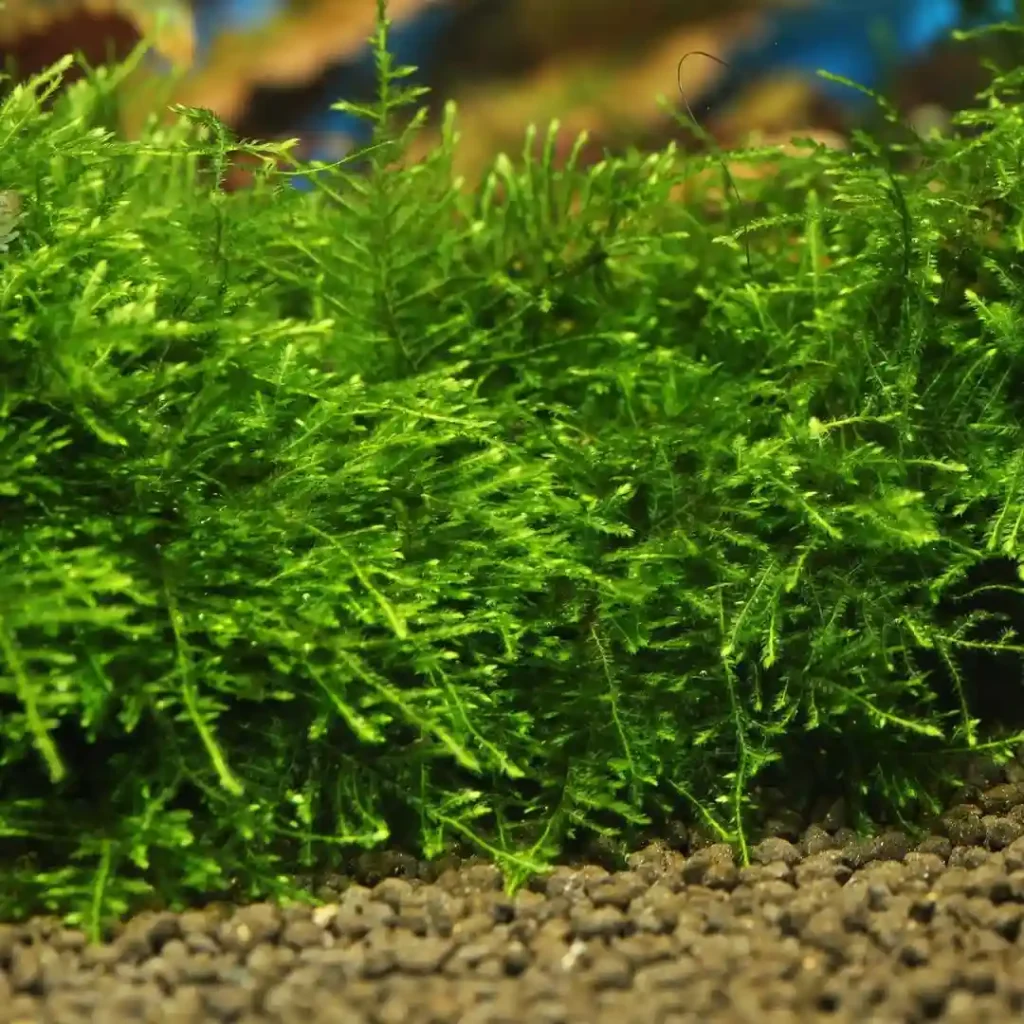
What Is Java Moss?
Java Moss is a slow-growing aquatic moss native to Southeast Asia. It thrives in a wide range of water conditions and lighting levels, making it ideal for beginners and low-tech planted tanks.
Quick Facts:
- Scientific Name: Taxiphyllum barbieri
- Plant Type: Moss (non-rooted)
- Placement: Foreground, hardscape, or floating
- Growth Rate: Slow to moderate
- Light Requirement: Low to moderate
- CO2 Needed: No
- Temperature: 59–82°F (15–28°C)
- pH Range: 6.0–8.0
Why Keep Java Moss?
- No roots or substrate needed
- Grows in low light and low-tech tanks
- Provides hiding spots for shrimp and fry
- Creates natural aquascape textures (walls, carpets, trees)
- Reduces nitrates and improves water quality
- Great biofilm source for shrimp and bottom dwellers
Floating vs Attached Java Moss
Java Moss is flexible it grows either floating or anchored.
Floating Java Moss:
- Creates a wild, natural look
- Great for shrimp, fry, and breeding tanks
- Easy to move or trim
- May clog filters if not contained
Attached Java Moss:
- Used in aquascapes on wood, rocks, or mesh
- Cleaner, more controlled appearance
- Ideal for moss walls, moss trees, or carpets
- Slower growth when tied or glued
Lighting & Water Conditions
Java Moss is extremely hardy and grows in most freshwater conditions.
| Parameter | Ideal Range |
| Temperature | 59–82°F (15–28°C) |
| pH | 6.0–8.0 |
| Lighting | Low to moderate |
Low light = slower growth
Medium light = bushier growth
High light = faster growth (may attract algae)
Tip: Keep flow gentle to moderate to prevent debris buildup.
How to Attach Java Moss
Java Moss can be attached to:
- Driftwood
- Rocks
- Coconut shells
- Mesh panels (for moss walls or carpets)
Attachment Methods:
- Tie with cotton thread or fishing line
- Use super glue gel (aquarium-safe) in small dabs
- Wrap around objects until it grips naturally
Fertilization & CO2
- CO2 is not required, but will improve growth rate and thickness
- Liquid fertilizers (especially micro nutrients) help with lush growth
- Root tabs are unnecessary it feeds from the water column
Trimming & Maintenance
Java Moss can become messy if left untrimmed.
- Trim with sharp scissors every 2–4 weeks
- Gently remove trimmed pieces with net or siphon
- Rinse under tank water if debris builds up
- Avoid letting it cover your entire tank or clog filters
Tip: Use floating rings or mesh to contain free-floating moss.
Propagation
Java Moss propagates naturally cuttings will grow into new clumps.
- Trim a healthy portion (1–2 inches)
- Let it float or reattach to another surface
- It will re-root and continue growing within days
Tank Mates & Best Uses
Java Moss is safe for all freshwater tanks.
Best Tank Mates:
- Shrimp (Cherry, Amano)
- Bettas
- Tetras, Rasboras
- Guppies, Endlers
- Corydoras and Otocinclus
Great Uses:
- Shrimp and fry hiding spots
- Breeding tanks
- Moss walls or trees
- Natural-style aquascapes
- Foreground carpet alternatives
Common Problems & Solutions
Problem: Java Moss turning brown
Cause: Poor water quality, debris buildup, or low flow
Fix: Rinse moss gently, increase water movement, trim dead areas
Problem: Algae growing on moss
Cause: Too much light, high nutrients
Fix: Reduce light duration, improve water changes, trim algae-covered parts
Problem: Moss coming loose
Cause: Weak attachment or flow
Fix: Re-tie securely or use aquarium-safe glue
FAQs
Does Java Moss need CO2?
No. It thrives without CO2 and is great for low-tech setups.
Can Java Moss grow in low light?
Yes! It’s one of the best low-light aquarium plants.
Does it need substrate?
No. Java Moss doesn’t have roots and can be floated or attached.
Is Java Moss good for breeding tanks?
Absolutely it provides shelter and grazing areas for fry and shrimp.
Can I mix Java Moss with other mosses?
Yes, but be aware it may outcompete slower-growing moss types.
Final Thoughts
Java Moss is a low-maintenance, flexible plant that works in almost any freshwater aquarium. Whether you let it float, tie it to driftwood, or use it in a moss wall, it adds natural beauty and improves water quality. It’s especially useful in shrimp and fry tanks—but any aquarist can benefit from having this reliable plant.
