
9 Best Floating Aquarium Plants for Beginners

Floating aquarium plants are one of the easiest ways to make a freshwater tank look more natural. They sit on the water surface, grow without substrate, and help create shade for fish that do not enjoy bright light.
The best part is that most floating plants are beginner-friendly. You do not need CO₂, deep substrate, or a high-tech planted tank. If your aquarium has decent lighting and stable water, many floaters will grow fast.
But not every floating plant is perfect for beginners. Some spread too quickly. Some hate strong filter flow. Some melt when their leaves stay wet. I learned this the hard way with duckweed, which looked cute at first but quickly covered every corner of the tank.For most beginners, I would start with Amazon Frogbit, Salvinia Minima, or Hornwort. Duckweed is easy, but it can become annoying fast. Red Root Floater is beautiful, but it needs stronger light to show good red color.
Quick Comparison of Floating Aquarium Plants
| Plant | Best For | Growth Speed | Beginner Level | Main Problem |
|---|---|---|---|---|
| Amazon Frogbit | Betta, guppy, shrimp, community tanks | Fast | Easy | Leaves dislike water splash |
| Salvinia Minima | Low-maintenance planted tanks | Fast | Easy | Can cover the surface quickly |
| Duckweed | Shrimp tanks and nutrient control | Very fast | Easy but messy | Hard to remove completely |
| Red Root Floater | Colorful planted tanks | Medium | Medium | Needs strong light for red color |
| Hornwort | Fry cover and water cleanup | Fast | Easy | Can shed needles |
| Water Lettuce | Open-top aquariums and larger tanks | Fast | Medium | Gets large and needs space |
| Riccia Fluitans | Shrimp tanks and aquascaping | Fast | Medium | Can break apart and float everywhere |
| Azolla | Outdoor tubs, ponds, larger setups | Fast | Medium | Not ideal for many indoor tanks |
| Java Moss | Shrimp tanks, fry tanks, natural cover | Slow to medium | Easy | Not a true surface floating plant |
Why Add Floating Plants to an Aquarium?
Floating plants are not just for decoration. They can help your tank feel calmer and more balanced.
Many fish come from areas with shaded water, slow flow, roots, leaves, and plant cover. When you add floaters, the tank often feels safer for them. Bettas, guppies, gouramis, rasboras, shrimp, and fry all benefit from the cover.
Floating plants also absorb extra nutrients from the water. This can help reduce algae because the plants compete with algae for nitrates and other nutrients. They will not fix bad tank care by themselves, but they can help support a healthier aquarium.
I also like floating plants because they tell you something about your water. If they are growing too fast, your tank may have a lot of nutrients. If they are yellowing or melting, the tank may need better light, gentle flow, or small doses of plant fertilizer.
1. Duckweed (Lemna minor)
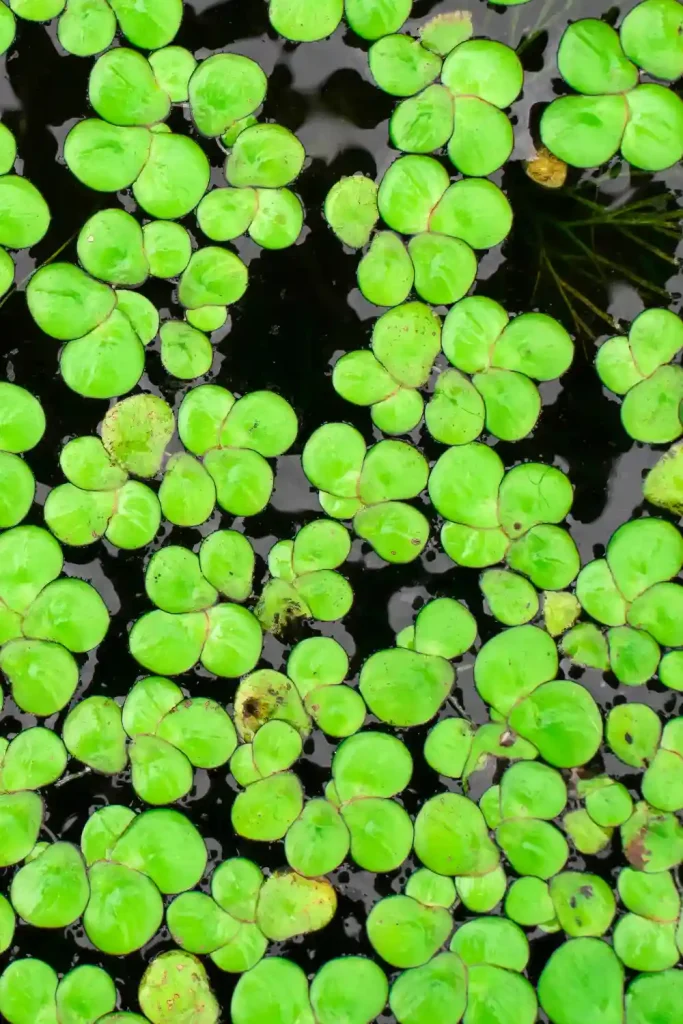
Duckweed is probably the easiest floating aquarium plant to grow. It has tiny round leaves and spreads extremely fast. In a tank with nutrients and light, it can multiply before you even notice it.
For water quality, duckweed can be useful. It absorbs excess nutrients and gives shrimp and fry a place to hide. Some fishkeepers use it in breeding tanks, shrimp tanks, and outdoor tubs because it grows so easily.
But I will be honest: I do not recommend duckweed as the first floating plant for every beginner. It is easy to grow, but hard to control. Once it gets into your tank, small pieces can stick to nets, plant tools, filter parts, and even your hands. Removing it fully can be frustrating.
If you still want to try duckweed, keep it in a plant ring or a low-flow tank. Do not let it cover the full surface. Also, avoid adding it to a tank where you want a neat aquascape.
Duckweed is best for people who want function over looks. If you want clean maintenance, Amazon Frogbit or Salvinia is better.
- Care notes: Light: moderate to high
- Growth speed: very fast
- CO₂ needed: no
- Best tank type: shrimp tanks, fry tanks, outdoor tubs
- Beginner rating: easy but messy
2. Water Spangles (Salvinia minima)
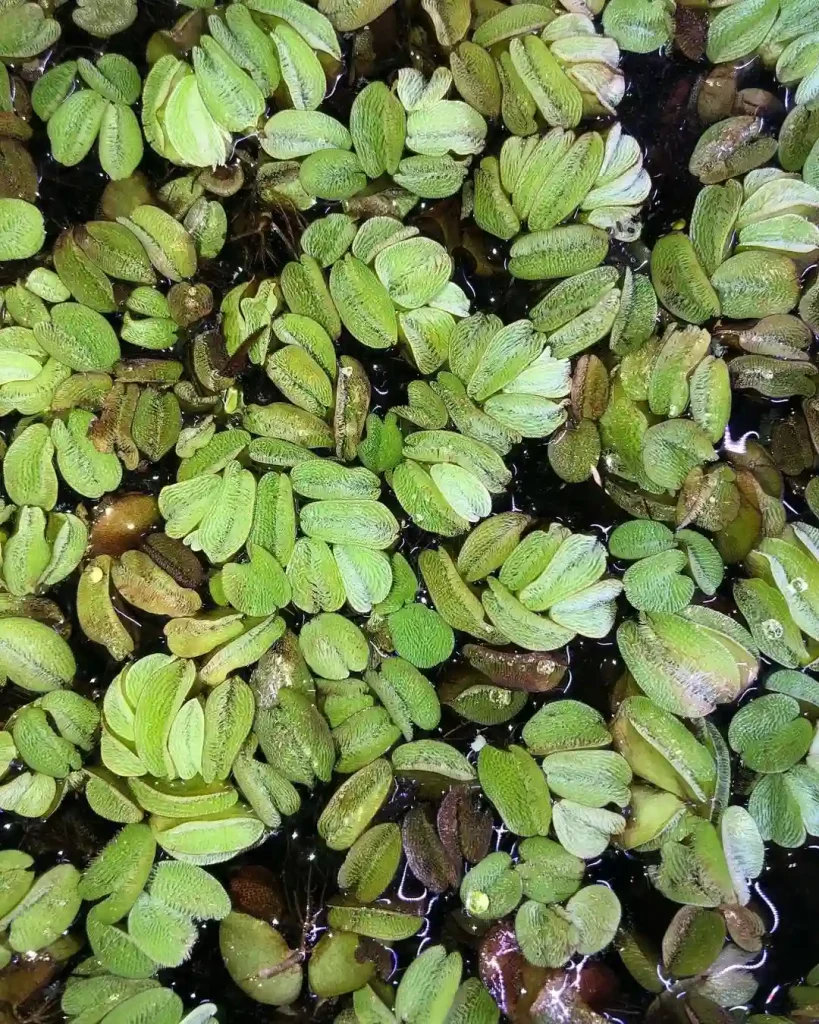
Salvinia Minima, also called Water Spangles, is another great choice for beginners. It has small oval leaves with a soft floating look. It grows in clusters and can cover the water surface quickly when the tank has enough light and nutrients.
This plant is easier to manage than duckweed because the leaves are larger. When it spreads too much, you can scoop out a handful during water changes. That makes it a good floating plant for people who want fast growth without the nightmare of tiny duckweed pieces sticking everywhere.
Salvinia is useful in tanks with light algae problems because it competes for nutrients. It can shade the tank, which helps reduce harsh light reaching the glass, substrate, and slow-growing plants below.
The downside is surface coverage. If you let Salvinia cover the full tank, it can block too much light from rooted plants. It can also reduce open surface space where oxygen exchange happens. I like to keep one clear feeding area open at all times.
- Care notes:Light: moderate to high
- Growth speed: fast
- CO₂ needed: no
- Best tank type: low-tech planted tanks, shrimp tanks, community tanks
- Beginner rating: very good
3. Amazon Frogbit (Limnobium laevigatum)
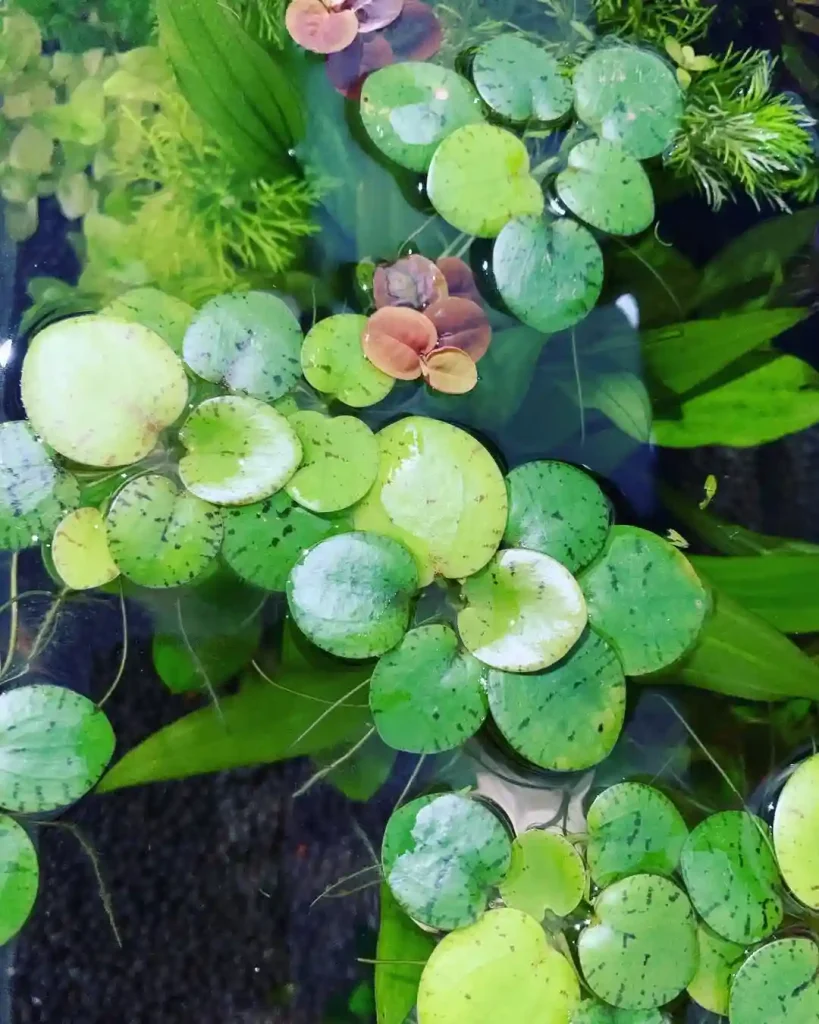
Amazon Frogbit is one of the best floating aquarium plants for beginners. It has round green leaves that sit on the water surface and long roots that hang down into the tank. Those roots look beautiful in a natural-style aquarium, especially when small fish swim through them.
I would choose Amazon Frogbit before duckweed if you want a cleaner, easier floating plant. It grows fast, but it is not as tiny and annoying as duckweed. You can remove extra pieces by hand without feeling like you are chasing green dots around the tank.
Amazon Frogbit works well in betta tanks, guppy tanks, shrimp tanks, and peaceful community aquariums. Bettas especially enjoy the shade because it makes the surface feel calmer and safer.
The main thing to watch is water splash. Frogbit leaves do not like staying wet on top. If your filter splashes heavily across the surface, the leaves may turn yellow, melt, or rot. A sponge filter or gentle filter flow works much better.
- Care notes:Light: moderate to high
- Growth speed: fast
- CO₂ needed: no
- Best tank type: betta, guppy, shrimp, peaceful community tank
- Beginner rating: very good
4. Red Root Floater (Phyllanthus fluitans)
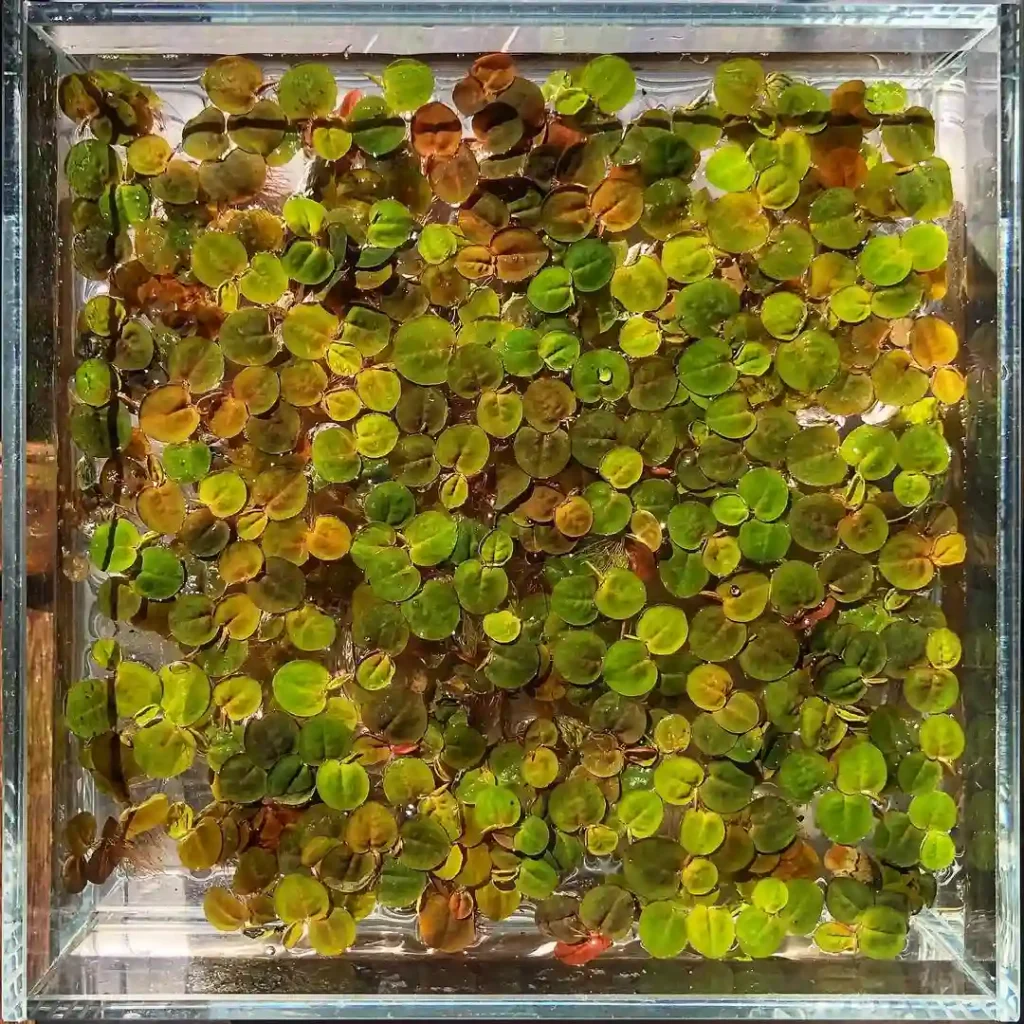
Red Root Floater is one of the prettiest floating aquarium plants. It has small leaves that can turn red or pink under the right conditions, with red roots hanging below the surface.
This plant is popular in planted tanks because it adds color without needing to be planted in substrate. It can make the top of the aquarium look more interesting, especially in open-top tanks.
That said, Red Root Floater is not as forgiving as Amazon Frogbit or Salvinia. It needs stronger light to show good red color. In low light, it may stay mostly green. That does not mean the plant is unhealthy, but beginners sometimes feel disappointed when it does not turn red.
It also dislikes too much surface movement. If your filter pushes the leaves around all day or splashes water on top, the plant may melt. Keep the flow gentle and give it a still corner.
I would choose Red Root Floater if you already have a planted tank light and want a more decorative floating plant.
- Care notes: Light: high for red color
- Growth speed: medium
- CO₂ needed: no
- Best tank type: planted tanks, open-top aquariums, display tanks
- Beginner rating: medium
5. Hornwort (Ceratophyllum demersum)
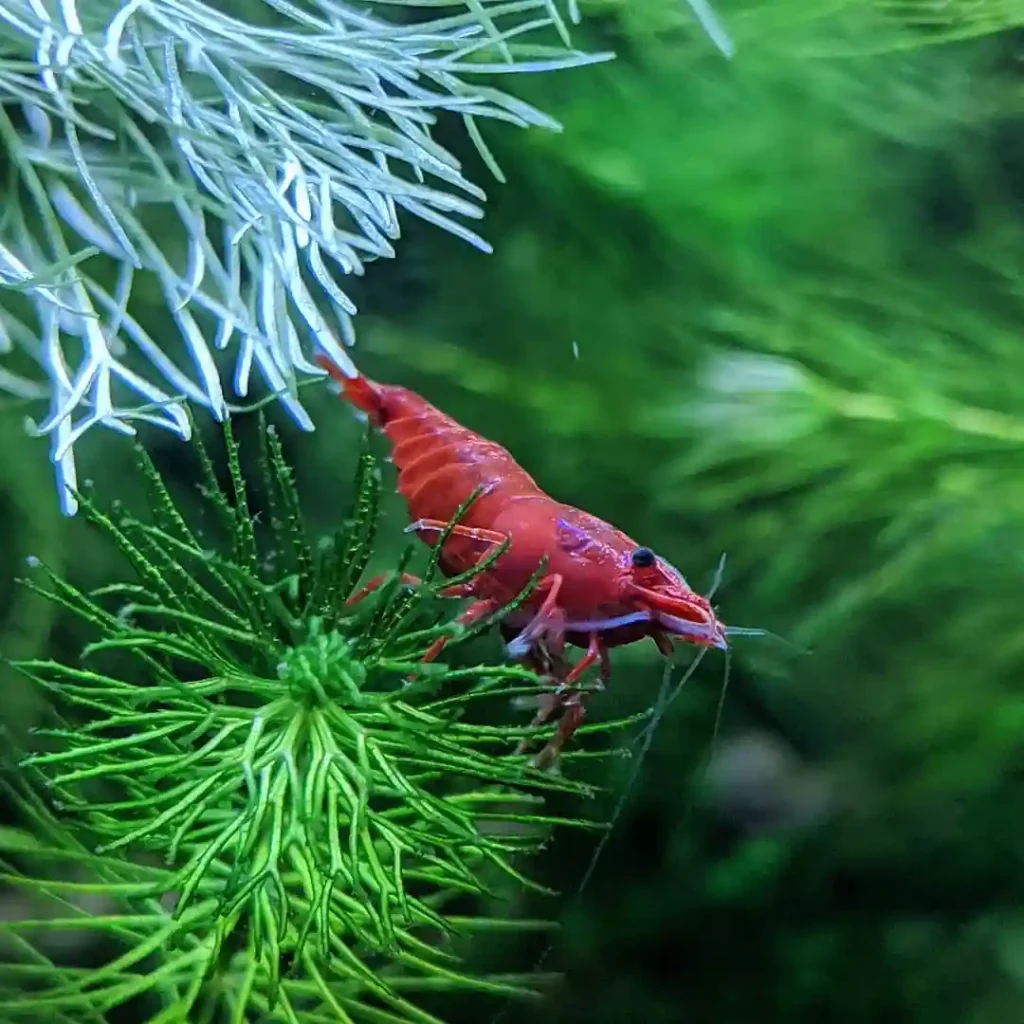
Hornwort is a little different from the other plants on this list because it can float freely or be planted loosely in the substrate. It has long green stems with fine needle-like leaves, and it grows fast in many aquarium setups.
For beginners, Hornwort is useful because it helps absorb nutrients and gives fish fry a place to hide. It is often used in breeding tanks because baby fish can hide between the stems.
Hornwort also works well in coldwater setups, which makes it useful for some goldfish or unheated tanks. But be careful with goldfish because they may nibble or pull it apart.
The main problem with Hornwort is shedding. Sometimes it drops little needles, especially after being moved to a new tank. This can make the tank look messy. Usually, once it adjusts, it grows better.
I like Hornwort for beginner tanks where function matters more than a perfect planted look. If you want a clean aquascape, you may prefer Frogbit or Salvinia instead.
- Care notes: Light: low to moderate
- Growth speed: fast
- CO₂ needed: no
- Best tank type: fry tanks, beginner tanks, coldwater tanks
- Beginner rating: good
6. Water Lettuce (Pistia stratiotes)
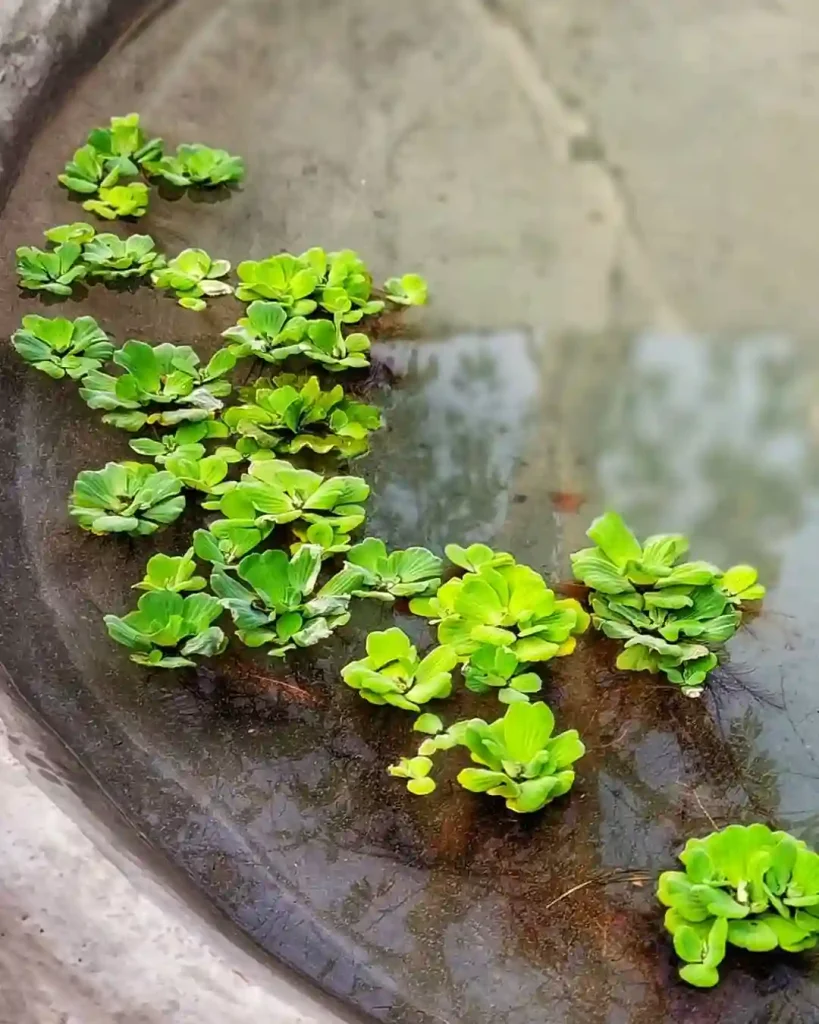
Water Lettuce has soft green leaves that grow in a rosette shape. It gives the tank a lush, tropical look. In the right setup, it can look beautiful.
But Water Lettuce needs more space than smaller floaters. It is not my first choice for tiny aquariums or tanks with tight lids. The leaves can grow wide, and the roots can become long. It also prefers good airflow above the water surface.
Water Lettuce works best in open-top aquariums, larger freshwater tanks, indoor tubs, and ponds. If you have a small covered tank, Amazon Frogbit is usually a better choice.
This plant can also grow quickly when conditions are good. You may need to thin it weekly so it does not block all the light below.
If you want a bold floating plant and have surface space, Water Lettuce is a good option. If you want something easier to manage in a beginner tank, choose Salvinia or Frogbit.
- Care notes: Light: moderate to high
- Growth speed: fast
- CO₂ needed: no
- Best tank type: open-top tanks, larger aquariums, ponds
- Beginner rating: medium
7. Java Moss (Taxiphyllum barbieri)
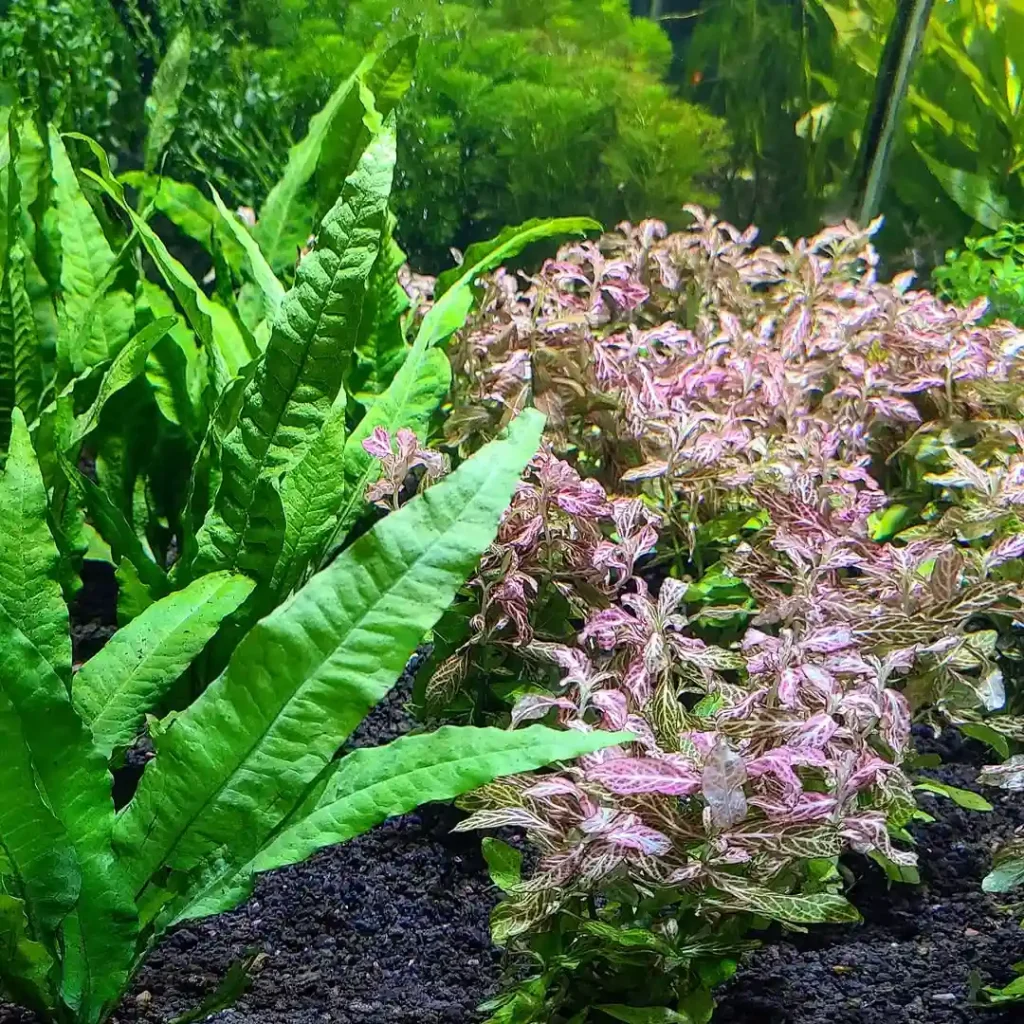
While not a true floating plant, Java Moss can float freely or be attached to surfaces. It’s hardy, easy to care for, and great for breeding tanks.
- Light Requirement: Low to moderate
- Growth Rate: Moderate
- CO₂ Needed: No
- Maintenance: Trim and rinse occasionally
- Best For: Shrimp tanks and natural aquascapes
8. Riccia Fluitans (Crystalwort)
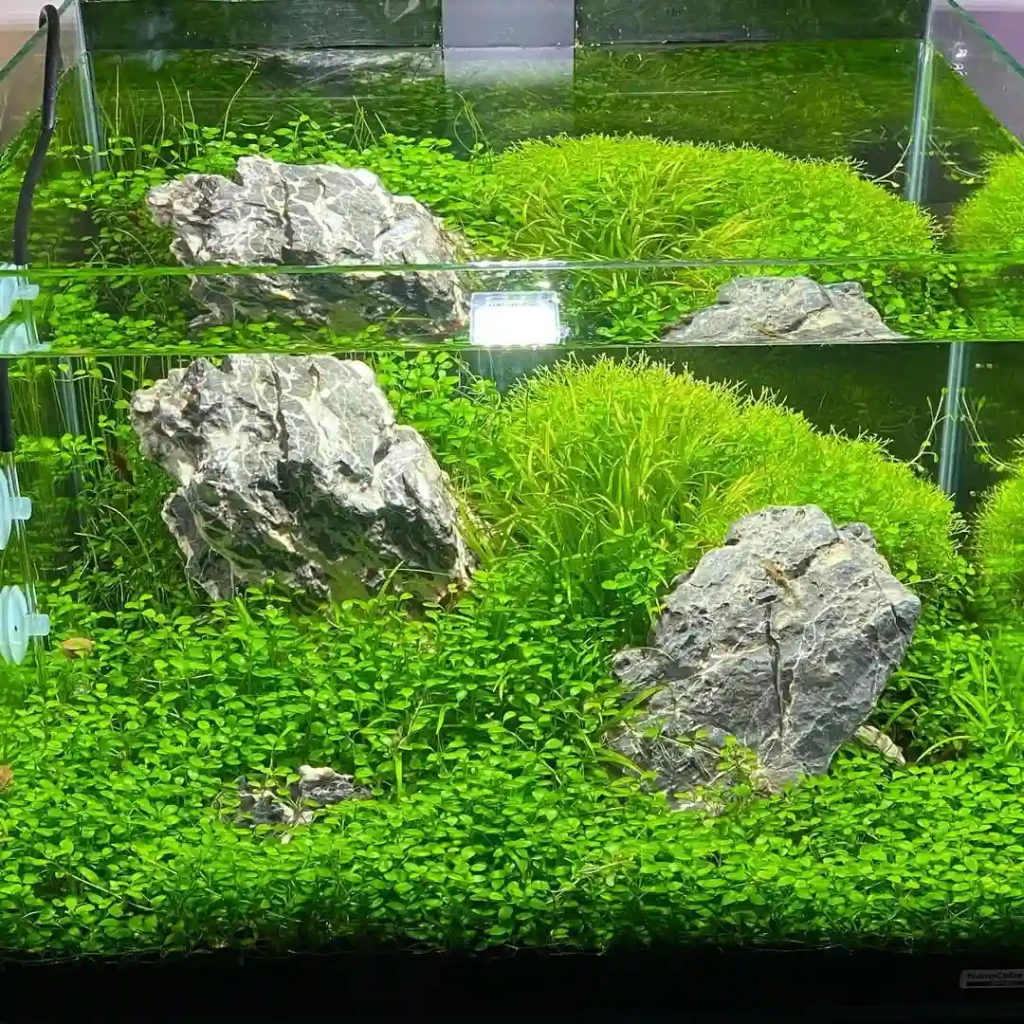
Riccia Fluitans, also called Crystalwort, is a bright green floating plant that grows in soft mats. It can float at the surface, but aquascapers also tie it to rocks or driftwood.
For shrimp tanks, Riccia can be useful because shrimp graze on the tiny surfaces and biofilm around it. It also gives baby shrimp and fry extra cover.
Riccia looks nice when it grows cleanly, but it can become messy if pieces break apart. Small bits can float around the tank and get stuck in plants, filters, and hardscape.
This is why I see Riccia as a medium-level beginner plant. It is not hard to grow, but keeping it neat takes more work than Frogbit or Salvinia.
If your goal is a natural shrimp tank, Riccia can be worth trying. If your goal is a simple low-maintenance community tank, start with Amazon Frogbit instead.
- Care notes: Light: moderate to high
- Growth speed: fast
- CO₂ needed: no, but grows better with good light
- Best tank type: shrimp tanks, aquascapes, fry tanks
- Beginner rating: medium
9. Azolla (Azolla filiculoides)

Azolla, also known as mosquito fern, is a small floating plant with a fern-like look. It can grow quickly and may turn reddish under strong light.
Azolla is more common in outdoor tubs, ponds, and some larger setups. It can work in aquariums, but I do not think it is the best first choice for most indoor beginner tanks.
The reason is simple: it can spread fast, and it may not always look as clean indoors as Frogbit or Salvinia. It can also be harder to find in aquarium stores compared with the more common floaters.
Azolla can be useful if you keep outdoor fish tubs, mini ponds, or seasonal setups. For a normal indoor aquarium, I would pick Amazon Frogbit, Salvinia, or Red Root Floater first.
- Care notes: Light: moderate to high
- Growth speed: fast
- CO₂ needed: no
- Best tank type: outdoor tubs, ponds, larger setups
- Beginner rating: medium
Read also:
Floating Plants I Would Avoid as a Complete Beginner
Not all floating plants are bad, but some are better after you understand your tank.
I would avoid starting with duckweed if you like a clean tank. It spreads everywhere and can be very hard to remove. It is useful, but it is not always enjoyable.
I would also avoid Water Lettuce in small covered aquariums. It needs space, and the leaves can struggle when there is not enough airflow.
Riccia is another plant I would not choose as the first option if you want low maintenance. It can break apart and move around the tank.
For your first floating plant, my personal order would be:
- Amazon Frogbit
- Salvinia Minima
- Hornwort
- Red Root Floater
- Duckweed only if you are ready to manage it
How to Stop Floating Plants From Taking Over
Floating plants can grow fast, and that is both good and bad. Fast growth means they absorb nutrients, but it also means they can cover the whole surface.
The easiest way to control them is to remove extra plants every week during water changes. Do not wait until the full surface is covered. Once floaters become too dense, they can block light from your other aquarium plants.
You can also use a floating ring or plant corral. A simple airline tubing ring works well. This keeps floating plants in one area and leaves open space for feeding, oxygen exchange, and filter movement.
Another tip is to keep the plants away from strong filter output. Many floaters dislike being pushed around all day. If you use a hang-on-back filter, create a calm corner using a floating ring.
Leave at least one part of the water surface open. Fish need good gas exchange, and surface-feeding fish need access to food.
Are Floating Plants Good for Betta Fish?
Yes, floating plants are great for betta fish. Bettas often prefer calm, shaded areas near the surface. Floating plants help soften the light and make the tank feel safer.
Amazon Frogbit, Salvinia, and Red Root Floater are good choices for betta tanks. Just make sure the betta still has open surface space to breathe. Bettas use their labyrinth organ to take air from the surface, so do not let plants cover everything.
Avoid very strong filter flow because bettas and floating plants both prefer calmer water.
Are Floating Plants Good for Shrimp?
Floating plants are excellent for shrimp tanks. Shrimp enjoy grazing on biofilm that grows around roots and plant surfaces. Baby shrimp also use floating roots as hiding spots.
Salvinia, Amazon Frogbit, Duckweed, Riccia, and Hornwort can all work well in shrimp tanks. I especially like Frogbit because the roots create a natural hanging cover.
Just be careful when adding new plants. Rinse them well and avoid plants from tanks treated with unsafe chemicals. Shrimp are sensitive, so it is better to buy aquarium-safe plants from a trusted source.
Do Floating Plants Help Reduce Algae?
Floating plants can help reduce algae, but they are not a magic fix.
They help in two main ways. First, they absorb nutrients from the water. Second, they shade the aquarium, which reduces the amount of light reaching algae-prone areas.
If your tank has too much light, too much fish waste, or poor maintenance, algae can still grow. Floating plants work best when you also manage feeding, lighting time, water changes, and stocking levels.
For beginner tanks, I like using floaters as part of a simple algae-control routine. Keep lights on for 6 to 8 hours, avoid overfeeding, remove dead leaves, and thin floating plants weekly.
Floating Plants vs Rooted Plants
Floating plants and rooted plants both help aquariums, but they work differently.
Floating plants grow at the surface. They take light easily and can pull nutrients straight from the water. This makes them fast growers. They are great for shade, fry cover, and quick nutrient use.
Rooted plants grow in substrate or attach to hardscape. They help build the aquascape and create structure inside the tank. Plants like Amazon Sword, Cryptocoryne, Java Fern, and Anubias are more about long-term layout and design.
A good beginner planted tank can use both. Floating plants control light and nutrients from above, while rooted or attached plants fill the middle and bottom areas.
Common Problems With Floating Aquarium Plants
Floating Plants Turning Yellow
Yellow leaves usually mean low nutrients, weak light, or poor plant adjustment. If the plant is new, give it time. Remove dying leaves so they do not rot in the tank.
If the whole plant keeps yellowing, check your lighting and consider a safe aquarium plant fertilizer.
Floating Plants Melting
Melting often happens after shipping or when plants move into new water conditions. Amazon Frogbit and Red Root Floater may also melt if their leaves stay wet from filter splash.
Keep surface flow gentle and remove melted leaves quickly.
Roots Falling Off
Some floating plants drop roots when flow is too strong or fish keep picking at them. This can also happen during adjustment.
Long roots are normal for Frogbit and Water Lettuce. If roots look brown and mushy, remove the damaged parts.
Plants Blocking the Filter
Floating plants can get pushed into filter intakes or outflows. Use a pre-filter sponge on the intake and a floating plant ring to keep plants in one area.
This is especially useful with duckweed and Salvinia.
Plants Blocking Too Much Light
This is common when floating plants are left alone for too long. Thin them weekly and keep part of the surface open.
If you have rooted plants below, do not let floaters cover the full aquarium.
Best Floating Plant for Each Tank Type
| Tank Type | Best Floating Plant |
| Betta tank | Amazon Frogbit or Salvinia |
| Guppy tank | Amazon Frogbit or Hornwort |
| Shrimp tank | Salvinia, Frogbit, Riccia |
| Fry tank | Hornwort or Frogbit |
| Low-tech planted tank | Salvinia or Frogbit |
| Colorful display tank | Red Root Floater |
| Outdoor tub or pond | Azolla or Water Lettuce |
| Beginner community tank | Amazon Frogbit |
My Personal Pick for Beginners
If I had to recommend only one floating plant for a beginner, I would choose Amazon Frogbit.
It gives shade, looks natural, grows fast, and is easier to remove than duckweed. The roots also make the tank feel more alive. It works in many peaceful freshwater setups, from betta tanks to shrimp tanks.
My second choice would be Salvinia Minima because it is simple, hardy, and easy to thin.
I would only choose Duckweed if you are okay with constant trimming and you do not mind it spreading everywhere.
FAQs
What is the easiest floating aquarium plant for beginners?
Amazon Frogbit and Salvinia Minima are two of the easiest floating plants for beginners. Duckweed is also very easy to grow, but it spreads so fast that many fishkeepers find it annoying.
Do floating aquarium plants need CO₂?
Most floating aquarium plants do not need added CO₂. Since they sit at the surface, they can use CO₂ from the air. Good lighting and stable water are usually more important.
Do floating plants need fertilizer?
They can grow without fertilizer in tanks with enough fish waste and nutrients. But if the leaves turn yellow or growth slows down, a small dose of aquarium-safe liquid fertilizer may help.
Can floating plants live with a lid?
Some can, but not all floating plants love covered tanks. Frogbit and Red Root Floater may struggle if condensation keeps the leaves wet. Salvinia usually handles covered tanks better.
Are floating plants good for betta fish?
Yes, floating plants are very good for betta fish. They create shade, reduce stress, and make the surface feel safer. Just leave open water so your betta can breathe at the surface.
Can too many floating plants harm fish?
Yes, if they cover the entire surface. Too many floating plants can block light, reduce surface movement, and make feeding harder. Keep some open surface space.
Why are my floating plants dying?
Common reasons include strong filter flow, wet leaves, weak light, low nutrients, or sudden water changes. Remove dead leaves and adjust the surface flow first.
Do floating plants reduce algae?
Floating plants can help reduce algae by using excess nutrients and shading the tank. They work best when paired with good lighting control, water changes, and careful feeding.
Can floating plants block my filter?
Yes. Duckweed, Salvinia, and loose roots can get pulled toward filters. Use a sponge pre-filter and a floating plant ring to keep them away from the intake.
Should I remove extra floating plants?
Yes. Thin floating plants weekly or during water changes. This keeps the tank balanced and prevents them from covering the entire surface.
