
Amano Shrimp Care Guide: Setup, Feeding, Breeding

Amano shrimp are hardy freshwater algae grazers, but they still need a mature aquarium and stable water. A 5-gallon tank can work for a small group, although I recommend 10 gallons or more for beginners because the water is easier to manage.
Keep ammonia and nitrite at 0 ppm, provide plenty of surfaces covered in biofilm, and use a lid because Amanos are skilled escape artists. They will eat several types of algae, but they will not repair an aquarium with excessive light, overfeeding, or poor maintenance.
Adult Amano shrimp live in freshwater. Their larvae need brackish or saltwater to develop, so they will not form a growing freshwater colony like Cherry shrimp.
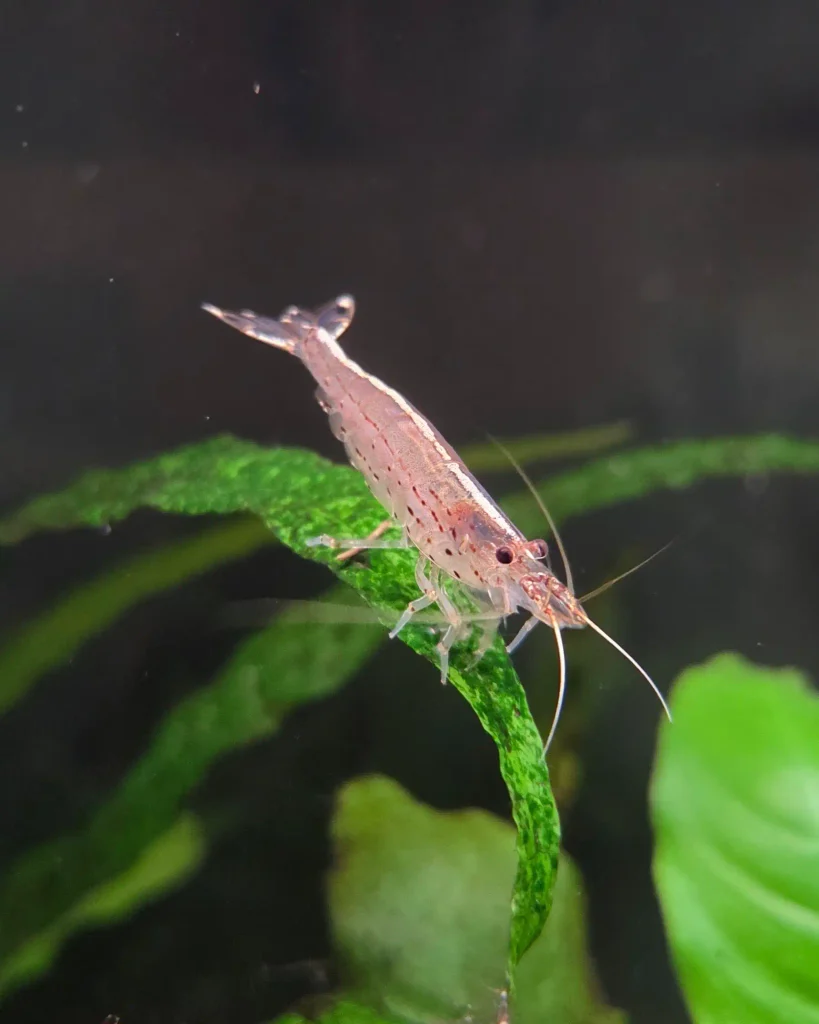
Amano Shrimp Care at a Glance
| Characteristic | Amano Shrimp Requirement |
| Scientific name | Caridina multidentata |
| Former name | Caridina japonica |
| Common names | Amano shrimp, Yamato shrimp, algae shrimp, Japanese shrimp |
| Care level | Beginner-friendly in a mature aquarium |
| Adult size | Around 1.5–2 inches (4–5 cm) |
| Lifespan | Commonly 2–5 years |
| Minimum tank size | 5 gallons |
| Recommended beginner tank | 10 gallons or larger |
| Temperature | 65–78°F (18–26°C) |
| pH | 6.5–8.0 |
| GH | Around 4–12 dGH |
| KH | Around 1–10 dKH |
| Ammonia | 0 ppm |
| Nitrite | 0 ppm |
| Nitrate | Preferably below 20 ppm |
| Diet | Omnivorous grazer |
| Temperament | Peaceful but bold during feeding |
| Breeding | Adults breed in freshwater, larvae need brackish or saltwater |
| Best kept with | Small peaceful fish, shrimp, and snails |
These numbers are working ranges, not targets that must be hit perfectly. Stable water inside a suitable range is safer than repeatedly adding chemicals to chase one exact pH, GH, or TDS reading.
Are Amano Shrimp Right for Your Aquarium?
Amano shrimp are a good choice if you want a peaceful cleanup crew for an established planted aquarium. They spend much of the day picking through moss, wood, rocks, plant leaves, and filter sponges for algae and biofilm.
They are also larger and bolder than Cherry shrimp. This makes them easier to see and less likely to become an instant snack for very small community fish. However, any fish with a mouth large enough to swallow a shrimp should still be treated as a risk.
Amanos may not suit your aquarium if the tank is newly set up, contains large predatory fish, or has no lid. They also are not the right shrimp if your main goal is building a breeding colony. Their larvae cannot finish developing in normal freshwater.
Do not buy Amano shrimp as your only algae treatment. They can help control algae, but you still need to correct excessive lighting, excess nutrients, and overfeeding.

What Are Amano Shrimp?
Amano shrimp are freshwater shrimp from East Asia, mainly Japan and Taiwan. They live in river systems where water movement, oxygen, rocks, and other hard surfaces provide places to graze.
The species became popular in planted aquariums after aquascaper Takashi Amano used large groups of them to help control algae. Their common name comes from him.
Older books and shop labels may call them Caridina japonica. A 2006 taxonomic review confirmed that Caridina multidentata is the accepted scientific name.
Amano Shrimp Appearance and Size
Amano shrimp usually have translucent gray, tan, or greenish bodies. A row of reddish-brown dots or broken lines runs along each side. Their clear bodies sometimes take on colors from their food, surroundings, and internal organs.
Most adults reach about 1.5–2 inches. Females usually grow larger and develop a wider, more rounded abdomen for carrying eggs.
Their larger size makes them noticeably different from most Neocaridina shrimp, but young Amanos can still be confused with wild-type Cherry shrimp.
Male vs Female Amano Shrimp
Look at the markings along the lower sides of the body.
Males usually have separate round dots arranged in a fairly even row. Females tend to have longer markings that look like broken dashes. Mature females also have a broader abdomen and may carry many tiny eggs beneath the tail.
Sexing very young shrimp is harder. Wait until they grow before relying on body shape or markings.
Amano Shrimp Lifespan
Amano shrimp commonly live for two to five years in aquariums. Some keepers report older shrimp, but lifespan varies with age at purchase, shipping stress, water quality, temperature, diet, and source quality.
Because shops rarely know the exact age of imported shrimp, an Amano that lives for two years after purchase may already have been an adult when you bought it.
Amano Shrimp Tank Setup
A good Amano tank does not need expensive shrimp equipment. It needs clean, oxygen-rich water, a working biological filter, food-growing surfaces, and enough stability to prevent sudden changes.
If you are starting from an empty aquarium, follow this shrimp tank setup guide before bringing the shrimp home.
Amano Shrimp Tank Size
Five gallons is a reasonable minimum for a few Amano shrimp in a shrimp-only aquarium. However, I recommend starting with at least 10 gallons.
A larger tank gives you:
- More stable temperature and water chemistry
- More rocks, plants, and wood for grazing
- Better dilution of uneaten food and waste
- More room for peaceful fish tank mates
- A little extra forgiveness when something goes wrong
A 5-gallon tank can house two or three Amanos when it is mature and carefully maintained. A 10-gallon aquarium gives a group of three to five far more feeding space.
Tank size should also be based on the fish living with them. If the tank mates need 20 gallons, the shrimp do not make that requirement smaller.
Cycle the Aquarium Before Adding Shrimp
Do not put Amano shrimp into an uncycled aquarium.
A completed nitrogen cycle allows bacteria in the filter and aquarium to process toxic ammonia and nitrite. The extra time also allows biofilm and small amounts of natural algae to form.
Use a test kit rather than counting days. The tank is ready only when it can process its waste source while ammonia and nitrite remain at 0 ppm. Our fish tank cycling guide explains the process step by step.
A tank can be cycled but still be too clean and new for shrimp. If every surface looks freshly unpacked, give the aquarium more time to mature or provide suitable supplemental food.
Filtration and Water Flow
A sponge filter works well in a shrimp-only tank because it provides biological filtration, gentle movement, and a large grazing surface.
Hang-on-back, internal, and canister filters can also work. Cover exposed intakes with a pre-filter sponge to reduce injury risk and create another place where biofilm can grow.
Amano shrimp naturally come from flowing river habitats, so they usually handle gentle to moderate current well. Avoid turning the aquarium into a washing machine. The shrimp should be able to walk, feed, and rest without being pushed across the tank.
Surface movement is helpful because it improves gas exchange. This matters even more in warm tanks, heavily stocked community aquariums, and aquariums that receive carbon dioxide for plant growth.
Plants, Wood and Hiding Places
Live plants are not mandatory, but they make an Amano aquarium easier to manage. Moss, wood, rocks, and plant leaves give the shrimp more surfaces to search for food.
Useful additions include:
- Java moss
- Anubias
- Java fern
- Water sprite
- Guppy grass
- Driftwood
- Rounded rocks
- Dried aquarium-safe leaves
You can find more choices in our guide to the best plants for shrimp tanks.
Shrimp also need cover while molting. Dense plants, small caves, wood gaps, and leaf litter give freshly molted shrimp somewhere to wait while their new shell hardens.
Substrate
Amano shrimp can live over sand, fine gravel, or aquarium soil. Choose the substrate based on your plants and the type of aquarium you want.
Active aquarium soils can lower pH and KH. That may help certain plants and soft-water shrimp, but it is not required for Amanos. If your tap water already has low KH, an active soil may make the water harder to keep stable.
An inert sand or gravel is often the simpler choice for a beginner.
Heater and Lid
You may not need a heater if your room keeps the aquarium within a stable temperature range. Use a thermostatically controlled heater if the tank regularly drops below about 65°F or changes sharply between day and night.
A secure lid is far less optional.
Amano shrimp can climb filter pipes, airline tubing, cables, plants, and wet corners. Check every opening around the filter and cables. If one disappears, look behind the aquarium before assuming a fish ate it.
Our guide to shrimp climbing out of the tank covers the common causes and fixes.
Amano Shrimp Water Parameters
Amanos tolerate a wider range than many delicate Caridina shrimp, but they do not handle ammonia, nitrite, pollutants, or sudden water changes well.
| Parameter | Recommended Range | What It Means |
| Temperature | 65–78°F (18–26°C) | Keep it stable and avoid sudden heating or cooling |
| pH | 6.5–8.0 | Stability matters more than chasing exactly 7.0 |
| GH | 4–12 dGH | Supplies calcium and magnesium used during shell formation |
| KH | 1–10 dKH | Helps resist sudden pH changes |
| TDS | Roughly 100–300 ppm | Use as a consistency check, not as a complete water test |
| Ammonia | 0 ppm | Any reading needs immediate attention |
| Nitrite | 0 ppm | Toxic and a sign that filtration is not keeping up |
| Nitrate | Below 20 ppm when possible | Control with plants, feeding, stocking, and water changes |
GH and KH are often mixed up. GH measures calcium and magnesium in the water. KH measures the water’s ability to resist a sudden pH drop. Read our shrimp GH and KH guide if these measurements are new to you.
TDS does not tell you which minerals or pollutants are present. Two tanks can have the same TDS reading and very different water chemistry. Use it to notice changes, not to replace ammonia, nitrite, nitrate, GH, KH, and pH testing.
Water Changes
Small, regular water changes are usually safer than waiting until the aquarium becomes dirty and replacing a large amount at once.
For many tanks, changing around 10–20% weekly is a useful starting point. Adjust the schedule based on nitrate, stocking, feeding, plant growth, and evaporation.
Match the replacement water closely to the tank’s temperature and hardness. Always treat tap water for chlorine or chloramine before it reaches the shrimp.
Do not add minerals simply because a care guide gives a higher GH target. Test your water first. Unnecessary additives can create the sudden changes you were trying to prevent.
Drip Acclimating New Amano Shrimp
Shrimp can react badly when the shop water and aquarium water have different temperatures, pH, GH, or TDS.
For locally purchased shrimp that have spent only a short time in the bag:
- Place the shrimp and bag water in a clean container.
- Run airline tubing from the aquarium to the container.
- Tie a loose knot or use a valve to create a slow drip.
- Let the water volume roughly double over 45–90 minutes.
- Net the shrimp into the aquarium.
- Discard the shop water.
For shrimp shipped over a long distance, follow the seller’s arrival instructions. Water chemistry inside a long-transport bag changes after it is opened, so a slow acclimation is not always the safest method for shipped livestock.
Dim the aquarium lights after adding the shrimp and leave them alone. Hiding for the first day or two is normal.
What Do Amano Shrimp Eat?
Amano shrimp are omnivorous scavengers. They eat algae, biofilm, decaying plant matter, leftover fish food, small organisms, and prepared shrimp foods.
They are famous for eating algae, but they are also shameless food thieves. Drop one algae wafer into a community tank and an Amano may carry off the whole piece like it paid for it.
What Algae Do Amano Shrimp Eat?
| Algae or Growth | How Likely Amanos Are to Eat It |
| Soft green film | Often eaten |
| Hair algae | Often eaten when strands are young and soft |
| Thread algae | Commonly grazed |
| Brown diatom coating | May be eaten, especially from plants and hardscape |
| Black beard algae | Sometimes grazed when young or weakened, but not guaranteed |
| Staghorn algae | May pick at softer growth |
| Green spot algae | Usually poor control because it is hard and firmly attached |
| Cyanobacteria | Not a dependable food source and should be treated as a tank problem |
| Long, tough, mature algae | Often ignored unless manually trimmed first |
Amano shrimp usually choose fish food over algae when both are available. If you want better algae grazing, reduce extra feeding slightly and remove large food leftovers. Do not starve the shrimp in an attempt to force them to eat a specific algae.
Shrimp are one part of algae management. You still need to check lighting duration, plant health, feeding, fertilizer use, water movement, and maintenance. See our aquarium algae-control tips for help with the cause.
How Often Should You Feed Amano Shrimp?
In a mature planted community tank, Amanos may find much of their food without daily feeding. Offer supplemental food two or three times per week and watch how quickly it disappears.
Suitable foods include shrimp pellets, algae wafers, quality sinking fish food, softened vegetables, and dried aquarium-safe leaves. Small portions of protein-rich food can be offered occasionally.
Remove food that remains after a few hours. A large decaying vegetable slice can damage water quality faster than a few shrimp can clean it.
If you keep Amanos with smaller Cherry shrimp, place food in several areas. Amanos are larger, faster, and very good at stealing a meal. Learn more in our aquarium shrimp feeding guide.
Amano Shrimp Behavior and Molting
Healthy Amano shrimp spend much of their time grazing. They walk across plants and hardscape, pick at the filter sponge, swim between surfaces, and rush toward food.
They can live alone, but several shrimp are easier to observe and cover more of the aquarium. A group is useful, but there is no proven rule that every Amano must live in a group of three or five.
Why Is My Amano Shrimp Hiding?
Hiding is common after being introduced, during the days around a molt, or when the aquarium contains active fish.
A freshly molted shrimp has a soft shell and may remain inside plants or wood until it hardens. Give it time before moving decorations to search for it.
Persistent hiding can also point to aggressive tank mates, bright open surroundings, poor water, or a lack of shelter.
Should You Remove the Molted Shell?
Leave a clean, empty molt in the aquarium. Shrimp often eat it and reuse some of its minerals.
A molt looks clear and hollow. A dead shrimp usually contains tissue, color, and visible internal organs. Check carefully before removing anything.
Frequent failed molts are a reason to test GH and review recent water changes. Do not immediately add calcium powder or mineral blocks without knowing what the water contains.
Why Are Amano Shrimp Swimming Frantically?
Male Amanos may swim rapidly around the aquarium after a female molts and releases mating signals. This can look chaotic but may be normal when only the shrimp are affected.
If every shrimp is racing around, climbing upward, or trying to leave the water, test ammonia, nitrite, temperature, and pH immediately. Review anything recently added to the tank, including medication, fertilizer, new decorations, and untreated tap water.
Amano Shrimp Tank Mates
Amano shrimp work well with small, peaceful fish that are unlikely to swallow an adult shrimp.
Usually suitable choices include small tetras, rasboras, Otocinclus, peaceful Corydoras, Kuhli loaches, Nerite snails, and other dwarf shrimp.
Bettas and small gouramis are less predictable. One individual may ignore shrimp for years, while another begins hunting them within minutes. Dense cover lowers the risk but does not remove it.
Avoid puffers, larger cichlids, predatory catfish, large barbs, goldfish, crayfish, and large clawed shrimp. These animals may injure or eat an Amano, especially after it molts.
No fish is completely shrimp-safe. Even a small peaceful fish may peck at a vulnerable shrimp if given the chance.
For species-by-species advice, see our full list of Amano shrimp tank mates.
Can Amano Shrimp Breed in Freshwater?
Adult Amano shrimp mate and carry eggs in freshwater, but the larvae cannot complete their development there.
Amano shrimp have an amphidromous life cycle. In nature, newly hatched larvae move downstream toward brackish or marine water. After passing through several planktonic stages, the young shrimp return to freshwater.
Home breeding usually follows this pattern:
- A female develops and carries many tiny eggs in freshwater.
- The eggs hatch into free-swimming larvae.
- The larvae are moved to a separate brackish or saltwater rearing container.
- They receive microscopic suspended foods while passing through larval stages.
- After changing into juvenile shrimp, they are slowly returned to freshwater.
Move the larvae, not the adult female, into saltwater. Adult Amanos are freshwater shrimp and should not be placed into a marine breeding tank.
A 2021 laboratory study found that temperature and salinity strongly affected Caridina larval survival and development. That is why breeding Amanos is much harder than breeding Cherry shrimp and cannot be reduced to “add some aquarium salt.”
Common Amano Shrimp Problems
| Symptom | Likely Causes | What to Do |
| Shrimp disappeared | Hiding, escape, filter access, or predation | Check lid gaps, behind the tank, filter chambers, plants, and tank mates |
| Not eating | Recent molt, enough natural food, stress, or poor water | Test the water and offer a small amount of another suitable food |
| Not eating algae | Preferred food is available or algae is too hard | Reduce extra food slightly, trim mature algae, and correct the algae cause |
| White or milky body | Stress, tissue damage, age, illness, or a dead shrimp | Test water, observe closely, and separate the shrimp if the condition spreads |
| Failed molt | Low GH, poor nutrition, or sudden water changes | Test GH and compare recent replacement water with the aquarium |
| Frantic swimming | Mating behavior or water irritation | Check whether only males are active, then test water if several animals look distressed |
| Climbing out | Lid gaps, poor water, new-tank stress, or unsuitable flow | Test the water and seal openings |
| Sudden deaths after a water change | Chlorine, temperature shock, hardness change, or pollutants | Stop adding products, test the tank, and make a treated, temperature-matched partial change |
Do not treat the whole aquarium with medication based only on one symptom. Many fish treatments contain ingredients that are unsafe for shrimp. Move affected animals to a separate tank when treatment is needed and follow the product label.
Buying Healthy Amano Shrimp
Choose shrimp that are actively walking, grazing, and reacting to food. The body should look clear or naturally tinted rather than heavily milky or opaque.
Check for:
- Complete legs and antennae
- Normal walking and swimming
- No cottony growth
- No unusual green growth beneath the abdomen
- No obvious worms around the head
- No repeated falling onto the side
A shrimp that is resting is not automatically sick. Watch the group for several minutes before choosing.
Ask the seller how long the shrimp have been in the shop and whether they are eating. Newly arrived shrimp may already be dealing with shipping stress, so buying from a settled batch can reduce losses.
Also confirm that the shrimp are true Amanos. Look for the dotted or dashed side markings and compare them with a trusted reference photo.
If you are deciding between two popular species, read our Amano vs Cherry shrimp comparison.
Frequently Asked Questions
How Many Amano Shrimp Should I Keep?
There is no fixed number that works for every aquarium. Two or three can work in a mature 5-gallon shrimp tank. Three to five is a reasonable starting group for a 10-gallon aquarium.
For algae control, base the number on available food, tank size, and the amount of covered surface. Adding too many to a spotless aquarium creates competition and does not guarantee better cleaning.
Can Amano Shrimp Live Alone?
Yes. Amano shrimp do not need a school to survive. Keeping several makes them easier to see and spreads grazing across more of the aquarium.
Do Amano Shrimp Need a Heater?
Not always. A heater is unnecessary when the room keeps the aquarium within a stable suitable range. Use one if the water regularly becomes too cold or changes sharply.
Do Amano Shrimp Eat Live Plants?
They normally graze algae, biofilm, and damaged tissue from plant leaves. They do not usually eat healthy aquarium plants.
A shrimp sitting on a damaged leaf may be cleaning dying tissue rather than causing the damage.
Do Amano Shrimp Eat Fish Waste?
They may pick through waste looking for leftover food and microorganisms, but they do not make fish waste disappear. The aquarium still needs filtration, water changes, and substrate cleaning when required.
Can Amano Shrimp Live With Cherry Shrimp?
Yes. Their water requirements overlap, and they do not crossbreed.
The main problem is food competition. Larger Amanos may grab wafers and push smaller Cherry shrimp aside. Feed in more than one place.
Will Amano Shrimp Eat Baby Cherry Shrimp?
Healthy Amanos are not active shrimp hunters. They may scavenge a dead or dying baby shrimp, just as they scavenge other animal matter. Provide moss and dense cover if you want more Cherry shrimp babies to survive around fish.
Why Is My Amano Shrimp Turning White?
A mild color change can happen with age, food, stress, or molting. A body that becomes heavily milky or opaque may point to tissue damage or illness.
Test ammonia, nitrite, temperature, and recent water changes first. Separate the shrimp if the condition worsens or appears in more animals.
Why Is My Amano Shrimp Not Eating?
It may have recently molted, found enough biofilm, or become stressed after a move. Check the water before adding more food.
If the shrimp remains inactive and stops grazing for several days, look for discoloration, damaged limbs, failed molts, or aggressive tank mates.
Do Amano Shrimp Clean the Whole Aquarium?
No. Amanos can reduce soft algae and pick up food scraps, but they cannot replace regular aquarium care.Think of them as helpers, not unpaid maintenance staff.
