
20 Best Angelfish Tank Mates (Plus 5 to Avoid)

The best tank mates for angelfish are peaceful, medium-sized fish that do not nip fins or fit inside an angelfish’s mouth. Good choices include Corydoras catfish, Bristlenose Plecos, Rummy Nose Tetras, Bolivian Rams, German Blue Rams, and larger peaceful tetras.
Avoid Tiger Barbs, tiny nano fish, aggressive cichlids, and goldfish because they can cause stress, injuries, or poor water conditions.
Before choosing tank mates, make sure your angelfish setup is right first. If you are still planning the tank, read this full Angelfish Care Guide so you can match the right tank size, food, water temperature, and setup before adding other fish.
Quick Angelfish Tank Mate Table
| Tank Mate | Best Tank Size | Swimming Area | Safe With Angelfish? | Notes |
| Corydoras Catfish | 30+ gallons | Bottom | Yes | Keep in groups of 5 or more |
| Bristlenose Pleco | 30+ gallons | Bottom/glass | Yes | Peaceful algae eater |
| Rummy Nose Tetra | 40+ gallons | Middle | Yes | Keep in a school |
| Black Skirt Tetra | 40+ gallons | Middle | Usually | Safer in larger groups |
| Lemon Tetra | 40+ gallons | Middle | Yes | Peaceful schooling fish |
| Congo Tetra | 55+ gallons | Middle | Yes | Needs space and groups |
| Bolivian Ram | 40+ gallons | Bottom/middle | Yes | Hardy peaceful cichlid |
| German Blue Ram | 40+ gallons | Bottom/middle | Yes | Needs clean, warm water |
| Pearl Gourami | 55+ gallons | Top/middle | Usually | Best in planted tanks |
| Blue Acara | 55+ gallons | Middle/bottom | Sometimes | Needs space and cover |
| Silver Dollar Fish | 75+ gallons | Middle | Yes | Large schooling fish |
| Tiger Barb | Not recommended | Middle | No | Fin-nipper |
| Neon Tetra | Risky | Middle | Risky | Adults may eat them |
| Goldfish | Not recommended | All levels | No | Different temperature needs |
Can Angelfish Live With Other Fish?
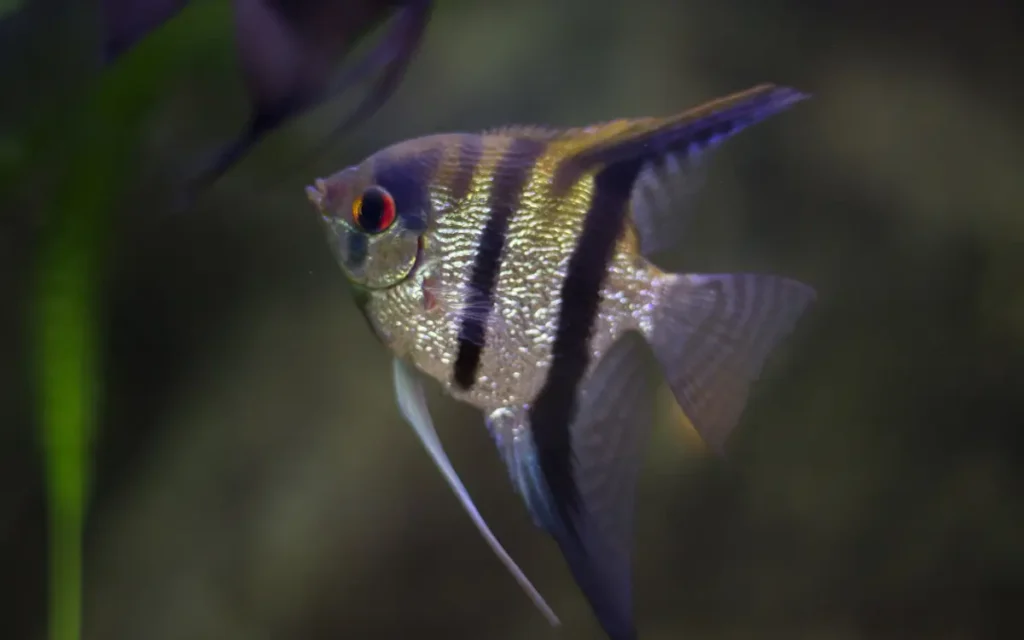
Yes, angelfish can live with other fish, but they need the right tank mates. They are not tiny peaceful community fish. Angelfish are cichlids, so they can become territorial, especially once they mature or start breeding.
The safest tank mates are fish that are calm, not too small, and not known for fin-nipping. Angelfish have long fins, so fish like Tiger Barbs and Serpae Tetras can become a problem. Small fish like Neon Tetras may also become food when the angelfish grows.
Tank size matters a lot. A 30-gallon tank can work for one angelfish or a pair, but a community setup is better in a 40 to 55-gallon tank or larger. More space gives each fish room to move and reduces chasing.
What Makes a Good Angelfish Tank Mate?
A good angelfish tank mate should be peaceful but not helpless. The fish should be large enough to avoid being eaten, calm enough to avoid fights, and comfortable in warm tropical water.
Angelfish usually stay in the middle of the tank. That means bottom-dwelling fish often work well because they do not compete for the same space. Corydoras, Bristlenose Plecos, and Kuhli Loaches are good examples.
Mid-level fish can also work, but they need to be the right type. Choose schooling fish with enough body size and speed. Rummy Nose Tetras, Black Skirt Tetras, Lemon Tetras, and Congo Tetras can work in the right tank size.
Avoid fish that are too tiny, too aggressive, too fast, or too nippy. Even if a fish looks peaceful at the store, it may not be safe with angelfish long term.
Simple Angelfish Community Tank Layout
Use this simple layout when planning an angelfish tank with other fish.
| Tank Area | Best Setup |
| Back of tank | Tall plants like Amazon Sword, Vallisneria, or Java Fern |
| Middle area | Open swimming space for angelfish and schooling fish |
| Bottom | Sand or smooth gravel for Corydoras and loaches |
| Sides | Driftwood, plants, and hiding spots |
| Surface | Gentle flow, not strong current |
A planted tank works better because plants and driftwood break the line of sight. This helps reduce chasing. If one fish is always staring at another fish across an empty tank, fights become more likely.
1. Corydoras Catfish (Corydoras spp.)
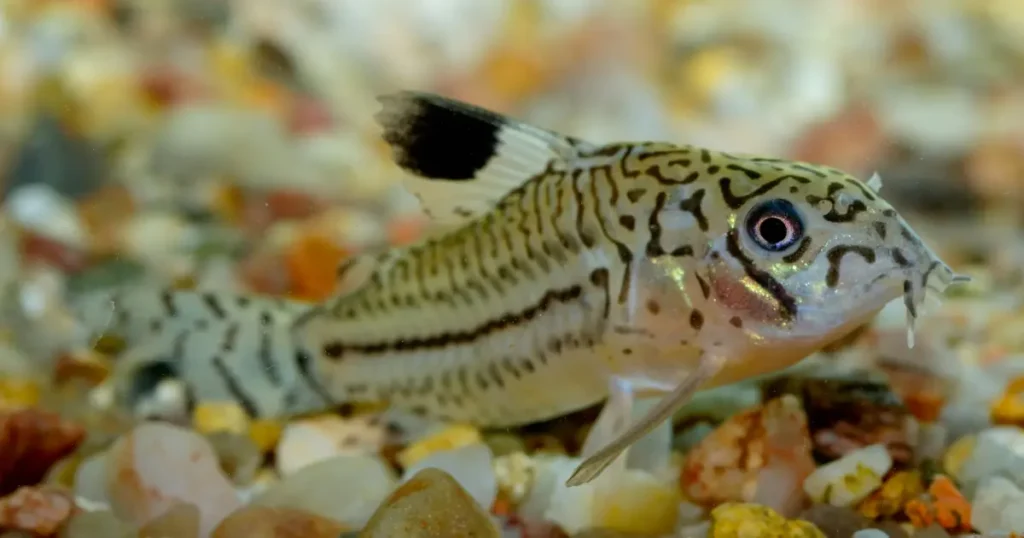
Corydoras catfish are one of the best tank mates for angelfish. They stay near the bottom, search for leftover food, and usually ignore other fish.
Keep Corydoras in a group of at least 5 or 6. A single Cory often becomes shy and stressed. Use soft sand or smooth gravel because rough substrate can damage their barbels.
They do best in clean water with peaceful fish. Do not expect them to “clean the tank” fully. They still need their own sinking food.
2. Bristlenose Pleco (Ancistrus spp.)
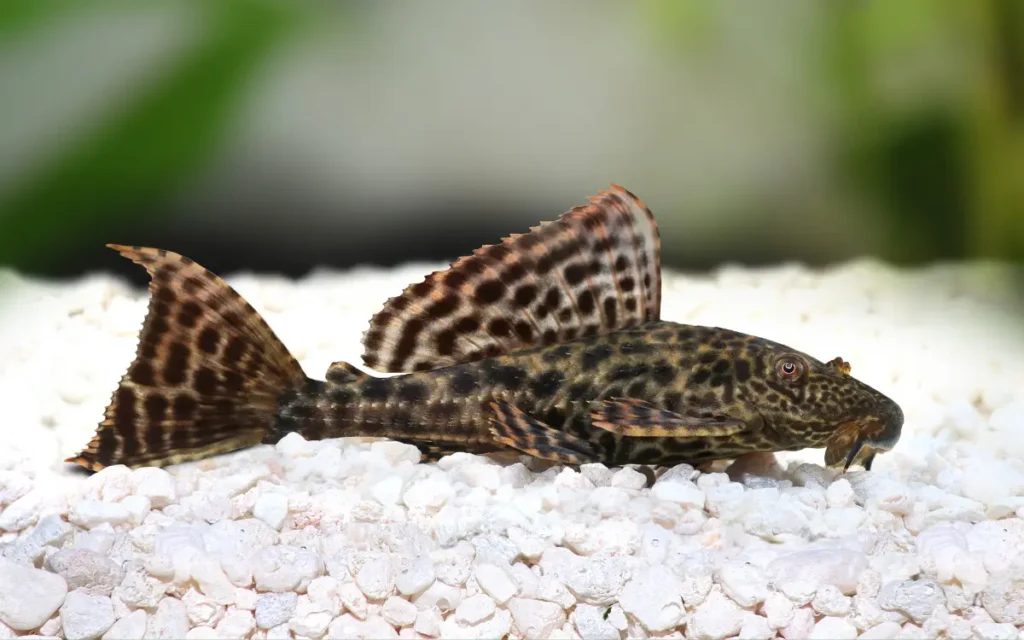
Bristlenose Plecos are peaceful algae eaters that can live well with angelfish. They usually stay on driftwood, glass, plants, and the bottom area.
They do not chase angelfish and are not fin-nippers. A single Bristlenose Pleco is enough for most community tanks.
Give them driftwood, algae wafers, and vegetables like zucchini or cucumber. They need more than just algae from the glass.
3. Mystery Snails (Pomacea bridgesii)
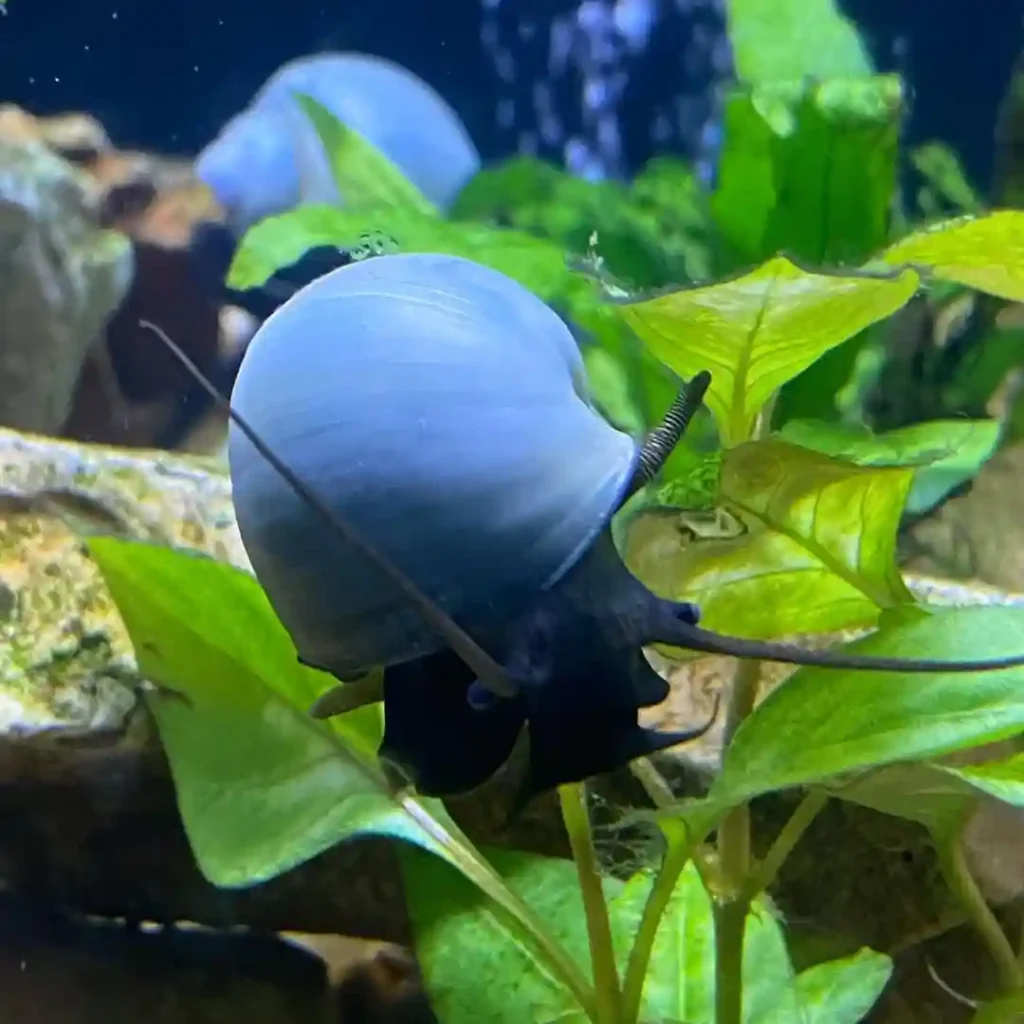
Mystery Snails are peaceful and safe with angelfish in most tanks. They eat leftover food and soft algae, and they do not bother fish.
They are also easy to watch, which makes them a nice addition for beginners. Keep the water stable and avoid aggressive fish that may nip their antennae.
Do not keep too many snails in a small tank. They still add waste, so the tank needs good filtration.
4. Kuhli Loaches (Pangio kuhlii)
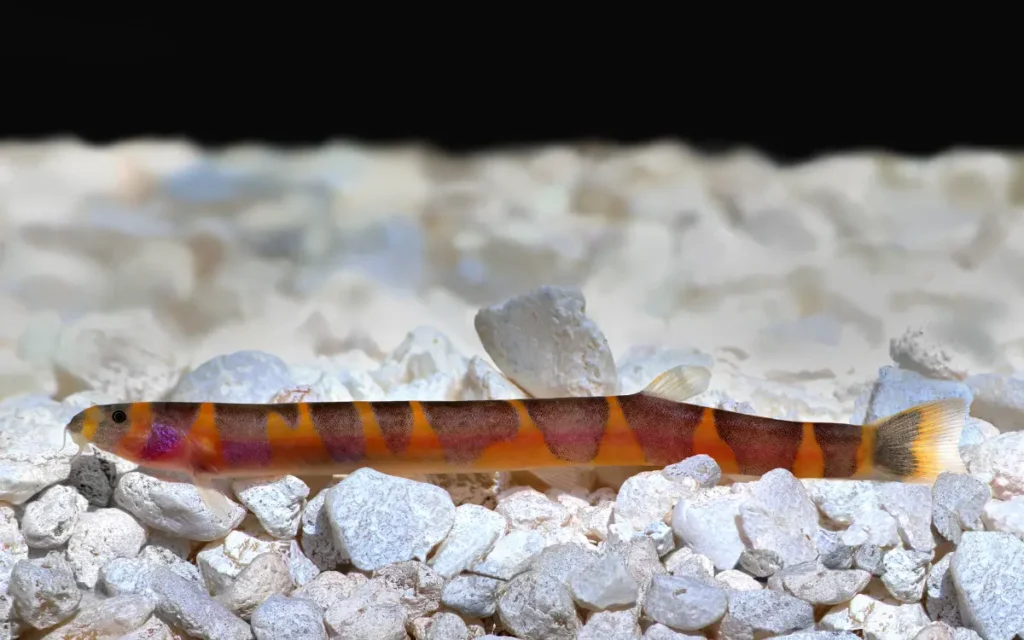
Kuhli Loaches are shy, peaceful bottom fish. They look like small eels and usually hide during the day.
They work well with angelfish because they stay near the bottom and avoid conflict. Keep them in groups because they feel safer with their own kind.
Give them caves, plants, and soft substrate. They may not be seen much at first, but they become more active when they feel safe.
5. Boesemani Rainbowfish (Melanotaenia boesemani)
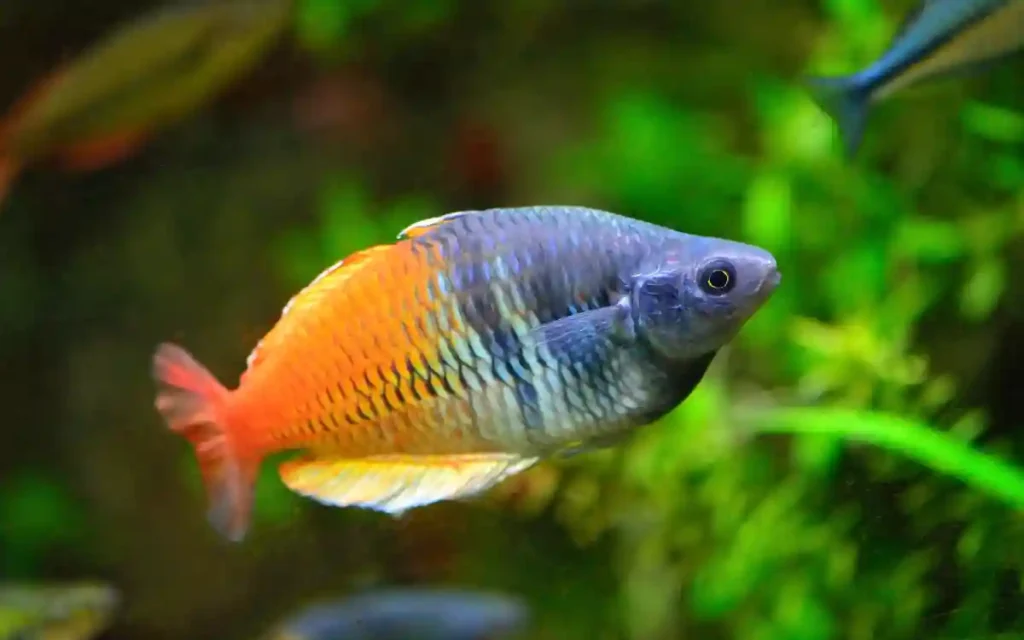
Boesemani Rainbowfish are active, colorful fish that can live with angelfish in larger aquariums. They are fast enough to avoid minor chasing and usually do not nip fins.
They need a group and plenty of swimming room. A 55-gallon tank or larger is best.
Because they are active, they may not be ideal for a very calm, slow-moving tank. In the right setup, they can work well.
6. Swordtails (Xiphophorus helleri)
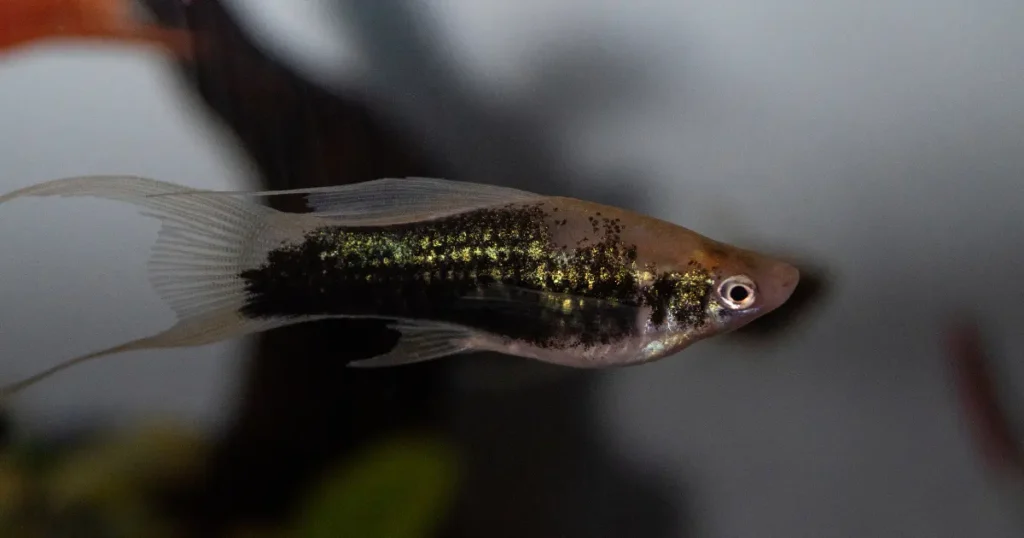
Swordtails can live with angelfish when they are similar in size. They are active livebearers that usually swim in the upper and middle parts of the tank.
Avoid tiny juveniles because angelfish may eat them. Adult swordtails are safer.
Keep more females than males if you keep a group. Too many males can chase females and create stress in the tank.
7. Mollies (Poecilia sphenops)
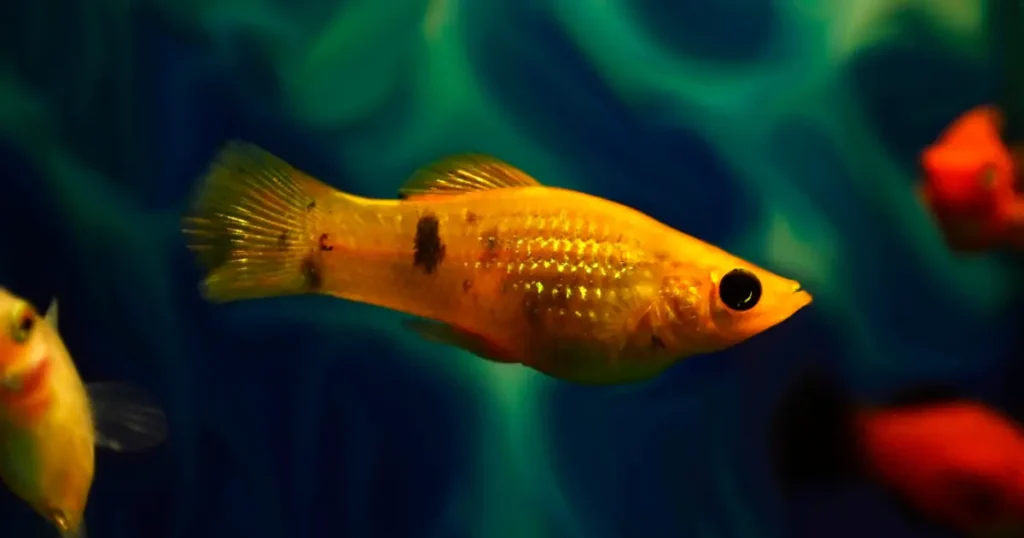
Mollies can work with angelfish in some setups, but water needs should be watched. Mollies often like slightly harder water, while angelfish are often kept in softer water.
Captive-bred fish can adapt, but the tank should be stable. Adult mollies are usually large enough to avoid being eaten.
Choose calm mollies and avoid overcrowding. They produce more waste than many small tetras.
8. Roseline Sharks (Sahyadria denisonii)

Roseline Sharks are peaceful, fast, and beautiful, but they need a large tank. They do best in groups and should not be kept in small aquariums.
A 55-gallon tank is the bare starting point, but bigger is better. They need open swimming space and clean water.
They are not beginner fish for small tanks, but they can work in a large angelfish community setup.
9. Rummy Nose Tetras (Hemigrammus bleheri)
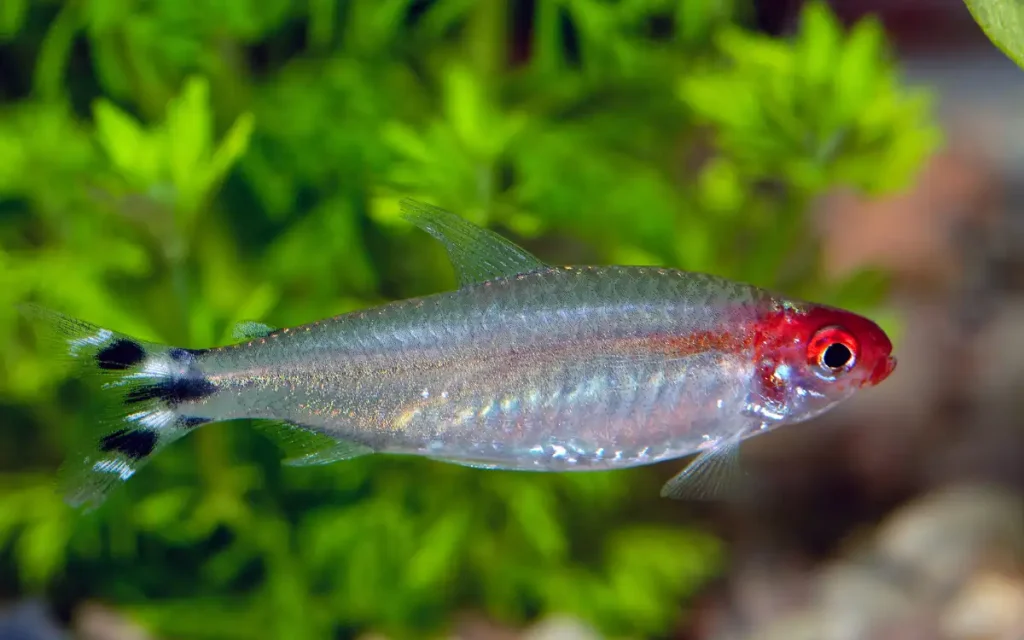
Rummy Nose Tetras are one of the better schooling fish for angelfish tanks. They are fast, peaceful, and usually stay together in a tight group.
Their red noses can fade when water quality drops, so they are also a useful sign of stress. Keep them in a school of at least 6, but 10 or more is better.
A 40-gallon or larger planted tank is best. Avoid keeping them with large adult angelfish in very small groups.
10. Black Skirt Tetras (Gymnocorymbus ternetzi)
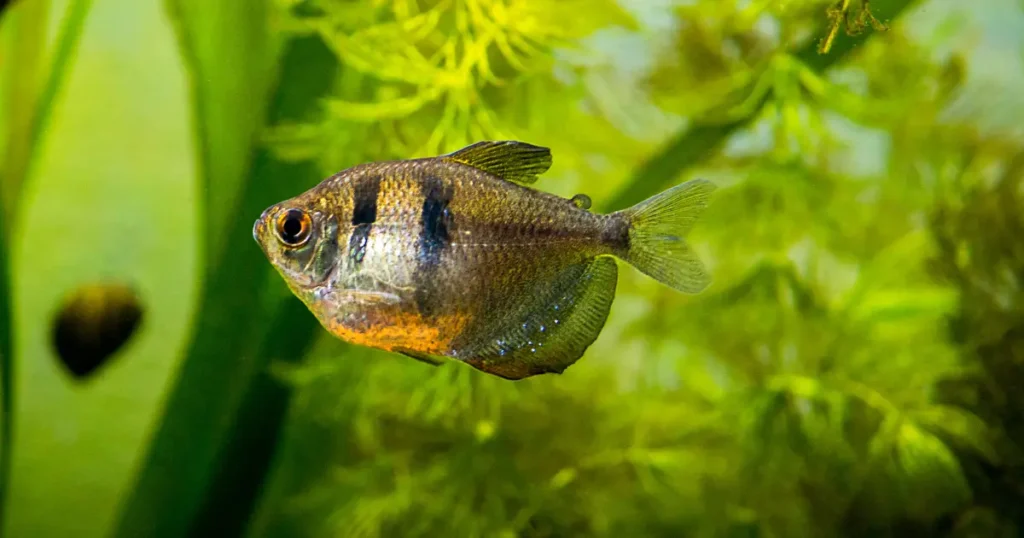
Black Skirt Tetras can work with angelfish, but only when kept correctly. They should be kept in a larger group so they focus on each other instead of the angelfish’s fins.
A group of 6 is the minimum, but 8 to 10 is safer. In small groups, they may become nippy.
They are thicker-bodied than Neon Tetras, so adult angelfish are less likely to see them as food.
11. Bleeding Heart Tetras (Hyphessobrycon erythrostigma)
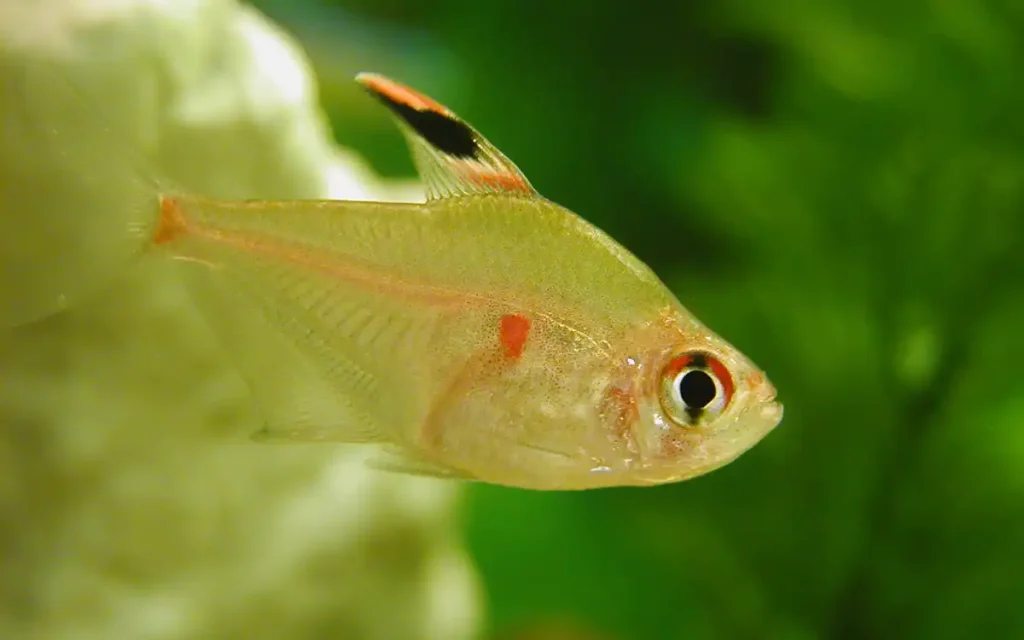
Bleeding Heart Tetras can work well with angelfish because they are peaceful, slightly larger than many small tetras, and usually too big to be seen as food.
Keep them in a group of at least 6, but 8 to 10 is better for a calmer school. In small groups, they may become shy or stressed.
They do best in planted tanks with open swimming space. Their warm-water needs match angelfish, making them a safer choice than tiny tetras like Neon Tetras.
12. Congo Tetras (Phenacogrammus interruptus)
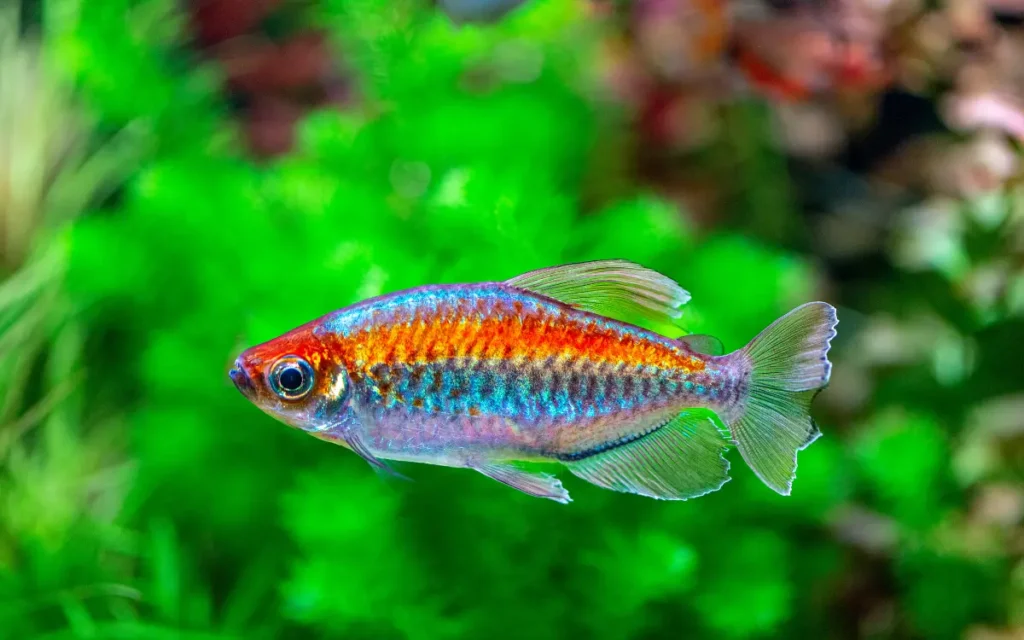
Congo Tetras are beautiful, peaceful, and large enough to live with angelfish. They need more space than smaller tetras, so they are best for 55-gallon tanks or larger.
They should be kept in groups of at least 6. In a planted tank, they add movement and color without usually bothering angelfish.
Make sure the tank is not overcrowded. Congo Tetras are active swimmers and need open space.
13. Lemon Tetras (Hyphessobrycon pulchripinnis)
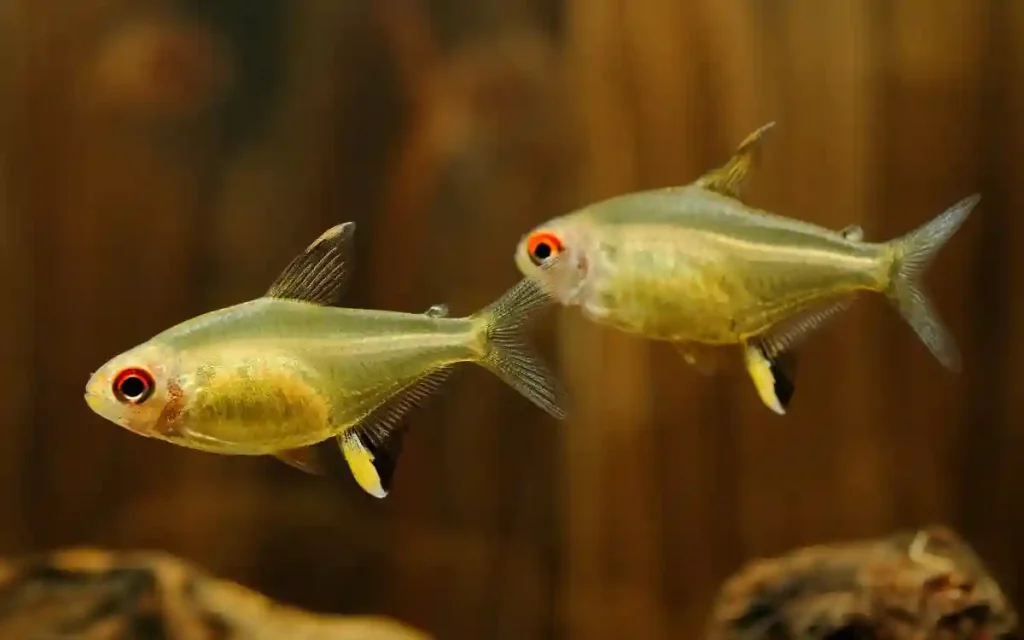
Lemon Tetras are peaceful schooling fish that can work in angelfish tanks. They are small but not as risky as very tiny nano fish when kept in a proper group.
They look best in planted tanks with darker backgrounds and calm tank mates. Keep them in groups of 6 or more.
They are better for angelfish that are already well-fed and not overly aggressive.
Cichlids That Can Live With Angelfish
Not all cichlids are too aggressive for angelfish. Some smaller, calmer cichlids can work if the tank is large enough and has hiding spots.
14. German Blue Rams (Mikrogeophagus ramirezi)
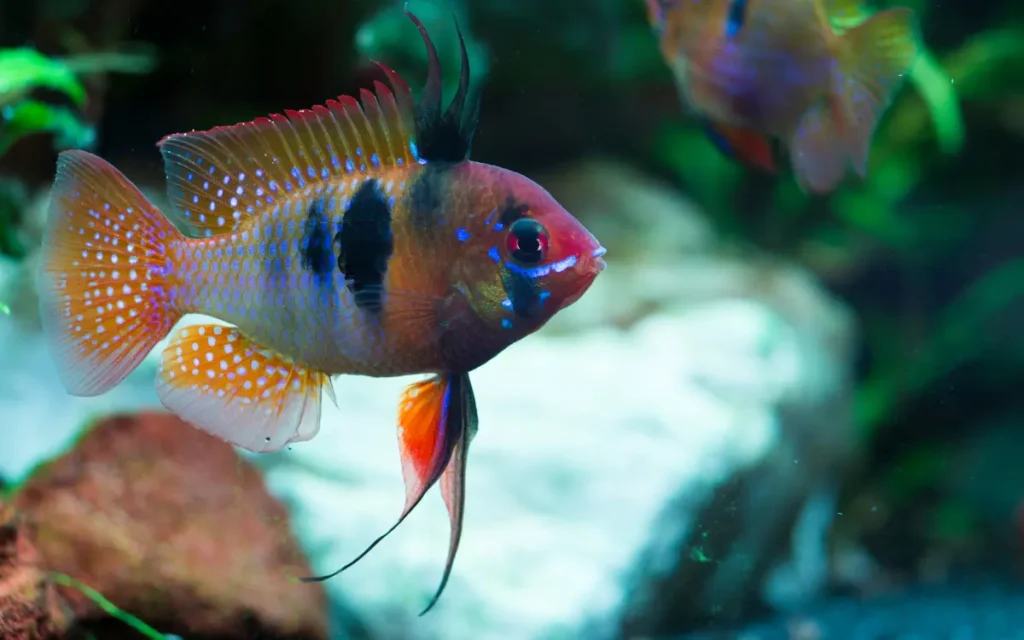
German Blue Rams can live with angelfish in warm, clean water. They are colorful, peaceful, and usually stay near the bottom or lower middle part of the tank.
They are sensitive to poor water, so they are better for stable, mature tanks. Do not add them to a new tank.
They like planted aquariums with hiding spots and gentle tank mates.
15. Bolivian Rams (Mikrogeophagus altispinosus)
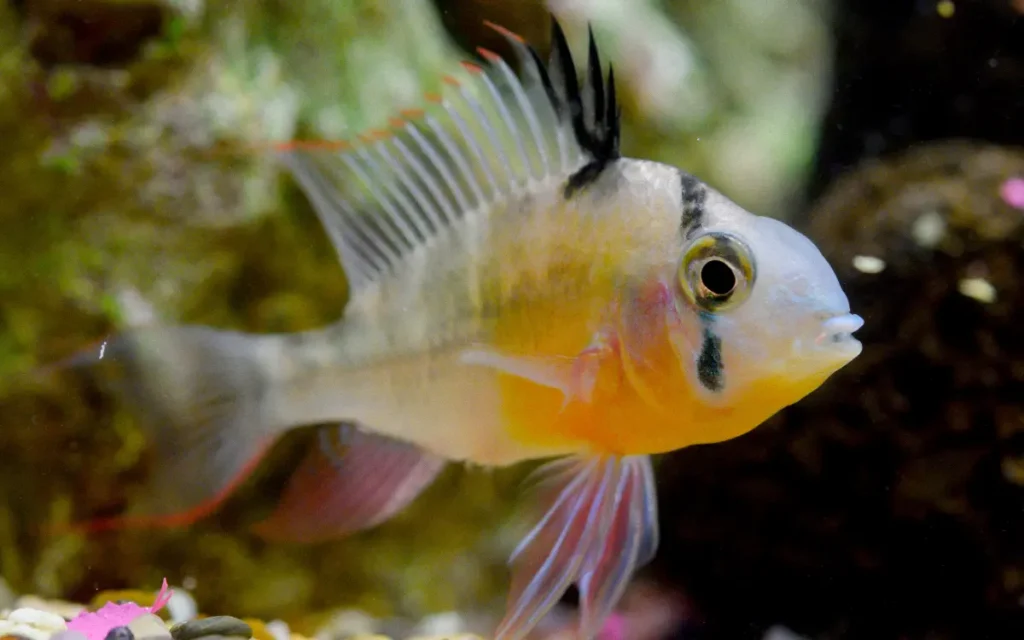
Bolivian Rams are a better choice for many beginners because they are hardier than German Blue Rams. They are peaceful, calm, and usually stay lower in the tank.
They can live well with angelfish when there is enough space. A planted 40-gallon tank or larger is a good target.
They may defend a small area during breeding, but they are usually not extreme.
16. Keyhole Cichlids (Cleithracara maronii)
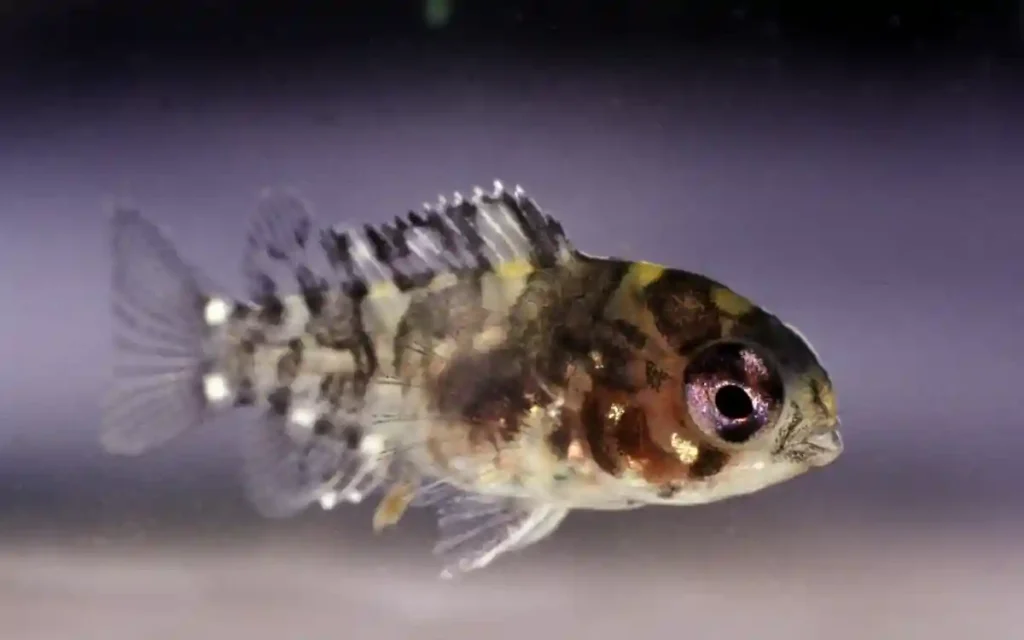
Keyhole Cichlids are shy and peaceful compared with many other cichlids. They are a good choice for calm community tanks.
They do not usually challenge angelfish and prefer planted tanks with cover. Their gentle nature makes them a safer cichlid option.
Because they are shy, do not keep them with rough or overly active fish.
17. Kribensis Cichlids (Pelvicachromis pulcher)
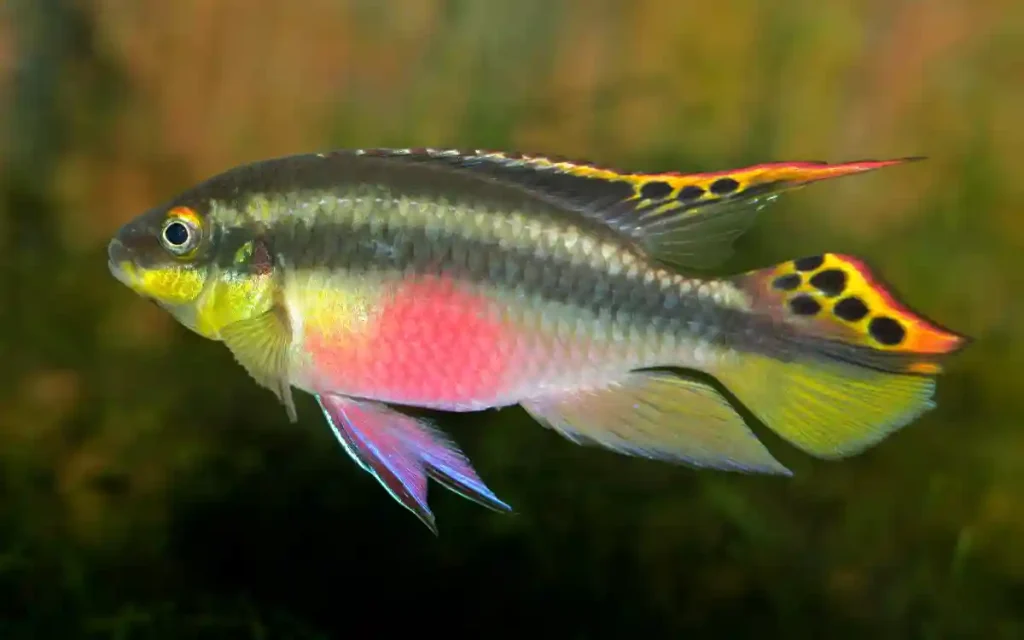
Kribensis can live with angelfish, but breeding behavior can be a problem. A pair may become territorial when guarding fry.
They are best in larger tanks with caves and broken sight lines. If the tank is too small, they may chase bottom fish and stress other tank mates.
If you choose Kribensis, watch their behavior closely during breeding.
18. Pearl Gourami (Trichopodus leerii)
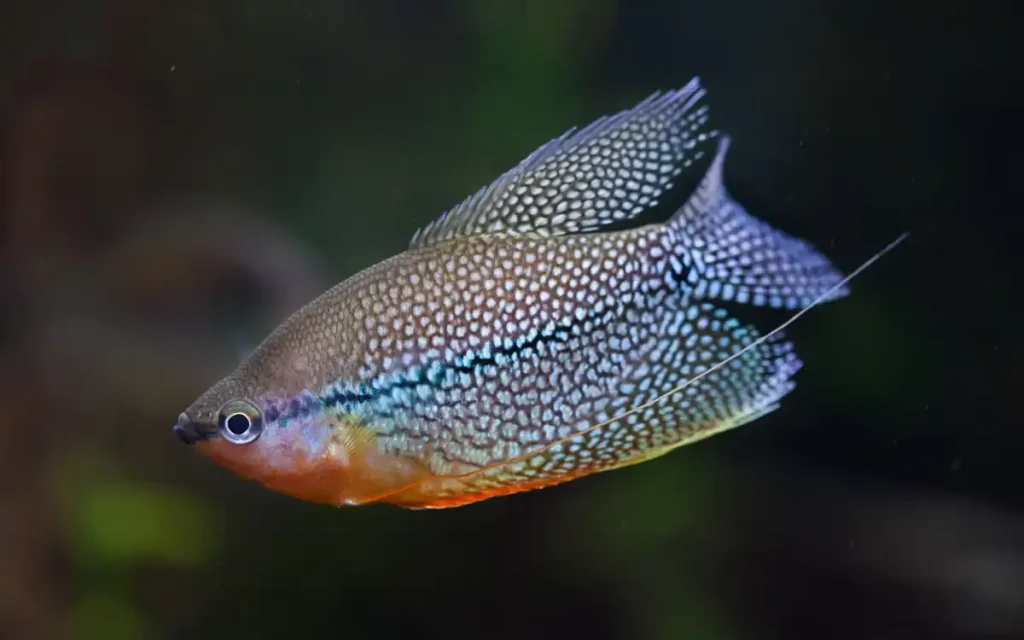
Pearl Gouramis are calm and elegant fish that can live with angelfish in larger planted tanks. They like warm water and gentle flow.
They are peaceful, but both gouramis and angelfish use similar swimming areas. That means space matters.
A 55-gallon tank with plants is better than a small open tank.
19. Blue Acara (Andinoacara pulcher)
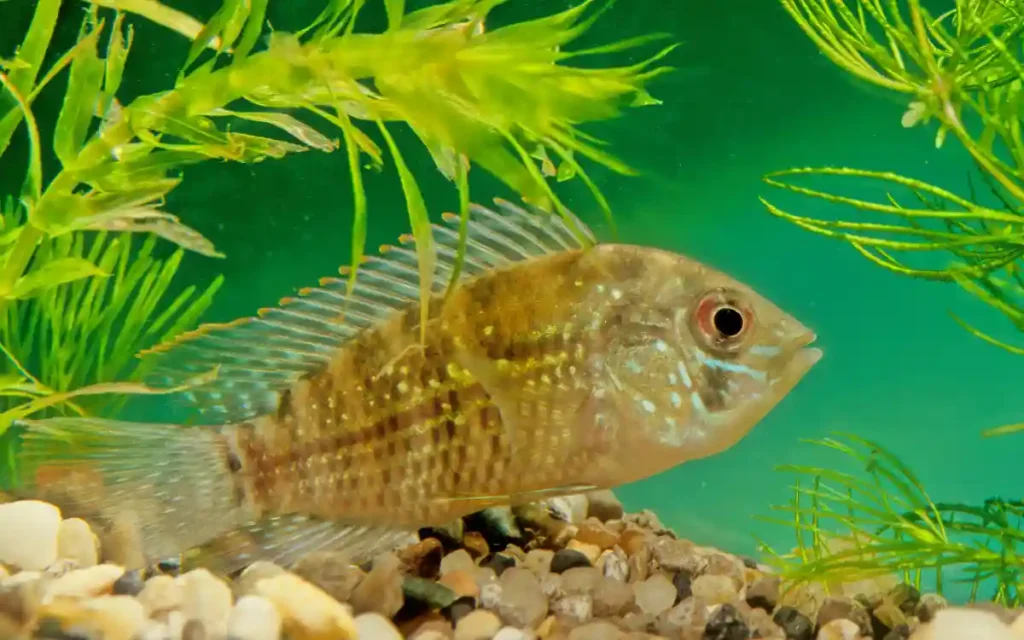
Blue Acaras can work with angelfish in larger tanks, but this is not the safest beginner pairing. Blue Acaras are mild for cichlids, but they still get larger and need territory.
Use a 55-gallon tank or larger with driftwood, plants, and hiding spots. Avoid keeping them in cramped tanks with breeding angelfish.
This pairing works better for fishkeepers who already understand cichlid behavior.
20. Silver Dollar Fish (Metynnis argenteus)
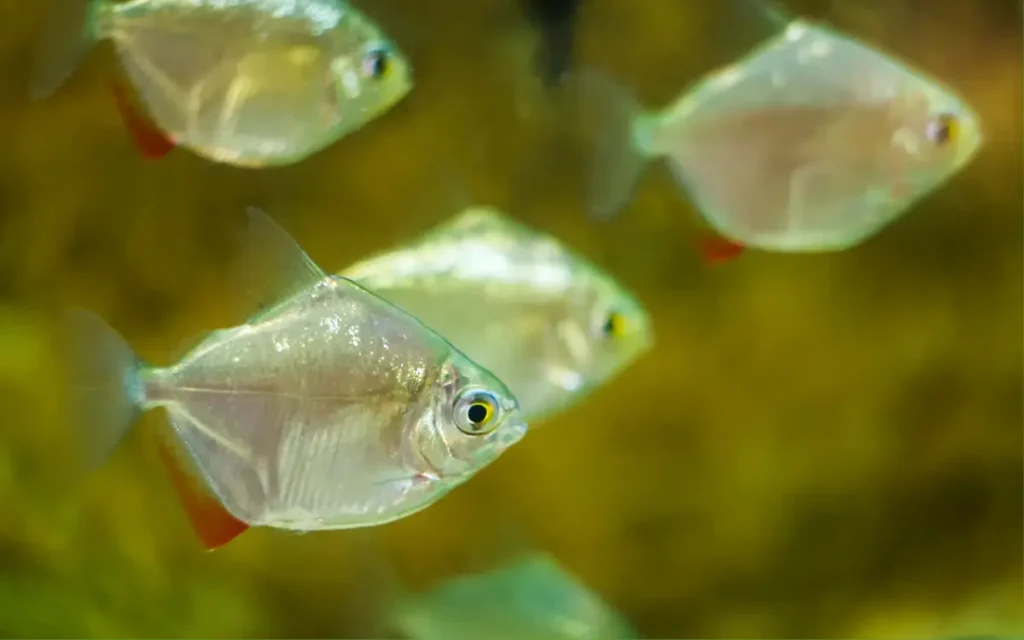
Silver Dollar Fish are peaceful and too large to be eaten by angelfish. They are schooling fish, so they need to be kept in groups.
The main issue is tank size. Silver Dollars need a large aquarium, usually 75 gallons or more.
They may also eat soft aquarium plants, so choose hardy plants or use artificial cover if needed.
Fish to Avoid With Angelfish
Some fish should not be kept with angelfish because they create stress, damage fins, or become food.
| Avoid These Fish | Why They Are Risky |
| Tiger Barbs | Nip long angelfish fins |
| Serpae Tetras | Can chase and nip fins |
| Neon Tetras | May be eaten by adult angelfish |
| Ember Tetras | Too small |
| Guppy Fry | Easy prey |
| Fancy Guppies | Long fins may attract aggression |
| Male Bettas | Long fins and territory issues |
| Goldfish | Need cooler water and produce heavy waste |
| Oscars | Too large and aggressive |
| Jack Dempsey | Too aggressive |
| Convict Cichlids | Territorial and rough |
| Skunk Loaches | Can be aggressive and nippy |
Beginner Mistakes When Choosing Angelfish Tank Mates
One common mistake is choosing fish only by looks. A bright or pretty fish is not always a safe tank mate. Tiger Barbs, for example, look active and fun, but they can damage angelfish fins.
Another mistake is adding very small fish. Baby angelfish may ignore Neon Tetras at first, but adult angelfish can see small tetras as food.
Overcrowding is also a major problem. A tank may look fine for the first few weeks, then aggression starts as the angelfish grows. Always plan for adult size, not store size.
Some beginners also mix fish with different water needs. Goldfish and angelfish are a poor match because goldfish prefer cooler water and create a lot of waste.
The last big mistake is adding all fish at once. Add tank mates slowly, watch behavior, and test the water often.
Safety and Warning Section
Do not add fin-nipping fish to an angelfish tank. Torn fins can lead to stress and infection.
Do not keep angelfish with fish small enough to fit in their mouth. Even a peaceful angelfish may eat tiny fish.
Do not keep angelfish with aggressive cichlids like Oscars, Jack Dempsey, Convicts, or Green Terrors.
Do not keep angelfish with goldfish. Their temperature needs are different, and goldfish produce too much waste for many tropical community setups.
Do not ignore chasing. Short chasing can happen, but constant chasing, hiding, torn fins, or missed meals means the tank setup is not working.
Simple Tank Mate Choosing Diagram
Use this simple check before buying any tank mate:
| Question | If Yes | If No |
| Is the fish peaceful? | Keep checking | Avoid |
| Is it too big to be eaten? | Keep checking | Avoid |
| Does it avoid fin-nipping? | Keep checking | Avoid |
| Does it like warm tropical water? | Keep checking | Avoid |
| Is your tank large enough? | Safer choice | Upgrade tank first |
FAQ
Can angelfish live with shrimp?
Usually, angelfish are not the best choice for shrimp tanks. Small shrimp like Cherry Shrimp and Ghost Shrimp may be eaten, especially by adult angelfish. Larger shrimp like Amano Shrimp or Bamboo Shrimp may survive in a heavily planted tank, but there is still some risk.
Will angelfish eat smaller tetras?
Yes, angelfish may eat smaller tetras if the tetras are small enough to fit in their mouth. Neon Tetras, Ember Tetras, and very small rasboras are risky with adult angelfish. Larger or thicker-bodied tetras like Rummy Nose Tetras, Black Skirt Tetras, Lemon Tetras, and Congo Tetras are safer choices.
How many angelfish should be kept together in a community tank?
For most beginners, one angelfish or one bonded pair is the safest choice. Groups can work in larger tanks, but angelfish may form pairs and bully weaker fish. If you want a group, use a large aquarium with plants, driftwood, and plenty of open swimming space.
Can I keep angelfish in a planted tank with tank mates?
Yes, a planted tank is one of the best setups for angelfish with tank mates. Plants give cover, reduce stress, and help break up territory. Tall plants like Amazon Sword, Java Fern, Anubias, and Vallisneria work well.
What bottom feeders go well with angelfish?
Good bottom feeders for angelfish include Corydoras catfish, Bristlenose Plecos, Kuhli Loaches, and some peaceful snails. These tank mates stay near the bottom and usually do not compete with angelfish for space.
Can angelfish live with guppies?
Angelfish and guppies are not the best match. Adult angelfish may eat guppy fry, and fancy guppies with long fins may attract chasing or nipping. If you want livebearers, adult swordtails or mollies are usually safer than fancy guppies.
Can angelfish live with bettas?
Angelfish and bettas are risky together. Both can be territorial, and both have noticeable fins. In some large planted tanks it may work for a while, but it is not a safe beginner pairing.
Can angelfish live with goldfish?
No, angelfish and goldfish should not be kept together. Angelfish need warmer tropical water, while goldfish prefer cooler water. Goldfish also produce a lot of waste, which can make water quality harder to control.
