
Aquarium Checklist: Everything You Need

Setting up an aquarium feels exciting, but it is also where many beginners make mistakes. The biggest problem is not usually the fish. It is missing basic equipment, skipping water testing, choosing the wrong tank size, or adding fish before the tank is ready.
This aquarium checklist will help you prepare your tank step by step before buying fish. You do not need every fancy aquarium product on the market, but you do need the right basics: a proper tank, filter, heater if needed, dechlorinator, test kit, substrate, and a plan for cycling.
My honest advice is simple: buy the setup first, then buy the fish later. A little patience in the beginning saves fish, money, and stress.Internal link idea: Link to your article on fish tank cycling guide for beginners when you mention cycling.
Aquarium Checklist at a Glance
Before you add fish, your aquarium should have all the main equipment ready and running. Here is a simple beginner checklist.
| Aquarium Item | Needed? | Why You Need It |
| Fish tank | Yes | Gives fish enough swimming space |
| Aquarium stand | Yes for larger tanks | Supports the tank safely |
| Filter | Yes | Holds beneficial bacteria and removes waste |
| Heater | Yes for tropical fish | Keeps water temperature stable |
| Thermometer | Yes | Helps you check water temperature |
| Dechlorinator | Yes | Makes tap water safe |
| Water test kit | Yes | Checks ammonia, nitrite, nitrate, and pH |
| Substrate | Optional but common | Helps with plants and natural look |
| Light | Usually yes | Helps viewing and plant growth |
| Fish net | Yes | Helps move fish safely when needed |
| Gravel vacuum | Yes | Cleans waste during water changes |
| Bucket | Yes | Used only for aquarium water changes |
| Fish food | Yes | Choose based on fish type |
| Beneficial bacteria | Optional | Can help support cycling |
| Live plants | Optional | Help with water quality and natural cover |
| Decorations/hiding spots | Yes | Makes fish feel safer |
Choose the Right Fish Tank Size
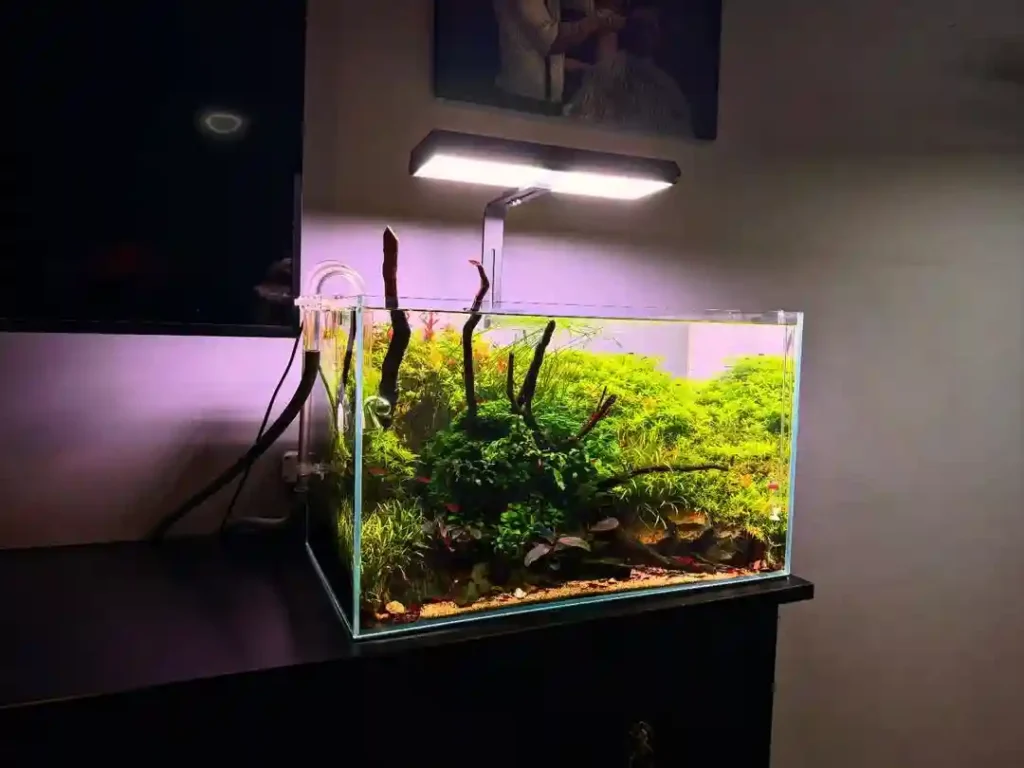
Choose the Right Fish Tank Size
Your tank size matters more than beginners think. A tiny tank may look easy, but small tanks are less forgiving. Water quality can change fast, ammonia can build up quickly, and temperature can swing more easily.
For most beginners, I prefer starting with at least a 10-gallon tank. A 20-gallon tank is even better if you have space. It gives you more stocking options and is easier to keep stable.
A bowl or very small tank is not a good choice for most fish. Even hardy fish need clean, heated, filtered water depending on the species.
Good beginner sizes:
| Tank Size | Best For |
| 5 gallons | Shrimp, snails, or one betta with care |
| 10 gallons | Small beginner fish or betta setup |
| 20 gallons | Better beginner community tank |
| 29 gallons+ | More stable and better for mixed fish |
Pick a Strong Aquarium Filter
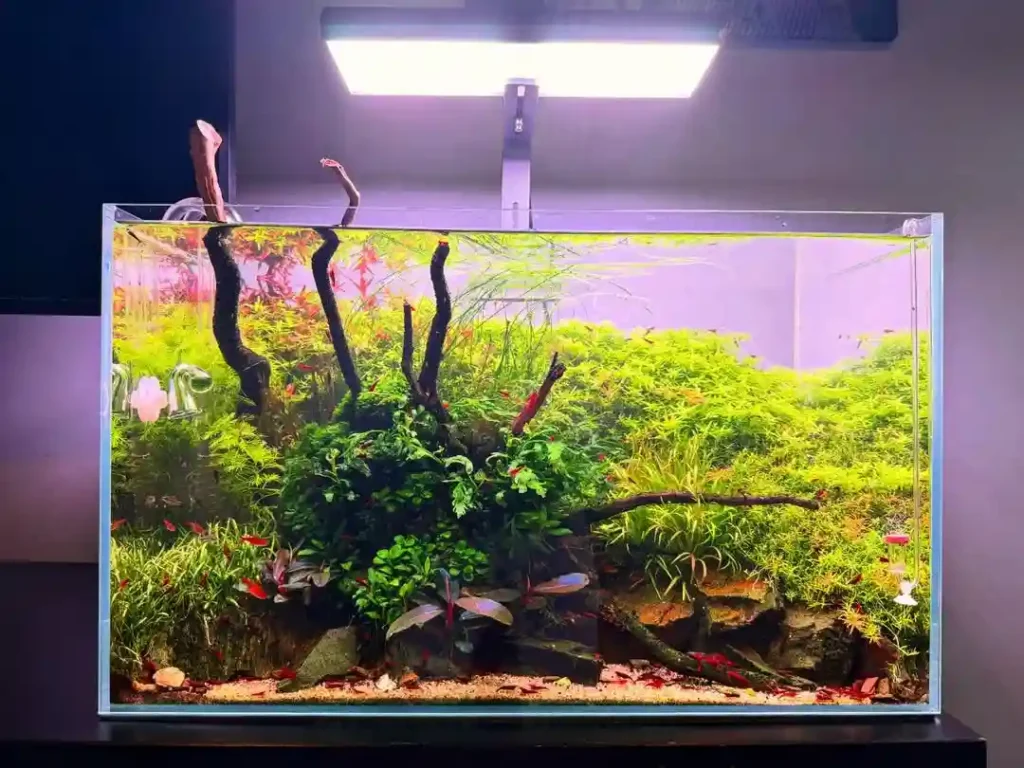
A filter is one of the most important items in any aquarium checklist. It does more than remove visible dirt. Your filter also holds beneficial bacteria that break down fish waste.
For beginners, a hang-on-back filter or sponge filter is usually easy to use. Sponge filters are gentle and great for shrimp, fry, bettas, and smaller fish. Hang-on-back filters are simple for community tanks and offer good water movement.
The key is not just buying a filter. You also need to protect the filter media. Do not replace all filter media every few weeks, even if the product packaging says so. That media holds your good bacteria.
Rinse filter sponge or media gently in old tank water during a water change, not under untreated tap water.
Add a Heater for Tropical Fish
Not every aquarium needs a heater, but most tropical fish do. Guppies, tetras, mollies, platies, bettas, corydoras, rasboras, and many common beginner fish prefer stable warm water.
A heater keeps the temperature from dropping too low, especially at night or during seasonal changes.
Do not guess the temperature by touching the glass. Use a thermometer. A tank can feel normal from the outside while the water is too cold or too warm for your fish.
For most tropical freshwater tanks, a common range is around 75°F to 80°F, but always check the needs of your specific fish.
Use a Thermometer
A thermometer is cheap, but it can save your fish. Beginners often focus on filters and food but forget temperature. Sudden temperature changes can stress fish and make them more likely to get sick.
You can use a digital thermometer or a simple glass thermometer. I prefer something easy to read at a glance.
Place it where you can check it daily without disturbing the tank.
Buy a Good Water Conditioner
Tap water usually contains chlorine or chloramine, which can harm fish and beneficial bacteria. That is why dechlorinator, also called water conditioner, is a must-have item.
Use it whenever you add tap water to the aquarium, including during water changes.
This is one product I would never skip. Even if your tank looks clean and your filter is strong, untreated tap water can cause problems.
Get a Water Test Kit
A water test kit is one of the most useful tools for beginners. Clear water does not always mean safe water. Ammonia and nitrite are invisible, but they can hurt fish quickly.
At minimum, you should be able to test:
| Test | Why It Matters |
| Ammonia | Toxic waste from fish and food |
| Nitrite | Dangerous during cycling |
| Nitrate | Shows waste buildup after cycling |
| pH | Helps check water stability |
Test strips are easy, but liquid test kits are usually better for cycling because they give clearer readings for ammonia and nitrite.
If I had to choose between buying an extra decoration or a test kit, I would choose the test kit every time.
Choose the Right Substrate
Substrate is the sand, gravel, or aquarium soil at the bottom of the tank. It affects the look of your aquarium, but it can also affect plants, cleaning, and fish behavior.
Gravel is easy for beginners and works well in many tanks. Sand looks natural and is good for fish that like to sift or rest on the bottom, such as corydoras. Aquarium soil is best for planted tanks, but it may release nutrients and needs more planning.
If you want a simple beginner setup, choose smooth gravel or aquarium sand. Avoid sharp gravel, especially if you plan to keep bottom-dwelling fish.
Add Aquarium Light
A light helps you see your fish and supports live plants if you have them. But beginners often leave lights on too long, which can lead to algae.
For most beginner tanks, 6 to 8 hours of light per day is enough. If you do not have live plants, you do not need an expensive plant light.
A timer can help keep the lighting schedule steady.
Use Decorations and Hiding Spots
Fish need more than open water. Many species feel safer when they have plants, caves, driftwood, rocks, or shaded areas.
A bare tank can make fish feel exposed. When fish feel unsafe, they may hide constantly, chase each other, or show dull colors.
Choose aquarium-safe decorations only. Avoid painted items, sharp plastic edges, or anything that may affect water quality.
Good beginner options include smooth rocks, ceramic caves, driftwood, live plants, and soft silk plants.
Consider Live Plants
Live plants are not required, but they can make a beginner tank healthier and more natural. Plants can use some nitrate, provide hiding spots, and make fish feel more secure.
Start with easy plants that do not need high light or CO2.
Good beginner aquarium plants include:
| Plant | Why It Is Beginner Friendly |
| Anubias | Hardy and slow-growing |
| Java fern | Does not need substrate planting |
| Hornwort | Fast-growing and useful for cover |
| Amazon sword | Good background plant |
| Water sprite | Grows well in many tanks |
| Floating plants | Help shade the tank and use nutrients |
Do not bury Anubias or Java fern rhizomes in the substrate. Tie or glue them to wood or rocks instead.
Buy a Gravel Vacuum
A gravel vacuum helps remove fish waste, leftover food, and debris from the substrate during water changes. It is one of those tools beginners do not think about until the tank starts looking messy.
You do not need to deep clean the whole tank every time. In fact, overcleaning can disturb beneficial bacteria. Just clean sections gently during regular water changes.
A gravel vacuum also makes water changes much easier.
Keep a Separate Aquarium Bucket
Use a bucket only for aquarium water changes. Do not use a bucket that has held soap, floor cleaner, detergent, or chemicals.
This sounds basic, but it matters. Chemical residue can harm fish.
Mark the bucket as “aquarium only” and keep it with your fishkeeping supplies.
Choose the Right Fish Food
Fish food should match the fish you keep. Not all fish eat the same way. Some feed at the surface, some in the middle, and some at the bottom.
For community tanks, you may need flakes or micro pellets for surface and mid-water fish, plus sinking wafers for bottom feeders.
The biggest feeding mistake is overfeeding. Fish usually need less food than beginners think. Feed small amounts they can finish quickly.
Prepare for Aquarium Cycling
Before adding fish, your tank needs to cycle. This is the process where beneficial bacteria grow and prepare the aquarium to handle fish waste.
A cycled tank can turn ammonia into nitrite, then nitrite into nitrate. Ammonia and nitrite should stay at 0 ppm in a safe aquarium.
Cycling usually takes several weeks in a new tank. You can do fishless cycling before buying fish, which is the safest option.
Do not add fish just because the water looks clear. Test the water first.
Do Not Forget a Fish Net
A fish net is useful for moving fish when needed, removing dead leaves, or catching floating debris. Choose a soft net that fits your tank size.
Avoid chasing fish around the tank unless necessary. It can stress them. Move slowly and calmly.
Optional But Helpful Aquarium Supplies
Once you have the basics, a few extra items can make aquarium care easier.
| Optional Item | Why It Helps |
| Aquarium timer | Keeps light schedule steady |
| Algae scraper | Cleans glass |
| Plant tweezers | Helps place plants |
| Feeding ring | Keeps floating food in one area |
| Air pump | Adds oxygen and runs sponge filters |
| Backup filter sponge | Useful for extra bacteria |
| Water change hose | Helps with larger tanks |
You do not need all of these on day one, but they can help as your tank grows.
Beginner Aquarium Shopping Checklist
Here is a simple shopping list you can use before setting up your tank.
| Product Type | Buy Before Fish? |
| Tank | Yes |
| Stand | Yes, if needed |
| Filter | Yes |
| Heater | Yes for tropical fish |
| Thermometer | Yes |
| Dechlorinator | Yes |
| Test kit | Yes |
| Substrate | Yes, if using |
| Light | Yes |
| Decorations/plants | Yes |
| Gravel vacuum | Yes |
| Aquarium bucket | Yes |
| Fish food | Before fish |
| Fish net | Before fish |
| Beneficial bacteria | Optional |
| Algae scraper | Optional |
My Honest Beginner Setup Recommendation
If someone asked me what to buy for a simple first aquarium, I would not tell them to buy the smallest tank possible. I would suggest a 20-gallon freshwater tank if they have space.
It gives more room for fish, better water stability, and more aquascaping options. Pair it with a reliable filter, heater, thermometer, water conditioner, liquid test kit, smooth substrate, easy plants, and a gravel vacuum.
That setup is not the cheapest, but it is much easier to manage than a tiny bowl or overcrowded small tank.
Common Aquarium Checklist Mistakes
The first mistake is buying fish and equipment on the same day. This usually leads to an uncycled tank.
The second mistake is skipping the test kit. Without testing, you are guessing.
The third mistake is choosing fish before checking tank size and compatibility. Some fish sold as “small” grow larger than beginners expect.
Another mistake is buying decorations with sharp edges. Fish with long fins, like bettas or fancy guppies, can tear fins on rough decor.
And finally, many beginners buy too many fish too quickly. Start slow. A clean-looking tank can still become unstable if the bio-load jumps overnight.
Final Aquarium Checklist Before Adding Fish
Before you bring fish home, make sure you can answer yes to these:
| Question | Yes or No |
| Is the tank fully set up? | |
| Is the filter running 24/7? | |
| Is the water dechlorinated? | |
| Is the heater set correctly if needed? | |
| Is the tank cycled? | |
| Are ammonia and nitrite at 0 ppm? | |
| Is nitrate under control? | |
| Do you know the adult size of your fish? | |
| Are the fish compatible? | |
| Do you have food, net, and water change tools? |
If you cannot answer yes to the cycling and water testing questions, wait before adding fish.
FAQs
What do I need for a beginner aquarium?
You need a tank, filter, heater for tropical fish, thermometer, dechlorinator, water test kit, substrate, light, fish food, net, gravel vacuum, and an aquarium-only bucket.
Can I set up a fish tank and add fish the same day?
I do not recommend it for beginners. A new tank needs time to cycle so beneficial bacteria can grow and process fish waste safely.
Do I need a heater for a freshwater aquarium?
You need a heater if you keep tropical fish. Some coldwater species do not need one, but many popular beginner fish prefer stable warm water.
Is a filter necessary for a fish tank?
Yes, in almost all beginner aquariums. A filter helps with water movement, waste control, and beneficial bacteria growth.
What is the most important aquarium product?
A good filter, dechlorinator, and water test kit are some of the most important items. Decorations are nice, but water safety comes first.
Do live plants replace a filter?
No. Live plants help with water quality, but they do not replace a proper filter in a beginner aquarium.
What should I buy first for an aquarium?
Buy the tank, filter, heater, thermometer, dechlorinator, and test kit first. Then set up and cycle the tank before buying fish.
