
25 Small Aquarium Fish for Freshwater Tanks

The best small aquarium fish include Bettas, Chili Rasboras, Ember Tetras, Pygmy Corydoras, Endler’s Livebearers and Celestial Pearl Danios. But don’t choose a fish only because it looks tiny at the store.
A one-inch Pea Puffer may attack its tank mates. A two-inch Zebra Danio needs a long aquarium and a group of at least eight. Otocinclus stay small but can starve in a new tank without enough algae and biofilm. Small body, very different needs.
This guide compares 25 small freshwater fish by adult size, minimum permanent tank, temperature, group size, diet and care level. You’ll also see which species suit beginners, which need mature aquariums and which are better kept alone.
Use the profiles to choose fish that fit your actual tank rather than trying to make an unsuitable species fit the space you have.
1. Betta Fish
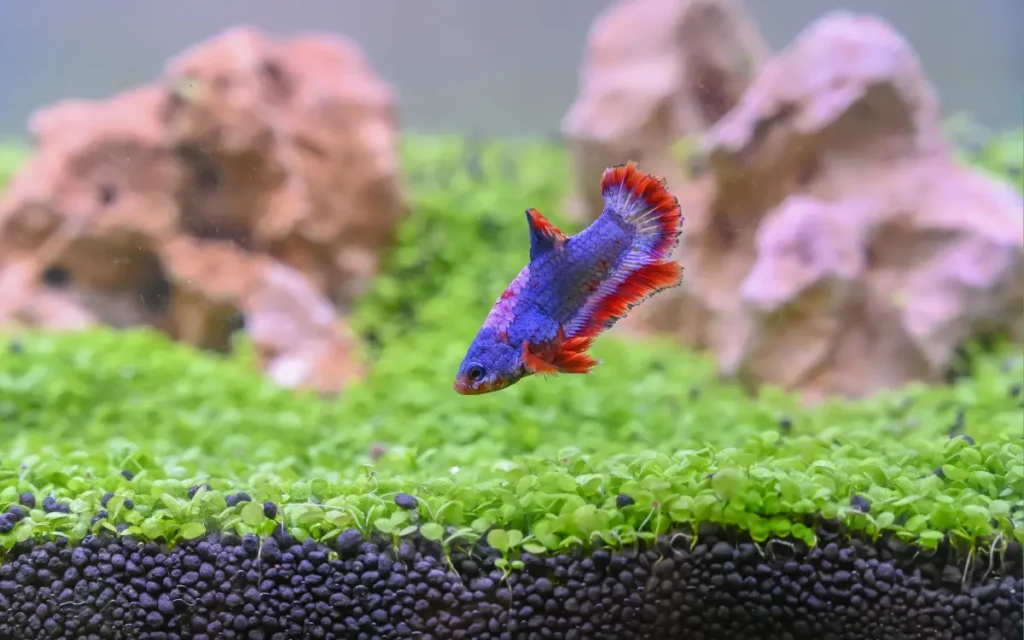
Betta fish are one of the best choices for a small freshwater aquarium, but they shouldn’t be treated like decorative fish that can live in an unheated bowl. A single Betta needs a filtered, heated tank of at least five gallons with enough room to swim and rest.
These fish prefer gentle water movement because their long fins make swimming against a strong current tiring. Add live plants, smooth decorations and a broad leaf or Betta hammock near the surface. Keep a secure lid because Bettas can jump when startled.
Most male Bettas should be kept alone. Some can live with peaceful snails, shrimp or carefully selected fish in larger aquariums, but temperament differs between individuals. A Betta that ignores a snail may decide a colorful guppy has personally offended him.
Quick profile
- Scientific name: Betta splendens
- Adult size: 2.5–3 inches
- Minimum tank: 5 gallons for one Betta
- Temperature: 76–82°F
- pH: 6.5–7.5
- Lifespan: Usually 3–5 years
- Social need: One male per tank
- Swimming level: Middle and upper areas
- Diet: Carnivorous, insect-based pellets with frozen or live foods
- Care level: Beginner
- Best for: A heated, planted species tank
- Main warning: Never keep two males together, and don’t assume every Betta will accept community tank mates
Bettas are beginner-friendly when their basic needs are met. The most common problems come from cold water, tiny containers, overfeeding and unsuitable tank mates rather than the fish being naturally difficult to keep.
2. Pea Puffer
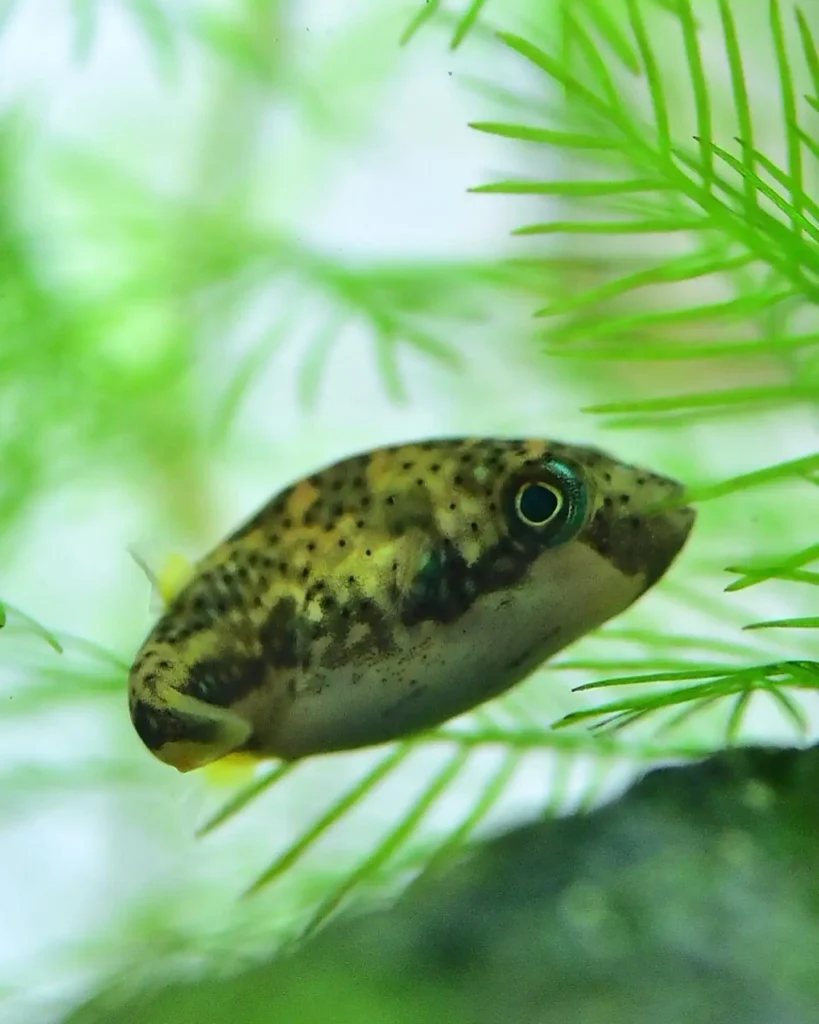
Pea Puffers are among the smallest freshwater fish, but their personality is several sizes larger than their body. They’re curious hunters that inspect plants, caves, snails and sometimes their tank mates’ fins.
A single Pea Puffer is safest in a heavily planted 10-gallon aquarium. Keeping a group requires a larger tank, dense cover and careful observation. They often refuse flakes, so be ready to offer frozen or live foods.
Quick profile
- Scientific name: Carinotetraodon travancoricus
- Adult size: About 1 inch
- Minimum tank: 10 gallons for one
- Temperature: 74–82°F
- pH: 6.5–8.0
- Social need: One or a carefully planned group
- Diet: Snails, daphnia, brine shrimp, bloodworms and other meaty foods
- Care level: Intermediate
- Best for: A planted species-only aquarium
- Main warning: Can attack other fish and may refuse prepared food
Pea Puffers aren’t suitable for a general community tank. Small size doesn’t cancel out territorial behavior.
3. Endler’s Livebearer
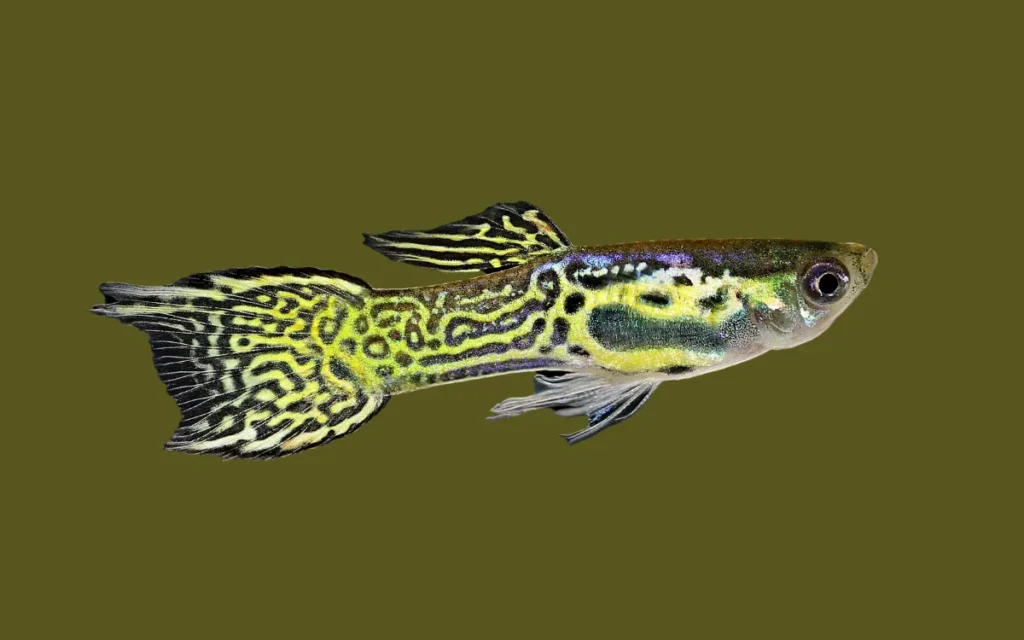
Endler’s Livebearers are small, colorful and constantly moving. Males remain smaller and display brighter patterns, making an all-male group a practical option for a compact aquarium.
Mixed groups breed quickly. If males and females are kept together, use at least two or three females for every male and have a plan for the fry.
Quick profile
- Scientific name: Poecilia wingei
- Adult size: Males around 1 inch; females up to 1.8 inches
- Minimum tank: 10 gallons
- Temperature: 72–82°F
- pH: 7.0–8.5
- Social need: Male group or one male with several females
- Diet: Flakes, micro pellets, algae-based foods and small frozen foods
- Care level: Beginner
- Best for: Hard-water planted aquariums
- Main warning: Mixed groups can overpopulate a small tank
Endlers shouldn’t be mixed with soft-water fish simply because everyone looks peaceful at the store. Match their mineral-rich water needs first.
4. Chili Rasbora
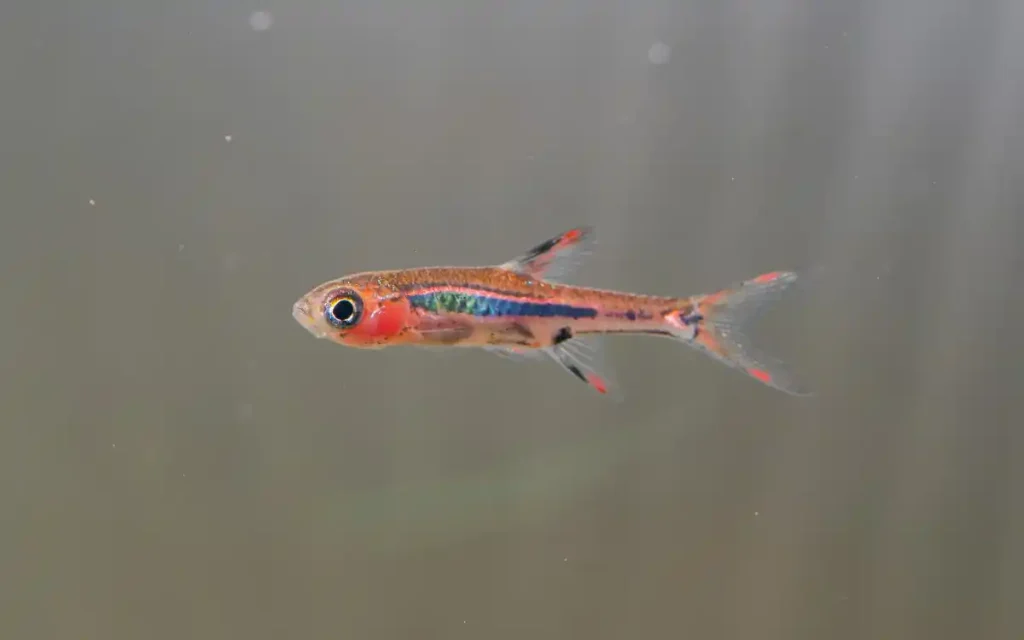
Chili Rasboras are tiny red fish that look best in a dark, heavily planted aquarium. They’re peaceful but easily frightened by larger fish, strong currents and sudden movement outside the tank.
Keep at least ten together. A larger group makes them more confident and helps their red color become easier to see. Their mouths are extremely small, so crush flakes and choose fine micro pellets.
Quick profile
- Scientific name: Boraras brigittae
- Adult size: 0.7–0.8 inch
- Minimum tank: 10 gallons
- Temperature: 72–82°F
- pH: 4.0–7.0
- Social need: 10–12 or more
- Diet: Powdered flakes, micro pellets and tiny frozen foods
- Care level: Intermediate
- Best for: Mature, soft-water planted tanks
- Main warning: Easily outcompeted by large or fast fish
Chili Rasboras need stable water, so they shouldn’t be used to cycle a new aquarium. Read the full Chili Rasbora Care Guide before planning their school.
5. Ember Tetra
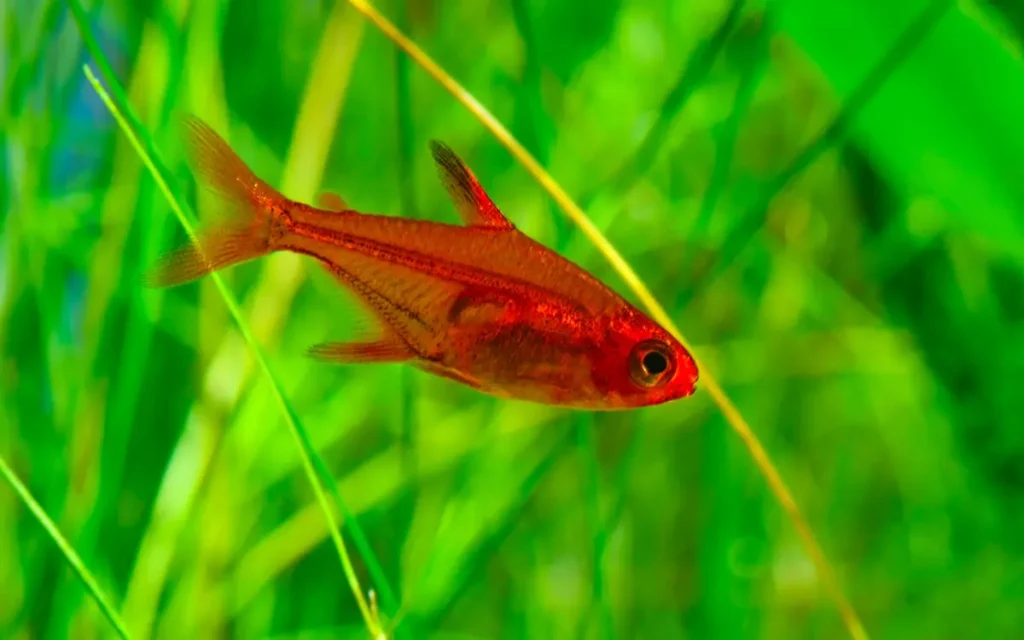
Ember Tetras are small orange fish with a calm personality. Their warm color stands out against green plants and dark substrate without making the aquarium feel crowded.
A group of at least eight can live in a well-planned 10-gallon tank, although ten or more is better. Keep the current gentle and leave an open area where the group can swim together.
Quick profile
- Scientific name: Hyphessobrycon amandae
- Adult size: Around 0.8 inch
- Minimum tank: 10 gallons
- Temperature: 72–82°F
- pH: 5.5–7.5
- Social need: 8–10 or more
- Diet: Crushed flakes, micro pellets and baby brine shrimp
- Care level: Beginner in a stable tank
- Best for: Peaceful planted communities
- Main warning: Large fish may eat or intimidate them
Ember Tetras aren’t difficult to feed, but the food must fit their tiny mouths. Spread it across the surface so every fish gets a chance.
6. Celestial Pearl Danio
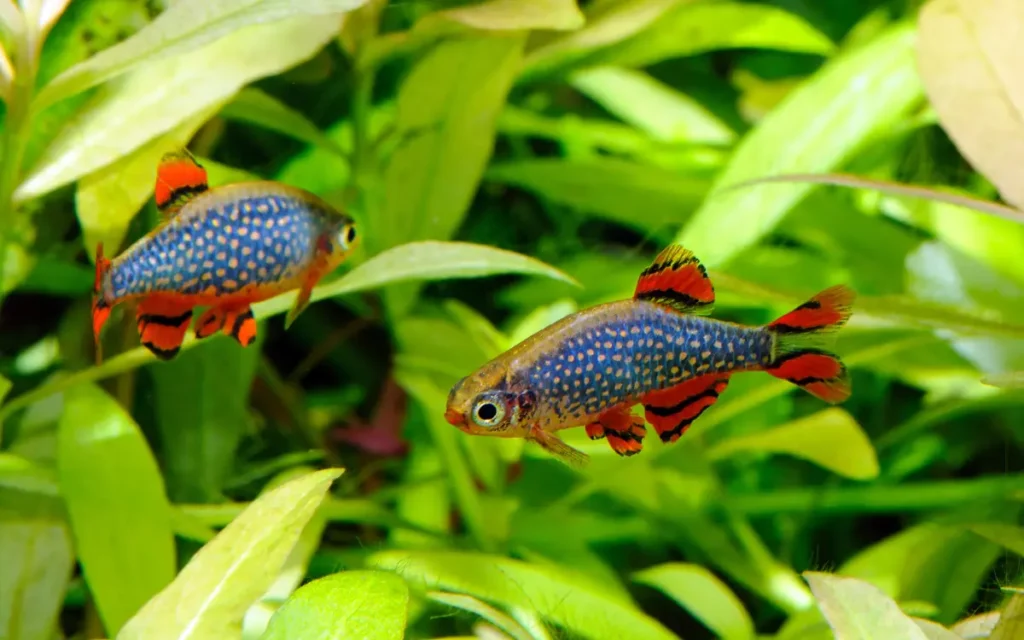
Celestial Pearl Danios have spotted bodies, red fins and a shy nature. They spend more time moving between plants than racing across the tank like Zebra Danios.
Keep at least eight, with ten or more preferred. Males display and chase one another, so dense plants and a group containing plenty of females help reduce constant pressure.
Quick profile
- Scientific name: Danio margaritatus
- Adult size: 0.8–1 inch
- Minimum tank: 10 gallons
- Temperature: 68–79°F
- pH: 6.5–7.5
- Social need: 8–10 or more
- Diet: Micro pellets, crushed flakes and small frozen foods
- Care level: Beginner to intermediate
- Best for: Densely planted aquariums
- Main warning: Fast tank mates may take all their food
These fish need sheltered areas and gentle flow. A bare tank can leave them hiding whenever someone walks past.
See the complete Celestial Pearl Danio Guide for group and feeding advice.
7. Pygmy Corydoras
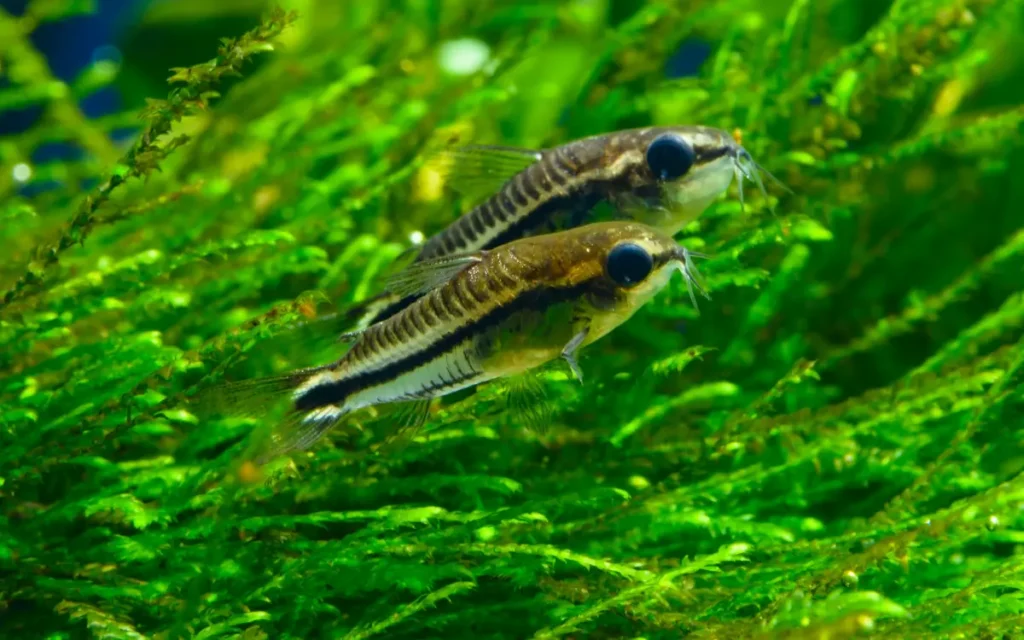
Pygmy Corydoras are tiny social catfish that swim through the middle of the aquarium as well as exploring the bottom. This makes them more visible than many larger Corydoras species.
Keep at least eight on sand or smooth fine gravel. They search for fallen food, but they’re not aquarium vacuum cleaners. Feed them tiny sinking pellets and frozen foods after faster fish have eaten.
Quick profile
- Scientific name: Corydoras pygmaeus
- Adult size: Around 1 inch
- Minimum tank: 10 gallons
- Temperature: 72–79°F
- pH: 6.4–7.4
- Social need: 8–10 or more
- Diet: Fine sinking pellets, wafers and baby brine shrimp
- Care level: Beginner in a stable tank
- Best for: Calm planted nano communities
- Main warning: Can starve when only given leftovers
Avoid sharp gravel because it can injure their barbels. The Pygmy Cory Care Guide explains their feeding and group needs in more detail.
8. Otocinclus Catfish
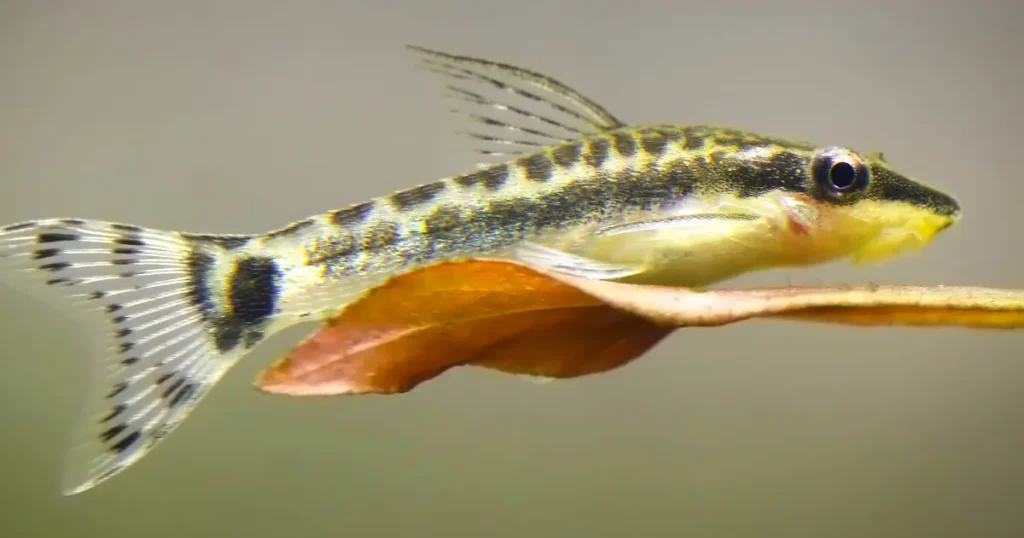
Otocinclus are small algae-grazing catfish, but they aren’t suitable for new aquariums. They need a mature tank with natural algae, biofilm, stable water and plenty of plant surfaces.
Keep at least six. Choose active fish with rounded bellies rather than thin individuals with hollow stomachs.
Quick profile
- Scientific name: Otocinclus species
- Adult size: 1.5–2 inches
- Minimum tank: 20-gallon mature aquarium
- Temperature: 72–79°F
- pH: 6.0–7.5
- Social need: Six or more
- Diet: Biofilm, algae wafers, gel food and softened vegetables
- Care level: Intermediate
- Best for: Mature planted aquariums
- Main warning: Can starve when the tank lacks natural food
An Otocinclus isn’t a replacement for an algae scraper. It needs regular feeding even when some algae is present. Read the Otocinclus Catfish Care Guide before buying a group.
9. White Cloud Mountain Minnow
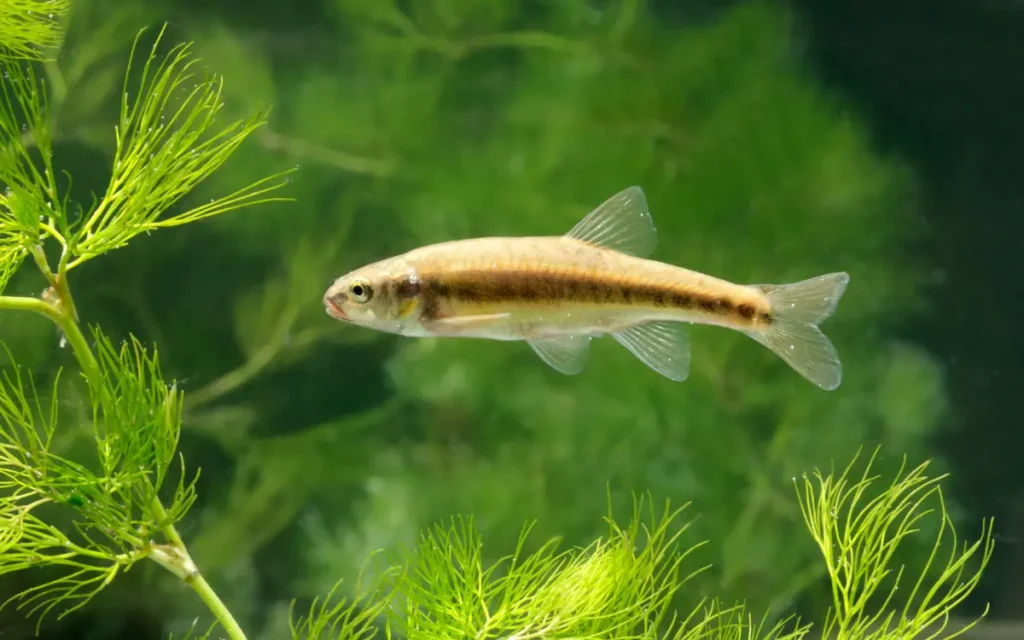
White Cloud Mountain Minnows are active schooling fish that prefer cooler water than most tropical species. Their red fins and bright side stripe make them a good choice for an unheated indoor aquarium when room temperatures remain suitable.
Keep at least eight, with ten or more preferred. A 20-gallon-long tank provides the horizontal room this active school needs.
Quick profile
- Scientific name: Tanichthys albonubes
- Adult size: Around 1.5 inches
- Minimum tank: 20-gallon long
- Temperature: 64–72°F
- pH: 6.0–8.0
- Social need: 8–10 or more
- Diet: Flakes, micro pellets and small frozen foods
- Care level: Beginner
- Best for: Cool-water community tanks
- Main warning: Don’t keep them permanently at high tropical temperatures
Avoid warm-water fish such as German Blue Rams and Discus. Read the White Cloud Mountain Minnow Care Guide before choosing companions.
10. Green Neon Tetra
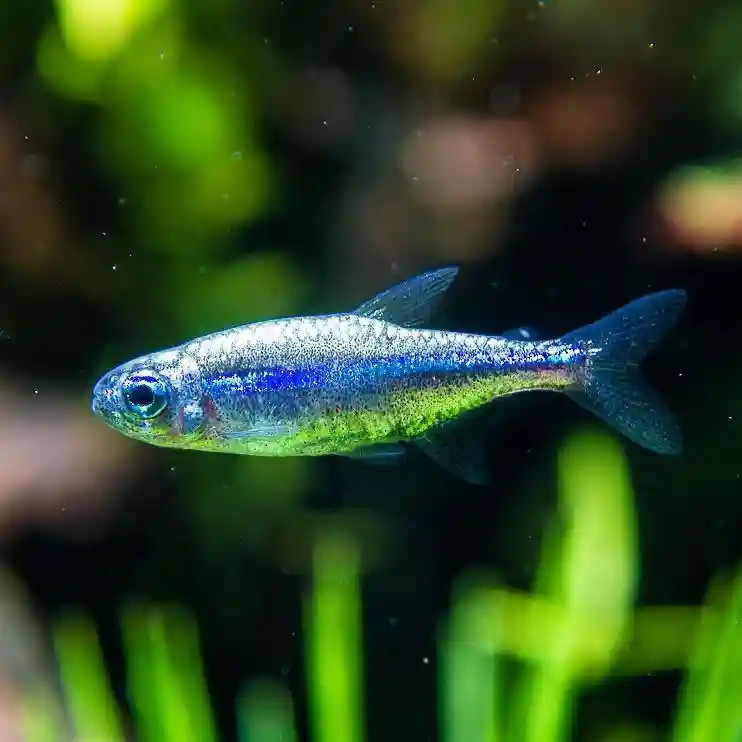
Green Neon Tetras are smaller than regular Neon Tetras. Their bright blue-green stripe catches the light, while the rest of the body almost disappears against a dark aquarium background.
They need a mature tank with soft, stable water. Keep at least ten because a larger school reduces fear and creates a more noticeable display.
Quick profile
- Scientific name: Paracheirodon simulans
- Adult size: Around 1 inch
- Minimum tank: 10–15 gallons
- Temperature: 75–84°F
- pH: 4.0–7.0
- Social need: 10 or more
- Diet: Fine flakes, micro pellets and tiny frozen foods
- Care level: Intermediate
- Best for: Warm, soft-water planted tanks
- Main warning: Doesn’t handle unstable new aquariums well
Don’t confuse a smaller adult size with easier care. Green Neons can react badly to sudden changes in temperature or water chemistry.
11. Scarlet Badis
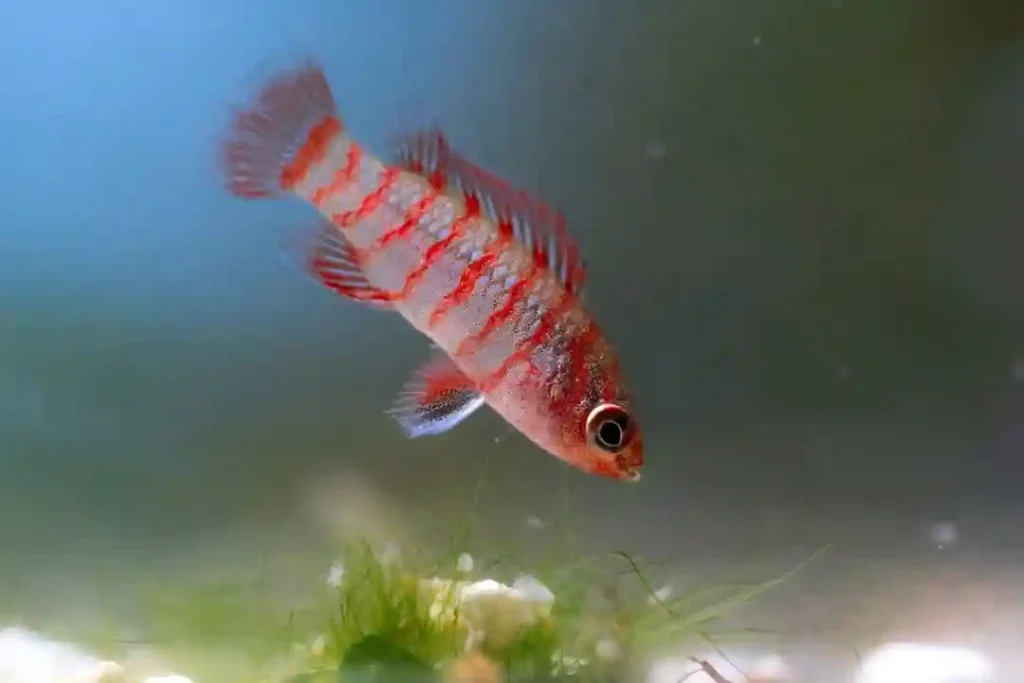
Scarlet Badis are tiny fish with red-and-blue bands and cautious hunting behavior. Males may defend small territories even though they barely reach an inch.
They often ignore flakes and pellets, especially after arriving from the store. Be prepared to offer live or frozen daphnia, baby brine shrimp, grindal worms and similar small foods.
Quick profile
- Scientific name: Dario dario
- Adult size: 0.8–1 inch
- Minimum tank: 10 gallons
- Temperature: 72–79°F
- pH: 6.5–7.5
- Social need: One male or a carefully planned group
- Diet: Small live and frozen foods
- Care level: Intermediate
- Best for: Mature planted tanks with calm inhabitants
- Main warning: Picky eater with territorial males
Scarlet Badis aren’t a good choice for a busy community. Fast Tetras or Danios can finish dinner while the Badis is still examining its first bite.
12. Dwarf Pencilfish
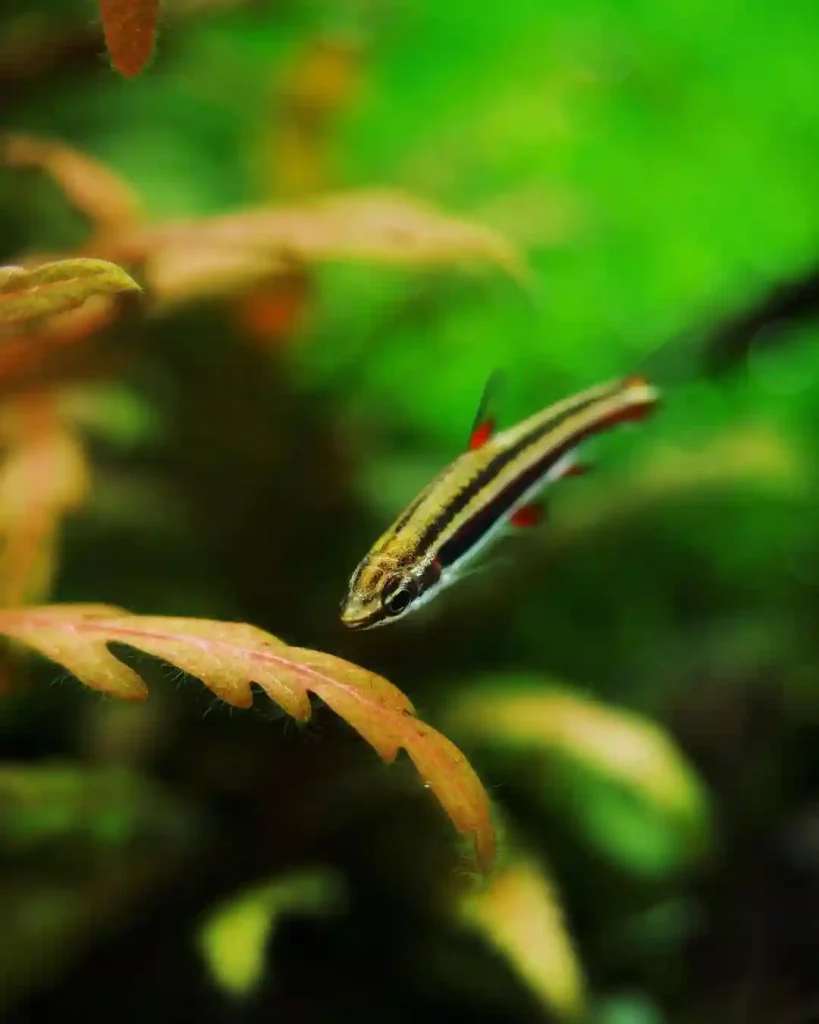
Dwarf Pencilfish are slender schooling fish that spend much of their time near the upper and middle levels. Their small size and calm movement suit planted aquariums with gentle filtration.
Keep at least eight, although ten or more can make them feel safer. Floating plants and darker areas reduce nervous behavior.
Quick profile
- Scientific name: Nannostomus marginatus
- Adult size: 1.2–1.4 inches
- Minimum tank: 10–15 gallons
- Temperature: 73–82°F
- pH: 5.0–7.5
- Social need: 8–10 or more
- Diet: Crushed flakes, micro pellets and small frozen foods
- Care level: Intermediate
- Best for: Calm soft-water communities
- Main warning: Easily stressed by fast or aggressive fish
Use a secure lid and avoid a powerful filter current. Pencilfish are capable jumpers and don’t enjoy being pushed across the tank all day.
13. Sparkling Gourami
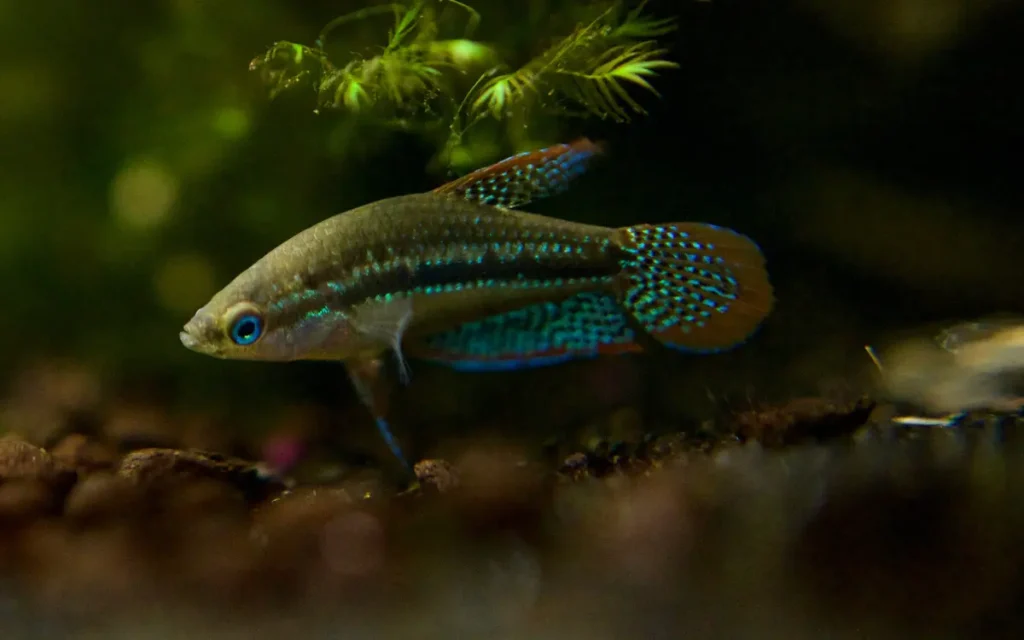
Sparkling Gouramis are tiny labyrinth fish that can produce quiet clicking or croaking sounds. They prefer shaded aquariums with dense plants, wood and gentle water movement.
They can be kept alone, as a pair or in a small planned group. Males may guard territories, so each fish needs somewhere to retreat.
Quick profile
- Scientific name: Trichopsis pumila
- Adult size: Around 1.5 inches
- Minimum tank: 15 gallons
- Temperature: 75–82°F
- pH: 5.5–7.5
- Social need: One, a pair or a planned group
- Diet: Fine pellets and small live or frozen foods
- Care level: Intermediate
- Best for: Quiet, densely planted aquariums
- Main warning: Shy around fast feeders and mildly territorial
Avoid Bettas, large Gouramis and active fin nippers. Read the Sparkling Gourami Care Guide before building their tank.
14. Least Killifish
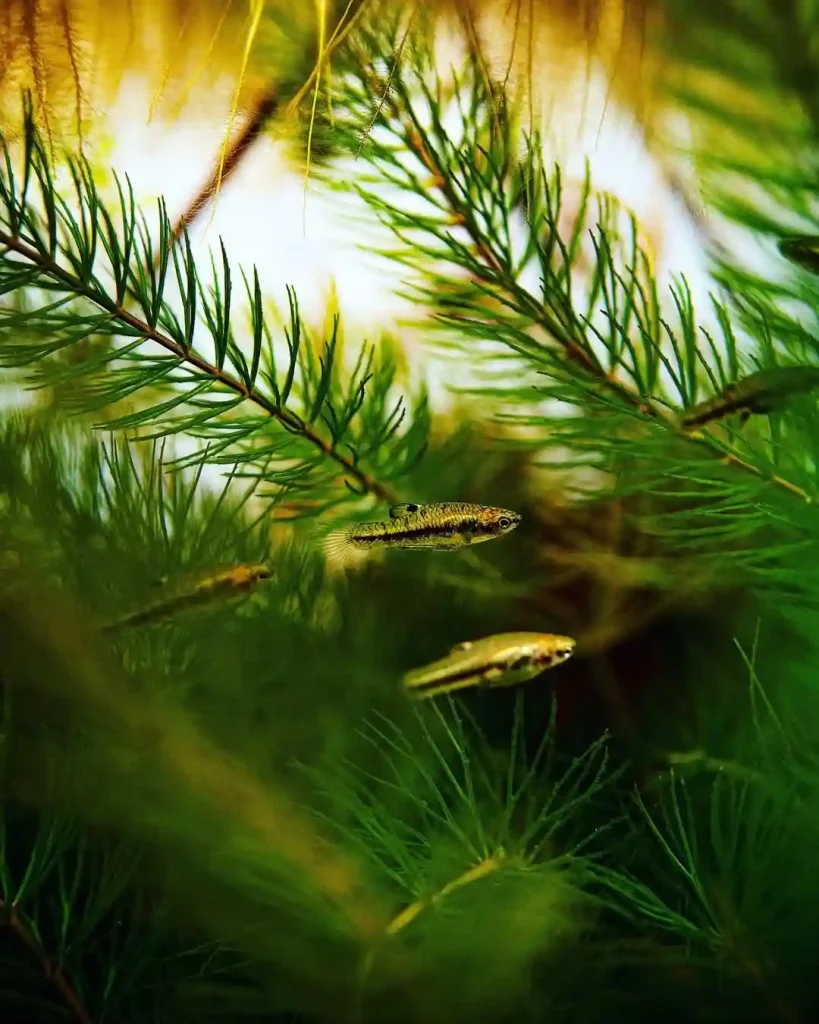
The Least Killifish is one of the smallest livebearing fish available. Despite its name, it isn’t a true killifish. It is more closely related to Guppies and Mosquitofish.
These quiet fish work well in mature planted aquariums with gentle flow. They give birth to small numbers of fry over time, so their population grows more slowly than a Guppy colony but still needs monitoring.
Quick profile
- Scientific name: Heterandria formosa
- Adult size: Males around 0.8 inch; females up to 1.4 inches
- Minimum tank: 10 gallons
- Temperature: 68–78°F
- pH: 7.0–8.0
- Social need: Small group
- Diet: Fine flakes, micro foods and small live or frozen foods
- Care level: Beginner
- Best for: Quiet, planted hard-water tanks
- Main warning: Larger fish may see them as food
Least Killifish are easily overlooked during feeding. Avoid keeping them with boisterous species that rush the surface and swallow everything in seconds.
15. Neon Tetra
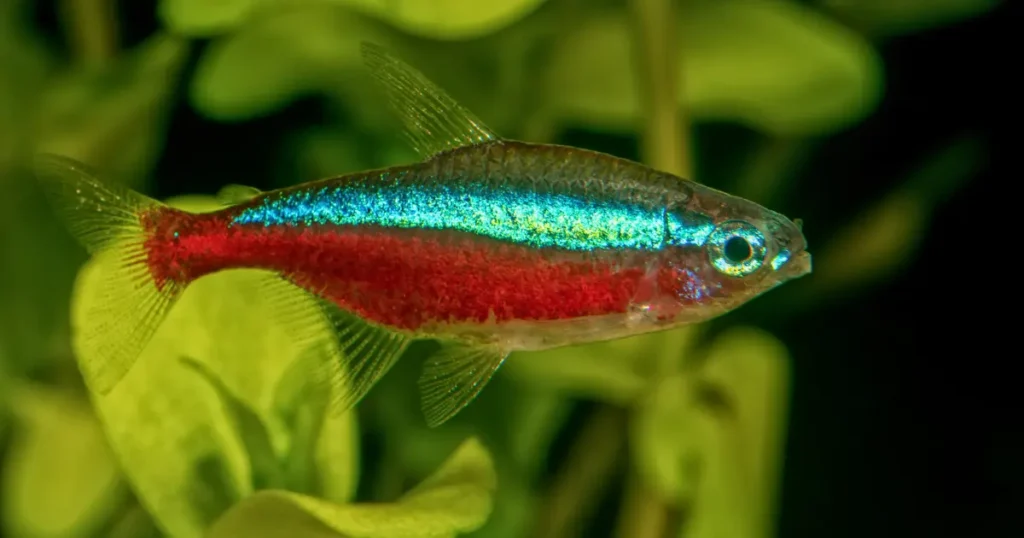
Neon Tetras are among the most recognizable small aquarium fish. Their blue stripe and red lower body look best when a proper school moves across a planted tank.
Keep at least eight, with ten or more preferred. Although often sold to complete beginners, they should enter a fully cycled aquarium with stable water.
Quick profile
- Scientific name: Paracheirodon innesi
- Adult size: Around 1.5 inches
- Minimum tank: 15–20 gallons
- Temperature: 70–77°F
- pH: 5.0–7.5
- Social need: 8–10 or more
- Diet: Fine flakes, micro pellets and small frozen foods
- Care level: Beginner in a stable aquarium
- Best for: Peaceful planted communities
- Main warning: Avoid new tanks and very hard alkaline water
Choose fish with full bellies, straight bodies and clear color. Avoid pale or thin individuals that remain separated from the school.
See the complete Neon Tetra Care Guide for feeding and tank setup advice.
16. Guppy
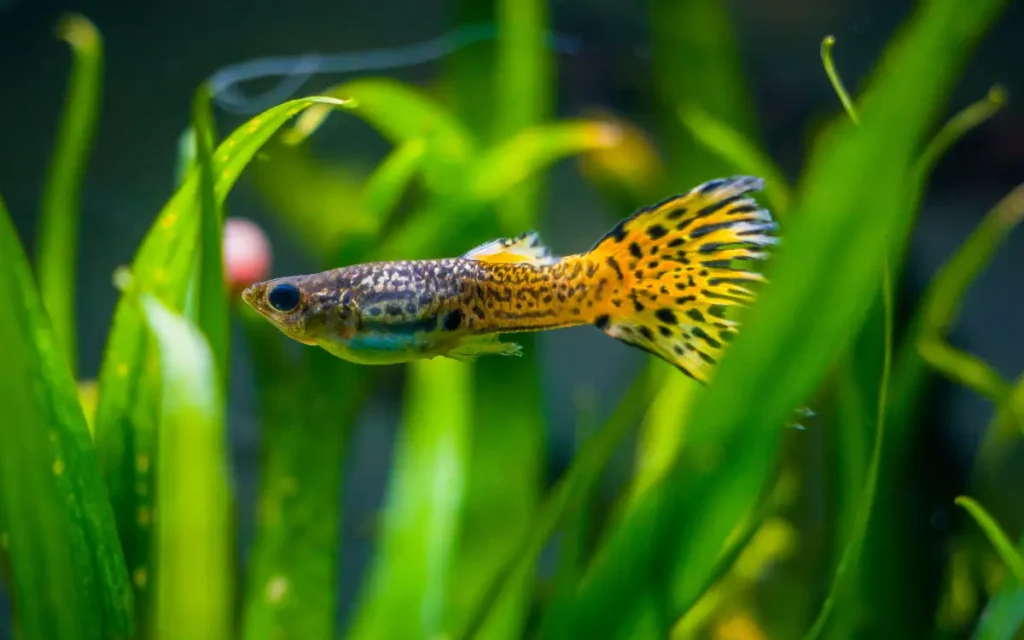
Guppies provide a wide range of colors and tail shapes, but their breeding can quickly turn a quiet aquarium into a crowded family reunion.
An all-male group avoids fry, although some males may chase or nip one another. If keeping both sexes, provide at least two or three females for each male and plan where the young fish will go.
Quick profile
- Scientific name: Poecilia reticulata
- Adult size: Males 1.5 inches; females around 2–2.5 inches
- Minimum tank: 15–20 gallons for a group
- Temperature: 72–82°F
- pH: 7.0–8.2
- Social need: Male group or one male with several females
- Diet: Flakes, pellets, plant matter and small frozen foods
- Care level: Beginner
- Best for: Moderately hard to hard-water communities
- Main warning: Breeds rapidly and may suffer in soft water
Guppies do best when their mineral needs match the aquarium. Use the complete Guppy Care Guide before choosing their tank mates.
17. Harlequin Rasbora
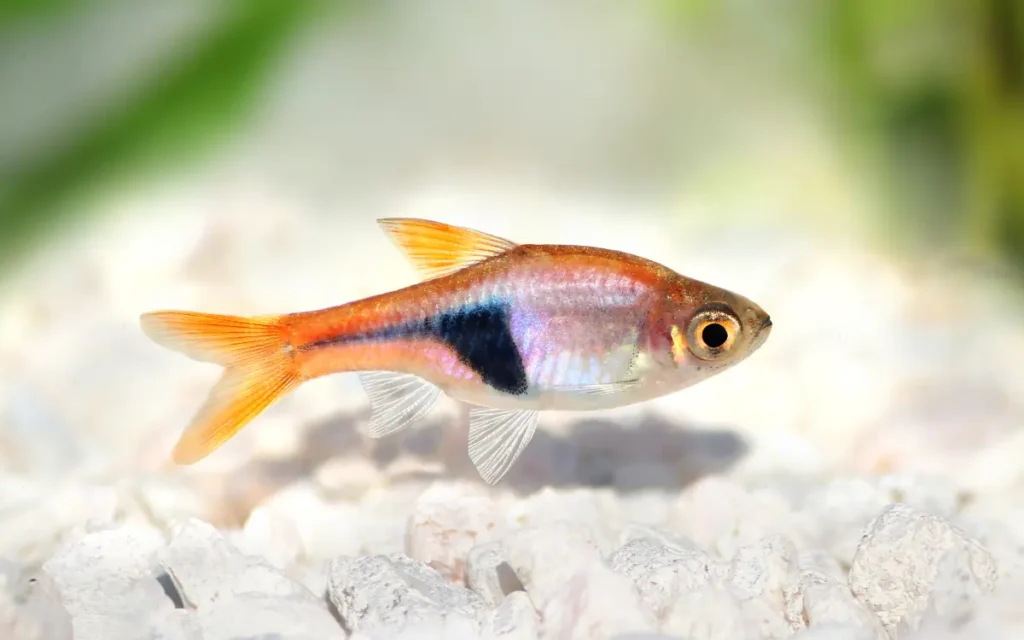
Harlequin Rasboras have copper-colored bodies with a black triangular mark near the tail. They’re peaceful, dependable community fish that usually ignore other species.
Keep at least eight, with ten or more producing a more confident school. Use plants along the sides while leaving open swimming room through the middle.
Quick profile
- Scientific name: Trigonostigma heteromorpha
- Adult size: 1.75–2 inches
- Minimum tank: 20 gallons
- Temperature: 72–80°F
- pH: 5.5–7.5
- Social need: 8–10 or more
- Diet: Flakes, micro pellets and frozen or live foods
- Care level: Beginner
- Best for: Peaceful planted communities
- Main warning: Needs more room than its store size suggests
Stock for the adult fish, not the small juveniles displayed at the shop. Find complete care information in the Harlequin Rasbora Care Guide.
18. Cherry Barb
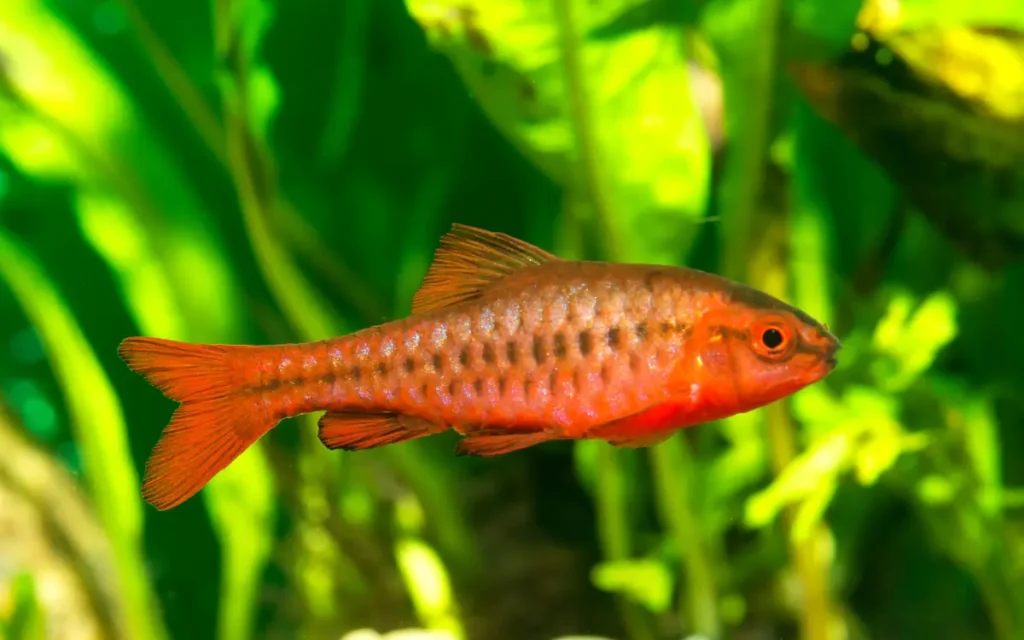
Cherry Barbs are calmer than Tiger Barbs and can live peacefully in a well-planned community. Mature males become deep red, while females usually show lighter brown coloring with a dark side stripe.
Keep at least eight, preferably with more females than males. Plant cover gives females somewhere to rest when males become too interested in displaying.
Quick profile
- Scientific name: Pethia titteya
- Adult size: Around 2 inches
- Minimum tank: 20 gallons
- Temperature: 73–81°F
- pH: 6.0–8.0
- Social need: Eight or more
- Diet: Flakes, pellets, plant matter and small frozen foods
- Care level: Beginner
- Best for: Peaceful planted communities
- Main warning: Small groups may become nervous or chase excessively
Cherry Barbs aren’t as nippy as many other Barbs, but they still need their own group. See the Cherry Barb Care Guide for more details.
19. Panda Corydoras
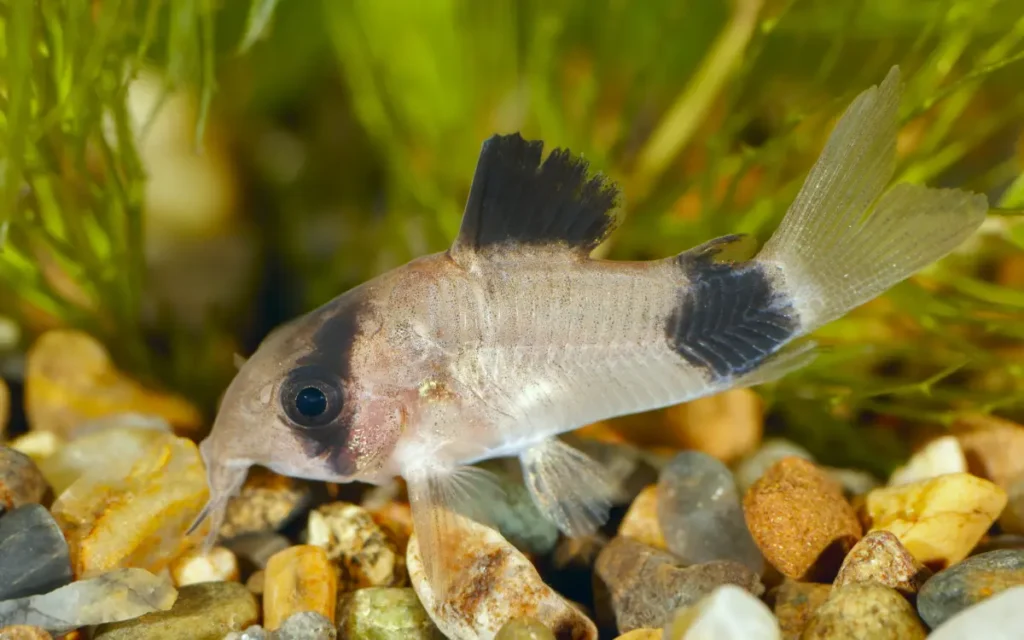
Panda Corydoras have black-and-white markings and a busy social personality. They spend their time searching the bottom, resting together and making quick trips to the surface for air.
Keep at least six, with eight preferred. Use sand or smooth fine gravel to protect their sensitive barbels, and provide shaded resting places under plants or wood.
Quick profile
- Scientific name: Corydoras panda
- Adult size: Around 2 inches
- Minimum tank: 20-gallon long
- Temperature: 68–77°F
- pH: 6.0–7.5
- Social need: 6–8 or more
- Diet: Sinking pellets, wafers and frozen foods
- Care level: Beginner to intermediate
- Best for: Peaceful, slightly cooler communities
- Main warning: Sharp gravel and warm water can cause problems
Corydoras don’t survive on waste. Feed them after the upper-level fish have eaten. Read the Panda Cory Care Guide for full feeding advice.
20. Black Neon Tetra
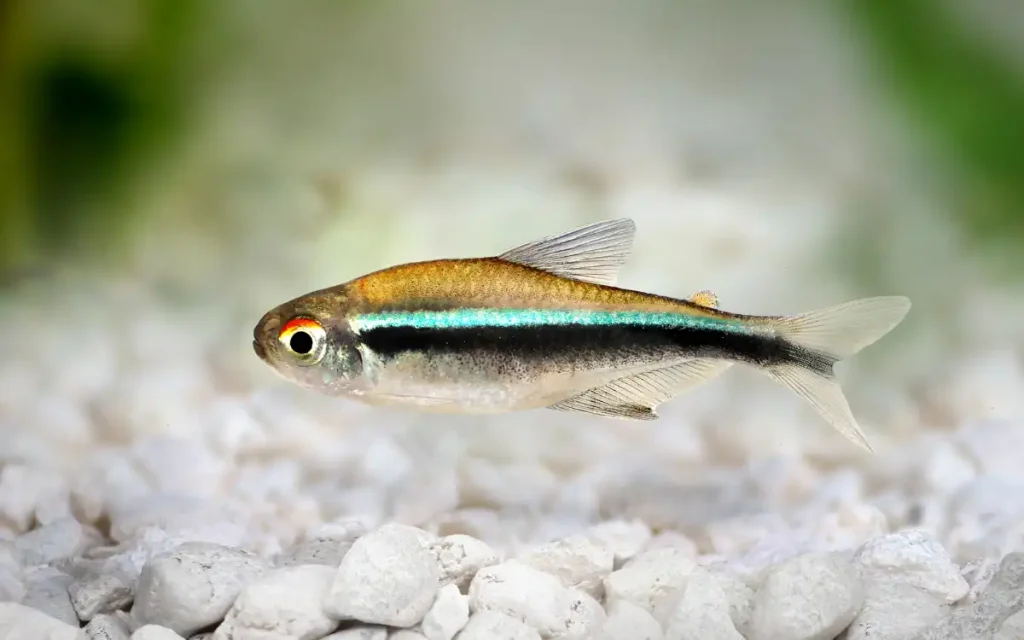
Black Neon Tetras have a silver stripe above a dark horizontal band. They’re active, hardy and often more confident than tiny soft-water Tetras.
Keep at least eight, with ten or more preferred. Arrange plants around the edges and leave the middle open for swimming.
Quick profile
- Scientific name: Hyphessobrycon herbertaxelrodi
- Adult size: Around 1.5 inches
- Minimum tank: 20 gallons
- Temperature: 72–82°F
- pH: 5.5–7.5
- Social need: 8–10 or more
- Diet: Flakes, micro pellets and frozen or live foods
- Care level: Beginner
- Best for: Active peaceful communities
- Main warning: Keeping only a few can cause stress and chasing
Their dark stripe stands out against green plants and lighter backgrounds. The Black Neon Tetra Care Guide covers feeding, water and tank mates.
21. Platy
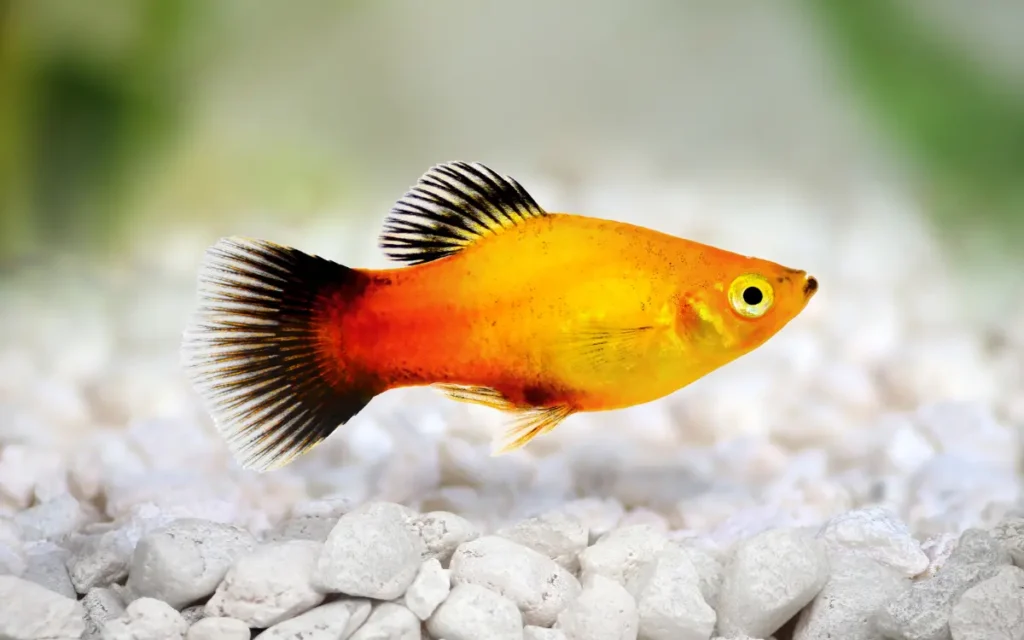
Platies are colorful livebearers that suit beginners with moderately hard or hard tap water. They remain relatively small but need more swimming room and filtration than a tiny desktop tank provides.
Like Guppies, Platies breed easily. Keep an all-female group if you want less chasing, or house one male with at least two or three females.
Quick profile
- Scientific name: Xiphophorus maculatus
- Adult size: 2–3 inches
- Minimum tank: 20 gallons
- Temperature: 70–78°F
- pH: 7.0–8.2
- Social need: Group with a controlled sex ratio
- Diet: Flakes, pellets, algae-based foods and frozen foods
- Care level: Beginner
- Best for: Hard-water community aquariums
- Main warning: Mixed-sex groups can produce many fry
Platies shouldn’t be combined with delicate soft-water fish simply because both species are described as peaceful. Check the water requirements before choosing companions.
The complete Platy Care Guide explains feeding, breeding and community setup.
22. Clown Killifish
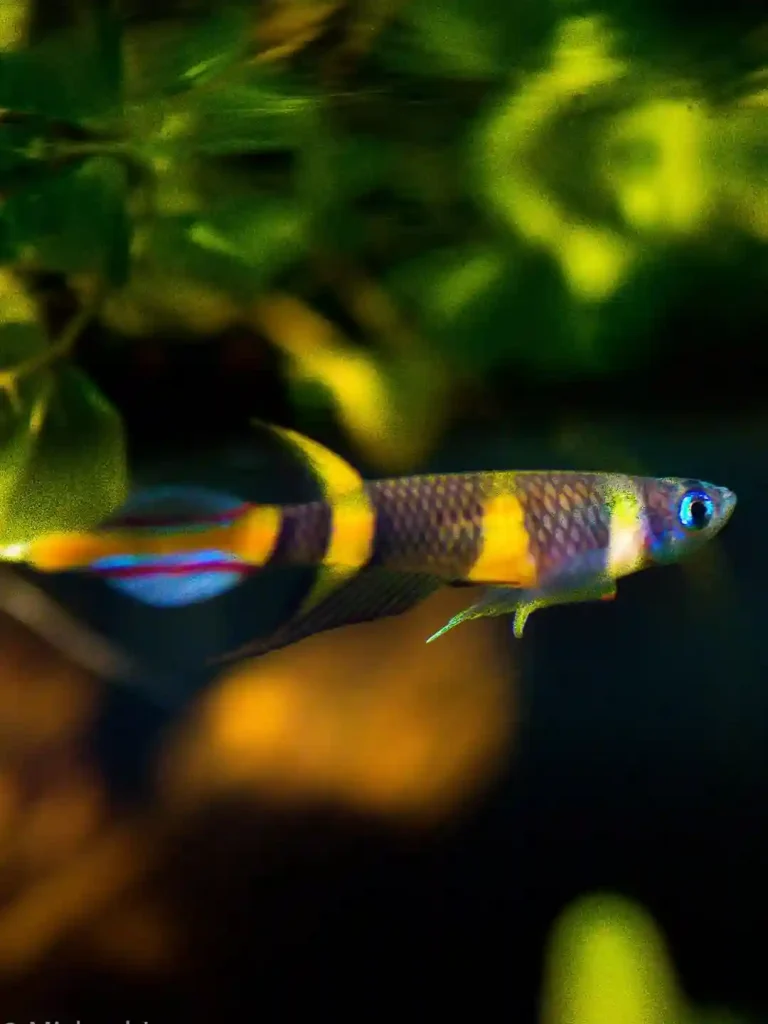
Clown Killifish have striped bodies and colorful, flag-like tails. They spend most of their time near the surface, where floating plants help them feel secure.
Keep at least six, with more females than males when possible. The aquarium must have a tightly fitted lid because these fish can jump through narrow gaps around cables and filter pipes.
Quick profile
- Scientific name: Epiplatys annulatus
- Adult size: 1.2–1.5 inches
- Minimum tank: 10 gallons
- Temperature: 72–79°F
- pH: 4.0–7.0
- Social need: Six or more
- Diet: Floating micro pellets and tiny live or frozen foods
- Care level: Intermediate
- Best for: Soft-water planted aquariums
- Main warning: Skilled jumper that needs surface foods
Leave open feeding areas between the floating plants. Food that sinks quickly may reach the bottom before the Clown Killifish decide it’s worth investigating.
23. Scarlet Badis
Scarlet Badis are tiny fish with red-and-blue bands and cautious hunting behavior. Males may defend small territories even though they barely reach an inch.
They often ignore flakes and pellets, especially after arriving from the store. Be prepared to offer live or frozen daphnia, baby brine shrimp, grindal worms and similar small foods.
Quick profile
- Scientific name: Dario dario
- Adult size: 0.8–1 inch
- Minimum tank: 10 gallons
- Temperature: 72–79°F
- pH: 6.5–7.5
- Social need: One male or a carefully planned group
- Diet: Small live and frozen foods
- Care level: Intermediate
- Best for: Mature planted tanks with calm inhabitants
- Main warning: Picky eater with territorial males
Scarlet Badis aren’t a good choice for a busy community. Fast Tetras or Danios can finish dinner while the Badis is still examining its first bite.
24. Glowlight Tetra
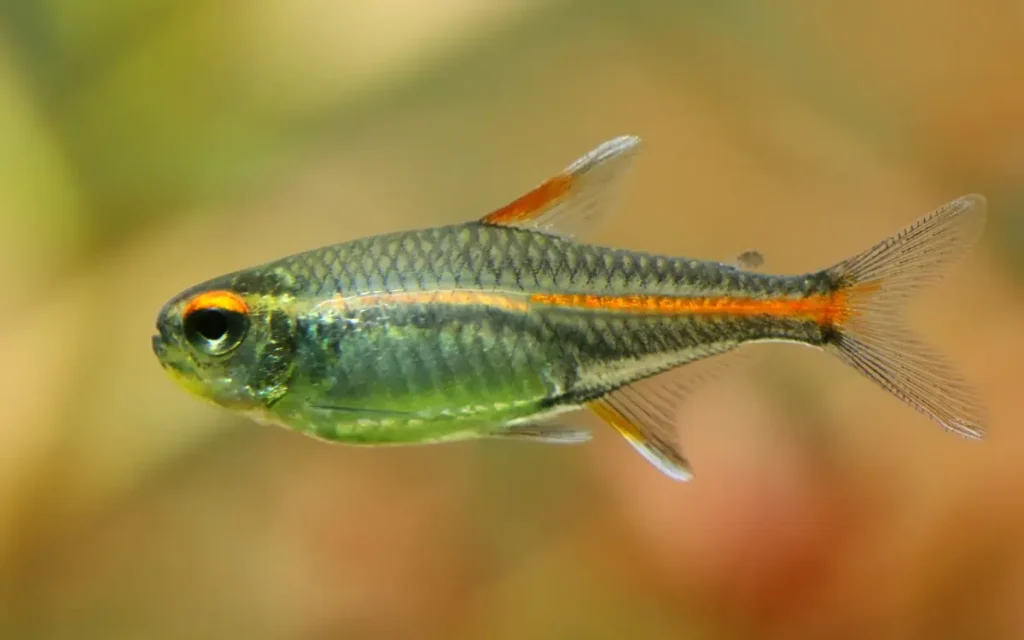
Glowlight Tetras have a copper-orange stripe that runs from the nose to the tail. Their natural coloring shouldn’t be confused with fluorescent GloFish varieties.
These peaceful fish feel safest in a group of at least eight. Plants around the edges and an open middle area give them both shelter and swimming room.
Quick profile
- Scientific name: Hemigrammus erythrozonus
- Adult size: Around 1.5 inches
- Minimum tank: 15–20 gallons
- Temperature: 74–82°F
- pH: 5.5–7.5
- Social need: 8–10 or more
- Diet: Flakes, micro pellets and small frozen foods
- Care level: Beginner
- Best for: Peaceful tropical communities
- Main warning: Avoid aggressive fish and fin nippers
Dark substrate and moderate lighting make their stripe easier to see. Learn more in the Glowlight Tetra Care Guide.
25. Honey Gourami
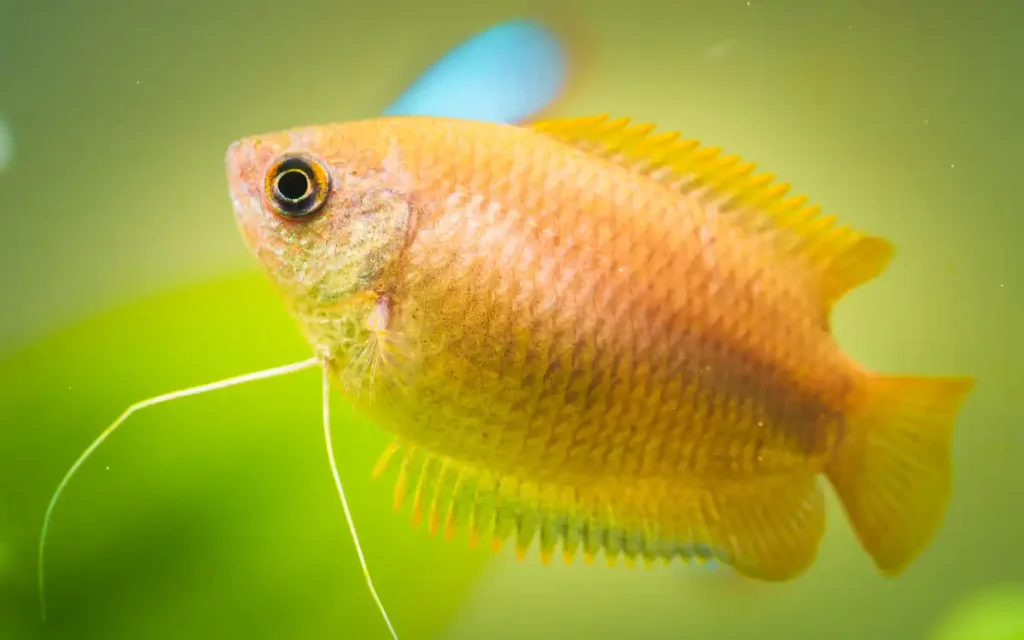
Honey Gouramis are gentle centerpiece fish with warm yellow coloring. They’re usually calmer than Dwarf Gouramis and can work well in quiet community aquariums.
Provide floating plants, sheltered corners and gentle filtration. One Honey Gourami can live alone, while a larger planted tank may support one male with two females.
Quick profile
- Scientific name: Trichogaster chuna
- Adult size: 2–2.5 inches
- Minimum tank: 20 gallons
- Temperature: 72–82°F
- pH: 6.0–7.5
- Social need: One or a carefully planned group
- Diet: Pellets, flakes and small frozen or live foods
- Care level: Beginner
- Best for: Calm planted community tanks
- Main warning: Fast fish can prevent them from eating
Avoid Bettas, aggressive Gouramis and fin-nipping Barbs. The Honey Gourami Care Guide covers their complete setup.
