
Mollies fish Care Guide For Beginners

Molly fish are colorful, active livebearers that can be great for beginner aquariums, but they do best when the tank is set up properly from the start. They need warm water, a cycled tank, good filtration, and water that is more mineral-rich than what many soft-water fish prefer.
The biggest mistake beginners make with mollies is treating them like “any easy tropical fish.” Mollies are hardy, but they do not do well in tiny tanks, unstable water, or soft acidic conditions for long periods. Once their water and tank size are right, they become active, social, and fun to watch.
This guide covers molly fish tank size, water parameters, food, tank mates, breeding, diseases, salt, behavior, and common beginner mistakes.
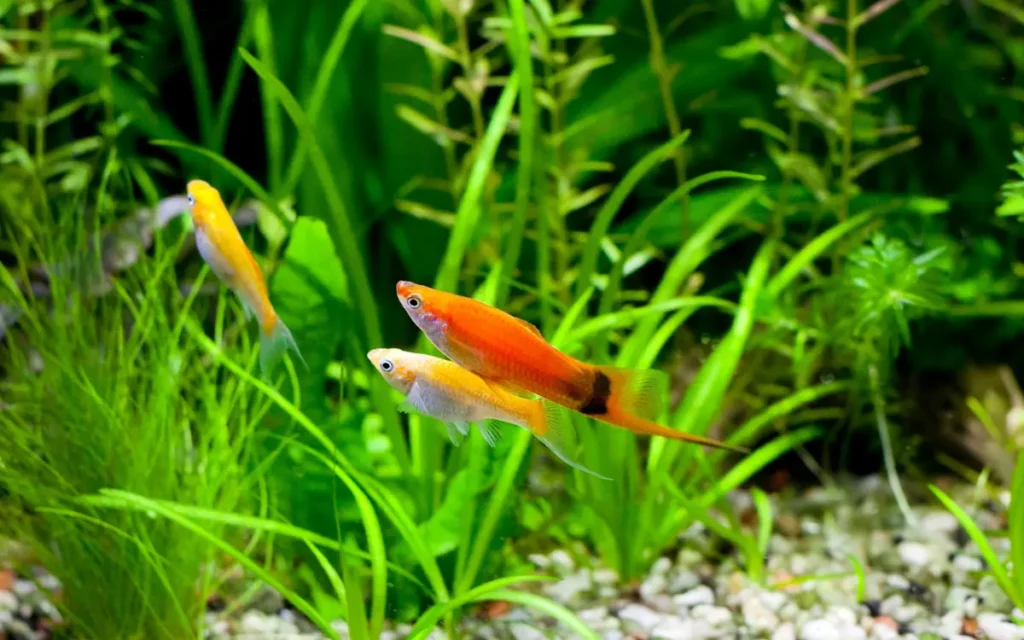
Molly Fish Quick Care Chart
| Care Category | Best Range or Recommendation |
| Care level | Easy to moderate |
| Adult size | 3–6 inches, depending on type |
| Minimum tank size | 20 gallons for most mollies |
| Better tank size | 30 gallons or larger for sailfin mollies |
| Temperature | 75–80°F |
| pH | 7.5–8.2 |
| Water hardness | Moderate to hard |
| Diet | Omnivore, but plant-heavy foods are important |
| Temperament | Mostly peaceful, active |
| Group size | 1 male with 2–3 females |
| Lifespan | Around 3–5 years |
| Breeding type | Livebearer |
| Best beginner types | Common Molly, Black Molly, Dalmatian Molly |
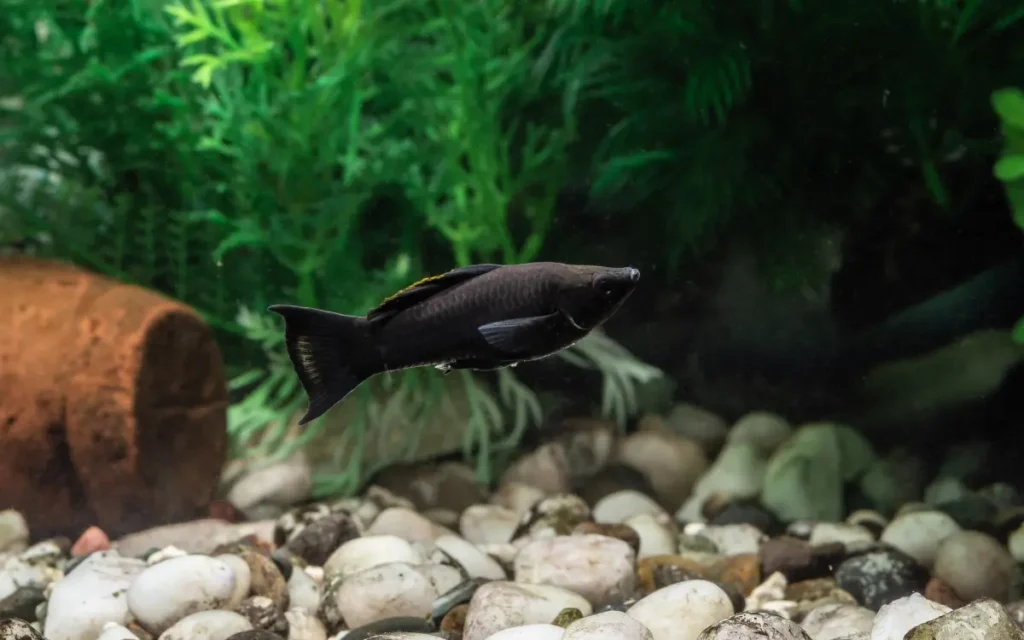
What Are Molly Fish?
Molly fish are livebearing fish from the Poecilia genus. They are related to guppies, platies, and swordtails. Instead of laying eggs, female mollies give birth to live, free-swimming babies called fry.
Most mollies sold in aquarium shops are not pure wild species. Many are aquarium-bred varieties, such as Black Molly, Dalmatian Molly, Balloon Molly, Lyretail Molly, and Gold Dust Molly. These varieties may look different, but their basic care is usually similar.
Mollies are active swimmers. They usually spend time in the middle and upper parts of the tank, but they will also graze on algae, plants, rocks, and decorations throughout the day.
They are often called beginner fish, but that does not mean they can live in a bowl or uncycled tank. They need stable water, a proper aquarium, and enough space to move.
Are Molly Fish Good for Beginners?
Yes, molly fish can be good for beginners, but only if the tank is ready for them.
A beginner with a cycled 20-gallon tank, heater, filter, and hard water can do very well with mollies. A beginner with a tiny tank, no test kit, and unstable water may struggle quickly.
Mollies are not delicate fish, but they are sensitive to poor water quality. They also do not like ammonia or nitrite. If the tank is not cycled, mollies may start shimmying, gasping, hiding, clamping their fins, or dying suddenly.
For a first molly tank, I would choose Common Mollies, Black Mollies, or Dalmatian Mollies. I would not start with Yucatan Mollies or a large sailfin group unless the tank is bigger and properly planned.
Best Molly Types for Beginners
| Molly Type | Beginner Rating | Why |
| Common Molly | Best | Hardy, easy to find, good starter molly |
| Black Molly | Best | Popular, active, usually hardy |
| Dalmatian Molly | Good | Attractive and beginner-friendly |
| Sailfin Molly | Good with space | Needs a larger tank |
| Lyretail Molly | Good | Needs peaceful tank mates |
| Balloon Molly | Caution | Rounded body shape may bring health concerns |
| Yucatan Molly | Not first choice | Gets larger and needs more space |
A good beginner molly is not just the prettiest one in the store. Choose the fish that fits your tank size, water, and experience level.
Molly Fish Tank Size
A 20-gallon tank is the best starting size for most mollies. This gives them enough room to swim, reduces stress, and makes water quality easier to control.
Mollies are active livebearers. They are not tiny nano fish. They also produce more waste than many beginners expect, especially when kept in groups and fed daily.
Larger mollies, such as Sailfin Mollies and Yucatan Mollies, should have more space. A 30-gallon tank or larger is much better for them.
Can Molly Fish Live in a 10-Gallon Tank?
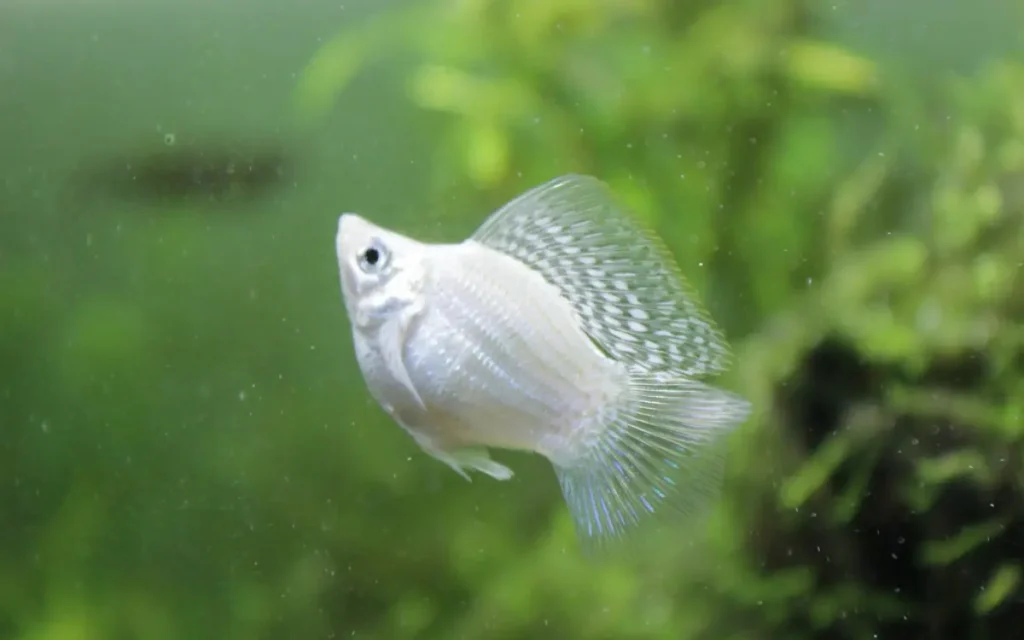
A 10-gallon tank is too small for most adult mollies long term.
It may work as a temporary quarantine tank, fry tank, or short-term holding tank, but it is not ideal for a proper molly group. Mollies are active, social, and often breed quickly. A small tank can become crowded and dirty fast.
The main problems with 10-gallon molly tanks are:
- Water quality changes quickly
- Males chase females in tight spaces
- Fry can overpopulate the tank
- Larger mollies do not have enough swimming room
- Waste builds up faster
My honest advice: skip the 10-gallon setup for mollies. Start with 20 gallons or more.
How Many Molly Fish Should You Keep Together?
Mollies are social fish, so it is better to keep them in a small group. A good beginner group is one male with two or three females.
This ratio matters because male mollies often chase females. If you keep one male with only one female, she may get stressed from constant attention.
A better group looks like this:
| Tank Size | Molly Group Suggestion |
| 20 gallons | 1 male and 2–3 females |
| 30 gallons | 1–2 males and 4–6 females |
| 40 gallons or larger | Larger group with careful stocking |
Avoid adding too many mollies at once. They breed easily, so your tank can become crowded even if it looks fine at first.
How Many Mollies in a 20-Gallon Tank?
For a 20-gallon tank, start with 3 to 5 mollies.
A good setup is one male with two or three females. You can keep a few more if the tank has strong filtration and no other large tank mates, but do not overstock the tank.
Also remember that mollies can have babies every few weeks. A tank that starts with four mollies can become crowded if fry survive.
Molly Fish Tank Setup
A good molly tank should be simple, stable, and easy to maintain. You do not need a complicated aquascape, but you do need the basic equipment.
A molly tank should have:
- A heater
- A filter
- A lid
- Open swimming space
- Plants or hiding spots
- A cycled filter
- Water test kit
- Moderate to hard water
Mollies are active fish, so leave open swimming room in the front or middle of the aquarium. Plants are helpful, but do not fill every inch of the tank.
Heater
Mollies need warm, stable water. In most homes, you should use an aquarium heater to keep the tank around 75–80°F. Aquarium Co-Op gives the same general range for molly tanks.
Temperature swings can stress mollies. A cold tank may lead to sluggish behavior, weak appetite, clamped fins, or illness.
Use a thermometer instead of guessing. Heater dials are not always perfect.
Filter
Mollies need good filtration because they are active eaters and produce a fair amount of waste.
A filter helps with:
- Water movement
- Beneficial bacteria
- Waste breakdown
- Oxygen exchange
- Cleaner water
For a beginner molly tank, a hang-on-back filter or sponge filter can work well. In larger tanks, a canister filter or stronger hang-on-back filter may be useful.
If you keep fry, cover filter intakes with a sponge pre-filter so baby mollies do not get pulled in.
Plants and Hiding Spots
Plants help mollies feel safer, especially females and fry. They also create grazing surfaces where mollies can pick at algae and biofilm.
Good plants for molly tanks include:
- Java fern
- Anubias
- Hornwort
- Water sprite
- Vallisneria
- Amazon sword
- Guppy grass
Floating plants are useful if you want fry to survive. Baby mollies hide near roots and dense plant growth.
Internal link idea: Link to your aquarium plants guide with the anchor easy aquarium plants for beginners.
Substrate
Mollies do not need a special substrate. Sand, gravel, or planted tank substrate can all work.
If your tap water is naturally soft, you can use crushed coral in the filter or substrate to help raise hardness slowly. Do this carefully and test your water. Sudden changes are worse than slightly imperfect water.
Dark substrate can make Black Mollies, Dalmatian Mollies, and Gold Dust Mollies stand out more.
Molly Fish Water Parameters
Water parameters are one of the most important parts of molly fish care. Many molly problems come from soft water, dirty water, unstable pH, or an uncycled tank.
| Water Parameter | Best Range |
| Temperature | 75–80°F |
| pH | 7.5–8.2 |
| GH | Moderate to hard |
| KH | Stable, not too low |
| Ammonia | 0 ppm |
| Nitrite | 0 ppm |
| Nitrate | Ideally under 20–40 ppm |
FishBase lists Poecilia sphenops, the Common Molly, with a pH range of 7.5–8.2 and hardness range of 11–30 dH, which supports keeping mollies in harder, alkaline water rather than soft acidic water. (FishBase)
Why Hard Water Matters for Mollies
Mollies often do better in mineral-rich water. This is one reason they may struggle in some community tanks where the water is very soft.
Hard water helps keep their body systems stable. When mollies are kept in soft, acidic water for too long, they may become weak or stressed.
Signs your water may not suit mollies include:
- Shimmying
- Clamped fins
- Weak appetite
- Repeated illness
- Poor fry survival
- Mollies dying while other fish seem fine
TFH Magazine describes mollies as fish that need mineral-rich, high-quality water and says they do not do well in soft water. It also notes that mollies should not have any ammonia or nitrite in the tank. (TFH Magazine)
Do Molly Fish Need Aquarium Salt?
Molly fish do not always need aquarium salt.
This topic causes a lot of confusion because mollies can tolerate salt better than many freshwater fish. Some mollies are found in freshwater, brackish, or coastal habitats, and many aquarium strains can handle harder, mineral-rich water very well.
But that does not mean every molly tank needs salt.
TFH Magazine explains that salt can help unhealthy fish in some cases, but it is not required for fancy mollies. It also warns that salt can limit healthy plant growth, which can be a problem in planted aquariums. (TFH Magazine)
My advice is simple:
Focus on hard, alkaline, clean water first. Do not add salt blindly to a mixed community tank.
Salt can be risky if you keep:
- Corydoras
- Some plants
- Some snails
- Soft-water fish
- Sensitive freshwater species
Never use table salt. Only use aquarium salt or marine salt mix when you know why you are using it and your tank mates can handle it.
Molly Fish Diet and Feeding
Mollies are omnivores, but they need a lot of plant matter. They naturally graze on algae, biofilm, and small foods.
A good molly diet should not be only bloodworms, brine shrimp, or rich protein foods. Too much protein can lead to bloating and poor digestion.
Best Food for Molly Fish
Good foods for mollies include:
- Spirulina flakes
- Quality tropical flakes
- Algae wafers
- Small pellets
- Blanched zucchini
- Blanched spinach
- Shelled peas
- Frozen brine shrimp
- Daphnia
- Mosquito larvae from safe sources
For everyday feeding, use a quality flake or pellet as the base. Then add spirulina, algae wafers, and vegetables several times a week.
Frozen foods are fine, but treat them as part of the diet, not the whole diet.
How Often Should You Feed Molly Fish?
Feed adult mollies once or twice per day.
Only feed what they can finish in about one to two minutes. Mollies often act hungry even when they have already eaten, so do not trust begging behavior.
Overfeeding causes:
- Dirty water
- Bloating
- Algae problems
- High nitrate
- Uneaten food in the substrate
For fry, feed smaller meals more often.
Can Molly Fish Eat Algae?
Yes, mollies often graze on soft algae.
They may pick at algae on glass, plants, rocks, and decorations. But they should not be your only algae-control plan. Mollies still need proper food, and they will not clean every type of algae.
If your tank has too much algae, check light timing, nitrate, phosphate, overfeeding, and water change routine.
Foods to Avoid
Avoid feeding too much of these:
- Bloodworms
- High-protein foods
- Large hard pellets
- Bread
- Seasoned vegetables
- Human snack foods
Mollies need a balanced diet with plant matter. A rich, protein-heavy diet may make them look full but can cause long-term problems.
Molly Fish Behavior
Healthy mollies are active and curious. They swim around the tank, graze on surfaces, chase food, and interact with each other.
Normal molly behavior includes:
- Swimming around the middle and top of the tank
- Grazing on algae and biofilm
- Males displaying to females
- Occasional chasing
- Exploring plants and decorations
Some chasing is normal, especially from males. Constant chasing is not normal if one fish is being stressed all day.
Problem behavior includes:
- Gasping at the surface
- Staying at the bottom
- Hiding all day
- Shaking or shimmying
- Clamped fins
- Refusing food
- Sitting near the filter
- Being bullied constantly
When you see these signs, test the water before adding medicine.
Are Molly Fish Aggressive?
Mollies are usually peaceful, but they can be pushy.
Male mollies may chase females often. They may also display at other males. This gets worse in small tanks, overcrowded tanks, or groups with too many males.
The best way to reduce chasing is to keep more females than males. A good ratio is one male with two or three females.
Also add plants and hiding spots so females can rest.
Male vs Female Molly Fish
It is useful to know the difference between male and female mollies because group ratio affects behavior.
| Feature | Male Molly | Female Molly |
| Body shape | Smaller and slimmer | Larger and rounder |
| Anal fin | Pointed gonopodium | Fan-shaped anal fin |
| Behavior | Chases and displays | Often chased by males |
| Pregnancy | No | Can become pregnant |
| Size | Usually smaller | Usually larger |
The easiest way to sex mollies is to look at the anal fin. Males have a pointed fin called a gonopodium. Females have a normal fan-shaped anal fin.
How to Tell If a Molly Is Pregnant
Female mollies can become pregnant easily if males are present. They can also store sperm, so a female may give birth even after being separated from males.
Signs of a pregnant molly include:
- Rounder belly
- Dark gravid spot, easier to see on light-colored fish
- Eating more
- Hiding more often
- Boxy belly near birth
- Male chasing her frequently
A pregnant molly should not be stressed or moved repeatedly. Stable water and hiding places are more helpful than constant handling.
Molly Fish Breeding
Mollies are livebearers, which means females give birth to live fry instead of laying eggs.
They breed easily in a healthy tank. In fact, many beginners are surprised by how quickly the population can grow.
If you keep males and females together, assume babies may happen.
How Often Do Molly Fish Give Birth?
Female mollies can give birth about every 4–6 weeks when conditions are good.
The timing can vary depending on age, health, temperature, food, and stress level.
How Many Babies Do Mollies Have?
A female molly may have around 20–100 fry, depending on her size and age.
Young females usually have smaller batches. Larger mature females may have more.
Not all fry survive in a community tank. Adult fish, including mollies, may eat baby fish.
Should You Use a Breeding Box?
A breeding box can protect fry, but it can also stress the mother if used too long.
I do not like keeping a pregnant molly inside a small box for days. It can make her panic, stop eating, or give birth under stress.
Better options include:
- Dense plants
- Floating plants
- A separate fry tank
- A breeding net for short-term use only
- Guppy grass or hornwort for hiding
If you use a breeding box, place the female inside only when she is very close to giving birth, then remove her after birth.
Molly Fry Care
Molly fry are larger than many egg-layer fry, so they are not too hard to feed.
Good fry foods include:
- Crushed flakes
- Powdered fry food
- Baby brine shrimp
- Microworms
- Crushed spirulina flakes
Feed small meals several times per day. Keep the water clean because fry grow better in stable water.
Use a sponge filter in fry tanks. It gives gentle filtration and prevents fry from being sucked into the filter.
Internal link idea: Link to /pregnant-molly-fish/ with the anchor pregnant molly fish guide.
Best Molly Fish Tank Mates
Mollies do best with peaceful fish that enjoy similar water conditions. Do not only choose tank mates based on temperament. Water preference matters too.
Good molly tank mates include:
| Tank Mate | Why It Works |
| Platies | Similar livebearer care |
| Swordtails | Active and hardy |
| Guppies | Similar warm, harder water needs |
| Bristlenose Pleco | Good for larger community tanks |
| Nerite Snails | Helpful algae grazers |
| Rainbowfish | Good for larger active tanks |
| Some Corydoras | Choose carefully based on water hardness |
Mollies are active, so they usually do better with fish that are not too slow or delicate.
Internal link idea: Link to /molly-fish-tank-mates/ with the anchor best molly fish tank mates.
Fish to Avoid With Mollies
Avoid tank mates that are aggressive, too delicate, or need very different water.
Fish and animals to be careful with:
- Aggressive cichlids
- Large predatory fish
- Fin nippers
- Very soft-water fish
- Slow long-finned fish
- Tiny shrimp, if you want shrimp babies to survive
Mollies may also pick at tiny baby shrimp. Adult shrimp may survive in a planted tank, but fry and shrimplets are not always safe.
Can Molly Fish Live With Betta Fish?
Sometimes, but I do not recommend it as the safest beginner pairing.
Mollies are active and may bother a betta. Some bettas may attack mollies, especially if the molly has bright colors or flowing fins.
There is also a water preference issue. Mollies usually prefer harder, more alkaline water, while bettas are often kept in softer water.
For beginners, choose safer tank mates.
Can Molly Fish Live With Guppies?
Yes, mollies and guppies can live together in the right tank.
Both are livebearers. Both like warm water and usually do well in harder water. But they also breed quickly, so the tank can become crowded.
Watch male behavior. Male guppies and male mollies can both be active and pushy.
Internal link idea: Link to your guppy tank mates article with the anchor best guppy tank mates.
Common Molly Fish Diseases and Problems
Mollies often get sick when the tank is not stable. Before using medicine, always test the water.
Check:
- Ammonia
- Nitrite
- Nitrate
- pH
- Temperature
- GH/KH if possible
Many disease signs are made worse by poor water quality.
Ich
Ich looks like tiny white grains of salt on the body and fins.
Common signs include:
- White spots
- Scratching on objects
- Clamped fins
- Fast breathing
- Low energy
Ich spreads quickly, so act early. Follow a trusted treatment plan and remove carbon from the filter if the medicine instructions require it.
Fin Rot
Fin rot can happen when fins become damaged or water quality is poor.
Signs include:
- Ragged fins
- White or red fin edges
- Fins getting shorter
- Lethargy
- Clamped fins
Clean water is the first step. Medicine may be needed if the damage keeps spreading.
Shimmying
Shimmying is common in stressed mollies. The fish may shake, wiggle in place, or move without really swimming forward.
Possible causes include:
- Poor water quality
- Soft water
- Low temperature
- Stress
- Sudden parameter change
- Ammonia or nitrite
This is why water testing matters. Do not guess.
Bloating
Bloating can come from overfeeding, constipation, poor diet, or internal infection.
Possible causes include:
- Too much food
- Too much protein
- Poor water
- Internal parasites
- Dropsy
- Pregnancy, if female
If the scales stick out like a pinecone, that is more serious and may point to dropsy.
Molly Fish Staying at the Bottom
A molly staying at the bottom may be stressed or sick.
Possible causes include:
- Poor water quality
- Bullying
- Pregnancy
- Low temperature
- Disease
- Ammonia or nitrite
- Weakness after birth
Test the water first. Many times, the problem is not “mystery illness” but unstable or dirty water.
Internal link idea: Link to /molly-fish-diseases/ with the anchor common molly fish diseases.
Common Molly Fish Care Mistakes
Many molly problems are avoidable. These are the mistakes I would fix first.
Keeping Mollies in a Tiny Tank
A tiny tank makes everything harder. Waste builds up faster, males chase more, and oxygen can drop faster.
A 20-gallon tank is a much safer starting point.
Ignoring Water Hardness
Mollies are often sold with generic tropical fish, but they do not always like the same water as soft-water species.
If your mollies keep getting sick while other fish look fine, check GH, KH, and pH.
Keeping Too Many Males
Too many males can turn the tank into a chasing zone. Females may hide, stop eating, or become weak.
Keep more females than males.
Feeding Too Much Protein
Mollies need plant matter. Too many bloodworms or rich foods can cause bloating and digestion problems.
Use spirulina and algae-based foods regularly.
Adding Salt Without Thinking
Salt can help in some setups, but it is not a magic fix. It can harm plants and bother some freshwater tank mates.
Use salt only when it makes sense for the whole tank.
Skipping Quarantine
New mollies can bring ich, parasites, or bacterial problems. A quarantine tank is useful if you already have healthy fish.
Even a simple quarantine setup can save your main tank.
Best Molly Fish Types for Beginners
| Molly Type | Best For | Notes |
| Common Molly | Beginners | Hardy and simple |
| Black Molly | Beginner tanks | Very popular |
| Dalmatian Molly | Colorful tanks | Easy to find |
| Sailfin Molly | Larger tanks | Needs more room |
| Lyretail Molly | Peaceful tanks | Avoid fin nippers |
| Balloon Molly | Careful keepers | Body-shape concerns |
For a first molly tank, I would choose Common Mollies, Black Mollies, or Dalmatian Mollies. They are easier to find and easier to plan around.
Internal link idea: Link to /types-of-molly-fish/ with the anchor types of molly fish.
Molly Fish Care Checklist
Before buying mollies, make sure you have:
- A cycled tank
- 20 gallons or larger
- Heater
- Filter
- Water test kit
- Hard, alkaline water or a plan to adjust it
- More females than males
- Plant-based foods
- Peaceful tank mates
- A plan for fry
This checklist prevents most beginner mistakes.
Final Molly Fish Care Advice
Molly fish are not hard to keep, but they are often misunderstood. They need more than a small tank and random flakes.
The best molly tank has warm water, strong filtration, stable minerals, enough swimming room, and a diet with plant matter. If you get those basics right, mollies can be active, colorful, and rewarding fish.
For most beginners, start with Common Mollies, Black Mollies, or Dalmatian Mollies. Save larger Sailfin Mollies or Yucatan Mollies for bigger tanks.
FAQs
Are molly fish easy to care for?
Yes, molly fish are easy to care for when their tank is set up properly. They need a cycled aquarium, warm water, good filtration, and moderate to hard water. They are not a good choice for bowls, tiny tanks, or unstable water.
What size tank do molly fish need?
Most mollies need at least a 20-gallon tank. Larger types, such as Sailfin Mollies and Yucatan Mollies, do better in 30 gallons or more.
Do molly fish need a heater?
Yes, most molly tanks need a heater. Mollies do best around 75–80°F, and a stable temperature helps reduce stress and disease risk.
Do molly fish need salt?
Molly fish do not always need salt. They can tolerate salt better than many freshwater fish, but salt is not required for every tank. Focus first on clean, hard, alkaline water. TFH Magazine notes that salt can help unhealthy fish in some cases, but it is not required for fancy mollies.
What do molly fish eat?
Molly fish eat algae, plant matter, flakes, pellets, and small frozen foods. A good molly diet should include spirulina flakes, algae wafers, blanched vegetables, and occasional protein foods like brine shrimp or daphnia.
How often should I feed molly fish?
Feed adult mollies once or twice per day. Give small portions they can finish in one to two minutes. Fry need smaller meals more often.
How many molly fish should be kept together?
Keep at least three mollies when possible. A good beginner ratio is one male with two or three females. This helps reduce stress because male mollies can chase females often.
Can molly fish live alone?
A molly can live alone, but it is better to keep them in a small group. Mollies are social and usually act more naturally with other mollies.
Are molly fish aggressive?
Mollies are usually peaceful, but males can chase females and other males. Aggression is worse in small tanks, crowded tanks, or groups with too many males.
Can molly fish live with guppies?
Yes, mollies can live with guppies in the right tank. Both like warm, harder water. Make sure the tank is large enough because both species are active and breed quickly.
Can molly fish live with bettas?
Sometimes, but it is not the safest beginner pairing. Mollies are active and may bother bettas, while some bettas may attack mollies.
How long do molly fish live?
Molly fish usually live around 3–5 years with good care, stable water, and a proper diet.
How big do molly fish get?
Most common mollies grow around 3–4 inches. Sailfin Mollies and Yucatan Mollies can grow larger and need more space.
Why is my molly fish shaking or shimmying?
Shimmying often happens when mollies are stressed by poor water quality, soft water, low temperature, or sudden water changes. Test ammonia, nitrite, nitrate, pH, and hardness first.
Why is my molly fish staying at the bottom?
A molly staying at the bottom may be stressed, sick, pregnant, bullied, or affected by poor water quality. Test the water before using medicine.
How often do molly fish have babies?
Female mollies can give birth about every 4–6 weeks when conditions are good.
Do mollies eat their babies?
Yes, adult mollies may eat fry. Use dense plants, floating plants, or a separate fry tank if you want more babies to survive.
What is the best molly fish for beginners?
The best molly fish for beginners are Common Mollies, Black Mollies, and Dalmatian Mollies. They are easier to find and usually easier to care for than larger sailfin types.
