
Betta Fish Care for Beginners

One Betta fish needs a heated, filtered tank of at least 5 gallons. Keep the water between 78°F and 80°F, treat all tap water with conditioner, and maintain 0 ppm ammonia and nitrite.
A 10-gallon tank is even easier for a beginner. The extra water changes temperature more slowly and gives waste more room to dilute.
If your Betta is already sitting in a cup, bowl, or uncycled tank, don’t panic. You can make its home safer today. Start with conditioned water, steady heat, gentle filtration, and daily water testing.
Betta Fish Care at a Glance
| Care requirement | Recommended condition |
| Scientific name | Betta splendens |
| Common names | Betta fish, Siamese fighting fish |
| Adult size | Around 2.5 to 3 inches |
| Average lifespan | 3 to 5 years |
| Care level | Beginner-friendly when the tank is prepared correctly |
| Minimum tank size | 5 gallons |
| Better beginner tank | 10 gallons |
| Water temperature | 78°F to 80°F |
| pH | Stable around 6.5 to 7.5 |
| Ammonia | 0 ppm |
| Nitrite | 0 ppm |
| Nitrate | Preferably below 20 ppm |
| Water flow | Gentle |
| Diet | Carnivorous, insect-based foods |
| Feeding | Once or twice daily |
| Water changes | Usually 20% to 30% weekly |
| Temperament | Territorial and often safest alone |
| Filter | Required |
| Heater | Required |
| Tank lid | Required |
Do You Already Have Your Betta?
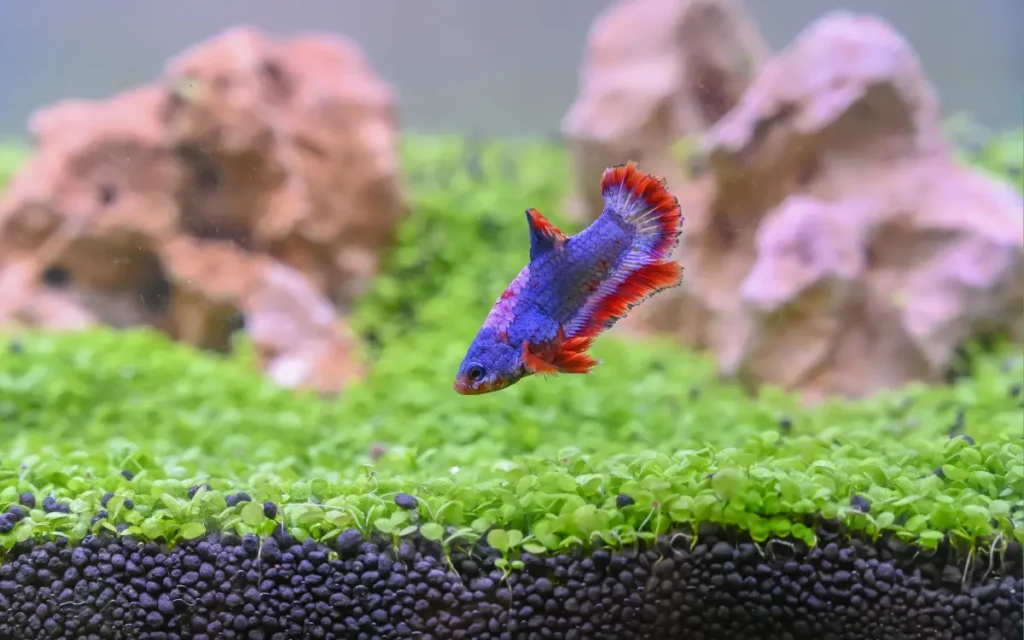
The correct first step depends on whether you already have the fish.
If You Have Not Bought Your Betta Yet
Set up and cycle the aquarium before buying your Betta.
Cycling allows helpful bacteria to grow inside the filter and on tank surfaces. These bacteria process toxic fish waste. Clear-looking water is not proof that an aquarium is safe.
You will need a freshwater test kit to measure ammonia, nitrite, nitrate, and pH. Follow this fish tank cycling guide before bringing the fish home.
A fishless cycle is the safest choice because no fish is exposed to ammonia or nitrite while the bacteria become established.
If Your Betta Is Already Home
Move the fish into the largest safe tank you can provide. A heated and filtered 5-gallon tank is much better than leaving it in a small cup while waiting for a perfect setup.
Fill the tank with temperature-matched tap water and add the correct amount of aquarium water conditioner. Install a heater, thermometer, and gentle filter.
Test ammonia and nitrite every day while the aquarium cycles. Both should remain at 0 ppm. If you detect either one, make a partial water change with conditioned water and test again.
Choose a water-change amount that brings the reading as close to zero as possible. A higher reading will normally require a larger change.
Feed lightly during this period because uneaten food creates more ammonia. Do not add tank mates, replace the filter media, or clean every tank surface at once.
Bottled bacteria may help the cycle start, but it does not replace water testing. If ammonia is already present, follow these steps for lowering aquarium ammonia.
Betta Fish Characteristics
Betta fish are small freshwater fish known for their colours, flowing fins, and territorial behaviour. Most pet-store Bettas are domesticated forms of Betta splendens.
They usually grow to around 2.5 to 3 inches long, although their fins can make them appear larger. With clean water and steady care, many live for three to five years.
Bettas are active and curious when they feel safe. They may swim toward you at feeding time, inspect new decorations, rest on plant leaves, and patrol the same parts of their tank each day.
What Is the Betta Labyrinth Organ?
Bettas have a special breathing structure called a labyrinth organ. It allows them to take oxygen directly from the air above the water.
You may see your Betta swim to the surface, take a quick breath, and return to the tank. This is normal.
The labyrinth organ does not mean a Betta can live in dirty water. Bettas still use their gills and still need safe water, filtration, and regular maintenance.
Keep the water surface open enough for the fish to breathe. Use a lid because Bettas can jump, but leave the normal air space between the water and the lid.
Can Betta Fish Live in Bowls?
A Betta may survive for a short time in a bowl, but a bowl is not a suitable permanent home.
Small bowls heat and cool quickly. Waste also builds up much faster, and most bowls cannot safely hold a heater and filter.
A 5-gallon tank gives the fish swimming space and makes the water easier to manage. The University of Illinois College of Veterinary Medicine also recommends a 5-gallon tank or larger for Bettas.
Betta Fish Origin and Natural Habitat
Wild Betta splendens come from Southeast Asia, especially Thailand and nearby areas. They live in warm, shallow waters with slow movement and thick plant growth.
These areas can include marshes, floodplains, canals, and rice-growing regions. The water may be shallow, but it can cover a wide area. Wild Bettas do not spend their whole lives in tiny isolated puddles.
Their natural environment explains why pet Bettas prefer warm water, gentle flow, plant cover, and easy access to the surface.
Domestic Bettas look very different from most wild Bettas. Selective breeding has produced longer fins and many colours, patterns, and tail shapes.
Wild Betta splendens is currently listed as Vulnerable by the IUCN Red List, mainly because of habitat loss and pollution.
How to Choose a Healthy Betta Fish
Choosing a healthy fish gives you a better start, though even a healthy-looking Betta can become stressed after moving.
Watch the fish for a few minutes before buying it. A healthy Betta should notice movement around its container and be able to swim without falling sideways, sinking, or floating without control.
Signs of a Healthy Betta
Look for a fish that:
- Is alert and responsive
- Breathes without struggling
- Swims with control
- Has clear eyes
- Has smooth scales
- Has a body that is not badly swollen or thin
- Can reach the surface without trouble
- Shows interest in nearby movement
Minor fin damage can heal in good water, but severe damage may point to infection, injury, or long-term poor care.
Warning Signs at the Store
Avoid buying a fish with:
- White spots or a gold dust-like coating
- Open wounds
- Cotton-like growths
- Raised, pinecone-like scales
- Severe swelling
- Rapid or strained breathing
- Trouble staying upright
- Eyes that are badly swollen
- A body that is extremely thin
- No response to movement
Buying a sick fish because you want to rescue it is understandable, but it can be difficult for a first-time owner. It may also require a quarantine tank and veterinary help.
What You Need for a Betta Fish
You do not need every product sold in the aquarium aisle. Start with the equipment that keeps the water warm and safe.
| Item | Why you need it |
| 5-gallon or larger tank | Gives the fish room and keeps water more stable |
| Secure lid | Stops the Betta from jumping |
| Adjustable heater | Maintains warm, steady water |
| Thermometer | Confirms the heater is working |
| Gentle filter | Holds helpful bacteria and removes waste |
| Water conditioner | Treats chlorine and chloramine in tap water |
| Freshwater test kit | Measures ammonia, nitrite, nitrate, and pH |
| Gravel vacuum | Removes waste during water changes |
| Betta pellets | Provides the main daily diet |
| Smooth hiding place | Gives the fish somewhere to rest |
| Live or silk plants | Provide cover and resting areas |
| Light timer | Maintains a regular day and night routine |
Substrate, live plants, and decorative wood can make the tank look better, but safe water comes first.
Five-Gallon vs. Ten-Gallon Betta Tank
A 5-gallon aquarium is the smallest tank I recommend for one Betta. It can hold a heater, filter, plants, and a hiding place without becoming too crowded.
A 10-gallon tank is easier for most beginners. More water changes temperature slowly and gives waste more room to dilute. It also provides more swimming space.
Choose a long tank instead of a narrow, tall tank. Bettas spend time near the surface and often swim from side to side.
When a 5-Gallon Tank Works
A 5-gallon tank can work well when:
- It holds only one Betta
- It has a heater and gentle filter
- The tank is fully cycled
- Water is tested regularly
- It is not packed with decorations
- Weekly maintenance is completed
Why a 10-Gallon Tank Is Easier
A 10-gallon tank gives you more room for plants and hiding places. It is also more forgiving if you accidentally add slightly too much food or miss a small piece of waste.
That does not mean a 10-gallon aquarium cleans itself. It still needs water testing and regular partial water changes.
Read this 5-gallon vs. 10-gallon Betta tank comparison if you are deciding between the two.
How to Set Up a Betta Fish Tank
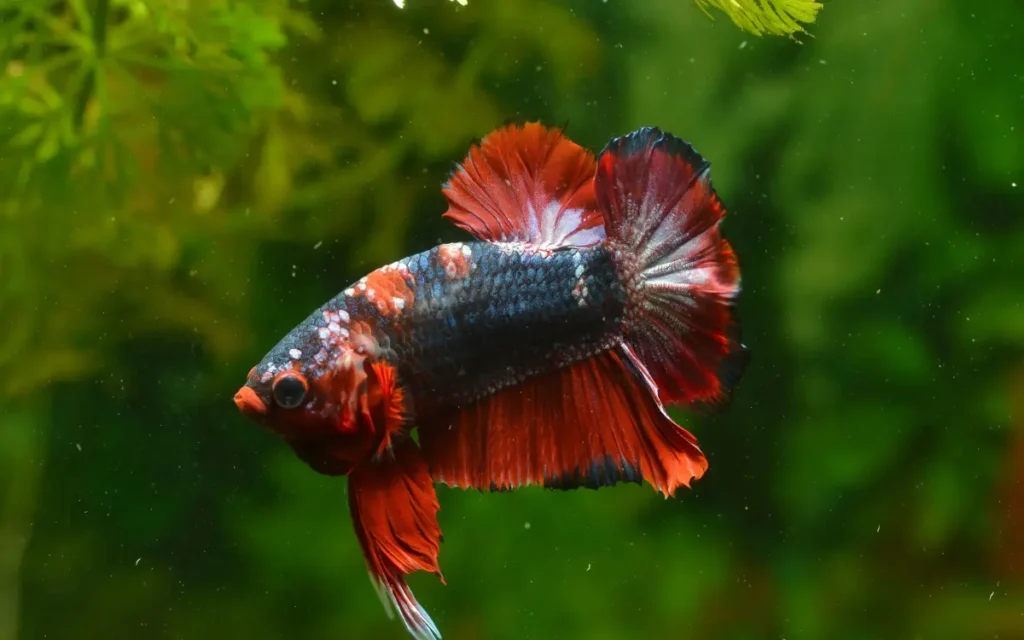
Step 1: Choose a Safe Location
Place the aquarium on a flat, strong surface that can hold its full weight.
Keep it away from direct sunlight, cold windows, air conditioners, heaters, and busy areas where the tank may be knocked.
Step 2: Rinse the Tank and Decorations
Rinse the tank, substrate, plants, and decorations with clean water.
Never use soap, disinfectant, window cleaner, or other household chemicals. Residue can remain on the surface and harm the fish.
Step 3: Add the Substrate
Add around one or two inches of aquarium sand or gravel.
Either option can work. Choose a substrate that is easy to vacuum and does not contain sharp pieces.
Step 4: Install the Equipment
Install the heater, thermometer, filter, plants, and hiding places.
Keep enough open space for swimming. Check decorations for sharp edges and small holes where the fish could become trapped.
Step 5: Add Conditioned Water
Fill the tank with tap water and add the amount of water conditioner listed on the product label.
Untreated chlorine and chloramine can damage fish gills and the bacteria living inside the filter.
Step 6: Adjust the Temperature and Flow
Turn on the heater and filter. Wait until the temperature reaches 78°F to 80°F.
Watch the filter flow. The water should move gently without pushing the fish around. Add a sponge, pre-filter, or safe baffle if the current is too strong.
Step 7: Cycle the Aquarium
Follow a fishless cycling method using a controlled ammonia source. Test the water during the process.
A cycled aquarium must be able to process the added ammonia source without leaving detectable ammonia or nitrite. Follow the testing method and timing in your chosen cycling instructions.
Nitrate often appears during cycling, but a heavily planted tank may use some or all of it. The presence of nitrate alone does not prove that the tank is ready.
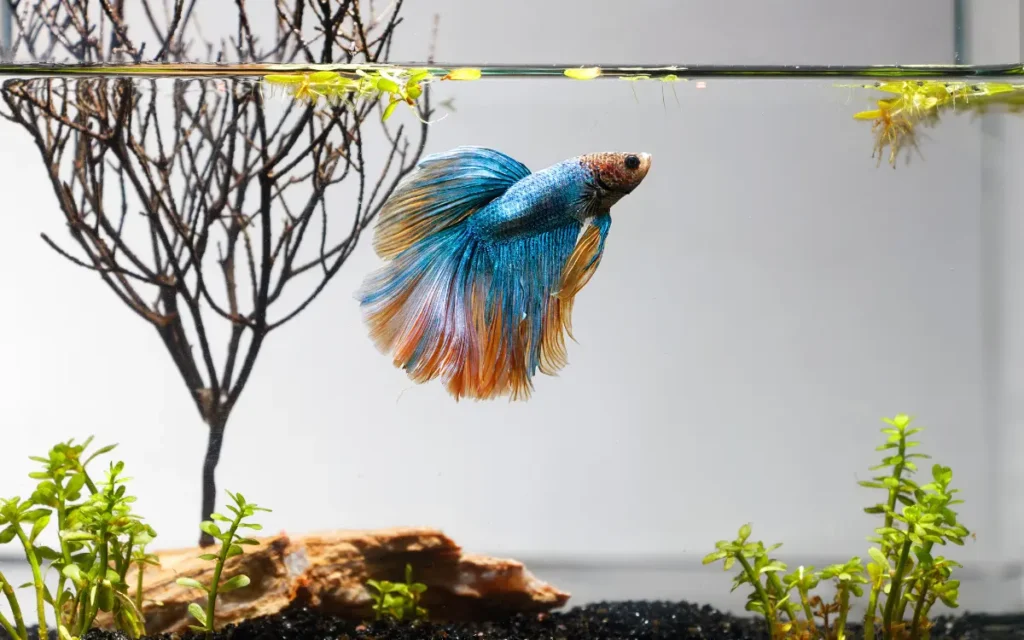
Betta Tank-Ready Checklist
Before adding the fish, confirm that:
- The heater maintains a steady temperature
- The filter produces a gentle flow
- Ammonia reads 0 ppm
- Nitrite reads 0 ppm
- The tank has completed its cycling test
- Tap water has been conditioned
- Decorations are smooth
- The lid fits securely
- The fish can reach the surface
- The aquarium has a hiding place
Betta Fish Water Parameters
Testing your water is more useful than judging it by appearance. Clear water can still contain ammonia or nitrite.
| Parameter | Recommended condition | What to do if it is wrong |
| Temperature | 78°F to 80°F | Check the heater and change the temperature slowly |
| Ammonia | 0 ppm | Make a conditioned partial water change and retest |
| Nitrite | 0 ppm | Change part of the water and inspect the tank cycle |
| Nitrate | Preferably below 20 ppm | Change water and remove trapped waste |
| pH | Stable around 6.5 to 7.5 | Test the source water and avoid sudden chemical changes |
Do Bettas Need Soft Water?
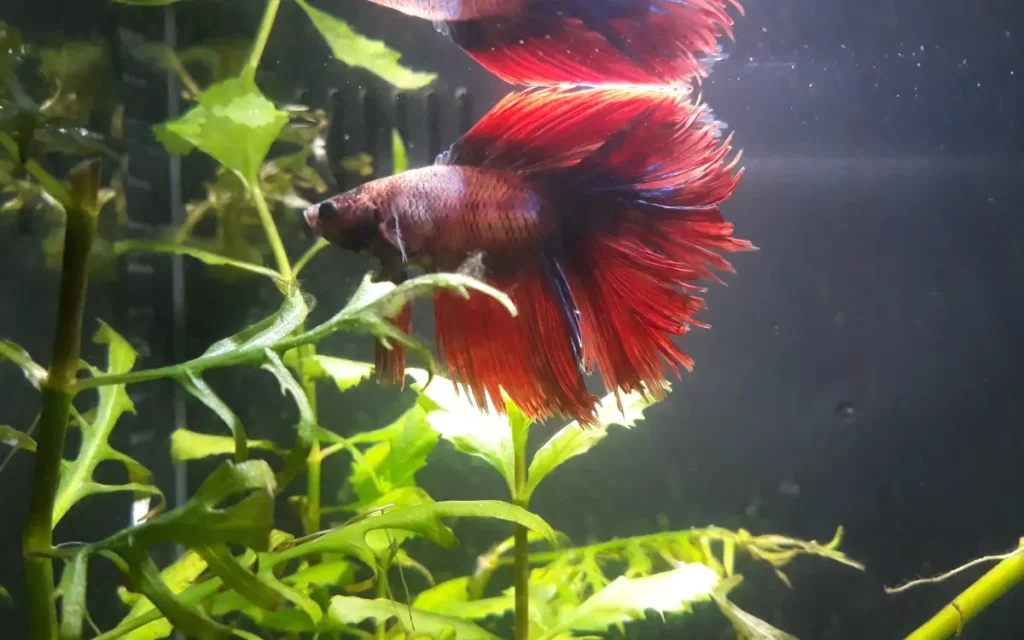
Bettas usually do well in soft to moderately hard freshwater. Most beginners do not need to change hardness when their tap water is safe and stable.
Suddenly changing hardness can be more stressful than keeping a Betta in water that falls slightly outside a suggested range.
If your tap water is extremely hard or soft, test its general hardness and carbonate hardness before trying to change it.
Should You Change Betta Tank pH?
Avoid adding chemicals simply to reach one exact pH number.
A stable pH is usually safer than a number that rises and falls because different products are being added. Test your tap water and aquarium water before deciding that a change is needed.
Can Bettas Live in Tap Water?
Bettas can live in tap water after it has been treated with aquarium water conditioner.
Letting tap water sit overnight may remove some chlorine, but it does not reliably remove chloramine. Use a conditioner that treats both when your water supplier uses chloramine.
Bringing a New Betta Home
Keep the aquarium light off while bringing the fish home. Avoid shaking the cup or bag, and do not leave it inside a hot or cold car.
Float the sealed cup or bag in the aquarium for around 15 to 20 minutes. This allows the temperatures to become closer.
For a locally purchased Betta that has only travelled for a short time, you may gradually add small amounts of tank water to the container before moving the fish.
A shipped fish may need a different method because old shipping water can become unsafe after the bag is opened. Follow the breeder’s arrival instructions when buying a fish online.
Move the Betta with a clean net or suitable container. Avoid pouring store water into your aquarium.
Leave the tank light off for the rest of the day. The fish may hide, rest, or refuse its first meal. That can be normal after a move.
Check the temperature and water readings if the behaviour continues or the fish appears to struggle.
Your Betta’s First 30 Days
The First Day
Keep the room and aquarium calm. Do not tap on the glass or repeatedly move decorations.
Check that the heater and filter are working. Offer a small meal after the fish has had time to settle, but do not worry if it refuses to eat.
Remove any uneaten food.
Days 2 to 7
Watch how your Betta swims, breathes, eats, and rests. Learning its usual behaviour makes it easier to notice a problem later.
Test ammonia and nitrite daily if the tank was not fully cycled before the fish arrived.
Do not add another fish during the first week. Give your Betta time to claim its space and recover from the move.
Weeks 2 to 4
Continue checking the water and temperature. New aquariums can change quickly, even when the water looks clean.
Feed a steady amount instead of testing several new foods at once. Remove dead leaves, uneaten food, and visible waste.
A settled Betta will often come forward for food, inspect the tank, rest on leaves, and swim around without being pushed by the filter.
After the First Month
Continue testing the water weekly and make regular partial water changes.
Do not stop testing simply because the aquarium has been running for several months. A dead plant, broken heater, missed cleaning, or extra food can change the tank.
What Do Betta Fish Eat?
Bettas are carnivorous fish that naturally eat insects, larvae, and other small animals.
Choose food made for Bettas. Check the ingredient list for named fish, shrimp, krill, or insect ingredients near the beginning.
Best Daily Food for Bettas
A quality Betta pellet is the easiest main food. Pellets are simple to portion and usually contain the vitamins and minerals a pet Betta needs.
Pellet sizes vary between brands. A tiny pellet and a large pellet should not be counted as the same amount.
Many adult Bettas eat around two to four small pellets per meal, once or twice daily. Start with a small amount and adjust by watching the fish’s body and leftover food.
Live and Frozen Foods
Frozen or live foods can add variety and encourage natural hunting behaviour.
Suitable options include:
- Brine shrimp
- Daphnia
- Mosquito larvae
- Bloodworms
- Flightless fruit flies
- Blackworms from a trusted source
Bloodworms are rich and work better as an occasional food than a daily meal.
Freeze-dried foods should also be given in small amounts. Soaking them briefly can make them easier for the fish to eat.
Signs You Are Overfeeding
A Betta’s belly may look slightly round after eating, but it should not stay badly swollen.
Signs that you may be feeding too much include:
- Food falling to the substrate
- A stomach that stays enlarged
- Long strings of waste
- Rising ammonia
- Cloudy water
- The fish becoming less active after every meal
Bettas often swim forward and beg when someone approaches the tank. Begging does not always mean the fish is hungry.
What to Do When a Betta Looks Bloated
Stop and check the full situation before adding treatment.
Test the water, confirm the temperature, and think about how much the fish recently ate. Missing one meal may help after simple overfeeding, but repeated swelling needs more attention.
Do not feed peas to a bloated Betta. Peas are not a suitable food for a carnivorous fish.
Raised scales, severe swelling, trouble swimming, or swelling that does not improve can point to a more serious problem. Contact an aquatic veterinarian when possible.
Creating a Comfortable Betta Tank
A good Betta tank should have open swimming room, quiet resting places, and easy access to the surface.
Best Plants for Bettas
Live plants create cover and give Bettas places to inspect and rest.
Beginner-friendly choices include:
- Anubias
- Java fern
- Java moss
- Water Sprite
- Cryptocoryne
- Amazon frogbit
- Red root floaters
- Guppy grass
Keep part of the surface open when using floating plants. Bettas need open spaces for breathing and feeding.
See these plants for Betta fish for more choices.
Soft silk plants can work when you do not want live plants. Avoid stiff plastic leaves that may catch long fins.
Safe Hiding Places and Decorations
Add at least one smooth cave or covered resting area.
Check every opening carefully. If the Betta can push its head into a hole but cannot turn around, it may become trapped.
Run your fingers over decorations before adding them. Remove anything sharp, rough, or cracked.
These Betta fish tank ideas can help you plan a layout without filling every inch of swimming space.
Lighting and Day-Night Schedule
Bettas need a regular light and dark schedule.
Use a timer so the aquarium light turns on and off at the same time each day. The exact schedule will depend on your plants and room lighting.
Do not leave the light on all night. Bettas sleep and need a dark period.
Too much light can increase algae and may cause constant flaring if the fish sees its reflection.
Do Bettas Need an Air Pump?
A separate air pump is not always needed when the filter creates gentle surface movement.
An air pump can be useful when running a sponge filter or when the water needs more movement. Keep the airflow low enough that the fish can swim and rest normally.
The labyrinth organ does not replace filtration. It only allows the fish to take extra oxygen from the air.
How to Reduce Strong Filter Flow
A strong current can exhaust a long-finned Betta.
You can reduce the flow by:
- Turning down an adjustable filter
- Adding a pre-filter sponge
- Placing a safe sponge near the outlet
- Using a filter baffle
- Switching to a gentle sponge filter
- Placing plants near the current to break it up
Watch the fish, not only the surface. If it is pushed sideways, avoids part of the tank, or struggles to reach food, the flow is too strong.
Betta Enrichment
Bettas can benefit from small changes that give them something to inspect.
Try moving one decoration, adding a new plant, or offering safe live food occasionally. Keep changes small so you do not disturb the whole tank.
Mirrors can cause flaring, but long mirror sessions may create stress. A Betta does not need daily mirror exercise to stay healthy.
Betta Fish Cleaning and Maintenance Schedule
| When | What to do |
| Every day | Feed, check temperature, inspect equipment, and watch the fish |
| Every week | Test water, change part of the water, and vacuum visible waste |
| Every month | Check the heater, lid, filter flow, cords, and decorations |
| When needed | Trim plants, remove algae, and rinse dirty filter sponges |
How Much Water Should You Change?
A 20% to 30% weekly water change works for many established, filtered Betta tanks.
The correct amount depends on tank size, nitrate level, feeding, plants, and whether tank mates are present.
An uncycled tank may need larger or more frequent changes. Let your test results guide the decision.
Match the new water temperature as closely as possible and add water conditioner before the water reaches the fish.
How to Clean Filter Media Safely
Rinse reusable sponges and biological filter media in old aquarium water removed during a water change.
Do not scrub them clean or rinse them under untreated tap water. You only need to remove enough dirt for water to flow through them again.
Keep reusable biological media until it begins falling apart. If your filter uses disposable chemical pads, follow the product directions without replacing all biological media at once.
Normal Betta Behaviour vs. Warning Signs
Not every strange action means your fish is sick. Bettas sleep, rest on leaves, build bubble nests, and sometimes flare.
A bubble nest is normal male behaviour, but it does not prove that every tank condition is perfect.
| Behaviour or sign | What it may mean | First action |
| Resting on a plant leaf | Usually normal | Continue watching |
| Sleeping at night | Normal | Keep a regular dark period |
| Building a bubble nest | Normal male behaviour | No action needed |
| Occasional flaring | Territorial response | Check for reflections |
| Hiding on the first day | Moving stress | Keep the tank calm |
| Constant flaring | Reflection or ongoing stress | Remove the trigger |
| Refusing several meals | Stress, cold water, unsafe water, or illness | Test water and temperature |
| Staying at the bottom all day | Cold water, strong flow, unsafe water, or illness | Test the tank immediately |
| Gasping or rapid breathing | Possible water or gill problem | Test water and inspect equipment |
| Clamped fins | Stress or illness | Check water, temperature, and tank mates |
| White spots | Possible parasite | Isolate if possible and confirm the cause |
| Cotton-like growth | Possible infection | Seek proper diagnosis |
| Raised scales | Serious internal problem | Contact an aquatic veterinarian |
| Trouble staying upright | Buoyancy, injury, or internal problem | Check water and seek help if it continues |
Test the water and temperature before adding medicine. Many water problems can cause symptoms that look like disease.
Do not mix several medications or treat the tank based on a single photograph.
Can Betta Fish Live With Other Fish?
A Betta does not need another fish for company. Many Bettas are safest when kept alone in a well-planted tank.
Never place two male Bettas together. Do not keep a male and female together as permanent tank mates.
Some Bettas can live with peaceful fish or invertebrates, but success depends on the individual Betta, tank size, hiding places, and behaviour of the other animals.
Possible Betta Tank Mates
Depending on the tank size, possible choices may include:
- Nerite snails
- Mystery snails
- Amano shrimp
- Pygmy Corydoras
- Ember tetras
- Small rasboras
- Kuhli loaches in a suitable larger tank
Shrimp may be hunted, especially small shrimp and babies. Snails can also have their antennae bitten.
Schooling fish must be kept in a proper group. Do not place one or two schooling fish into a small Betta tank.
A 15 or 20-gallon aquarium is normally safer for a Betta community than a crowded 10-gallon tank. Always have a backup tank or divider available.
Read the full Betta fish tank-mates guide before adding another animal.
Fish to Avoid
Avoid:
- Other male Bettas
- Permanent male and female pairs
- Tiger barbs and other fin-nippers
- Aggressive cichlids
- Gouramis
- Goldfish
- Large predatory fish
- Fish requiring cold water
- Fish with long fins that may trigger aggression
Why Betta Sororities Are Not for Beginners
A sorority is a group of female Bettas kept in one aquarium.
Female Bettas can still be territorial and may seriously injure one another. Sororities require a large planted tank, several hiding places, close monitoring, and an immediate separation plan.
They can fail even when the setup appears correct. For a beginner, keeping one female Betta alone is the safer choice.
Male vs. Female Betta Fish
Male Bettas often have longer fins and stronger colours, while females often have shorter fins and fuller bodies.
These signs are not perfect. Plakat males have short fins, and some females are brightly coloured. Young fish can also be difficult to identify.
Females may have a small white egg spot near the underside of the body, but this should not be used as the only clue.
Both males and females need the same basic care:
- A heated tank
- Gentle filtration
- Clean water
- A secure lid
- A proper diet
- Hiding and resting places
Females are not automatically peaceful. A female Betta may attack tank mates or another female.
Common Betta Fish Diseases and Problems
Fish symptoms can have several causes. Start by testing water and temperature before choosing a treatment.
Fin Damage and Fin Rot
Torn fins may come from sharp decorations, strong current, biting, or tank mates.
Fin rot may cause the fin edges to keep breaking down. Poor water can make the problem worse.
Remove sharp objects, separate aggressive tank mates, and correct any water problem. Seek proper treatment if the damage continues or reaches the body.
Ich
Ich often looks like small white grains of salt on the body and fins. The fish may scratch against objects, breathe quickly, or clamp its fins.
Other conditions can look similar, so confirm the problem before treating the aquarium.
Velvet
Velvet may appear as fine gold or rust-coloured dust. Infected fish may hide from light, clamp their fins, scratch, or breathe quickly.
Some velvet treatments can harm shrimp and snails. Move invertebrates only when it is safe and follow treatment directions carefully.
Popeye
One or both eyes may become swollen because of injury, infection, or poor water.
Test the water, remove sharp objects, and watch whether one or both eyes are affected. Severe swelling needs professional help.
Swimming and Buoyancy Problems
A Betta that floats, sinks, or swims sideways may be overfed, injured, stressed, or dealing with an internal problem.
Test the water and confirm that the temperature is correct. Do not assume every swimming problem is “swim bladder disease.”
Bloating and Raised Scales
A swollen stomach after a large meal may improve with corrected feeding.
Raised pinecone-like scales are more serious. This sign is often called dropsy, but dropsy describes fluid buildup rather than one single disease.
A Betta with swelling, raised scales, weakness, or breathing trouble needs fast help from an aquatic veterinarian when one is available.
Does Betta Type Change Its Care?
All domestic Bettas need warm water, safe water chemistry, a filter, proper food, and a covered tank.
Fin and body shape can change how the tank should be arranged.
Long-Finned Bettas
Veil tail, Halfmoon, Rosetail, and other long-finned Bettas may tire more easily in strong flow.
Give them gentle filtration and resting leaves near the surface.
Plakat Bettas
Plakat Bettas have shorter fins and are often stronger swimmers.
They may be active jumpers, so check the lid carefully. More open swimming space is useful.
Crowntail and Veil Tail Bettas
Crowntail Bettas have reduced webbing between their fin rays. Their pointed fin shape should not be confused with fin damage.
Veil Tail Bettas have long, flowing tails and often need very gentle water movement.
You can compare more colours and tail shapes in this guide to the different types of Betta fish.
Breeding Betta Fish
Breeding Bettas requires more than placing a male and female together.
The pair needs a separate breeding setup, careful conditioning, close supervision, and a plan for raising many young fish. The male usually builds a bubble nest and guards the eggs after spawning.
The female must be removed at the correct time, and the male must later be separated from free-swimming fry. The young fish also need tiny foods and several grow-out containers.
Breeding is better left until you have experience with normal Betta care and access to homes for the young fish.
Common Betta Care Mistakes
Keeping a Betta in a Bowl
Bowls are difficult to heat and filter. Their small water volume can become unsafe quickly.
Skipping the Heater
Room temperature is often lower than Betta water temperature. It may also change between day and night.
Adding the Fish Before Cycling
A new aquarium can contain ammonia even when the water is clear.
Feeding Too Much
Extra food can cause swelling and pollute the water.
Using Untreated Tap Water
Chlorine and chloramine can damage fish and filter bacteria.
Making Complete Water Changes
Replacing all the water can cause sudden changes in temperature and chemistry.
Replacing All Filter Media
Removing all mature biological media may weaken or restart the tank cycle.
Using Sharp Decorations
Rough plastic plants and narrow holes can damage fins or trap the fish.
Keeping Incompatible Tank Mates
A peaceful-looking fish can still bite fins, chase the Betta, or compete for food.
Treating Without Testing
Medicine will not fix ammonia, nitrite, cold water, or an overly strong filter.
Frequently Asked Questions
Are Betta Fish Easy to Care For?
Bettas are beginner-friendly when their aquarium is properly prepared. They still need a 5-gallon or larger tank, heater, filter, water conditioner, testing, and weekly maintenance.
They are not low-care pets that can be left in an unheated bowl.
How Long Do Betta Fish Live?
Most Bettas live for around three to five years. Age at purchase, genetics, water quality, diet, temperature, and stress can affect lifespan.
Do Betta Fish Need a Heater?
Yes. Bettas are tropical fish and need stable water between 78°F and 80°F.
A normal room may feel warm to you while still being too cold for the fish.
Do Betta Fish Need a Filter?
Yes. A filter removes waste particles and provides a home for bacteria that process fish waste.
Choose a filter with gentle or adjustable flow.
Do Betta Fish Need an Air Pump?
A separate air pump is not normally required when the filter creates enough surface movement.
You will need an air pump when using a sponge filter.
How Often Should Betta Water Be Changed?
A filtered and cycled tank normally needs a 20% to 30% water change each week.
Small, uncycled, overstocked, or heavily fed tanks may need more frequent changes. Test the water instead of relying only on a fixed schedule.
Can a Betta Live Alone?
Yes. Bettas do not need another fish for company.
Plants, hiding places, open swimming space, and small changes to the tank can give a solitary Betta plenty to do.
Why Is My Betta Staying at the Bottom?
Short periods of bottom resting can be normal, especially during sleep.
A Betta that stays there all day may be cold, stressed, exhausted by strong current, exposed to ammonia or nitrite, or sick. Test the water and temperature first.
Why Is My Betta Not Eating?
A newly moved Betta may refuse food for a day while it settles.
Continued refusal may come from cold water, unsafe water, stress, overfeeding, stale food, or illness. Check the tank before buying several new foods.
How Can I Tell If My Betta Is Doing Well?
A settled Betta usually eats regularly, swims with control, rests normally, breathes without effort, and takes interest in activity outside the tank.
Colour and bubble nests alone do not prove that the fish is healthy. Water-test results and steady behaviour give you a better picture.
