
10 Best Plants for Your Betta Fish Tank

Live plants can make a betta tank look better, feel calmer, and stay cleaner. They give your betta soft places to rest, shady areas to explore, and a more natural home than a plain glass tank.
My honest opinion: if you are new to betta keeping, start with easy plants like Anubias, Java Fern, Amazon Frogbit, and Java Moss. These plants do not need CO2, strong light, or special planted tank skills. They are simple, forgiving, and safe for most beginner betta tanks.
This guide will help you choose the best live plants for a betta fish tank, where to place them, and what mistakes to avoid.
If you are still learning basic betta care, read this full guide first: Betta Fish Care for Beginners. It will help you understand tank size, heating, feeding, water changes, and daily care before adding more plants.
Why Live Plants Are Good for Betta Fish
Bettas are not fish that enjoy bare, empty tanks. In the wild, they live around plants, roots, leaves, and slow-moving water. A planted tank helps your betta feel safer because there are places to hide, explore, and rest.
Live plants also help with water quality. They use some of the nutrients from fish waste, leftover food, and organic matter in the tank. This does not replace water changes, but it can help make the tank more stable.
Plants are also useful for bettas with long fins. Many bettas like to rest on broad leaves close to the surface. This is helpful because bettas breathe air from the surface, so they often enjoy resting spots that are not too far from the top.
Different betta types may also use plants in different ways. Long-finned bettas often rest more, while short-finned bettas may swim through plants more actively. If you want to learn more about betta varieties, read this guide on Types of Betta Fish.
What Makes a Plant Safe for Bettas?
A good betta plant should be soft, easy to care for, and not too sharp. Bettas have delicate fins, especially halfmoon, rosetail, dumbo, and other long-finned types. Rough plastic plants and sharp decorations can tear their fins.
The best plants for bettas usually have one or more of these features:
- Soft leaves that do not damage fins.
- Broad leaves where bettas can rest.
- Low light needs.
- No need for CO2.
- Slow or easy-to-control growth.
- Floating cover without blocking the full surface.
You do not need a difficult planted tank setup to keep betta plants. A small LED light, warm water, gentle filter, and basic care routine are enough for many beginner plants.

Why Live Plants Are Great for Betta Fish
Before we dive into the best plants, let’s talk about why live plants are so awesome for your Betta:
Live plants create a natural home for your Betta, similar to their native waters in Southeast Asia. They help clean the water by removing waste and give your fish places to explore and rest.
Plants also reduce stress, which keeps your Betta healthier and more colorful.
Now, let’s check out the best plants for your Betta tank!
1. Anubias Nana
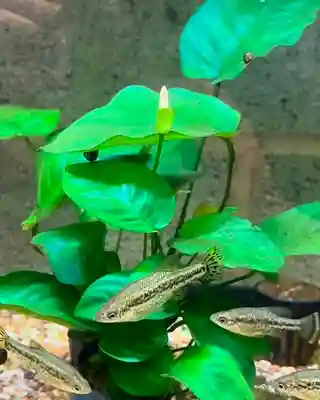
Anubias Nana is one of the best plants for betta fish tanks. It is strong, slow-growing, and very easy to care for. The broad leaves also make perfect resting spots for bettas.
This plant does well in low light and does not need CO2. That makes it perfect for small beginner tanks, especially 5 gallon and 10 gallon betta tanks.
The biggest mistake with Anubias is burying the rhizome. The rhizome is the thick green stem where the leaves and roots grow from. If you bury it under gravel, the plant can rot.
Instead, attach Anubias to driftwood, rocks, or aquarium decorations. You can use aquarium-safe glue, thread, or fishing line. Over time, the roots will grip the surface by themselves.
- Best placement: front or middle of the tank.
- Best for: resting leaves, low-light tanks, beginner setups.
2. Java Fern
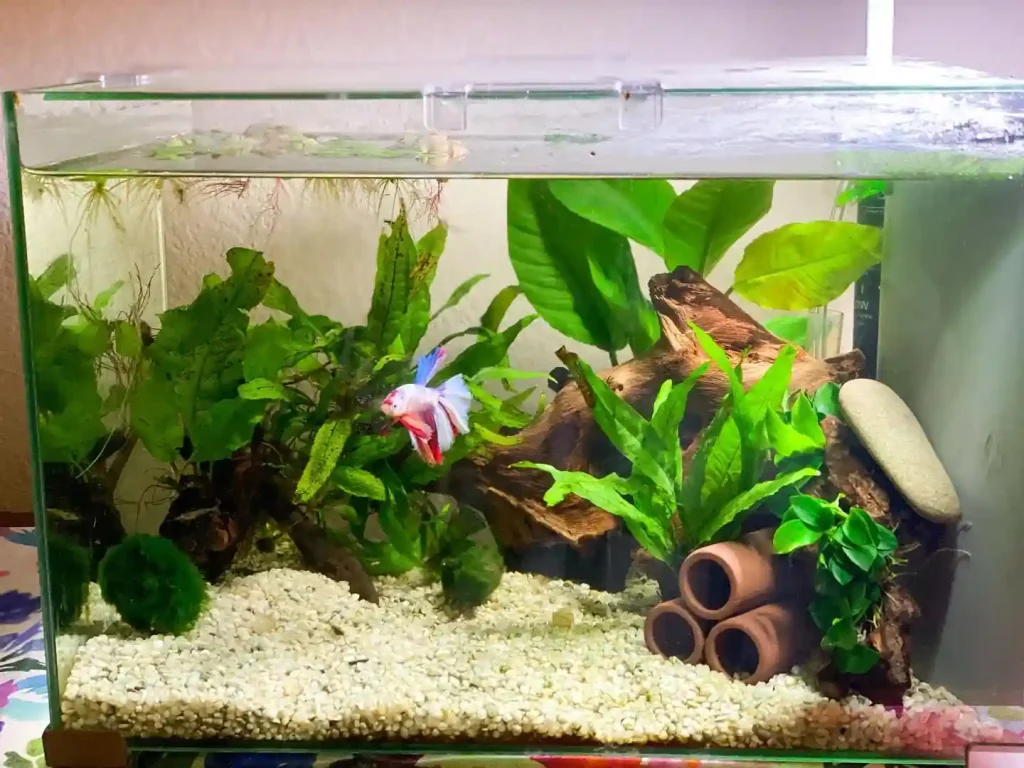
Java Fern is another excellent beginner plant for bettas. It is hardy, simple to grow, and looks natural in almost any tank.
Like Anubias, Java Fern should not be buried in the substrate. Attach it to rock, driftwood, or decor. If the rhizome is buried, it may rot.
Java Fern has long green leaves that create shelter and swimming spaces. Bettas often swim around the leaves or rest near them. It is also a good choice if your tank has plain gravel because it does not need root tabs or planted soil.
There are different types of Java Fern, including regular Java Fern, Windelov Java Fern, and narrow leaf Java Fern. All of them can work in betta tanks.
- Best placement: middle or background.
- Best for: low-light tanks, hiding spots, natural aquascapes.
3. Amazon Frogbit
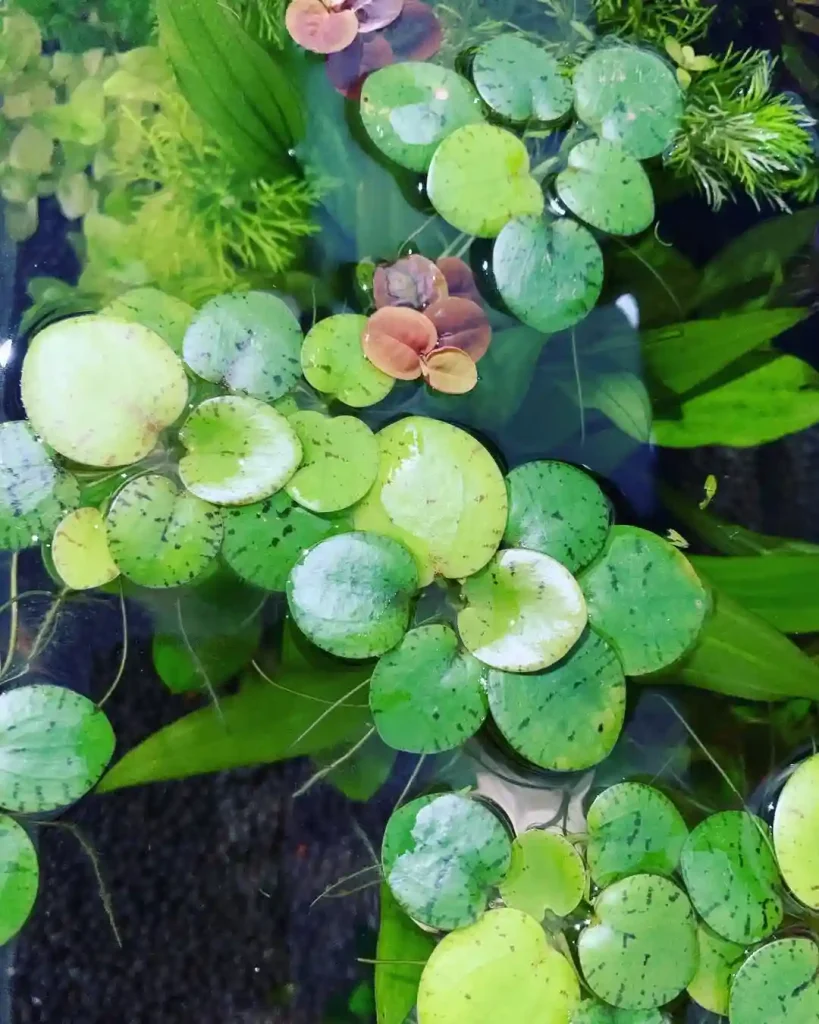
Amazon Frogbit is one of my favorite floating plants for betta fish. It sits on the water surface and grows long roots down into the tank. Bettas often enjoy swimming under the roots and resting in shaded areas.
Floating plants are great for bettas because bettas naturally spend a lot of time near the surface. They also help soften bright light, which can make the tank feel calmer.
The only issue is that floating plants can cover too much of the surface if you do not trim them. Bettas need open surface space to breathe air, so do not let Frogbit block the entire top of the tank.
Remove extra plants during weekly maintenance. Keep some open space at the front or one corner of the tank.
- Best placement: floating at the surface.
- Best for: shade, bubble nests, natural cover.
4. Java Moss
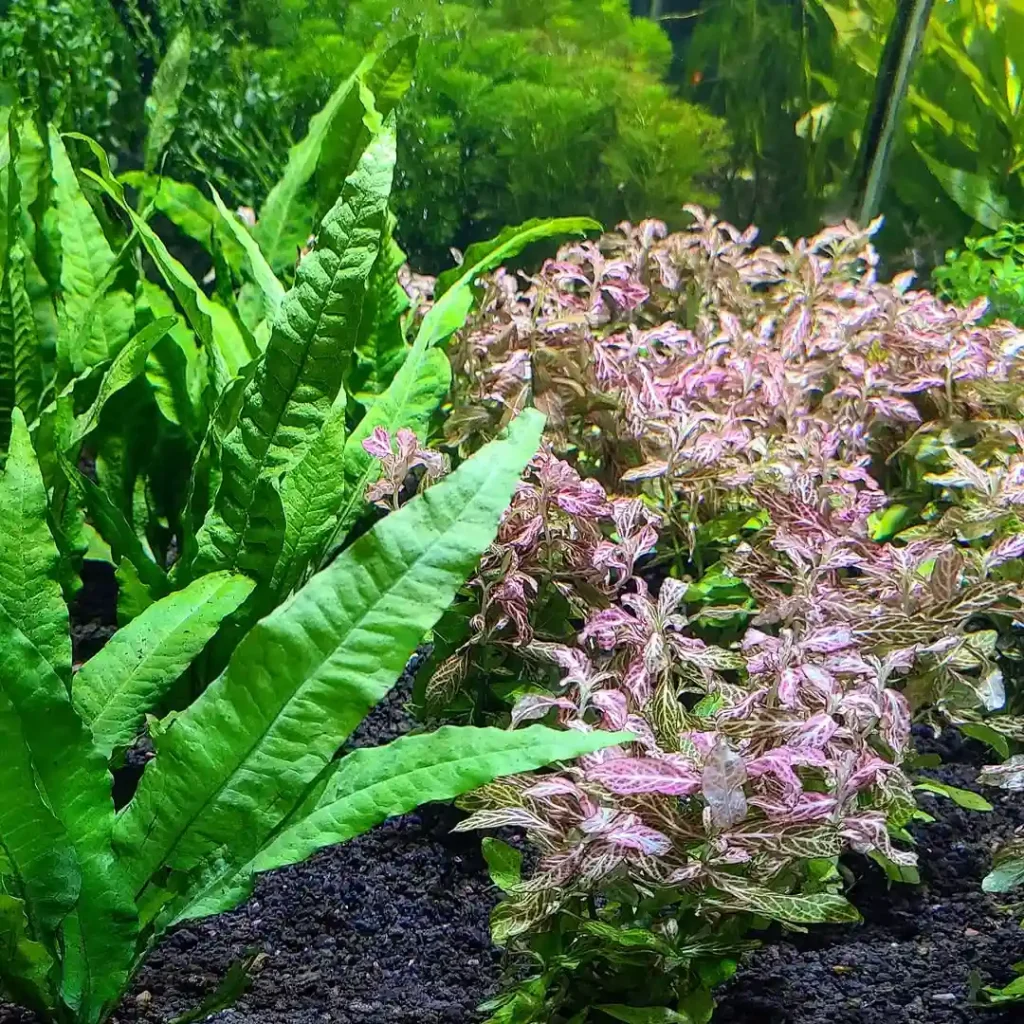
Java Moss is a soft, beginner-friendly plant that can be used in many ways. You can attach it to driftwood, place it on rocks, or let it grow into a soft patch.
Bettas may not rest on Java Moss the same way they rest on Anubias leaves, but it still gives the tank a natural feel. It also creates gentle cover and works well in small tanks.
Java Moss grows in low light and does not need CO2. It can look messy if you never trim it, so give it a light trim when it starts spreading too much.
This plant is also useful if you want a soft, natural look around hardscape. It helps cover empty spaces and makes the tank feel less bare.
- Best placement: rocks, wood, foreground, or small patches.
- Best for: soft cover, natural layouts, beginner planted tanks.
5. Bucephalandra (Buce)
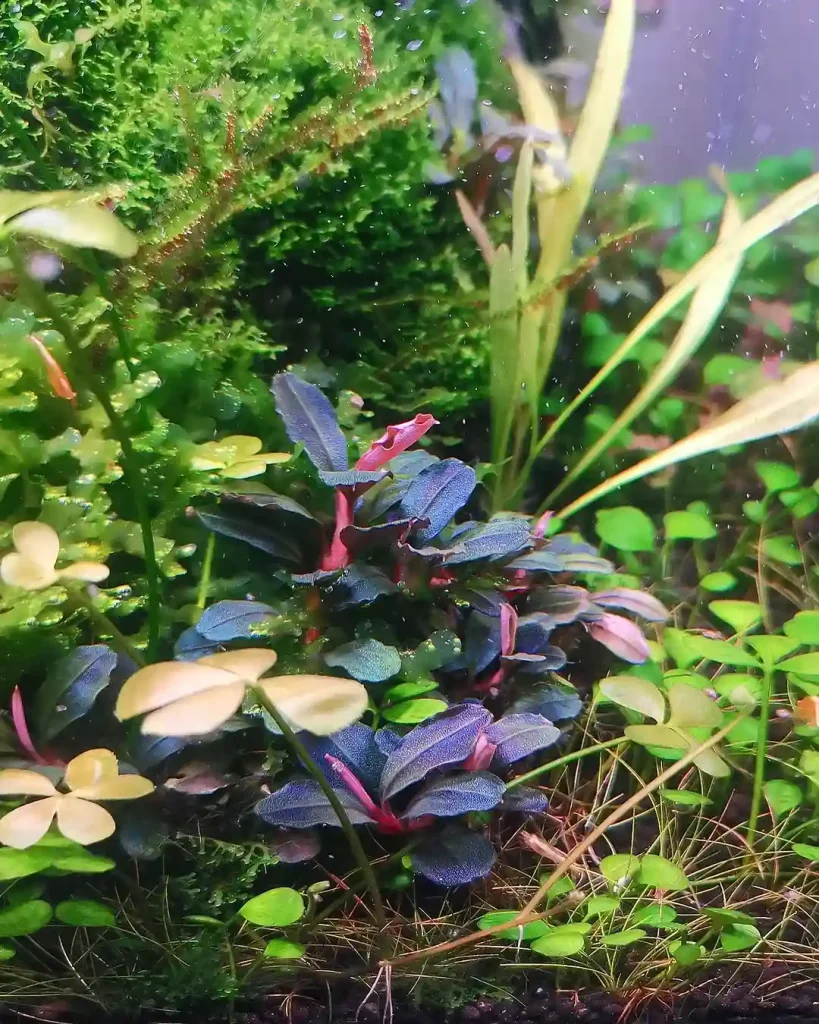
Bucephalandra, often called Buce, is a beautiful plant for small betta tanks. It grows slowly, stays compact, and comes in many leaf shapes and colors.
Buce is similar to Anubias because it has a rhizome. Do not bury it in the substrate. Attach it to wood, rocks, or decor.
This plant is a good choice if you want a natural aquascape without constant trimming. It grows slowly, so it will not take over the tank quickly.
Buce usually costs more than beginner plants like Java Fern or Anubias, but it looks very nice in small tanks. It is a good choice for a clean, simple betta setup.
- Best placement: front or middle attached to rock or wood.
- Best for: small tanks, low light, natural aquascapes.
6. Cryptocoryne Wendtii
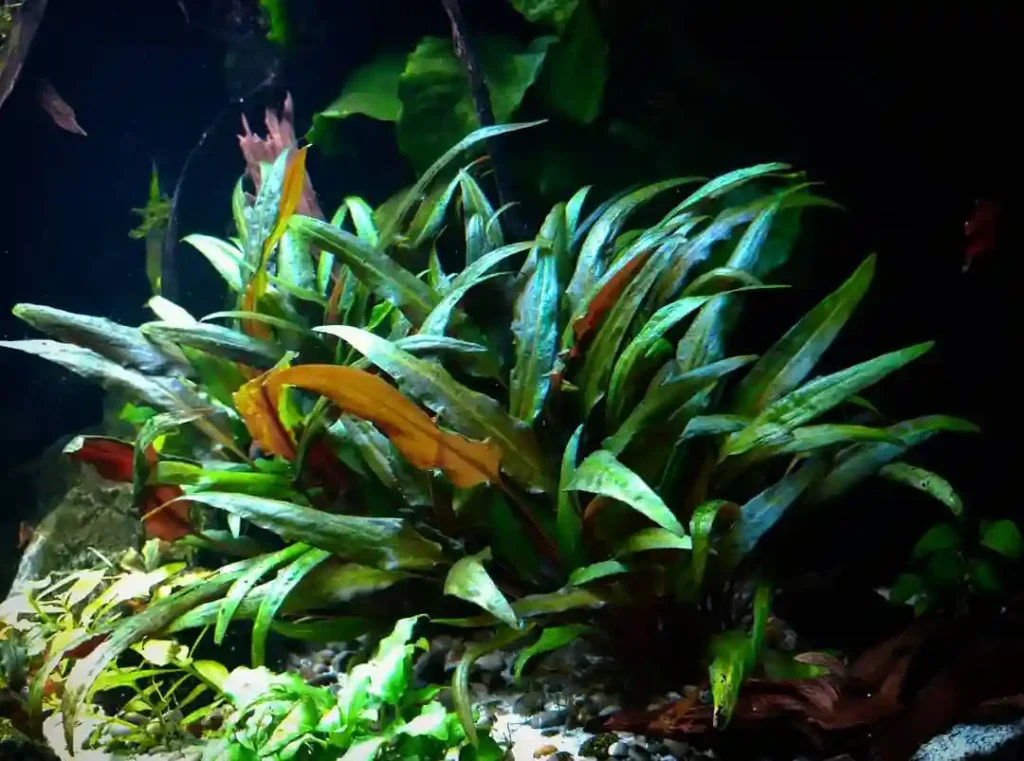
Cryptocoryne Wendtii, often called Crypt Wendtii, is a great planted option for betta tanks. It grows from the substrate and creates leafy hiding spots near the bottom and middle of the tank.
Crypts come in green, brown, bronze, and red tones. This makes them useful if you want more color without choosing difficult plants.
One thing beginners should know is that crypts may melt after being added to a new tank. This means some leaves may turn soft or die back. Do not panic. If the roots are healthy, the plant can grow new leaves after it adjusts.
Crypts do best with root tabs because they feed heavily through their roots. They do not need CO2, but they do better when the substrate has nutrients.
- Best placement: middle ground.
- Best for: natural hiding spots, color variety, planted substrate setups.
7. Hornwort
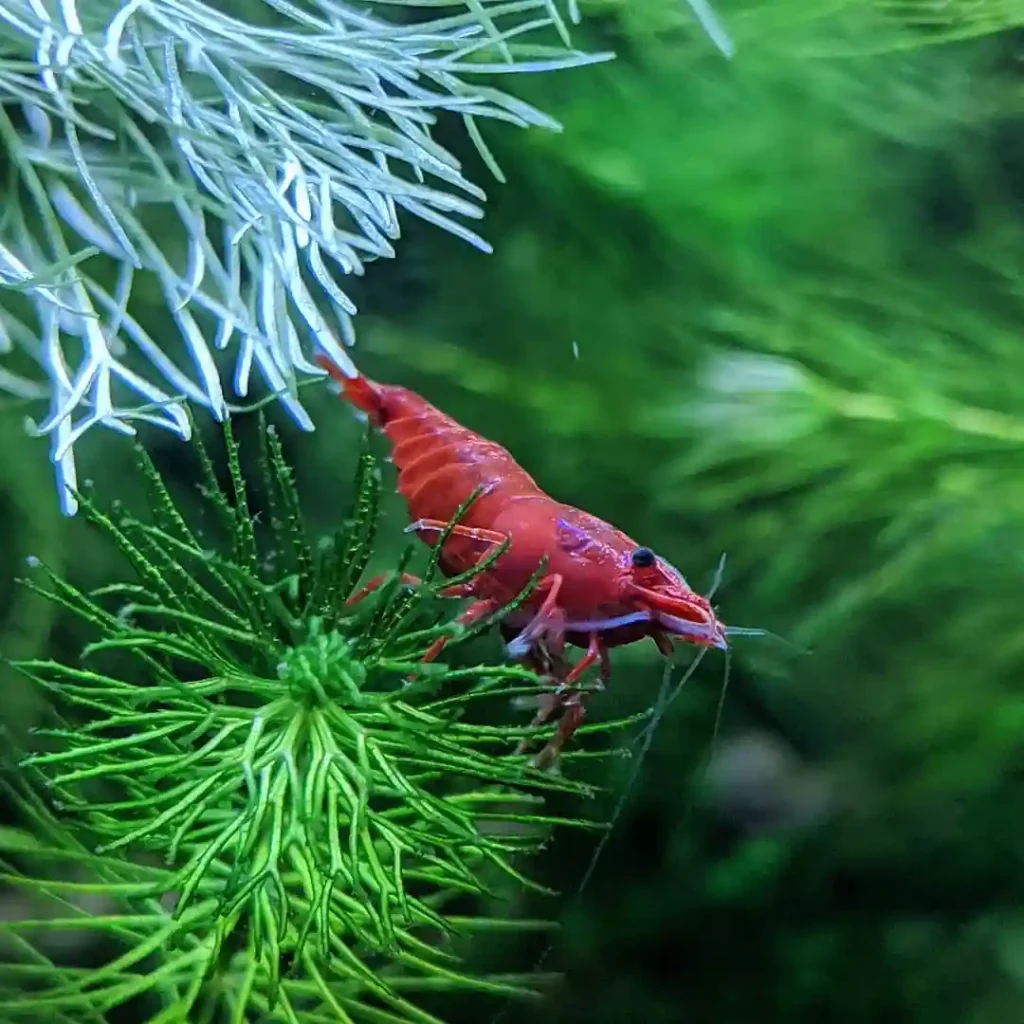
Hornwort is a fast-growing plant that can be floated or planted. It has thin, feathery stems that give the tank a soft, wild look.
Bettas often enjoy swimming through the branches, especially when the plant is used as floating cover. It also grows quickly, which can help use extra nutrients in the water.
The downside is that Hornwort can shed needles when water conditions change. This can make the tank look messy for a while. If that happens, remove loose pieces during water changes.
Hornwort is best for keepers who do not mind trimming plants often. If you want a slow-growing plant, Anubias or Bucephalandra is a better choice.
- Best placement: floating or background.
- Best for: fast growth, cover, low-tech tanks.
8. Dwarf Aquarium Lily
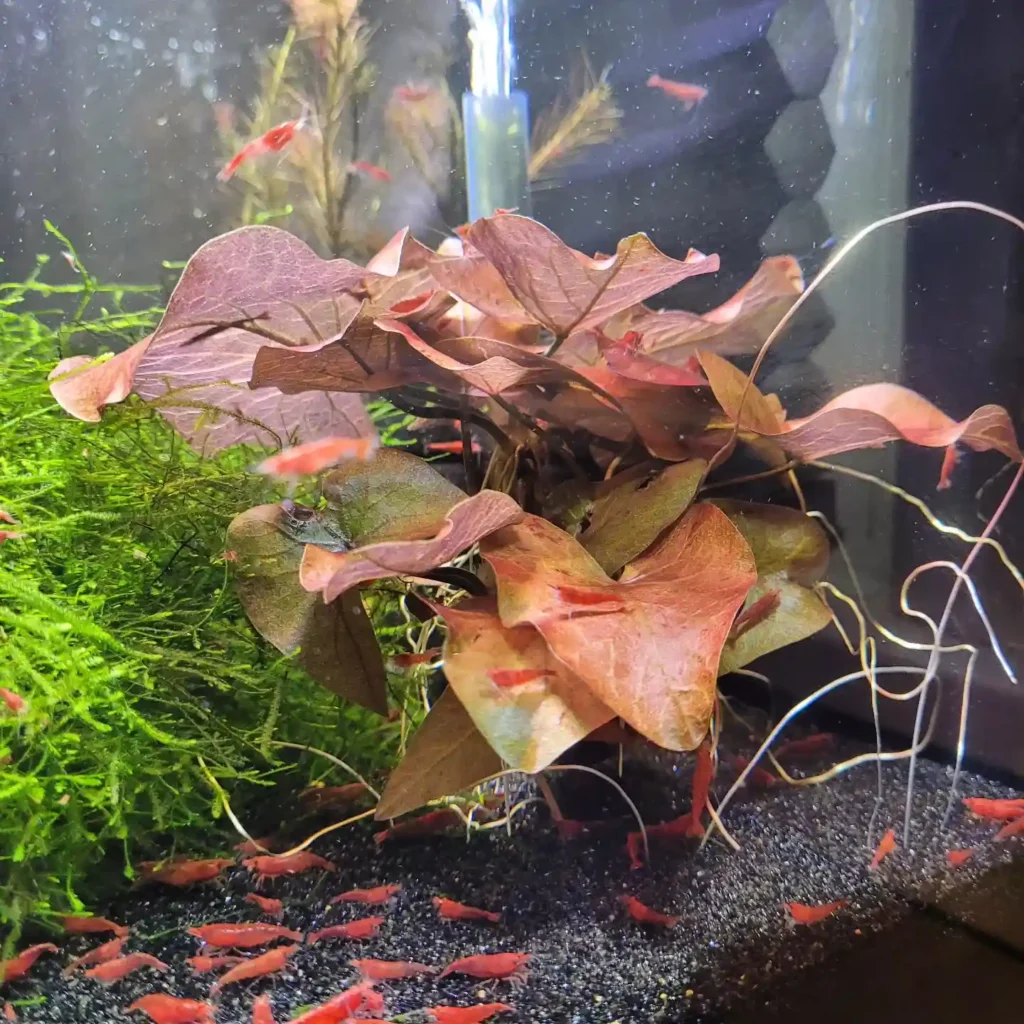
Dwarf Aquarium Lily is a beautiful plant for betta tanks because it can grow leaves that reach toward the surface. Bettas often enjoy resting under or near these leaves.
This plant grows from a bulb and is usually placed in the substrate. It can make a tank look more like a small underwater garden.
Dwarf Aquarium Lily is better for 10 gallon tanks or larger. It can grow too large for some 5 gallon tanks if you let it spread without trimming.
It may need root tabs and medium light to look its best. It is not as beginner-proof as Anubias, but it is still manageable if you want something more eye-catching.
- Best placement: middle or background.
- Best for: larger betta tanks, surface leaves, natural shade.
9. Amazon Sword
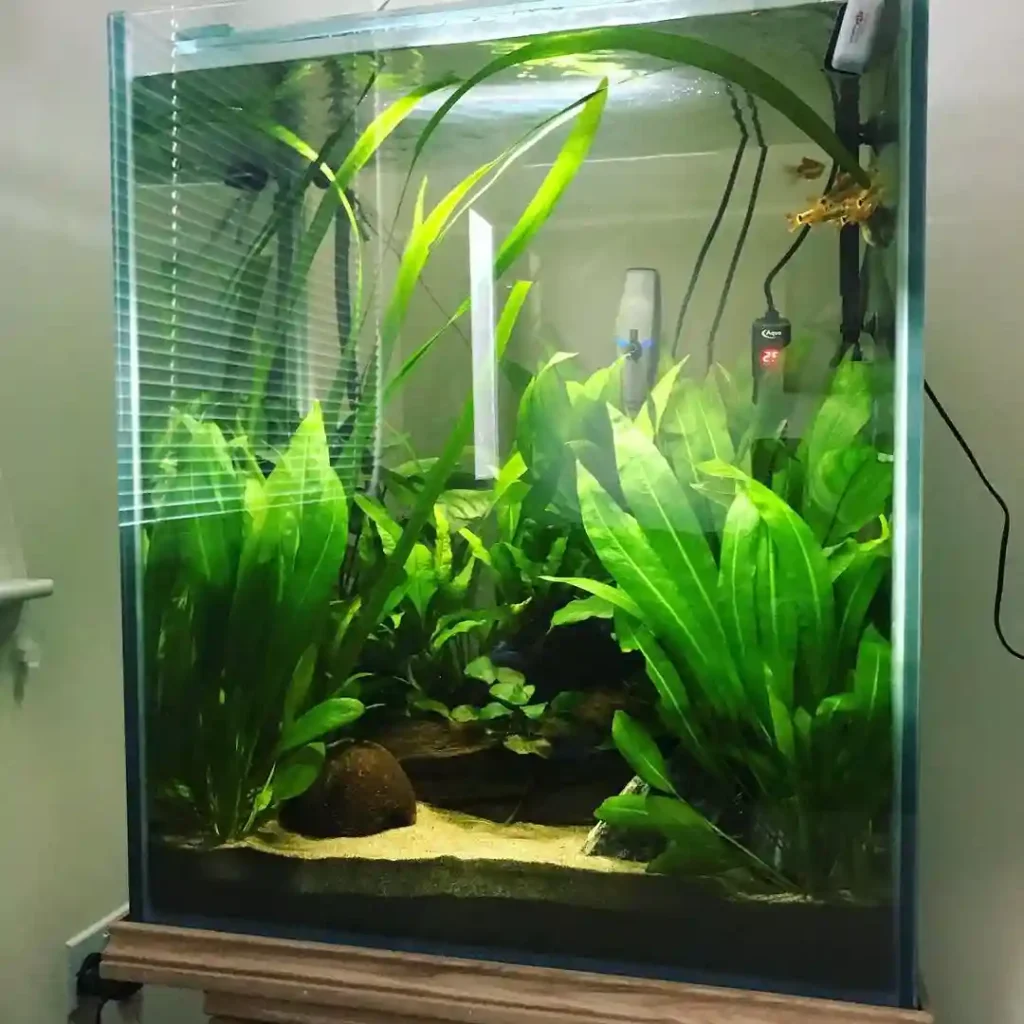
Amazon Sword is a classic aquarium plant with large green leaves. Bettas like it because the leaves create shelter and resting areas.
However, Amazon Sword can grow big. I would not choose it for a tiny tank. It is best for 10 gallon betta tanks or larger. In a 5 gallon tank, it may take up too much space.
Amazon Sword is a root-feeding plant, so it needs root tabs or nutrient-rich substrate. Without nutrients, the leaves may turn yellow or weak.
If you want a bold centerpiece plant for a larger betta aquarium, Amazon Sword can work very well. Just trim older leaves when the plant gets too large.
- Best placement: background or centerpiece.
- Best for: 10 gallon tanks, large leaves, jungle-style layouts.
10. Water Sprite
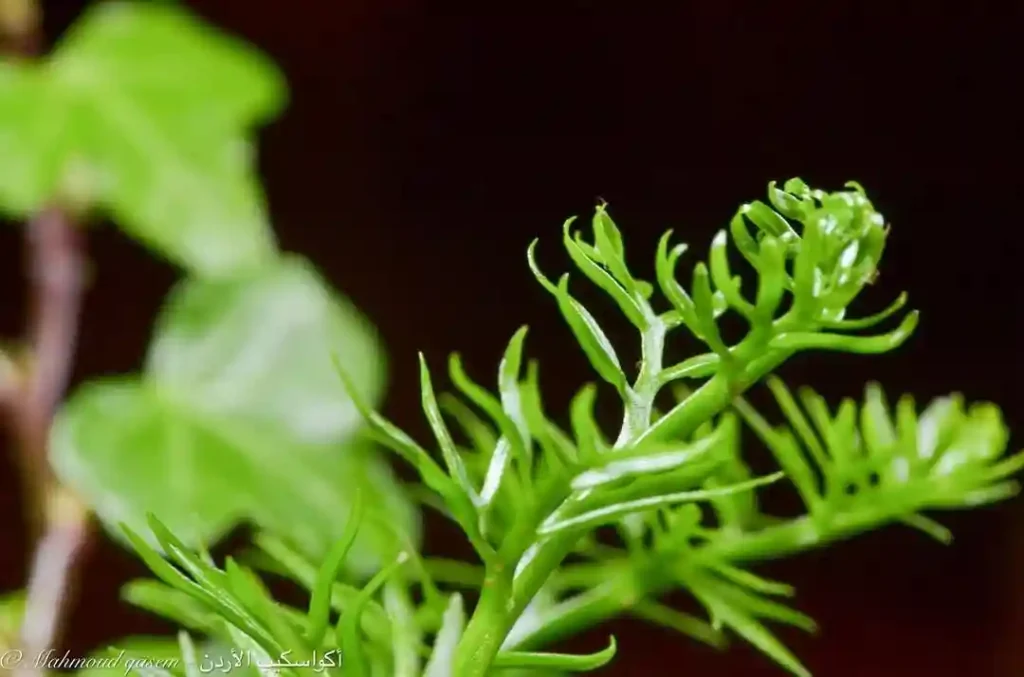
Water Sprite is a flexible plant because it can be planted in the substrate or left floating. This makes it very useful for betta tanks.
When planted, it grows as a soft background plant. When floated, it creates surface cover and long roots that bettas can explore. If you are not sure where to place it, start by floating it and see how your betta reacts.
Water Sprite grows faster than Anubias or Java Fern, so it may need trimming. The good side is that fast-growing plants can help use extra nutrients in the water.
This plant works well in 5 gallon tanks, but it needs regular trimming in smaller aquariums. In 10 gallon tanks, it has more room to grow.
- Best placement: floating or background.
- Best for: beginner tanks, soft cover, natural surface shade.
Best Plant Combos for Betta Tanks
If you are confused about which plants to buy first, do not overthink it. Pick a simple mix that gives your betta different areas to use.
For a 5 gallon betta tank, try Anubias Nana, Java Fern, Java Moss, and Amazon Frogbit. This gives you attached plants, floating cover, and soft texture without overcrowding the tank.
For a 10 gallon betta tank, try Anubias, Java Fern, Cryptocoryne Wendtii, Water Sprite, and Amazon Frogbit. This setup gives more height, more cover, and a fuller planted look.
For a low-light betta tank, choose Anubias, Java Fern, Bucephalandra, Java Moss, and Cryptocoryne. These plants can grow under basic aquarium lights.
For a no-CO2 betta tank, all plants in this guide can work. You do not need CO2 for a beginner betta setup. Good lighting, warm water, and simple maintenance matter more.
How to Set Up a Planted Betta Tank
A planted betta tank does not need to be complicated. The goal is to keep the tank warm, calm, clean, and comfortable.
A 5 gallon tank is a good starting size for one betta. A 10 gallon tank is even better because it gives more swimming room and more space for plants.
Use a heater to keep the water stable. Bettas are tropical fish and do best in warm water. Sudden temperature changes can stress them.
Choose a gentle filter. Bettas do not like strong current, especially long-finned types. A sponge filter or a filter with reduced flow works well.
Use a basic aquarium LED light for 6 to 8 hours per day. Too much light can cause algae, especially if your tank has slow-growing plants.
For substrate, you can use aquarium gravel, sand, or planted substrate. Rhizome plants like Anubias, Java Fern, and Buce do not need to be planted in the substrate. Root plants like Amazon Sword and Cryptocoryne do better with root tabs.
Live Plants vs Fake Plants for Bettas
Live plants are better in most betta tanks because they look natural, help with water quality, and give your fish soft resting places.
Fake plants can still be used, but choose silk plants instead of hard plastic plants. Plastic plants can have rough edges that tear betta fins.
A simple test is to run the plant across a thin tissue. If it catches or tears the tissue, it may damage your betta’s fins too.
If you want the easiest setup, use live low-light plants and avoid sharp decor. Your betta will have a safer and more natural home.
Common Mistakes to Avoid
One common mistake is burying Anubias, Java Fern, or Bucephalandra in the gravel. These plants have rhizomes that should stay above the substrate.
Another mistake is letting floating plants cover the whole surface. Bettas need open water at the top so they can breathe air.
Many beginners also choose plants that grow too large for small tanks. Amazon Sword and Dwarf Aquarium Lily can look great, but they need space.
Running the light too long is another issue. If you leave the light on for 10 to 12 hours every day, algae may grow quickly. Start with 6 to 8 hours.
Also, rinse new plants before adding them to the tank. Some plants can bring snails, algae, or loose dirt into the aquarium.
Easy Maintenance Routine
| Task | How Often | What to Do |
| Water change | Weekly | Change around 20 to 30 percent |
| Trim floating plants | Weekly | Keep part of the surface open |
| Check rhizome plants | Monthly | Make sure rhizomes are not buried |
| Add liquid fertilizer | Weekly or as needed | Use a small dose made for aquarium plants |
| Add root tabs | Every 2 to 3 months | Use for Amazon Sword and Crypts |
| Clean algae | As needed | Reduce light if algae grows fast |
You do not need to trim everything every week. Just remove dead leaves, keep the surface open, and make sure plants are not blocking all swimming space.
FAQs
What is the best plant for a betta fish tank?
Anubias Nana is one of the best plants for most betta tanks. It is easy to grow, safe for bettas, and has broad leaves that many bettas use as resting spots.
Do betta fish need live plants?
Bettas do not need live plants to survive, but live plants make the tank more comfortable. They provide cover, resting spots, and a more natural space.
Can bettas live with floating plants?
Yes, bettas usually enjoy floating plants. Just make sure the plants do not cover the full surface because bettas need open space to breathe air.
Are fake plants safe for bettas?
Silk plants are usually safer than plastic plants. Avoid sharp or rough fake plants because they can tear betta fins.
Do betta tank plants need CO2?
No. The plants in this guide can grow without CO2. Anubias, Java Fern, Java Moss, Frogbit, Crypts, and Buce are all good choices for no-CO2 tanks.
Can I keep plants in a 5 gallon betta tank?
Yes. A 5 gallon betta tank can hold live plants. Choose small or slow-growing plants like Anubias Nana, Java Fern, Bucephalandra, Java Moss, and Amazon Frogbit.
Will bettas eat aquarium plants?
No, bettas are mainly meat-eating fish. They may explore plants, rest on them, or swim through them, but they usually do not eat healthy plant leaves.
