
10 Oddball Fish for Your Aquarium

Community aquariums often contain familiar fish such as guppies, tetras, mollies, and gouramis. But freshwater fish come in much stranger forms.
Some can breathe air. Others sense their surroundings with weak electrical signals, bury themselves beneath the substrate, swim upside down, or move through the water like snakes.
These oddball aquarium fish can be fascinating, but unusual appearance often comes with unusual care requirements. Several species on this list grow large, eat smaller fish, escape through tiny openings, or need carefully chosen food.
Before buying one, look beyond its size at the pet store. Check its adult size, feeding behavior, tank footprint, and compatibility with your existing fish.
1. Amazon Puffer
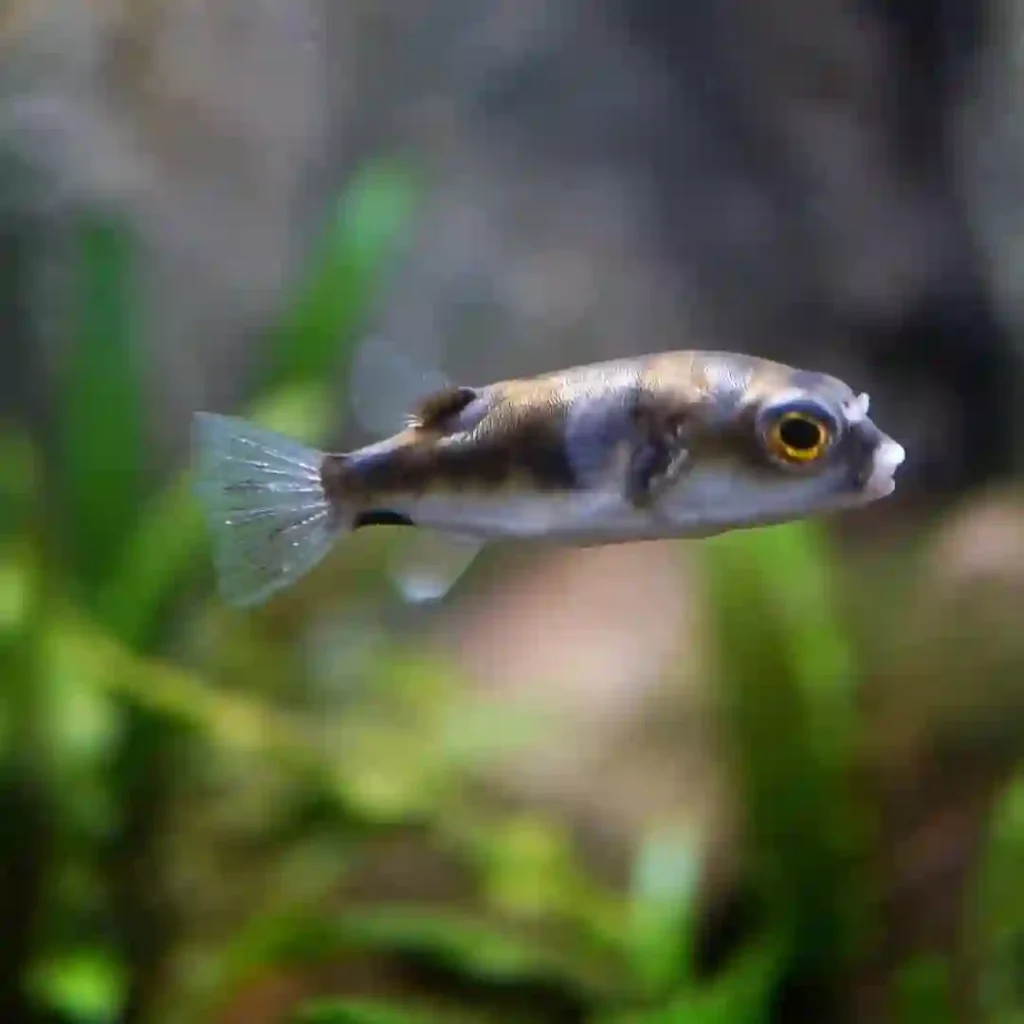
Scientific name: Colomesus asellus
The Amazon puffer is a small freshwater puffer covered in dark, curved bands. Its large eyes, rounded face, and constant activity give it an almost cartoon-like appearance.
Unlike many commonly sold puffers, this species can remain in freshwater throughout its life. It does not require a brackish aquarium.
Why It Is Unusual
Amazon puffers have four fused dental plates that continue growing. Hard food can help wear them down, but diet alone may not always prevent overgrowth. Some individuals eventually require their teeth to be trimmed by an experienced fish keeper or aquatic veterinarian.
Puffing is a defensive response, not entertaining behavior. Never frighten or remove a puffer from the water to make it inflate.
Care Requirements
Provide a mature aquarium with strong filtration, high oxygen levels, and room to swim. A varied layout with plants, wood, and open areas works well.
Feed suitable foods such as snails, mussel, shrimp, insect larvae, and other meaty items. Do not rely only on dried flakes.
Amazon puffers may nip slow fish or fish with long fins. A species-focused aquarium is usually the safest choice.
Best for: Experienced keepers who understand puffer feeding and dental care.
2. African Butterflyfish
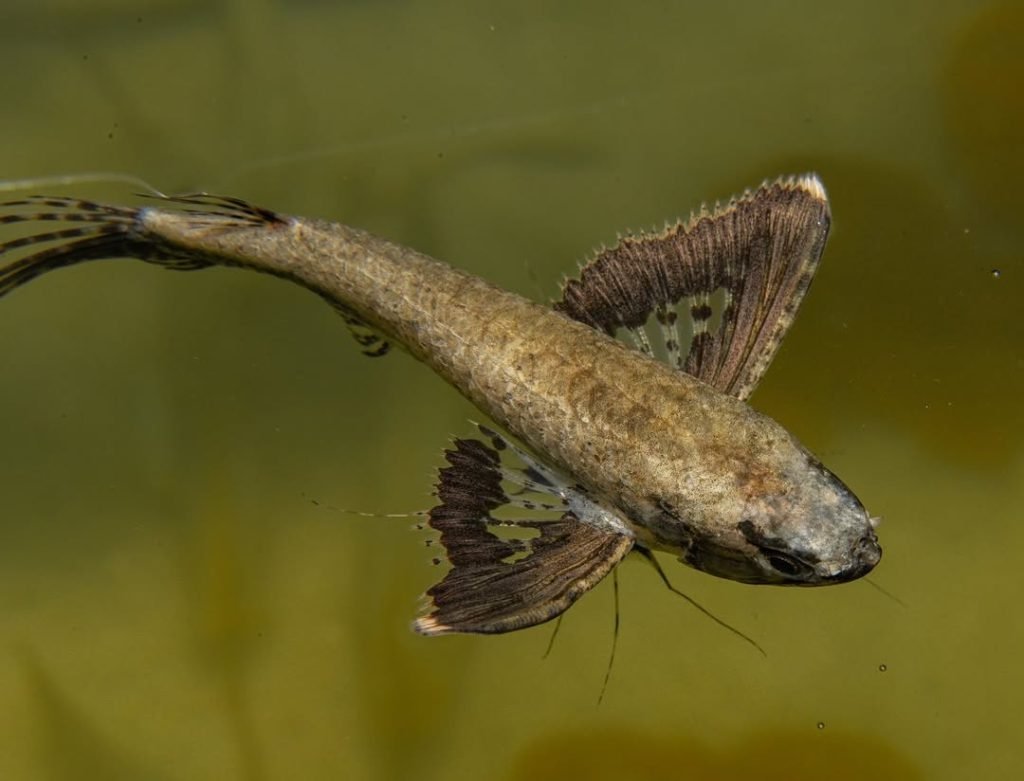
Scientific name: Pantodon buchholzi
The African butterflyfish spends most of its life immediately below the surface. Its broad pectoral fins resemble wings, while its upward-facing mouth is built for catching insects.
It is one of the strangest options for the upper level of a freshwater aquarium.
Why It Is Unusual
This species watches the space above the water rather than searching around the bottom. It can launch itself out of the aquarium when startled or when chasing food.
African butterflyfish can also take atmospheric air at the surface. They must always have open access to the waterline.
Care Requirements
Use a tight lid and cover every opening around filters, cables, and pipes. Floating plants help the fish feel protected, but do not cover the entire surface.
Keep water movement gentle near the top. Frozen and live insects, floating carnivore foods, and other surface foods are better choices than sinking pellets.
Avoid very small tank mates because they may be eaten. Fin-nipping fish and aggressive surface dwellers are also poor companions.
Best for: Intermediate keepers with a calm, securely covered aquarium.
3. Black Ghost Knifefish
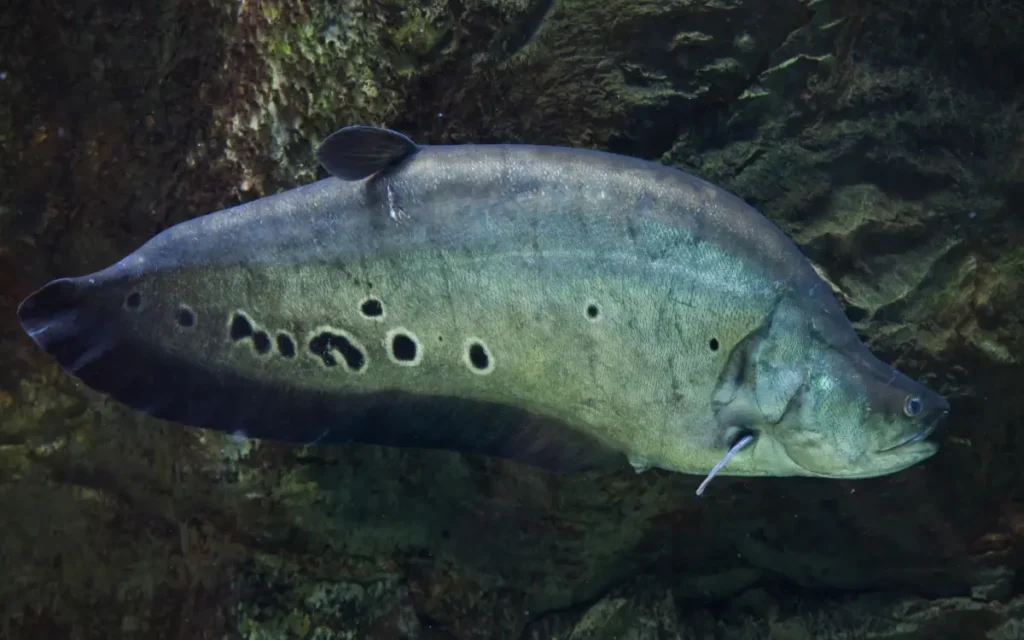
Scientific name: Apteronotus albifrons
The black ghost knifefish has a long black body, a white mark near its head, and pale rings near its tail. Instead of swimming with a normal tail movement, it ripples a long fin beneath its body.
This movement allows it to glide forward, backward, and around obstacles.
Why It Is Unusual
Black ghost knifefish produce a weak electrical field that helps them navigate and locate food. This is especially helpful because they are most active in dim conditions.
They are often sold when only a few inches long, but adults can approach 20 inches.
Care Requirements
An adult needs a much larger aquarium than the commonly repeated 75-gallon recommendation. A tank of around 120 gallons or more gives this active, flexible fish more suitable swimming room.
Provide smooth caves, pipes, driftwood, subdued lighting, and a soft substrate. Sharp decorations can injure its delicate skin.
Feed worms, shrimp, insect larvae, and good sinking carnivore foods. Very small fish may eventually be eaten.
Avoid keeping several electric fish together without researching their social behavior and space requirements.
Best for: Advanced keepers prepared for a very large aquarium.
4. Elephant Nose Fish
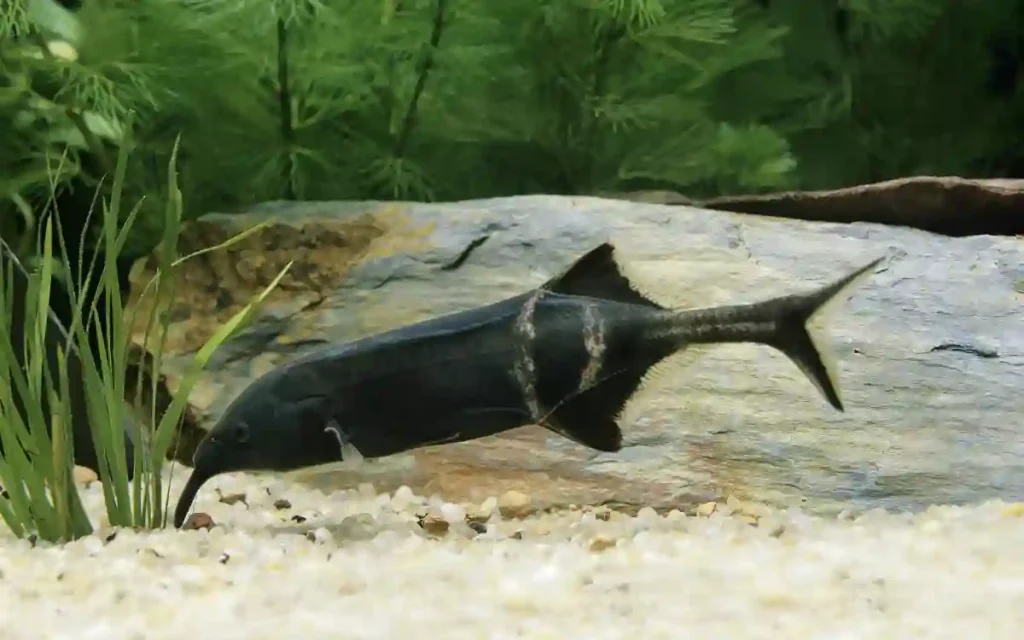
Scientific name: Gnathonemus petersii
The elephantnose fish has a narrow extension below its mouth that resembles a short trunk. It uses this sensitive structure to search the substrate for food.
Its dark body and unusual profile make it easy to recognize.
Why It Is Unusual
Like the black ghost knifefish, the elephantnose fish produces weak electrical signals. It uses them to explore its surroundings and find prey in murky or dark water.
The trunk-like structure is not a nose. It is a sensitive extension associated with the mouth.
Care Requirements
Use fine sand rather than rough gravel. The fish repeatedly searches the bottom, and sharp substrate may damage its sensitive mouth area.
A single specimen needs around 55 gallons with dim areas, wood, plants, and sheltered feeding places. Keeping multiple elephantnose fish is more complicated because they can be territorial and require considerably more space.
They are slow and cautious feeders. Busy tank mates may consume all the food before the elephantnose gets enough. Target feeding after the lights dim can help.
Offer bloodworms, blackworms, insect larvae, and suitable frozen or sinking foods.
Best for: Advanced keepers who can monitor feeding closely.
5. Fire Eel
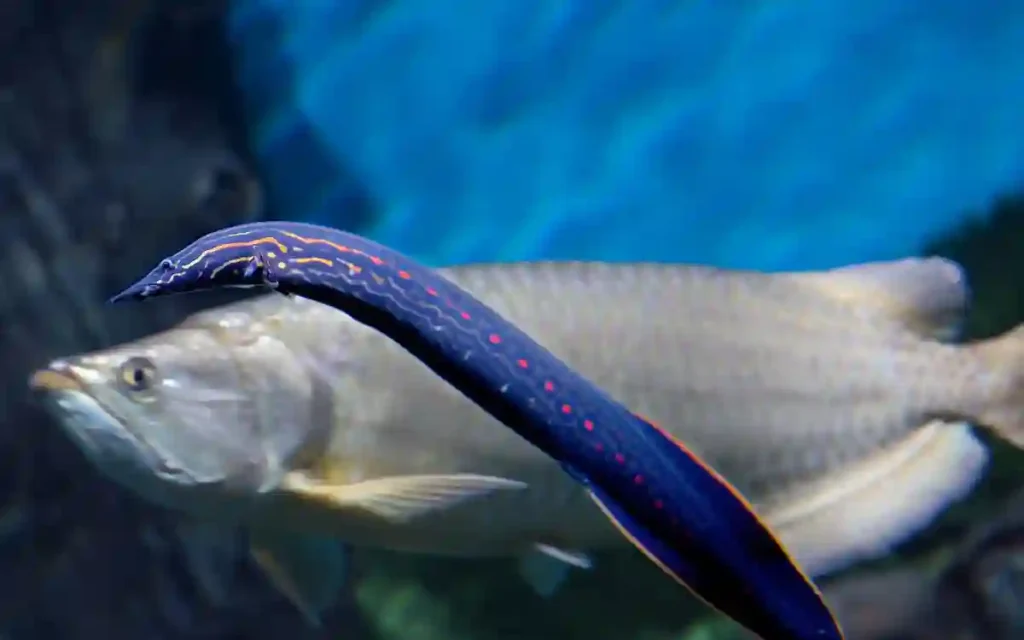
Scientific name: Mastacembelus erythrotaenia
Despite its common name, the fire eel is a spiny eel rather than a true eel. It has a long dark body marked with red or orange lines and spots.
Juveniles look manageable in a store aquarium, but this species can grow close to three feet long. Wild records reach approximately 100 cm.
Why It Is Unusual
Fire eels spend much of their time hidden or partly buried. Once settled, some learn to recognize the person who feeds them and may cautiously take food from feeding tongs.
Hand-feeding is unnecessary and can lead to accidental bites or poor hygiene. Tongs are safer.
Care Requirements
An adult needs an aquarium in the region of 180 gallons or larger, preferably with a long footprint. A 125-gallon tank may hold a growing juvenile but is restrictive for a large adult.
Use soft sand, smooth shelters, strong filtration, and a tightly secured lid. Cover filter intakes and narrow gaps because spiny eels can enter spaces that appear too small for them.
Feed earthworms, shrimp, mussel, and other meaty foods. Avoid routine use of feeder fish because they can carry parasites and do not provide a balanced diet.
Best for: Advanced keepers with space for a very large aquarium.
Read also: 8 algae eater for your Aquarium: Ultimate Guide
6. Ropefish
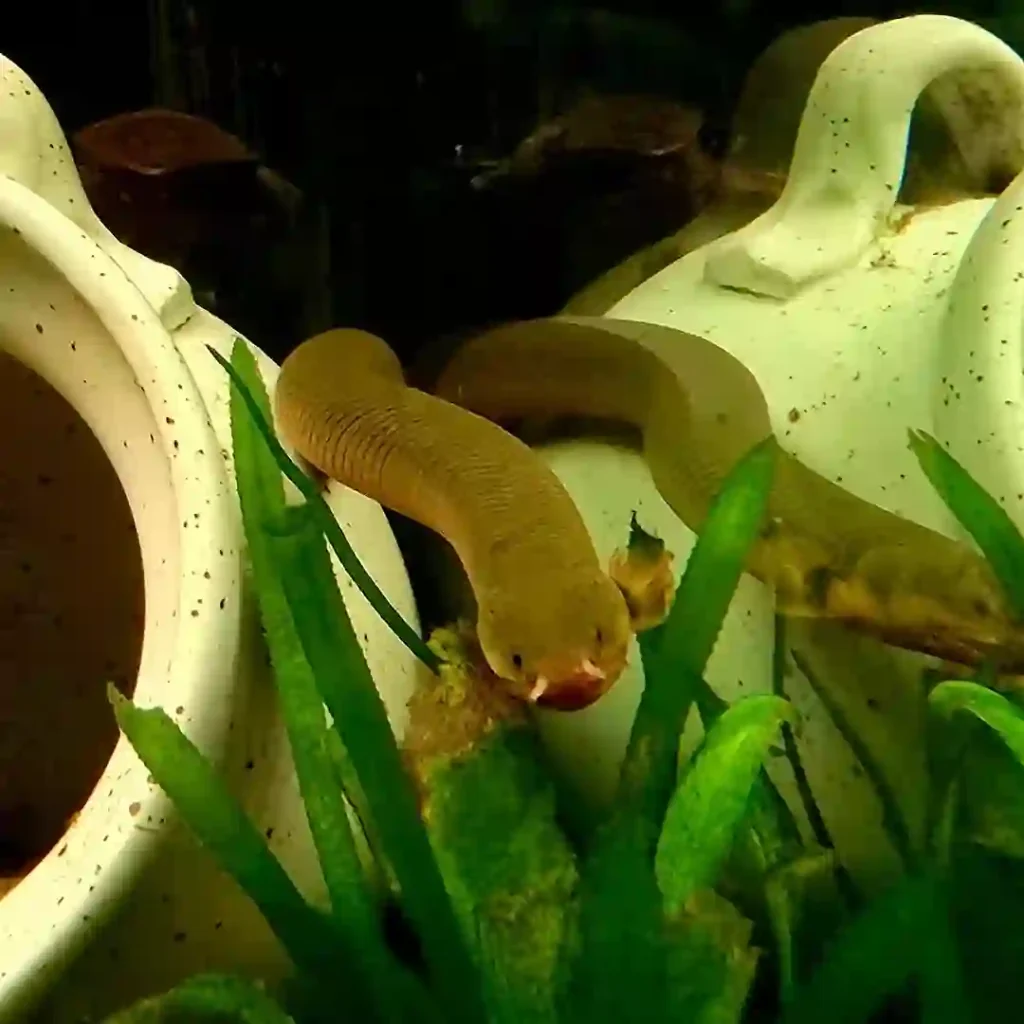
Scientific name: Erpetoichthys calabaricus
The ropefish resembles a slender snake more than a typical aquarium fish. It has a long body, small fins, and a row of separate finlets along its back.
It is related to bichirs and can breathe atmospheric air.
Why It Is Unusual
Ropefish regularly rise to the surface to gulp air. Their flexible bodies also allow them to squeeze through tiny openings.
A ropefish found outside its aquarium is usually the result of an uncovered gap, not a fish deliberately trying to live on land.
Care Requirements
A 55-gallon tank may house one smaller specimen, but a 75-gallon or larger aquarium is a better target, especially for a group.
Seal every opening. Lowering the water slightly below the lid can add another layer of protection.
Provide caves, plants, wood, and open floor space. Feed earthworms, shrimp, insect larvae, and sinking carnivore foods.
Ropefish are usually peaceful toward fish they cannot swallow. Small tetras, fry, shrimp, and other bite-sized animals may disappear at night.
Best for: Intermediate keepers who can make the aquarium escape-proof.
7. Upside Down Catfish
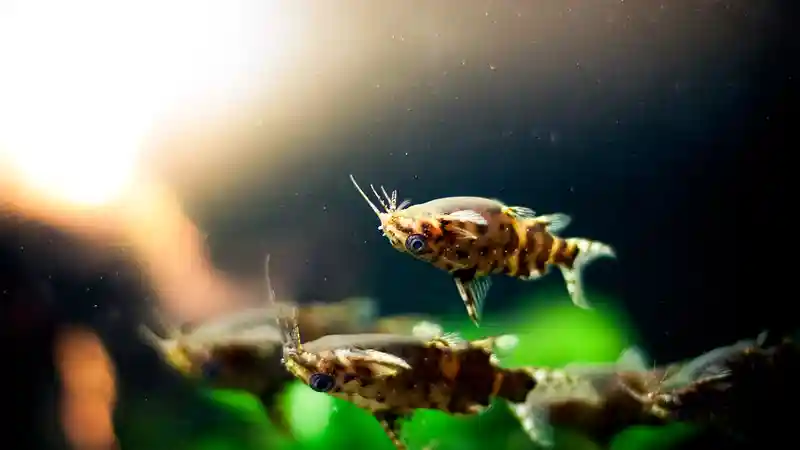
Scientific name: Synodontis nigriventris
As its name suggests, the upside-down catfish often swims with its belly facing upward. This position allows it to graze beneath branches, rocks, and broad plant leaves.
Its darker belly helps camouflage it when viewed from below.
Why It Is Unusual
Swimming upside down is normal for this species. It is not automatically a sign of swim bladder disease.
However, a different fish that suddenly rolls over, struggles to balance, or cannot swim normally may still have a health problem.
Care Requirements
Keep upside-down catfish in a group of at least five. A 30-gallon or larger aquarium with wood, caves, plants, and shaded areas works for a small group.
They accept many foods, including sinking pellets, insect-based foods, frozen invertebrates, and some plant matter.
Choose peaceful community fish that share similar water requirements. Avoid aggressive cichlids that may take over every cave.
Best for: Newer keepers who want a manageable oddball species.
8. Banjo Catfish
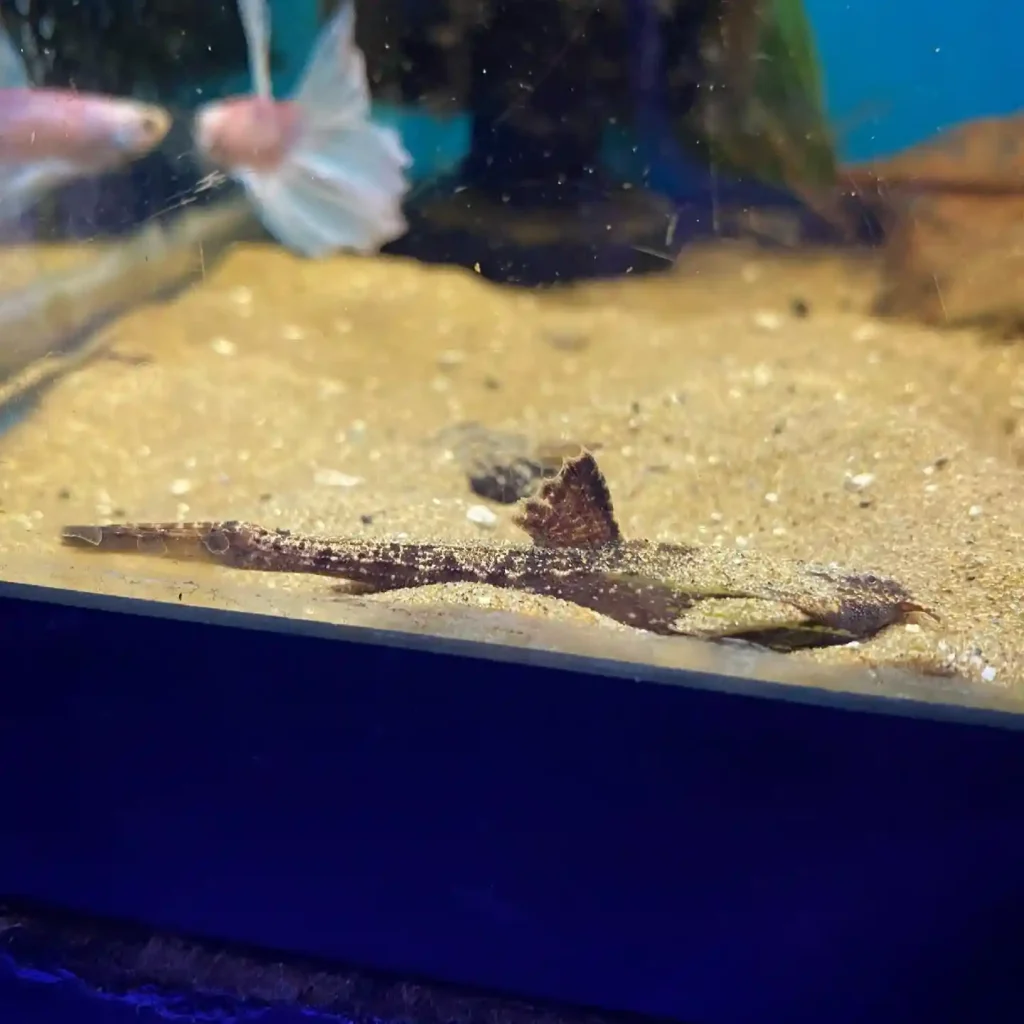
Scientific name: Bunocephalus coracoideus
A banjo catfish looks like a dead leaf lying on the aquarium floor. Its flattened head, mottled brown pattern, and narrow tail help it disappear against sand and leaf litter.
It may remain buried or motionless for much of the day.
Why It Is Unusual
Banjo catfish rely on camouflage rather than speed. New owners sometimes think their fish is missing because it has buried itself beneath the substrate.
They usually become more active after the aquarium lights go out.
Care Requirements
A 30-gallon aquarium with soft sand, dried leaves, driftwood, and shaded areas makes a suitable starting point.
Tank mates must be peaceful and should not take all the food. Feed sinking carnivore pellets, worms, and frozen foods after dark. Check that food reaches the catfish instead of assuming it will find leftovers.
Banjo catfish may eat very small fish or fry but are generally peaceful with similarly sized community fish.
Best for: Keepers who enjoy quiet, nocturnal fish.
9. Leopard Bushfish
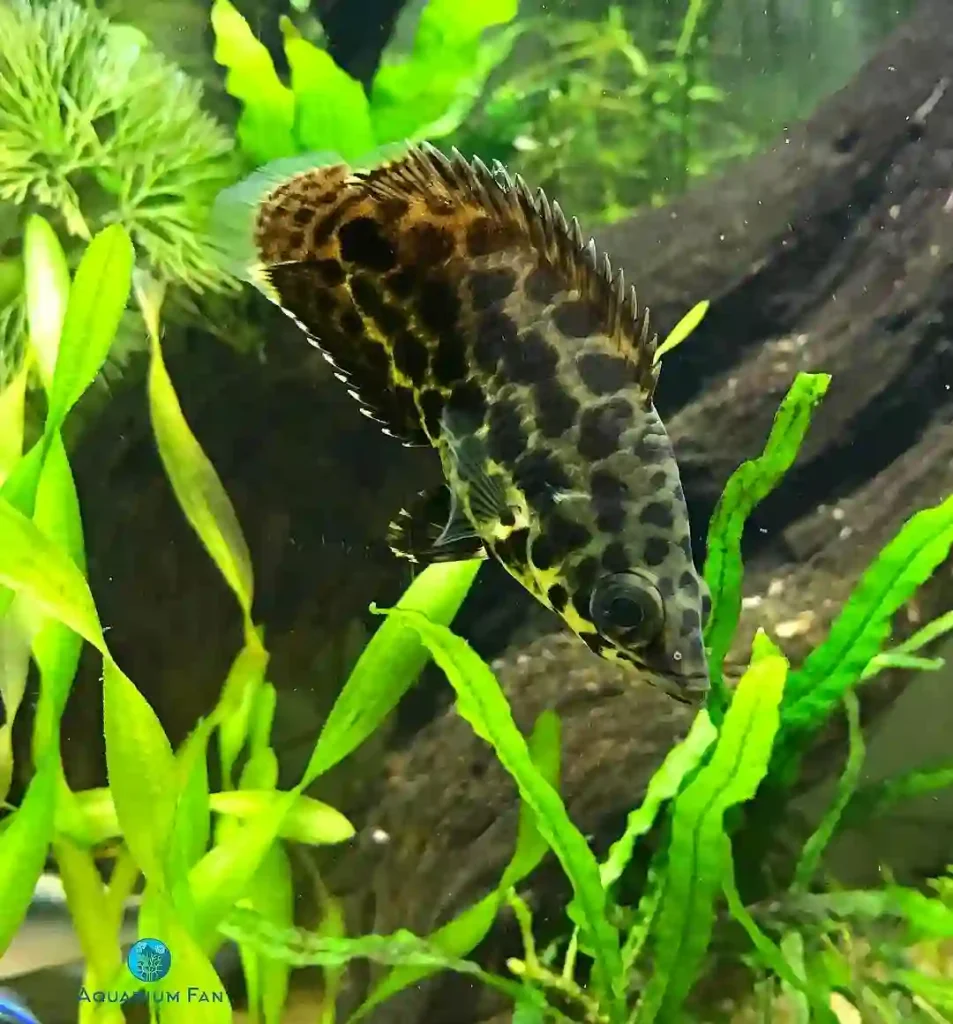
Scientific name: Ctenopoma acutirostre
The leopard bushfish has a rounded body covered in brown and gold spots. Its slow movement and large mouth reveal its hunting strategy: remaining still until prey comes close.
Why It Is Unusual
This fish is a labyrinth fish, which means it can take air from above the water. It can also hide remarkably well among plants despite its bold pattern.
Its calm appearance can be misleading. It is an ambush predator.
Care Requirements
Use a 55-gallon or larger aquarium with dense planting, floating cover, driftwood, and dim areas.
Do not keep it with nano fish, small tetras, shrimp, or anything else that can fit inside its mouth. Suitable companions include peaceful, robust fish that are too large to swallow.
Feed quality carnivore pellets along with frozen shrimp, worms, and insects. There is no need to provide live feeder fish.
Best for: Intermediate keepers planning a community of medium-sized fish.
10. Bichir
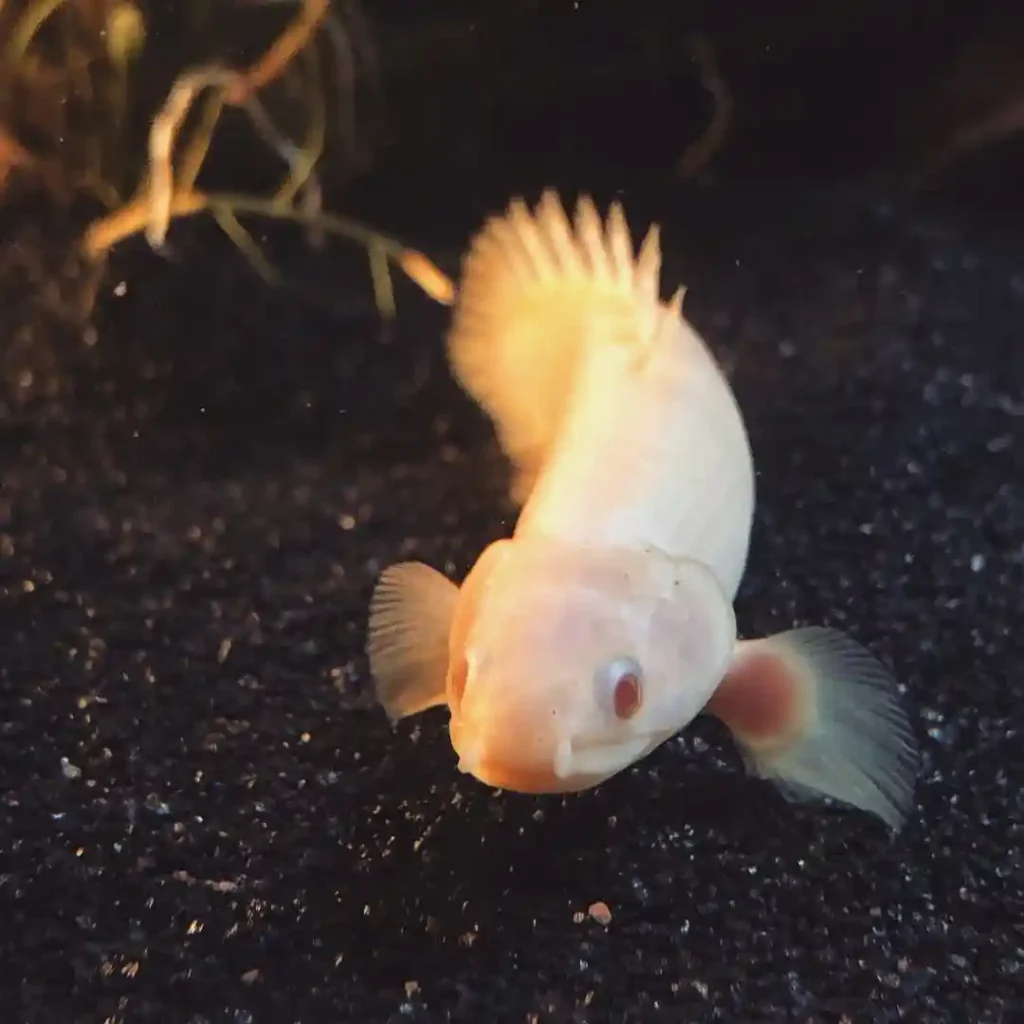
Scientific name: Polypterus senegalus
The Senegal bichir has a long body covered in hard, diamond-shaped scales. Separate dorsal finlets give it a prehistoric appearance.
Its fleshy pectoral fins allow it to push itself along the bottom.
Why It Is Unusual
Bichirs have paired lung-like organs and regularly visit the surface for air. Juveniles also have external gills, adding to their ancient appearance.
Although they can move over wet ground for short periods, they should never be encouraged to leave the water.
Care Requirements
A 75-gallon aquarium is a reasonable starting point for a Senegal bichir, but larger specimens benefit from more room. Other bichir species may grow much larger, so identify the exact species before buying.
Use a tight lid and block every gap. Provide smooth sand, wide shelters, and open floor space.
Bichirs are generally calm but predatory. Keep them with peaceful fish that are too large to swallow. Feed sinking carnivore pellets, shrimp, earthworms, mussel, and similar foods.
Best for: Intermediate keepers who understand predatory fish.
Which Oddball Fish Is Best for Beginners?
The upside-down catfish is the best option on this list for a newer fish keeper. It stays relatively small, eats prepared foods, and can live in a peaceful community aquarium when kept in a suitable group.
The banjo catfish is another manageable choice, but owners must make sure it receives enough food after dark.
Amazon puffers are small, but they are not beginner fish. Their dental needs, active behavior, specialized diet, and potential fin-nipping require more planning.
Oddball Fish to Avoid in Small Aquariums
Do not choose a fish based on its size at the store. These species are especially unsuitable for small tanks:
- Black ghost knifefish
- Fire eel
- Ropefish
- Elephantnose fish
- Leopard bushfish
- Senegal bichir
A juvenile may survive in a smaller aquarium temporarily, but buying one with plans to upgrade later often ends badly. Have the adult aquarium ready first.
Can Oddball Fish Live in Community Tanks?
Some can, but “community fish” does not always mean “safe with small fish.”
Predatory oddballs may ignore tank mates for months and then eat them once their mouths become large enough. Compatibility depends on adult size, swimming level, feeding speed, temperament, and water requirements.
Avoid placing slow feeders such as elephantnose fish with aggressive eaters. Do not combine surface predators with tiny top-dwelling fish. Escaping species need a secure lid regardless of their tank mates.
Before Buying an Unusual Aquarium Fish
Ask these questions before bringing one home:
- How large will this exact species become?
- Do I already own a suitable adult-sized aquarium?
- Will it eat my current fish, shrimp, or snails?
- Does it need live, frozen, floating, or sinking food?
- Can it escape through the lid or filter openings?
- Is an aquatic veterinarian available if special treatment is required?
- Can I care for it throughout its full lifespan?
Oddball fish can make a freshwater aquarium far more interesting, but unusual animals rarely succeed as impulse purchases. Choose a species whose adult size, diet, and behavior match the aquarium you can provide now.
