
Aquarium Substrate Guide: Sand, Gravel, Soil & More

The best aquarium substrate depends on what you plan to keep.
For a simple freshwater community tank, smooth sand or fine aquarium gravel is usually the easiest choice. For a heavily planted tank with rooted plants, aquasoil gives roots a better growing medium and can supply nutrients. Fish that dig or sift through the bottom often do better over smooth sand.
You can also run an aquarium with no substrate at all. Bare-bottom tanks are useful for quarantine, breeding, fry grow-out, and setups where fast cleaning matters more than appearance.
Substrate is not just decoration. It changes how easily you can clean the tank, where plants can root, how fish interact with the bottom, and, in some cases, your water chemistry.
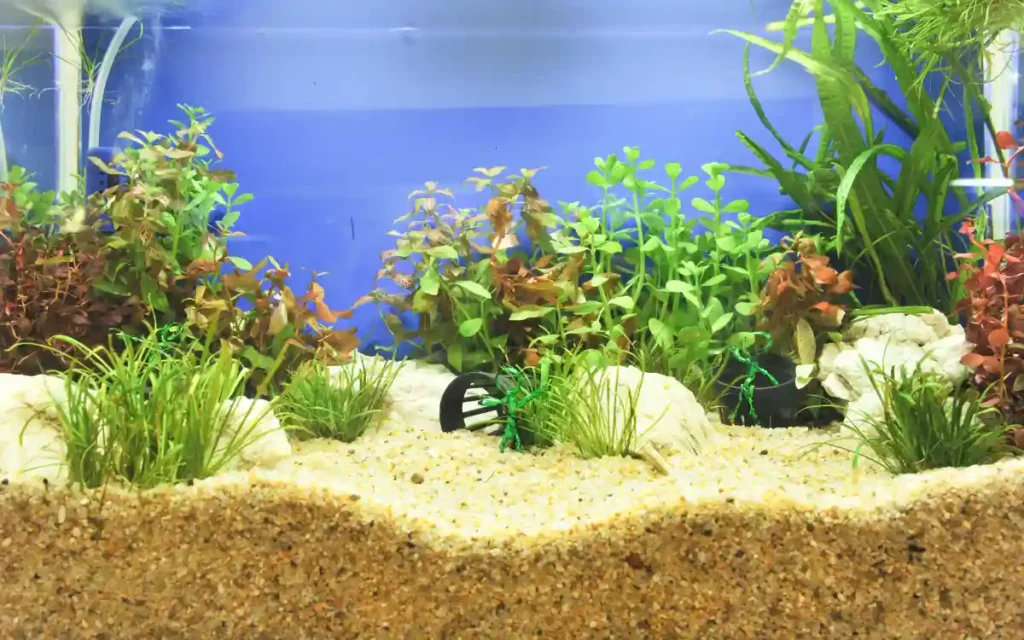
Aquarium Substrate at a Glance
| Substrate | Best For | Plant Nutrition | Effect on Water | Cleaning |
| Sand | Bottom dwellers, digging fish, natural layouts | Little or none | Usually neutral | Waste stays near surface |
| Fine gravel | Beginner community tanks | Little or none | Usually neutral | Easy to gravel vacuum |
| Aquasoil | Planted tanks and carpets | Nutrient-rich when new | May lower pH and hardness | Surface cleaning only |
| Sand/gravel + root tabs | Low-tech planted tanks | Added around roots | Usually neutral | Easy to moderate |
| Crushed coral/aragonite | Hard-water setups | None | Can raise hardness and buffer pH | Moderate |
| Capped soil | Experienced planted tanks | High | Depends on materials | Harder to disturb safely |
| Bare bottom | Quarantine, fry and breeding setups | None | None | Very easy |
There isn’t one substrate that is best for every aquarium. Plant species, fish behavior, source-water chemistry, and how much maintenance you want to do matter more than the appearance of the bag at the aquarium store.
What Is Aquarium Substrate?
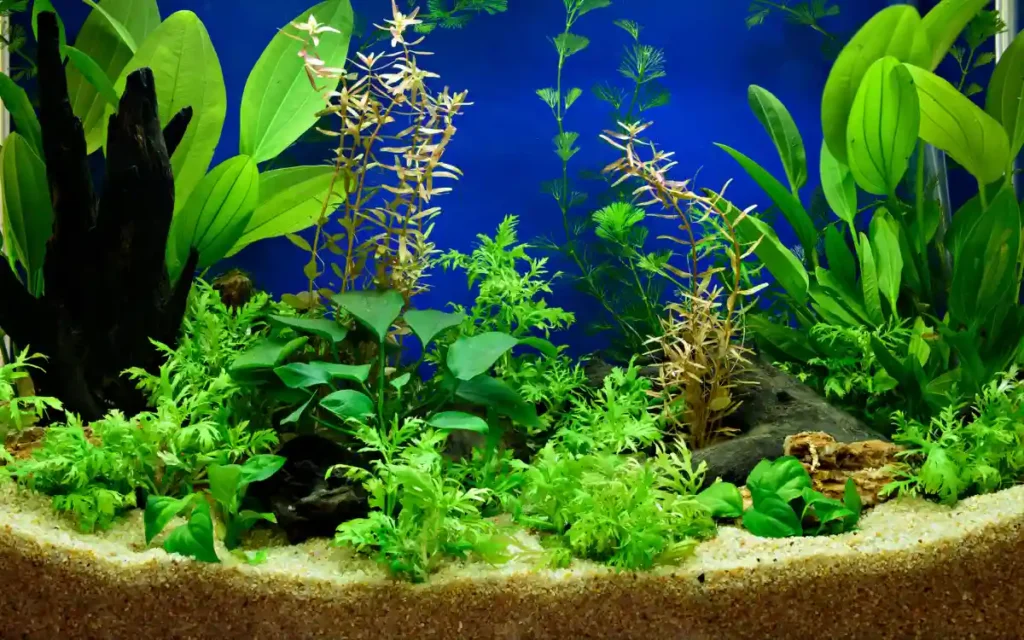
Aquarium substrate is the material covering the bottom of the tank.
Common examples include:
- Sand
- Gravel
- Aquasoil
- Clay-based planted substrate
- Crushed coral
- Aragonite
- Soil covered with sand or gravel
Substrate gives rooted plants somewhere to anchor themselves. It also creates surface area for bacteria and other tiny organisms and gives many fish and shrimp somewhere to search for food.
Beneficial bacteria also live throughout the filter and on other wet aquarium surfaces. Substrate helps provide more surface area, but it does not replace proper filtration or a completed aquarium cycle.
If you’re setting up your first tank, read the freshwater aquarium setup guide before adding fish.
Does Every Aquarium Need Substrate?
No.
A display aquarium usually looks more natural with substrate, but there are situations where leaving the bottom bare makes more sense.
Bare-bottom tanks are common for:
- Quarantine
- Hospital tanks
- Breeding setups
- Fry grow-out tanks
- Temporary holding tanks
- Fish that produce a lot of visible waste
Waste is very easy to spot and siphon from bare glass.
The downside is that some fish spend much of their time digging, sifting, burrowing, or searching along the bottom. A bare tank removes those natural behaviors.
Plants are also more limited unless you use pots, attach them to wood or rocks, or choose floating species.
For a normal home display aquarium, sand or gravel is usually a better starting point.
Main Types of Aquarium Substrate
Aquarium Sand
Sand gives an aquarium a smooth, natural-looking bottom and works especially well for fish that search through the substrate.
Corydoras, kuhli loaches, many dwarf cichlids, and other bottom-oriented fish can sift or dig through smooth sand without having to work around large stones.
Waste usually stays visible on top rather than dropping deeply between grains. That sounds messy, but it can actually make routine cleaning easier because you can see exactly where the debris has collected.
The main drawback is that very fine sand can pack together tightly. Rooted plants may struggle more in extremely compact material, especially when the layer is deep.
When choosing sand, make sure it is intended for aquarium use or otherwise confirmed safe and free from unwanted chemicals or additives.
Is Sand Hard to Clean?
Not once you get used to it.
Instead of pushing the siphon deep into the substrate, hover it just above the surface. The current lifts fish waste and leftover food while the heavier sand stays behind.
If sand starts moving up the tube, reduce the flow or raise the siphon slightly.
Aquarium Gravel
Fine aquarium gravel is one of the easiest substrates for a first community aquarium.
It is simple to plant in, easy to vacuum, available in many natural colors, and usually has little effect on water chemistry.
The grain size matters.
Large gravel creates wide gaps where uneaten food and waste can disappear. Very sharp gravel can also be unsuitable for fish that rest, dig, or search along the bottom.
For general use, smooth, smaller gravel is usually easier to manage.
Plain gravel does not provide much nutrition for plant roots. You can still grow many plants in it by adding root tabs below heavy root feeders.
Rooted plants such as Amazon swords, Cryptocoryne, and Vallisneria can grow in inert substrate when nutrients are supplied near their roots.
You can find plant choices for different setups in the OceanBitez aquarium plant library.
Aquasoil
Aquasoil is made for planted aquariums.
Unlike plain sand or gravel, many aquasoils contain nutrients and have a porous structure that gives small roots somewhere to spread.
This makes them useful for:
- Carpet plants
- Cryptocoryne
- Amazon swords
- Dwarf Sagittaria
- Root-heavy aquascapes
- High-tech planted tanks
Aquasoil isn’t automatically better for every aquarium.
Many active soils affect water chemistry. Depending on the product, they can lower pH and carbonate hardness. Some also need extra water changes during the early setup period, so the manufacturer’s instructions matter. Tropica, for example, notes that its aquarium soil lowers pH and recommends frequent water changes during the first weeks after setup.
This can be useful in the right aquarium and completely unnecessary in another.
Aquasoil also doesn’t stay nutrient-rich forever. Plants eventually use much of the available nutrition, at which point root tabs or other fertilizers may still be needed.
Sand With Root Tabs
You do not need expensive aquasoil to have a planted aquarium.
A simple layer of inert sand plus root tabs can support many beginner plants.
The sand gives the roots somewhere to grow, while the tabs provide nutrients directly around heavy root feeders.
This works well for plants such as:
- Amazon swords
- Cryptocoryne
- Vallisneria
- Dwarf Sagittaria
It is less relevant for plants that don’t depend heavily on substrate.
Anubias and Java fern, for example, grow from thick rhizomes. Their rhizomes should stay above the substrate and are usually attached to wood or rock.
Gravel With Root Tabs
Fine gravel plus root tabs is another strong choice for a beginner planted aquarium.
It gives you a substrate that is easy to vacuum without forcing you to manage the water-chemistry changes that can come with some active soils.
This setup makes sense when you want a planted community aquarium rather than a demanding aquascape.
The main limitation is that carpeting plants with tiny roots may not anchor as easily in coarse gravel.
Capped Organic Soil
A dirted aquarium uses a nutrient-containing soil layer underneath sand or fine gravel.
The upper layer keeps most of the soil away from the water column while plant roots grow down into it.
This type of setup can grow plants well, but it is less forgiving than ordinary gravel or aquasoil.
Pulling out a large rooted plant can drag soil through the cap. Fish that dig heavily may uncover the lower layer. Changing the layout later can become messy.
Not every bag of garden soil belongs underwater either. Products may contain fertilizers, wetting agents, pesticides, or other additives you do not want in an aquarium.
For a first planted aquarium, sand or gravel with root tabs is much easier to control.
Crushed Coral and Aragonite
Crushed coral and aragonite contain calcium carbonate.
As they dissolve, they can increase carbonate hardness and help keep water more alkaline.
That can be useful in some:
- African cichlid tanks
- Hard-water fish setups
- Marine aquariums
- Tanks where source water has very little buffering
Do not choose crushed coral simply because you like the color.
If you keep soft-water fish, changing the hardness and pH may move the aquarium farther away from the conditions you want.
Test your source water first.
For more on substrate choices in cichlid setups, see the cichlid tank setup guide.
Specialty Aquarium Substrates
Stores also sell products labeled as shrimp substrate, planted gravel, buffering substrate, coral sand, clay substrate, or volcanic substrate.
Read what the product actually does rather than relying on the name.
Check:
- Does it contain nutrients?
- Does it lower pH?
- Does it raise hardness?
- Does it need rinsing?
- Does it release ammonia when new?
- Is it meant to be replaced later?
- Is it suitable for the animals you plan to keep?
A substrate designed for one type of shrimp may be a poor choice for a hard-water fish tank.
How to Choose the Right Aquarium Substrate
Start with the animals and plants, not the color.
Ask four questions:
- Will my fish dig or sift through it?
- Will I grow rooted plants?
- Do I want the substrate to change my water chemistry?
- How much cleaning do I want to do?
Those answers usually narrow the choices quickly.
Best Substrate for a Beginner Aquarium
For a normal freshwater community tank, start with smooth fine gravel or inert sand.
Both are predictable and easy to understand.
Choose gravel if you want straightforward gravel-vacuum cleaning.
Choose sand if you like a smoother appearance or plan to keep bottom-dwelling fish that search through the substrate.
You can add root tabs later if you decide to grow rooted plants.
There is no need to buy active aquasoil for a tank filled mostly with floating plants, Anubias, Java fern, mosses, or artificial decorations.
Best Substrate for a Planted Aquarium
There are two good routes.
For a plant-heavy aquascape with lots of rooted or carpeting plants, aquasoil is convenient.
For a simpler low-tech planted tank, sand or fine gravel with root tabs is often enough.
The plants should decide the substrate.
Some species depend heavily on root nutrition, while others take much of what they need from the water or don’t need to be planted in substrate at all.
Before buying soil for every inch of the tank, browse the aquarium plant finder and check how your plants actually grow.
Best Substrate for Carpet Plants
Small carpet plants usually need a substrate that lets fine roots anchor easily.
Fine aquasoil works well because the granules hold roots while giving runners room to spread.
Plants such as Monte Carlo, Dwarf Hairgrass, and Dwarf Baby Tears are commonly grown this way.
Substrate alone will not create a thick carpet.
Light, nutrients, plant choice, trimming, and CO₂ availability can matter just as much.
See the aquarium carpet plants guide before building a carpeted foreground.
Best Substrate for Low-Light Plants
Many low-light aquarium plants do not need nutrient soil.
Anubias and Java fern can be attached directly to rock or wood.
Cryptocoryne and Vallisneria can grow in sand or gravel when nutrients are available around their roots.
This means a simple low-tech aquarium can often use inexpensive inert substrate rather than covering the entire bottom with aquasoil.
Best Substrate for Corydoras
Smooth sand is one of the better choices for Corydoras.
Corys spend a lot of time searching along the bottom and pushing their snouts into the substrate for food.
Fine, smooth sand lets them perform this behavior naturally.
Avoid sharp substrate that could scrape the mouth or belly.
Keeping the bottom clean matters just as much as the material. Dirty substrate and poor water quality are not made safe simply because the grains are soft.
Best Substrate for Kuhli Loaches
Kuhli loaches also benefit from soft sand.
They like to search around the bottom and may partially bury themselves.
Rough or jagged gravel does not offer the same digging opportunity.
Add leaves, wood, plants, and shaded hiding spaces rather than depending on substrate alone to make kuhli loaches feel secure.
Best Substrate for Betta Fish
Bettas do not require a special substrate.
Smooth gravel or inert sand can both work.
For a planted betta aquarium, let the plants decide. A tank with Amazon swords and Cryptocoryne may benefit from root tabs or aquasoil, while a tank built around Anubias and Java fern needs very little from the substrate.
Avoid sharp decorative gravel that could create rough surfaces around a long-finned fish.
The Betta fish care guide covers the rest of the tank setup.
Best Substrate for Goldfish
Goldfish make substrate choice slightly trickier because they investigate almost everything with their mouths.
Fine sand can work because fish can sift through it and spit it back out.
Bare-bottom tanks are another option, especially when easy waste removal is the main goal.
Be cautious with gravel that is small enough for a goldfish to pick up but large enough to become stuck.
Goldfish also produce plenty of waste, so whichever substrate you choose needs to be easy for you to keep clean.
Best Substrate for Shrimp Tanks
There is no single shrimp substrate because different shrimp can need very different water.
Inert sand or fine gravel can work well for many Neocaridina tanks when the source water already matches their needs.
Active buffering substrate is often used in Caridina setups where softer, more acidic water is wanted.
Don’t use active soil just because the packaging has a shrimp picture.
Choose it only when its effect on the water matches the shrimp you intend to keep.
Best Substrate for African Cichlids
Sand is a practical choice for many African cichlid tanks because these fish often dig and rearrange the bottom.
Aragonite or crushed-coral-based material may be useful where harder, more alkaline water is needed.
Your source water still matters.
If the tap water is already hard and alkaline, you may not need a substrate that pushes it higher.
Plan the whole aquarium around the species rather than applying one substrate rule to every African cichlid. The African cichlid care guide can help with that decision.
Does Aquarium Substrate Change pH?
Some substrates do. Others are designed to have very little effect.
This is the difference between inert and active substrate.
Inert substrates such as many aquarium sands and gravels are chosen mainly for structure and appearance.
Active substrates can alter water chemistry.
Many planted aquasoils lower pH and reduce carbonate hardness. Crushed coral and aragonite work in the other direction by adding minerals and helping buffer the water toward a higher pH.
Do not try to fix unstable pH by randomly adding a substrate that changes it.
First test your source water and learn why the pH is behaving the way it is.
Stable water within a suitable range is usually more useful than constantly trying to force one exact number.
How Deep Should Aquarium Substrate Be?
You do not need a huge layer in every aquarium.
A useful starting point is:
| Tank Type | Practical Starting Depth |
| Fish-only gravel tank | About 1–2 inches |
| Sand tank without rooted plants | About 1–1.5 inches |
| Basic planted tank | About 2–3 inches |
| Deep-rooted planted area | Around 3 inches where needed |
| Decorative sand path | Thin surface layer |
| Bare-bottom tank | None |
These are starting ranges, not rules.
A planted aquascape may be much deeper at the back than at the front. Sloping substrate creates space for roots while also making the tank appear deeper from front to back. Tropica similarly recommends building greater depth toward the rear in planted layouts.
Do not make the substrate deep simply because more seems better.
A thick layer is heavier, harder to clean, and unnecessary in sections where nothing is rooting.
How Much Aquarium Substrate Do You Need?
Tank gallons alone don’t tell you how much substrate to buy.
The floor area matters.
A long, shallow aquarium may need more substrate than a taller tank holding a similar amount of water.
For substrate sold by volume, you can estimate:
Tank length × tank width × desired substrate depth
Make sure all measurements use the same unit.
If you are creating a slope, calculate an average depth between the front and back.
For example, if the front is around 1.5 inches and the back is around 3 inches, use roughly the middle of those two values for a rough buying estimate.
Always check the manufacturer’s coverage information as well because sand, gravel, and aquasoil do not have the same density.
Should You Rinse Aquarium Substrate?
It depends on the substrate.
Rinse Most Inert Sand and Gravel
Ordinary aquarium gravel and many inert sands contain dust from processing and shipping.
Rinse small batches with clean water until the runoff becomes much clearer.
You do not need perfectly transparent water.
Never use soap, detergent, disinfectant, or household cleaners.
Check Instructions Before Rinsing Aquasoil
Do not automatically rinse aquasoil the same way you rinse gravel.
Some soil granules can break apart when handled heavily.
Follow the instructions for that specific product.
The same rule applies to specialized planted substrates and buffering shrimp soils.
How to Add Substrate Without Making the Tank Cloudy
Some cloudiness during setup is normal, especially with fine sand.
You can reduce it:
- Rinse inert substrate if the product allows it.
- Put the substrate into the empty aquarium.
- Create the slope and planting areas before filling.
- Place a plate, plastic bag, or shallow container over the substrate.
- Pour water slowly onto that surface.
- Start the filter after the tank is filled.
Pouring water directly onto loose sand can turn a neat layout into a crater in seconds.
Planting before completely filling the aquarium can also make rooted plants easier to position.
For layout ideas, see these planted aquarium designs.
How to Clean Aquarium Substrate
Cleaning technique changes with the material.
How to Clean Gravel
Push the gravel vacuum gently into one section.
Waste and lighter debris rise through the tube while the gravel falls back down.
You do not need to tear apart the entire tank during every water change.
In planted areas, work around roots rather than repeatedly uprooting or disturbing them.
How to Clean Sand
Keep the siphon just above the surface.
Move it over visible waste and gently swirl the water if debris needs help lifting.
If sand enters the siphon, raise it slightly or slow the flow.
You usually do not need to plunge the vacuum deeply through the sand.
How to Clean Aquasoil
Treat aquasoil gently.
Do not drive the gravel vacuum deep into soft granules.
Instead, remove loose debris from the surface while leaving plant roots and the substrate structure alone.
Heavy vacuuming can crush soil granules and pull nutrients and dirt into the water.
Can You Mix Sand, Gravel, and Aquasoil?
Yes, but the materials will not always stay where you put them.
Small sand grains gradually work down between larger pieces of gravel.
Fish digging through the bottom can mix carefully separated sections.
Plants being pulled up can drag aquasoil into a decorative sand path.
If you want clearly separated materials, use:
- Rocks
- Plastic dividers
- Retaining walls
- Substrate bags
- Hardscape boundaries
A beautiful white-sand path next to dark aquasoil may look perfect on setup day but can need regular maintenance to stay that way.
Plan for movement rather than assuming each grain will remain in place.
Common Aquarium Substrate Mistakes
Choosing by Color Before Fish Safety
Bright decorative stones may look attractive in a bag, but fish still have to live on them.
Watch for sharp edges, flaking coatings, rough glass pieces, and awkward grain sizes.
The substrate should fit the animal first.
Using Active Soil Without Understanding It
Aquasoil can change water chemistry.
Some products also require a different startup routine from ordinary gravel.
Read the product instructions before adding livestock.
A planted substrate that works perfectly in one tank can create unnecessary problems in another.
Making the Substrate Too Deep
More substrate does not automatically mean healthier plants.
Deep substrate can add weight, collect debris, and make future changes harder.
Use extra depth where roots or the layout need it.
Burying Anubias or Java Fern Rhizomes
Anubias and Java fern are not planted like Amazon swords.
Their thick rhizomes should stay exposed.
Attach them to rocks or driftwood, or position the roots so the rhizome remains above the substrate.
The OceanBitez plant library shows which plants are rooted, floating, carpeting, or attached to hardscape.
Assuming Gravel Feeds Plants
Plain gravel gives roots somewhere to anchor, but that doesn’t mean it contains useful plant nutrition.
Heavy root feeders may need root tabs.
Plants that take nutrients from the water may also need appropriate liquid fertilization depending on the aquarium.
Putting Root Tabs Near the Surface
Push root tabs deep enough that they remain inside the substrate near the root zone.
A tab sitting at the surface can dissolve directly into the water and make a mess.
Follow the spacing and replacement schedule for the product you use rather than assuming every root tab works the same way.
Using Crushed Coral in the Wrong Tank
Crushed coral is not neutral decoration.
It can affect hardness and buffering.
That’s useful when you want that change. It is not useful when you’re trying to maintain softer water.
Deep-Cleaning an Established Planted Tank
A planted substrate does not need to be churned through from top to bottom every week.
Deep vacuuming can disturb roots and pull buried debris into the water.
Clean visible waste and accessible open areas while leaving established root zones mostly alone.
Sand vs Gravel vs Aquasoil: Which Should You Choose?
If you still cannot decide, use this shortcut.
Choose sand if:
You keep fish that dig, sift, burrow, or spend lots of time searching along the bottom.
Choose fine gravel if:
You want a simple beginner community tank that is easy to vacuum and easy to change later.
Choose aquasoil if:
The tank is being built around rooted plants, carpet plants, or a planted aquascape and you understand how that soil affects the water.
Choose sand or gravel with root tabs if:
You want live plants without committing to a full active-soil setup.
Choose crushed coral or aragonite if:
Your livestock needs harder, more alkaline water and your source water does not already provide it.
Choose bare bottom if:
Easy cleaning, observation, quarantine, or fry management matters more than creating a natural-looking display.
Frequently Asked Questions
Is sand or gravel better for an aquarium?
Neither is automatically better.
Sand is often a better choice for digging and sifting fish. Gravel is easier for many beginners to vacuum deeply.
Choose based on your fish, plants, and cleaning routine rather than appearance alone.
Can aquarium plants grow in sand?
Yes.
Plain sand contains very little plant nutrition, so rooted plants may need root tabs.
Plants such as Amazon swords, Cryptocoryne, Vallisneria, and Dwarf Sagittaria can grow in sand when their nutrient needs are met.
Can aquarium plants grow in gravel?
Yes.
Fine gravel can hold plant roots well.
Add root tabs for heavy root feeders if the gravel itself does not contain nutrients.
Is aquasoil necessary for a planted aquarium?
No.
Aquasoil can make planted-tank setup easier for demanding rooted and carpeting plants, but many low-tech planted aquariums do well with sand or gravel plus fertilizer.
Some plants, including Anubias, Java fern, mosses, and floating plants, do not need nutrient soil beneath them at all.
Can I put sand over aquarium soil?
You can, but mixed layers often become messy over time.
Fish digging, plant removal, and routine maintenance can bring the lower layer upward.
If you want separate sections, physical dividers or hardscape barriers usually work better than loosely stacking two substrates.
How often should aquarium substrate be replaced?
Most inert sand and gravel does not need routine replacement.
Clean it as part of normal aquarium maintenance.
Aquasoil can lose much of its original nutrient supply over time, but that does not always mean the whole aquarium needs to be torn apart. Root tabs and other plant fertilizers can often support an older planted substrate.
Is black sand safe for aquarium fish?
Color alone does not determine whether sand is safe.
Check what the material is made from, whether it changes the water chemistry, how sharp the grains are, and whether the manufacturer says it is aquarium safe.
Can I change substrate with fish still in the aquarium?
It is possible, but replacing the entire substrate can release a large amount of debris and make the tank difficult to manage.
For a full substrate change, temporarily moving the fish to a heated, filtered holding container is often easier and safer.
Keep established filter media wet and running when possible so you do not unnecessarily disrupt the bacteria in the filter.
What is the easiest substrate for beginners?
For most beginner freshwater community tanks, smooth fine gravel or inert sand is the easiest starting point.
Choose sand when bottom-dwelling fish need a softer surface. Choose fine gravel when simple deep vacuuming matters more.
Add plant nutrition separately if you need it.
Which Aquarium Substrate Should You Pick?
For most first aquariums, there is no reason to make substrate complicated.
Use smooth sand for fish that dig or sift, fine gravel for a straightforward community tank, and aquasoil when rooted plants are a major part of the setup.
If you want an easy planted tank without active soil, sand or gravel plus root tabs is often enough.
Choose the fish and plants first. Then pick the substrate that supports what they actually need rather than building the entire aquarium around whichever bag looks best on the shelf.
