
How to Take Care of Anubias Plants for Healthy Growth

Anubias plants are one of the easiest aquarium plants to grow, which is why so many beginners start with them. They can survive in low light, grow without CO2, and tolerate beginner mistakes better than many delicate aquarium plants. Even after trying dozens of planted tank species, Anubias is still one of the plants I keep in almost every setup because it stays healthy with very little work.
The problem is that many beginners accidentally kill Anubias by planting it the wrong way. Others struggle with algae-covered leaves, melting plants, or slow growth and assume something is wrong. In reality, Anubias naturally grows slowly, and small setup mistakes usually cause most problems.
This guide will show you exactly how to keep Anubias healthy, where to place it, how to avoid rhizome rot, and how to stop algae from taking over the leaves.
Also read: Amazon Sword Care and Floating Aquarium Plants for Beginners
Why Anubias Is So Popular
Anubias works in almost every freshwater aquarium. You can keep it in a betta tank, shrimp tank, community aquarium, or low-tech planted setup without needing expensive equipment.
What makes it beginner-friendly is how adaptable it is:
- Survives in low light
- Does not require CO2 injection
- Can grow attached to rocks or driftwood
- Tolerates a wide range of water conditions
- Works well in small and large aquariums
The thick dark-green leaves also give aquariums a natural jungle look without demanding constant trimming.
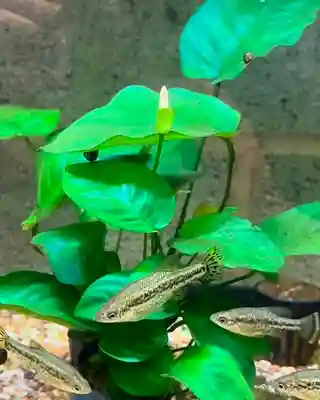
Quick Anubias Care Guide
| Feature | Details |
| Care Level | Easy |
| Growth Rate | Slow |
| Lighting | Low to medium |
| CO2 Needed | No |
| Placement | Foreground or midground |
| Temperature | 72–82°F |
| pH Range | 6.0–7.8 |
| Propagation | Rhizome division |
Different Types of Anubias Plants
Anubias Barteri
This is the most common variety sold in aquarium stores. It has broad sturdy leaves and works well in medium-sized tanks.
Anubias Nana
Anubias Nana stays smaller and fits perfectly in nano aquariums or betta tanks. Many beginners start with this variety because it is easy to manage.
Anubias Nana Petite
This version has tiny leaves and grows very compactly. It looks amazing attached to small rocks in aquascapes.
Anubias Coffeefolia
This plant has textured leaves with a rippled appearance. It stands out more than standard Anubias varieties.
Anubias Congensis
This variety develops longer leaves and works better in larger aquariums.
You can also pair these plants with other beginner species from your future “Best Low Light Aquarium Plants” article.
Best Tank Setup for Anubias
Lighting
Low to medium lighting works best.
Many beginners think stronger lights help plants grow faster, but Anubias often develops algae under intense lighting because the leaves grow slowly. Algae settles on the leaves before new growth appears.
A light schedule of around 6 to 8 hours daily usually works best.
If your leaves constantly turn green with algae, your light is probably too strong or left on too long.
Water Parameters
Anubias is not very demanding, but stable water helps it stay healthy.
| Parameter | Ideal Range |
| Temperature | 72–82°F |
| pH | 6.0–7.8 |
| GH | 3–12 |
| KH | 2–8 |
I’ve kept Anubias in soft water shrimp tanks and harder community tanks without problems. Stability matters more than chasing perfect numbers.
Do Anubias Need CO2?
No. That is one reason beginners love this plant.
Anubias grows perfectly fine in low-tech aquariums without injected CO2. Adding CO2 may slightly improve growth speed, but it is not necessary.
If you are building your first planted aquarium, Anubias is one of the safest choices.
How to Plant Anubias Properly
This is where most beginners make mistakes.
Never Bury the Rhizome
The rhizome is the thick horizontal stem where the leaves and roots grow from.
If you bury this part under gravel or sand, the plant will slowly rot and die.
Only the roots should touch the substrate.
Best Ways to Attach Anubias
Anubias actually grows better attached to hardscrops instead of planted in substrate.
You can:
- Glue it to rocks
- Tie it to driftwood
- Attach it to lava rock
- Wedge it into cracks between stones
After a few weeks, the roots naturally grab onto the surface.
This is why Anubias is so popular in aquascaping layouts.
Learn about the Aquarium Substrate Guide.
Best Placement for Anubias
Placement depends on the variety.
- Small Anubias Nana works well in the foreground
- Medium varieties fit midground areas
- Larger species can fill background corners
I personally like attaching Anubias to driftwood because it creates a more natural forest-style appearance.
It also keeps the rhizome exposed properly.
Why Anubias Leaves Get Algae
This is probably the most common complaint.
Because Anubias grows slowly, algae has plenty of time to settle on the leaves.
Black Beard Algae
Usually caused by:
- Too much light
- Poor water circulation
- Dirty tank conditions
Brown Algae
Common in newer aquariums and usually disappears over time.
Green Spot Algae
Often appears under strong lighting.
Reducing light intensity usually helps.
How to Clean Anubias Leaves
Never scrub aggressively.
Instead:
- Gently wipe leaves with fingers
- Use a soft toothbrush carefully
- Remove heavily damaged leaves
Shrimp and snails also help clean algae naturally.
This is why Anubias works so well in shrimp tanks.
Fertilizer Needs
Anubias absorbs most nutrients from the water column instead of heavy root feeding.
Liquid fertilizers usually work better than root tabs.
Important Nutrients
- Potassium
- Iron
- Trace minerals
Signs of Nutrient Problems
| Problem | Possible Cause |
| Yellow leaves | Nutrient deficiency |
| Holes in leaves | Low potassium |
| Weak growth | Lack of nutrients or poor lighting |
Since growth is slow, improvements may take weeks instead of days.
Common Anubias Problems
Yellow Leaves
Older leaves naturally die over time, but widespread yellowing may indicate nutrient issues.
Melting After Adding to Tank
Some plants melt slightly while adapting to new water conditions.
Usually new healthy leaves appear later.
Rhizome Rot
Almost always caused by burying the rhizome.
Stunted Growth
Completely normal for Anubias. This plant grows slowly even in ideal conditions.
How Fast Does Anubias Grow?
Very slowly.
Sometimes new hobbyists think the plant is unhealthy because it only grows a few leaves over several weeks.
That is normal.
Healthy Anubias focuses on producing thick durable leaves rather than rapid growth.
Honestly, this slow growth is one reason I like it. You rarely need trimming, and the tank stays neat longer.
How to Propagate Anubias
Propagation is simple.
Once the rhizome becomes large enough, cut it into sections using clean scissors or a sharp blade.
Each section should have:
- A few healthy roots
- Several leaves attached
Then attach the divided pieces to separate rocks or driftwood.
Within time, each piece becomes a new plant.
Best Tank Mates for Anubias
Anubias works with most peaceful freshwater fish.
Good Tank Mates
Fish That May Damage Anubias
- Large cichlids
- Goldfish
- Silver dollars
These fish may uproot plants or chew leaves.
You can internally link here to:
- “Best Community Fish”
- “Cherry Shrimp Care Guide”
- “Best Betta Tank Plants”
Using Anubias in Aquascaping
Anubias is one of the best plants for low-maintenance aquascaping.
It looks especially good:
- Attached to driftwood
- Around stones
- In jungle layouts
- In nano tanks
- In low-tech planted setups
Many aquascapers use Anubias to create aged natural-looking hardscapes because the leaves stay dark green for long periods.
Beginner Mistakes That Kill Anubias
Burying the Rhizome
The biggest mistake by far.
Using Strong Lighting
Too much light often causes algae problems.
Expecting Fast Growth
Anubias is naturally slow-growing.
Poor Water Circulation
Dead spots allow debris and algae to collect on leaves.
Ignoring Dirty Leaves
Leaves covered in algae stop looking healthy and attractive.
Frequently Asked Questions
Can Anubias grow without substrate?
Yes. It grows perfectly attached to rocks or driftwood.
Why are my Anubias leaves turning yellow?
Usually nutrient deficiencies, old leaf die-off, or poor water quality.
Can Anubias survive in low light?
Yes. It is one of the best low-light aquarium plants.
Do Anubias need fertilizer?
They grow better with liquid fertilizer, but heavy dosing is not required.
Why is my Anubias melting?
New tanks or buried rhizomes commonly cause melting.
Can shrimp live on Anubias plants?
Absolutely. Shrimp love grazing biofilm and algae from the leaves.
