
11 Types of Corydoras Catfish (With Care Tips & Pictures)

Corydoras catfish are one of the most popular freshwater aquarium fish, known for their peaceful nature and constant activity along the bottom of the tank. If you’re looking for a beginner-friendly fish that helps keep your aquarium clean while adding movement, Corydoras are a solid choice.
These small catfish are social, easy to care for, and come in many varieties like Panda, Sterbai, and Pygmy Corys. In this guide, you’ll learn how to care for Corydoras, set up the right tank, and explore the most popular types you can keep.
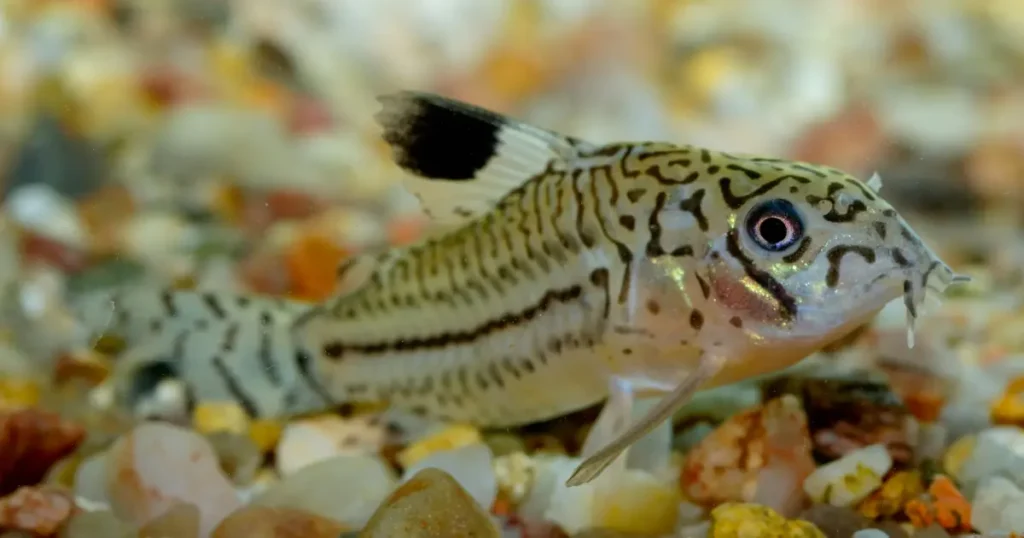
What Are Corydoras Catfish?
The Corydoras are a group of small bottom-dwelling fish from South America. They are often called “Cory cats” and are known for their armored bodies and whisker-like barbels used to search for food.
Most Corydoras species stay under 3 inches, making them perfect for small to medium aquariums. They spend most of their time moving along the substrate, often in groups, which creates a natural and active look in the tank.
Why Corydoras Are Perfect for Community Tanks
Corydoras are one of the safest choices for community aquariums. They rarely show aggression and get along well with most peaceful fish like tetras, rasboras, and guppies.
They also occupy the bottom level of the tank, which helps balance the aquarium since most fish swim in the middle or top areas.
Keeping them in groups of at least 5 to 6 is important. When kept alone, they become shy and inactive.
Panda Cory (Corydoras panda)
The Panda Cory is one of the most popular Corydoras species, especially for beginners. It gets its name from the black patches around its eyes, which look similar to a panda bear.
This species stays small, peaceful, and very active. Panda Corys are best kept in groups, where they constantly move around the bottom of the tank searching for food. Their playful behavior makes them a favorite in community aquariums.
They do best in slightly cooler water compared to many tropical fish, which is something beginners often miss. Stable conditions and clean substrate are key to keeping them healthy.
Panda Corys are also sensitive to poor water quality, so regular maintenance is important. When kept in the right setup, they are hardy and long-lasting.
Quick Overview:
- Size: 1.5 to 2 inches
- Temperament: Peaceful and social
- Tank Size: 10 gallons minimum (group recommended)
- Care Level: Easy to moderate
Sterbai Cory (Corydoras sterbai)
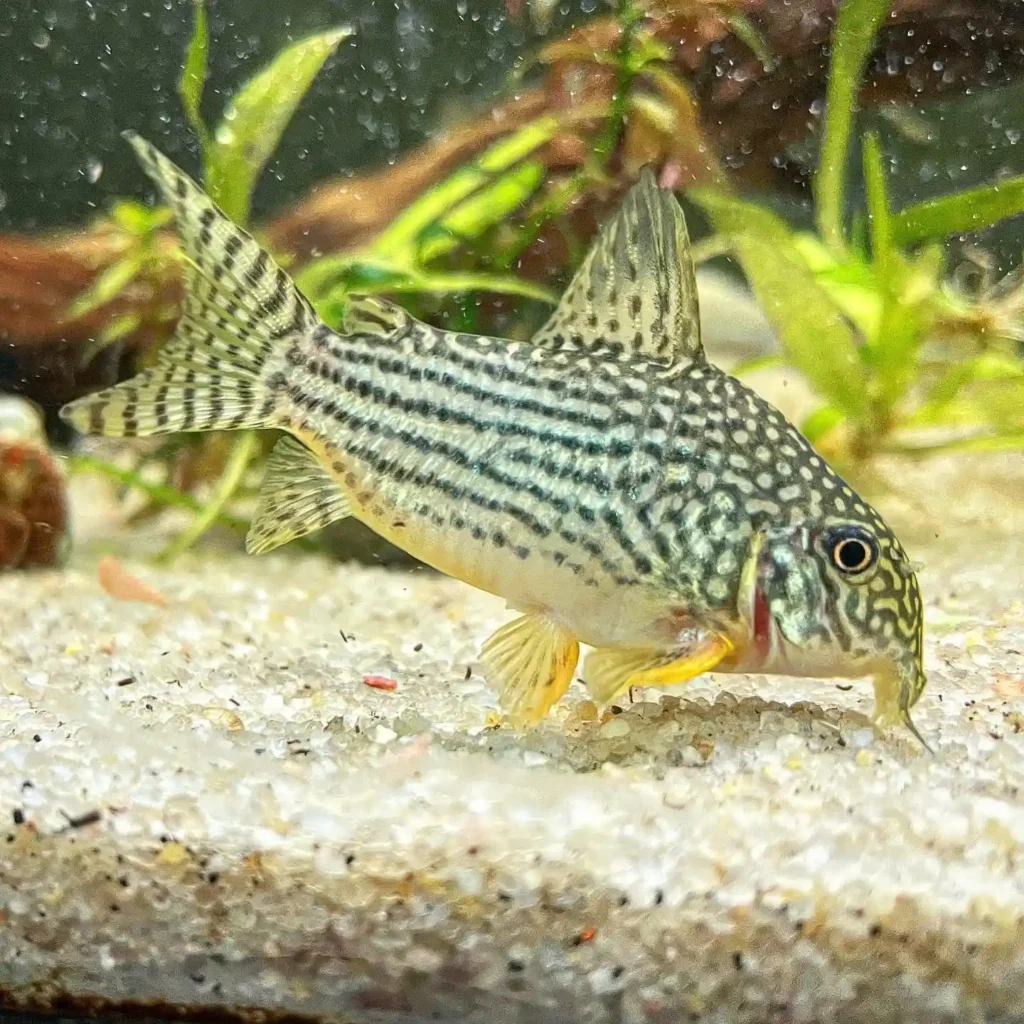
The Sterbai Cory is one of the most recognizable Corydoras thanks to its dark body covered with white spots and bright orange fins.
Unlike many other Cory species, Sterbai Corys tolerate warmer water, which makes them a great choice for tanks with fish like Discus or other tropical species. They are active bottom dwellers and enjoy moving in groups across the substrate.
They are hardy once settled but still require clean water and a soft substrate to protect their sensitive barbels. A group setup helps reduce stress and brings out their natural behavior.
Quick Overview:
- Size: 2.5 inches
- Temperament: Peaceful and social
- Tank Size: 15–20 gallons minimum
- Care Level: Easy
Pygmy Cory (Corydoras pygmaeus)
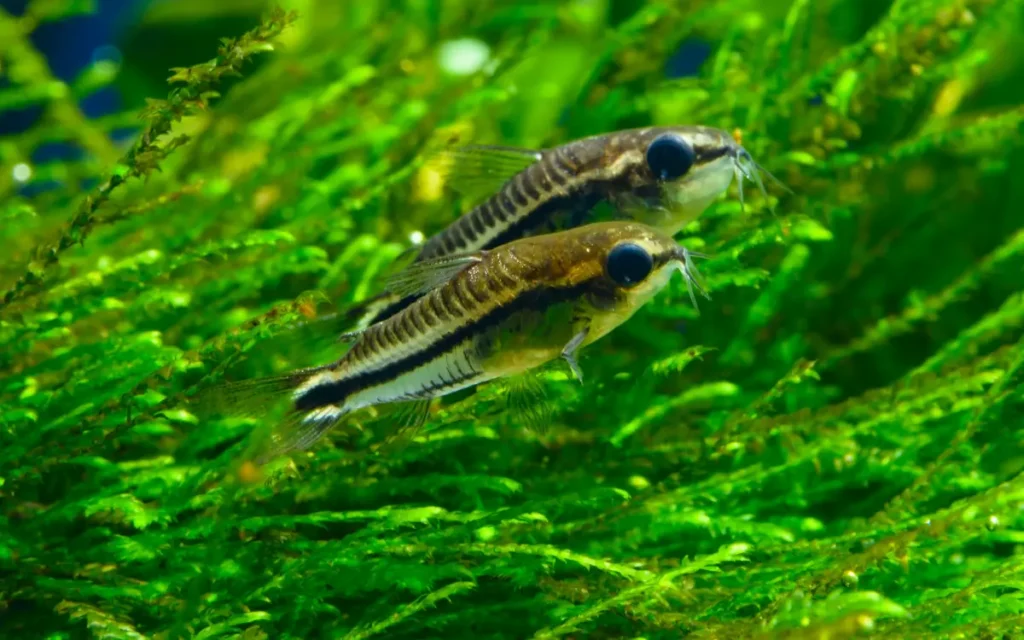
The Pygmy Cory is one of the smallest Corydoras species, making it perfect for nano aquariums.
Unlike most Corys that stay at the bottom, Pygmy Corys often swim in the middle of the tank, behaving more like schooling fish. This unique behavior makes them stand out in small community setups.
They need to be kept in larger groups to feel secure, and gentle filtration is important because of their small size. A planted tank works best for them.
Quick Overview:
- Size: 1 inch
- Temperament: Very peaceful
- Tank Size: 10 gallons minimum
- Care Level: Easy
Julii Cory (Corydoras julii)
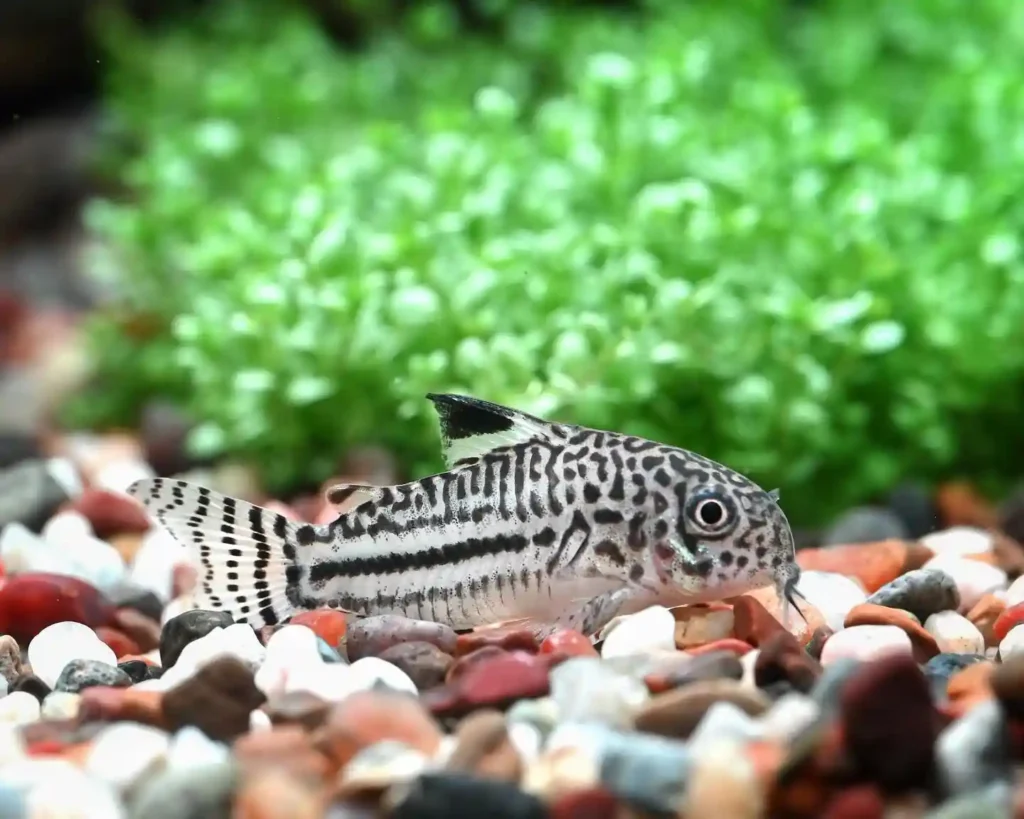
The Julii Cory is often confused with the Three Stripe Cory, but it has smaller, more defined spots instead of lines.
This species is calm, social, and perfect for community tanks. They spend most of their time searching the substrate for food and prefer to live in groups.
They adapt well to most aquarium conditions, but like all Corys, they need clean water and a smooth substrate to avoid injury.
Quick Overview:
- Size: 2 to 2.5 inches
- Temperament: Peaceful
- Tank Size: 15 gallons minimum
- Care Level: Easy
Bronze Cory (Corydoras aeneus)
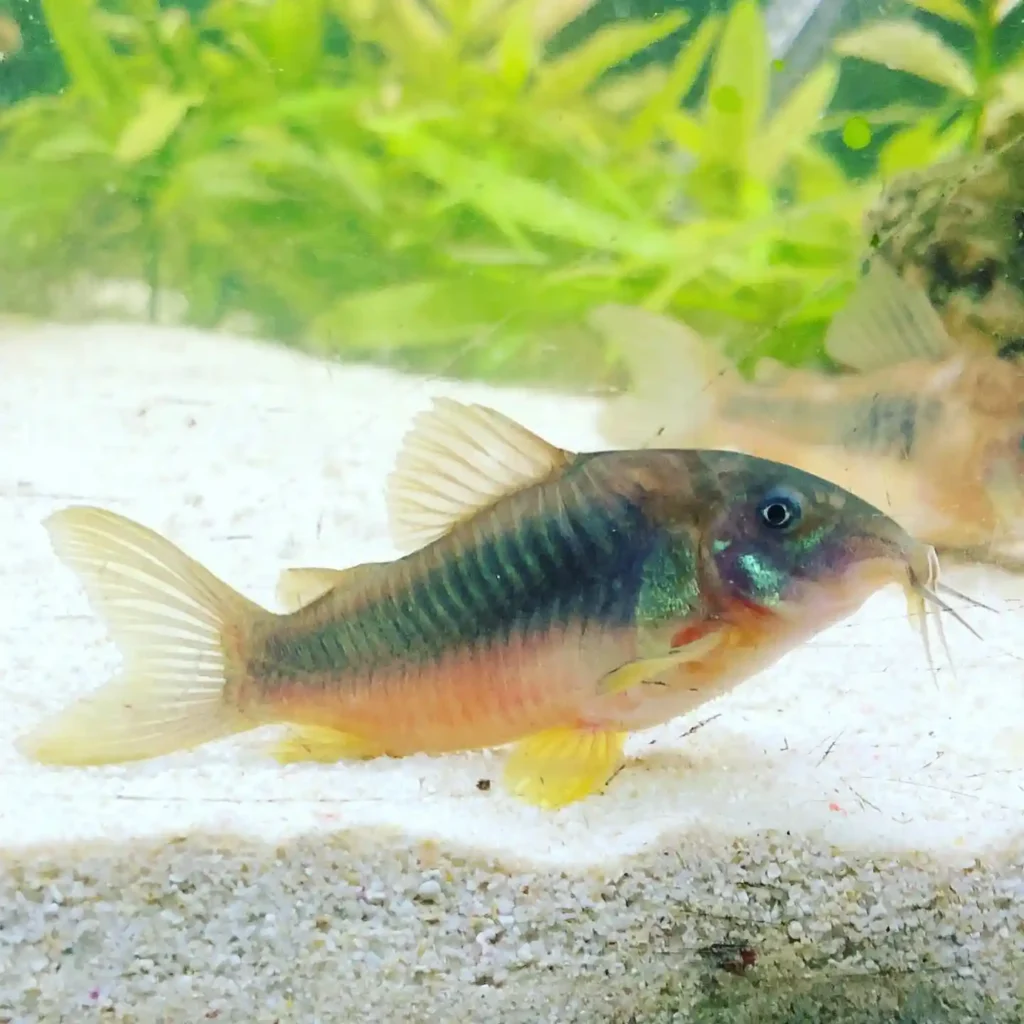
The Bronze Cory is one of the most common and hardy Corydoras species available.
It comes in several color variations, including green, bronze, and albino forms. Because of its adaptability, it is often recommended for beginners.
Bronze Corys are very active and constantly move around the tank bottom. They are tolerant of a wider range of water conditions compared to other Cory species.
Quick Overview:
- Size: 2.5 to 3 inches
- Temperament: Peaceful
- Tank Size: 15–20 gallons minimum
- Care Level: Very easy
Peppered Cory (Corydoras paleatus)
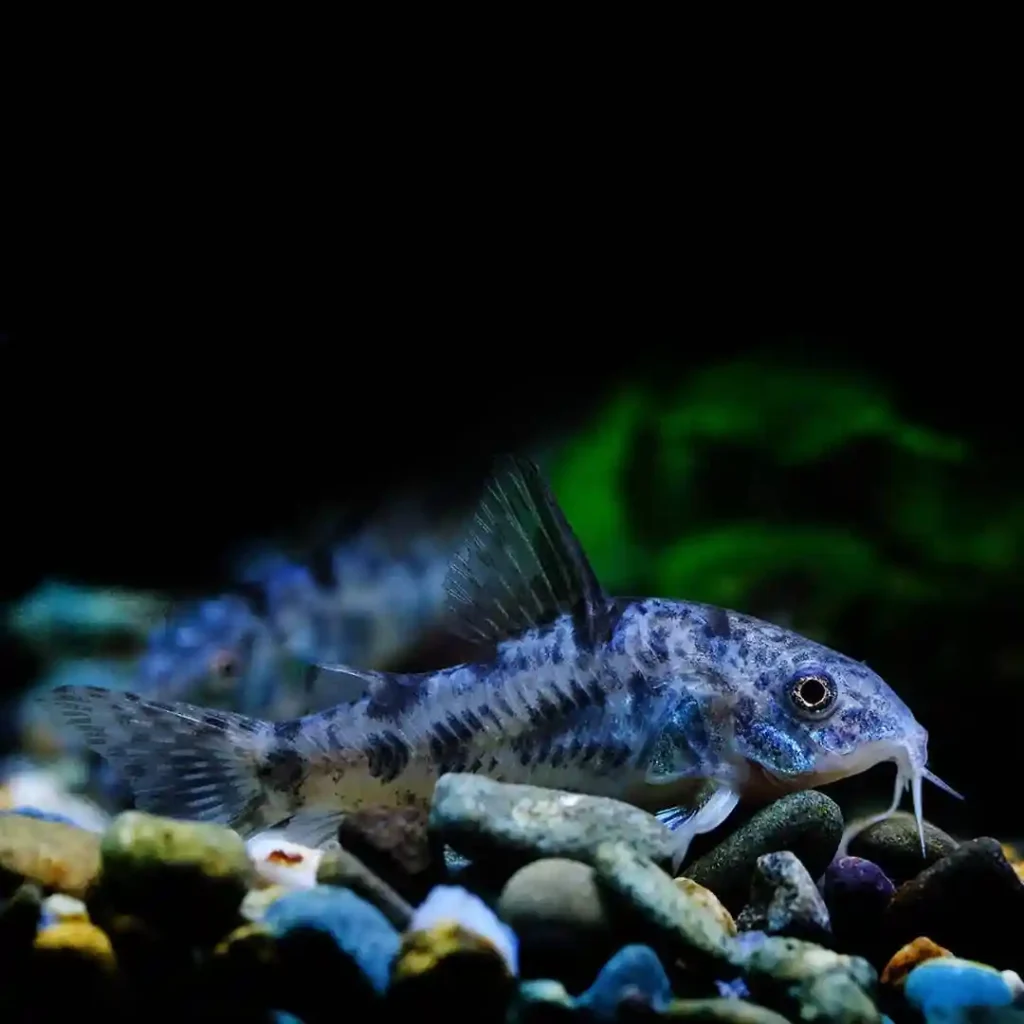
The Peppered Cory is a classic Cory species known for its speckled pattern.
It is highly adaptable and can tolerate cooler water, making it a great choice for beginners who do not use heaters. This species is active and thrives in groups.
They are very hardy and forgiving, but still benefit from stable water conditions and regular tank maintenance.
Quick Overview:
- Size: 2.5 to 3 inches
- Temperament: Peaceful
- Tank Size: 15 gallons minimum
- Care Level: Very easy
Skunk Cory (Corydoras arcuatus)
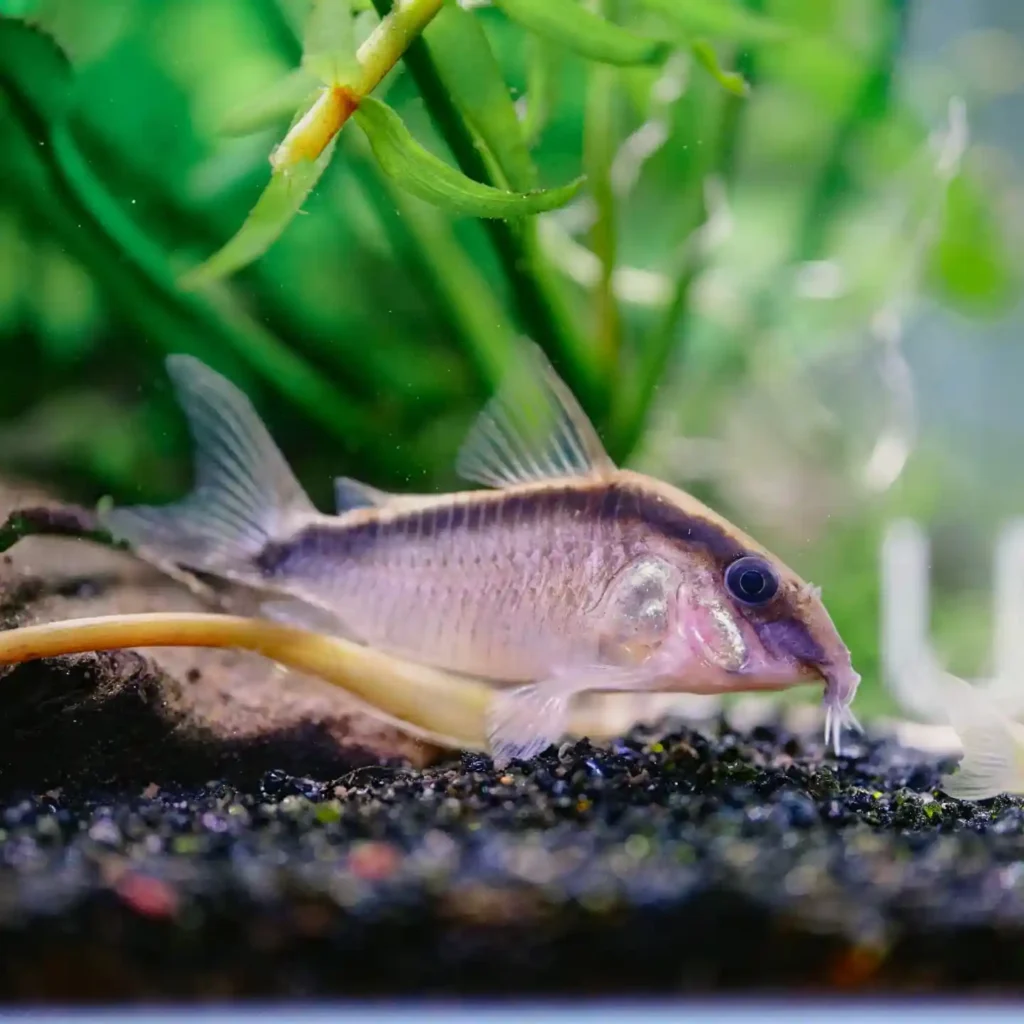
The Skunk Cory gets its name from the black stripe running along its back, similar to a skunk.
This species is slightly more sensitive than beginner Corys, so stable water conditions are important. It prefers calm environments and soft substrate.
When kept in groups, they become more active and comfortable in the tank.
Quick Overview:
- Size: 2 to 2.5 inches
- Temperament: Peaceful
- Tank Size: 15 gallons minimum
- Care Level: Moderate
Three Stripe Cory (Corydoras trilineatus)
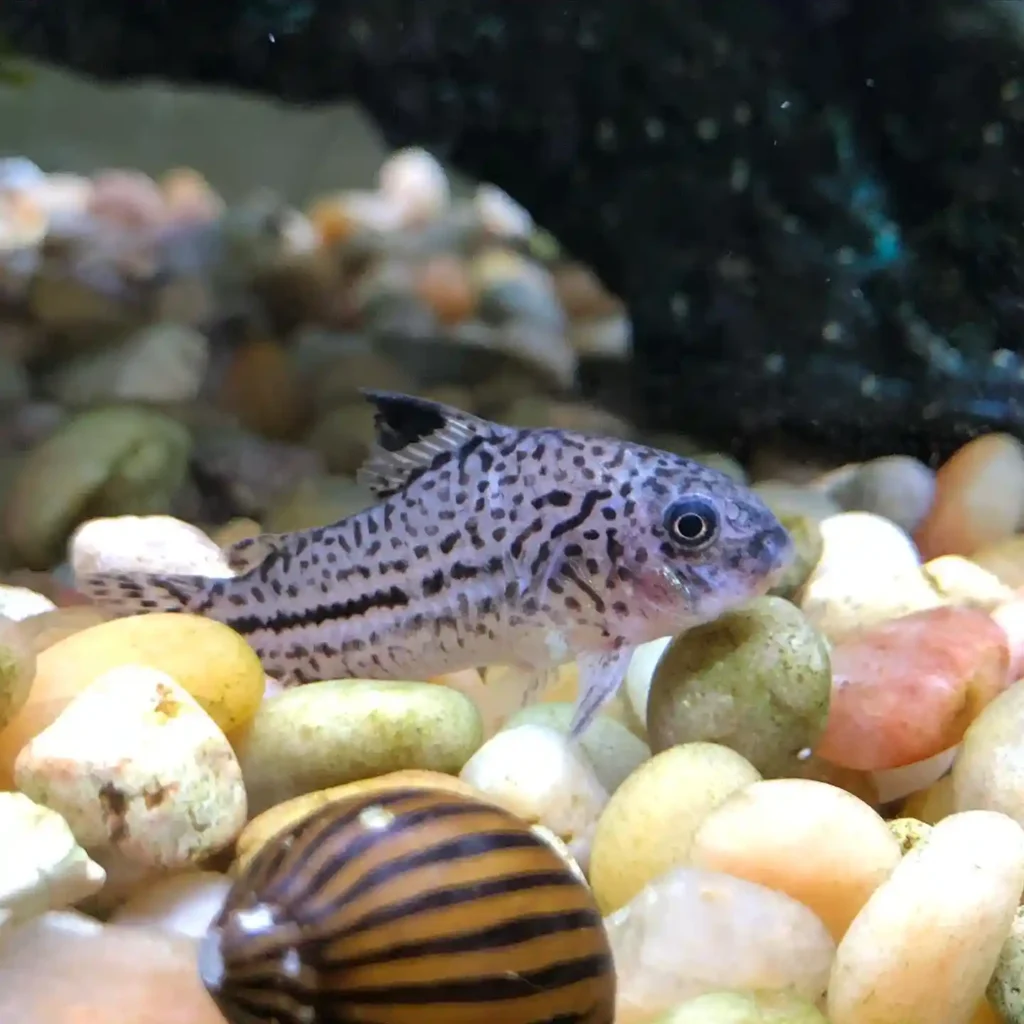
The Three Stripe Cory is often mistaken for the Julii Cory due to its similar appearance.
However, it has more connected lines rather than separate spots. It is hardy, peaceful, and widely available in the aquarium trade.
This species adapts well to community tanks and enjoys being kept in groups.
Quick Overview:
- Size: 2.5 inches
- Temperament: Peaceful
- Tank Size: 15 gallons minimum
- Care Level: Easy
Albino Corydoras (Albino Cory)
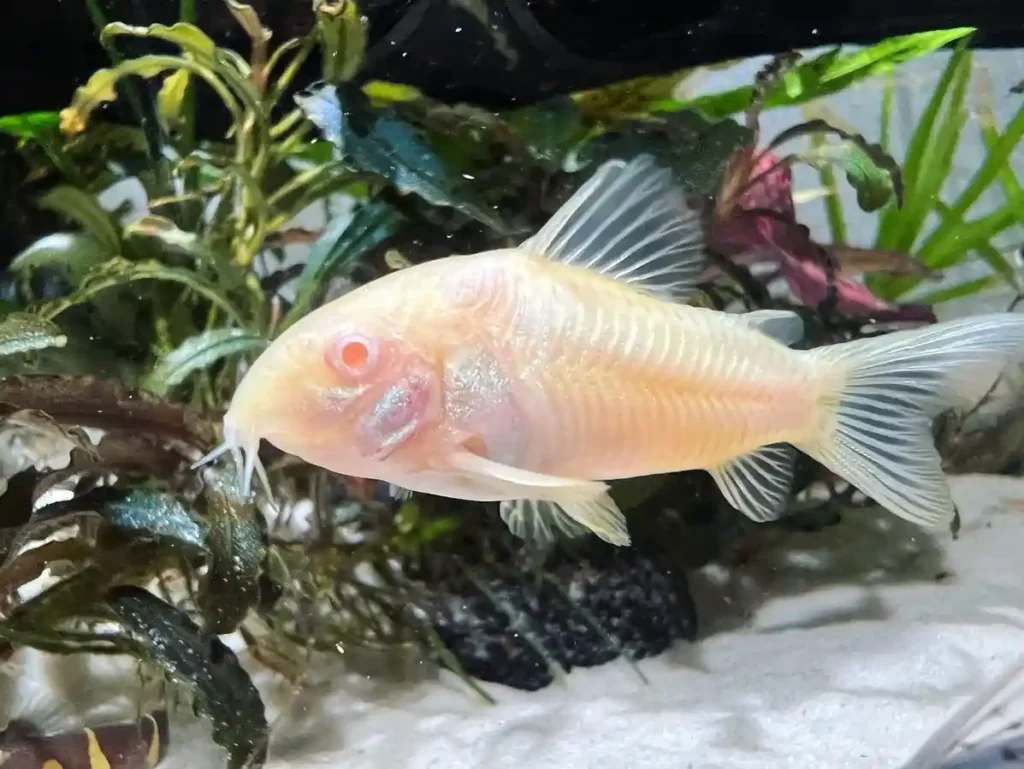
The Albino Corydoras is a color variation of the Bronze Cory rather than a separate species.
It has a pale white body with red eyes, making it stand out in planted aquariums. Care requirements are identical to Bronze Corys.
They are hardy, beginner-friendly, and very active bottom feeders.
Quick Overview:
- Size: 2.5 to 3 inches
- Temperament: Peaceful
- Tank Size: 15–20 gallons minimum
- Care Level: Very easy
Barbatus Cory (Corydoras barbatus)
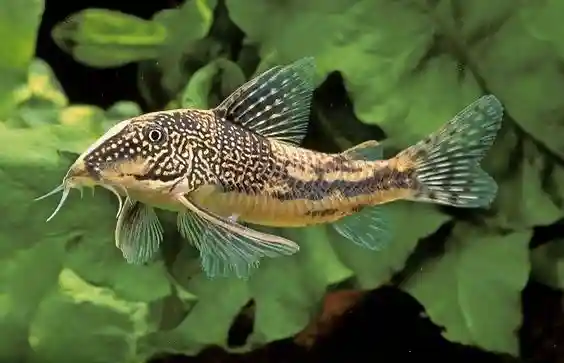
The Barbatus Cory is a larger Cory species known for its long barbels and unique appearance.
It requires more space than typical Corys and prefers slightly cooler water. This species is less common and better suited for aquarists with some experience.
A larger tank and stable conditions are important for long-term health.
Quick Overview:
- Size: 3 to 4 inches
- Temperament: Peaceful
- Tank Size: 20 gallons minimum
- Care Level: Moderate
Orange Laser Cory (Corydoras sp. “Orange Laser”)
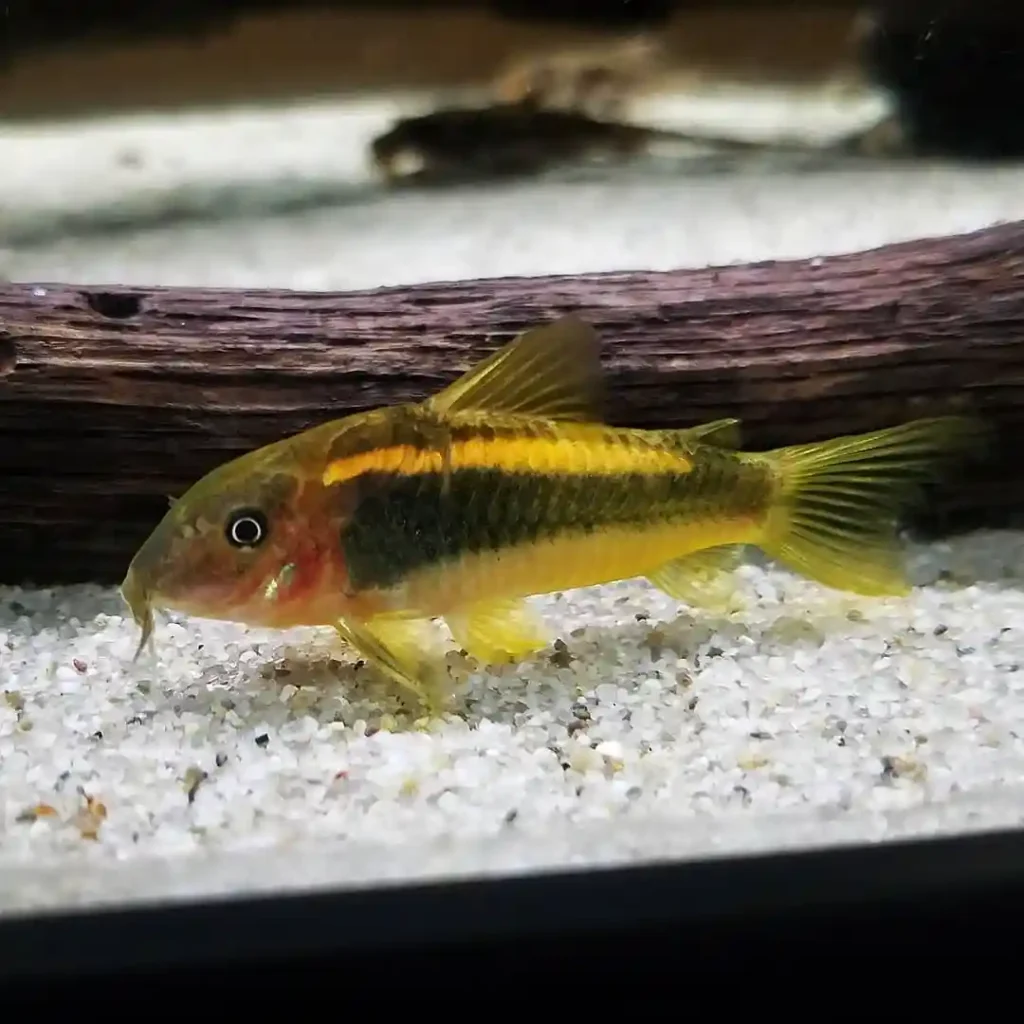
The Orange Laser Cory is a rare and visually striking Corydoras with a bright orange stripe along its body.
It is more sensitive than common Cory species and requires stable water conditions. Because of its rarity, it is often kept by experienced hobbyists.
They thrive in well-maintained aquariums with soft substrate and peaceful tank mates.
Quick Overview:
- Size: 2 to 2.5 inches
- Temperament: Peaceful
- Tank Size: 15–20 gallons minimum
- Care Level: Moderate
FAQs
How many Corydoras should be kept together?
Corydoras should always be kept in groups of at least 5 to 6. They are social fish and feel stressed when kept alone. In larger groups, they become more active, confident, and display natural schooling behavior.
Are Corydoras good for beginners?
Yes, Corydoras are one of the best fish for beginners. They are peaceful, easy to care for, and adapt well to most aquarium conditions. Species like Panda, Bronze, and Peppered Cory are especially beginner-friendly.
Do Corydoras clean the tank?
Corydoras help clean leftover food from the bottom, but they are not a replacement for proper tank maintenance. You still need regular water changes and proper feeding to keep the tank clean.
Can Corydoras live without a heater?
Some species like Peppered Cory can tolerate cooler water, but most Corydoras prefer stable temperatures between 22°C and 26°C. Using a heater is recommended for consistency, especially in tropical setups.
What do Corydoras eat?
Corydoras eat sinking pellets, algae wafers, and frozen or live foods like bloodworms. They should be fed directly and not rely only on leftover food from other fish.
Do Corydoras need sand or gravel?
Sand is the better option for Corydoras. Their sensitive barbels can get damaged on sharp gravel. A soft sand substrate allows them to dig and behave naturally.
How long do Corydoras live?
Most Corydoras live between 5 to 10 years with proper care. Good water quality, proper diet, and keeping them in groups can increase their lifespan.
Can Corydoras live with other fish?
Yes, Corydoras are peaceful and do well with most community fish like tetras, rasboras, guppies, and danios. Avoid aggressive or large fish that may stress them.
Do Corydoras need an air pump?
Corydoras can breathe from the surface occasionally, but they still need well-oxygenated water. A filter with good flow is usually enough, but an air pump can help in heavily stocked tanks.
Why do Corydoras swim to the surface?
This is normal behavior. Corydoras sometimes swim to the surface to gulp air. However, if they do it constantly, it may indicate poor water quality or low oxygen levels.
