Goldfish Care Guide: Tank Setup, Feeding, Size and Lifespan

Goldfish need a large filtered tank, clean water, the right food, and regular care. They should never spend their life in a small bowl.
One fancy goldfish needs at least 20 to 30 gallons as a starting point. Common, Comet, and Shubunkin Goldfish need much more space because they grow larger and swim faster.
Goldfish are often sold as easy starter pets, but they are not the easiest fish for a beginner. They produce plenty of waste and may live for 10 to 20 years. If you want a smaller first fish, compare the choices in my guide to the best freshwater fish for beginners.
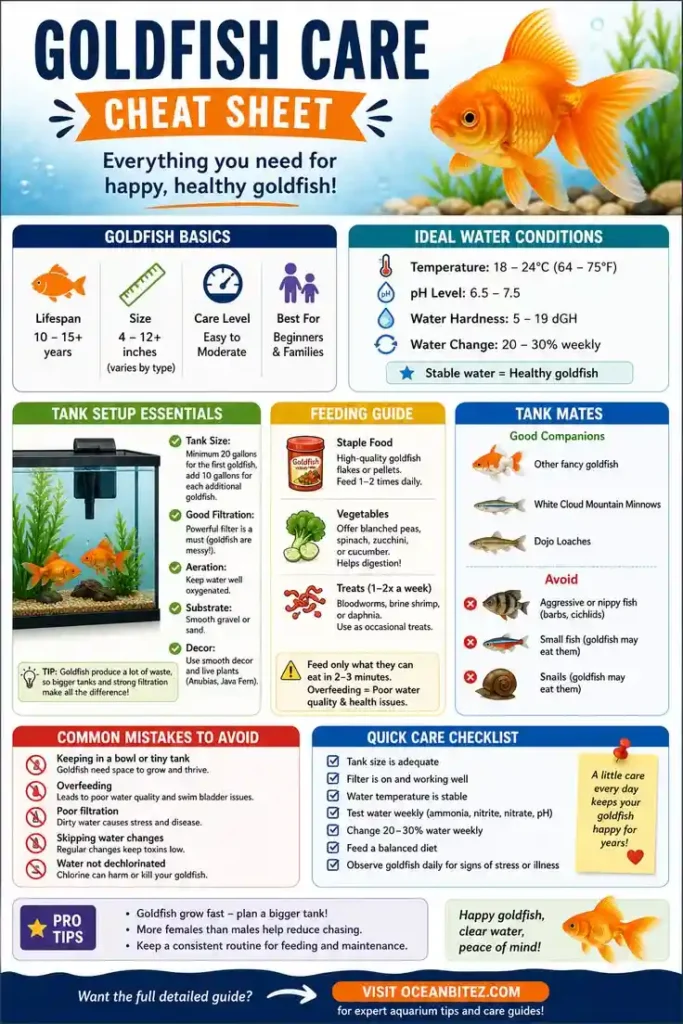
Goldfish Care Overview
Here are the basic conditions a goldfish needs:
| Care requirement | Recommended conditions |
| Care level | Moderate |
| Adult size | 6 to 12+ inches |
| Lifespan | 10 to 20 years |
| Fancy goldfish tank | 20–30 gallons for one |
| Common goldfish tank | 55–75+ gallons or a pond |
| Water temperature | 65–75°F |
| pH | 7.0–8.4 |
| Diet | Omnivore |
| Temperament | Peaceful |
| Best companions | Goldfish with a similar body type |
Use these numbers as starting points. The right tank size also depends on the goldfish variety, adult size, tank shape, filtration, and number of fish.
Are Goldfish Good for Beginners?
Goldfish are not the easiest beginner fish. A prepared beginner can care for one, but the fish needs more space and maintenance than many people expect.
The biggest challenge is waste. Goldfish eat often and produce a lot of waste, so their water can become unsafe quickly in a small or unfiltered tank.
Common and Comet Goldfish also grow large. A fish that looks tiny at the store may eventually need a very large aquarium or pond.
Fancy goldfish stay shorter, but their rounded bodies, long fins, raised eyes, or head growth can make them more sensitive to injury and swimming problems.
I would recommend a goldfish only to a beginner who is ready to cycle the tank, test the water, use a strong filter, and complete regular water changes.
Types of Goldfish: Common vs Fancy
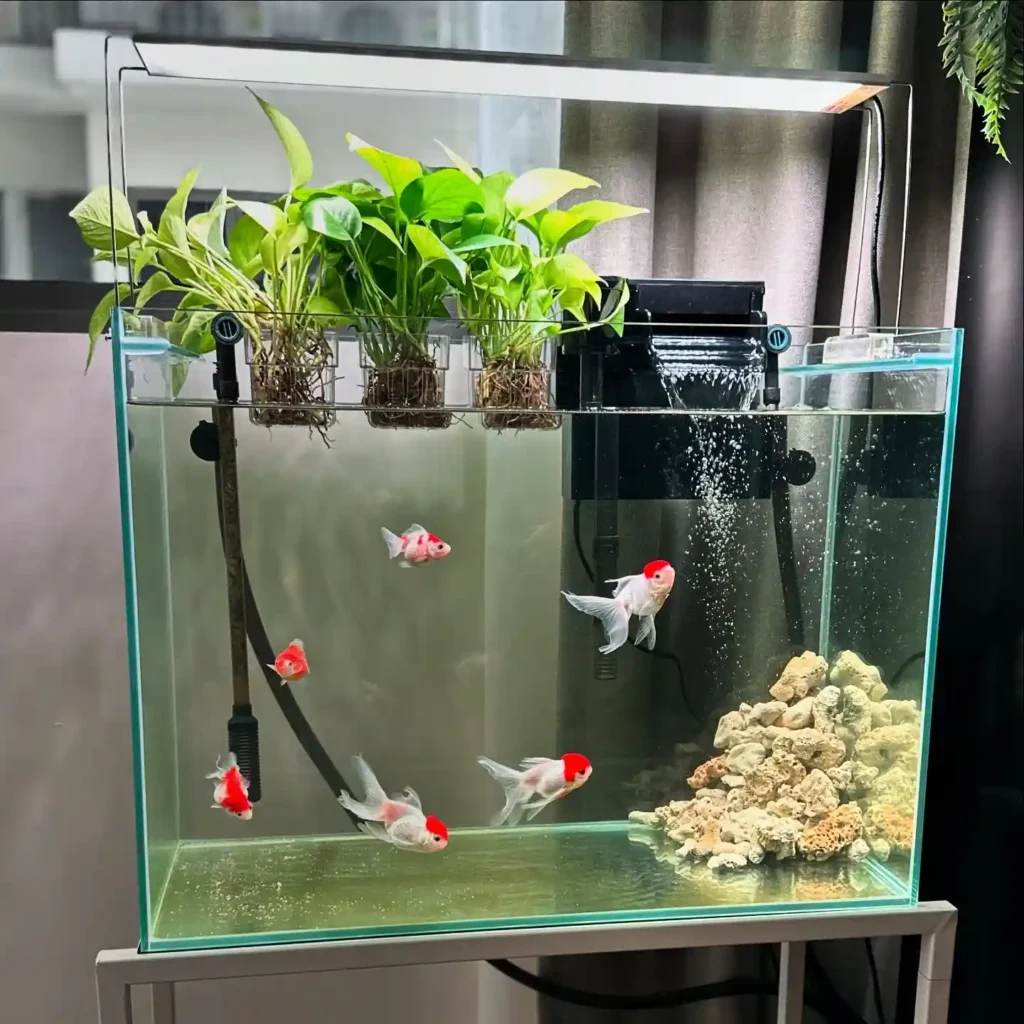
Goldfish fall into two main groups: single-tail goldfish and fancy goldfish. Their body shape affects how much space they need and which fish can live with them.
Common and Single-Tail Goldfish
Common Goldfish, Comets, and Shubunkins have long bodies and single tails. They are fast, active swimmers that need plenty of open space.
These fish may reach 10 to 12 inches or more. A large aquarium can work for young fish, but a well-maintained pond is often the better adult home.
Single-tail goldfish should usually live with other single-tail varieties. They may take food from slower fancy goldfish.
Fancy Goldfish
Fancy goldfish have shorter, rounder bodies and double tails. This group includes Fantails, Orandas, Ranchu, Ryukins, Black Moors, Telescope Goldfish, Lionheads, and Bubble Eyes.
They swim more slowly than single-tail goldfish. Some also have poor eyesight, long fins, or soft head growths that can be injured.
Fancy varieties normally do best with other fancy goldfish of a similar size and swimming speed.
You can compare their colors, shapes, and needs in my guide to the different types of goldfish.
Choosing a Healthy Goldfish
Choose a goldfish that swims steadily, holds its fins open, and shows interest in its surroundings. Its eyes and body should look clean, with no spots, sores, or unusual swelling.
Watch the fish for a few minutes before buying it. Healthy goldfish usually search for food and react when someone approaches the tank.
Avoid fish with clamped fins, rapid breathing, torn tails, red patches, white spots, or trouble staying upright. A fish sitting alone at the bottom may also be sick or stressed.
Ask the seller how long the fish has been in the store and whether any fish in the tank were recently treated for illness. Do not buy from a tank containing dead or visibly sick fish.
Most pet-store goldfish are young. Choose the aquarium based on the fish’s adult size rather than how small it looks on the day you bring it home.
Goldfish Tank Size
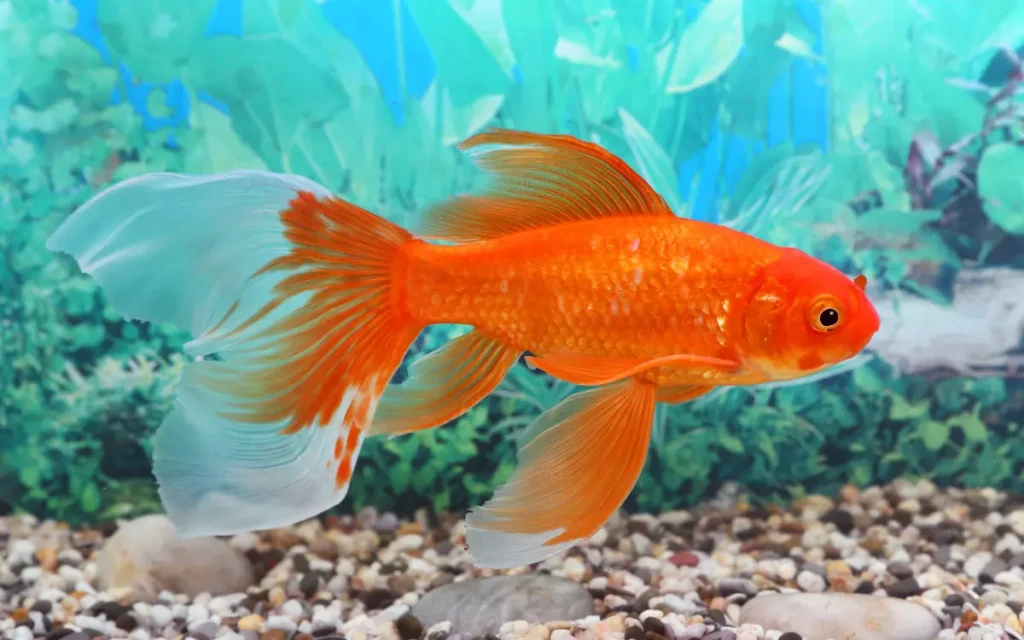
Goldfish need more room than bowls and small starter tanks provide. A larger aquarium gives them swimming space and helps keep the water stable.
| Goldfish setup | Better starting size |
| One fancy goldfish | 20–30 gallons |
| Two fancy goldfish | 30–40+ gallons |
| Three fancy goldfish | 50–60+ gallons |
| One Common or Comet Goldfish | 55–75+ gallons |
| Several single-tail goldfish | Very large aquarium or pond |
These are starting points rather than limits. Larger tanks usually provide more stable water and more room for adult fish.
Tank shape matters too. A long aquarium offers more swimming room and surface area than a tall, narrow tank with the same volume.
Can Goldfish Live in a Bowl?
No, a goldfish should not live in a bowl. Bowls are too small for normal swimming and usually do not have room for proper filtration.
Waste builds up quickly in a small amount of water. This can cause ammonia poisoning, breathing trouble, stress, and early death.
Bowls also have less surface area for oxygen exchange. Even frequent cleaning cannot turn a tiny bowl into a suitable long-term home.
Can Goldfish Live in a Small Tank?
A young goldfish may physically fit inside a small tank, but that does not make the tank suitable.
Small tanks become dirty quickly and change temperature faster than larger aquariums. They also limit swimming space as the fish grows.
If you already have a goldfish in a small tank, move it into a larger filtered aquarium as soon as you can. Do not wait until the fish looks too large.
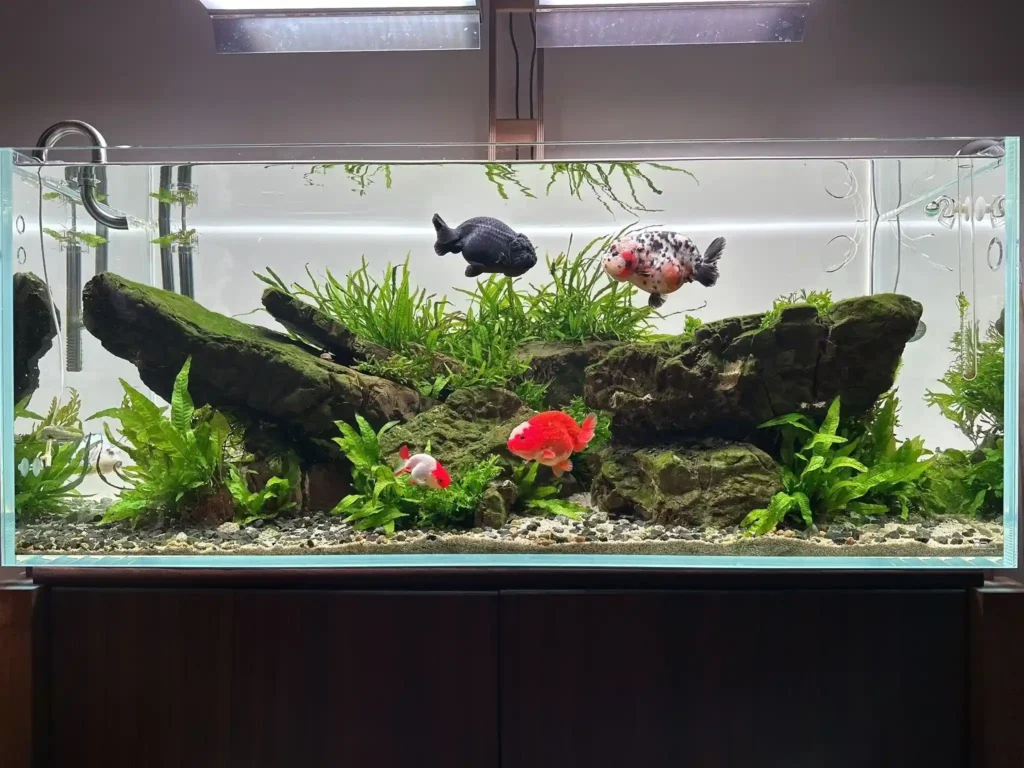
How to Set Up a Goldfish Tank
A good goldfish tank needs open swimming space, strong filtration, and smooth decorations. Keep the layout simple enough to clean easily.
My complete guide on setting up a goldfish tank covers the full process. Here are the main points.
Choose a Long Aquarium
Choose a long, wide tank rather than a tall and narrow one. Goldfish spend most of their time swimming from side to side.
A wider water surface also supports better oxygen exchange. This is useful because goldfish need clean, well-oxygenated water.
Place the aquarium on a level stand that can support its full weight. Water is heavy, and even a medium-sized tank weighs far more when filled.
Add Strong Filtration
Goldfish need a filter because they produce a heavy amount of waste. The filter collects loose dirt and gives helpful bacteria a place to grow.
Choose a filter that can handle more than the tank’s listed volume. A canister filter, hang-on-back filter, or large sponge filter may work, depending on the setup.
Fancy goldfish can struggle in a strong current. If the flow pushes them around, use a spray bar, sponge, or baffle to spread the water more gently.
Never assume a powerful filter replaces water changes. The filter processes waste, but nitrate and other waste still build up over time.
Choose a Safe Substrate
Fine aquarium sand works well because goldfish like to search through the bottom. Use only aquarium-safe sand and clean it during water changes.
Large, smooth gravel may also work when the pieces are too large to swallow. Avoid small stones that could become stuck in a goldfish’s mouth.
A bare-bottom tank is easy to clean, but it looks less natural and gives the fish fewer opportunities to search through the substrate.
Use Smooth Decorations
Choose rounded rocks and smooth ornaments without sharp edges. Run your fingers over each decoration before placing it in the tank.
Avoid narrow holes and tight gaps. A goldfish may swim into an opening and become trapped as it grows.
This matters even more for Black Moors, Telescope Goldfish, Orandas, and other fancy varieties with delicate eyes or head growths.
Add Hardy Plants
Goldfish can live with plants, but they may nibble soft leaves or pull plants from the substrate.
Anubias and Java Fern have tough leaves and can be attached to rocks or driftwood. Hornwort and Vallisneria may also work, although every goldfish behaves differently.
Plants can provide shade and cover, but they do not replace filtration or tank maintenance.
See my list of plants that can grow in goldfish tanks for more options.
How to Cycle a Goldfish Tank
Cycle the aquarium before adding a goldfish. Cycling grows helpful bacteria that process dangerous fish waste.
Fish waste and leftover food create ammonia. Ammonia is poisonous, even when the water looks clear.
One group of bacteria changes ammonia into nitrite. Nitrite is also poisonous. Another group changes nitrite into nitrate, which is less dangerous and can be controlled through water changes.
Use a freshwater test kit while cycling the tank. The aquarium is ready only when ammonia and nitrite both read 0 ppm and nitrate is present.
A new tank may take several weeks to cycle. Adding a goldfish too early can expose it to ammonia and nitrite while the filter bacteria are still growing.
Do not replace all your filter media after the tank cycles. Much of the helpful bacteria lives inside that media.
Goldfish Water Parameters
Goldfish are hardy, but they still need clean and stable water.
| Water parameter | Recommended range |
| Temperature | 65–75°F |
| pH | 7.0–8.4 |
| Ammonia | 0 ppm |
| Nitrite | 0 ppm |
| Nitrate | Preferably below 40 ppm |
Avoid making sudden changes while chasing one exact pH number. A stable pH within a suitable range is normally safer than repeated chemical adjustments.
Test the water at least weekly. Test it more often in a new tank, after adding fish, or whenever a goldfish behaves differently.
Do Goldfish Need a Heater?
Goldfish usually do not need a heater when the room keeps the water within a stable and suitable range.
A heater may help if the room becomes very cold or the temperature changes sharply between day and night. In that case, use the heater to keep the water steady rather than making it tropical.
Check the needs of your goldfish variety. Fancy goldfish may benefit from water near the warmer part of the safe range, while many single-tail goldfish handle cooler conditions.
Always use a thermometer. The water temperature may differ from the room temperature.
Do Goldfish Need a Filter?
Yes, goldfish need a filter. Their heavy waste can cause ammonia to rise quickly in an unfiltered aquarium.
The filter should move the surface gently, trap loose dirt, and hold biological media where helpful bacteria can grow.
Clean water is not always safe water. Ammonia and nitrite are invisible, which is why a filter and water test kit are both needed.
Goldfish Tank Maintenance
A goldfish tank needs regular care even when it looks clean. Testing and water changes prevent waste from reaching unsafe levels.
How Often Should You Change Goldfish Water?
Start with a weekly partial water change. Changing around 25% to 30% works for many properly stocked tanks, but your water-test results should guide the schedule.
A crowded aquarium or one with large goldfish may need bigger or more frequent changes. Rising nitrate is a sign that the current routine is not enough.
Treat new tap water with a conditioner that removes chlorine or chloramine. Try to match the new water temperature to the aquarium.
Do not replace all the water during normal maintenance. A sudden change in temperature or water chemistry can stress the fish.
How to Clean a Goldfish Tank
First, test the water and check the fish. Then unplug the heater and filter if their instructions require it.
Use an aquarium siphon to remove part of the water while vacuuming waste from the substrate. Pay attention to areas beneath decorations and around plants.
Add treated water at a similar temperature. Restart the equipment and make sure the filter is flowing normally.
Never use soap, household cleaners, or scented products inside the aquarium.
How to Clean the Filter
Rinse dirty filter sponges or media gently in a bucket of water removed from the aquarium.
Do not scrub everything until it looks new. The goal is to remove loose dirt without destroying the helpful bacteria.
Avoid rinsing biological filter media under untreated tap water. Chlorine may kill the bacteria that process ammonia and nitrite.
Replace worn media only when needed. When possible, replace one part at a time instead of changing everything on the same day.
What Do Goldfish Eat?
Goldfish are omnivores. They eat both plant-based foods and small animal foods.
Use a quality goldfish pellet or gel food as the main diet. Flakes can work, but they break apart quickly and may create more waste.
A mixed diet supports steady growth and normal digestion. Treats can add variety, but they should not replace the main food.
Best Everyday Goldfish Food
Choose a food made for goldfish rather than a general tropical fish food. Goldfish have different nutritional needs.
Sinking pellets are often a good choice for fancy goldfish. They allow the fish to eat below the surface and may reduce the amount of air swallowed during feeding.
Soak large or hard pellets briefly if your goldfish struggles to eat them. Choose a pellet size that fits comfortably inside the fish’s mouth.
Vegetables Goldfish Can Eat
Goldfish can eat small amounts of blanched spinach, zucchini, and shelled peas.
Cook or blanch firm vegetables until they are soft enough to bite. Let them cool before placing them in the tank.
Remove any uneaten pieces after a short time so they do not spoil the water.
Shelled peas may help some goldfish with mild digestive trouble. They are not a cure for every floating or swimming problem.
Protein Treats
Daphnia, brine shrimp, and bloodworms can be offered as occasional treats.
Do not feed rich protein foods every day. Too much can upset the diet and create extra waste.
Frozen foods should be thawed before feeding. Offer only a small portion that the fish can finish.
Foods to Avoid
Do not feed bread, crackers, cereal, cheese, or processed human food. These items are not suitable for goldfish and can make the water dirty.
Avoid large, hard pieces that the fish cannot swallow safely. Remove any food that remains uneaten.
How Often Should You Feed Goldfish?
Feed most adult goldfish once or twice a day. Give a small amount they can finish within about one or two minutes.
There is no perfect number of pellets for every fish because pellet sizes and fish sizes differ. Watch how quickly the food disappears and adjust the portion.
Goldfish often act hungry even after eating. Do not keep feeding them because they swim to the glass or search the bottom.
Signs of overfeeding include uneaten food, cloudy water, bloating, and nitrate rising faster than usual. Reduce the portion if you notice these problems.
Young, growing goldfish may need a different feeding schedule. Divide their daily food into small meals instead of giving one large serving.
Normal Goldfish Behavior
Healthy goldfish are active, curious, and interested in food. They often search through the substrate and swim toward people near the tank.
Learning your fish’s normal routine makes it easier to notice illness early.
Swimming and Searching for Food
Goldfish spend much of the day swimming and searching for small pieces of food.
They may move sand, nibble plants, or investigate decorations. This is normal when the fish swims steadily and shows no signs of distress.
A goldfish may also follow another goldfish around the tank. Gentle interaction is different from constant chasing or biting.
Resting
Goldfish sleep and rest, although they do not close their eyes. A resting goldfish may stay quietly near the bottom or in a calm part of the tank.
Its body should remain upright, and its breathing should look steady.
A fish lying on its side, breathing heavily, or remaining at the bottom all day may have a water-quality or health problem.
Chasing
Brief chasing can happen during feeding or breeding. Male goldfish may chase females when spawning conditions begin.
Constant chasing is not healthy. It may prevent a weaker fish from eating or resting.
Separate the fish if chasing causes torn fins, missing scales, exhaustion, or long periods of hiding.
Warning Behaviors
Test the water if your goldfish gasps at the surface, clamps its fins, rubs against objects, stops eating, or suddenly hides.
Check ammonia and nitrite first. Both should read 0 ppm.
Also inspect the body for white spots, red areas, swelling, wounds, or damaged fins.
Goldfish Compatibility and Tank Mates
The safest companion for a goldfish is usually another goldfish with a similar body type and swimming speed.
Fancy goldfish should normally live with other suitable fancy varieties. Commons, Comets, and Shubunkins are better with other fast single-tail goldfish.
Avoid mixing goldfish with most tropical fish. Tropical species often need warmer water, and small fish may be swallowed.
Even another goldfish needs extra tank space. Do not add a companion when the aquarium is already at its safe limit.
My complete goldfish tank mate guide explains which fish may work and which pairings should be avoided.
Special Care for Fancy Goldfish
Fancy goldfish need calm water, smooth decorations, and easy access to food. Their unusual body shapes can make swimming and feeding harder.
Gentle Water Flow
Strong currents may push a fancy goldfish around or make it work too hard to stay in place.
Spread the filter output with a spray bar, sponge, or flow baffle. Keep enough movement for good filtration and oxygen without creating a rough current.
Watch the fish rather than judging the filter by sound. If it is constantly pushed sideways or avoids one part of the tank, the flow may be too strong.
Easy Access to Food
Slow fancy goldfish may lose food to stronger swimmers. Feed in more than one area and watch each fish eat.
Black Moors and Telescope Goldfish have limited vision. They may need food placed close to them.
A fish that becomes thinner than its tank mates may need separate feeding.
Smooth Tank Layout
Avoid sharp rocks, tight openings, and rough plastic plants. Fancy goldfish can tear their fins or injure their eyes and head growths.
Keep a large open area for swimming. Place smooth plants and decorations near the back or sides.
Digestive and Swimming Problems
Fancy goldfish have short, round bodies. Their compact shape can make some varieties more likely to have balance or swimming trouble.
Overfeeding and poor water may cause problems, but not every floating fish is constipated. Infection, injury, internal disease, and body shape can also be involved.
Test the water first. If the fish does not improve or cannot eat normally, seek help from an aquatic veterinarian.
Wen Care
Orandas, Ranchu, and Lionheads may grow a soft head covering called a wen.
A healthy wen should look clean and free from sores. Watch for redness, swelling, white patches, trapped waste, or a bad smell.
Clean water and smooth decorations reduce the chance of injury and infection.
Do not cut a wen at home. Trimming it incorrectly can cause bleeding, infection, and serious injury.
For care tailored to each variety, read these guides:
- Oranda Goldfish Care Guide
- Ranchu Goldfish Care Guide
- Black Moor Goldfish Care Guide
- Fantail Goldfish Care Guide
- Lionhead Goldfish Care Guide
- Bubble Eye Goldfish Care Guide
Common Goldfish Health Problems
Poor water quality causes or worsens many goldfish health problems. Test the water before reaching for medication.
Swim Bladder Problems
A goldfish with a swimming problem may float, sink, swim sideways, or struggle to remain balanced.
Possible causes include digestive trouble, overfeeding, poor water, infection, injury, and the body shape of some fancy goldfish.
Test ammonia, nitrite, nitrate, temperature, and pH. Reduce feeding briefly if the fish appears bloated, but do not assume peas will solve every case.
Seek qualified help if the fish cannot eat, shows swelling, or fails to improve.
Fin Rot
Fin rot can make the fins look torn, cloudy, red, or worn away at the edges.
Poor water, stress, and injuries may allow infection to begin. Test the water and remove sharp decorations.
Mild damage may improve with clean water and reduced stress. Worsening cases may need proper treatment.
Ich
Ich often looks like small grains of salt on the body and fins. Affected fish may rub against objects, clamp their fins, or breathe quickly.
Ich can spread through the tank. Begin a suitable treatment early and follow its directions carefully.
Do not raise the temperature quickly without checking whether the fish and treatment can handle the change.
Fungal Infections
Fungal growth may look white and cotton-like. It often develops on damaged skin, fins, or eggs.
Several fish conditions can look similar, so avoid choosing medicine based only on one symptom.
Keep the water clean and seek experienced help when the affected area spreads.
When to Seek Help
Contact an aquatic veterinarian when your goldfish has open sores, severe swelling, heavy breathing, uncontrolled bleeding, repeated floating trouble, or a long loss of appetite.
Avoid mixing several medicines without knowing the cause. Some treatments can harm the fish or filter bacteria.
How Long Do Goldfish Live?
Goldfish can live for 10 to 20 years with suitable care. Some live even longer.
Their lifespan depends on tank size, water quality, diet, genetics, and early care. Goldfish kept in bowls often die young because the environment cannot meet their needs.
Fancy goldfish may have shorter average lives than strong single-tail varieties because some body shapes are linked with health problems.
Buying a goldfish is a long commitment. Plan for its adult size and future home before bringing it home.
Daily and Weekly Goldfish Care Schedule
A simple routine helps you find small problems before they become serious.
| Schedule | Care task |
| Daily | Check swimming, breathing, appetite, and fins |
| Daily | Check the filter and water temperature |
| Daily | Feed one or two small meals |
| Weekly | Test ammonia, nitrite, nitrate, and pH |
| Weekly | Complete a partial water change |
| Weekly | Vacuum visible waste |
| Monthly | Check filter flow and inspect decorations |
| As needed | Rinse filter media in removed tank water |
Do not rely only on a fixed schedule. Test more often when the tank is new, a fish becomes sick, or another fish is added.
Common Goldfish Care Mistakes
Keeping a goldfish in a bowl is the most damaging mistake. A bowl cannot provide the space, filtration, and stable water that a goldfish needs.
Another mistake is choosing the tank based on the fish’s current size. Goldfish sold in stores are young and may grow for many years.
Do not add a goldfish before cycling the aquarium. Clear water can still contain poisonous ammonia or nitrite.
Overfeeding is also common because goldfish always appear interested in food. Large meals create digestive trouble and make the tank dirty.
Never replace all filter media during routine cleaning. This can remove much of the helpful bacteria and cause ammonia to rise.
Avoid mixing fast single-tail goldfish with slow fancy varieties. The faster fish may take most of the food.
Test the water instead of judging it by appearance. Unsafe water can look perfectly clean.
Frequently Asked Questions
Are Goldfish Easy to Care For?
Goldfish are not the easiest fish to care for. Their basic routine is simple, but they need a large aquarium, strong filtration, water testing, and regular cleaning.
A prepared beginner can keep one successfully. The mistake is treating a goldfish as a small bowl pet.
Can Goldfish Live in Tap Water?
Goldfish can live in tap water after it has been treated with a water conditioner.
Untreated tap water may contain chlorine or chloramine, which can harm the fish and the helpful bacteria inside the filter.
What Size Tank Does a Goldfish Need?
One fancy goldfish needs at least 20 to 30 gallons as a starting point. Two fancy goldfish need around 30 to 40 gallons or more.
Common, Comet, and Shubunkin Goldfish need much larger aquariums or ponds because they grow longer and swim faster.
Do Goldfish Need a Filter?
Yes, goldfish need a filter. They produce heavy waste that can quickly create unsafe ammonia in an unfiltered tank.
A filter does not replace water changes or water testing.
Do Goldfish Need a Heater?
A heater is not always needed when the water remains stable between about 65°F and 75°F.
Use a heater when the room becomes too cold or the water temperature changes sharply. Check the temperature with a thermometer.
How Often Should Goldfish Be Fed?
Feed most adult goldfish once or twice daily. Give only a small amount they can finish in about one or two minutes.
Reduce the amount if food remains in the tank or the water becomes dirty quickly.
How Often Should Goldfish Water Be Changed?
Start with a weekly partial water change of around 25% to 30%. Adjust the amount according to nitrate levels, tank size, and the number of fish.
Ammonia or nitrite above 0 ppm means the tank needs immediate attention.
Can Fancy and Common Goldfish Live Together?
Fancy and Common Goldfish should not normally live together. Common Goldfish swim faster and may take food before a fancy goldfish can reach it.
Keep fancy varieties with other similar fancy goldfish. Keep Commons, Comets, and Shubunkins with other fast single-tail varieties.
Can a Goldfish Live Alone?
Yes, a goldfish can live alone when it has enough space, clean water, suitable food, and a safe tank layout.
Keeping one goldfish alone is better than adding an unsuitable companion or overcrowding the tank.
Why Is My Goldfish Swimming Sideways?
A goldfish may swim sideways because of poor water quality, digestive trouble, infection, injury, or an internal problem.
Test ammonia and nitrite first. Both should read 0 ppm. If the fish cannot eat, looks swollen, or does not improve, seek help from an aquatic veterinarian.
A healthy goldfish needs more than a bowl and a small daily meal. Give it enough swimming space, strong filtration, clean water, and a suitable diet.
With the right setup and regular care, your goldfish may remain part of your home for well over a decade.
