
8 Best Goldfish Tank Mates That Can Live Together Safely

The best tank mate for a goldfish is usually another goldfish with a similar body shape and swimming speed. Fancy goldfish do well with other fancy types, while fast Comets, Commons, and Shubunkins are better kept together.
Some cool-water fish and snails can also live with goldfish. White Cloud Mountain Minnows, Zebra Danios, Dojo Loaches, Mystery Snails, and Nerite Snails may work in the right tank. However, goldfish may eat small fish or bother slow-moving snails.
Tank size, water temperature, and feeding speed all matter when choosing a companion. Before adding one, make sure the tank has enough room and the new animal cannot fit inside your goldfish’s mouth.
If you are still learning the basics, read my Goldfish Care Guide first. It will help you understand their tank, food, water, and daily care needs.
Quick Goldfish Tank Mate Compatibility Chart
This chart gives you a quick look at which goldfish companions may work. Remember that “possible” does not mean safe in every tank. Your goldfish’s size, behavior, and available space still matter.
| Tank mate | Compatibility | Suggested tank size | Main concern |
| Other fancy goldfish | Best choice | 30–40+ gallons | Needs a similar swimming speed |
| Other single-tail goldfish | Best choice | 75+ gallons or pond | Requires plenty of swimming room |
| White Cloud Mountain Minnows | Possible | 40+ gallons | Large goldfish may eat them |
| Zebra Danios | Possible | 40+ gallons | Their small size creates a risk |
| Dojo Loaches | Possible | 55+ gallons | Need floor space and soft substrate |
| Mystery Snails | Possible | 20–30+ gallons | Goldfish may bite their antennae |
| Nerite Snails | Possible | 20–30+ gallons | Goldfish may flip or bother them |
| Bristlenose Pleco | Risky | 55+ gallons | Temperature and behavior may not match |
Another goldfish is normally the easiest choice, but match the body types carefully. A slow Ranchu or Black Moor may struggle to eat when kept with a fast Comet.
You should also treat the suggested tank sizes as starting points, not strict rules. Adult fish size, filter strength, and the number of animals in the tank can change how much space you need.
Can Goldfish Live With Other Fish?
Yes, goldfish can live with some other fish, but the options are limited. A suitable companion must enjoy cooler water, remain peaceful, and be large enough that the goldfish cannot swallow it.
Goldfish are curious and often test objects with their mouths. They may chase or eat a small fish even when they are not acting aggressively. If another fish can fit inside a goldfish’s mouth, I would not consider it safe.
Water temperature is another problem. Many popular aquarium fish are tropical and need warmer water. Keeping the tank too warm for the goldfish or too cold for the tropical fish can cause stress and illness.
Goldfish also eat quickly and produce a lot of waste. Any companion must compete for food without taking everything, while also living in a tank with strong filtration and regular water changes.
For these reasons, I recommend choosing another goldfish with a similar body shape whenever possible. Different species should only be added when you have checked their adult size, temperature range, behavior, and space needs.
Goldfish Compatibility: What Makes a Good Companion?
A good goldfish companion needs more than a peaceful nature. It must enjoy the same water conditions, grow to a safe size, and have a similar swimming and feeding speed.
Before adding any fish or snail, I check the following points. If the animal fails even one of them, I look for a safer option.
Similar Water Temperature
Goldfish prefer cooler water than most tropical fish. The exact range depends on the type of goldfish, but many do well between 65°F and 75°F.
A tank mate must stay healthy within the same temperature range. A fish surviving in cooler water for a few weeks does not mean it can live there comfortably for years.
Avoid changing the temperature to force two unsuitable fish to live together. This can weaken both fish and make them more likely to become sick.
Peaceful Behavior
Goldfish are generally peaceful and cannot defend themselves well against aggressive fish. Fin-nippers may damage their tails, while territorial fish may chase them away from food and resting areas.
Fancy goldfish are at greater risk because they swim slowly and often have long fins. Bettas, Tiger Barbs, and most cichlids are poor choices for this reason.
Watch every new companion closely. Repeated chasing, hiding, torn fins, or missed meals can mean the pairing is not working.
Safe Adult Size
Goldfish will often eat a fish that fits inside their mouth. They may not hunt like predators, but they are curious and will try to swallow small animals.
Check the tank mate’s adult size before buying it. Also think about how large your goldfish will become. A tiny fish that looks safe beside a young goldfish may become food when the goldfish grows.
This is the main risk when keeping White Cloud Mountain Minnows or Zebra Danios with large goldfish.
Similar Swimming Speed
Fish with similar swimming speeds are more likely to live and feed together without trouble. This is why fancy goldfish usually do best with other fancy types.
Comets, Commons, and Shubunkins are strong, fast swimmers. They may reach the food before slow Ranchu, Black Moors, and Telescope Goldfish have a chance to eat.
Fast fish can also bump slow fancy goldfish during feeding. Over time, this may cause stress or injury.
Fair Feeding Competition
Every fish in the tank must receive enough food. A companion that moves much faster may grab most of the meal before your goldfish can reach it.
Watch each fish while feeding, especially during the first few weeks. A fish that becomes thinner, waits at the bottom, or regularly misses food may need to be fed separately.
You can place food in more than one part of the tank to reduce competition. Sinking food may also help slower bottom-feeding companions.
Enough Tank Space
Adding a companion means adding more waste. Goldfish already produce a lot of waste, so an overcrowded tank can develop unsafe ammonia or nitrite quickly.
The tank must provide enough swimming room for every animal at its adult size. It also needs a filter that can handle the extra waste without creating water flow that is too strong for fancy goldfish.
When space is limited, keeping one healthy goldfish is better than adding a companion and making the tank overcrowded.
Goldfish Companion Checklist
Use this quick check before choosing a new tank mate:
| Compatibility check | What to look for |
| Water temperature | Comfortable in cool goldfish water |
| Behavior | Peaceful and not known for fin-nipping |
| Adult size | Too large for the goldfish to swallow |
| Swimming speed | Similar to your type of goldfish |
| Feeding habits | Will not take all the food |
| Waste level | Suitable for the tank and filter |
| Tank space | Enough room at full adult size |
A fish that passes these checks may still need close watching. Individual goldfish behave differently, so no mixed-species pairing is completely risk-free.
Best Tank Size for Goldfish and Tank Mates
A goldfish community needs more space than a tank holding one goldfish. Every new fish needs swimming room and adds waste to the water.
For one fancy goldfish, I recommend starting with at least 20 to 30 gallons. Two fancy goldfish are better in a 30 to 40-gallon tank or larger. More space makes it easier to keep the water clean and gives both fish room to move.
Commons, Comets, and Shubunkins need far more space. These single-tail goldfish are fast swimmers and can grow close to 12 inches or longer. A large aquarium may work while they are young, but a well-maintained pond is often the better adult home.
| Goldfish setup | Suggested tank size |
| One fancy goldfish | 20–30 gallons |
| Two fancy goldfish | 30–40+ gallons |
| Three fancy goldfish | 50–60+ gallons |
| One single-tail goldfish | 55–75+ gallons |
| Several single-tail goldfish | Very large tank or pond |
| Goldfish with other species | Extra space based on each animal |
These numbers are starting points. A larger tank is always easier to manage than an overcrowded one. The final size also depends on the fish’s adult length, filter strength, and how often you change the water.
A 20-gallon tank is not a good community setup. It may work as a starting home for one small fancy goldfish, but adding several companions can cause waste to build up quickly.
Do not use a bowl for a goldfish or its tank mates. A bowl does not provide enough swimming space, stable water, or room for proper filtration.
If you are preparing a new aquarium, follow my guide on how to set up a goldfish tank before bringing home another fish.
8 Best Goldfish Tank Mates
The safest goldfish tank mates enjoy cool water, remain peaceful, and cannot easily fit inside a goldfish’s mouth. Even then, every option comes with a risk.
Another goldfish with a similar body type is my first choice. Fish, loaches, snails, and plecos should only be considered after checking the available space and how your goldfish behaves.
1. Other Fancy Goldfish
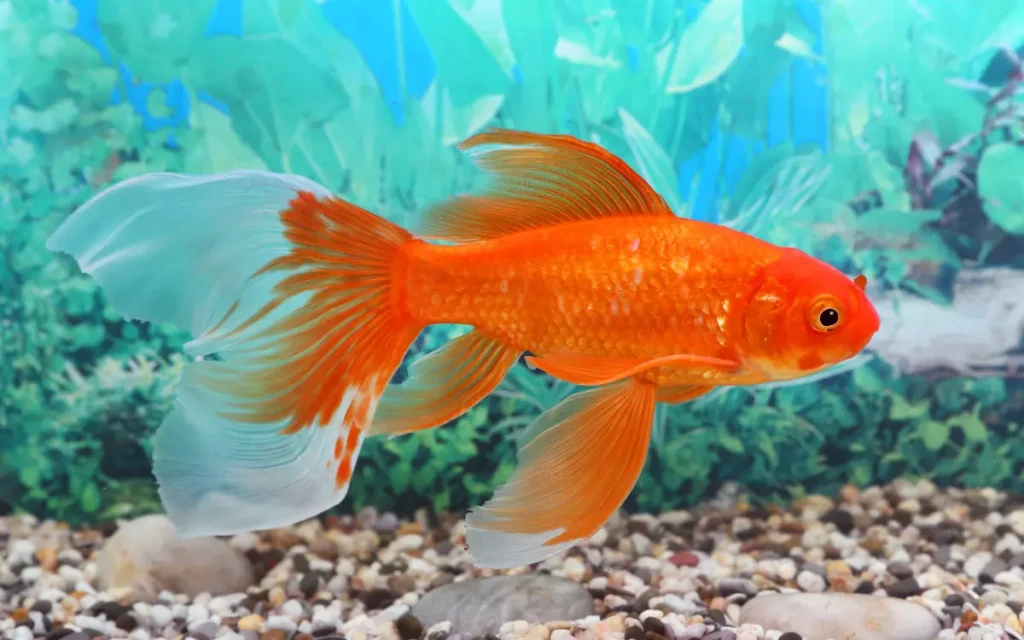
Another fancy goldfish is usually the best companion for a fancy goldfish. They share similar water needs, body shapes, swimming speeds, and feeding habits.
Good pairings may include Fantails, Orandas, Ryukins, Ranchu, Black Moors, and Telescope Goldfish. However, try to match fish with similar swimming abilities. A healthy Ryukin may move much faster than a delicate Ranchu or Telescope.
Give each fish enough room to turn, swim, and reach its food. During meals, watch that one fish does not push the other away or eat everything first.
Avoid adding a very small fancy goldfish beside a much larger adult. The size difference can lead to rough feeding, stress, or accidental injury.
2. Other Single-Tail Goldfish
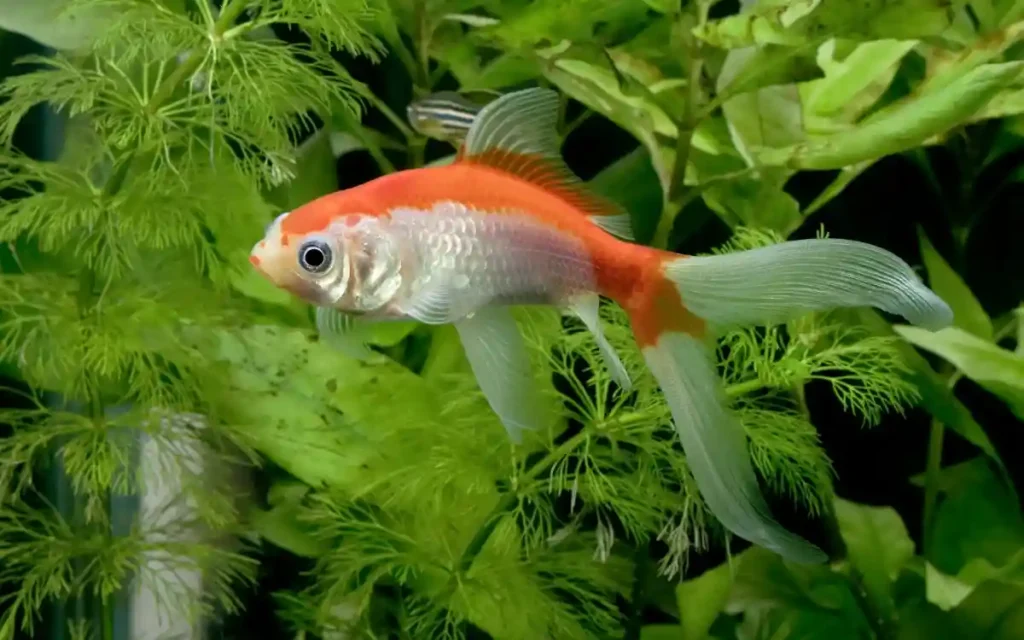
Commons, Comets, and Shubunkins usually do best with other single-tail goldfish. They are fast, active swimmers with similar feeding habits.
These goldfish can grow much larger than many people expect. They need a long tank with plenty of open swimming room, strong filtration, and regular water changes. A pond is often the best home once they reach adult size.
Do not mix single-tail goldfish with slow fancy varieties in a small aquarium. The faster fish may grab most of the food and repeatedly bump the fancy goldfish.
When kept in enough space, similar-sized single-tail goldfish can make active and suitable companions for one another.
3. White Cloud Mountain Minnows
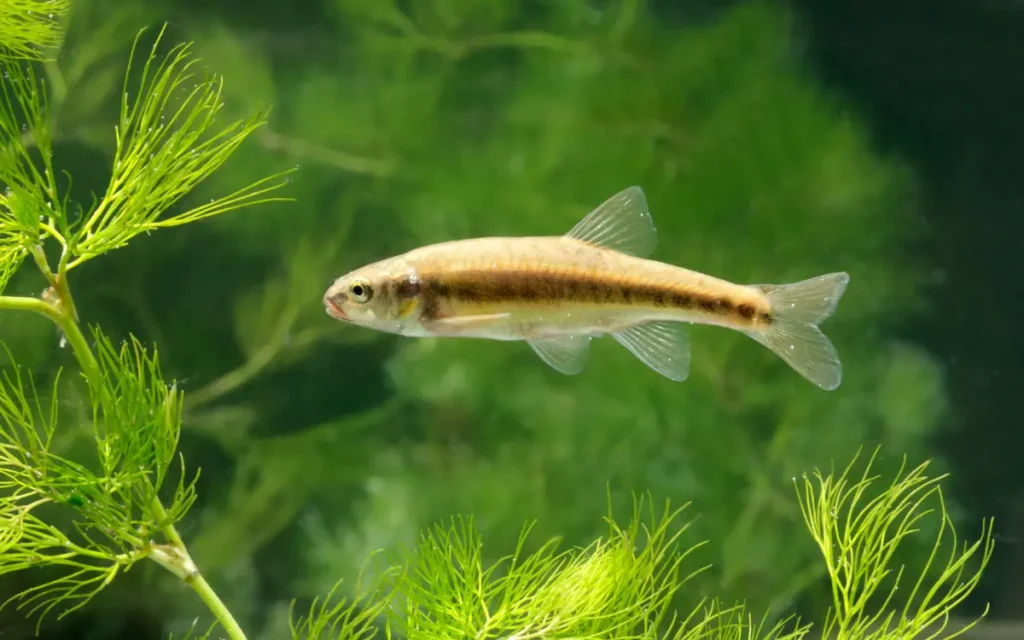
White Cloud Mountain Minnows are peaceful fish that can handle cooler water. This makes them a possible match for some goldfish tanks.
They are active schooling fish, so keep at least six together. A larger group helps them feel safer and behave more naturally.
The main concern is their small size. An adult goldfish may eat a White Cloud Mountain Minnow if it can fit inside its mouth. They are more likely to work with young or smaller fancy goldfish, but the risk never goes away.
Provide open swimming space along with plants where the minnows can move away from the goldfish. Watch closely for chasing, missing fish, or minnows hiding most of the day.
I would not keep White Clouds with large Commons, Comets, or Shubunkins. These goldfish are fast, grow large, and can swallow small fish more easily.
4. Zebra Danios
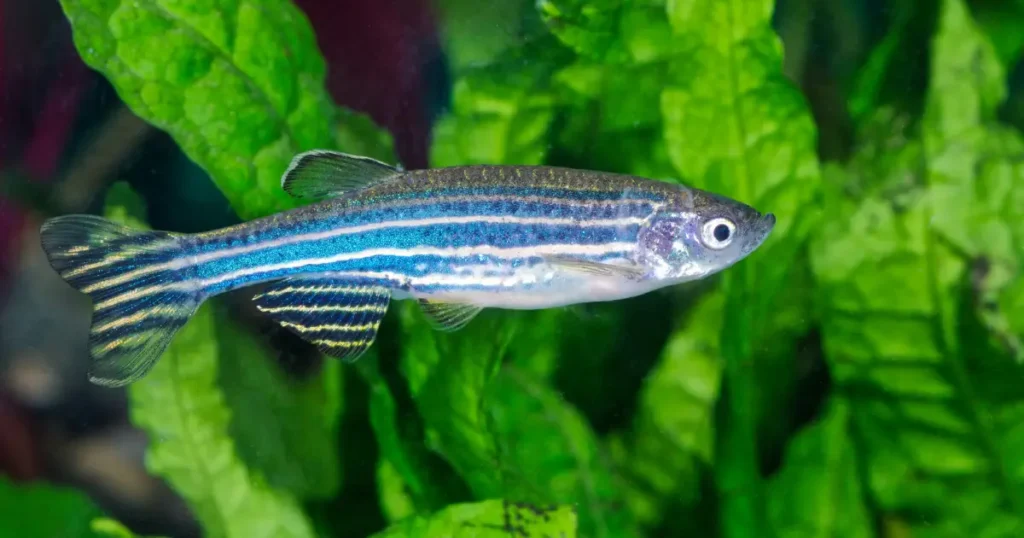
Zebra Danios are fast fish that can tolerate cooler water better than many tropical species. Their speed may help them stay away from curious goldfish.
Keep Zebra Danios in a group of at least six. When kept alone or in a tiny group, they may become stressed and bother other fish.
Their small size is still a concern. A large goldfish may catch and eat them, even if the Danios have lived safely in the tank for months.
Zebra Danios are active swimmers and need open space. They should only be considered in a roomy tank that can support a full group plus the goldfish.
Watch for fin-nipping as well. Danios are usually peaceful in a proper group, but stressed fish may chase or nip slow fancy goldfish.
5. Dojo Loaches
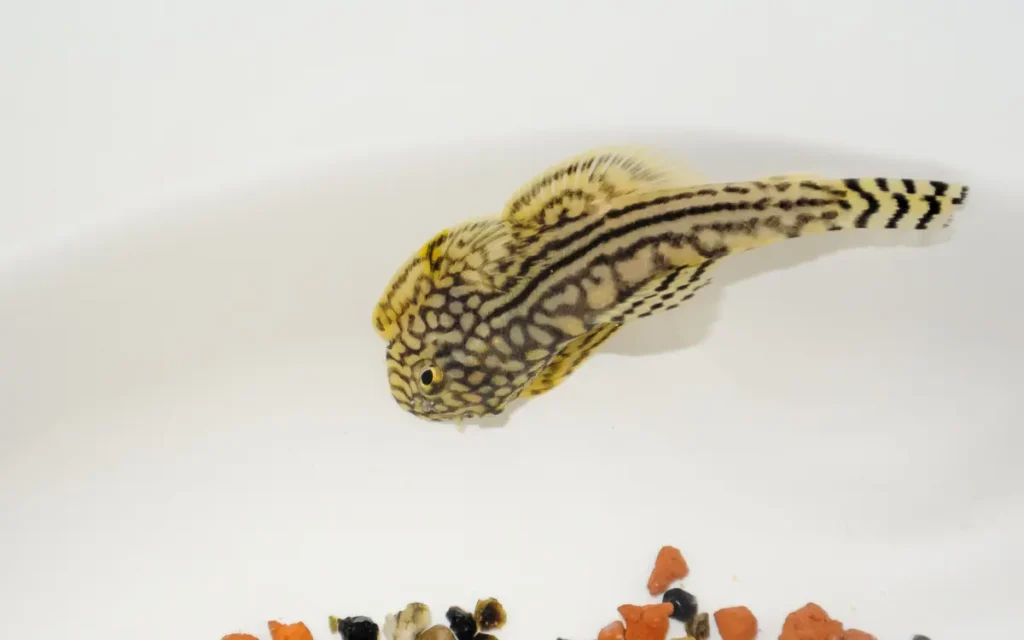
Dojo Loaches, also called Weather Loaches, are one of the better bottom-dwelling companions for goldfish. They enjoy cooler water and are usually peaceful.
However, they grow much larger than many people expect. An adult Dojo Loach can reach 8 to 12 inches, so I recommend a tank of at least 55 gallons. A larger tank is better when keeping more than one.
Use soft sand or another smooth substrate. Dojo Loaches like to dig, and rough gravel can damage their mouths and bodies.
Give them caves, tubes, or smooth hiding areas near the bottom. Make sure every opening is wide enough to prevent the loach from becoming trapped.
Dojo Loaches may jump, so use a secure lid and cover gaps around filters and cables. Check local laws before buying one because they are restricted in some regions.
6. Nerite Snails
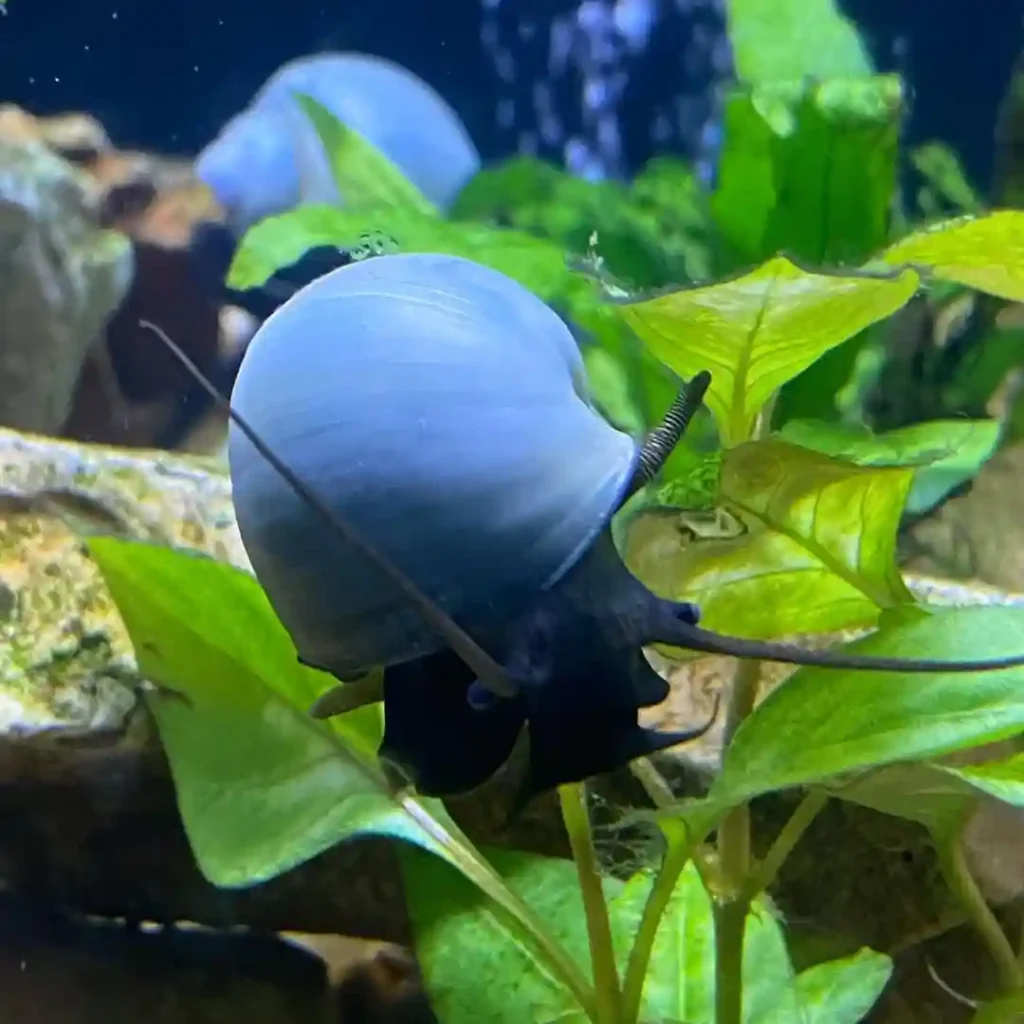
Nerite Snails are small algae eaters that do not multiply in a freshwater aquarium. This makes them easier to manage than snails that can quickly fill a tank.
Their hard shells give them some protection, but they are not completely safe from goldfish. A curious goldfish may peck at the shell, bite the soft body, or flip the snail over.
Nerite Snails have difficulty turning themselves upright on some surfaces. Check the tank daily and help any upside-down snail.
The tank should contain enough natural algae or biofilm for grazing. You may also need to offer suitable food when the aquarium is very clean.
A Nerite Snail is a possible companion for a calm fancy goldfish. I would avoid the pairing if the goldfish constantly investigates or bites everything in the tank.
7. Bristlenose Pleco
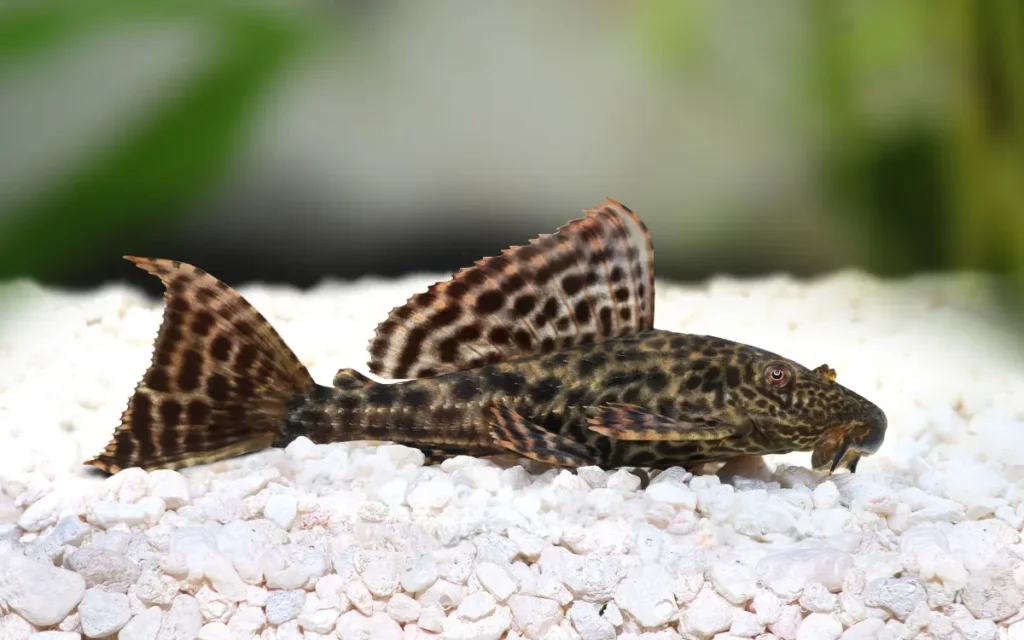
A Bristlenose Pleco can sometimes live with goldfish, but I consider it a risky choice. It is not the first tank mate I would recommend to a beginner.
Temperature is one concern. Bristlenose Plecos often prefer warmer water than many goldfish setups. The tank must stay within a safe range for both fish instead of favoring only one.
A Bristlenose also needs hiding places, natural wood, and proper food. It cannot live on leftover goldfish food or algae alone.
Watch the fish after the lights go out. A hungry or stressed pleco may bother a slow goldfish and damage its protective slime coat.
Use at least a 55-gallon tank for this pairing. Feed both fish properly and separate them if you notice wounds, missing scales, or repeated nighttime contact.
Do not replace a Bristlenose with a Common Pleco. Common Plecos grow far too large for most home aquariums and create a heavy amount of waste.
8. Mystery Snails
Mystery Snails can live with calm goldfish, but the pairing needs close watching. Some goldfish ignore snails, while others bite their long antennae.
Choose a healthy adult snail that is not small enough for the goldfish to swallow. Add smooth hiding areas where the snail can rest without being disturbed.
Mystery Snails need a calcium source to maintain strong shells. They also need their own food. Do not expect them to survive only on algae and leftover fish food.
Snails produce waste, so adding one does not reduce your cleaning work. Continue testing the water and completing regular water changes.
Remove the snail if your goldfish repeatedly flips it, bites its body, or prevents it from leaving its shell.
