
13 Types of Goldfish: Which One to Choose

Goldfish are easy to love, but not every goldfish is easy to keep.
Choosing a goldfish is not as simple as picking the prettiest one at the store. A Common goldfish, Oranda, Bubble Eye, and Black Moor may all be sold as “goldfish,” but their care needs can be very different.
Goldfish split into two main groups: single-tail goldfish and fancy goldfish. Single-tail types are fast, active, and need larger tanks or ponds. Fancy types are slower, rounder, and often need gentler tank setups.
This guide breaks down 13 popular types of goldfish with real care details, not just looks. By the end, you will know which goldfish fits your tank size, care level, and experience.
If you are still learning the basics, read our full goldfish care guide before choosing your fish.
Which Goldfish Should You Get?
If this is your first goldfish, I would choose based on tank size and care level first, then appearance.
| Your Situation | Best Goldfish Choice |
| First-time owner with a 20-gallon tank | Fantail Goldfish |
| First-time owner with a 30 to 40-gallon tank | Common Goldfish |
| Want a beginner-friendly fancy goldfish | Fantail Goldfish |
| Have a pond or very large aquarium | Comet or Shubunkin |
| Want a colorful hardy goldfish | Shubunkin |
| Want a unique fancy goldfish and can handle extra care | Oranda, Telescope, or Black Moor |
| Want a delicate display fish | Bubble Eye or Pearlscale |
| Best goldfish to avoid as a first fish | Bubble Eye, Pearlscale, Butterfly Telescope |
My direct pick for beginners is the Fantail. It gives you the fancy goldfish look without being as delicate as Bubble Eye, Pearlscale, or Telescope types.
If you have a large tank or pond, Common, Comet, and Shubunkin goldfish are better choices because they are hardy and active. But they are not small-tank fish.
Single-Tail vs Fancy Goldfish
Before choosing a type, you need to understand the difference between single-tail and fancy goldfish.
Single-tail goldfish have long, slim bodies and one tail. They swim fast, grow large, and need more space. Common goldfish, Comets, and Shubunkins belong to this group.
Fancy goldfish have rounder bodies, double tails, and slower movement. Orandas, Fantails, Ryukins, Black Moors, Telescopes, Lionheads, Bubble Eyes, and Pearlscales are fancy goldfish.
You should not usually mix single-tail and fancy goldfish together. Single-tail goldfish are faster and often reach food first, while fancy goldfish can become stressed or underfed.
1.Oranda Goldfish
| Feature | Details |
| Scientific Name | Carassius auratus |
| Size | 6–8 inches |
| Lifespan | 10–15 years |
| Care Level | Moderate |
| Tank Size | 20+ gallons |
| Temperament | Peaceful |
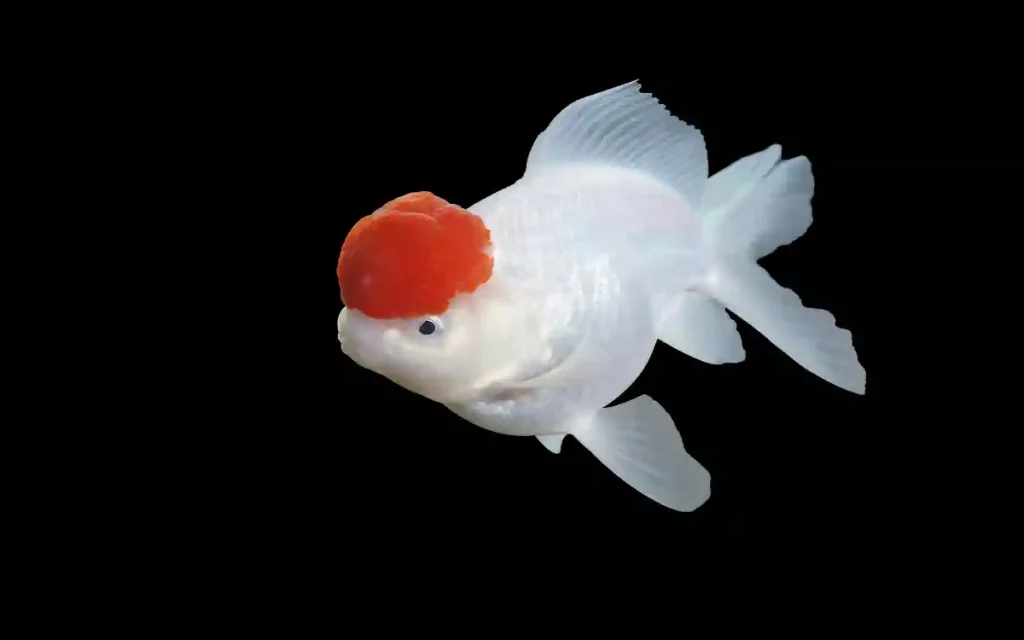
The wen is the main feature that makes an Oranda goldfish stand out. This fleshy head growth gives the fish its rounded, fancy look, but it also adds extra care needs.
Waste and bacteria can collect around the folds of the wen if the tank is dirty. That is why Orandas need strong filtration, clean water, and regular water changes. They are not the hardest goldfish to keep, but they are not as forgiving as Common or Fantail goldfish.
Orandas are slow and graceful swimmers. They do best with other calm fancy goldfish such as Fantails, Ryukins, and Black Moors. Fast fish like Comets or Shubunkins can outcompete them during feeding.
Feed sinking pellets instead of floating food when possible. Orandas have round bodies, so they can be more prone to bloating and swim bladder problems.
If you want a goldfish that looks special but still feels manageable, the Oranda is a strong choice for keepers who already understand basic goldfish care.
Full care guide: Oranda Goldfish Care Guide
2.Common Goldfish
| Feature | Details |
| Scientific Name | Carassius auratus |
| Size | 8–12 inches |
| Lifespan | 15–20 years |
| Care Level | Easy |
| Tank Size | 30+ gallons |
| Temperament | Active |
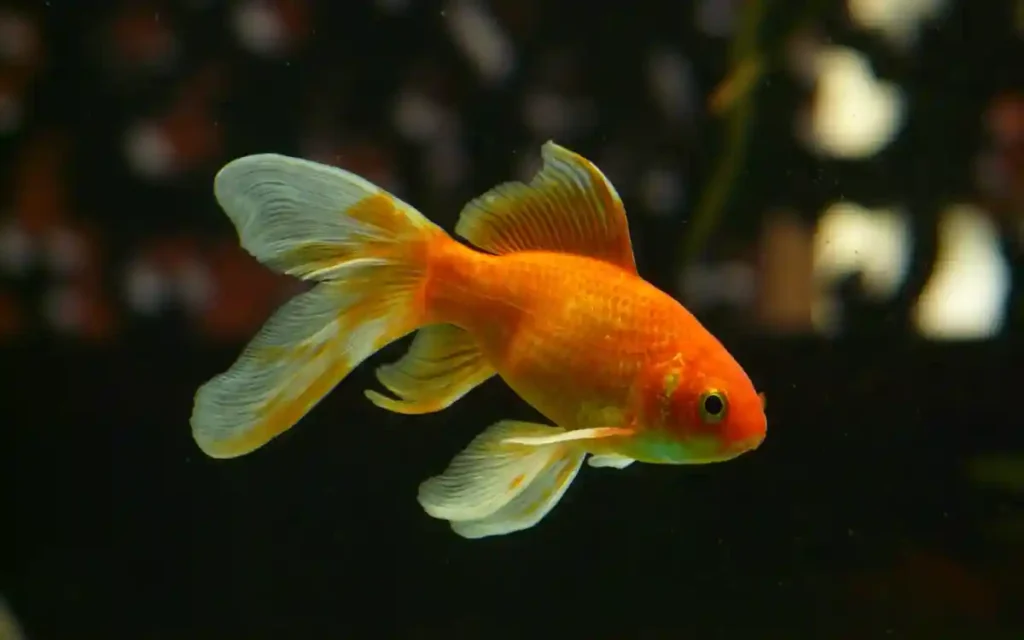
The Common goldfish is one of the hardiest goldfish types, but it is also one of the most misunderstood.
Many beginners buy Common goldfish for small bowls or tiny tanks. That is a mistake. These fish grow large, swim fast, and produce a lot of waste. They need real aquarium space, not a bowl.
Common goldfish have slim bodies and strong swimming ability. They are active fish that spend most of the day moving around and searching for food.
They should not be kept with fancy goldfish. A Common goldfish will usually reach food faster and can stress slower fancy types over time.
If you have a large tank or outdoor pond, the Common goldfish is a great beginner option. If you only have a small indoor tank, choose a Fantail instead.
3.Black Moor Goldfish
| Feature | Details |
| Scientific Name | Carassius auratus |
| Size | 6–8 inches |
| Lifespan | 10–15 years |
| Care Level | Moderate |
| Tank Size | 20+ gallons |
| Temperament | Calm |
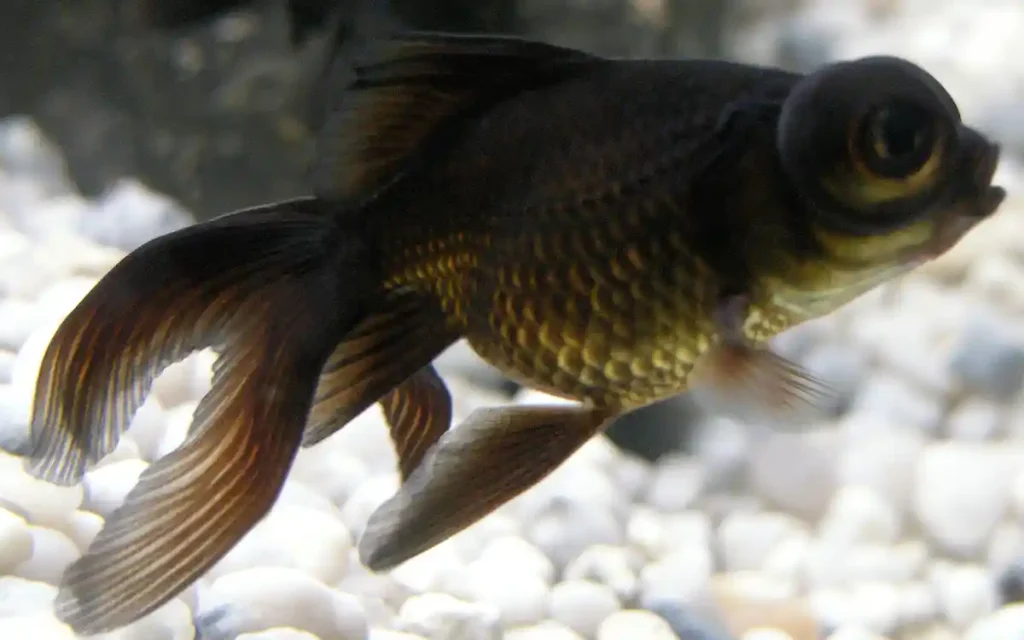
The Black Moor goldfish is best known for its deep black color and large telescope eyes.
Those eyes are beautiful, but they also make the fish less aware of its surroundings. Black Moors do not see as well as most goldfish, so the tank setup matters a lot.
Avoid sharp rocks, rough gravel, narrow gaps, and hard decorations with pointed edges. Their eyes can be injured easily. A simple tank with smooth decor and open swimming space is much safer.
Black Moors are slow and calm. They do well with other peaceful fancy goldfish, especially Fantails, Orandas, and Telescopes.
When feeding, place food in the same area each time. This helps them learn where to look. Sinking pellets are usually easier for them than floating food.
The Black Moor is a good choice if you want a unique goldfish and are willing to build a safe, gentle tank around it.
Full care guide: Black Moor Goldfish Care Guide
4.Fantail Goldfish
| Feature | Details |
| Scientific Name | Carassius auratus |
| Size | 6–8 inches |
| Lifespan | 10–15 years |
| Care Level | Easy |
| Tank Size | 20+ gallons |
| Temperament | Peaceful |
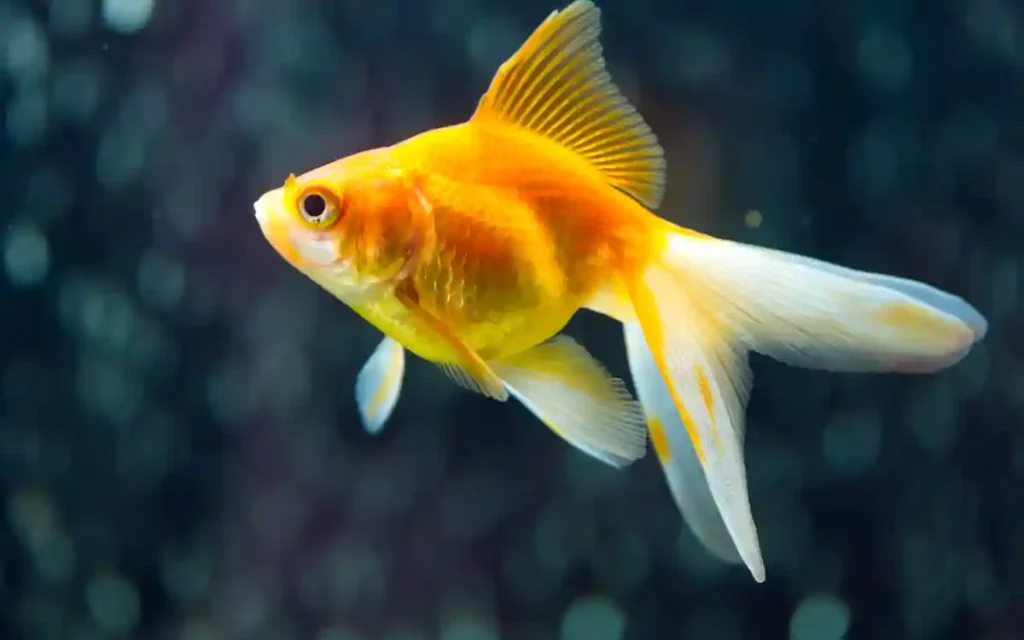
The Fantail is my top fancy goldfish pick for beginners.
It has the rounded body and double tail people love in fancy goldfish, but it is usually hardier than more delicate types like Bubble Eye, Pearlscale, or Telescope goldfish.
Fantails are peaceful, active enough to find food easily, and not as fragile as some other fancy varieties. They work well in a calm fancy goldfish tank.
They still need proper care. A 20-gallon tank is the minimum for one Fantail, with strong filtration and weekly water changes.
Feed quality sinking pellets and add vegetables now and then. This helps with digestion and lowers the risk of bloating.
If you want your first fancy goldfish, start here. The Fantail gives you the best balance of looks, hardiness, and easy care.
Full care guide: Fantail Goldfish Care Guide
5.Comet Goldfish
| Feature | Details |
| Scientific Name | Carassius auratus |
| Size | 10–12 inches |
| Lifespan | 15–20 years |
| Care Level | Easy |
| Tank Size | 40+ gallons |
| Temperament | Very active |
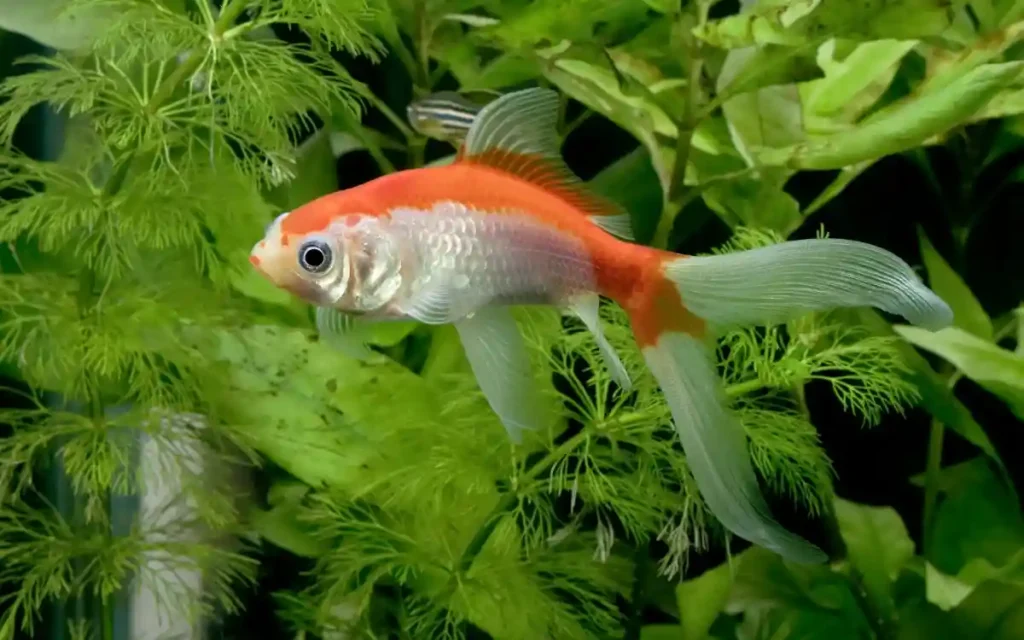
The Comet goldfish is built for space.
It has a slim body, long flowing tail, and very active swimming style. This is not a fish for a small aquarium. Even though Comets are hardy, they need room to move.
A Comet can quickly outgrow beginner tanks. A 40-gallon tank is a better starting point, but many Comets do best in large aquariums or outdoor ponds.
Comets are strong feeders and should not be mixed with fancy goldfish. They will usually beat slower fish to the food every time.
They are easy to feed and accept pellets, flakes, vegetables, and occasional protein treats. The main challenge is not diet. It is space and water quality.
Choose a Comet if you want a hardy, active goldfish and you have a large setup ready.
6.Shubunkin Goldfish
| Feature | Details |
| Scientific Name | Carassius auratus |
| Size | 10–12 inches |
| Lifespan | 15–20 years |
| Care Level | Easy |
| Tank Size | 40+ gallons |
| Temperament | Active |
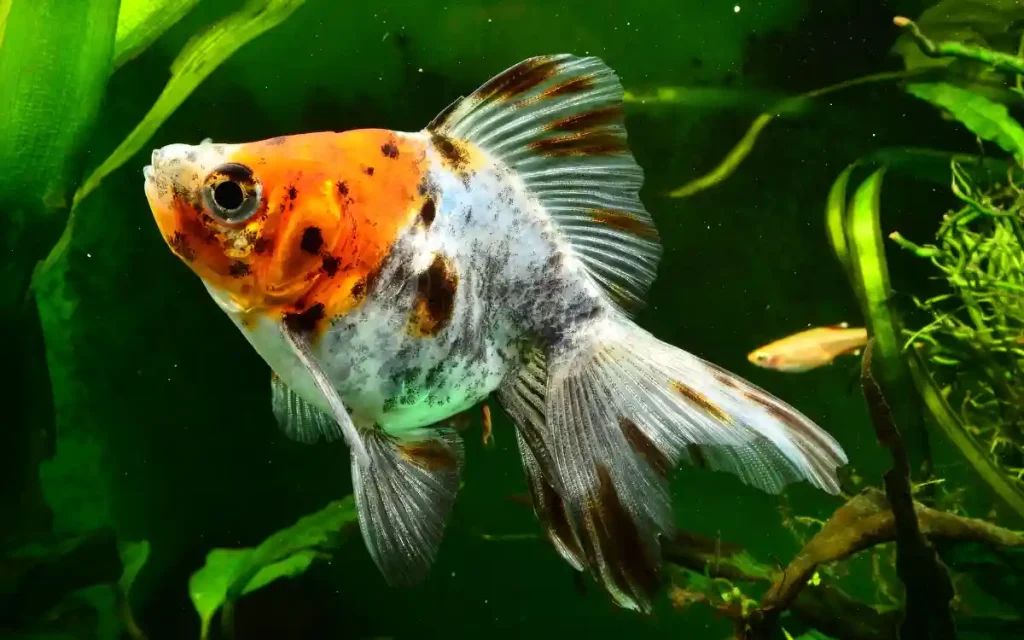
The Shubunkin is a single-tail goldfish known for its calico pattern.
You will often see blue, orange, black, white, and red mixed across the body. No two Shubunkins look exactly the same, which makes them popular with pond keepers.
Care-wise, Shubunkins are closer to Common and Comet goldfish than fancy goldfish. They are active, hardy, and need a lot of swimming space.
They should not be kept with slow fancy types. A Shubunkin will move faster, feed faster, and may leave round-bodied goldfish struggling to keep up.
They are a good choice for beginners who have a pond or a large aquarium. They are not a good choice for a small indoor setup.
If you want a colorful, hardy, active goldfish, the Shubunkin is one of the best single-tail choices.
7.Ryukin Goldfish
| Feature | Details |
| Scientific Name | Carassius auratus |
| Size | 6–8 inches |
| Lifespan | 10–15 years |
| Care Level | Moderate |
| Tank Size | 20+ gallons |
| Temperament | Peaceful |
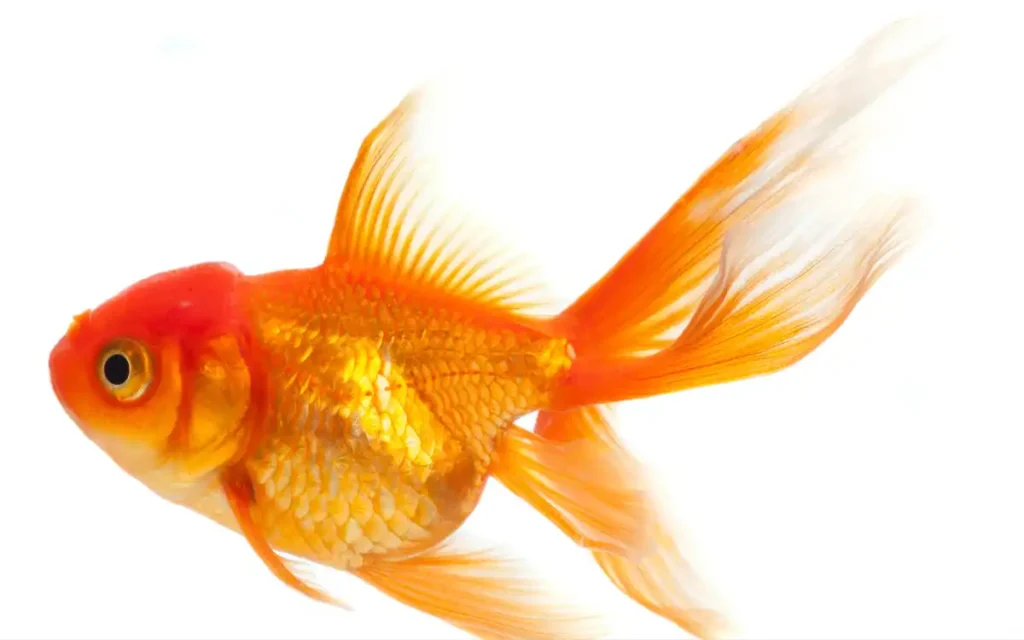
The Ryukin goldfish has a tall body and noticeable shoulder hump behind the head.
This shape gives the fish a bold look, but it also means the Ryukin needs stable water and careful feeding. Like other round-bodied fancy goldfish, it can be more prone to digestive and swim bladder issues.
Ryukins are stronger swimmers than some delicate fancy types, but they are still not a match for fast single-tail goldfish.
They do best with other fancy goldfish such as Fantails, Orandas, and Black Moors. Avoid Comets, Commons, and Shubunkins in the same tank.
Feed small portions and avoid overfeeding. Sinking pellets and vegetables are better than too many dry floating foods.
The Ryukin is a good choice if you want a fancy goldfish with a strong body shape and more presence in the tank.
8.Telescope Goldfish
| Feature | Details |
| Scientific Name | Carassius auratus |
| Size | 6–8 inches |
| Lifespan | 10–15 years |
| Care Level | Moderate |
| Tank Size | 20+ gallons |
| Temperament | Slow |
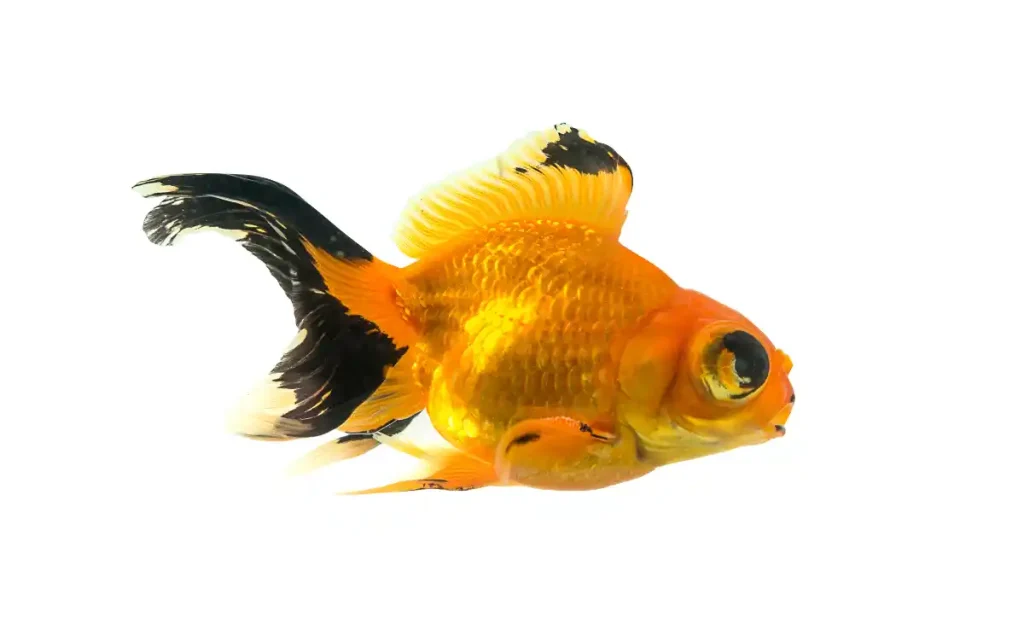
The Telescope goldfish is all about the eyes.
Its large protruding eyes make it one of the most recognizable fancy goldfish, but those eyes are also the main care challenge.
Telescope goldfish have limited vision. They may take longer to find food, and they can bump into decorations if the tank is too crowded.
Keep the tank simple. Use smooth decor, soft plants, and open swimming space. Avoid sharp ornaments or small holes where the fish could get stuck.
Telescope goldfish should live with other slow fancy goldfish. They are not good tank mates for fast single-tail types.
If you want a goldfish with a unique look, Telescope goldfish are a good option, but they need a safer tank than Fantails.
Full care guide: Telescope goldfish
9.Lionhead Goldfish
| Feature | Details |
| Scientific Name | Carassius auratus |
| Size | 6–8 inches |
| Lifespan | 10–15 years |
| Care Level | Moderate |
| Tank Size | 20+ gallons |
| Temperament | Calm |
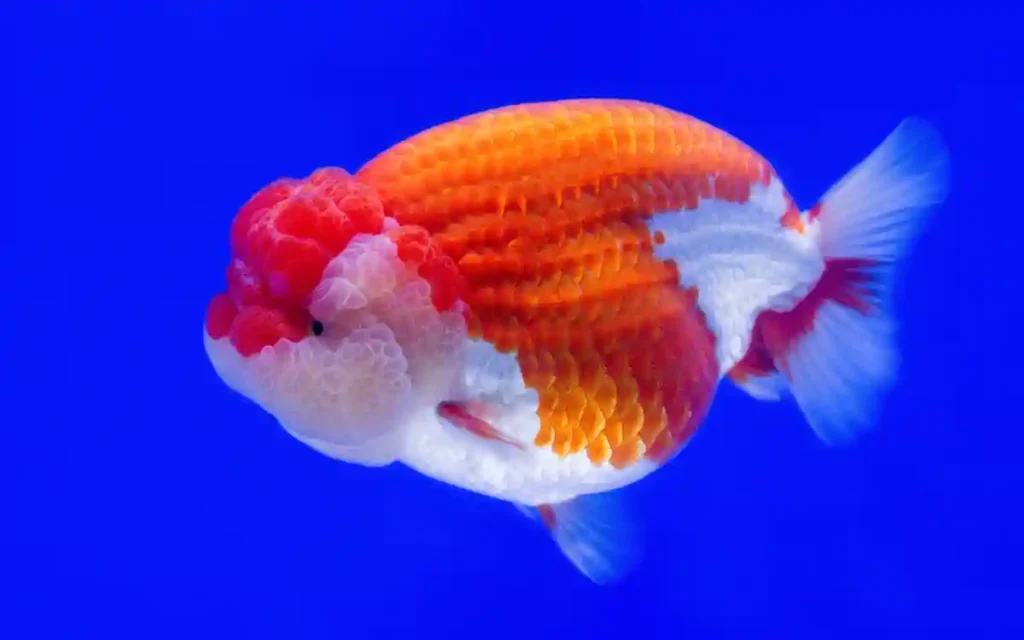
The Lionhead goldfish looks similar to an Oranda, but it does not have a dorsal fin.
That missing dorsal fin changes how the fish swims. Lionheads are less stable in the water and usually move slowly. They need gentle flow and calm tank mates.
Like Orandas, Lionheads can develop a head growth called a wen. This area needs clean water because waste and bacteria can collect around the folds.
Do not place Lionheads in tanks with strong current or fast goldfish. They do better in peaceful fancy goldfish tanks.
Their diet should include sinking pellets and occasional vegetables to support digestion.
The Lionhead is a beautiful fish, but I would not choose it as the first fancy goldfish for a beginner. A Fantail is easier. A Lionhead is better after you already understand fancy goldfish care.
Full care guide: Lionhead Goldfish Care Guide
10.Bubble Eye Goldfish
| Feature | Details |
| Scientific Name | Carassius auratus |
| Size | 5–6 inches |
| Lifespan | 10–15 years |
| Care Level | Difficult |
| Tank Size | 20+ gallons |
| Temperament | Very delicate |
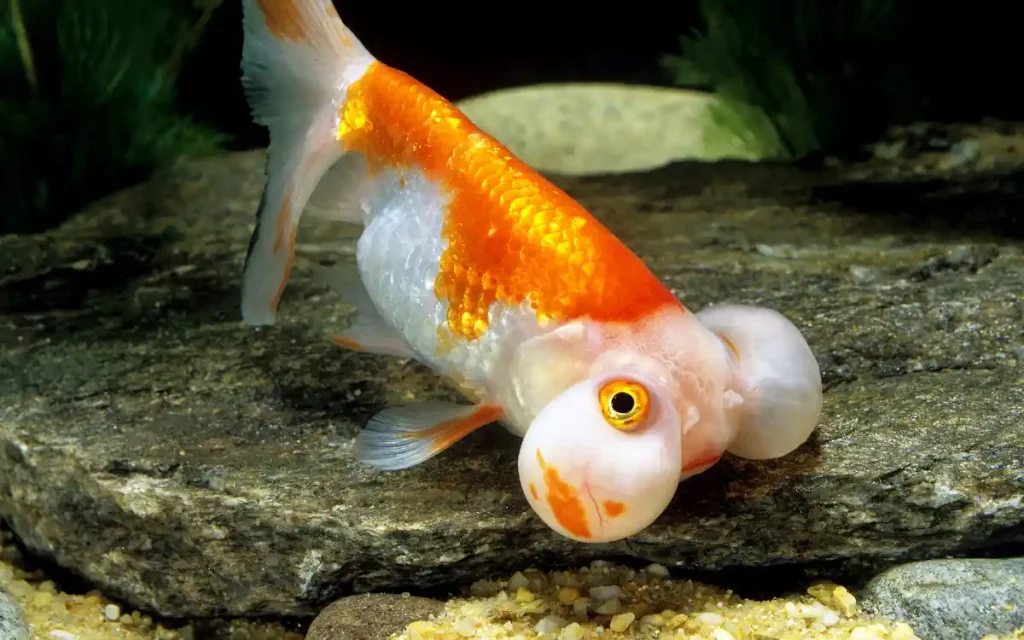
The Bubble Eye goldfish is one of the most delicate goldfish types.
Its fluid-filled sacs under the eyes make it look unusual, but they can also be damaged easily. Sharp decor, rough surfaces, strong filter flow, or rough tank mates can all cause problems.
This fish has poor vision and slow swimming ability. It needs a very safe tank with smooth surfaces, gentle flow, and peaceful tank mates.
Bubble Eyes should only be kept with other slow, gentle fancy goldfish. Even then, feeding can take extra care because they may struggle to find food quickly.
This is not a good first goldfish. It is better for keepers who already know how to maintain clean water and build a safe tank.
If you want something rare-looking and are willing to give extra care, the Bubble Eye can be interesting. But for most beginners, I would avoid it.
Full care guide: Bubble Eye Goldfish Care Guide
11.Pearlscale Goldfish
| Feature | Details |
| Scientific Name | Carassius auratus |
| Size | 6–8 inches |
| Lifespan | 10–15 years |
| Care Level | Moderate |
| Tank Size | 20+ gallons |
| Temperament | Peaceful |
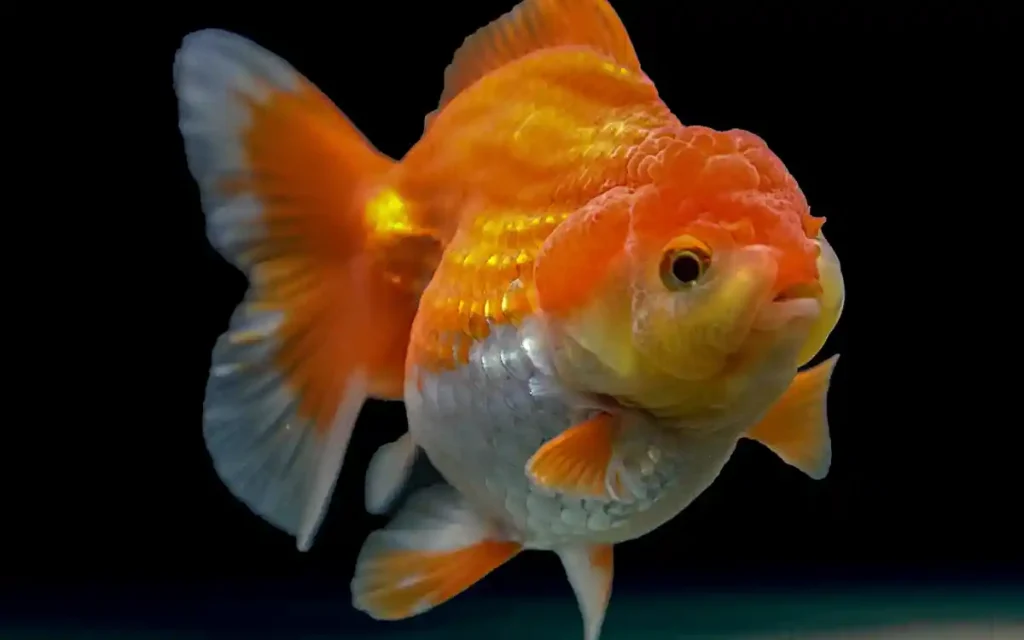
The Pearlscale goldfish is known for its round body and raised scales that look like tiny pearls.
That round body is also the reason this fish needs careful feeding. Pearlscales can struggle with balance, bloating, and buoyancy issues if they are overfed or kept in poor water.
They are slow swimmers and need a calm tank with gentle flow. Strong current can make swimming harder for them.
Pearlscales should be kept with other slow fancy goldfish, not fast single-tail goldfish. Good food competition matters because Pearlscales are not built for speed.
Sinking pellets, small portions, and occasional vegetables are best. Avoid heavy feeding.
The Pearlscale is beautiful, but I would not call it the best beginner fancy goldfish. Choose Fantail first if you want an easier start.
12.Butterfly Telescope Goldfish
| Feature | Details |
| Scientific Name | Carassius auratus |
| Size | 6–8 inches |
| Lifespan | 10–15 years |
| Care Level | Moderate |
| Tank Size | 20+ gallons |
| Temperament | Slow |
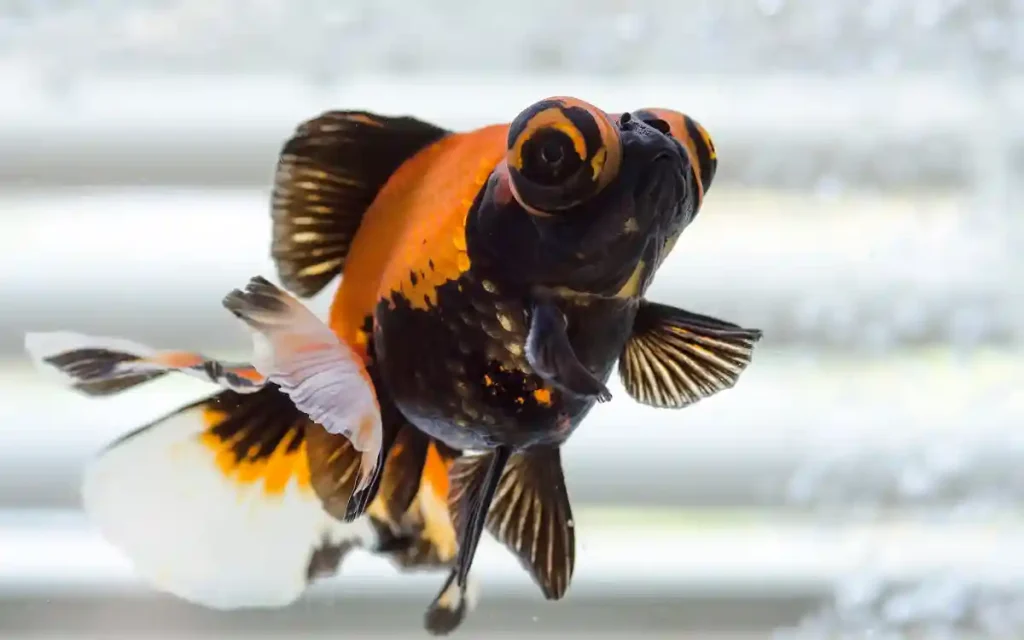
The Butterfly Telescope goldfish is a telescope variety with a wide tail that looks like butterfly wings from above.
This fish is popular in display tanks because of its shape, but it needs the same safety care as other telescope goldfish.
The eyes are delicate, and the vision is limited. The long tail also makes the fish slower than many other goldfish.
Keep the tank layout simple and safe. Smooth decorations, open space, and gentle filtration are better than a crowded tank.
Butterfly Telescopes should not live with Comets, Commons, or Shubunkins. They do best with other slow fancy goldfish.
This is a good option for someone who wants a display fish and does not mind giving extra attention to tank safety.
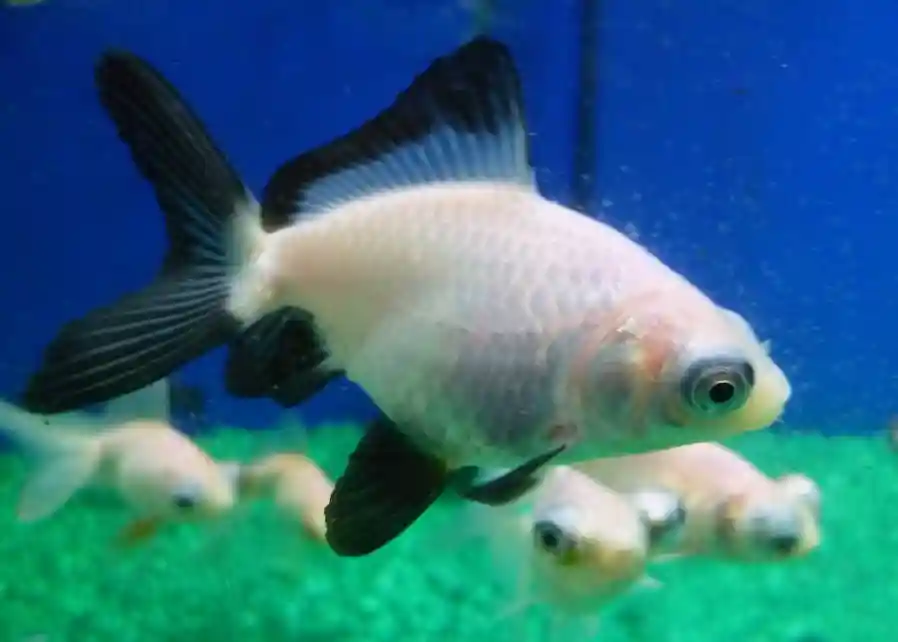
13.Panda Telescope Goldfish
| Feature | Details |
| Scientific Name | Carassius auratus |
| Size | 6–8 inches |
| Lifespan | 10–15 years |
| Care Level | Moderate |
| Tank Size | 20+ gallons |
| Temperament | Calm |
The Panda Telescope goldfish is a color variation of the Telescope goldfish.
Its black-and-white pattern makes it very attractive, especially in a clean, bright aquarium. But the care needs are the same as other telescope types.
The main issue is eyesight. Panda Telescopes need a safe tank with smooth decor and predictable feeding.
One thing beginners should know: the panda coloring may change as the fish grows. Some fish lose the deep black areas over time and become lighter or more orange.
These fish are calm and slow, so keep them with similar fancy goldfish. Avoid fast, active goldfish that can take food before they get enough.
If you like the panda look, this fish can be a great choice. Just do not buy it only for the color, because that pattern may not stay the same forever.
Content priority: create a dedicated Panda Telescope Goldfish Care Guide if this page does not exist yet.
Best Goldfish Types for Beginners
For most beginners, the best goldfish types are Fantail, Common, and Shubunkin.
The Fantail is best if you want a fancy goldfish in an indoor aquarium. It is hardy for a fancy type and does not have extreme features like bubble eyes or very poor vision.
The Common goldfish is hardy, but it needs more space. Choose it only if you can provide a large tank or pond.
The Shubunkin is a good choice for ponds or large aquariums because it is colorful, active, and usually easier to care for than delicate fancy types.
Goldfish Types to Avoid as a Beginner
Some goldfish look amazing but are not ideal for a first-time keeper.
Bubble Eye goldfish are too delicate for most beginners. Their eye sacs can be damaged easily.
Pearlscale goldfish are beautiful, but their round body can make digestion and swimming issues more common.
Butterfly Telescope and Panda Telescope goldfish need safe tank layouts because of their delicate eyes and limited vision.
This does not mean you can never keep them. It just means you should learn basic goldfish care first.
Can Different Types of Goldfish Live Together?
Yes, but only when their body shape, swimming speed, and feeding ability are similar.
Fancy goldfish should live with other fancy goldfish. Single-tail goldfish should live with other single-tail goldfish.
Good matches include:
| Goldfish Group | Good Tank Mates |
| Common Goldfish | Comet, Shubunkin |
| Comet Goldfish | Common, Shubunkin |
| Shubunkin Goldfish | Common, Comet |
| Fantail Goldfish | Oranda, Ryukin, Black Moor |
| Telescope Goldfish | Black Moor, Panda Telescope, Butterfly Telescope |
| Bubble Eye Goldfish | Other very gentle fancy goldfish only |
For more ideas, read our full guide on goldfish tank mates.
Quick Tips Before Choosing a Goldfish
Do not buy a goldfish before checking the adult size. Many small store goldfish grow much larger than expected.
Avoid bowls. Goldfish need filtered aquariums with enough swimming space.
Do not mix fast single-tail goldfish with slow fancy goldfish.
Choose smooth decor for fancy types with large eyes, long fins, or head growths.
Use strong filtration because goldfish produce a lot of waste.
FAQs
Which goldfish is best for beginners?
The best goldfish for beginners is the Fantail if you want an indoor aquarium fish. Common and Shubunkin goldfish are also beginner-friendly, but they need larger tanks or ponds.
What is the easiest fancy goldfish to care for?
The Fantail is usually the easiest fancy goldfish to care for. It is hardier than many other fancy types and does not have extreme features like bubble eyes or telescope eyes.
What is the difference between fancy and common goldfish?
Common goldfish have slim bodies and single tails. Fancy goldfish have rounder bodies, double tails, and special features like head growths, telescope eyes, or rounded scales.
Can different types of goldfish live together?
Yes, but only if they have similar swimming speed and body shape. Fancy goldfish should be kept with fancy goldfish, while Common, Comet, and Shubunkin goldfish should usually stay together.
How big do goldfish grow?
Most goldfish grow between 6 and 12 inches, depending on the type. Single-tail goldfish like Commons, Comets, and Shubunkins usually grow larger than fancy goldfish.
Do goldfish need a filter?
Yes, goldfish need a filter. They produce a lot of waste, and a filter helps keep ammonia and nitrite under control.
Can goldfish live in a bowl?
No, goldfish should not live in a bowl. Bowls are too small, hard to filter, and unstable for long-term goldfish care.
What is the rarest type of goldfish?
Some rare goldfish varieties include high-quality Ranchu, Tosakin, Bubble Eye, and certain Telescope color forms. Availability depends on your location and breeder quality.
What goldfish should I avoid as a beginner?
Avoid Bubble Eye, Pearlscale, Butterfly Telescope, and very delicate fancy goldfish as your first goldfish. These types need safer tank setups and more careful feeding.
