
10 Best Foreground Aquarium Plants

The best foreground aquarium plants include Dwarf Hairgrass, Monte Carlo, Marsilea hirsuta, Staurogyne repens, Dwarf Baby Tears, Glossostigma, Micro Sword, Cryptocoryne parva, Anubias nana ‘Petite,’ and Hygrophila ‘Araguaia.’
These plants stay short enough for the front of a planted tank, where they add texture without blocking the view. Some spread into a full carpet, while others form small bushes or accents around rocks and driftwood.
For an easy low-tech setup, I would start with Marsilea hirsuta, Cryptocoryne parva, or Anubias nana ‘Petite.’ If you want a thick carpet and can provide stable CO₂, Monte Carlo and Dwarf Hairgrass are better choices. Dwarf Baby Tears is the most demanding plant on this list and is not the one I would choose for a first planted aquarium.
Foreground Aquarium Plants at a Glance
| Plant | Light | Added CO₂ | Difficulty | Growth style |
| Dwarf Hairgrass | Medium to high | Recommended | Moderate | Fine grassy carpet |
| Monte Carlo | Medium to high | Helpful | Easy to moderate | Dense leafy carpet |
| Marsilea hirsuta | Low to medium | Not required | Easy | Slow natural carpet |
| Staurogyne repens | Medium | Helpful | Easy to moderate | Low bush |
| Dwarf Baby Tears | High | Usually required | Advanced | Very fine carpet |
| Glossostigma | High | Strongly recommended | Moderate to advanced | Fast leafy carpet |
| Micro Sword | Medium to high | Helpful | Moderate | Grass-like runners |
| Cryptocoryne parva | Low to medium | Not required | Easy | Slow clumps |
| Anubias nana ‘Petite’ | Low to medium | Not required | Very easy | Hardscape accent |
| Hygrophila ‘Araguaia’ | Medium to high | Recommended | Moderate | Compact reddish bush |
1. Dwarf Hairgrass
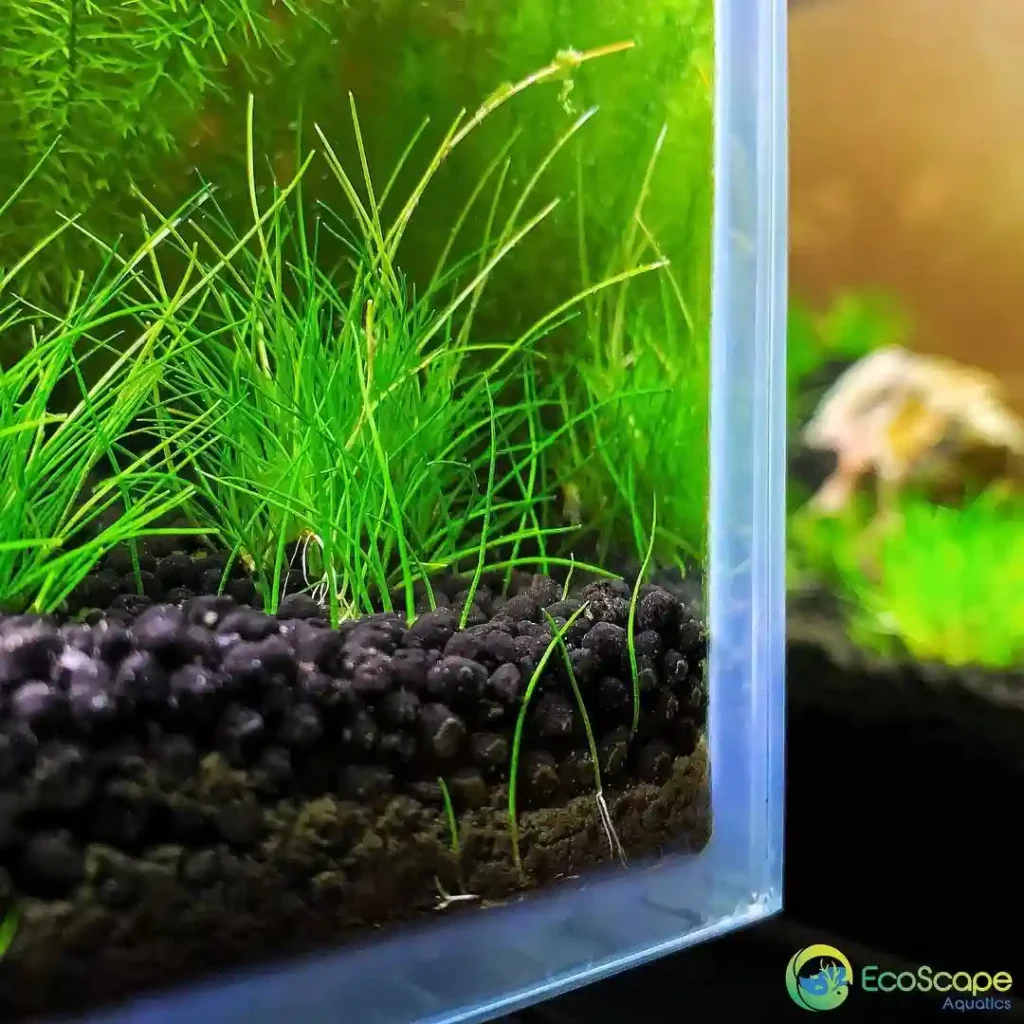
Dwarf Hairgrass creates one of the most natural-looking aquarium carpets. Its narrow blades resemble a small underwater lawn and look especially good around stones in nature-style and iwagumi aquascapes.
This plant spreads through runners beneath the substrate. New blades emerge a short distance from the parent plant and slowly fill the spaces between the original clumps.
Dwarf Hairgrass can survive without injected CO₂, but survival and carpeting are not the same thing. In a low-tech tank, it may grow slowly, remain patchy, or send up taller blades instead of forming the thick lawn shown in aquascaping photos.
Medium to high light and stable CO₂ produce faster, denser growth. A nutrient-rich substrate also helps because the plant feeds through its roots.
Divide the pot into small portions before planting. Place each clump about an inch apart with aquarium tweezers. Planting the entire pot as one bunch creates a thick center but leaves the surrounding substrate bare.
Trim established grass to encourage fresh growth, but do not cut a newly planted carpet too aggressively. Give the roots time to settle first.
- Light: Medium to high
- CO₂: Recommended for a dense carpet
- Growth rate: Moderate to fast
- Best placement: Open foreground around rocks
2. Monte Carlo

Monte Carlo has small, round green leaves that spread across the substrate on creeping stems. It produces a softer and more leafy carpet than Dwarf Hairgrass.
I often recommend Monte Carlo to people who like the appearance of Dwarf Baby Tears but do not want such a demanding plant. Monte Carlo is more forgiving, although it still grows best with good light, nutrients, and added CO₂.
It can grow in some low-tech aquariums, but the result may be looser and taller than a high-tech carpet. Without enough light, the stems may reach upward instead of staying close to the substrate.
Separate the plant into small clumps and plant them in a grid. Push the roots into the substrate while leaving the leaves exposed. If you plant large mats, the lower parts may lift before they develop strong roots.
Once the carpet becomes thick, trim the top layer. An overgrown mat can block light and water movement from reaching the lower growth. The bottom may then turn brown and detach from the substrate.
- Light: Medium to high
- CO₂: Optional for survival but helpful for carpeting
- Growth rate: Moderate
- Best placement: Broad open foregrounds
If your main goal is complete substrate coverage, compare these choices with my list of aquarium carpet plants for beginners.
3. Marsilea Hirsuta
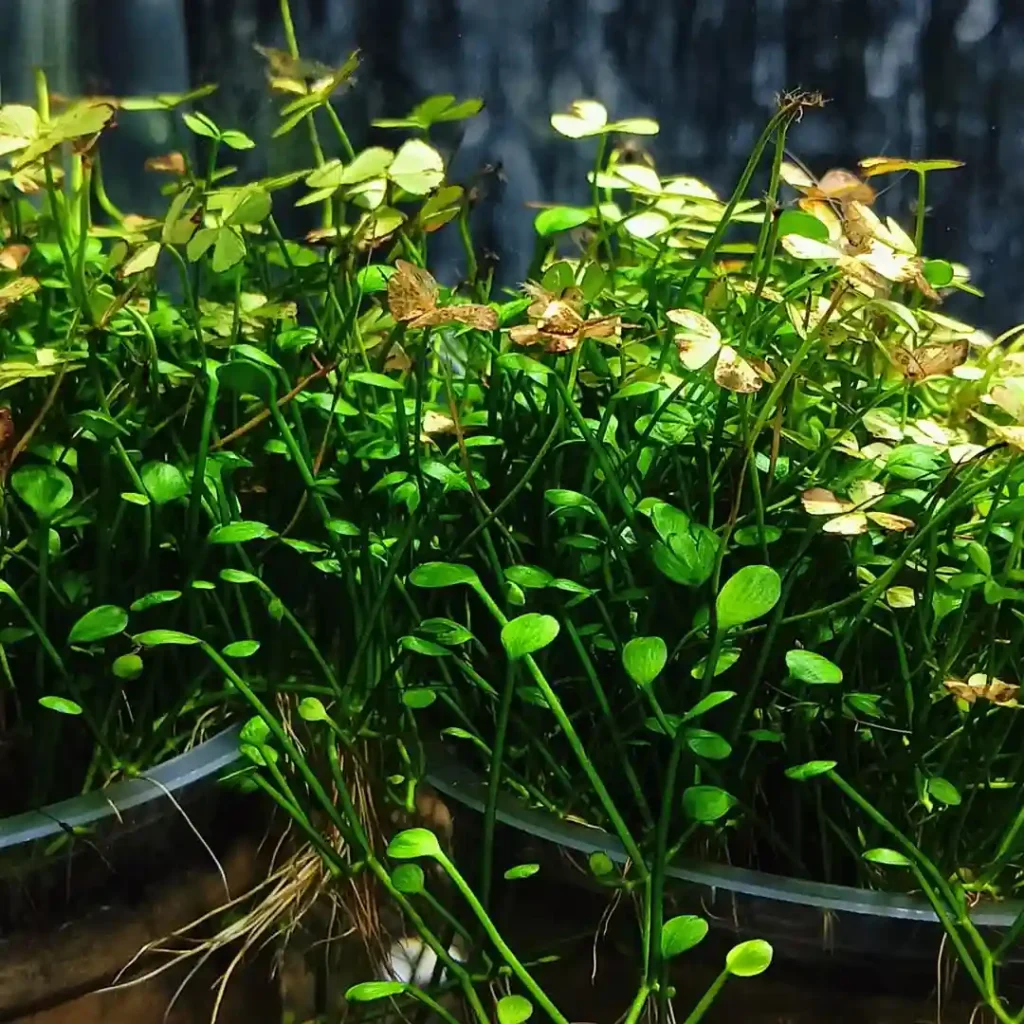
Marsilea Hirsuta, often called Mini Clover, forms a charming, low-growing carpet with clover-Marsilea hirsuta is one of my favorite foreground plants for a low-tech aquarium. It spreads slowly through runners and can grow with simple lighting and no injected CO₂.
Its submerged leaves do not always keep the familiar four-leaf clover shape. Depending on the growing conditions, a plant may produce single, divided, or clover-shaped leaves. This variation gives the foreground a less manicured and more natural appearance.
Marsilea often spends its first few weeks establishing roots rather than producing obvious new growth. This can make it seem as if nothing is happening. Once settled, runners begin appearing around the parent plants.
Plant small portions a short distance apart. Give the roots access to nutrients with an aquarium soil or occasional root tabs.
Moderate light helps it remain lower. In weak light, the leaf stems may stretch upward, making it look more like a small midground plant than a tight carpet.
- Light: Low to medium
- CO₂: Not required
- Growth rate: Slow at first
- Best placement: Low-tech and natural aquascapes
4. Staurogyne Repens
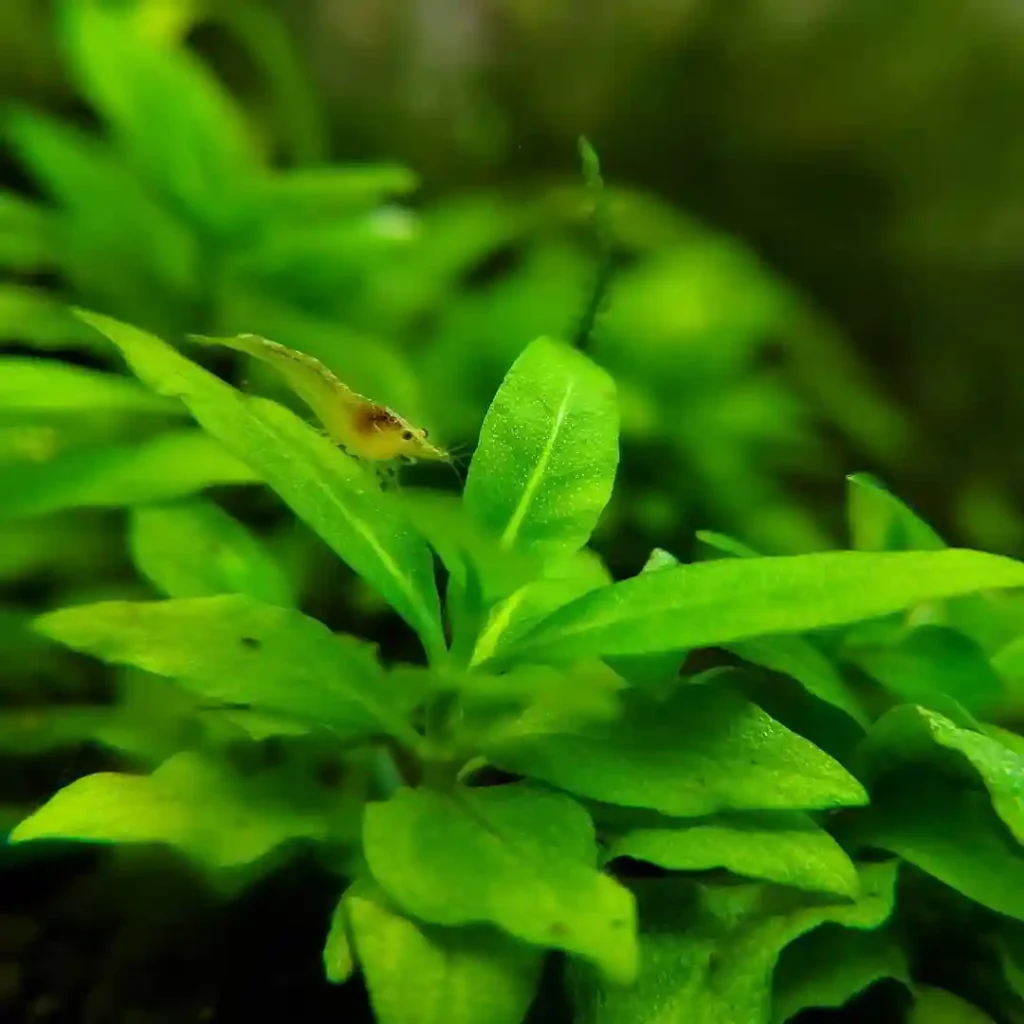
Staurogyne repens forms a low, bushy patch rather than a flat lawn. Its bright green leaves work well between a carpet and taller midground plants.
I like using it around the base of driftwood or behind foreground rocks. It softens hard edges and creates a natural transition without covering the whole substrate.
Plant each stem separately with a little space between them. Closely packed bunches can lose their lower leaves because light and water cannot reach the center.
When the stems grow too tall, cut the tops and replant the healthy cuttings. Trimming encourages side shoots, which makes the group look fuller and more compact.
Staurogyne repens can grow without injected CO₂, but it may become taller and less dense. Medium light, regular fertilization, and added CO₂ give it a neater foreground shape.
- Light: Medium
- CO₂: Helpful but not always necessary
- Growth rate: Moderate
- Best placement: Foreground-to-midground transition
Related article: 12 Fast Growing Aquatic Plants
5. Dwarf Baby Tears
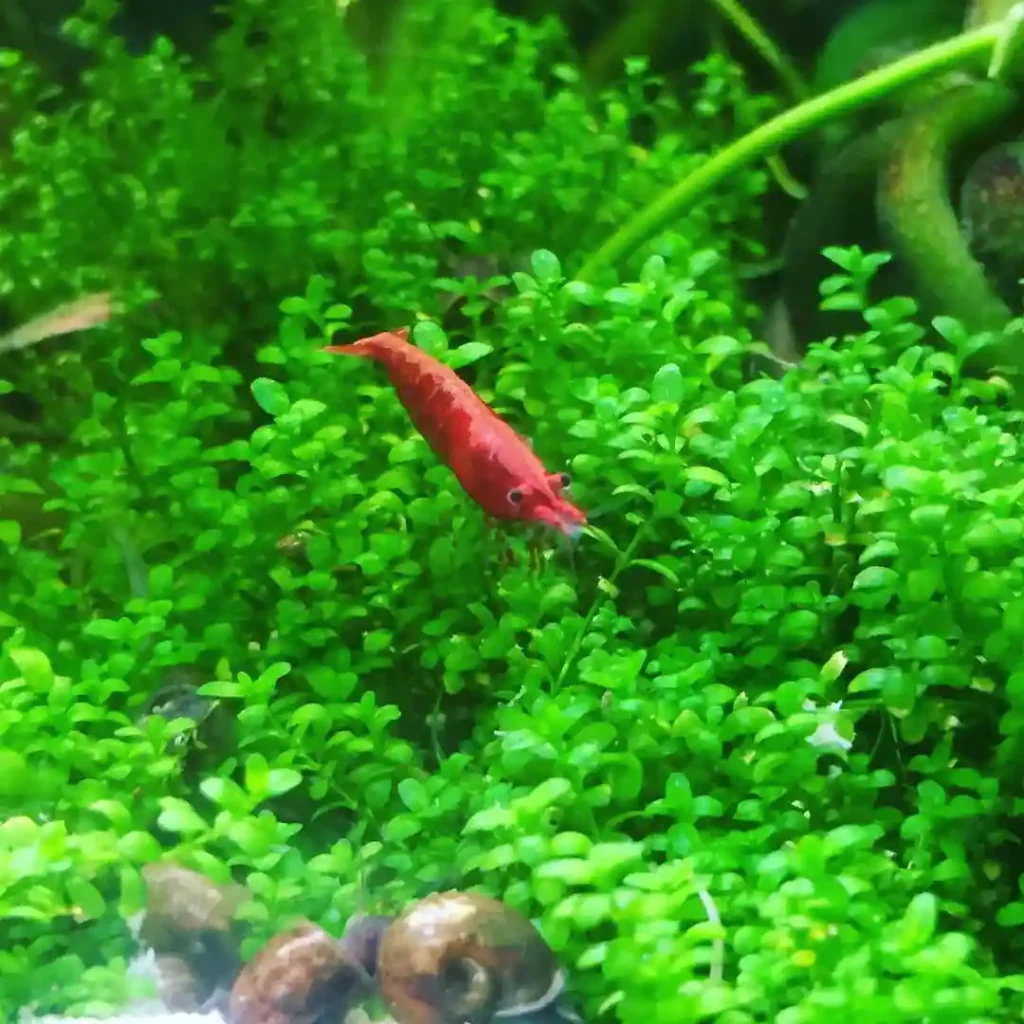
Dwarf Baby Tears, often sold as HC Cuba, produces one of the finest aquarium carpets. Its tiny leaves create a detailed sense of scale, which makes rocks and driftwood appear larger.
That beautiful appearance comes with higher care needs. This plant usually requires strong light, stable injected CO₂, regular fertilization, and good water circulation near the substrate.
I would not recommend Dwarf Baby Tears for a basic low-tech tank. It may loosen, melt, grow upward, or collect algae when its needs are not met.
Divide it into very small portions and plant them close together with fine tweezers. The roots are short and easy to dislodge, so avoid strong flow near the substrate until they become established.
Trim the carpet before it grows into a thick cushion. If the top becomes too dense, the bottom receives less light and may die. Large sections can then float away from the substrate.
- Light: High
- CO₂: Usually required
- Growth rate: Fast in stable high-tech tanks
- Best placement: Detailed high-tech aquascapes
6. Glossostigma elatinoides
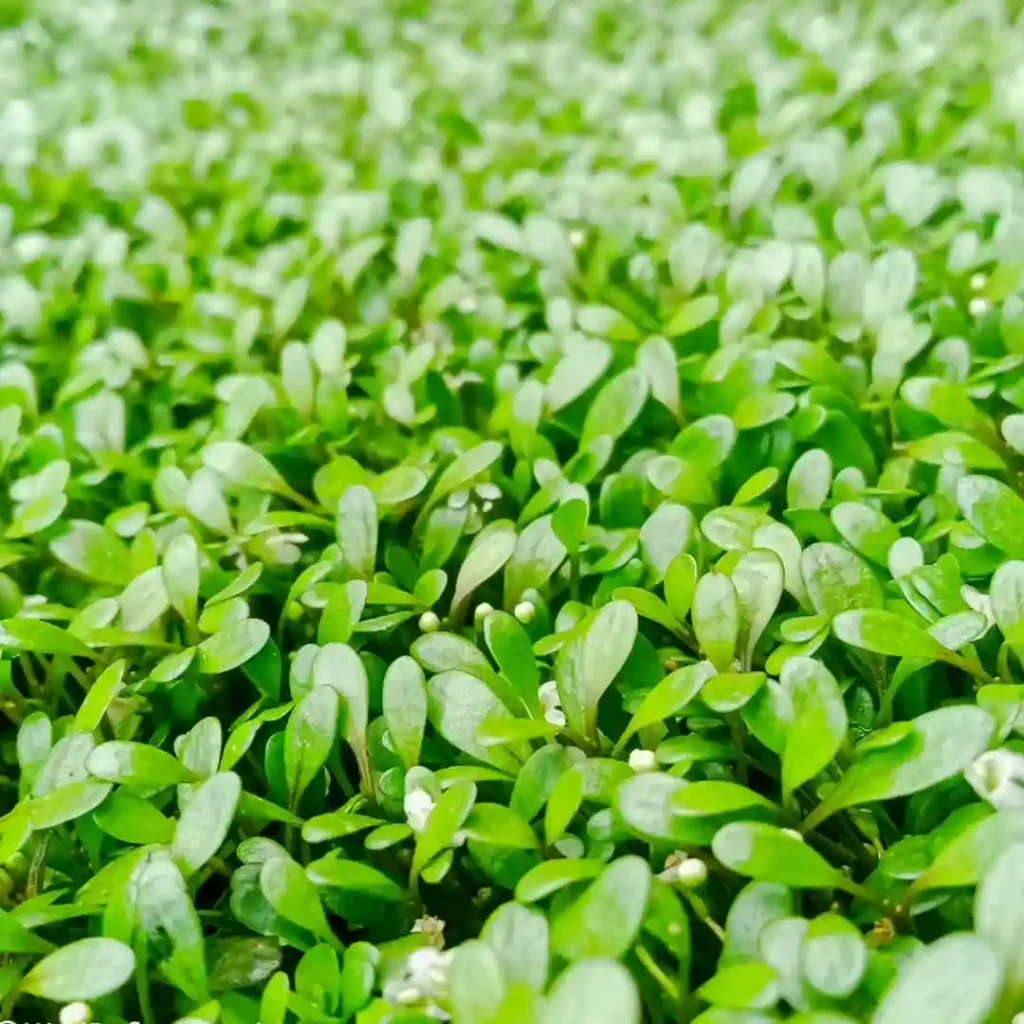
Glossostigma elatinoides, commonly called Glosso, has small paired leaves that create a bright green carpet. It can spread quickly when given strong light, CO₂, and enough nutrients.
The biggest problem with Glosso is vertical growth. When light at the substrate is too weak, the stems reach upward rather than creeping across the bottom.
Plant individual stems or very small clusters horizontally across the foreground. Bury the lower stem and roots while keeping the leaves above the substrate.
Once it begins spreading, regular trimming keeps the carpet low. Remove loose cuttings after trimming so they do not block the filter or settle between other plants.
Glosso grows quickly in the right tank, but rapid growth also means it needs steady nutrients. Pale new leaves or weak stems may point to a shortage rather than a need for more light.
- Light: High
- CO₂: Strongly recommended
- Growth rate: Fast
- Best placement: High-light carpets and iwagumi tanks
7. Micro Sword
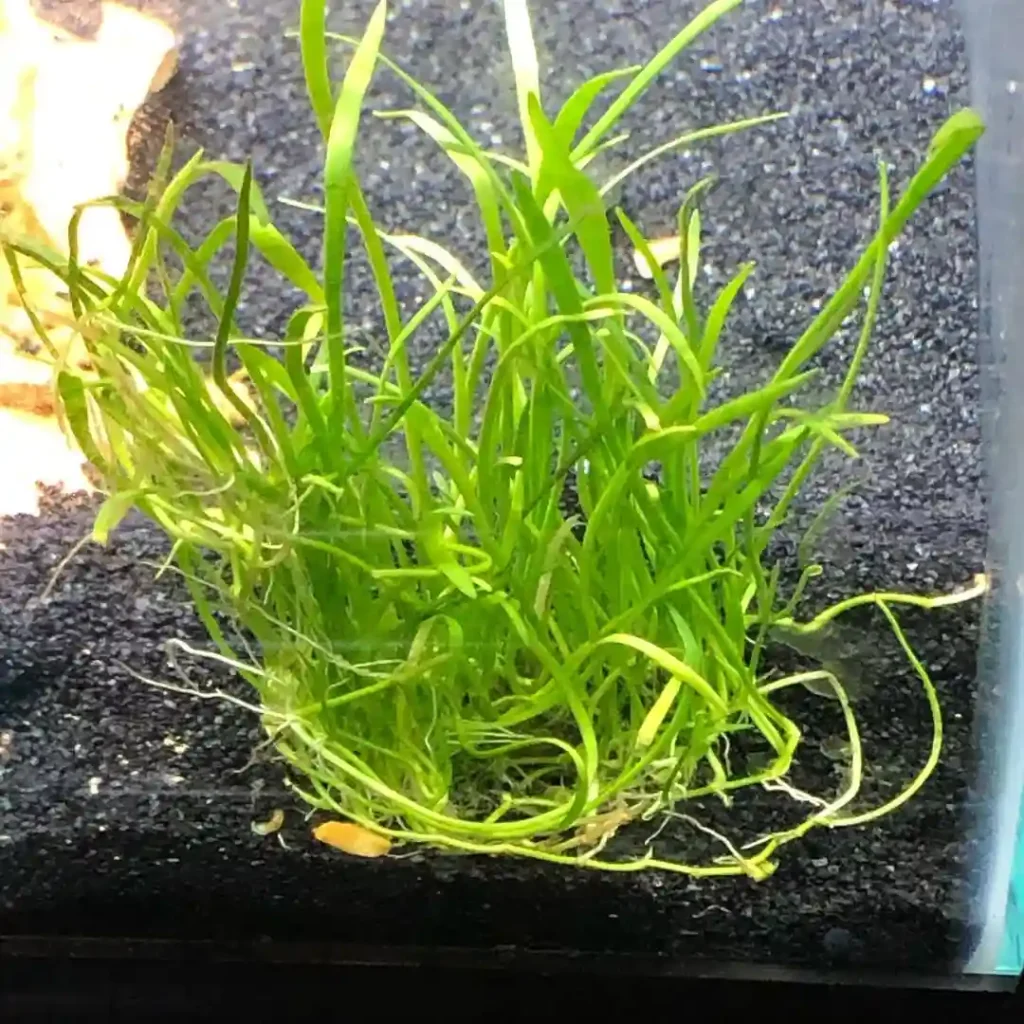
Micro Sword produces narrow, grass-like leaves that spread through underground runners. It creates a slightly taller and broader grassy foreground than Dwarf Hairgrass.
This plant works well along the edge of a path or between a low carpet and larger plants. Its leaves provide useful cover for shrimp, fry, and shy bottom-dwelling fish.
Micro Sword often adjusts slowly after planting. Strong roots must develop before it begins sending runners across the substrate.
Divide it into small plugs rather than planting the entire pot together. Place the plugs an inch or two apart and avoid burying the crown too deeply.
Medium to high light helps the plant stay dense. Added CO₂ and root nutrition improve its spread, but patience is still needed during the first few weeks.
- Light: Medium to high
- CO₂: Helpful
- Growth rate: Slow to moderate
- Best placement: Grassy foreground edges
8. Cryptocoryne parva
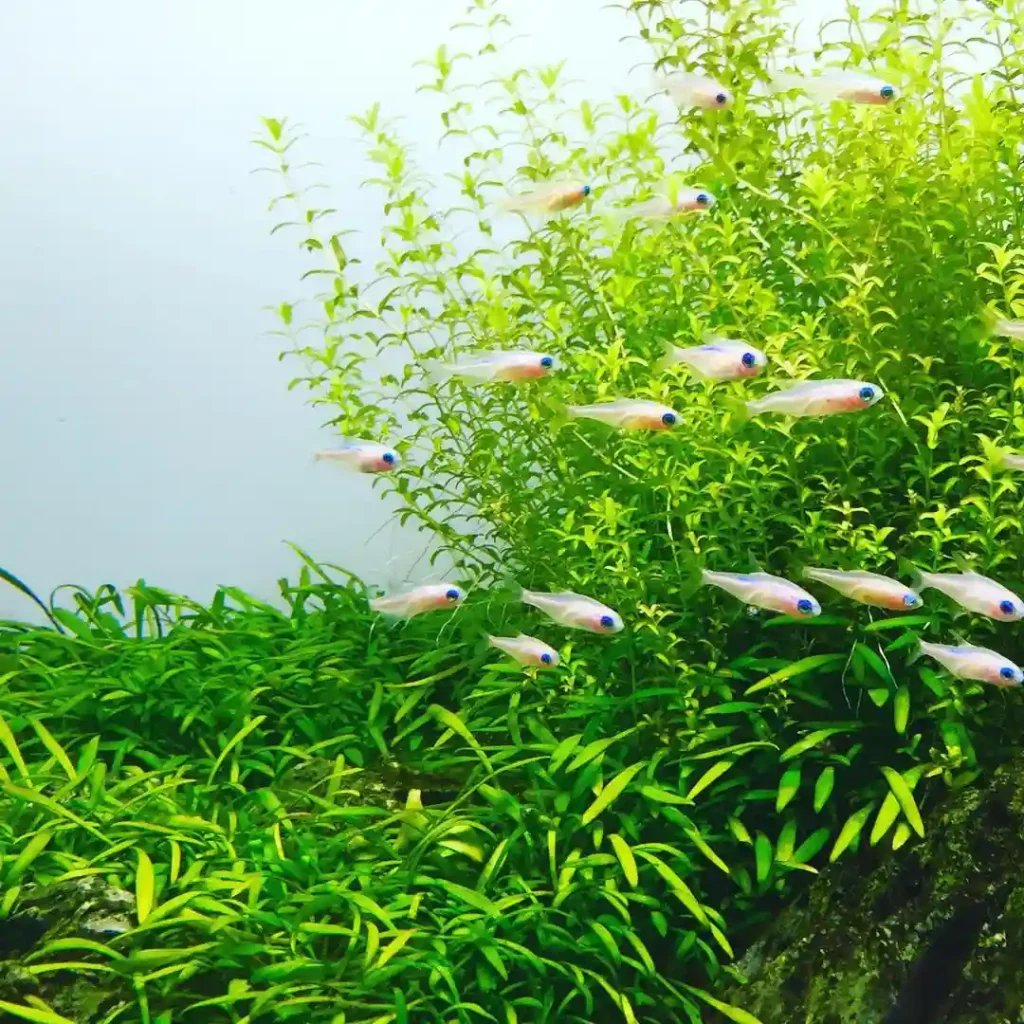
Cryptocoryne parva is one of the smallest Cryptocoryne plants. It forms neat green clumps that remain low enough for the foreground.
It grows very slowly, which makes it a good choice for someone who wants less trimming. The tradeoff is that it can take months to fill a large area.
Cryptocoryne parva is a heavy root feeder. Add root tabs if you are using plain sand or gravel. Place the tabs beneath the root zone rather than directly against the crown.
Do not be surprised if older leaves melt after planting. Many Cryptocoryne plants are grown above water before sale. Those leaves may die as the plant adjusts and produces new underwater growth.
Keep the roots buried but leave the crown above the substrate. A deeply buried crown may rot.
- Light: Low to medium
- CO₂: Not required
- Growth rate: Very slow
- Best placement: Low-maintenance foreground clumps
Cryptocoryne parva grows well in many simple setups. You can find more suitable choices in my guide to low-light aquarium plants.
9. Anubias nana ‘Petite’
Anubias nana ‘Petite’ is not a true carpeting plant. It grows from a small rhizome and works best as a foreground accent attached to rocks or driftwood.
Its dark green leaves look good in shaded areas where many carpet plants struggle. It is also useful in tanks with fish that dig because it does not need to be rooted in the substrate.
Attach the rhizome to hardscape with thread or a small amount of aquarium-safe cyanoacrylate gel. The roots will slowly grip the surface.
Never bury the rhizome. Covering it with substrate can cause it to rot, although the thin roots can safely grow into sand or gravel.
This plant grows slowly, so leaves exposed to strong light may collect algae. Place it under taller plants or hardscape and avoid keeping the aquarium lights on longer than necessary.
- Light: Low to medium
- CO₂: Not required
- Growth rate: Slow
- Best placement: Rocks, wood, and shaded foreground areas
10. Hygrophila ‘Araguaia’

Hygrophila ‘Araguaia,’ commonly sold under that trade name, adds reddish-brown or purple tones to a foreground filled with green plants.
It grows as a low, spreading stem plant when given strong light, good nutrients, added CO₂, and regular trimming. Under weaker conditions, it may become taller, greener, and less compact.
Use it as an accent rather than covering the entire foreground. A small group beside gray stone or pale sand creates more contrast than a large solid patch.
Plant the stems separately and trim the tops once they begin growing upward. New side shoots will create a wider and bushier group.
Color depends on light, nutrition, and the plant’s condition. More light alone will not solve every color problem. The plant still needs stable CO₂ and a suitable nutrient supply.
- Light: Medium to high
- CO₂: Recommended
- Growth rate: Moderate
- Best placement: Reddish foreground accents
Which Foreground Plant Should You Choose?
The best choice depends on the equipment you already have and the amount of maintenance you want.
For a simple aquarium without injected CO₂, I would choose Marsilea hirsuta, Cryptocoryne parva, or Anubias nana ‘Petite.’ These plants grow slowly, but they are more realistic choices for basic lighting.
Monte Carlo is a good middle option. It can survive in some low-tech setups, but CO₂ makes the carpet much faster and denser.
Choose Dwarf Hairgrass or Micro Sword if you prefer a grassy foreground. Dwarf Hairgrass usually produces the finer lawn, while Micro Sword grows slightly taller.
For a high-tech aquascape, Dwarf Baby Tears and Glossostigma can produce a very tight carpet. Both need more light, trimming, fertilization, and CO₂ stability.
If you are planning the entire layout rather than choosing one plant, my aquascaping guide for beginners explains how to arrange foreground, midground, background, and hardscape elements.
How to Plant Foreground Aquarium Plants
Start by removing rock wool, gel, and damaged leaves from each plant. Rinse the roots gently and divide large pots into smaller portions.
Use long aquascaping tweezers to push the roots into the substrate. Release the plant slowly while pulling the tweezers out at an angle. This leaves the roots buried without dragging the whole plant back out.
Space carpeting plants rather than packing them into one spot. Small clumps spread more evenly and give every plant better access to light and water.
Plant stem species such as Staurogyne repens and Hygrophila ‘Araguaia’ one stem at a time. Leave enough room for side shoots to form.
Attach Anubias to wood or rock instead of placing its rhizome under the substrate.
After planting, fill the aquarium slowly. Pour water onto a plate, plastic bag, or piece of hardscape so the flow does not lift the new plants.
How Long Does an Aquarium Carpet Take to Grow?
A carpet may take several weeks or several months to fill, depending on the plant and tank conditions.
Glossostigma and Dwarf Baby Tears can spread quickly in stable high-tech tanks. Monte Carlo and Dwarf Hairgrass usually need more time, especially without added CO₂.
Marsilea hirsuta, Micro Sword, and Cryptocoryne parva are slower. They are better for patient aquarists than anyone expecting full coverage within a month.
Newly planted carpeting plants often spend their first weeks developing roots. Limited visible growth does not always mean the plant is failing.
Fast-growing plants elsewhere in the aquarium can help use excess nutrients while a foreground becomes established. See these fast-growing aquatic plants for suitable options.
Substrate and Fertilizer
A fine planted substrate makes foreground plants easier to anchor. Large gravel leaves wide gaps and may not hold short roots securely.
Aquarium soil supplies nutrients and usually works well for carpeting species. Inert sand and fine gravel can also work when you add root tabs and dose nutrients correctly.
Rooted plants such as Dwarf Hairgrass, Marsilea, Micro Sword, and Cryptocoryne parva benefit from nutrition around their roots.
Monte Carlo, Dwarf Baby Tears, Glossostigma, and stem plants also take nutrients from the water. A complete liquid fertilizer can help when fish waste alone does not supply enough.
Do not add extra fertilizer simply because a carpet is slow. First check its normal growth rate, lighting, CO₂, and whether the roots have had enough time to settle.
Lighting and CO₂
Low-growing plants sit farther from the aquarium light than tall stem plants. A fixture that keeps an Anubias alive may not provide enough light at the substrate for a tight carpet.
Start with six to eight hours of light per day. Increasing the schedule too quickly can produce algae before the foreground plants become established.
Injected CO₂ is not required for every foreground plant. It does, however, improve the density and growth rate of Monte Carlo, Dwarf Hairgrass, Glossostigma, and Dwarf Baby Tears.
CO₂ must remain steady during the lighting period. Large daily changes can stress fish and encourage algae.
Do not treat bottled liquid carbon products as a direct replacement for injected carbon dioxide. Some plants are sensitive to these products, and their effect is not the same as a regulated CO₂ system.
Trimming a Foreground
Trim a carpet before it becomes so thick that the lower growth receives no light or water movement.
Use curved aquascaping scissors and remove the cut pieces with a net or siphon. Loose leaves left in the tank can decay or block the filter intake.
Dwarf Hairgrass can be trimmed like a lawn once established. Monte Carlo, Dwarf Baby Tears, and Glossostigma should be thinned before they form deep mats.
Staurogyne repens and Hygrophila ‘Araguaia’ respond well to top trimming. Cutting the growing tips encourages new branches and a bushier shape.
Slow plants such as Cryptocoryne parva and Anubias nana ‘Petite’ need little trimming. Remove only damaged, algae-covered, or dying leaves.
Common Foreground Plant Problems
Plants Keep Floating Up
The roots may be too short, the clumps may be too large, or the substrate may be too coarse. Divide the plant into smaller portions and push the roots deeper with tweezers.
Strong fish, shrimp, and bottom dwellers can also disturb new plants. Give the roots time to settle before adding active digging fish.
Carpet Grows Upward
Vertical growth usually points to weak light at the substrate, overcrowding, or the natural habit of the plant. Increase light carefully and trim tall growth after the plants have rooted.
Leaves Are Melting
Many aquarium plants are grown above water before sale. Their original leaves may die while new submerged leaves develop.
Remove soft decaying material, but do not throw away a plant with firm roots or fresh shoots.
Carpet Turns Brown Underneath
The carpet has probably become too thick. Trim and thin the top so light and water can reach the lower layer.
Algae Covers the Leaves
Too much light, unstable CO₂, poor circulation, excess waste, or weak plant growth can all contribute. Reduce the lighting period and correct the imbalance instead of adding more fertilizer blindly.
Frequently Asked Questions
What is the easiest foreground aquarium plant?
Anubias nana ‘Petite’ is one of the easiest foreground accents, but it does not form a true carpet. Marsilea hirsuta and Cryptocoryne parva are better rooted choices for beginners who do not use injected CO₂.
What is the easiest carpeting plant?
Monte Carlo is often easier than Dwarf Baby Tears or Glossostigma. It still forms a faster and denser carpet with medium to high light and stable CO₂.
Can foreground plants grow without CO₂?
Yes. Marsilea hirsuta, Cryptocoryne parva, and Anubias nana ‘Petite’ can grow without injected CO₂. Dwarf Hairgrass and Monte Carlo may also survive, but their carpets will usually develop more slowly.
Can carpet plants grow in low light?
Some can, but growth will be slower and less compact. Marsilea hirsuta and Cryptocoryne parva are better low-light choices than Dwarf Baby Tears or Glossostigma.
What is the fastest foreground aquarium plant?
Glossostigma and Dwarf Baby Tears can spread quickly under strong light with stable CO₂. Dwarf Hairgrass can also fill space quickly after it becomes established.
Why is my aquarium carpet growing tall?
The most common reason is weak light reaching the substrate. The plants stretch upward to reach brighter water. Crowding, plant type, and a lack of trimming can also cause tall growth.
How do I stop foreground plants from uprooting?
Divide them into small clumps, use fine planting tweezers, and bury the roots deeply enough to hold. Fill the tank slowly and keep strong water flow away from newly planted areas.
What is the difference between foreground and carpet plants?
Foreground plants are any short plants used at the front of an aquarium. Carpet plants are a smaller group that spreads horizontally and covers the substrate. A foreground plant such as Anubias nana ‘Petite’ adds low detail but does not create a carpet.
Do foreground plants need root tabs?
Rooted species benefit from root nutrition, especially when grown in plain sand or gravel. Rhizome plants such as Anubias take much of their nutrition from the water and do not need to be planted over root tabs.
Can I mix different foreground plants?
Yes. Combining a low carpet with small bushes or hardscape plants creates a more natural layout. Keep each species in a clear group so the foreground does not look scattered.
