
17 Things to Know Before Breeding Aquarium Fish

Before breeding aquarium fish, you need more than a healthy male and female. You need a cycled breeding tank, suitable spawning conditions, fry-safe filtration, correct first foods, grow-out space, and a plan for every surviving juvenile.
Some fish breed so easily that preventing the next brood becomes harder than producing the first. Others lay eggs repeatedly but eat them before they hatch. Cichlids may protect their young while attacking every other fish in the tank.
The biggest mistake is planning only for spawning day. A successful breeding project may leave you caring for dozens or hundreds of young fish for several months.
1. Learn How Your Fish Reproduce
Don’t begin with a generic breeding setup. First identify whether your fish are livebearers, egg scatterers, plant spawners, cave spawners, open-surface spawners, bubble-nest builders, or mouthbrooders.
Each method needs a different setup.
Guppies give birth to free-swimming fry. Zebra danios scatter eggs that fall toward the bottom. Bristlenose plecos lay eggs inside caves. Angelfish use broad vertical surfaces. Bettas build bubble nests near the surface.
A cave won’t help a zebra danio, while bottom mesh won’t provide an angelfish with its preferred spawning surface.
Common Breeding Methods
| Breeding method | Examples | Basic requirement |
| Livebearer | Guppy, molly, platy, swordtail | Dense cover for newborn fry |
| Egg scatterer | Danio, barb, tetra | Mesh, marbles or thick spawning material |
| Plant spawner | Ricefish, killifish | Plants or spawning mops |
| Cave spawner | Kribensis, bristlenose pleco | Secure breeding caves |
| Open-surface spawner | Angelfish, discus | Slate, leaves or another smooth surface |
| Bubble-nest builder | Betta, gourami, paradise fish | Calm surface and floating cover |
| Mouthbrooder | Some African cichlids | Low stress and suitable territory |
Cichlids alone use several reproductive methods. Some place eggs on a surface, while others carry eggs and young inside the mouth. Many also provide extended parental care. Animal Diversity Web gives a helpful overview of these reproductive patterns.
2. Confirm the Fish Are the Same Species
Fish sold under similar common names aren’t always the same species. Closely related species may need different water, spawning conditions, or egg-care methods.
Check the scientific name on a reliable fish profile or ask the seller for it. Don’t rely only on color because stores may sell several varieties under one broad label.
Correct identification also helps prevent accidental hybrids. Guppies and Endler’s livebearers, for example, can interbreed. Keeping them together may produce fertile hybrids and remove the traits of a pure strain.
Hybrids aren’t automatically unhealthy, but they must be labelled honestly. Never sell or give away a hybrid as a pure species.
3. Make Sure You Have a Male and Female
This sounds obvious until you try sexing angelfish, juvenile cichlids, catfish, or fish with little visible difference between the sexes.
Color alone isn’t reliable for every species. Body shape, fin shape, breeding tubes, facial bristles, size, abdominal fullness, and courtship behavior may offer better clues.
Some fish cannot be sexed confidently until they mature or begin spawning. Angelfish are a good example. Buying one fish believed to be male and one believed to be female doesn’t guarantee a compatible pair.
For schooling fish, breeding a small group can be easier than selecting one pair. Zebra danios and corydoras often breed more readily when several mature fish are present.
With livebearers, identify the anal fin. Males have a pointed reproductive fin called a gonopodium, while females have a broader, fan-shaped anal fin.
Use the Male vs. Female Guppy Guide when preparing guppies.
4. Wait Until the Fish Are Fully Mature
A fish may show adult color before it is physically ready to breed. Young fish can produce smaller broods, poorly developed eggs, or weak offspring.
Breeding too early can also place unnecessary strain on a female that is still growing.
Maturity isn’t determined by age alone. Growth rate changes with species, diet, temperature, water quality, and the fish’s history. Use age, body size, physical condition, and breeding behavior together.
Avoid breeding an undersized female simply because a male has started chasing her. Give her enough time and space to develop properly.
Older fish may also become less productive. When possible, choose fully grown, active adults that are neither newly mature nor showing age-related decline.
5. Start With Healthy Breeding Fish
Breeding places extra physical demand on adults, especially females producing eggs or carrying developing fry. Sick, thin, injured, or badly stressed fish shouldn’t be used.
Healthy breeding candidates should:
- Swim normally
- Eat readily
- Maintain a healthy body shape
- Hold their fins open
- Breathe normally
- Have clear eyes
- Show no visible parasites, sores or white spots
- Produce normal waste
- Recover normally after routine maintenance
A swollen belly doesn’t always mean a fish is carrying eggs or fry. Constipation, internal parasites, tumors, fluid retention, and dropsy can also cause swelling.
Raised scales that create a pinecone appearance are not a normal pregnancy sign. Treat the fish as potentially ill rather than placing it in a breeding tank.
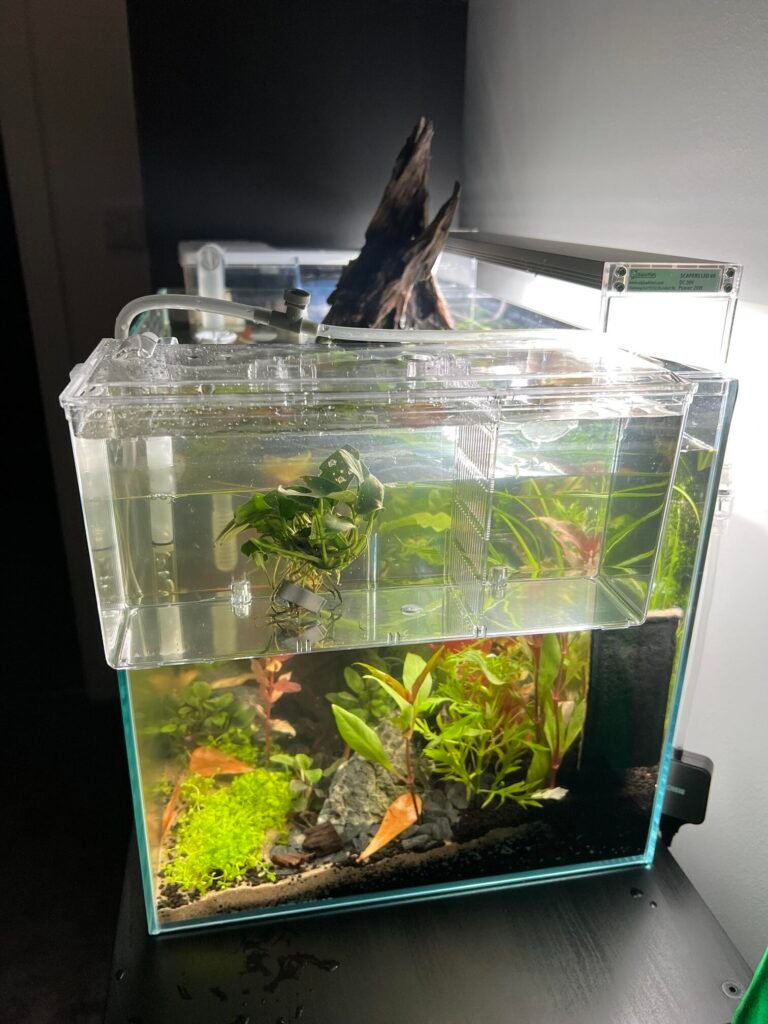
For most of the time i used this breeding tank for successfully breed my freshwater fish.
6. Quarantine New Breeding Stock
A healthy-looking fish can still carry parasites or disease. Adding it directly to your established breeding group risks infecting every adult and any future fry.
Keep new fish in a separate quarantine aquarium before introducing them. Observe their appetite, breathing, waste, swimming, skin, fins, and body shape.
The quarantine tank should have its own net, siphon, and other equipment. Sharing wet equipment can move pathogens between tanks.
Don’t medicate every new fish without a reason. Some treatments are stressful and can affect the biological filter. Use treatment when symptoms, testing, or professional guidance gives you a reason.
Breeding can wait. Clearing a disease outbreak across several adult and fry tanks takes much longer.
7. Choose Compatible Breeding Partners
A male and female of the same species may not accept each other. This is especially common with cichlids, bettas, gouramis, and other territorial fish.
A forced pair can lead to torn fins, constant hiding, missed meals, and death.
Signs of a Compatible Pair
Compatible fish may spend time together, clean the same spawning surface, inspect a cave, display without causing injury, or jointly defend an area.
Some chasing is normal during courtship. It becomes dangerous when one fish cannot leave its hiding place, reach food, or rest without being attacked.
Letting Fish Choose Partners
For angelfish and several cichlids, raising a group of young fish and allowing pairs to form naturally often works better than selecting one male and one female.
Once a pair forms, move it to an appropriate breeding aquarium. Keeping the pair in the original group may lead to territorial fights.
Always have a divider or second tank ready in case the pair stops tolerating each other.
8. Prepare a Fully Cycled Breeding Tank
Never set up a breeding tank on the day the fish are ready to spawn. A newly filled aquarium doesn’t have a mature biological filter.
Adult waste, uneaten conditioning food, eggs, and repeated fry meals can cause ammonia to rise quickly.
Set up and cycle the tank in advance. Seed a sponge filter in an established healthy aquarium so it contains a working colony of beneficial bacteria when needed.
Check that ammonia and nitrite remain at zero before adding the breeding fish.
A breeding tank doesn’t need expensive decoration, but it must provide:
- Stable temperature
- Safe filtration
- Suitable water movement
- A fitted lid
- Species-specific spawning material
- Shelter for the weaker adult
- Easy access for cleaning
Review the Fish Tank Cycling Guide before preparing the breeding aquarium.
9. Match the Setup to the Spawning Method
The breeding tank should make spawning easy while protecting eggs, fry, and adult fish.
Egg scatterers need mesh, marbles, or dense spawning material that lets eggs fall beyond the parents’ reach. Plant spawners need moss, fine plants, or yarn mops where adhesive eggs can be placed.
Cave spawners need safe shelters. Open spawners may use slate, broad leaves, flowerpots, or smooth rocks. Bubble-nest builders need a calm surface and floating cover.
Avoid Unsafe Decorations
Every item must be aquarium-safe and free from:
- Sharp edges
- Peeling paint
- Exposed metal
- Soap or cleaning residue
- Gaps that trap adults
- Holes that trap growing fry
Place more than one shelter in tanks containing territorial fish. The weaker adult needs somewhere to escape if courtship becomes aggressive.
10. Stable Water Matters More Than a “Magic” Number
Breeding guides often provide one exact temperature or pH, but fish populations and captive strains don’t always behave identically.
Begin with the conditions in which your adults already eat well, display normal color, and remain healthy. Then check whether the species needs a gradual seasonal cue, cooler water change, warmer period, altered daylight, softer water, or another trigger.
Don’t copy a breeding trick from an unrelated species. A cooler water change may encourage some corydoras, while a warm, calm surface suits many bubble-nest builders.
Test:
- Ammonia
- Nitrite
- Nitrate
- Temperature
- pH
- General hardness when relevant
- Carbonate hardness when relevant
- Salinity for species that require it
Make changes slowly. A sudden shift may trigger stress rather than spawning.
11. Condition the Adults Before Spawning
Conditioning means feeding mature adults well and keeping them in clean, stable water before breeding.
A varied diet helps females develop eggs and gives both parents energy for courtship, spawning, and parental care.
Use food appropriate for the species. Depending on the fish, this might include quality flakes or pellets, frozen foods, live foods, algae-based foods, vegetables, or small crustaceans.
Feed sensible portions. Overfeeding doesn’t create healthier breeders. It creates waste, rising nitrate, and potentially dangerous ammonia.
Some breeders condition males and females separately before introducing them. This can reduce constant chasing and make spawning behavior easier to identify.
Don’t use rich food as the only breeding trigger. Good nutrition cannot fix unsuitable water, immature fish, or an incompatible pair.
12. Learn the Signs That Spawning Is Close
Recognizing breeding behavior gives you time to install intake covers, prepare food, move tank mates, or transfer a spawning mop.
Common signs include:
- A female becoming fuller with eggs
- A livebearer developing a darker gravid spot
- Males displaying stronger colors
- Pairing and courtship
- Increased chasing
- Cave cleaning
- Digging or moving substrate
- Cleaning leaves, rocks or aquarium glass
- Bubble-nest construction
- Territorial guarding
- A breeding tube becoming visible
One sign alone isn’t proof. Chasing can be aggression, hiding can be stress, and swelling can be illness.
Look for several connected changes. A fuller female, active courtship, and repeated cleaning of one surface provide a clearer pattern than a single behavior.
Read Signs Aquarium Fish May Be Ready to Breed for a closer comparison of breeding, illness, and aggression.
13. Expect Adult Fish to Eat Eggs or Fry
Many fish provide no parental care. Danios, barbs, tetras, ricefish, livebearers, and several catfish may eat their own eggs or young.
Even fish described as peaceful can swallow a fry that fits inside its mouth.
Use the protection method that matches the species:
| Fish type | Protection method |
| Livebearers | Dense plants or remove newborn fry |
| Egg scatterers | Mesh, marbles or remove adults |
| Plant spawners | Collect eggs or move spawning mop |
| Corydoras | Move adhesive eggs |
| Angelfish | Use a dedicated pair tank |
| Bristlenose pleco | Leave guarded cave with male |
| Parental cichlids | Keep parents if they are caring properly |
Don’t automatically remove parents that provide care. Kribensis, convict cichlids, and other cichlids may protect, clean, fan, and move their young.
Parental behavior still needs monitoring. Young angelfish may eat their first batches, and a cichlid pair may suddenly turn on one another.
14. Fry-Safe Filtration Must Be Ready
A powerful filter can trap or kill fry even when the water looks clean.
Sponge filters are usually the simplest choice for breeding and nursery tanks. They provide biological filtration with gentle water movement and no dangerous intake opening.
If you must use a hang-on-back, canister, or internal filter, cover every intake with a fine pre-filter sponge.
Check the sponge frequently. Fine material can clog with powdered food and reduce water flow.
Don’t turn filtration off permanently because fry appear. Fry need clean, oxygenated water. Modify the filter so it is safe.
A mature sponge also develops biofilm that some fry graze on between meals.
15. Prepare First Foods Before Spawning
Don’t wait until the fry become free-swimming to decide what they will eat. Some live-food cultures take several days to become productive.
The correct first food depends on the size and feeding position of the fry.
Fry Food by Size
| Fry type | Possible first foods |
| Extremely small egg-layer fry | Infusoria, rotifers, green water |
| Small surface-feeding fry | Vinegar eels, banana worms |
| Medium fry | Microworms, newly hatched brine shrimp |
| Large livebearer fry | Powdered food, crushed flakes, brine shrimp |
| Corydoras fry | Microworms, brine shrimp, fine sinking food |
| Pleco fry | Biofilm, soft algae foods, suitable vegetables |
Newly hatched egg layers usually don’t eat while they are absorbing their yolk sacs. Begin feeding when they become free-swimming.
Livebearer fry are born free-swimming and can eat shortly after birth.
Prepare at least two foods. If a brine shrimp hatch fails or an infusoria culture crashes, the fry still need to eat.
Read Best Foods for Fish Fry for preparation and feeding instructions. The FAO identifies rotifers and newly hatched brine shrimp as common starter foods, with food size playing a major part in whether fry can use it. FAO fry-feeding review
16. A Hatching Tank Is Not Always a Grow-Out Tank
A small tank or container may work for eggs and newborn fry, but the young will need more room as they grow.
Crowding creates several problems:
- Waste accumulates faster
- Oxygen demand rises
- Smaller fry lose access to food
- Growth becomes uneven
- Disease spreads easily
- Aggression may begin
- Larger fry may eat smaller siblings
Estimate how many young the species may produce. Then plan where they will live at two weeks, one month, and several months old.
You may need to sort juveniles by size. Killifish and some cichlids can develop large size differences, allowing bigger siblings to eat smaller ones.
Livebearers create another problem. Young guppies, mollies, platies, and swordtails may begin breeding before you have rehomed the first generation.
17. Decide What Will Happen to Every Juvenile
This is the part many new breeders skip.
Ask local aquarium stores whether they accept home-bred fish. Find out whether they offer cash, store credit, trades, or nothing. Don’t assume a store will take 50 common guppies or convict cichlids.
Private buyers may want healthy juveniles, but demand changes by species, color, quality, and location.
Before breeding, answer these questions:
- How many juveniles can I house?
- How long will they take to reach a safe selling size?
- Can I separate males and females?
- Are local stores interested in this species?
- Can I accurately identify and label the fish?
- What will I do with ordinary or unwanted juveniles?
- Can I afford additional tanks, food and electricity?
Don’t release aquarium fish into ponds, rivers, drains, or local waterways. Released fish can die, spread disease, or harm native wildlife.
If you don’t have space and confirmed rehoming options, don’t begin the breeding project.
Breeding for Profit Is Harder Than It Looks
Most beginner fish-breeding projects don’t produce reliable profit. Food, electricity, water, medication, equipment, losses, and months of grow-out time reduce the money earned from each fish.
Common livebearers and convict cichlids are easy to produce, which also means many sellers already offer them.
Rare fish may sell for more, but they often cost more to obtain and may be harder to breed. Buyers also expect correct identification, healthy stock, accurate sexing, and reliable shipping.
Begin because you want to observe the species and raise healthy young. Treat any income as a later possibility rather than the reason for the first spawn.
Think About Genetics Before Pairing Fish
Avoid repeatedly breeding fish with severe deformities, chronic weakness, poor swimming, or inherited health problems.
Don’t choose breeders based only on the brightest color. Body shape, vigor, fertility, behavior, and long-term health also matter.
Breeding closely related fish repeatedly can increase the chance that harmful recessive traits appear. Keep records of parents and offspring when maintaining a line.
Never mislabel hybrids. If two varieties or species have crossed, tell future owners exactly what the fish are.
For selectively bred fish, decide what trait you are working with before pairing them. Randomly mixing several lines can produce healthy fish, but it may also make color and fin traits unpredictable.
Keep Simple Breeding Records
You don’t need complicated software. A notebook or spreadsheet is enough.
Record:
- Species and variety
- Parent identification
- Spawning date
- Water temperature
- pH and hardness when relevant
- Foods used for conditioning
- Number of eggs or fry
- Hatching date
- First food
- Survival notes
- Growth rate
- Health problems
- Date juveniles were separated or rehomed
Records help you see what worked. They also prevent accidental mating between close relatives when several generations are raised at once.
Photographs of parents and young can help you track color, shape, and development.
A Realistic Breeding Budget
The fish may be inexpensive, but the complete setup may include:
| Expense | Why You May Need It |
| Breeding tank | Gives adults a controlled spawning area |
| Grow-out tank | Houses juveniles after hatching |
| Sponge filters | Provides fry-safe filtration |
| Air pump and tubing | Runs filters and aeration |
| Heater | Maintains species-appropriate temperature |
| Water conditioner | Makes tap water safe |
| Test kit | Tracks ammonia, nitrite, nitrate and pH |
| Live-food supplies | Feeds small fry |
| Extra prepared food | Supports frequent feeding |
| Caves, mops or spawning mesh | Provides a suitable spawning site |
| Electricity | Runs heaters, lights, filters and air pumps |
| Medication or veterinary care | Covers illness or injury |
| Bags and containers | Used when rehoming juveniles |
You don’t need to buy everything new. Mature spare filters, used aquariums in safe condition, simple yarn mops, and basic clay pots can reduce costs.
Never save money by skipping the cycled filter, water testing, proper tank size, or suitable food.
How Much Daily Work Does Fish Breeding Require?
Breeding fish may need attention several times daily.
A normal day can include feeding fry, feeding adults, checking eggs, removing dead eggs, cleaning food waste, inspecting the filter, testing water, and watching for aggression.
Live-food cultures also need maintenance. Brine shrimp must be hatched regularly, while microworm, vinegar eel, or infusoria cultures need backup containers.
Vacations and busy workdays need planning. Small fry cannot simply receive one huge meal to cover the next two days.
Arrange a trained caretaker or delay breeding if you know daily care will be difficult.
Best Aquarium Fish for a First Breeding Project
For most beginners, I recommend starting with one of these:
Guppies
Guppies are easy to breed and produce large, free-swimming fry. Their main problems are population growth and adults eating babies.
Read the Guppy Breeding Guide before choosing a breeding group.
Platies
Platies are peaceful livebearers with fry large enough to accept prepared food. They still need plants or separation because adults provide no care.
Zebra Danios
Zebra danios are a good introduction to egg scattering. Marbles or mesh can protect their eggs from the adults.
Medaka Ricefish
Females attach visible eggs to plants or spawning mops. The eggs can be collected without removing the adults.
Kribensis
Kribensis are suitable for someone who wants to observe parental care. They need caves and enough space to manage breeding aggression.
See 15 Egg-Laying Fish for Beginner Breeders for more choices.
Fish I Wouldn’t Recommend for a First Attempt
Bettas
Getting bettas to spawn is only one part of the job. Introductions can become violent, fry require very small first foods, and young males may eventually need individual separation.
Discus
Discus breeding requires healthy compatible adults, stable water, close observation, and careful fry care. They are better after you have successfully raised easier species.
Large Cichlids
Large cichlids need spacious tanks, strong filtration, compatible partners, and a serious plan for aggressive juveniles.
Fish With Hundreds of Difficult-to-Rehome Fry
Convict cichlids are easy to breed but difficult to recommend as a first project. Stores and local keepers may already have more than they need.
Frequently Asked Questions
What do I need before breeding aquarium fish?
At minimum, you need healthy mature adults, suitable water, a cycled breeding setup, fry-safe filtration, spawning material, first food, grow-out space, and a rehoming plan.
Do aquarium fish need a separate breeding tank?
Not every species does, but a separate tank gives you more control over aggression, egg predation, filtration, feeding, and water quality.
How do I know whether fish are ready to breed?
Look for connected signs such as a fuller female, stronger male colors, courtship, pairing, nest preparation, surface cleaning, digging, or territorial behavior.
Can different fish species breed together?
Some closely related species can hybridize, but most unrelated fish cannot. Avoid intentional hybrids unless you understand the genetics and can label the offspring honestly.
How long does it take to breed aquarium fish?
Spawning may happen within days or take several months. The time depends on maturity, compatibility, health, season, water conditions, and species.
How many fry can aquarium fish produce?
It ranges from a handful to several hundred. Guppies commonly produce dozens of live young, while egg-scattering fish and cichlids may produce much larger batches.
FishBase reports that guppies may deliver around 20–40 fry after a four-to-six-week gestation, and females can store sperm for later broods. FishBase
Will aquarium stores buy my baby fish?
Some stores accept selected species at a suitable size, but others don’t buy from private breeders. Ask before producing the fish.
Can I breed fish in a community tank?
Yes, but eggs and fry often get eaten. Breeding parents may also attack their tank mates. Read Ways to Protect Fry in Community Tanks if a separate tank isn’t available.
Is breeding aquarium fish expensive?
It can be. Additional tanks, filters, heaters, food, testing supplies, electricity, and maintenance increase the cost of every brood.
Should I remove fish eggs from the parents?
Remove eggs from species that provide no care or actively eat them. Leave eggs with attentive parental species when the adults are protecting them successfully.
