
15 Signs Your Aquarium Fish Are Ready to Breed

Aquarium fish may be ready to breed when they have brighter colors, pair with a mate, claim territory, build nests, clean spawning surfaces, or show courtship behavior.
Females may also become rounder as they carry eggs or developing fry. However, chasing, hiding, or a swollen belly can also point to stress or illness, so you must consider the fish species and its normal behavior.
Explain that livebearers, egg layers, mouthbrooders, and bubble-nest builders display different breeding signs.
Quick Signs Your Fish May Be Ready to Breed
| Sign | Often Seen In | What It May Mean |
| Brighter colors | Bettas, cichlids, barbs | Courtship or competition |
| Rounded female belly | Guppies, mollies, egg layers | Eggs or developing fry |
| Pairing behavior | Angelfish, discus, cichlids | A breeding pair may be forming |
| Surface cleaning | Angelfish and cichlids | Preparing an egg-laying site |
| Nest building | Bettas, gouramis | Male is preparing for spawning |
| Territorial behavior | Cichlids and gouramis | Protecting a spawning area |
1. Their Colors Become Brighter
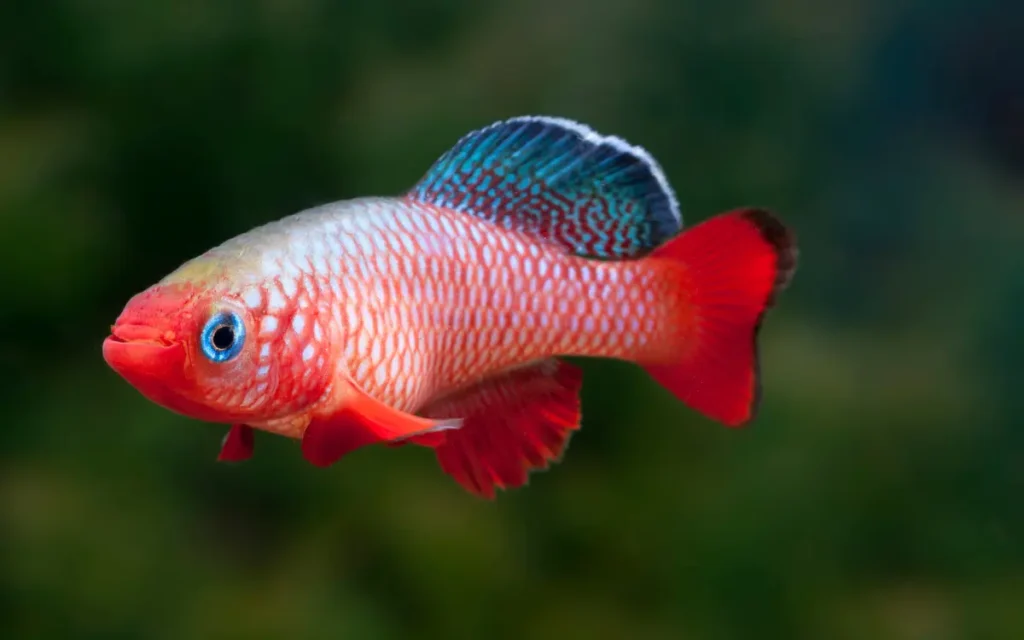
Explain how mature males often display stronger colors when trying to attract females.
Mention that color changes can also happen during aggression, stress, or changes in lighting. Readers should look for courtship behavior alongside the color change.
2. A Male and Female Begin Staying Together
Some fish form temporary or lasting breeding pairs. They may swim together, rest near one another, or defend the same part of the tank.
Use angelfish, discus, and some cichlids as examples.
3. The Female Develops a Rounder Belly
A female carrying eggs or developing fry may look fuller around the abdomen.
Clarify the difference between a normal rounded belly and possible illness:
- Breeding fullness is usually even and gradual.
- Dropsy may cause raised, pinecone-like scales.
- Constipation may come with reduced appetite or unusual waste.
4. A Livebearer’s Gravid Spot Becomes Darker
Explain the gravid spot seen near the rear of female guppies, mollies, platies, and swordtails.
A dark or enlarged gravid spot can suggest pregnancy, but it cannot tell owners the exact delivery date.
You to breed guppy home aquarium read this : Guppy Breeding Guide
5. The Male Starts Displaying for the Female
Describe fin spreading, body shaking, circling, short dashes, and side-by-side swimming.
Explain that these displays are often brief and repeated. Constant attacks that leave the female hiding are not healthy courtship.
6. The Fish Perform a Courtship Dance
Some species circle, quiver, press their bodies together, or swim in a repeated pattern before spawning.
Encourage readers to learn the normal courtship pattern of their species because mating displays can look like fighting.
7. One Fish Begins Chasing Another
Short, controlled chasing may be part of breeding. Livebearer males commonly follow females, while cichlids may chase mates toward a spawning area.
Explain when chasing becomes a problem:
- The chased fish cannot eat.
- It stays hidden for most of the day.
- Its fins become torn.
- It breathes rapidly.
- Several males constantly target one female.
8. They Claim and Defend a Territory
Breeding fish may take control of a cave, plant, rock, flowerpot, or corner of the aquarium.
Territorial behavior is common among cichlids, gouramis, and cave-spawning species. Tank mates may need to be moved if attacks become severe.
9. They Begin Cleaning a Flat Surface
Angelfish and several cichlids clean leaves, rocks, glass, or decorations before laying eggs.
The pair may repeatedly peck at the same surface and chase other fish away from it.
10. The Male Builds a Bubble Nest
Male bettas and many gouramis create clusters of bubbles at the water’s surface.
Explain that a bubble nest shows breeding instinct, but it does not always mean a female is ready or that the fish should be bred immediately.
11. The Fish Dig Pits or Move the Substrate
Some cichlids clear gravel, dig shallow pits, or move sand before spawning.
Mention that sudden digging may also be territorial behavior. Pair formation and guarding make breeding more likely.
12. They Spend More Time Inside a Cave
Cave-spawning fish may inspect, clean, and defend enclosed spaces.
Examples can include bristlenose plecos, kribensis, and several dwarf cichlids. Owners may not see the eggs because the spawning site is hidden.
13. A Breeding Tube Becomes Visible
Explain that some mature fish develop a small breeding tube, also called a spawning tube or genital papilla, near the vent.
In many species, the female’s tube looks broader and blunter, while the male’s may appear smaller and more pointed. It can be hard to identify without experience.
14. Their Appetite or Feeding Behavior Changes
Some fish eat more while preparing to breed. Others eat less when guarding a nest, carrying eggs in their mouth, or approaching spawning.
Warn readers not to use appetite alone as proof. A fish that refuses food and acts weak may be sick or stressed.
15. They Begin Guarding Eggs or Newly Born Fry
Egg guarding, fanning, mouthbrooding, or protecting a group of fry confirms that spawning has already happened.
Explain that parents behave differently by species. Some protect their young, while others may eat their own eggs or fry.
Breeding Signs by Fish Type
Livebearers
Cover guppies, mollies, platies, and swordtails. Common signs include a rounded belly, dark gravid spot, male pursuit, and a female seeking a quiet hiding place.
Identify guppy: Male vs. Female Guppy
Egg-Scattering Fish
Cover danios, barbs, and many tetras.
Common signs include active chasing, fuller females, early-morning spawning, and eggs scattered among plants or substrate.
Substrate and Cave Spawners
Cover cichlids and plecos.
Common signs include digging, cleaning surfaces, claiming caves, pairing, and guarding one area.
Bubble-Nest Builders
Cover bettas and gouramis.
Common signs include bubble nests, male displays, territorial behavior, and the pair embracing near the surface.
Mouthbrooders
Explain that one parent carries fertilized eggs in its mouth. A mouthbrooding fish may stop eating and develop a slightly enlarged throat area.
How to Confirm Your Fish Are Ready to Breed
Explain that owners should confirm several signs rather than relying on one behavior.
Check:
- The fish are mature and correctly sexed.
- Both fish are active and free from illness.
- Water conditions suit the species.
- The aquarium has a safe spawning site.
- A plan is ready for eggs or fry.
- The breeder knows whether the parents protect or eat their young.
What to Do Before Allowing Fish to Breed
Discuss preparing a separate breeding tank when needed, using a cycled filter, matching the main aquarium’s temperature, adding cover, and having suitable fry food ready.
Warn against placing fish in a new, uncycled aquarium simply because breeding behavior has started.
Know more about your aquarium
Breeding Behavior vs. Stress or Illness
This section should prevent beginners from making harmful assumptions.
| Behavior or Change | Possible Breeding Sign | Possible Problem |
| Swollen belly | Eggs or pregnancy | Constipation, internal illness, dropsy |
| Chasing | Courtship | Bullying or overcrowding |
| Hiding | Preparing to give birth | Stress, poor water, aggression |
| Refusing food | Mouthbrooding or egg guarding | Disease or poor water quality |
| Stronger colors | Courtship display | Stress or territorial aggression |
| Digging | Preparing a spawning site | Boredom or territorial behavior |
Advise testing ammonia, nitrite, nitrate, temperature, and pH if the fish also appear weak, breathe rapidly, clamp their fins, or stay near the surface.
Frequently Asked Questions
How can I tell if my fish are mating or fighting?
Brief displays and controlled chasing may be courtship. Torn fins, nonstop attacks, hiding, and missed meals usually point to aggression.
Does a swollen belly mean my fish is pregnant?
Not always. Livebearers can become pregnant, while egg-laying females may fill with eggs. Swelling can also come from constipation or illness.
At what age do aquarium fish begin breeding?
It depends on the species. Small livebearers may mature within a few months, while larger fish can take much longer.
Do fish need a separate tank to breed?
Not every species does, but a separate cycled breeding tank often protects eggs, fry, and the female.
Why are my fish breeding suddenly?
Stable water, mature fish, rich feeding, warmer temperatures, water changes, or seasonal cues may trigger spawning.
Will parent fish eat their eggs or fry?
Many species will. Others guard their young. Owners should check the breeding habits of the exact species before moving the parents.
