
15 Easiest Fish to Breed in a Home Aquarium

Guppies, Endler’s livebearers, platies, mollies, and swordtails are among the easiest aquarium fish to breed. These fish give birth to free-swimming fry, so you don’t have to protect delicate eggs or wait for them to hatch.
Egg-laying fish such as zebra danios, white cloud minnows, kribensis, and convict cichlids can also breed readily. However, their eggs need protection, and some breeding pairs become highly aggressive.
Getting fish to reproduce is often the easy part. You must also keep the babies alive, control water quality, prevent overcrowding, and find homes for the young fish. A single livebearer can produce several batches of fry, including after being separated from the male.
Easy Aquarium Fish to Breed at a Glance
| Fish | Breeding method | Recommended tank | Difficulty | Main challenge |
| Guppy | Livebearer | 10–20 gallons | Very easy | Adults eat fry |
| Endler’s livebearer | Livebearer | 10–20 gallons | Very easy | Population grows quickly |
| Platy | Livebearer | 20 gallons | Very easy | Protecting newborn fry |
| Molly | Livebearer | 30 gallons | Easy | Needs more space |
| Swordtail | Livebearer | 30 gallons | Easy | Male aggression |
| Convict cichlid | Cave spawner | 30 gallons | Easy | Breeding aggression |
| Kribensis | Cave spawner | 20 gallons | Easy | Parents defend fry |
| White cloud minnow | Egg scatterer | 15–20 gallons | Easy | Adults eat eggs |
| Zebra danio | Egg scatterer | 20 gallons | Easy | Eggs need protection |
| Medaka ricefish | Plant spawner | 10–20 gallons | Easy | Eggs must be collected |
| Bristlenose pleco | Cave spawner | 30 gallons | Easy | Large number of juveniles |
| Rosy barb | Egg scatterer | 30 gallons | Moderate | Adults eat eggs |
| Golden wonder killifish | Plant spawner | 20 gallons | Moderate | Larger fry may eat smaller fry |
| Angelfish | Surface spawner | 29–30 gallons | Moderate | Parents may eat eggs |
| Firemouth cichlid | Substrate spawner | 40 gallons | Moderate | Space and aggression |
The suggested tank sizes are starting points for breeding pairs or small groups. You may need a much larger grow-out tank once the fry begin growing.
1. Guppies
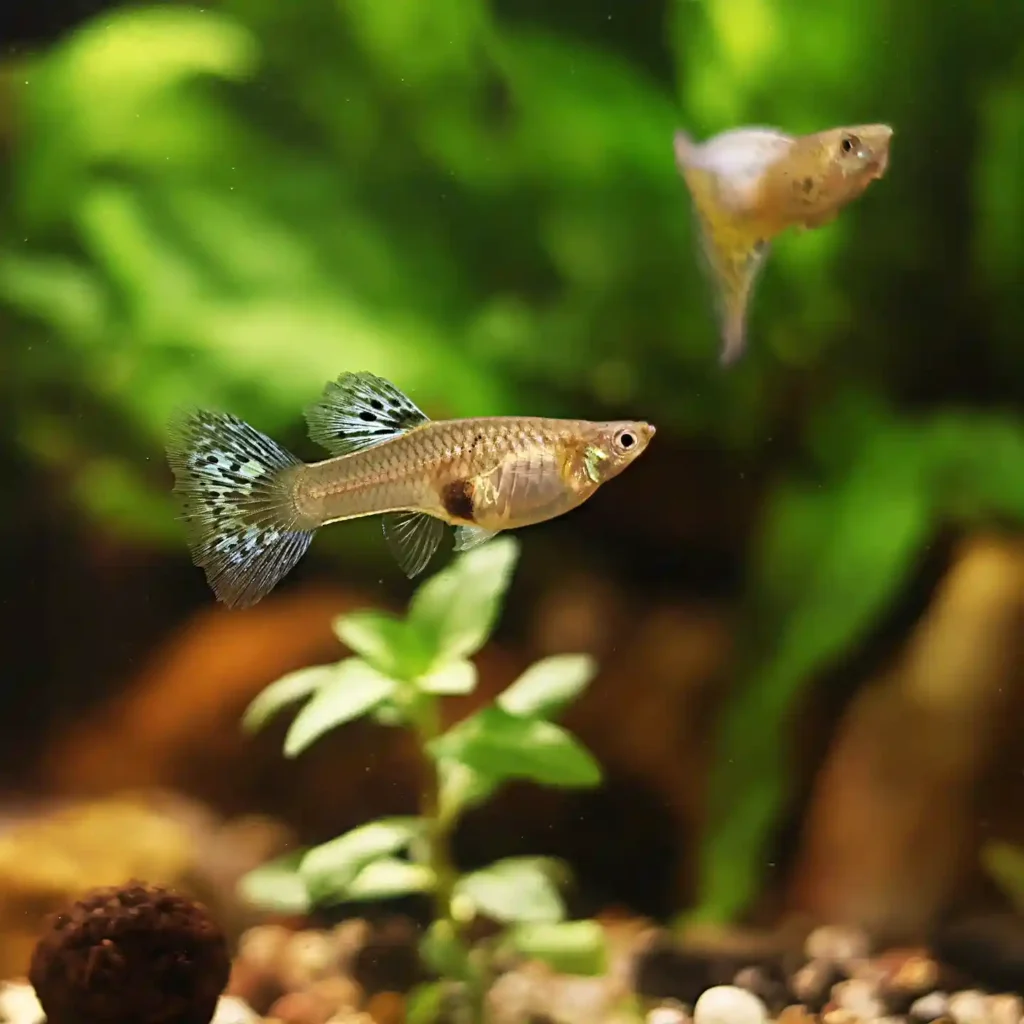
Guppies are usually the best fish for a first breeding project. They don’t require a spawning cave, nesting surface, or seasonal temperature change. Put healthy adult males and females together, and breeding will often happen without help.
A female guppy can also store sperm and use it for later broods. A female bought from a mixed store tank may give birth even if no male is present in your aquarium.
Breeding method: Livebearer
Breeding tank: 10 gallons for a temporary setup; 20 gallons or larger for a colony
Gestation: Commonly four to six weeks
Typical brood: Around 20–40 fry, though numbers vary
Parental care: None
Signs Guppies Are Ready to Breed
A male follows the female, spreads his fins, and repeatedly positions himself beside her. The female’s abdomen becomes larger as her pregnancy develops. You may also notice a dark gravid spot near the back of her belly.
Shortly before birth, the female may separate from the group and hide among plants. Her abdomen can appear box-shaped instead of gently rounded.
A large belly alone doesn’t confirm pregnancy. Constipation and illness can also cause swelling. Raised, pinecone-like scales are not a pregnancy sign and require immediate attention.
Best Breeding Setup
Keep one male with at least two or three females. This spreads the male’s attention and gives each female time to rest.
Fill part of the tank with Java moss, guppy grass, hornwort, or floating plants. The adults provide no parental care and may eat their own young. Thick plant growth gives newborn fry a chance to escape.
Use a sponge filter or cover the filter intake with a pre-filter sponge. Newborn guppies are small enough to be pulled into an uncovered intake.
Caring for Guppy Fry
Feed newborn guppies powdered fry food, finely crushed flakes, microworms, or newly hatched brine shrimp. Offer small servings several times daily rather than one large meal.
Remove leftover food and perform regular small water changes. Fry grow quickly when they receive clean water and frequent meals.
Separate young males and females before they begin reproducing. Guppies can mature surprisingly early, leaving an unprepared owner with several overlapping generations.
For more species-specific help, read the Guppy Breeding Guide and learn how to tell male and female guppies apart.
2. Endler’s Livebearers
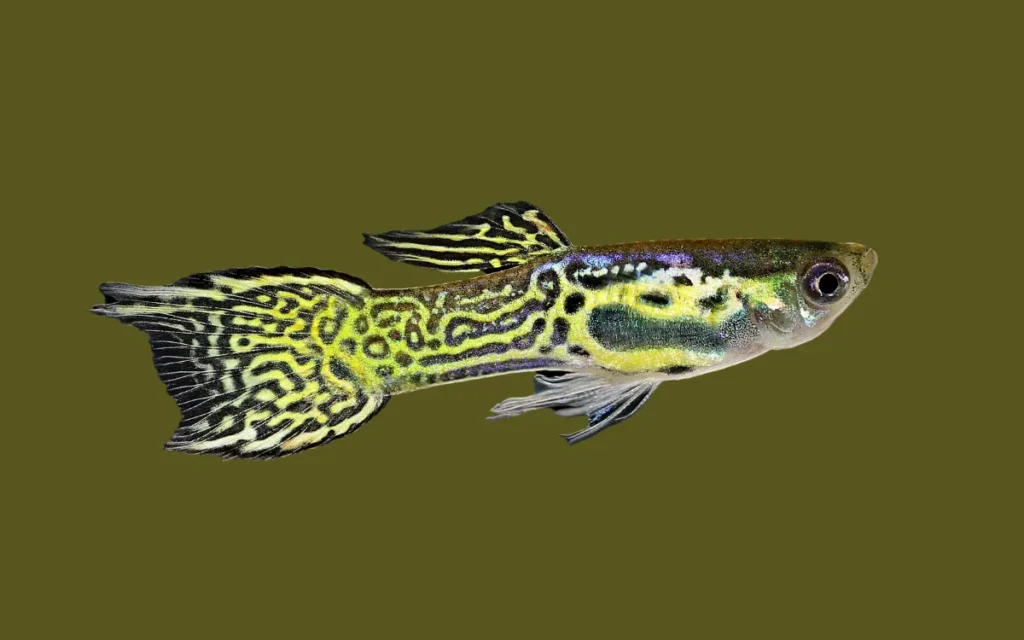
Endler’s livebearers breed as readily as guppies but stay smaller. Their modest size makes them suitable for aquarists who cannot dedicate a large tank to a breeding group.
Endlers and guppies are closely related and can produce fertile hybrid young. Keep them in separate tanks if you want to maintain a pure Endler strain.
Breeding method: Livebearer
Breeding tank: 10–20 gallons
Gestation: About three to four weeks
Typical brood: Often 10–30 fry
Parental care: None
Signs Endlers Are Ready to Breed
Males display their colors, dart around females, and attempt to mate throughout the day. A pregnant female becomes noticeably fuller and develops a darker area near the rear of her abdomen.
A female close to giving birth may avoid active males and spend more time near plants or quiet corners.
Best Breeding Setup
Keep more females than males. One male for every two or three females works well because males can be persistent.
Add fine plants and floating roots throughout the tank. Endler fry are tiny but can usually eat powdered commercial fry food from birth.
Avoid using a small breeder box for long periods. Limited water movement and space can stress the female. A planted breeding tank or separate maternity tank is safer.
Caring for Endler Fry
The adults sometimes ignore the fry when well-fed, but you shouldn’t depend on this. Dense plants or a separate grow-out tank will save more young.
Offer powdered flakes, microworms, and baby brine shrimp. Sort the juveniles by sex as they mature if you want to control the population or select particular colors.
The largest problem isn’t getting Endlers to breed. It’s preventing the colony from filling every available inch of the aquarium.
3. Platies
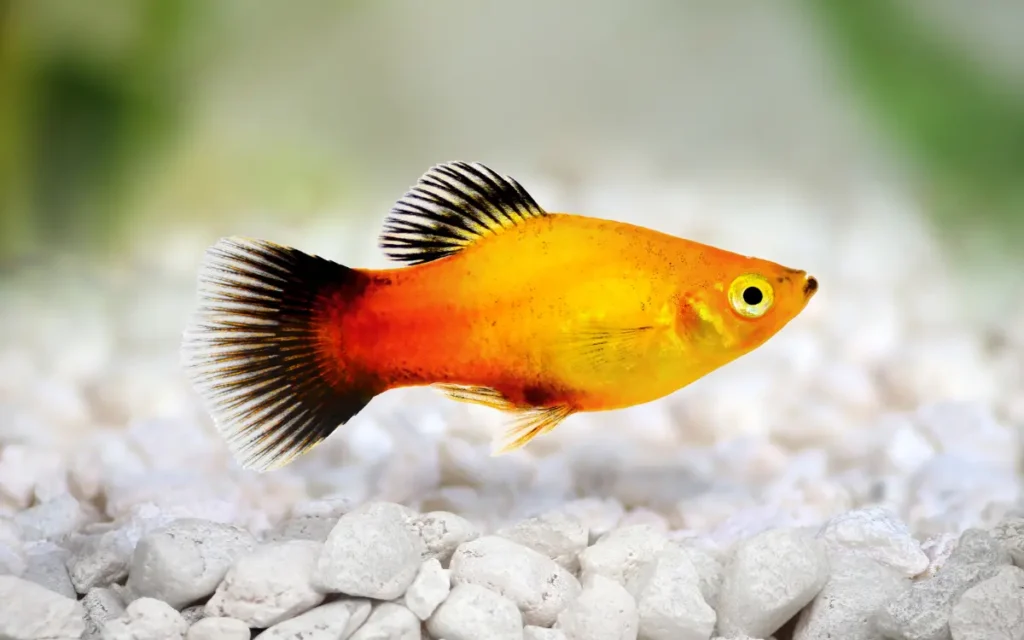
Platies are peaceful livebearers with larger newborn fry than Endlers. They tolerate a broad range of suitable aquarium conditions and usually reproduce without a dedicated breeding tank.
Their calm nature makes them easier to manage than highly territorial egg layers. Still, adult platies may eat any newborns they find.
Breeding method: Livebearer
Breeding tank: 20 gallons or larger
Gestation: Roughly four weeks
Typical brood: Around 20–50 fry
Parental care: None
Signs Platies Are Ready to Breed
A male uses his pointed anal fin, called a gonopodium, to fertilize the female. He may follow her closely and repeatedly approach from behind.
The female develops a rounder abdomen as the fry grow. A gravid spot may be visible, although it is harder to see in dark or heavily patterned platies.
Close to delivery, the female may rest near plants, hide behind decorations, or become less interested in the group.
Best Breeding Setup
Keep one male with two or three females in a well-planted aquarium. A 20-gallon tank offers more stable water and space for the adults than a small breeding box.
Provide Java moss, water sprite, guppy grass, or floating plants with long roots. You can move the female to a separate cycled tank before delivery, but transferring her too late may cause stress.
Caring for Platy Fry
Platy fry are large enough to accept crushed flakes, powdered fry food, and baby brine shrimp. Feed lightly several times daily.
Remove the female after she has finished giving birth if you are using a separate breeding tank. She may begin eating the fry once delivery ends.
Female platies can store sperm, so separating males and females may not stop births immediately. Plan for several broods rather than just one.
4. Mollies
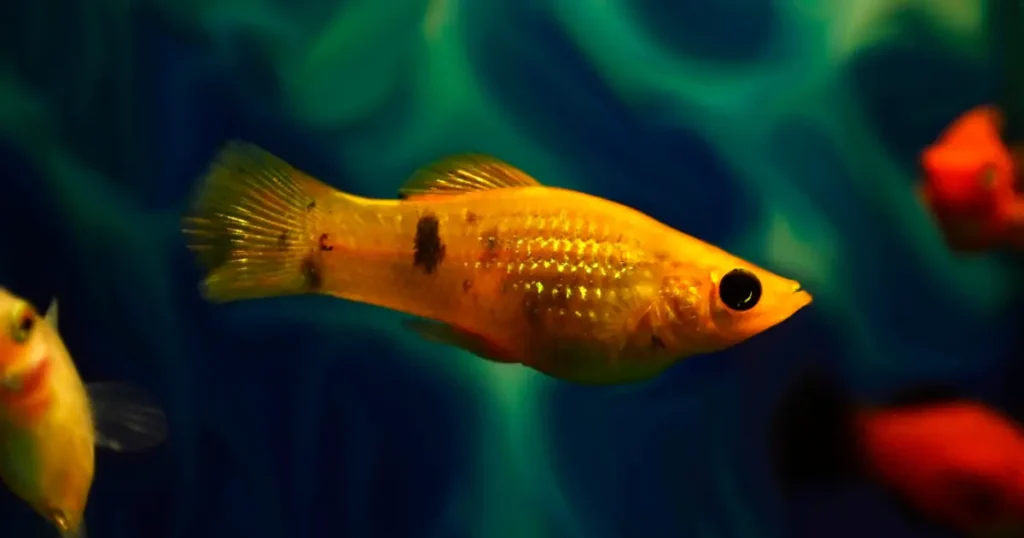
Mollies are productive livebearers, but they need more room and cleaner water than guppies or Endlers. They are easy to breed when kept in suitable conditions, yet they are not the best choice for a cramped aquarium.
The newborn fry are fairly large and begin swimming immediately. This makes feeding easier, although the adults may still hunt them.
Breeding method: Livebearer
Breeding tank: 30 gallons or larger
Gestation: Commonly four to six weeks
Typical brood: Around 20–60 fry, sometimes more
Parental care: None
Signs Mollies Are Ready to Breed
The male follows females and uses his gonopodium for mating. Pregnant females develop a wide abdomen that becomes more pronounced as delivery approaches.
A female may hide, remain near the heater, or search for a sheltered area shortly before giving birth. These behaviors can also occur when water conditions are poor, so test the water rather than assuming every hidden molly is pregnant.
Best Breeding Setup
Use a roomy, mature aquarium with steady filtration. Mollies produce a fair amount of waste, and a growing group can overwhelm a small filter quickly.
Keep several females per male. Add tall plants, floating cover, and dense clumps where newborns can disappear from the adults.
Don’t add aquarium salt automatically. Some mollies tolerate or prefer harder, mineral-rich water, but their needs depend on the strain and how they were raised. Sudden changes in salinity can do more harm than good.
Caring for Molly Fry
Molly fry accept powdered flakes, baby brine shrimp, and finely crushed algae-based foods. A varied diet suits their omnivorous feeding habits.
Watch the stocking level closely. One female can produce dozens of babies, and repeated broods may leave the aquarium badly overcrowded.
Poor water quality, rapid temperature swings, and underfeeding can leave the fry thin or slow-growing. Increase filtration and water-change frequency as the group grows.
5. Swordtails
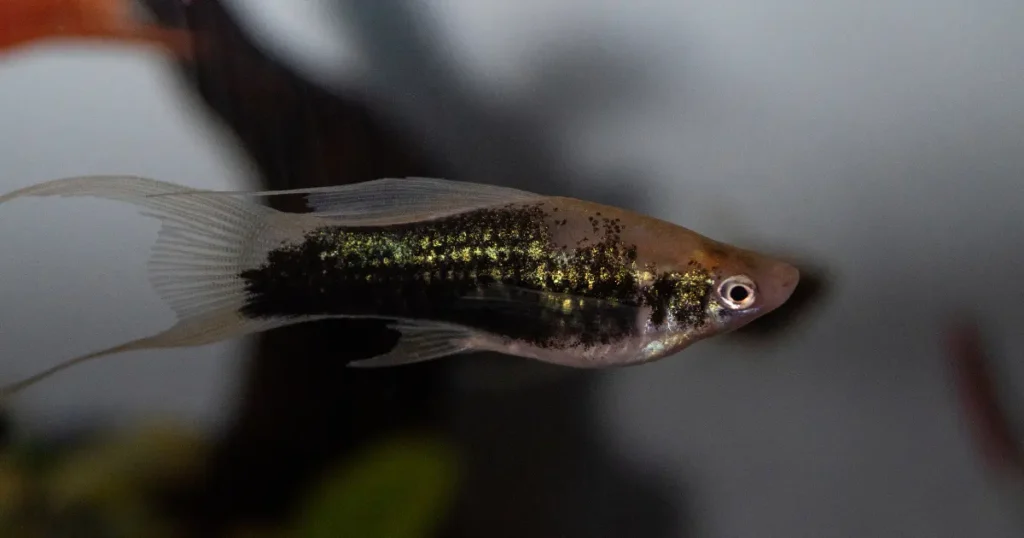
Swordtails are active livebearers that reproduce easily in a suitable aquarium. Their fry are large enough to accept common fry foods, but the adults need more swimming space than guppies and platies.
Adult males have the long lower tail extension that gives the fish its common name. They can become competitive, especially when too many males are placed in a small tank.
Breeding method: Livebearer
Breeding tank: 30 gallons or larger
Gestation: About four weeks
Typical brood: Often 20–80 fry
Parental care: None
Signs Swordtails Are Ready to Breed
Males display beside females, follow them around the tank, and attempt to mate. The female develops a fuller abdomen and may seek cover as delivery gets closer.
Aggressive chasing isn’t harmless courtship. If one female cannot eat or leave a hiding place, separate the male or add more visual barriers.
Best Breeding Setup
Use a long aquarium with open swimming room and dense planting around the edges. Keep one male with several females to reduce pressure on any individual fish.
A fitted lid is helpful because swordtails are strong swimmers and may jump. Keep water conditions steady and avoid moving a heavily pregnant female repeatedly.
Caring for Swordtail Fry
Provide dense plants or move the fry to a separate grow-out tank. The adults offer no care and may eat the newborns.
Feed crushed flakes, prepared fry food, and baby brine shrimp. Swordtail fry grow quickly but need room as their bodies and fins develop.
Juveniles can also begin breeding before reaching full adult size. Separate the sexes early if you don’t want uncontrolled reproduction.
6. Convict Cichlids
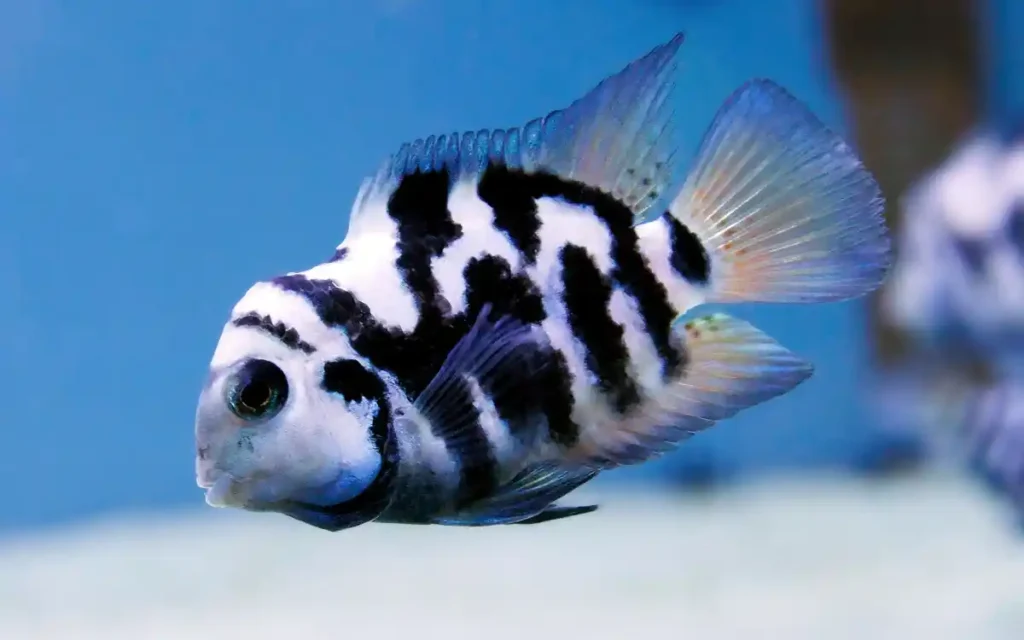
Convict cichlids are among the easiest egg-laying aquarium fish to breed. A compatible pair may spawn repeatedly with little encouragement and will guard their eggs and fry.
That doesn’t make them an easy community fish. Breeding convicts may attack anything that enters their territory, including fish much larger than themselves.
Breeding method: Cave or substrate spawner
Breeding tank: At least 30 gallons for a pair
Typical spawn: Around 100–300 eggs
Parental care: Both parents
Main concern: Strong territorial aggression
Signs Convict Cichlids Are Ready to Breed
The pair begins staying together, cleaning a cave or flat surface, and driving other fish away. They may dig pits in the substrate and move gravel from the chosen nesting area.
Females often become more colorful around the abdomen. The pair’s aggression usually rises sharply before eggs appear.
Best Breeding Setup
A species-only tank is safest. Provide clay pots, rock caves, or other secure shelters with entrances large enough for the fish.
Arrange decorations so they break lines of sight. This helps the weaker partner escape if the pair begins fighting.
Don’t place breeding convicts in a peaceful community and expect the other fish to stay outside an invisible boundary. The parents may defend most of the tank.
Egg and Fry Care
The female commonly tends the eggs while the male guards the territory. After hatching, the parents may move the wrigglers into a pit. Both adults then guide and defend the free-swimming fry.
Feed the fry baby brine shrimp, microworms, or finely powdered food. Watch the parents carefully. A bonded pair can suddenly turn on one another, particularly in a small tank.
Before breeding convicts, find people or stores willing to accept the juveniles. They are easy to produce and often difficult to rehome.
7. Kribensis
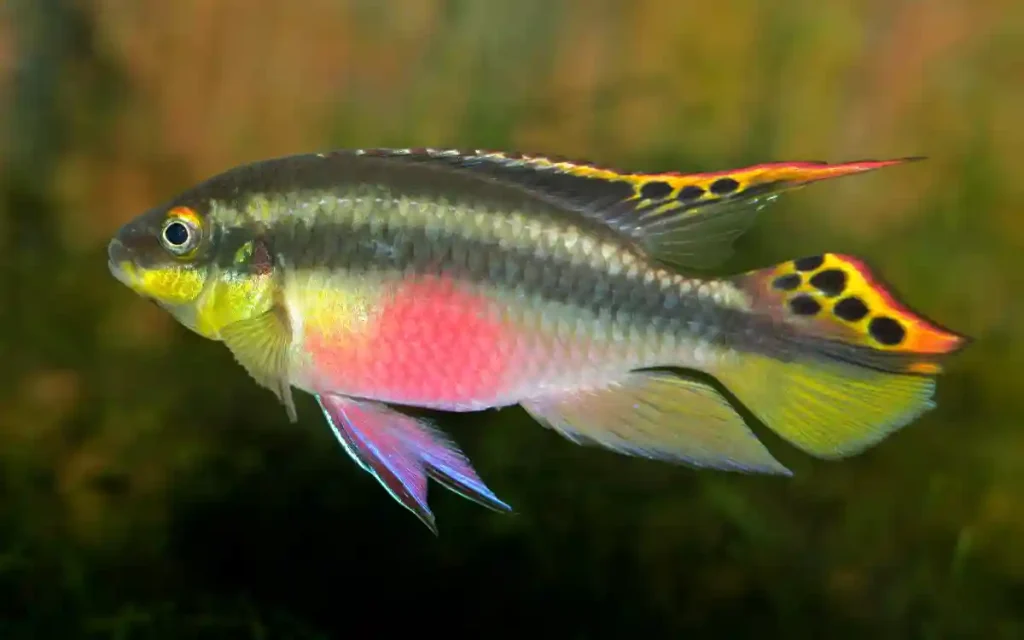
Kribensis are small African cichlids that lay eggs inside caves. They show strong parental care and may lead a group of fry around the aquarium once the young become free-swimming.
They are less extreme than convict cichlids, but a breeding pair will still defend its territory from tank mates.
Breeding method: Cave spawner
Breeding tank: 20 gallons or larger
Typical spawn: Around 40–100 eggs
Parental care: Both parents
Main concern: Aggression toward bottom-dwelling fish
Signs Kribensis Are Ready to Breed
A receptive female displays her rounded, brightly colored belly to the male. The pair may shake, curve their bodies, inspect caves, and remove substrate from an entrance.
Once eggs are laid, the female may disappear into the cave for long periods. The male usually remains outside and guards the surrounding area.
Best Breeding Setup
Provide more than one cave so the pair can choose a site. Small clay pots, coconut caves, and rock shelters work well.
A sand or fine-gravel substrate lets the fish dig without injuring themselves. Plants and wood can divide the aquarium into clear territories.
Avoid keeping breeding kribensis with slow bottom dwellers. Corydoras and similar fish may repeatedly enter the guarded area and receive serious injuries.
Egg and Fry Care
The female guards and fans the eggs inside the cave. After hatching, the parents lead the fry out as a group.
Offer baby brine shrimp, microworms, or finely powdered fry food. Place the food close to the group so the young can reach it before faster tank mates.
Don’t remove one parent unless fighting becomes dangerous. Both adults commonly help care for the young, though individual pairs can behave differently.
8. White Cloud Mountain Minnows
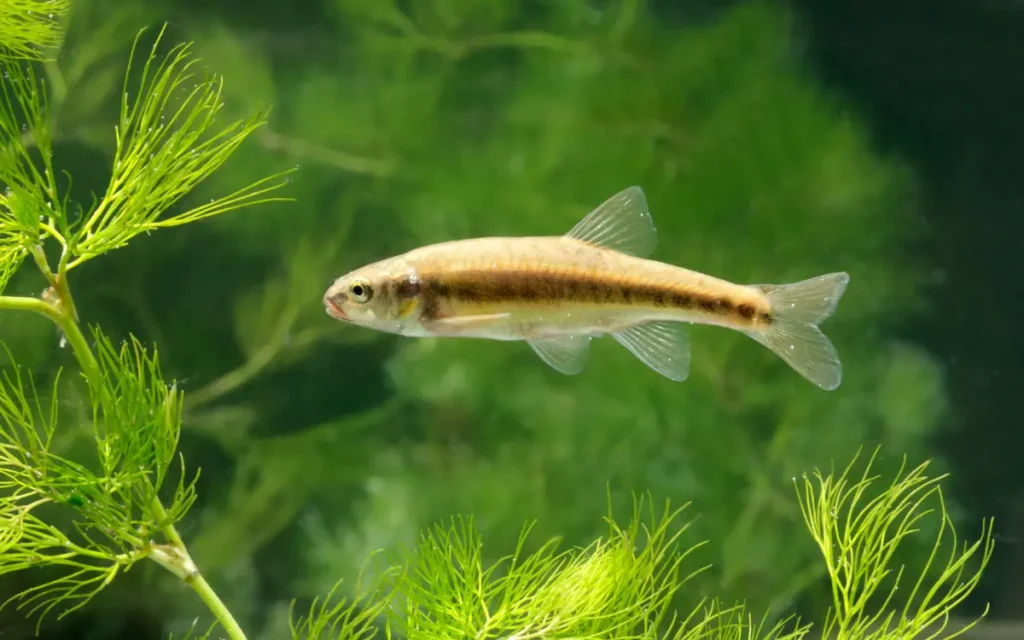
White cloud mountain minnows are hardy egg scatterers that breed in cooler water than most tropical fish. Mature fish may spawn regularly among moss, fine plants, or spawning mops.
They don’t guard their eggs, but well-fed adults may be less aggressive egg eaters than many barbs and danios.
Breeding method: Egg scatterer
Breeding tank: 15–20 gallons
Typical spawn: Small batches produced over several days
Parental care: None
Main concern: Tiny first foods
Signs White Clouds Are Ready to Breed
Males display their fins, circle females, and compete for attention. Females carrying eggs appear fuller through the abdomen.
Spawning usually occurs among fine plants. It can be easy to miss because the eggs are small and don’t form a neat cluster.
Best Breeding Setup
Use Java moss, artificial spawning mops, or other fine material. A mature planted aquarium can sometimes support a few surviving fry without intervention.
For better numbers, place a conditioned pair or small group in a separate spawning tank. Remove the adults after several days.
White clouds generally suit unheated or lightly heated setups, depending on room temperature. Don’t raise the temperature simply because warmer water triggers other fish.
Egg and Fry Care
The eggs hatch into very small fry that need tiny food. Begin with infusoria or a prepared liquid or powdered food intended for the smallest fry.
Move to microworms and newly hatched brine shrimp as the fry grow. Keep water movement gentle and avoid sudden large water changes.
A mature sponge filter can provide both safe filtration and small organisms for fry to pick at.
9. Zebra Danios
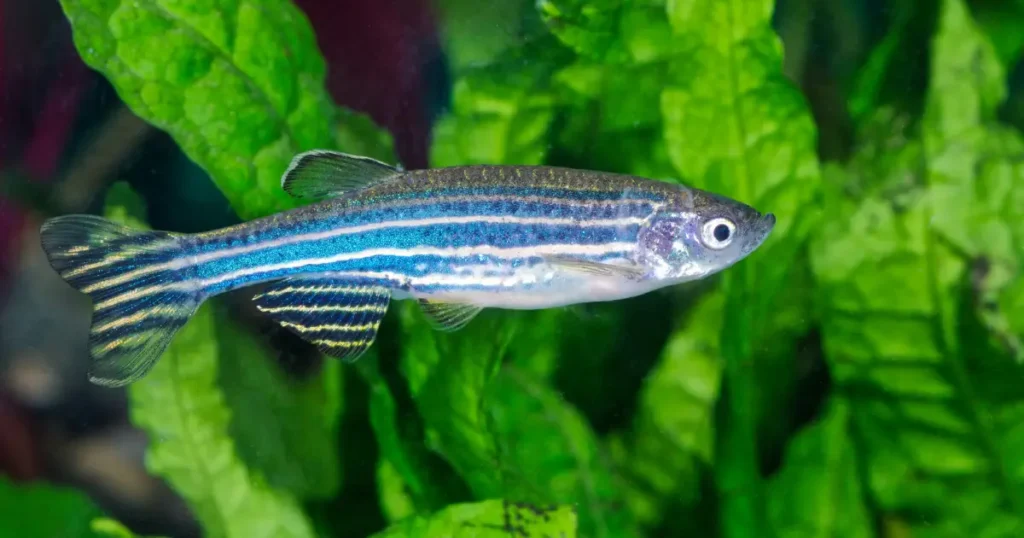
Zebra danios are active, hardy egg scatterers. Healthy adults often spawn at first light, but they will quickly eat any eggs they can reach.
The main job isn’t persuading zebra danios to breed. It is getting the eggs away from the adults.
Breeding method: Egg scatterer
Breeding tank: 10 gallons for spawning; 20 gallons or larger for the adult group
Typical spawn: Often several hundred eggs from a mature female
Parental care: None
Main concern: Egg predation
Signs Zebra Danios Are Ready to Breed
Females carrying eggs develop a broad, rounded abdomen. Males usually look slimmer and may chase females more actively in the morning.
A breeding-ready group may gather over plants or the chosen spawning area soon after the tank lights come on.
Best Breeding Setup
Cover the tank floor with clean marbles, coarse rounded gravel, or a spawning mesh raised above the bottom. The eggs fall through the gaps where the adults cannot reach them.
You can also use a thick spawning mop, but some eggs may remain accessible. Add conditioned adults in the evening and check for eggs the following morning.
Remove the adults after spawning. Don’t leave them in the tank while waiting for the eggs to hatch.
Egg and Fry Care
Keep lighting low around newly laid eggs and remove any that turn opaque or develop fungus. Maintain gentle water movement without allowing the eggs to dry or tumble roughly.
Newly hatched fry are tiny and need infusoria or fine commercial fry food at first. Introduce microworms and baby brine shrimp once they can handle larger prey.
Feed sparingly. An overfed fry tank can develop dangerous ammonia faster than many beginners expect.
Read also: 10 Types of Danios: Size, Tank Needs and Care
10. Medaka Ricefish
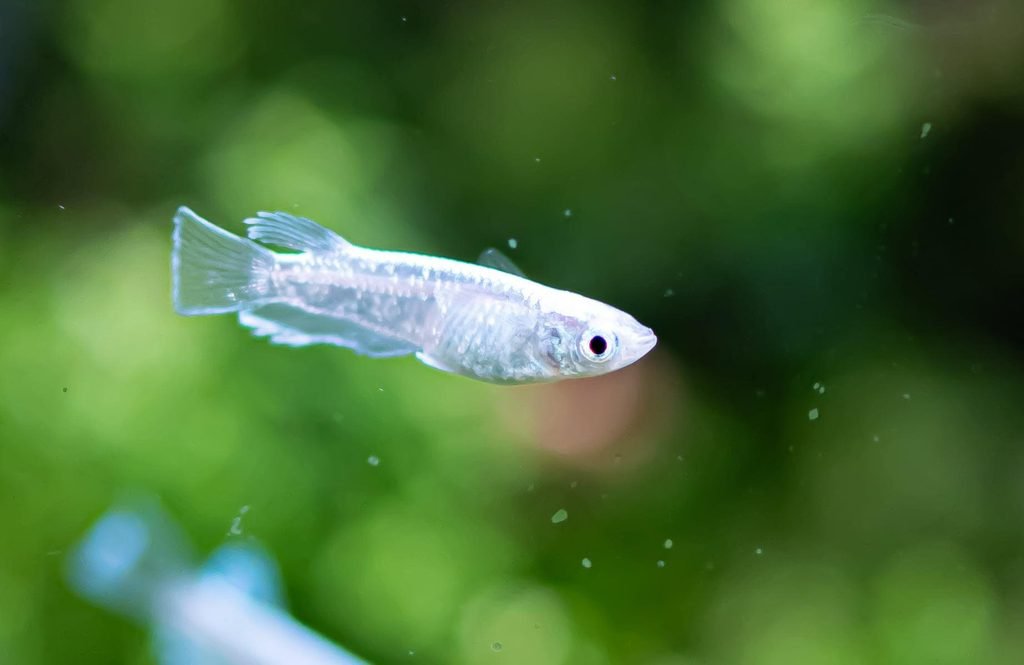
Medaka ricefish are hardy, peaceful fish that produce visible eggs. The female may carry a cluster near her vent before brushing against plants or spawning mops and attaching the eggs.
Their eggs are large enough to see and move, making Medaka a good introduction to breeding egg-laying fish.
Breeding method: Plant spawner
Breeding tank: 10–20 gallons
Typical spawn: Small batches laid regularly
Parental care: None
Main concern: Adults and older fry eating young
Signs Medaka Are Ready to Breed
The male follows the female and displays beside her. A female carrying eggs may have a clear cluster hanging beneath her body early in the day.
She later deposits the eggs on plant roots, moss, or a spawning mop. Check these areas daily during an active breeding period.
Best Breeding Setup
Use floating spawning mops or plants with hanging roots. This lets you remove the eggs without disturbing the adults.
Move the mop to a separate hatching container containing water from the main aquarium. Replace it with a clean mop so the adults can continue spawning.
Keep a secure lid because ricefish can jump, particularly when frightened.
Egg and Fry Care
Inspect the eggs and remove any that become cloudy or develop fungus. Once the fry hatch, provide infusoria or very fine fry food.
Separate larger fry from new hatchlings. Older Medaka fry may eat siblings that are small enough to fit in their mouths.
Don’t crowd the hatching container. Transfer growing juveniles to a filtered grow-out tank before water quality becomes difficult to control.
11. Bristlenose Plecos
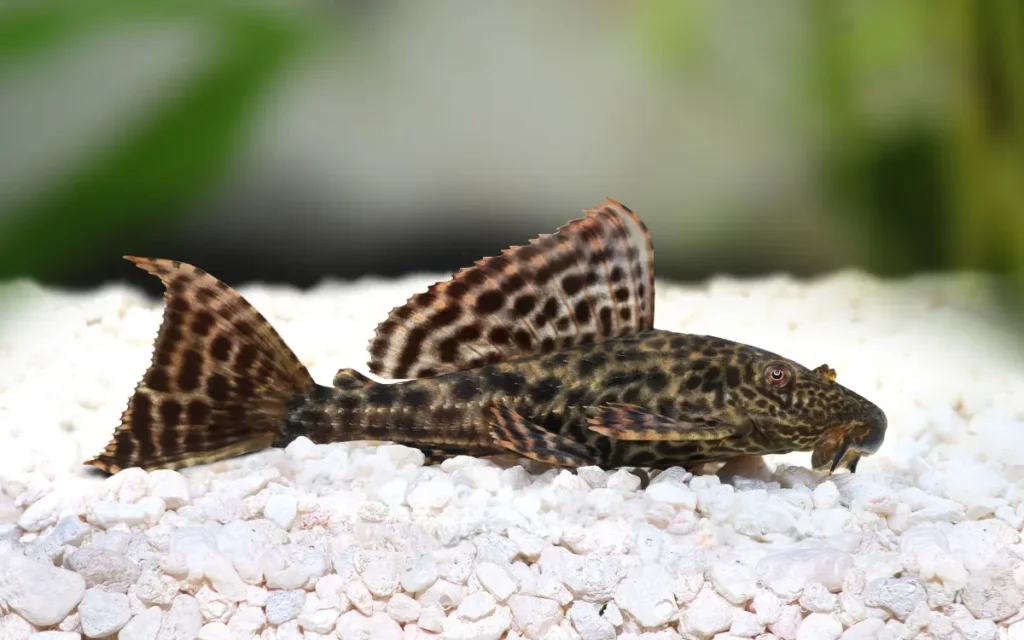
Bristlenose plecos breed inside caves rather than scattering eggs. Once a male accepts a cave and attracts a female, he takes responsibility for guarding and fanning the egg cluster.
The adults are simple to spawn in a mature aquarium, but a successful batch can produce many hungry juveniles.
Breeding method: Cave spawner
Breeding tank: 30 gallons or larger
Typical spawn: Around 20–100 eggs
Parental care: Male guards the eggs
Main concern: Feeding and housing juveniles
Signs Bristlenose Plecos Are Ready to Breed
A mature male develops more noticeable facial bristles and spends time claiming a narrow cave. He may clean the inside and chase other plecos away.
A female ready to spawn becomes fuller through the abdomen. If she accepts the cave, she enters and deposits a cluster of eggs before leaving.
Best Breeding Setup
Provide several pleco caves with narrow entrances. The cave should allow the male to block the opening while still leaving room around the egg cluster.
Include driftwood, shaded areas, and strong filtration. Bristlenose plecos produce considerable waste, particularly when numerous juveniles begin feeding.
Avoid repeatedly lifting or moving an occupied cave. A frightened male may abandon the eggs.
Egg and Fry Care
The male fans the eggs and removes damaged ones. Once the young have used their yolk sacs and leave the cave, offer soft algae-based foods, quality sinking wafers, and suitable vegetables.
Remove uneaten vegetables before they rot. A tank full of juvenile plecos can foul the water quickly.
Provide food in several locations so smaller young aren’t pushed away. Make sure you have space or buyers before raising an entire batch.
12. Rosy Barbs
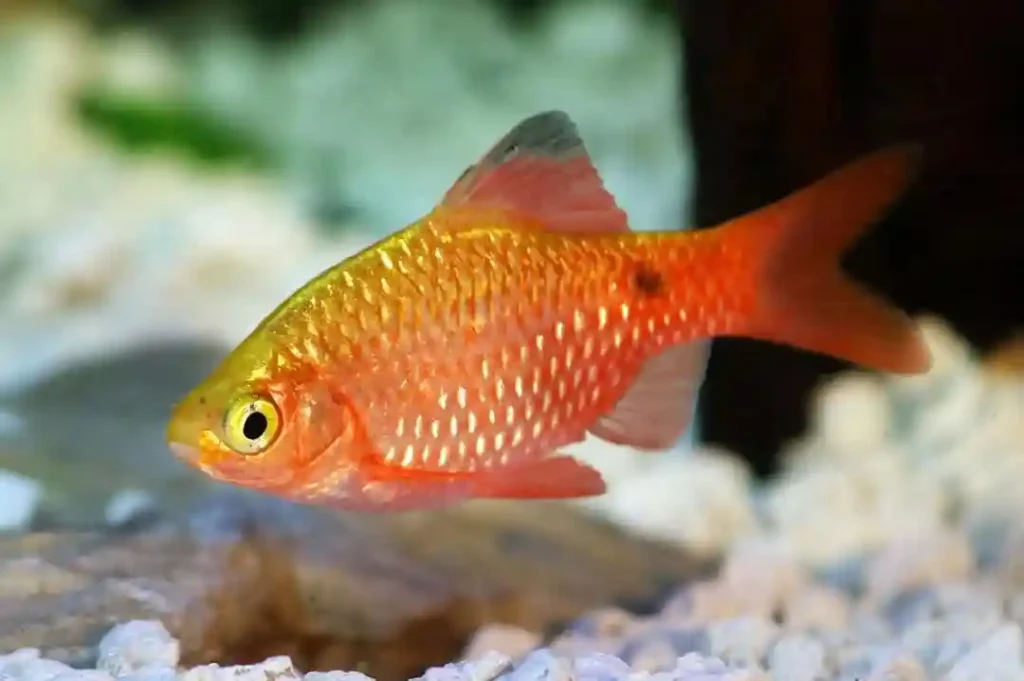
Rosy barbs are colorful, active egg scatterers. They will breed in aquariums, but they are slightly harder than livebearers because the parents eat eggs and provide no care.
A separate spawning tank gives you a much better chance of raising fry.
Breeding method: Egg scatterer
Breeding tank: 20 gallons for spawning; 30 gallons or larger for the adult group
Typical spawn: Several hundred eggs
Parental care: None
Main concern: Adults eating eggs
Signs Rosy Barbs Are Ready to Breed
Males develop stronger color and may display or chase females. A female carrying eggs looks broader and heavier through the abdomen.
The pair may move repeatedly through fine plants or a spawning mop. Eggs are scattered rather than placed in a nest.
Best Breeding Setup
Condition males and females with a varied diet before spawning. Use a tank containing fine plants, spawning mops, marbles, or mesh.
Introduce the adults in the evening and check the tank the next morning. Remove them as soon as spawning finishes.
Rosy barbs are active schooling fish. The small breeding tank should only be temporary, not their permanent home.
Egg and Fry Care
Keep the eggs in clean, gently filtered water. Remove white or fungused eggs when possible.
The newly hatched fry need infusoria or fine fry food before progressing to microworms and baby brine shrimp.
Regular small water changes support growth, but match the new water carefully. Sudden changes can harm young fry.
13. Golden Wonder Killifish
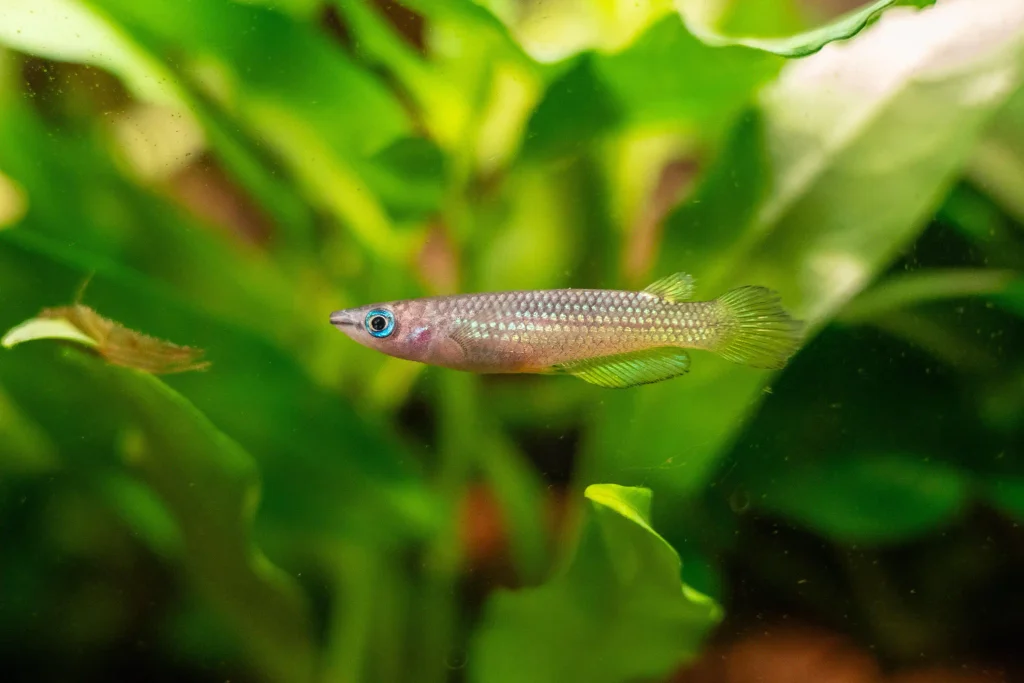
Golden wonder killifish lay eggs among plants and spawning mops. They can spawn regularly, and their relatively large eggs are easy to collect.
Raising the fry takes more work because the young may grow at different speeds. Larger juveniles can eat smaller siblings.
Breeding method: Plant spawner
Breeding tank: 20 gallons or larger
Typical spawn: A few eggs laid daily
Parental care: None
Main concern: Cannibalism among fry
Signs Golden Wonders Are Ready to Breed
The male displays his fins and follows the female through planted areas. The pair presses close together among floating plants or the spawning mop and leaves adhesive eggs behind.
A well-conditioned female may deposit eggs over several days rather than releasing them all at once.
Best Breeding Setup
Add floating plants or yarn spawning mops near the surface. Check the material daily and transfer the eggs to a separate container.
Use a fitted lid with no large openings. Golden wonders are excellent jumpers and may escape through surprisingly small gaps.
Avoid keeping them with very small fish. Their large mouths make tiny tank mates an easy meal.
Egg and Fry Care
Keep collected eggs in clean water and inspect them daily. Remove eggs that turn opaque or develop fungus.
Feed hatchlings newly hatched brine shrimp, microworms, or other food small enough for them to swallow. Their larger mouths make first feeding easier than with tiny danio fry.
Sort the fry by size as they grow. If you leave every age group together, the largest juveniles may reduce the number of smaller fish.
14. Angelfish
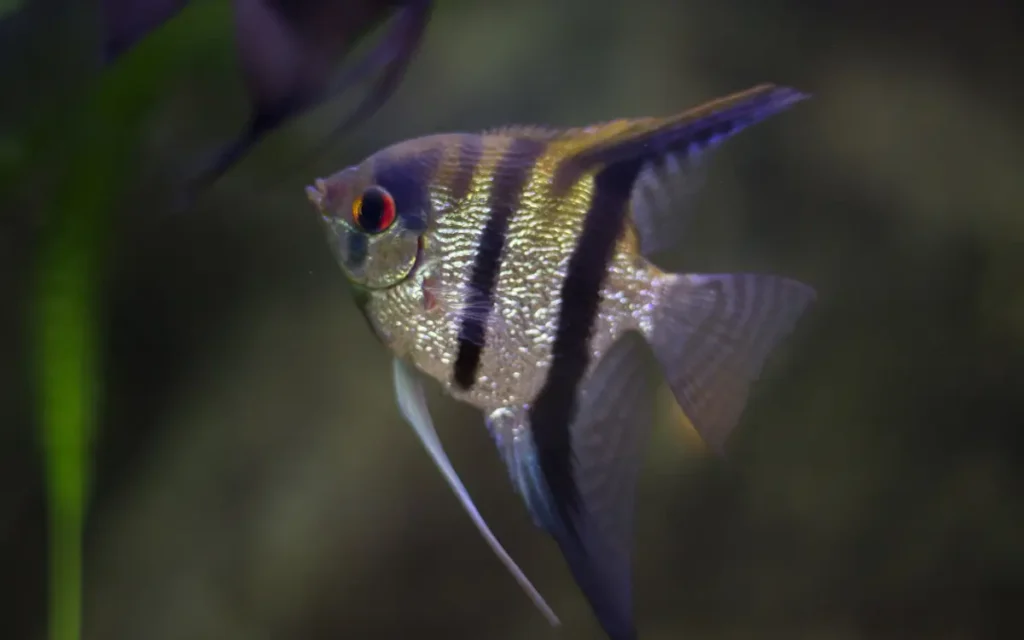
Angelfish often form pairs and lay eggs on broad leaves, slate, filter pipes, or aquarium glass. The spawning behavior is easy to recognize, but raising a full batch of fry requires patience.
Young or nervous parents may eat their eggs. Community tank residents may also pick off eggs or fry whenever the pair becomes distracted.
Breeding method: Open substrate spawner
Breeding tank: A tall 29–30-gallon tank for a proven pair
Typical spawn: Several hundred eggs
Parental care: Both parents, although behavior varies
Main concern: Egg eating and pair aggression
Signs Angelfish Are Ready to Breed
A pair begins spending time together and driving other fish from one area. Both fish repeatedly clean a broad leaf or vertical surface.
Their breeding tubes may become visible shortly before spawning. The female’s tube is usually broader and blunter, while the male’s tends to look smaller and more pointed.
Identifying the sexes outside the breeding period is difficult. Allowing a group of young angelfish to form natural pairs is often more reliable than choosing two unproven adults.
Best Breeding Setup
Give the pair a tall aquarium with a sponge filter and a removable spawning surface, such as slate. Keep the setup quiet and avoid sudden changes around the tank.
A dedicated breeding tank protects the eggs from other fish and prevents the pair from taking over a community aquarium.
Stable conditions matter more than chasing an exact universal pH or temperature. Match the conditions in which your particular angelfish are already healthy.
Egg and Fry Care
The parents clean and fan the eggs, removing infertile or damaged ones. Inexperienced pairs may eat the first several batches before learning to care for them.
After hatching, the larvae remain attached while using their yolk sacs. Begin feeding baby brine shrimp once the fry become free-swimming.
If you artificially hatch the eggs, you must supply gentle water movement and manage fungus yourself. Letting reliable parents care for the brood is often easier.
Read the complete Angelfish Care Guide before setting up a breeding pair.
15. Firemouth Cichlids
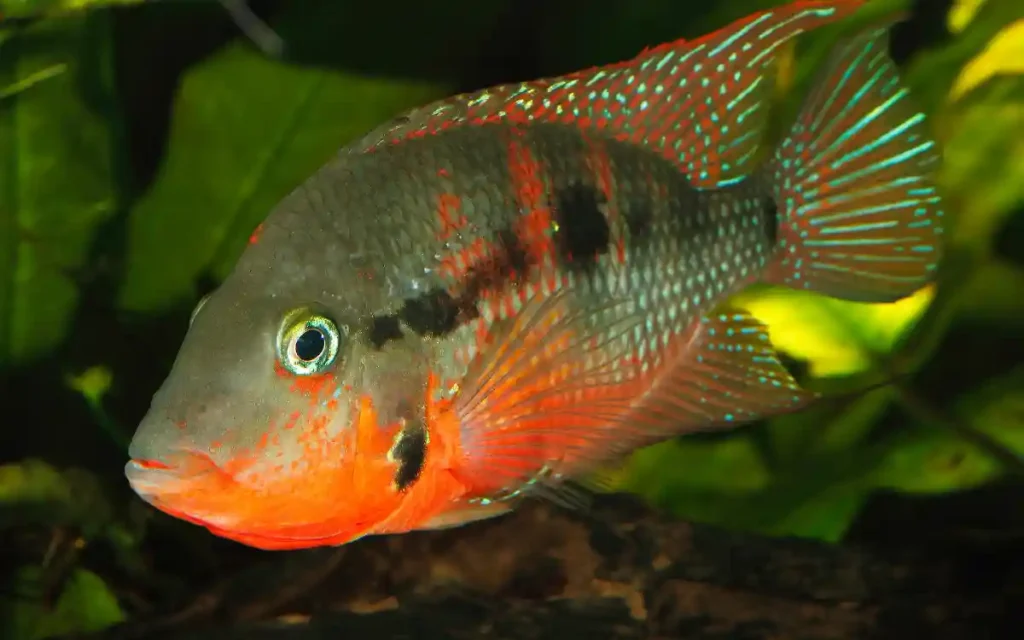
Firemouth cichlids lay eggs on flat rocks, inside caves, or on other cleaned surfaces. Both parents usually guard the eggs and care for the young.
They are not difficult to spawn once a compatible pair forms, but their adult size and breeding aggression make them better for fish keepers with some cichlid experience.
Breeding method: Substrate spawner
Breeding tank: 40 gallons or larger
Typical spawn: Several hundred eggs
Parental care: Both parents
Main concern: Territory and pair compatibility
Signs Firemouth Cichlids Are Ready to Breed
The pair claims a section of the aquarium and cleans a rock or sheltered surface. Their colors become stronger, and they may flare their gill covers at intruders.
They can also dig pits in the substrate. Aggression toward other fish usually rises as spawning approaches.
Best Breeding Setup
Use a roomy aquarium with sand, smooth rocks, caves, and visual barriers. Give the weaker fish places to leave the dominant partner’s view.
A divider should be ready in case the pair turns on one another. Simply buying one male and one female doesn’t guarantee that they will form a compatible pair.
Avoid overcrowding the aquarium with other territorial cichlids. Once eggs appear, the parents may defend a large portion of the tank.
Egg and Fry Care
The parents fan and guard the eggs. They may move newly hatched larvae into pits before the fry become free-swimming.
Offer baby brine shrimp and finely powdered food once the fry begin swimming. Keep the bottom clean without disturbing the guarded area.
Watch the adults as the brood ages. Parental care can change, and one adult may become aggressive toward the other after spawning.
Which Fish Is Best for a First Breeding Project?
Guppies are the easiest choice for most beginners. They breed without a special spawning site, and their newborn fry are large enough to accept prepared food.
Endler’s livebearers are a good choice for a smaller planted setup. Platies work well if you want larger fry and calmer adult fish. White cloud minnows are a sensible first egg layer because they breed among simple plants or spawning mops.
Convict cichlids may be easy to spawn, but I wouldn’t recommend them as a beginner’s first breeding project. Their aggression and the difficulty of rehoming large numbers of juveniles can turn an exciting spawn into a problem.
Livebearers or Egg Layers: Which Are Easier?
Livebearers are easier for most beginners. The young are born free-swimming, begin eating quickly, and don’t pass through a vulnerable egg stage inside the aquarium.
The biggest problem with livebearers is population control. Females can produce repeated broods, and the juveniles may begin reproducing before the first generation has been rehomed.
Egg layers require more preparation. Depending on the species, you may need spawning mops, caves, flat rocks, marbles, mesh, or thick plants. You must also stop the adults from eating the eggs.
Cichlids are an exception because many species guard their eggs and fry. Their parental care is fascinating to watch, but the same behavior can make them dangerous community residents. Cichlids use several reproductive methods, including substrate spawning and mouthbrooding, and many species provide extended care to their young. Animal Diversity Web provides a useful overview of these behaviors.
How to Prepare Fish for Breeding
Begin with mature, healthy adults. Don’t breed fish showing white spots, damaged fins, heavy breathing, curved bodies, unexplained swelling, or poor appetite.
Feed the adults a varied diet appropriate for their species. Frozen or live foods can help condition many fish, but they should supplement a balanced diet rather than replace it.
Keep water conditions stable and suitable for the species. Don’t copy a temperature trick from an unrelated fish. White clouds, mollies, angelfish, and killifish don’t all respond to the same breeding conditions.
The breeding tank must already be cycled. Moving a pregnant female or spawning pair into a newly filled tank exposes both adults and young to ammonia and nitrite. Review the Fish Tank Cycling Guide before preparing the breeding aquarium.
Equipment Needed for a Fish Breeding Tank
A basic breeding setup may include:
- A fully cycled aquarium
- A mature sponge filter
- A heater when the species requires one
- A fitted lid
- A thermometer
- Plants, caves, slate, mesh, marbles, or spawning mops
- A light that can be kept dim
- A container for hatching baby brine shrimp
- A separate grow-out tank
- A reliable liquid water-testing kit
A sponge filter is usually the safest choice because it provides gentle filtration without pulling fry into an intake. It also develops a surface of microorganisms that some fry will pick at.
Choose the spawning material according to the fish. A cave helps a bristlenose pleco but does little for zebra danios. Marbles protect scattered danio eggs but don’t give a kribensis pair the enclosed nesting site they want.
How to Keep More Fry Alive
Start by learning the fry’s first-food requirements. Guppy and platy fry can accept powdered foods from birth, while tiny egg-layer fry may need infusoria before they can swallow baby brine shrimp.
Feed small servings several times a day. Fry need regular food, but an oversized serving can decay and produce ammonia.
Perform frequent small water changes using water with closely matched temperature and chemistry. Siphon carefully so you don’t remove fry.
As the young grow, move them to a larger tank. A tank that safely holds 30 newborn fry may become overcrowded a few weeks later.
Separate juveniles by size when needed. This reduces competition and prevents larger killifish or cichlid fry from eating smaller siblings.
Common Fish-Breeding Mistakes
Breeding Fish in an Uncycled Tank
Clear water isn’t proof that an aquarium is ready. A new breeding tank may not contain enough beneficial bacteria to process waste from the adults and frequent fry feedings.
Using a Small Breeder Box for Too Long
A breeder box can separate fry temporarily, but it offers little swimming room. Keeping a pregnant female inside for days can cause stress.
Leaving Egg-Eating Adults in the Spawning Tank
Danios, barbs, and many other egg scatterers will eat their eggs. Remove the adults promptly unless the species provides parental care.
Feeding Fry Food That Is Too Large
Fry may starve while surrounded by food they cannot swallow. Match the first food to the size of the newborn fish’s mouth.
Overfeeding the Fry
Extra food doesn’t always mean faster growth. Uneaten food breaks down, damages water quality, and can kill an entire batch.
Producing Fish Without a Rehoming Plan
Ask local aquarium stores and fish keepers whether they accept juveniles before breeding begins. Common guppies, convicts, mollies, and bristlenose plecos may be harder to rehome than expected.
Frequently Asked Questions
What is the easiest aquarium fish to breed?
Guppies are usually the easiest. They give birth to free-swimming young and often reproduce without a separate breeding tank. FishBase reports that female guppies can store sperm, produce young at roughly four-week intervals, and may give birth to around 20–40 fry after a four-to-six-week gestation. Adults provide no parental care and may eat the young. FishBase
Can aquarium fish breed in a community tank?
Yes, but fewer young usually survive. Other fish may eat the eggs or fry, while breeding cichlids may attack tank mates that approach their nesting area.
Do I always need a separate breeding tank?
No. A densely planted aquarium may allow some livebearer fry to survive. A separate breeding tank gives you more control over egg protection, feeding, filtration, and water quality.
How do I know my fish are ready to breed?
Common signs include a fuller female, stronger male colors, courtship displays, pairing, nest building, cave cleaning, digging, or guarding a chosen area. Look for several connected signs rather than relying on one physical change.
Can a female fish give birth without a male present?
Female livebearers can store sperm after mating and use it for later broods. A guppy, platy, molly, or swordtail may therefore give birth after being moved to a female-only aquarium.
Why do my fish keep eating their eggs?
Many fish provide no parental care. Egg scatterers such as danios and barbs treat exposed eggs as food. Use mesh, marbles, thick moss, or a separate spawning tank to keep the eggs out of reach.
What should newborn fish eat?
Large livebearer fry can eat finely crushed flakes or prepared fry food. Smaller fry may require infusoria, vinegar eels, or similarly tiny food before moving to microworms and baby brine shrimp.
Is breeding betta fish easy?
No. Bettas may spawn under the right conditions, but introducing the pair can be dangerous. The fry are tiny, require frequent feeding, and eventually need more grow-out space. Young males may also require individual separation.
