
15 Egg Laying Fish for Beginner Breeders

Zebra danios, white cloud minnows, Medaka ricefish, bronze corydoras, and kribensis are some of the best egg-laying fish for beginner breeders. They spawn readily, and their breeding behavior is usually easy to recognize.
Egg layers require more planning than guppies and other livebearers. Adults may eat the eggs, newly hatched fry can be too small for regular fish food, and some breeding pairs become aggressive. You’ll need to match the breeding tank to the fish’s spawning method.
This list starts with forgiving species and moves toward fish that need more control over egg care, first foods, or parental behavior.
Beginner Egg Layers at a Glance
| Fish | Spawning method | Starting tank size | Egg care | Breeding level |
| Zebra danio | Egg scatterer | 20 gallons | Remove adults | Easy |
| White cloud minnow | Egg scatterer | 15–20 gallons | Remove adults for more fry | Easy |
| Medaka ricefish | Plant spawner | 10–20 gallons | Collect attached eggs | Easy |
| Fathead minnow | Cave or surface spawner | 20 gallons | Male guards eggs | Easy |
| Bronze corydoras | Egg depositor | 20 gallons | Move eggs | Easy |
| Cherry barb | Egg scatterer | 20 gallons | Remove adults | Easy |
| Rosy barb | Egg scatterer | 30 gallons | Remove adults | Easy |
| Tiger barb | Egg scatterer | 20–30 gallons | Remove adults quickly | Moderate |
| Buenos Aires tetra | Egg scatterer | 20 gallons | Protect eggs from adults | Moderate |
| Golden wonder killifish | Plant spawner | 20 gallons | Collect eggs | Moderate |
| Kribensis | Cave spawner | 20 gallons | Parents guard fry | Easy |
| Convict cichlid | Cave spawner | 30 gallons | Parents guard fry | Easy to spawn |
| Bristlenose pleco | Cave spawner | 30 gallons | Male guards eggs | Easy |
| Angelfish | Open-surface spawner | 29–30 gallons | Parents or breeder care for eggs | Moderate |
| Paradise fish | Bubble-nest builder | 20 gallons | Male guards nest | Moderate |
The listed tank sizes are for adult breeding fish. A separate grow-out aquarium may be needed once dozens of young fish begin growing.
1. Zebra Danios
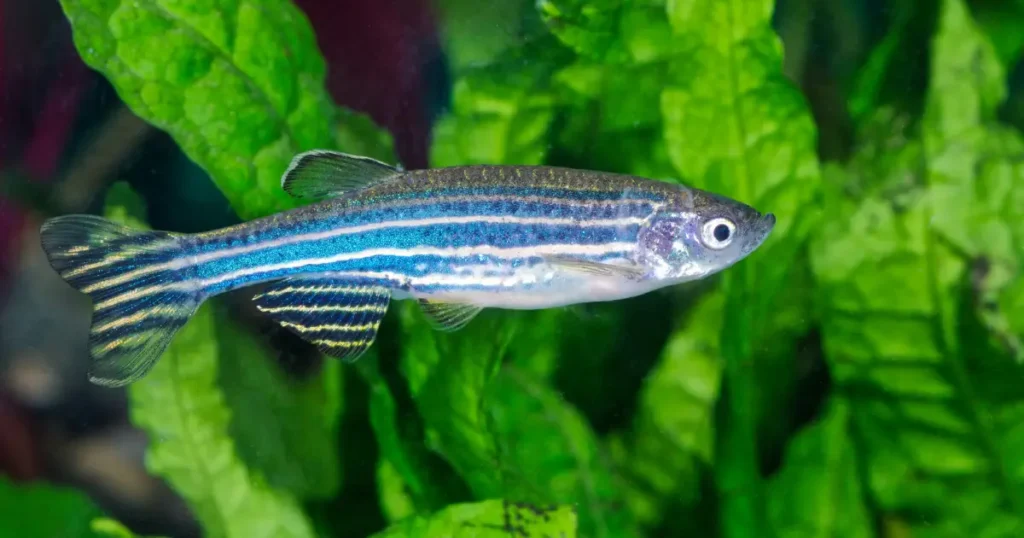
Zebra danios are one of the safest choices for your first egg-laying breeding project. Mature fish often spawn without much encouragement, and their breeding condition is easy to see.
The main problem is egg predation. Zebra danios scatter non-adhesive eggs across the bottom and begin eating them almost immediately.
Breeding method: Egg scatterer
Breeding tank: 10 gallons for spawning; 20 gallons or larger for the adult group
Parental care: None
Best first food: Infusoria followed by baby brine shrimp
Main challenge: Keeping eggs away from the adults
Signs Zebra Danios Are Ready to Spawn
Females become wider and more rounded through the abdomen as they fill with eggs. Males usually remain slimmer and may develop stronger yellow or golden tones.
Breeding-ready males chase females, usually with the most activity early in the morning. The group may repeatedly swim over plants or a chosen part of the tank floor.
Breeding Tank Setup
Place a layer of clean marbles or coarse rounded gravel across the bottom. You can also install plastic mesh above the tank floor. The openings must be large enough for eggs to fall through but too small for the adults to follow.
A dark spawning mop or fine-leaved plant can encourage spawning, but it won’t protect every egg. Mesh or marbles usually save more.
Add one full female with one or two active males in the evening. Spawning often begins soon after the lights come on the next morning.
Protecting the Eggs and Raising Fry
Remove the adults as soon as spawning finishes. Keep the tank dim because newly laid eggs can be sensitive to bright light.
The eggs commonly hatch within a few days, depending on temperature. The larvae remain attached to surfaces while using their yolk sacs. Don’t begin feeding until they become free-swimming.
Start with infusoria or a very fine commercial fry food. Move to microworms and newly hatched brine shrimp as soon as the fry are large enough.
2. White Cloud Mountain Minnows
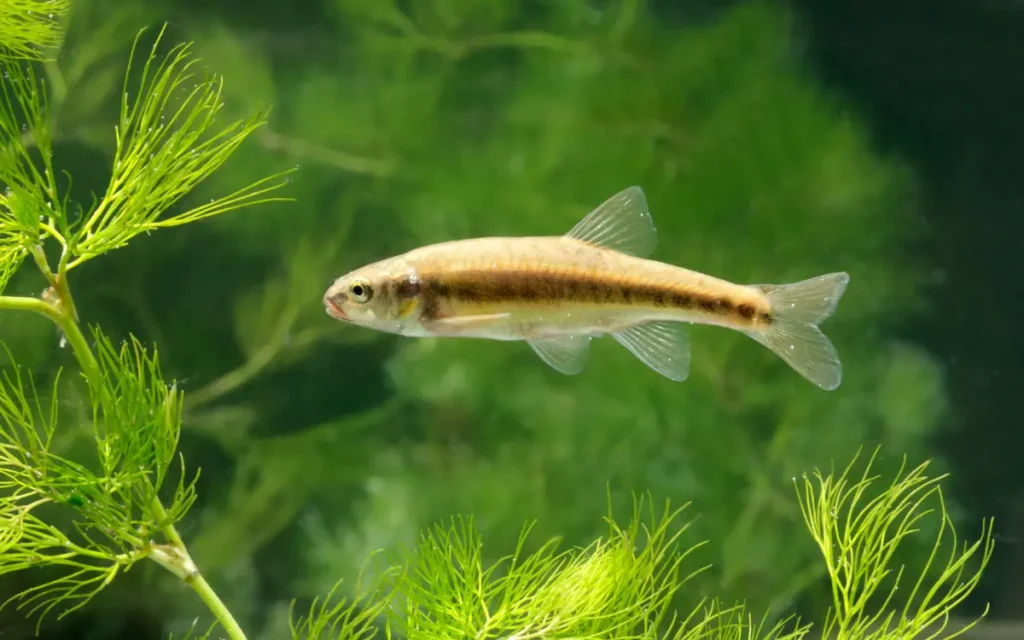
White cloud mountain minnows are small, hardy egg scatterers that breed in cooler aquariums. They may deposit a few eggs daily instead of releasing one large batch.
Adults sometimes ignore their eggs, especially in a mature planted tank. However, a separate spawning setup will produce far more fry.
Breeding method: Egg scatterer
Breeding tank: 15–20 gallons
Parental care: None
Best first food: Infusoria
Main challenge: Feeding very small fry
Signs White Clouds Are Ready to Spawn
Males spread their fins and display beside one another and in front of females. They may circle a female or guide her toward fine plants.
Females carrying eggs look fuller through the abdomen. The change is usually easiest to see when looking down at the fish.
Breeding Tank Setup
Add Java moss, fine artificial plants, or several spawning mops. A bare-bottom tank makes cleaning easier, while a planted tank provides microorganisms that the smallest fry can eat.
You can breed a pair, one female with two males, or a small group. Remove the adults after several days if you want to save as many eggs as possible.
White clouds prefer cooler conditions than many tropical community fish. Don’t raise the water temperature simply because warmer settings work for other species.
Egg and Fry Care
The small eggs may remain hidden in moss. They usually hatch within several days, but the exact time changes with water temperature.
Begin feeding the fry with infusoria or powdered food made for tiny egg-layer fry. Once they are large enough, offer microworms and baby brine shrimp.
Avoid powerful filtration. A mature sponge filter supplies gentle water movement and gives fry a surface where they can pick at tiny organisms.
3. Medaka Ricefish
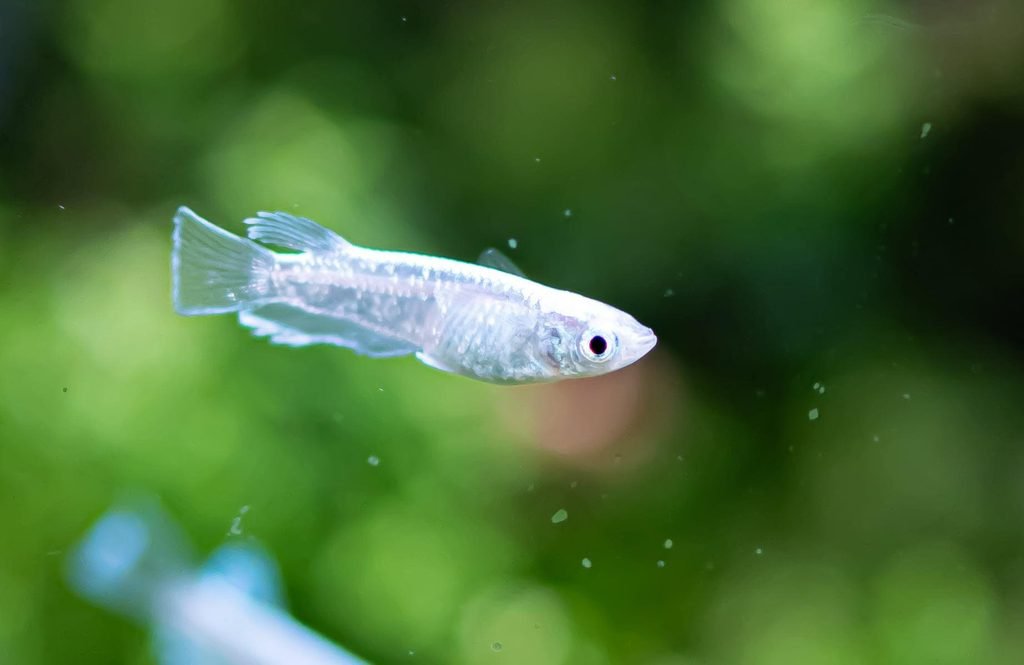
Medaka ricefish are excellent for beginners because their eggs are large, visible, and simple to collect. Instead of immediately dropping the eggs, the female carries a small cluster beneath her body before attaching it to plants.
A spawning mop lets you remove the eggs without chasing or moving the adult fish.
Breeding method: Plant spawner
Breeding tank: 10–20 gallons
Parental care: None
Best first food: Infusoria or powdered fry food
Main challenge: Adults and older fry eating hatchlings
Signs Medaka Are Ready to Spawn
Males follow and display beside females. During active breeding periods, you may see a female carrying a clear cluster of eggs near her vent early in the day.
She later brushes against plant roots or a spawning mop and attaches the eggs. Check the spawning material every morning.
Breeding Tank Setup
Hang dark yarn spawning mops near the surface or add floating plants with long roots. Dark mops make the pale eggs easier to see.
Remove the mop and place it in a small hatching aquarium containing water from the parent tank. Replace it with another mop so the adults can continue spawning.
Keep a fitted lid on both tanks. Medaka can jump when frightened.
Egg and Fry Care
Check the eggs daily. Fertile eggs remain clear or amber and gradually develop visible eyes. Remove any egg that turns white or grows fungus.
Once the fry hatch, begin with infusoria, green water, or very fine fry food. Introduce baby brine shrimp when they are large enough.
Move older fry away from fresh hatchlings. Larger Medaka fry may eat younger siblings.
4. Fathead Minnows
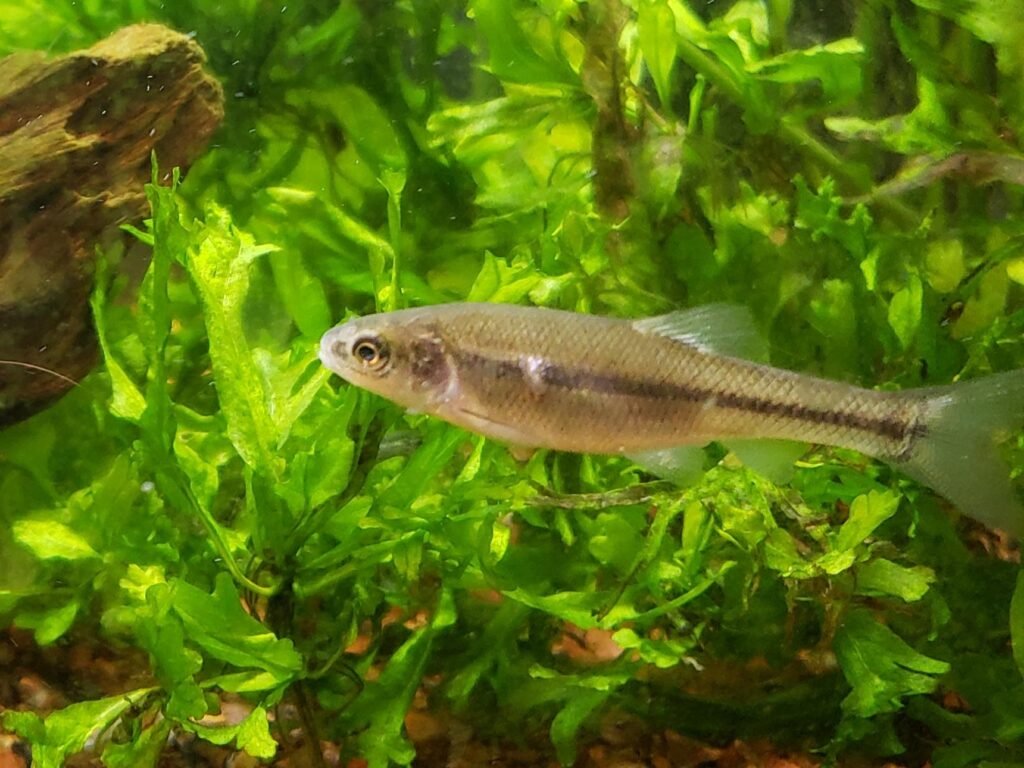
Fathead minnows breed differently from danios and barbs. The female attaches eggs to the underside of a hard surface, and the male guards and cleans them.
They are hardy and willing to reproduce, but they require more space than their feeder-fish reputation may suggest.
Breeding method: Adhesive egg layer
Breeding tank: 20 gallons or larger
Parental care: Male guards the eggs
Best first food: Infusoria followed by baby brine shrimp
Main challenge: Managing male territory
Signs Fathead Minnows Are Ready to Spawn
A mature male claims a cave, overturned pot, tile, or other covered surface. He cleans the underside and chases competing males away.
Breeding males may develop a darker body, swollen head, and small breeding tubercles. A female ready to spawn becomes noticeably fuller.
Breeding Tank Setup
Provide several covered spawning sites so males can establish separate territories. Short pieces of wide pipe, smooth tiles supported above the substrate, and overturned clay pots can work.
Use a small group with more females than males. Visual barriers reduce fighting and give females places to rest.
Avoid crowding several territorial males into a small tank.
Egg and Fry Care
The female places adhesive eggs on the ceiling of the chosen shelter. The male guards, fans, and cleans them until hatching.
You can leave the eggs with an attentive male or move the entire spawning surface to a separate hatching tank. Moving individual eggs may damage them.
Feed free-swimming fry infusoria before moving to microworms and baby brine shrimp.
5. Bronze Corydoras
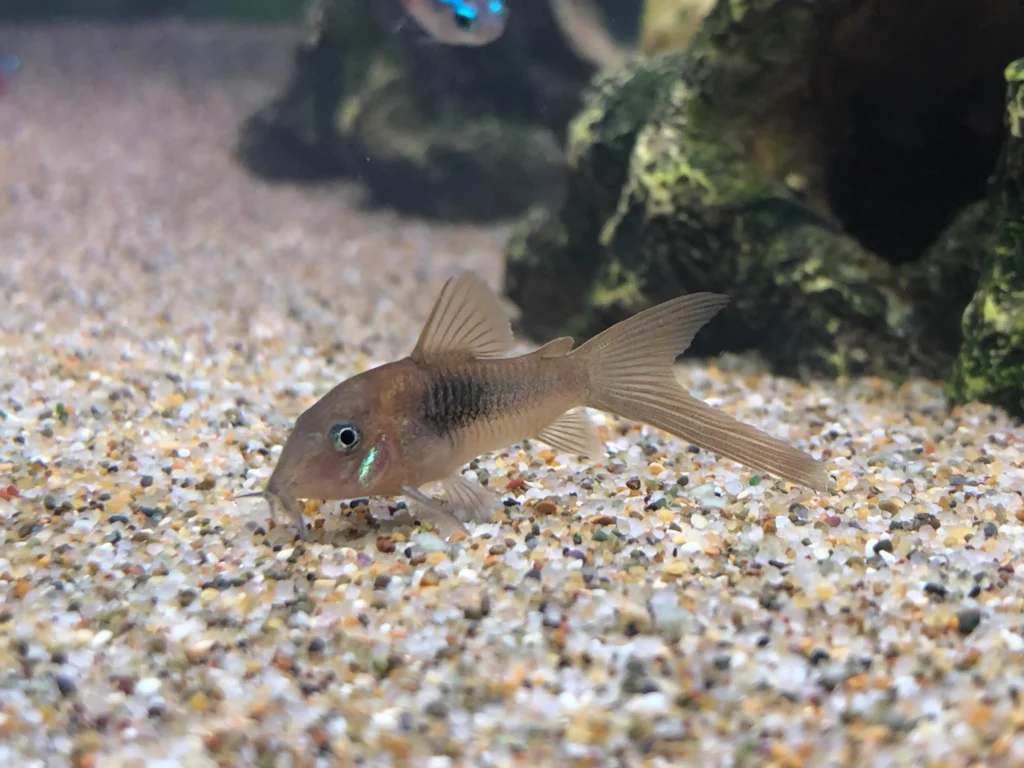
Bronze corydoras are one of the better catfish for a beginner breeding project. Their courtship is easy to recognize, and females place individual adhesive eggs on glass, plants, filters, and decorations.
The adults don’t guard the eggs and may eat them, so breeders usually collect the eggs soon after spawning.
Breeding method: Adhesive egg depositor
Breeding tank: 20 gallons or larger
Parental care: None
Best first food: Microworms and baby brine shrimp
Main challenge: Preventing fungus
Signs Bronze Corydoras Are Ready to Spawn
A female carrying eggs looks larger and broader than the males, especially when viewed from above. Males become restless and follow her around the aquarium.
During spawning, one male positions himself across the female’s head in the well-known T-position. She then holds a few eggs between her pelvic fins and presses them onto a surface.
Breeding Tank Setup
Keep a group rather than forcing one chosen pair together. Two or three males for each mature female can improve the chance of fertilization.
Condition the adults with a varied diet. Many breeders report spawning after a cooler water change, but avoid a drastic temperature drop. The replacement water must remain safe for the fish.
Use a sponge filter and provide broad plant leaves or clean glass where females can deposit eggs.
Egg and Fry Care
Gently roll eggs from the glass with a fingertip or move the plant leaf holding them. Place the eggs in a separate container with gentle aeration.
Remove white or fuzzy eggs before fungus spreads to healthy ones. Don’t overcrowd eggs in a small, unfiltered container.
Newly hatched cory fry use their yolk sacs before they begin eating. Offer microworms, finely powdered sinking food, and baby brine shrimp once they are ready.
Keep the bottom clean. Cory fry spend much of their time near the substrate, where waste and leftover food collect.
6. Cherry Barbs
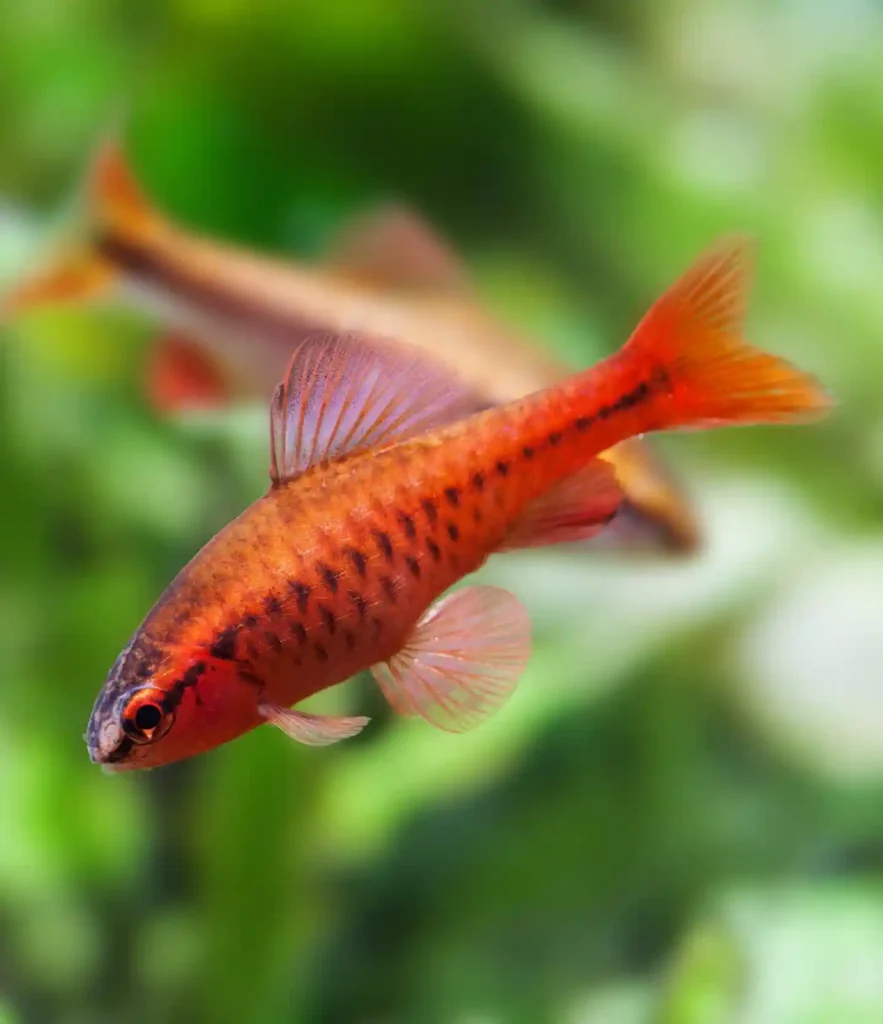
Cherry barbs are peaceful egg scatterers that breed among fine plants. They are less frantic than tiger barbs, making them easier to handle in a small breeding setup.
The adults don’t protect their eggs. Any exposed egg can quickly become food.
Breeding method: Egg scatterer
Breeding tank: 20 gallons
Parental care: None
Best first food: Infusoria
Main challenge: Locating and protecting small eggs
Signs Cherry Barbs Are Ready to Spawn
Males develop a stronger red color and display near females. A female carrying eggs looks fuller and usually has a paler, rounder body.
A male may follow the female through plants and swim beside her. Spawning often happens early in the day.
Breeding Tank Setup
Use Java moss, fine-leaved plants, or spawning mops. Add mesh or marbles if you want extra protection for falling eggs.
Condition the adults separately if possible. Place one rounded female with one colorful male in the spawning tank during the evening.
Remove both adults after spawning or within a day if eggs are visible.
Egg and Fry Care
Keep the aquarium dim while the eggs develop. Use gentle aeration and remove any eggs that turn white.
Begin feeding free-swimming fry with infusoria or fine powdered food. Change to microworms and baby brine shrimp as they grow.
Cherry barb fry don’t all grow at exactly the same speed. Make sure smaller fry can reach food without competing with larger siblings.
7. Rosy Barbs
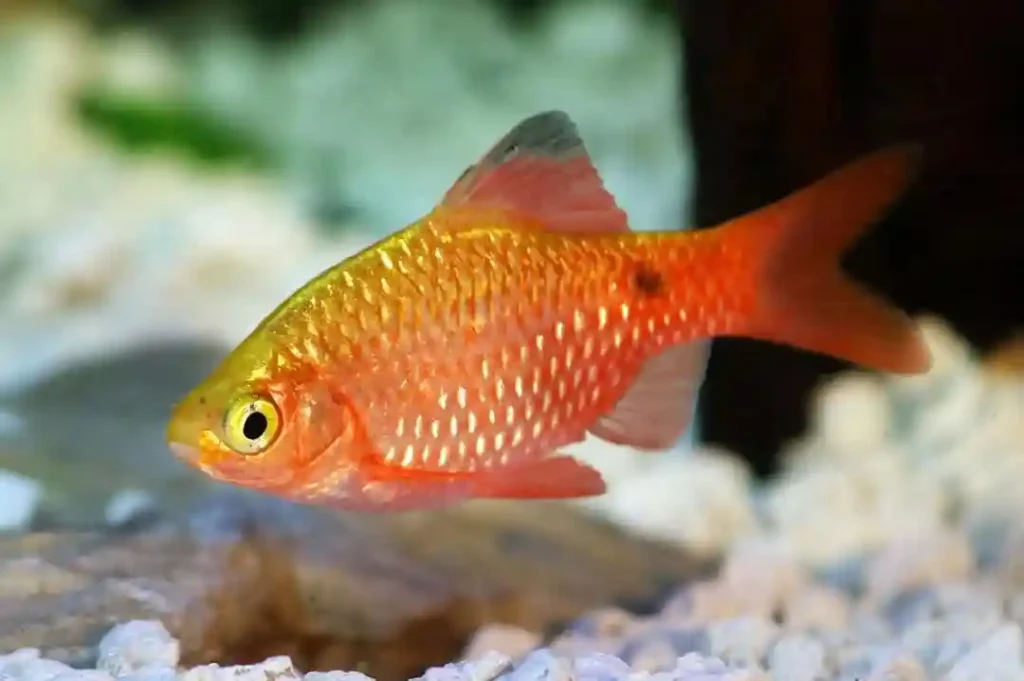
Rosy barbs are active, productive egg scatterers. A mature female can release many eggs, giving beginners a good chance of raising at least part of the brood.
They require more swimming room than cherry barbs and will eat their eggs if left in the spawning tank.
Breeding method: Egg scatterer
Breeding tank: 20 gallons for spawning; 30 gallons or larger for adults
Parental care: None
Best first food: Infusoria followed by baby brine shrimp
Main challenge: Adults finding and eating eggs
Signs Rosy Barbs Are Ready to Spawn
Breeding-ready males show stronger red or rosy coloring. Females become broad through the abdomen as they fill with eggs.
The male actively follows the female and encourages her into plants. Spawning can be energetic, so the tank needs enough open room.
Breeding Tank Setup
Cover the bottom with marbles or install mesh several inches above the base. Add spawning mops or fine plants above the protected area.
Condition males and females with a varied diet before introducing them. A pair or one female with two males can be used.
Check for eggs after the morning spawning period and remove the adults immediately.
Egg and Fry Care
Keep the eggs under low light with gentle water movement. Avoid handling them unless you need to remove a fungused egg.
The fry require tiny food when they first become free-swimming. Offer infusoria before moving to larger live foods.
Rosy barb fry grow quickly when fed well. Transfer them to a larger grow-out aquarium before the spawning tank becomes crowded.
8. Tiger Barbs
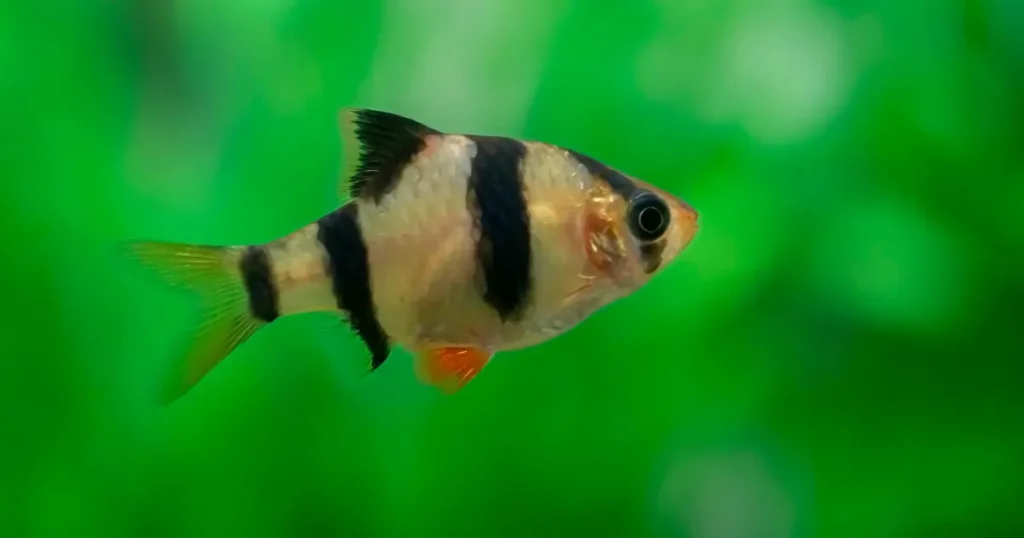
Tiger barbs spawn readily, but their speed and appetite make egg protection more difficult. They scatter eggs through plants and show no interest in caring for them.
They are a reasonable choice after you have successfully raised danios, white clouds, or cherry barbs.
Breeding method: Egg scatterer
Breeding tank: 20 gallons for spawning
Parental care: None
Best first food: Infusoria
Main challenge: Removing the adults at the right time
Signs Tiger Barbs Are Ready to Spawn
Females become round and heavy through the abdomen. Males develop stronger colors around the nose and fins and may chase females intensely.
Chasing alone doesn’t confirm breeding. A female that is constantly hiding, breathing rapidly, or missing meals may be stressed.
Breeding Tank Setup
Use mesh, marbles, or a dense layer of spawning material. Tiger barbs actively search for food, so a light covering of plants may not save enough eggs.
Place a conditioned pair in the breeding tank during the evening. Spawning commonly begins the following morning.
Remove the adults as soon as the eggs have been released. Don’t wait until the end of the day.
Egg and Fry Care
Keep the tank dim and use gentle aeration. Remove cloudy eggs before fungus spreads.
Begin with infusoria when the fry become free-swimming. Introduce baby brine shrimp and microworms after the fry have grown.
Tiger barb juveniles are active and need more space as they mature. Move them to a longer grow-out tank and maintain strong water quality.
9. Buenos Aires Tetras
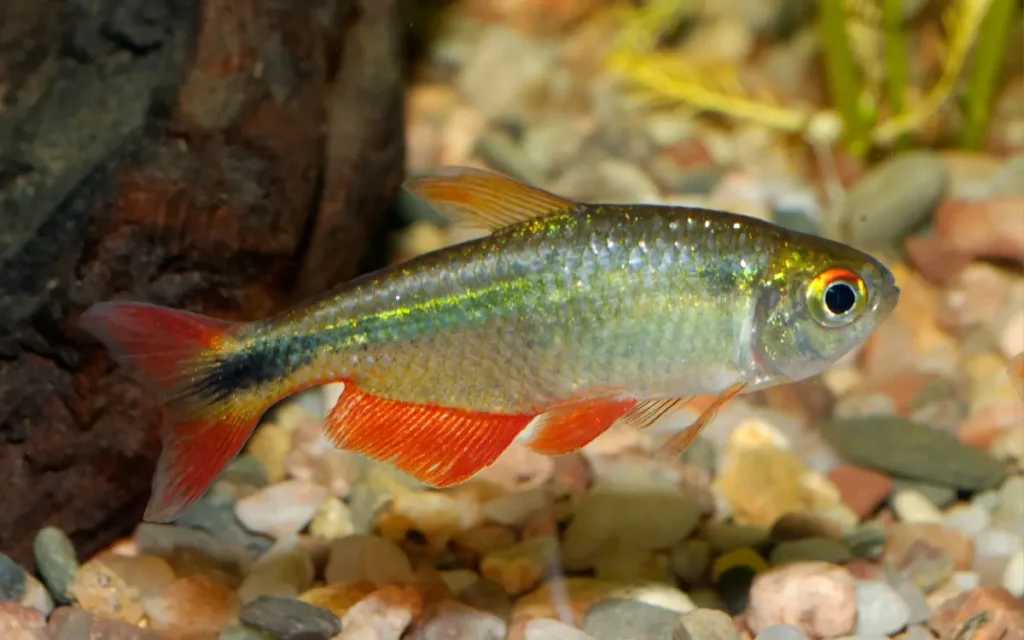
Buenos Aires tetras are hardy, active fish that scatter eggs among plants. They produce plenty of eggs but provide no parental care.
Their size and speed mean they need a roomy permanent aquarium. The small breeding tank should be used only during spawning.
Breeding method: Egg scatterer
Breeding tank: 20 gallons for spawning; larger for the adult school
Parental care: None
Best first food: Infusoria
Main challenge: Heavy egg predation
Signs Buenos Aires Tetras Are Ready to Spawn
Females become noticeably fuller through the abdomen. Males remain slimmer and may chase breeding-ready females around plants.
The activity becomes more focused around a spawning mop or fine-leaved plant when egg laying begins.
Breeding Tank Setup
Use a tank with marbles or raised mesh across the bottom. Add spawning mops or artificial plants above it.
Place a conditioned pair or small group in the tank during the evening. Provide only dim light when spawning begins.
Remove the adults immediately after eggs appear. They are quick and can eat a large part of the spawn in a short time.
Egg and Fry Care
Use a sponge filter or gentle air stone to maintain oxygen without creating strong currents. Remove any eggs showing fungus.
Begin feeding free-swimming fry with infusoria. Baby brine shrimp can be added once the fry have grown enough to capture it.
Move the young into a larger aquarium early. Buenos Aires tetras grow into active schooling fish and shouldn’t remain in a small hatching tank.
10. Golden Wonder Killifish
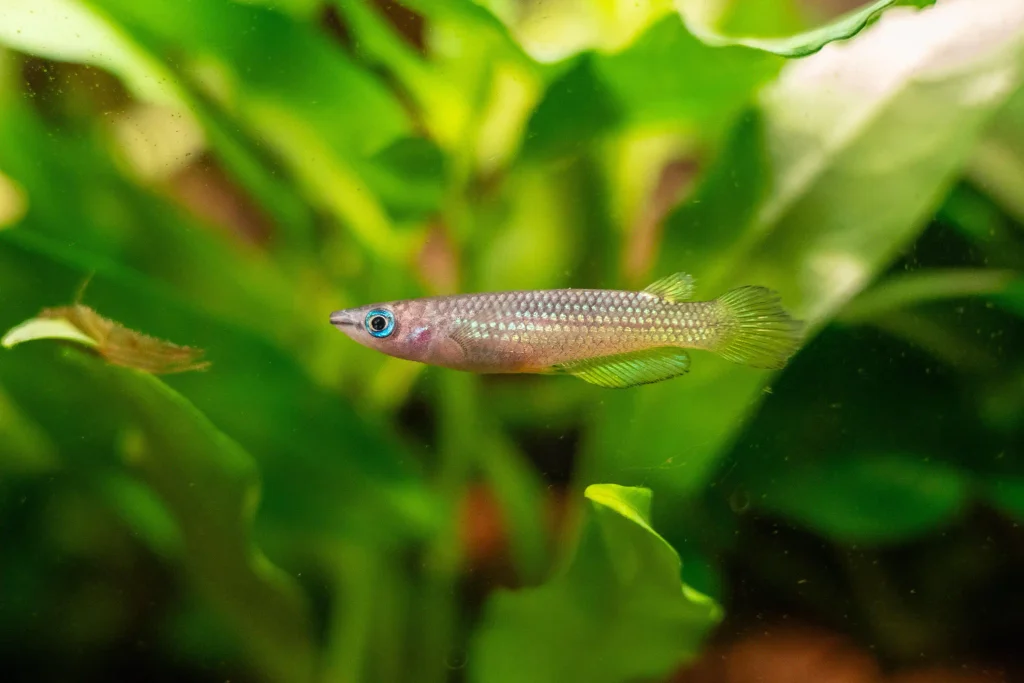
Golden wonder killifish place adhesive eggs among floating plants and spawning mops. The eggs are large enough to collect individually, making the process easy to observe.
The fry are also larger than those of many tetras. Their main problem is uneven growth, which can lead to larger fry eating smaller siblings.
Breeding method: Plant spawner
Breeding tank: 20 gallons or larger
Parental care: None
Best first food: Baby brine shrimp
Main challenge: Cannibalism among fry
Signs Golden Wonders Are Ready to Spawn
The male displays his fins and follows the female near the surface. A female in breeding condition becomes fuller around the abdomen.
The pair presses into a floating plant or spawning mop and deposits one or more adhesive eggs. This may happen repeatedly over several days.
Breeding Tank Setup
Hang several yarn spawning mops near the surface. Remove and check them daily so the adults cannot find the eggs.
Place collected eggs in a small hatching tank containing water from the breeding aquarium. Gentle aeration helps prevent still areas around the eggs.
Use a tight-fitting lid. Golden wonders are strong jumpers.
Egg and Fry Care
Remove white or fungused eggs. Healthy developing eggs gradually show the eyes and body of the fry.
Hatchlings can often take baby brine shrimp sooner than tiny tetra or minnow fry. Microworms and suitable powdered foods can also be offered.
Sort the young by size. A large juvenile can swallow a newly hatched sibling without much difficulty.
11. Kribensis
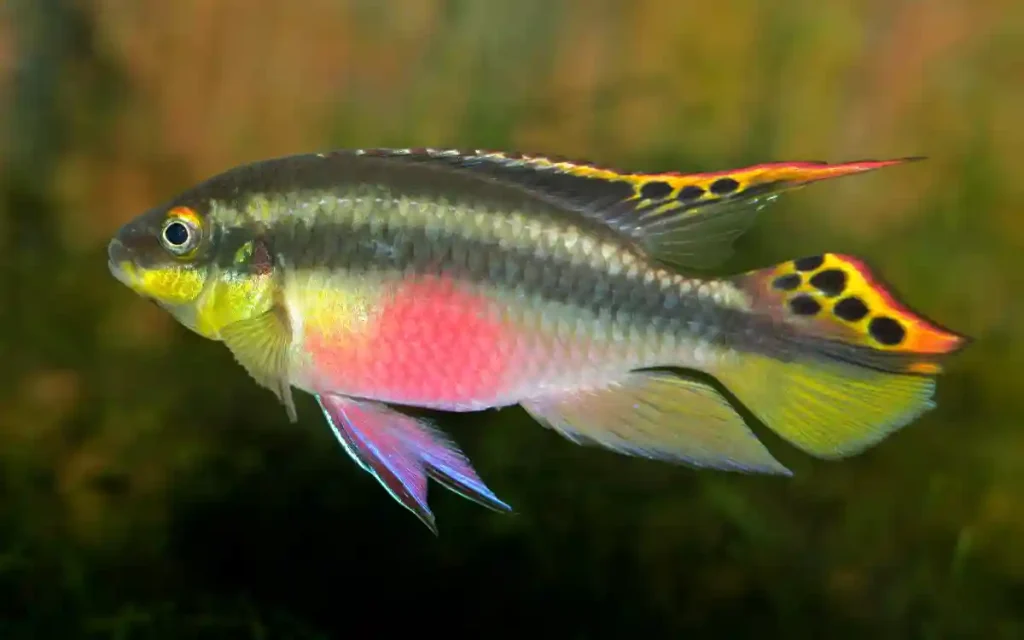
Kribensis are good first cichlids for someone who wants to watch natural parental care. They lay their eggs inside a cave, and both parents usually protect the brood.
Spawning is straightforward once a compatible pair forms. Managing the parents’ territorial behavior is the harder part.
Breeding method: Cave spawner
Breeding tank: 20 gallons or larger
Parental care: Both parents
Best first food: Baby brine shrimp
Main challenge: Aggression toward tank mates
Signs Kribensis Are Ready to Spawn
A receptive female displays her rounded, brightly colored belly. She may curve her body, shake in front of the male, and repeatedly enter a cave.
The pair removes sand from the cave entrance and drives away other fish. Once eggs are laid, the female may remain hidden inside for several days.
Breeding Tank Setup
Provide several caves so the pair can choose a site. Coconut shells, clay pots, and rock caves work well.
Use sand or smooth fine gravel because the parents may dig and move the young. Add plants and wood to create visual barriers.
A dedicated tank is safest. Breeding kribensis may repeatedly attack corydoras and other bottom fish that enter their territory.
Egg and Fry Care
The female usually guards and fans the eggs while the male patrols outside. After hatching, the parents may move the larvae before bringing out the free-swimming fry.
Offer baby brine shrimp close to the family group. The parents guide the fry around the tank, but the babies still need food small enough to catch.
Leave both parents with the brood unless one begins attacking the other. Cichlids are known for varied parental behavior, including guarding eggs, wrigglers, and free-swimming fry. Animal Diversity Web explains these broader cichlid breeding methods.
12. Convict Cichlids
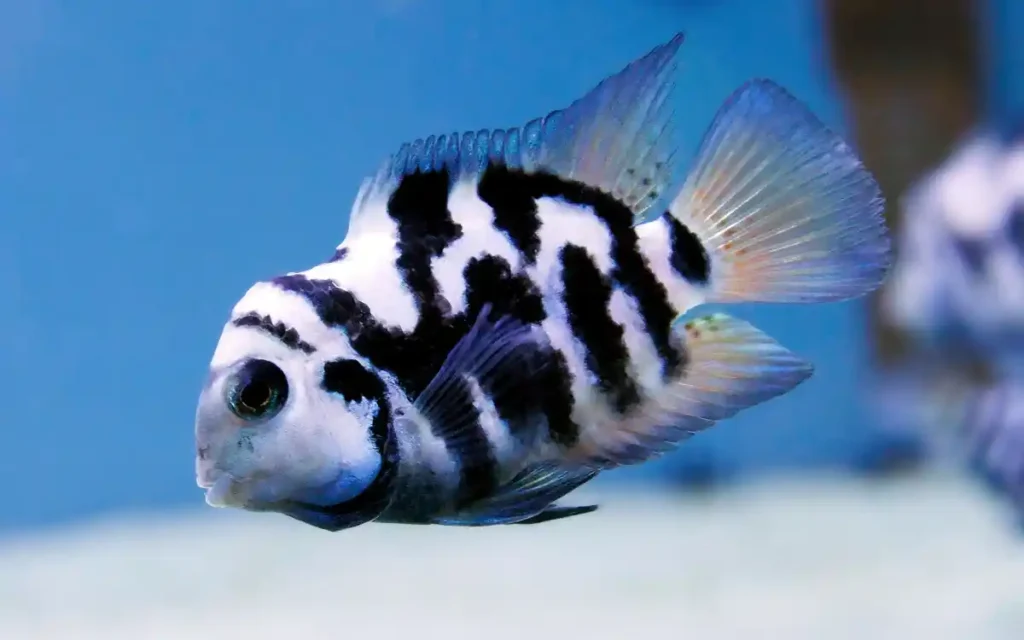
Convict cichlids are extremely easy to spawn. A compatible pair may lay eggs repeatedly without temperature tricks, delicate water chemistry, or special conditioning.
They are included because beginners can breed them, but they aren’t the best first community breeding fish. The parents become fiercely territorial.
Breeding method: Cave or substrate spawner
Breeding tank: 30 gallons or larger
Parental care: Both parents
Best first food: Baby brine shrimp or powdered fry food
Main challenge: Severe aggression and rehoming juveniles
Signs Convicts Are Ready to Spawn
The pair claims a cave or sheltered corner and cleans the surface. They may move gravel, dig pits, and attack anything approaching the area.
Females often show stronger orange coloring on the abdomen. The pair’s aggression rises as spawning gets closer.
Breeding Tank Setup
Use a dedicated aquarium containing caves, clay pots, or rock shelters. Arrange decorations so each fish can get out of the other’s sight.
Keep a divider ready. A bonded pair can still fight, especially in a small tank or after losing a brood.
Don’t place a breeding pair in a peaceful community. They may claim most of the aquarium and injure every fish that cannot escape.
Egg and Fry Care
The female often stays close to the eggs while the male guards the territory. After hatching, the parents may move the larvae into pits dug in the substrate.
Feed the free-swimming fry baby brine shrimp or finely powdered food. The parents will guide the young but cannot provide all their nutrition.
Arrange homes for the juveniles before breeding. Convicts are common, reproduce in large numbers, and may be difficult to sell or give away.
13. Bristlenose Plecos
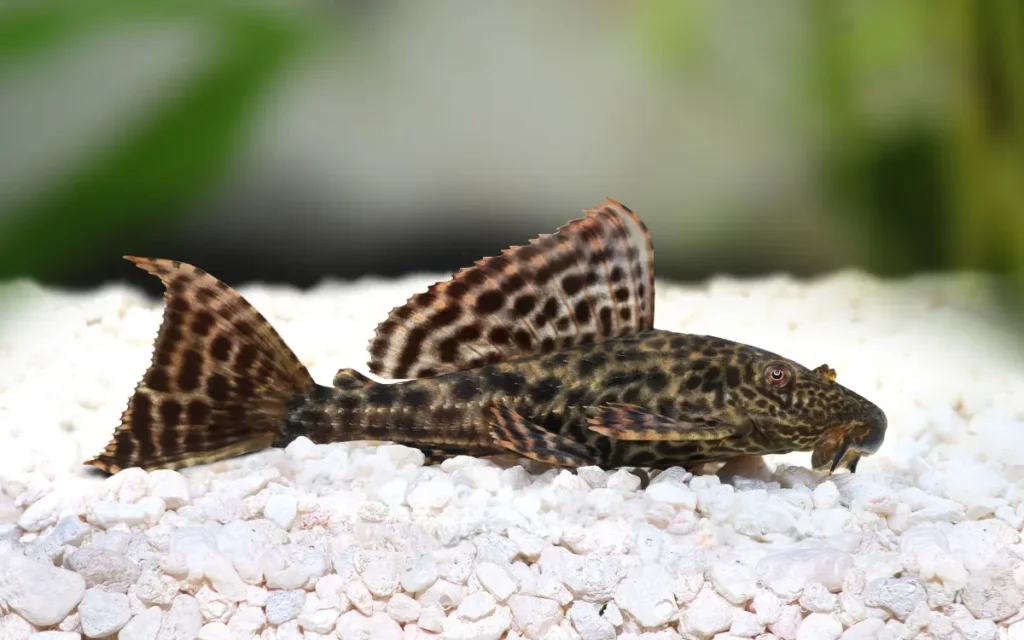
Bristlenose plecos lay a cluster of eggs inside a narrow cave. The male guards the entrance and fans the eggs until they hatch.
They are among the easiest catfish to breed, but a large batch of juveniles produces plenty of waste and requires frequent feeding.
Breeding method: Cave spawner
Breeding tank: 30 gallons or larger
Parental care: Male guards the eggs
Best first food: Soft algae-based foods and sinking fry food
Main challenge: Feeding and housing many juveniles
Signs Bristlenose Plecos Are Ready to Spawn
A mature male develops noticeable bristles and spends more time inside a chosen cave. He cleans the cave and chases other plecos away.
A mature female becomes wide through the abdomen when carrying eggs. If she accepts the male’s cave, she enters to lay an orange or yellow egg cluster.
Breeding Tank Setup
Provide more than one pleco cave. Each cave should have a narrow entrance and enough internal space for the male and egg cluster.
Include driftwood and shaded areas. Use strong biological filtration because both adults and growing juveniles create considerable waste.
Avoid lifting or turning an occupied cave. A frightened male may leave the eggs.
Egg and Fry Care
The male fans and guards the eggs. You usually don’t need to remove them when he is caring for the batch properly.
The newly hatched young remain in the cave while absorbing their yolk sacs. Once they leave, offer quality sinking foods, soft vegetables, and algae-based wafers.
Remove uneaten vegetables before they rot. Spread food around the tank so smaller juveniles aren’t pushed away by their siblings.
14. Angelfish
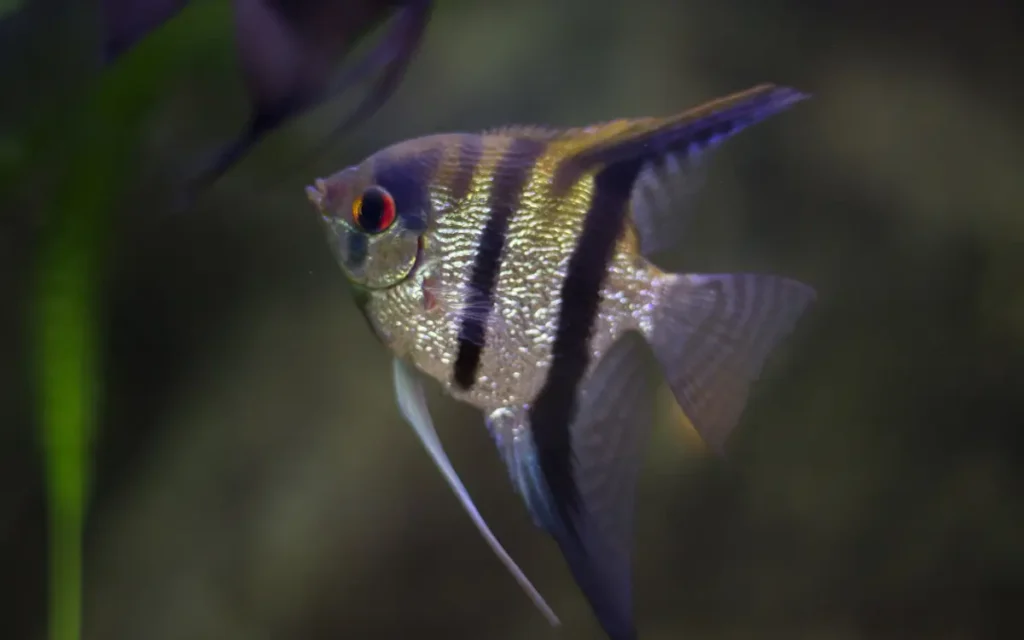
Angelfish form pairs and lay rows of eggs on broad leaves or vertical surfaces. Their spawning ritual is easy to observe, but inexperienced parents may eat their eggs.
They are better for beginners who have already raised one easier egg-laying species.
Breeding method: Open-surface spawner
Breeding tank: A tall 29–30-gallon aquarium
Parental care: Both parents, although behavior varies
Best first food: Newly hatched brine shrimp
Main challenge: Egg eating and pair compatibility
Signs Angelfish Are Ready to Spawn
A bonded pair stays together and defends one part of the aquarium. They repeatedly clean a plant leaf, slate, filter pipe, or aquarium wall.
Their breeding tubes may become visible shortly before spawning. The female’s tube is generally broader and blunter than the male’s.
Angelfish are difficult to sex when they aren’t breeding. Raising a small group and allowing a pair to form naturally is usually more reliable than buying two unproven adults.
Breeding Tank Setup
Give a proven pair its own tall aquarium. Add a removable spawning slate or a broad-leaved plant and use gentle sponge filtration.
Keep the tank in a quiet area. Sudden movement, changes in lighting, or nearby fish can make nervous parents eat their eggs.
Stable water matters more than chasing one perfect temperature or pH. Start with conditions in which the adults already eat well and behave normally.
Egg and Fry Care
The parents clean and fan the eggs, removing any that fail to develop. Young pairs may eat several batches before caring for one successfully.
After hatching, the larvae remain attached to the spawning surface while using their yolk sacs. Begin feeding newly hatched brine shrimp when the fry become free-swimming.
Artificial hatching gives you more control, but you must manage oxygen, fungus, and water cleanliness yourself. Let capable parents care for the eggs when possible.
Read the Angelfish Care Guide before preparing a breeding pair.
15. Paradise Fish
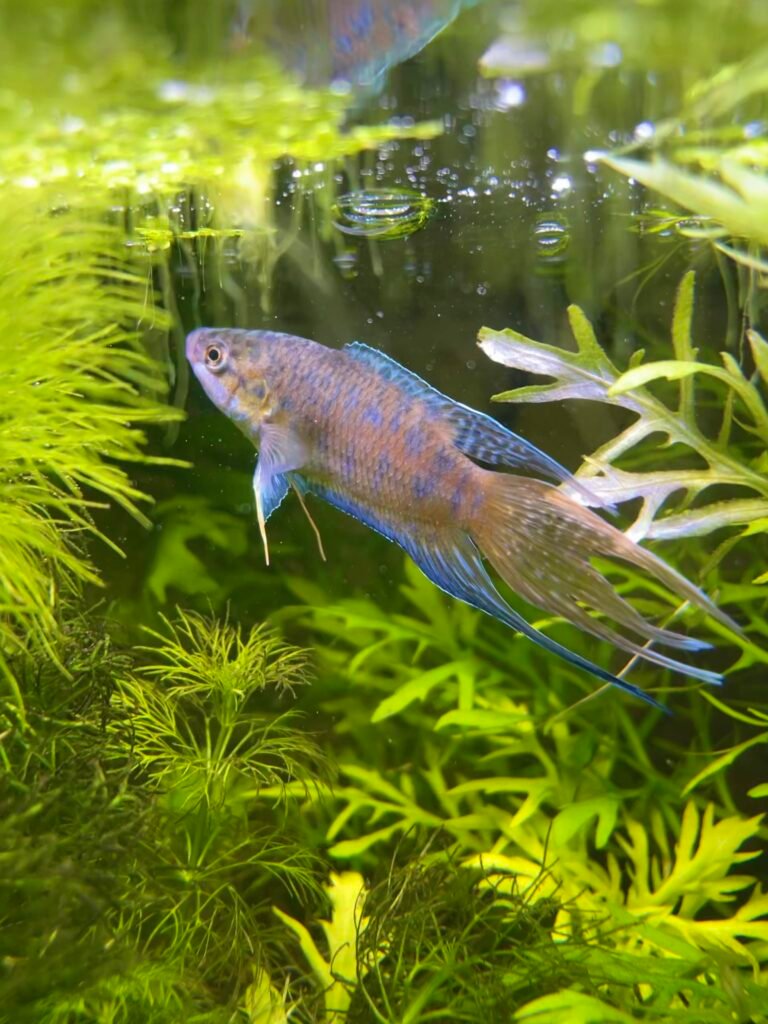
Paradise fish build bubble nests at the surface. The male places fertilized eggs inside the nest and guards them until the fry begin swimming.
Their breeding behavior is easy to see, but aggression between the adults and the fry’s tiny first-food requirements make them a more involved beginner project.
Breeding method: Bubble-nest builder
Breeding tank: 20 gallons
Parental care: Male guards the eggs
Best first food: Infusoria
Main challenge: Adult aggression and tiny fry
Signs Paradise Fish Are Ready to Spawn
The male develops stronger color, spreads his fins, and begins building a bubble nest under floating plants or a broad leaf.
A female carrying eggs becomes fuller through the abdomen. Vertical bars or changes in body color may appear when she is receptive.
Courtship can become rough. A female that remains hidden, has torn fins, or cannot approach the surface safely should be separated.
Breeding Tank Setup
Use a shallow, gently filtered tank with a tight lid. Warm, humid air above the water helps protect the developing labyrinth organs of the young fish.
Add floating plants and plenty of cover for the female. Keep surface movement low so the bubble nest isn’t broken apart.
Monitor the pair continuously during their introduction. Remove the female if the male’s attacks become dangerous.
Egg and Fry Care
During spawning, the male collects falling eggs and places them in the bubble nest. Remove the female after spawning if the male begins driving her away.
The male guards the nest until the fry become free-swimming. At that point, remove him because he may start eating them.
Begin with infusoria or another tiny live food. Move to microworms and baby brine shrimp as the fry grow.
Which Egg-Laying Fish Is Best for a Beginner?
Zebra danios are the best starting choice if you want to see a large, clear spawning event. Their eggs are simple to protect with mesh or marbles, and the adults are easy to condition.
Medaka ricefish are better if you want to collect visible eggs one at a time. The eggs attach to spawning mops, so you don’t need to search the bottom of the tank.
Kribensis are a good choice if you want to watch parents care for their young. You won’t need to remove every egg, but you must be ready for territorial behavior.
My beginner order would be:
- Zebra danios
- Medaka ricefish
- White cloud mountain minnows
- Bronze corydoras
- Kribensis
I wouldn’t start with angelfish or paradise fish. Both are breedable, but egg care, parental behavior, and first feeding require more attention.
Four Main Types of Egg-Laying Aquarium Fish
Egg Scatterers
Danios, barbs, tetras, and white clouds release eggs over plants or the substrate. They don’t guard the eggs and may eat them immediately.
Mesh, marbles, or dense spawning material keeps the eggs beyond the adults’ reach.
Plant Spawners
Medaka and many killifish attach adhesive eggs to plants or spawning mops. Breeders can remove the entire mop and hatch the eggs separately.
This method is easier to control because you can inspect individual eggs.
Cave and Surface Spawners
Kribensis, convict cichlids, bristlenose plecos, and angelfish place their eggs on a chosen surface. Depending on the species, one or both parents may guard them.
These fish protect their eggs better but may become aggressive.
Bubble-Nest Builders
Paradise fish and several gouramis and bettas build floating nests from bubbles. The male usually guards the eggs until the fry begin swimming.
Surface movement must remain low enough to avoid breaking the nest.
What You Need Before Breeding Egg-Laying Fish
Prepare the complete setup before introducing the breeding fish:
- A fully cycled breeding tank
- A mature sponge filter
- A heater if the species needs one
- A fitted lid
- A thermometer
- Spawning mesh, mops, caves or flat surfaces
- A separate hatching or grow-out tank
- A small air pump and air stone
- Suitable first foods
- A liquid water-testing kit
A new tank filled with clean-looking water isn’t ready for eggs or fry. It must contain enough beneficial bacteria to process waste. Read the Fish Tank Cycling Guide before starting the breeding setup.
How to Condition Egg-Laying Fish
Conditioning means preparing mature fish for spawning through good food, clean water, and low stress.
Feed a varied diet suitable for the species. Quality prepared food can be combined with frozen or live foods. Don’t overfeed in an attempt to fill females with eggs. Extra waste will lower water quality.
Keep prospective parents healthy for several weeks before breeding. Fish with clamped fins, unexplained swelling, white spots, open wounds, or poor appetite shouldn’t be placed in a breeding tank.
Some breeders separate males and females before spawning. This can make courtship more active when the fish are brought together, but it isn’t required for every species.
How to Tell Fertile and Infertile Fish Eggs Apart
Healthy developing eggs are commonly clear, amber, cream, or pale yellow, depending on the species. You may eventually see a dark spot or the fry’s eyes inside.
Infertile eggs often turn solid white. They may become covered in fuzzy fungus, which can spread to nearby healthy eggs.
Remove bad eggs with a pipette, dropper, or small tweezers. Work gently so you don’t damage adjacent eggs.
Not every clear egg will hatch, and not every pale egg is bad. Learn the normal egg color of the exact species before discarding an entire batch.
What to Feed Newly Hatched Egg-Layer Fry
Newly hatched fish usually don’t eat immediately. They first absorb the yolk sac attached to their bodies.
Begin feeding when the fry become free-swimming. The correct food depends on their mouth size:
| Fry size | Suitable first foods |
| Extremely small | Infusoria, green water, tiny commercial fry food |
| Small | Microworms, vinegar eels, fine powdered food |
| Medium | Newly hatched brine shrimp, microworms |
| Larger cichlid or catfish fry | Baby brine shrimp, powdered sinking foods |
Feed small servings several times daily. Fry need regular access to food, but leftover food can cause an ammonia spike.
Siphon waste with narrow airline tubing. Shine a small light into the tank first so you can see the fry and avoid removing them accidentally.
Common Egg-Laying Fish Breeding Mistakes
Leaving Egg Scatterers With Their Eggs
Danios, barbs, and tetras may eat a large part of the spawn within minutes. Remove the adults as soon as spawning ends.
Starting With an Uncycled Tank
Eggs and fry are sensitive to ammonia and nitrite. Set up and cycle the breeding tank before the fish are ready to spawn.
Using a Powerful Filter
A standard filter intake can trap fry. Use a sponge filter or cover the intake with a fine pre-filter sponge.
Feeding the Wrong First Food
Tiny fry can starve while surrounded by crushed flakes that are too large to swallow. Prepare infusoria before breeding species with very small fry.
Making Large Water Changes
Fresh water helps fry grow, but a sudden change in temperature, hardness, or pH can kill them. Use smaller, carefully matched water changes.
Breeding Without a Grow-Out Tank
A spawning tank may hold 100 eggs but won’t safely house 100 growing juveniles. Prepare additional space before the eggs hatch.
Assuming Every Parent Will Protect Its Eggs
Parental behavior varies. Young angelfish may eat their eggs, a cichlid pair may begin fighting, and a male pleco may abandon a disturbed cave.
Frequently Asked Questions
What is the easiest egg-laying fish to breed?
Zebra danios are one of the easiest. Healthy adults spawn readily, and marbles or mesh can protect the eggs from being eaten.
What egg-laying fish provide parental care?
Kribensis, convict cichlids, angelfish, bristlenose plecos, fathead minnows, and paradise fish provide some form of egg or fry care.
How long do aquarium fish eggs take to hatch?
Many aquarium fish eggs hatch within two to seven days, but the timing depends on the species and water temperature. Some killifish eggs take much longer.
Should I remove white fish eggs?
Solid white or fuzzy eggs are often infertile or infected with fungus. Remove them carefully before the fungus reaches healthy eggs.
Do fish eggs need light?
Many fish eggs develop better under dim light. Bright light is unnecessary and may harm the eggs of some species.
Do fish eggs need an air stone?
Gentle aeration can keep oxygenated water moving around unattended eggs. Don’t aim a powerful stream directly at them.
Can fish eggs hatch in a community aquarium?
Yes, but survival is usually low. Other fish, snails, shrimp, and even the parents may eat the eggs or newborn fry.
Can I breed egg-laying fish without live food?
Some larger fry can accept prepared foods. Tiny fry often survive better with live foods such as infusoria, microworms, or baby brine shrimp.
