
Neon Tetra Care: Why They Die & How to Keep Them Alive

Neon Tetras are easy to keep but they die fast in unstable tanks. Most beginners lose them in the first few weeks because the tank isn’t fully stable, even if water tests look fine. If you get a few key things right, tank maturity, group size, and calm conditions they become one of the most reliable and long-lasting fish in a community aquarium.
This guide focuses on what actually keeps Neon Tetras alive: stable water, stress-free setup, and avoiding the common mistakes that cause early deaths.
Neon Tetra Care Overview
| Category | Details |
| Scientific Name | Paracheirodon innesi |
| Size | Up to 1.5 inches |
| Lifespan | 5 – 8 years |
| Tank Size | 10 gallons (20 long recommended) |
| Temperature | 72–78°F |
| pH | 6.0 – 7.0 |
| Temperament | Peaceful, schooling fish |
| Care Level | Easy (in stable tanks) |
| Diet | Omnivore |
Why Neon Tetras Die So Often (And How to Prevent It)
Neon Tetras don’t usually die because they are weak they die because the tank is unstable. New aquariums often look fine on test kits, but the water still fluctuates after feeding, cleaning, or adding fish. These small changes are enough to stress Neons and weaken them quickly.
Another major cause is poor acclimation. Fish that have already gone through transport stress can’t handle sudden temperature or pH changes. Many losses happen within the first few days because of this.
Small group size is another hidden problem. When Neons are kept in groups that are too small, they stay stressed, hide more, and become more vulnerable to disease. A proper school makes a big difference in both behavior and survival.
If your tank is new or unstable, it’s better to start with hardier fish first and add Neon Tetras later once conditions settle.
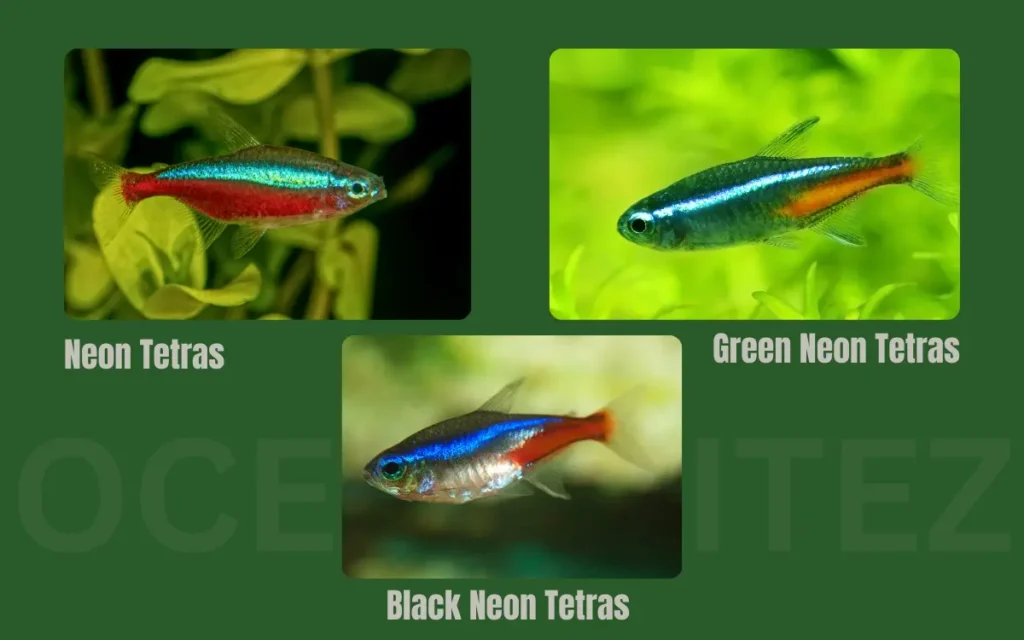
Do you know there are different Types of tetras
Appearance and Natural Behavior
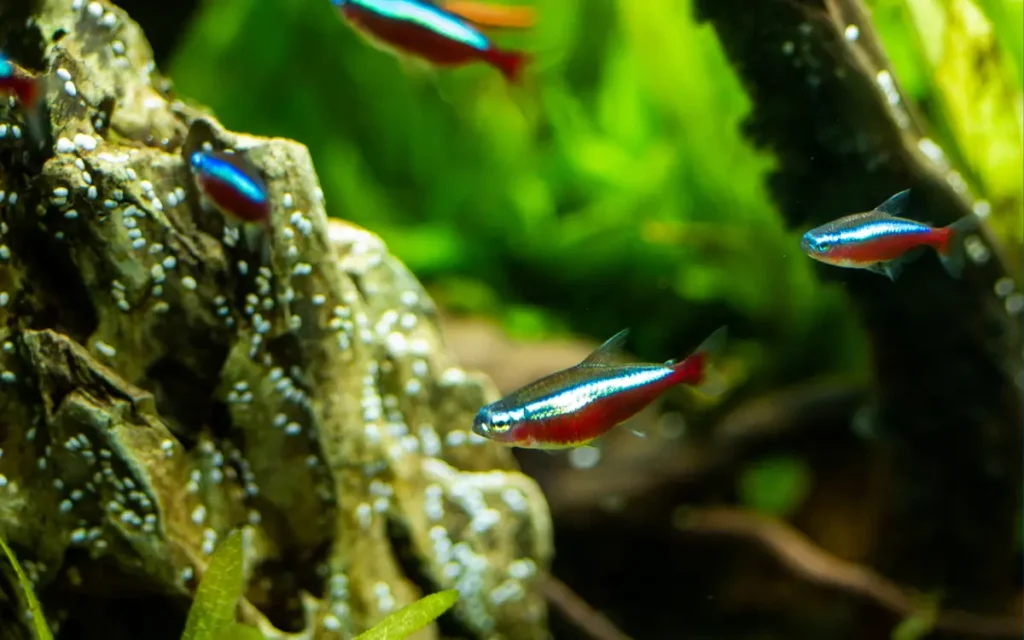
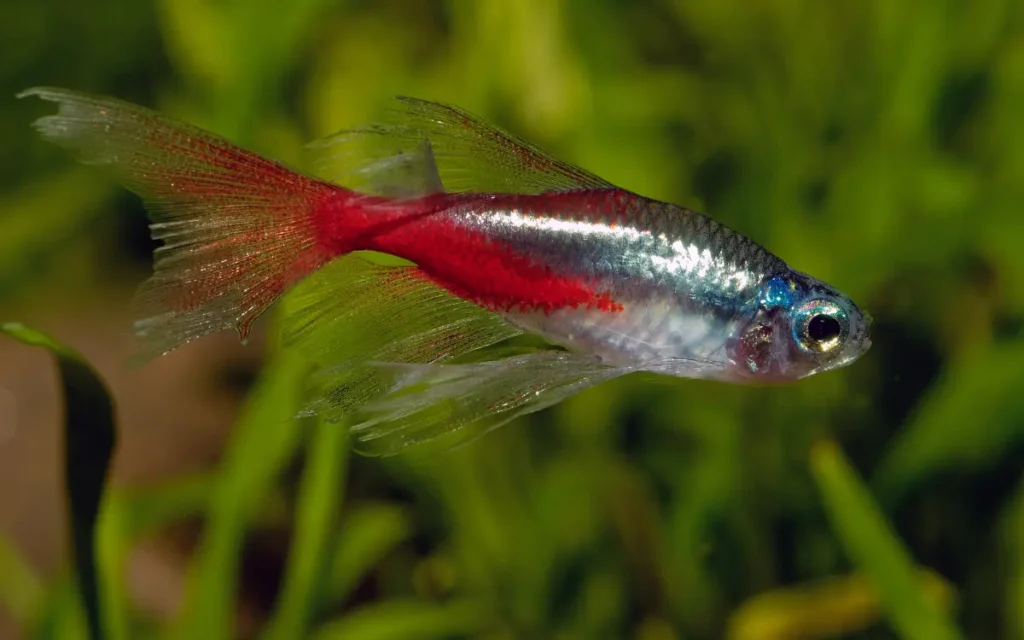
Neon Tetras have a bright blue stripe that reflects light and a red stripe along the lower body. In healthy fish, this color looks vibrant and almost glowing under proper lighting.
They are mid-water swimmers and prefer to stay in groups. In a stable tank with enough cover, they move together in loose schools and stay active throughout the day. If they are constantly hiding or losing color, it’s usually a sign of stress, not normal behavior.
Tank Size and Setup
A 10-gallon tank can work, but a 20-gallon long tank is a better choice. Neon Tetras use horizontal swimming space, and a longer tank allows them to move naturally and reduces stress.
The setup should focus on creating a calm environment. Plants along the sides and back provide cover, while the center should remain open for swimming. A dark substrate helps bring out their color, and floating plants can reduce harsh lighting.
Water movement should be gentle. Strong currents force them to swim constantly, which adds stress over time. A low-flow filter or sponge filter works best in most setups.
Water Parameters and Stability
Neon Tetras are not demanding when it comes to exact numbers, but they are very sensitive to changes. Stability matters more than hitting perfect values.
A temperature between 72–78°F and a slightly acidic to neutral pH works well. Sudden changes in temperature or water chemistry are far more harmful than slightly imperfect conditions.
Water changes should be consistent but not extreme. Small weekly changes are safer than large, sudden adjustments. Overcleaning, especially in new tanks, can disrupt beneficial bacteria and cause mini spikes that Neons react to quickly.
What Happens in the First Week
The first week is where most problems begin.
It is normal for Neon Tetras to be slightly shy at first. They may stay close together or hide more than usual. This usually improves as they settle in.
During this time, feeding should be light, and the tank should not be disturbed. Avoid rearranging decor or adding too many new fish. Strong lighting can increase stress, so moderate lighting works better.
If you see gasping, constant hiding, or rapid color loss, something is wrong with the setup or water stability.
How Many Neon Tetras Should Be Kept Together?
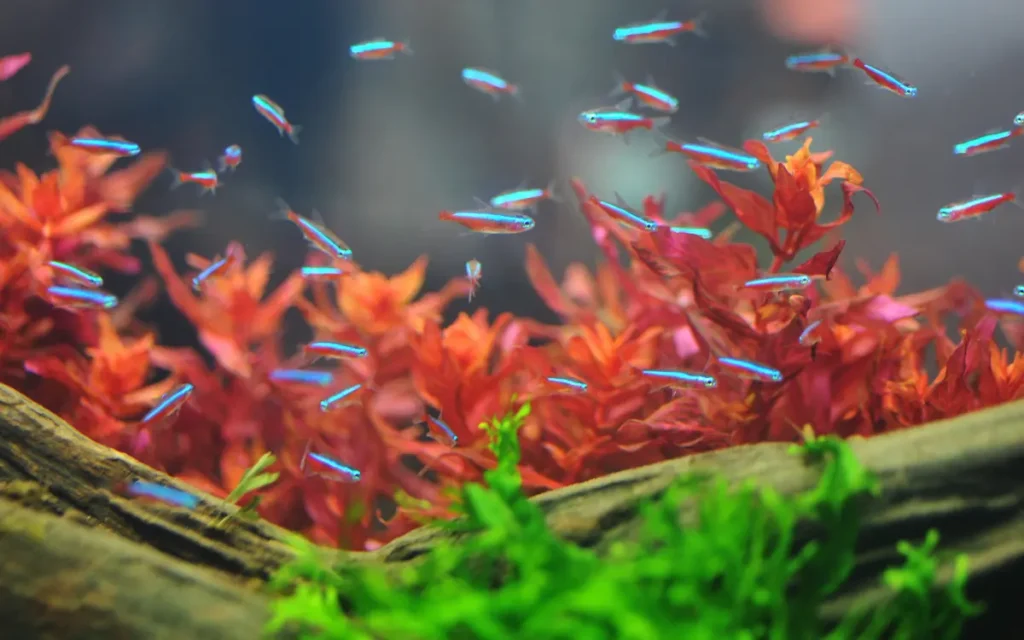
A minimum of six Neon Tetras is required, but this is often not enough for stable behavior. A group of ten or more shows better color, more natural movement, and lower stress levels.
In small groups, they tend to hide, lose color, and become more sensitive to changes in the tank. A larger school spreads out stress and helps them feel secure.
Want something semi-aggressive read this guide black skirt tetra
Best Tank Mates
Neon Tetras do best with peaceful fish that do not compete aggressively for food or space. Calm community fish work well because they do not stress the school.
Bottom-dwelling fish are usually safe choices since they stay out of the main swimming area. Other small, peaceful schooling fish can also work well if the tank has enough space.
Problems usually occur when Neons are kept with aggressive or overly active species. Even fish that do not attack them directly can create enough stress to weaken them over time.
Diet and Feeding
Neon Tetras are omnivores and do best with small, easy-to-eat foods. Flakes or micro pellets work well as a base diet, especially if they are crushed to match their mouth size.
Adding frozen foods occasionally helps improve their color and overall health. However, overfeeding is one of the fastest ways to create water quality issues. Small, controlled feeding once or twice a day is enough.
If food reaches the bottom quickly, you are feeding too much.
Learn about Cardinal Tetra vs Neon Tetra: Which Should You Get?
Common Problems and Fixes
Color fading is usually caused by stress, poor water quality, or small group size. Improving these factors often restores their appearance quickly.
Constant hiding is often linked to bright lighting, lack of cover, or an insufficient group. Adding plants and increasing the school size usually fixes this within a few days.
Gasping at the surface is more serious and often points to low oxygen or poor water quality. This should be checked immediately, as it can lead to quick losses if not corrected.
Lifespan and Growth
Neon Tetras can live between 5 to 8 years when kept in stable conditions. Their lifespan depends more on water stability and stress levels than on strict parameter ranges.
They grow to about 1.5 inches and remain active throughout their life when kept in proper groups.
Is Neon Tetra a Good Beginner Fish?
Neon Tetras are good for beginners, but only in a stable tank. They are not ideal as the first fish in a brand-new setup.
If the tank is mature, the group size is correct, and the environment is calm, they are easy to care for and remain active for years. If the tank is rushed or unstable, they are often the first fish to show problems.
FAQs
How many Neon Tetras should be kept together?
At least six, but ten or more is ideal for better behavior and color.
Do Neon Tetras need a heater?
Yes, they prefer stable temperatures between 72–78°F.
Why are my Neon Tetras dying?
Most early deaths are caused by unstable tanks, poor acclimation, or stress from small group size.
Can Neon Tetras live with bettas?
Sometimes, but it depends on the betta’s temperament and tank size.
How long do Neon Tetras take to settle?
Usually one to two weeks if the tank is stable and properly set up.
