
13 Types of Tetras: Colorful, Peaceful, and Easy to Keep

Neon, cardinal, ember and black neon tetras are popular choices for freshwater aquariums, but they suit different setups. Ember tetras stay tiny, Congo tetras need a much larger swimming area, and serpae tetras can nip their neighbours’ fins.
Before choosing a tetra, check its adult size, group needs and temperament. Buying two of several species might look colourful, but a proper group of one species usually makes a better starting point.
Below, you’ll find 13 types of tetras, how to identify them and the practical differences that matter when choosing fish for your tank.
Types of Tetras at a Glance
The tank sizes below are my suggested starting points for planning a suitable group, not universal minimums or permission to add unlimited tank mates. Aquarium length, filtration and existing fish also matter. All volumes are US gallons.
| Tetra | Approximate adult size | Suggested starting tank | Main consideration |
| Neon | 1–1.5 inches | 20 gallons long | Stable water and peaceful neighbours |
| Cardinal | 1.5–2 inches | 20 gallons long | Warm water suited to the whole community |
| Black neon | 1.5 inches | 20 gallons long | Open swimming space |
| Rummy-nose | Around 2 inches | 30 gallons, preferably 36 inches long | Mature aquarium and room to swim |
| Glowlight | Around 1.5 inches | 20 gallons long | Calm tank mates and shaded areas |
| Ember | Around 0.8 inch | 10 gallons | Tiny foods and gentle neighbours |
| Lemon | Around 2 inches | 20 gallons long | A proper group and planted cover |
| Serpae | Around 2 inches | 30 gallons | Fin-nipping risk |
| Congo | 3–3.5 inches | 55 gallons | Long swimming area and no fin-nippers |
| Black skirt | Around 2.5 inches | 20 gallons long | Can nip slow, long-finned fish |
| Diamond | Around 2.5 inches | 30 gallons | Adult size and group activity |
| Bleeding heart | Around 2.5–3 inches | 30 gallons | More space than its shop size suggests |
| Emperor | Around 2 inches | 30 gallons, preferably 36 inches long | Male territorial behaviour |
1. Neon Tetra (Paracheirodon innesi)
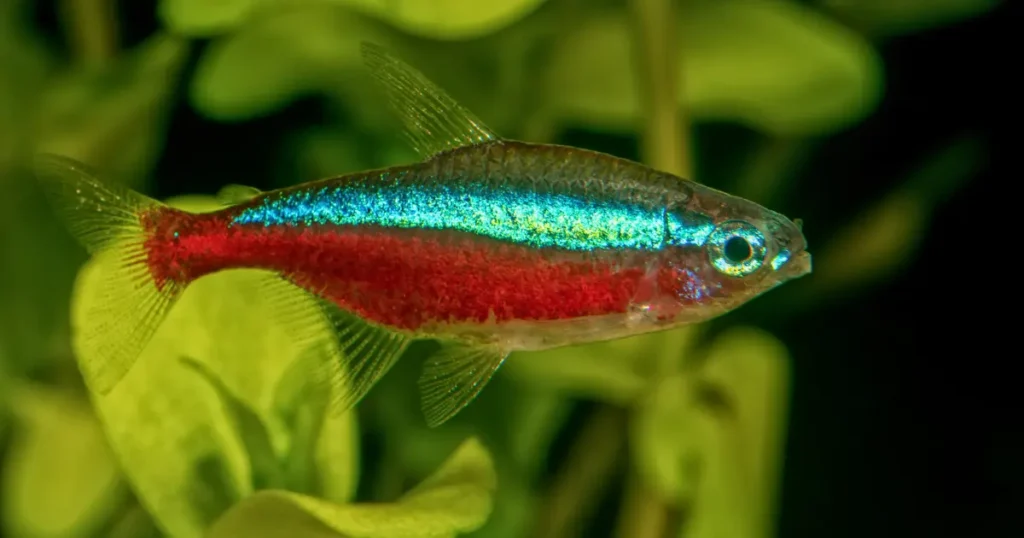
A neon tetra has a bright blue stripe along its side and a red stripe covering roughly the rear half of its body. That shorter red stripe is the quickest way to separate it from a cardinal tetra.
Neons work best in peaceful aquariums where they can swim together without being chased. Plant the back and sides while leaving an open area through the middle.
I would choose a group of around 10 rather than a few scattered individuals. Avoid adding them to an aquarium that has not finished cycling, and don’t assume they need the same warm conditions as every other tropical fish. Neons generally suit cooler conditions than cardinals.
2. Cardinal Tetra (Paracheirodon axelrodi)
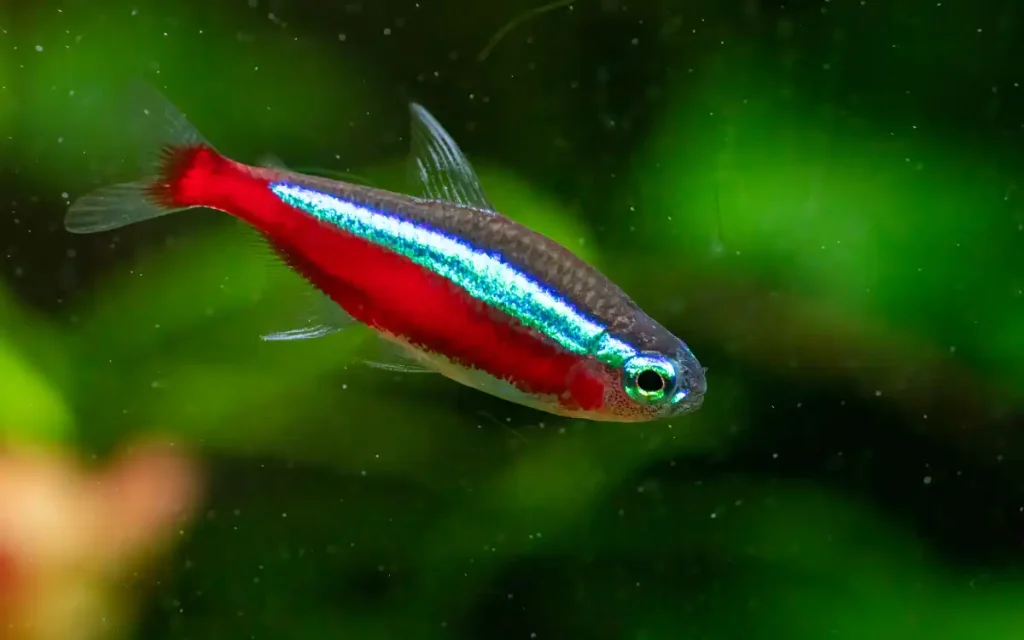
Cardinal tetras have a blue stripe above a red band that runs along most of the lower body. Compared with neons, they look as though someone has filled in the missing red section.
They are a good option for a warm, peaceful planted aquarium. Shaded areas help soften bright lighting, while open space lets the group move freely.
Before buying, ask the seller about the water conditions in which the fish are being kept. Cardinals naturally come from soft, acidic habitats, so they are not an automatic match for every household’s tap water.
A settled aquarium and compatible water conditions matter more than trying to force a particular pH overnight.
3. Black Neon Tetra (Hyphessobrycon herbertaxelrodi)
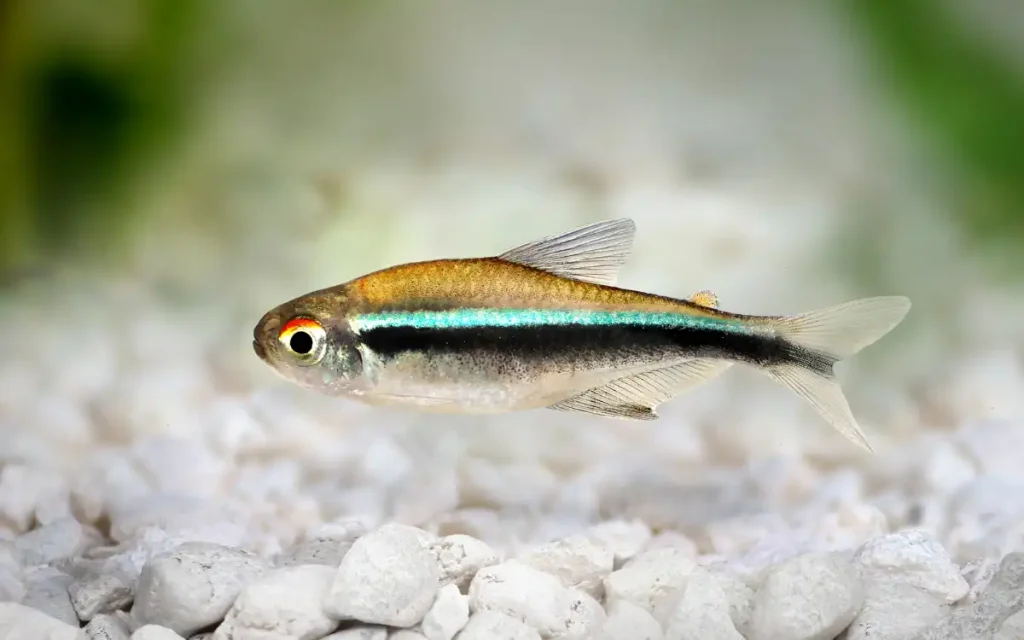
Black neon tetras have a dark horizontal band beneath a pale, reflective stripe. The upper part of the eye often shows orange or red.
Despite the name, they are a separate species from neon tetras, not a black colour variety. Their understated pattern can look especially attractive against green plants.
They are worth considering for a first established community aquarium because commercially bred fish are generally adaptable. Keep them with similarly sized, peaceful fish and give the group room to swim.
My preference would be a larger group of black neons over mixing small numbers of black neons, cardinals and ordinary neons.
4. Rummy-Nose Tetra (Hemigrammus rhodostomus)
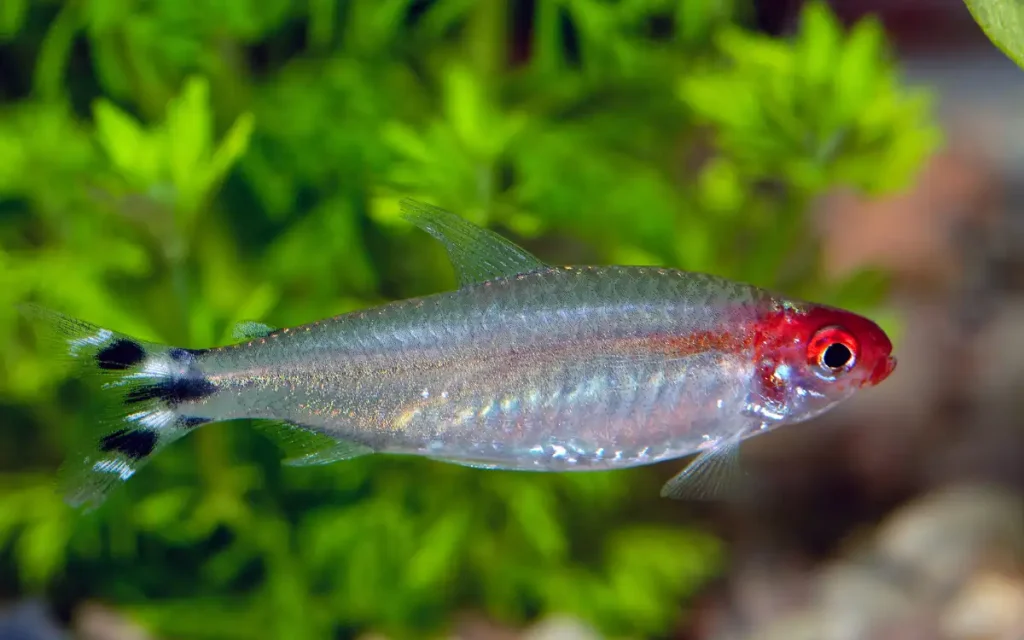
Also sold under the older name: Hemigrammus rhodostomus.
Rummy-nose tetras combine a red face, silver body and boldly striped black-and-white tail. Several similar species share the rummy-nose trade name, so shop labels are not always precise. The species formerly called Hemigrammus rhodostomus is currently recognised as Petitella rhodostoma.
Choose these fish when you have an established aquarium with a long, open swimming area. A group of 10 or more is a more useful plan than squeezing a handful into a small tank.
Their face colour can fade with stress, including transport and unsuitable conditions. However, colour is not a substitute for testing the water. If they suddenly become pale, check water quality and behaviour rather than guessing from appearance alone.
5. Glowlight Tetra (Hemigrammus erythrozonus)
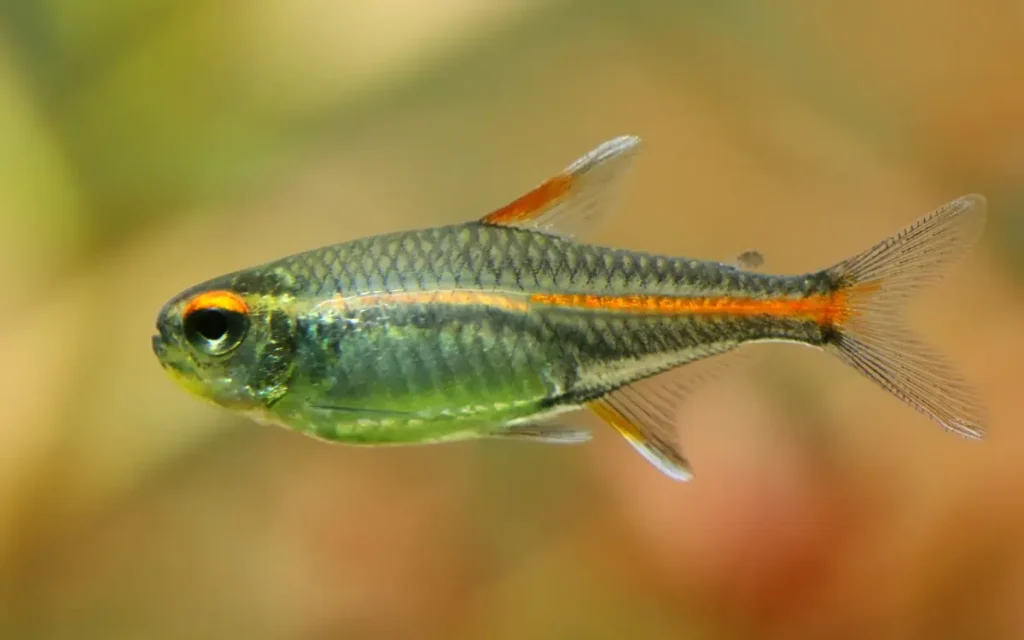
Glowlight tetras have translucent bodies crossed by a narrow orange-red stripe. Their colour is softer than a neon tetra’s, but it stands out well in a planted aquarium with shaded areas.
They are usually a sensible choice for a quiet community. Keep them with small, peaceful fish that will not chase them or take all the food before they can eat.
Offer appropriately sized flakes or micro-pellets, with suitable frozen or live foods for variety. Watch the whole group during feeding instead of assuming every fish gets a share.
Glowlight tetras are a separate species, not the same thing as fluorescent fish sold under the GloFish brand.
6. Ember Tetra (Hyphessobrycon amandae)
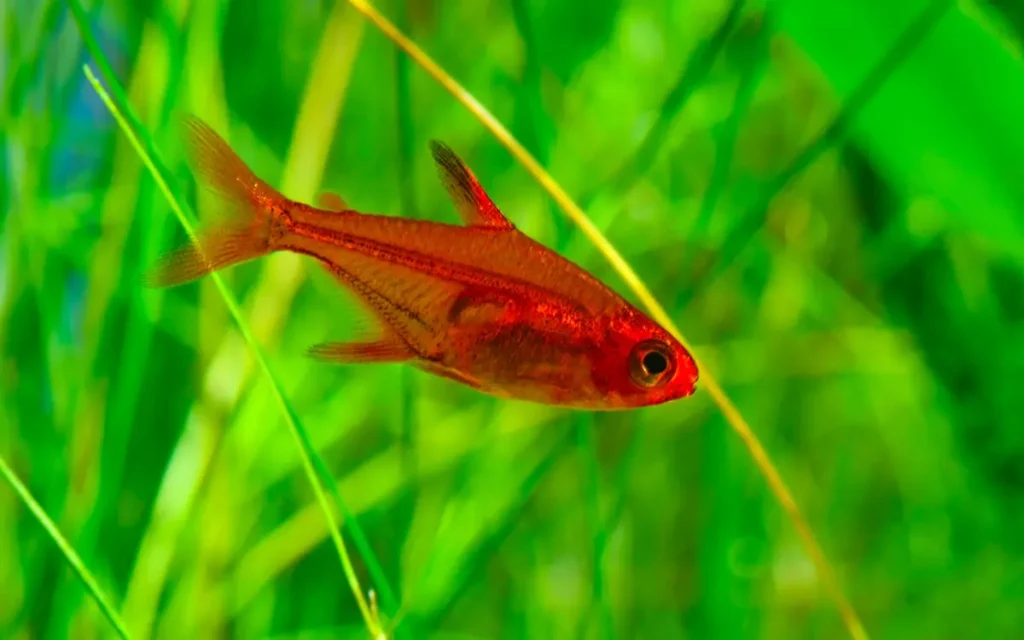
Ember tetras are small orange fish that can bring colour to a carefully planned nano aquarium. Adults stay under an inch long, making them much smaller than black skirts, diamonds or Congo tetras.
For a beginner, I would start with a planted 10-gallon aquarium rather than treat their size as a reason to use the smallest possible tank. A group of around 10 gives them company without splitting the space between several schooling species.
Food size deserves attention. Crushed flakes and tiny pellets are easier for them to manage than large community pellets.
Avoid boisterous neighbours. A fish can be non-aggressive and still overwhelm embers through its size, activity or feeding speed.
7. Lemon Tetra (Hyphessobrycon pulchripinnis)
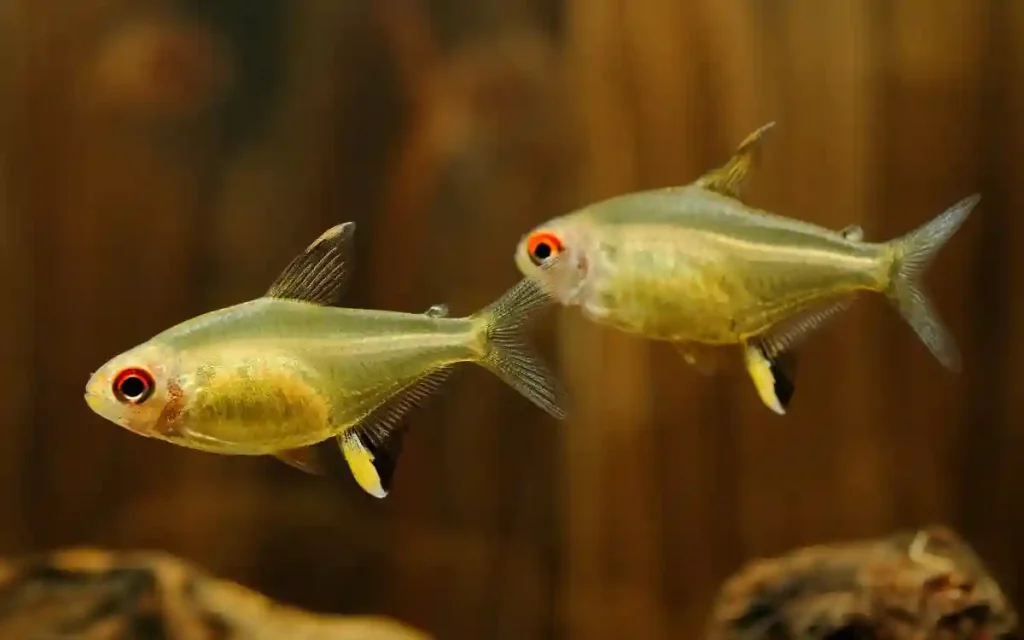
Lemon tetras have translucent yellow bodies, contrasting fin markings and a reddish upper eye. Their colour can appear washed out in a bare shop tank, so don’t judge them only by a newly arrived group.
A planted aquarium with open swimming space lets them show both their colour and their social behaviour. Males may display to one another, spreading their fins and briefly chasing rivals.
Keep a proper group rather than a pair. Around 8–10 is a practical starting target where space allows.
They suit a peaceful community, but leave enough room for movement. Filling every gap with ornaments can make a reasonably sized aquarium feel cramped.
8. Serpae Tetra (Hyphessobrycon eques)
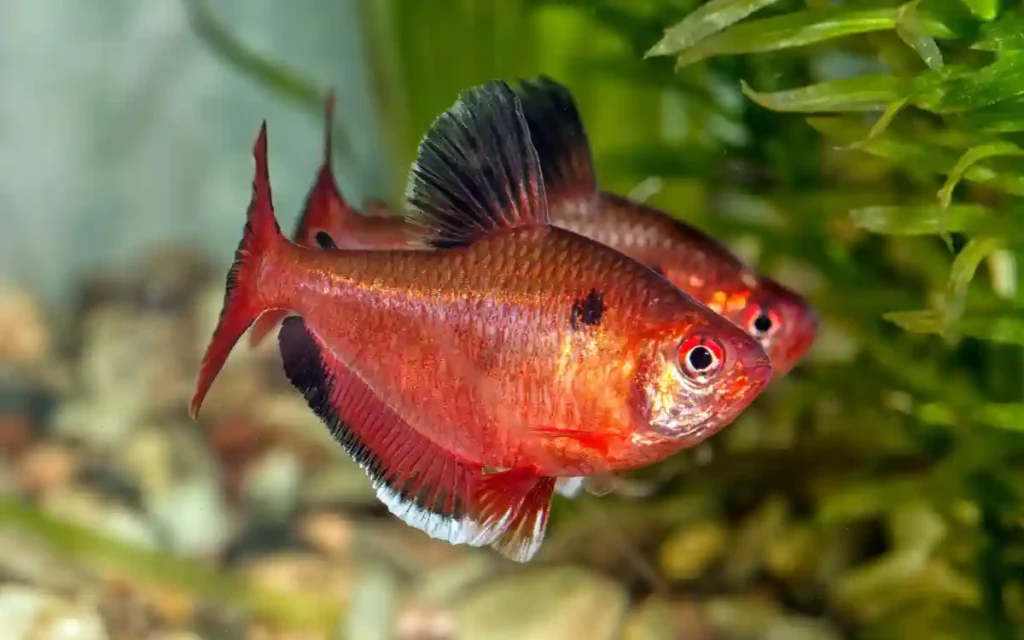
Common older name: Hyphessobrycon eques. The accepted name in Eschmeyer’s Catalog of Fishes is now Megalamphodus eques.
Serpae tetras have red bodies, a dark shoulder mark and contrasting dark fins. They are striking fish, but they would not be my first choice for a quiet community with delicate neighbours.
Their main drawback is fin-nipping. Bettas, fancy guppies and other slow fish with trailing fins are poor choices to pair with them.
A larger group and adequate space can reduce some unwanted behaviour, but neither guarantees compatibility. Plan around their temperament from the beginning, and be ready to separate fish if persistent chasing or fin damage occurs.
9. Congo Tetra (Phenacogrammus interruptus)
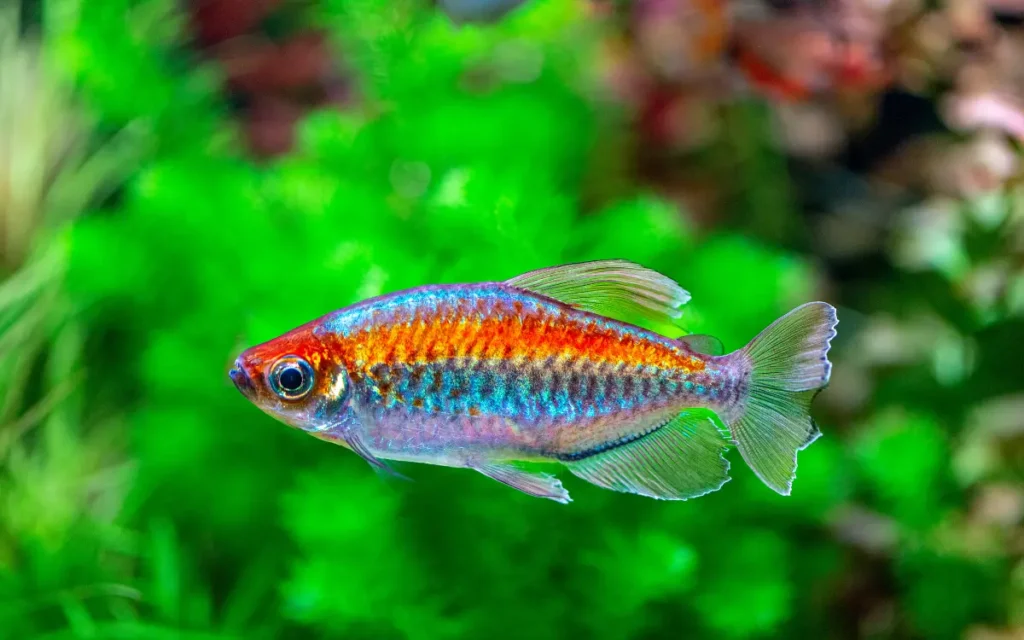
Congo tetras are larger African tetras with scales that reflect blue, gold and other colours as they turn. Mature males develop longer fins and extended central tail rays.
They need a different setup from tiny embers. I would plan a 55-gallon aquarium with a long swimming area for a group, rather than choose a tank based on their smaller juvenile size.
Plant around the edges and keep the centre open. Choose peaceful tank mates that will not damage their flowing fins.
Their larger size does not make them aggressive. A group of Congo tetras can be an attractive feature in a spacious community without needing an aggressive “centrepiece” fish.
10. Black Skirt Tetra (Gymnocorymbus ternetzi)
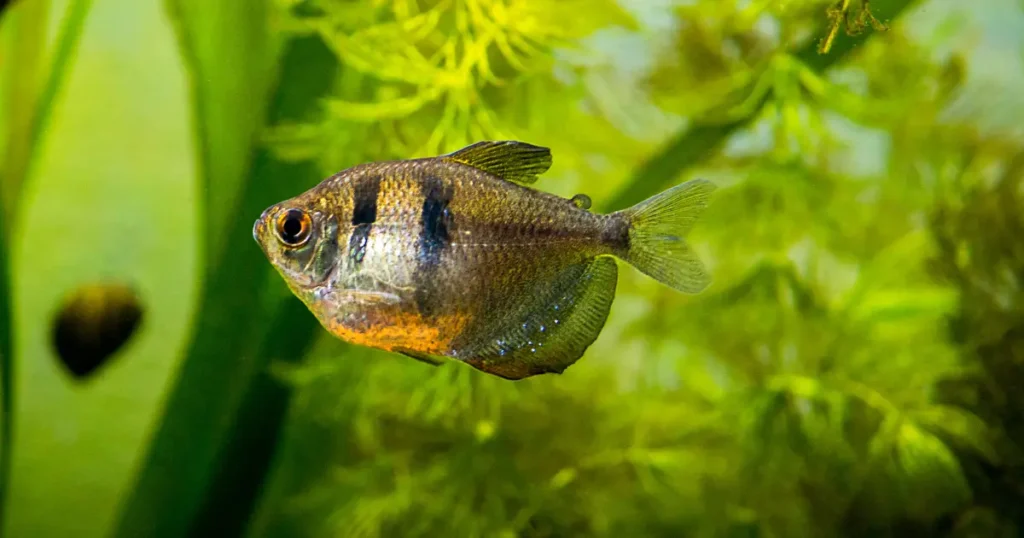
Black skirt tetras have deep, flattened bodies, dark vertical bars and a broad anal fin that creates their skirt-like outline. You may also see them called black widow tetras.
They are generally hardy, but that does not mean they fit every community. Fin-nipping can become an issue, especially with unsuitable companions or inadequate groups.
Keep them with active, compatible fish rather than slow swimmers with long fins. A group of around 8–10 is a more sensible plan than buying two or three.
White skirt varieties belong to the same species. Changing the colour does not remove their social needs or potential compatibility problems.
11. Diamond Tetra (Moenkhausia pittieri)
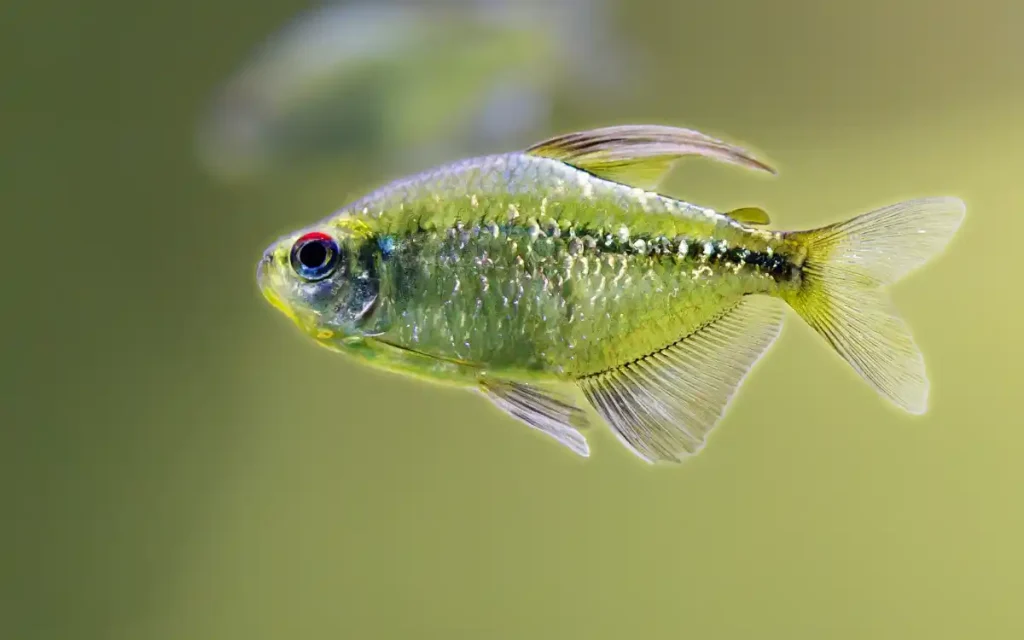
Widely known under the older name: Moenkhausia pittieri.
Young diamond tetras can look fairly ordinary. As they mature, their reflective scales and longer fins make them much more eye-catching. That is a good reason to look at adult photographs before choosing fish solely from a shop display.
These are deeper-bodied fish that need more space than small neons or embers. I would plan a planted 30-gallon aquarium for a group, with an open swimming area.
They are usually suitable for peaceful communities. Give them a varied diet and time to settle rather than relying on very bright lighting to make their scales shine.
12. Bleeding Heart Tetra (Hyphessobrycon erythrostigma)
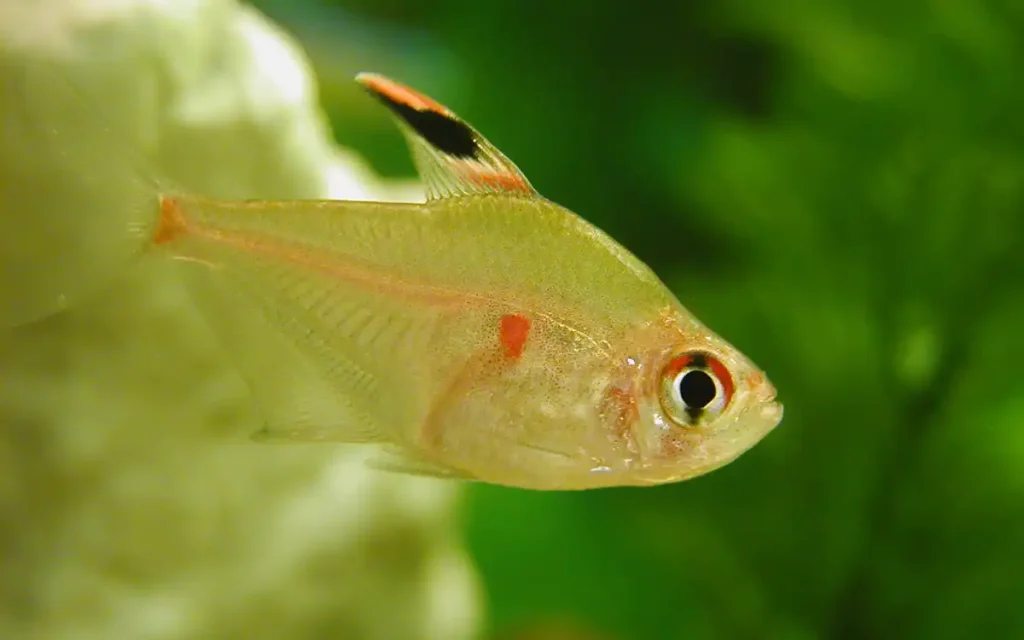
Common older name: Hyphessobrycon erythrostigma.
Bleeding heart tetras have a deep, pinkish-silver body and a red mark behind the gill area. That normal marking gives the fish its name; it is not an injury.
They grow larger than many beginners expect from the juveniles sold in shops. Allow room for a group, planted shelter and open water rather than treating them as interchangeable with neon tetras.
They are generally suitable for a thoughtfully chosen community, although males may display and chase one another. Plants and wood can break up sightlines so fish can move away from a rival.
Their adult size makes them a better candidate for a medium-sized aquarium than a nano setup.
13. Emperor Tetra (Nematobrycon palmeri)
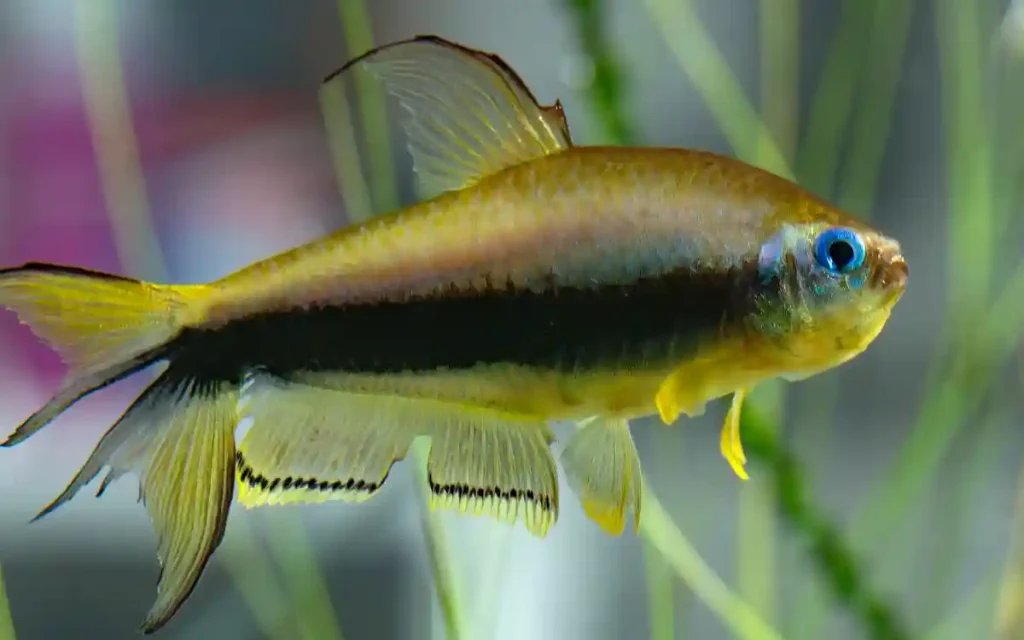
Emperor tetras have a dark horizontal stripe with a blue or purple sheen above it. Mature males develop extended fins and a pointed central tail ray.
They offer interesting social behaviour, but do not expect a permanently tight school. Males may claim small areas and display to one another.
I would choose an aquarium around 36 inches long, with plants and wood dividing the space while leaving swimming room. Keep a group rather than a lone male or an isolated pair.
Check the scientific name when buying. Fish sold as blue emperor tetras may be Inpaichthys kerri, a different species with a similar trade name.
How to Choose the Right Tetra
Start with your aquarium’s usable swimming space and water conditions. Then consider the fish already living there.
For a quiet planted setup, I would shortlist glowlight, black neon or lemon tetras. For a small aquarium with tiny, gentle inhabitants, embers deserve a closer look. For a larger display, Congo or diamond tetras offer more body size and movement.
Serpae tetras require more caution because of their nipping behaviour. Cardinals and rummy-noses deserve careful planning around water conditions and aquarium stability.
Most importantly, choose a species you can keep in a proper group. Ten compatible fish of one species usually make a better plan than a collection of lonely individuals.
Frequently Asked Questions
How many tetras should be kept together?
For many commonly kept tetras, six is a lower starting point, while a group of 8–12 is often a better goal. The right number depends on species, tank size and existing stocking. Larger groups still need adequate space.
Can different tetra species live together?
Often, yes, provided their water requirements and temperaments suit one another. Each species should still have its own group. Three neons and three cardinals should not be treated as a complete group of six of either species.
Which tetra is best for a beginner?
I would shortlist black neon and glowlight tetras for a beginner with a cycled, appropriately sized aquarium. “Beginner-friendly” does not mean a fish can tolerate an uncycled tank or neglected maintenance.
Can tetras live with a betta?
Some combinations work, but there is no guaranteed match. Avoid known fin-nippers such as serpae tetras. The betta’s behaviour, the tetra species and the available space all matter, and you need a backup plan if either fish becomes stressed.
Why are my tetras not swimming in a tight school?
A comfortable group may spread out to feed and investigate the aquarium. Constantly tight schooling can also occur when fish feel threatened. Judge their condition by normal feeding, breathing and interactions, rather than expecting coordinated swimming all day.
Which Tetra Would I Choose?
For a first community aquarium, I would favour one well-sized group of black neon or glowlight tetras. For a small planted setup, I would consider embers. With a spacious aquarium, Congo tetras become an option.
Choose the fish whose needs fit the aquarium you can provide. Colour is a bonus; compatibility is what makes the tank work.
