
Ember Tetra Care Guide Tank Size, Diet, Lifespan & Tank Mates

Ember Tetra is a small, peaceful freshwater fish known for its bright orange color and calm behavior. It’s a great choice for nano tanks and community aquariums, especially if you want a soft, natural look instead of flashy fish.
These fish stay small, rarely exceed 1 inch, and do best in groups of at least 8–10. With stable water, plants, and gentle tank mates, Ember Tetras are easy to care for and can live for several years without problems.
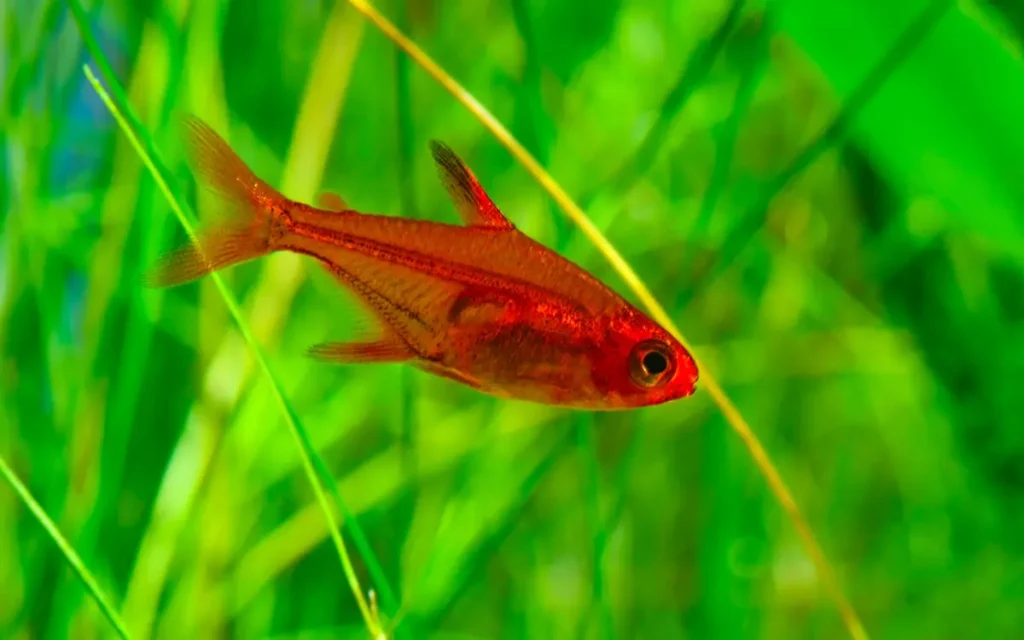
Ember Tetra Care Overview
| Category | Details |
| Scientific Name | Hyphessobrycon amandae |
| Common Names | Ember Tetra |
| Size | 0.8 – 1 inch |
| Lifespan | 2 – 4 years |
| Tank Size | 10 gallons (minimum) |
| Temperature | 73–84°F |
| pH | 5.5 – 7.0 |
| Temperament | Peaceful |
| Care Level | Easy |
| Diet | Omnivore |
Appearance
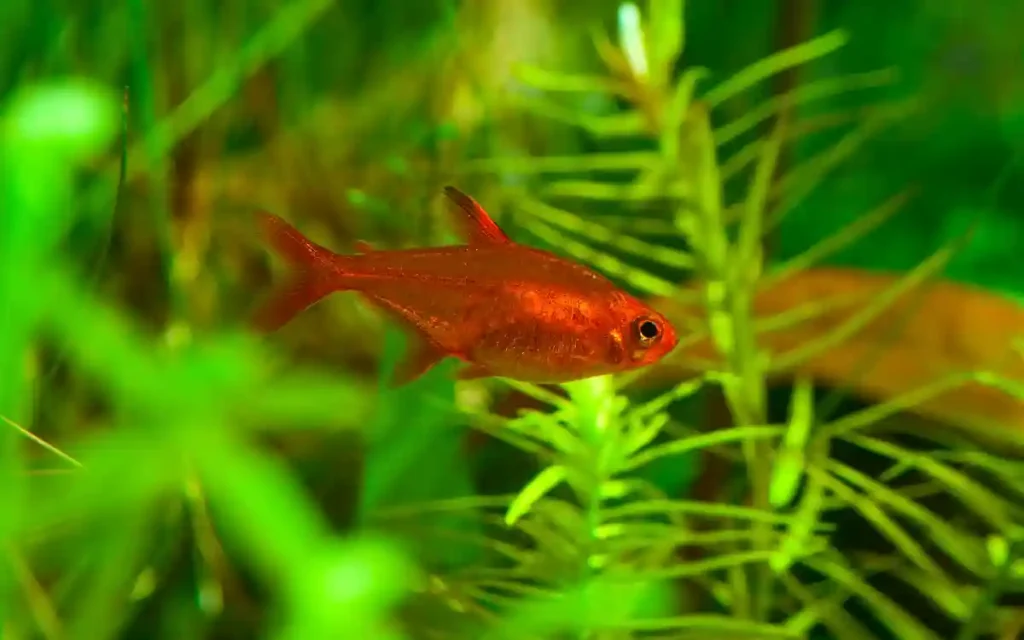
Ember Tetras are small but stand out because of their glowing orange color. Their bodies are slim and slightly transparent, which gives them a soft, natural look in planted tanks.
Unlike larger tetras, they don’t have bold patterns. Instead, their beauty comes from their consistent color and how they move together in a group. In a well-lit planted aquarium, their orange shade becomes more vibrant, especially when they are healthy and stress-free.
Tank Size and Setup
Minimum Tank Size
A 10-gallon tank is enough for Ember Tetras, which makes them perfect for nano setups. However, if you want a larger group or a community tank, a 15–20 gallon setup works even better.
Read also: Fish for 10 gallon tank
Ideal Tank Setup
Ember Tetras prefer a calm, natural environment.
- Dense plants (important for security)
- Soft lighting
- Dark substrate for better color
- Slow water flow
They feel more comfortable in planted tanks where they can hide and explore.
Water Parameters
- Temperature: 73–84°F
- pH: 5.5 – 7.0
- Soft water preferred
Stable conditions matter more than exact numbers. Avoid sudden changes.
Behavior
Ember Tetras are one of the most peaceful tetra species you can keep.
- Very calm and non-aggressive
- Spend time in mid to lower levels
- Stay close together in groups
They are shy fish, so they need a proper group to feel safe.
Related article: Rummy Nose Tetra Care Guide
How Many Ember Tetras Should Be Kept Together?
- Minimum: 8 fish
- Ideal: 10–15 fish
Unlike Black Skirt Tetras, Ember Tetras rely heavily on group size for confidence. Small groups may hide more and lose color.
Related article: Best schooling fish for home aquarium.
Best Tank Mates
Good Tank Mates
- Corydoras (small species)
- Rasboras
- Small peaceful tetras
- Shrimp and snails
These fish share similar temperament and won’t stress Ember Tetras.
Tank Mates to Avoid
- Large or aggressive fish
- Fast, hyperactive fish
- Fin nippers
Because Ember Tetras are small and calm, they can easily get stressed.
Diet and Feeding
Ember Tetras are easy to feed but need small-sized food.
Best Foods
- Micro pellets
- Crushed flakes
- Baby brine shrimp
- Daphnia
Feeding Schedule
Feed them 1–2 times daily in small amounts. Make sure food is small enough for their tiny mouths.
Lifespan and Growth
Ember Tetras live around 2–4 years with proper care. They stay small throughout their life, making them ideal for nano aquariums.
Breeding Ember Tetras
Breeding Ember Tetras is possible in a home aquarium, but it requires a bit of setup since they are egg scatterers.
To improve success:
- Use a separate 5–10 gallon breeding tank
- Keep lighting low
- Add fine-leaf plants or moss (like Java moss)
- Slightly soft and warm water works best
Females release eggs while males fertilize them, usually early in the morning. After spawning, remove the adults immediately because they will eat the eggs.
Eggs hatch within 24–48 hours. The fry are very small, so start with infusoria or powdered fry food. After a few days, you can feed baby brine shrimp.
Common Problems
Ember Tetras are hardy, but beginners often face a few common issues.
Color Fading
If your Ember Tetras look pale instead of bright orange, something is off.
Common causes:
- Stress
- Poor water quality
- Weak diet
Fix:
- Improve water quality with regular changes
- Feed protein-rich food
- Add plants and reduce stress
Hiding Behavior
These fish are naturally shy, but excessive hiding means a problem.
Reasons:
- Group size too small
- Tank too bright
- Lack of plants
Solution:
- Keep at least 8–10 fish
- Add dense plants
- Use softer lighting
Stress and Weakness
Stress can make them inactive and dull.
Causes:
- Aggressive tank mates
- Sudden water changes
- Poor tank setup
Fix:
- Keep only peaceful fish
- Maintain stable conditions
- Avoid overcrowding
Diseases
Like other small fish, Ember Tetras can get:
- Ich (white spots)
- Fungal infections
- Fin damage
Clean water and stable conditions prevent most issues.
Pros and Cons
Pros
- Very peaceful and beginner-friendly
- Perfect for nano tanks
- Bright orange color stands out in planted aquariums
- Easy to keep in groups
Cons
- Very small and can be easily stressed
- Not suitable with large or aggressive fish
- Needs a planted environment to feel secure
Is Ember Tetra Right for You?
If you want a calm, colorful fish for a small or planted aquarium, Ember Tetras are a great choice. They are easy to manage, don’t require large tanks, and look best when kept in groups.
They are especially good for beginners who want a peaceful community tank without dealing with aggressive behavior.
FAQs
How many Ember Tetras should be kept together?
At least 8, but 10–15 is ideal. Larger groups make them more active and confident.
Are Ember Tetras aggressive?
No, they are one of the most peaceful tetra species and rarely show aggression.
Can Ember Tetras live with shrimp?
Yes, they are shrimp-safe and work well in shrimp tanks.
Do Ember Tetras need a heater?
Yes, they prefer stable temperatures between 73–84°F, so a heater is recommended.
Why are my Ember Tetras hiding?
Usually due to small group size, bright lighting, or lack of plants. Increasing group size and adding cover helps.
How big do Ember Tetras get?
They stay small, around 0.8 to 1 inch, even as adults.
