
Zebra Danio Care Guide

Zebra danios are hardy, but they aren’t unbreakable. If yours are gasping, hiding, losing color, or chasing one fish nonstop, check the water before blaming disease.
Test ammonia and nitrite immediately. Both should read 0 ppm. If either is present, change 40 to 50 percent of the water, add water conditioner, increase surface movement, and stop feeding for 24 hours. Don’t replace all the filter media because that can remove the bacteria your tank needs.
Constant chasing usually points to another problem: the group is too small, the aquarium is too short, or there aren’t enough visual barriers. Zebra danios should live in a group of at least eight, preferably ten, inside a 20-gallon-long tank or larger.
Fix those basics first. Medication won’t repair poor water, and one lonely danio will not calm down by staring at its reflection all day.
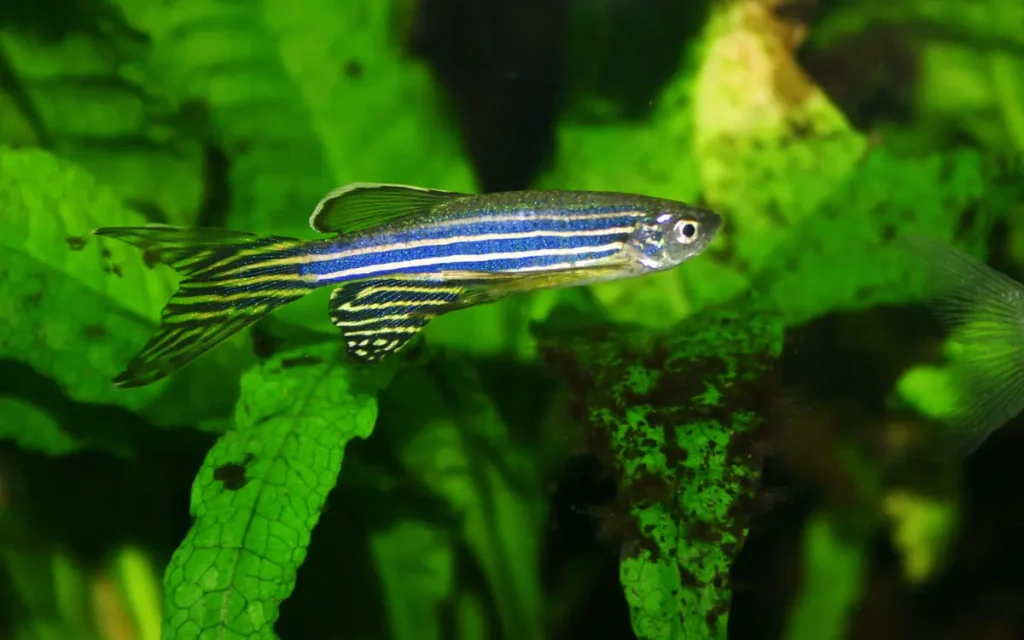
Zebra Danio Care at a Glance
Zebra danios are small, active freshwater fish that do best in cooler, well-oxygenated water. They are suitable for beginners when kept in a proper school inside a fully cycled aquarium.
| Care requirement | Recommended range |
| Scientific name | Danio rerio |
| Adult size | Around 1.5 to 2 inches |
| Lifespan | Usually 3 to 5 years |
| Minimum tank size | 20-gallon long |
| Group size | At least 8, preferably 10 or more |
| Temperature | 64 to 77°F |
| Preferred temperature | Around 68 to 74°F |
| pH | 6.0 to 8.0 |
| Water hardness | 5 to 19 dGH |
| Ammonia | 0 ppm |
| Nitrite | 0 ppm |
| Nitrate | Preferably below 20 ppm |
| Diet | Omnivore |
| Temperament | Peaceful but extremely active |
| Swimming level | Middle and upper areas |
| Care level | Beginner |
What Size Tank Do Zebra Danios Need?
A 20-gallon-long tank is the best starting size for a zebra danio school. A 10-gallon tank may hold the water, but it doesn’t provide enough horizontal swimming room for a proper group.
These fish move like someone pressed the fast-forward button. They race from one end of the tank to the other, turn sharply, and chase schoolmates throughout the day. A longer aquarium gives them room to do this without crashing into decorations or constantly bothering other fish.
The larger water volume also stays more stable. Ammonia, temperature, and pH can change quickly in a small aquarium, especially when a beginner feeds a “tiny pinch” that somehow becomes half the container.
A good setup includes:
- A 20-gallon-long aquarium or larger
- A secure lid with no wide gaps
- Open swimming room across the center
- Plants around the back and sides
- A filter that creates moderate water movement
- An air stone if surface movement is weak
- Sand or smooth gravel
- A light on a regular day-and-night schedule
Zebra danios are talented jumpers. Keep the tank covered, including the gaps near filter pipes and cables. A missing fish isn’t always hiding inside the decoration. Sometimes it has made a poor decision near the lid.
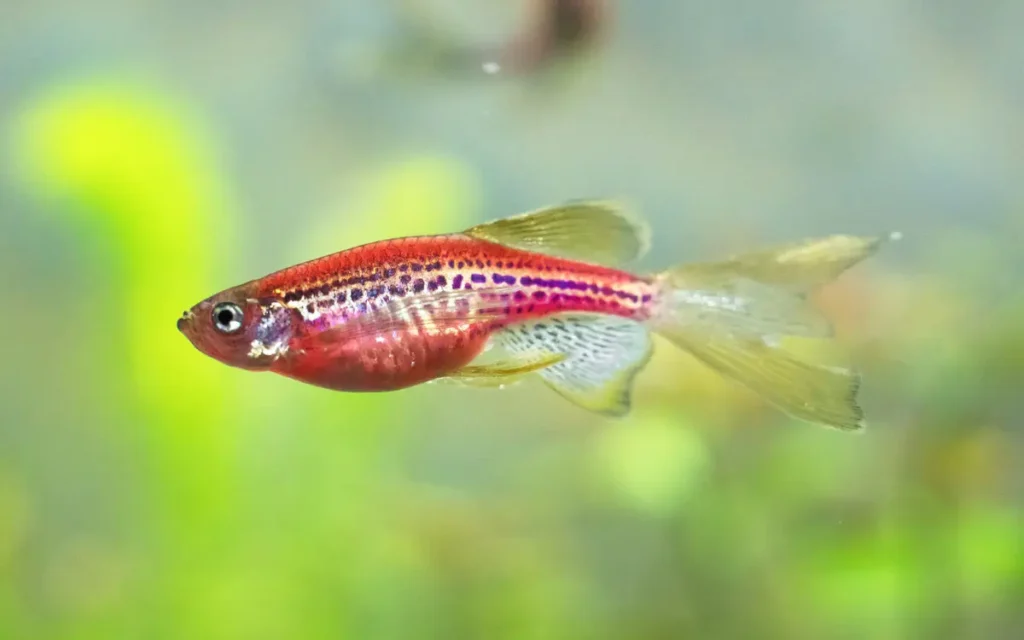
How to Set Up a Zebra Danio Tank
Step 1: Cycle the Aquarium
Never add zebra danios to a newly filled aquarium and assume their hardiness will protect them. They still suffer when ammonia or nitrite builds up.
Cycling grows bacteria that turn toxic ammonia into nitrite and then into less harmful nitrate. This process usually takes several weeks.
Your tank is ready when:
- Ammonia reads 0 ppm
- Nitrite reads 0 ppm
- Nitrate is present and remains controlled
- The readings stay stable before fish are added
If you are starting your first aquarium, follow this fish tank cycling guide. You can also read how the aquarium nitrogen cycle handles fish waste.
Step 2: Add the Substrate and Decorations
Zebra danios don’t spend much time digging, so either sand or smooth gravel works. Choose a substrate that is easy to vacuum.
Place taller plants, rocks, and driftwood toward the back and ends of the aquarium. Keep the middle open for swimming. This arrangement provides cover without turning the tank into an underwater obstacle course.
Hardy plants such as Java fern, Anubias, hornwort, and water sprite work well. Floating plants can make nervous fish feel safer, but don’t cover the full surface.
Step 3: Install a Suitable Filter
Use a filter rated for the aquarium’s water volume. Zebra danios enjoy moderate flow and oxygen-rich water, but the current should not throw them around the tank.
Aim the filter outlet toward the surface. You should see a gentle ripple rather than completely still water.
Cover strong filter intakes with a sponge if you plan to breed the fish or keep small shrimp. This prevents eggs, fry, and curious fish from being pulled inside.
Step 4: Add a Proper Group
Keep at least eight zebra danios together. Ten or more is even better when the aquarium has enough space and filtration.
A group of three or four often develops more bullying. One dominant fish may chase the weakest individual because there aren’t enough schoolmates to spread out that behavior.
Don’t solve a small-group problem by immediately buying more fish if the tank is uncycled or already overcrowded. Check the aquarium’s capacity and water quality first.
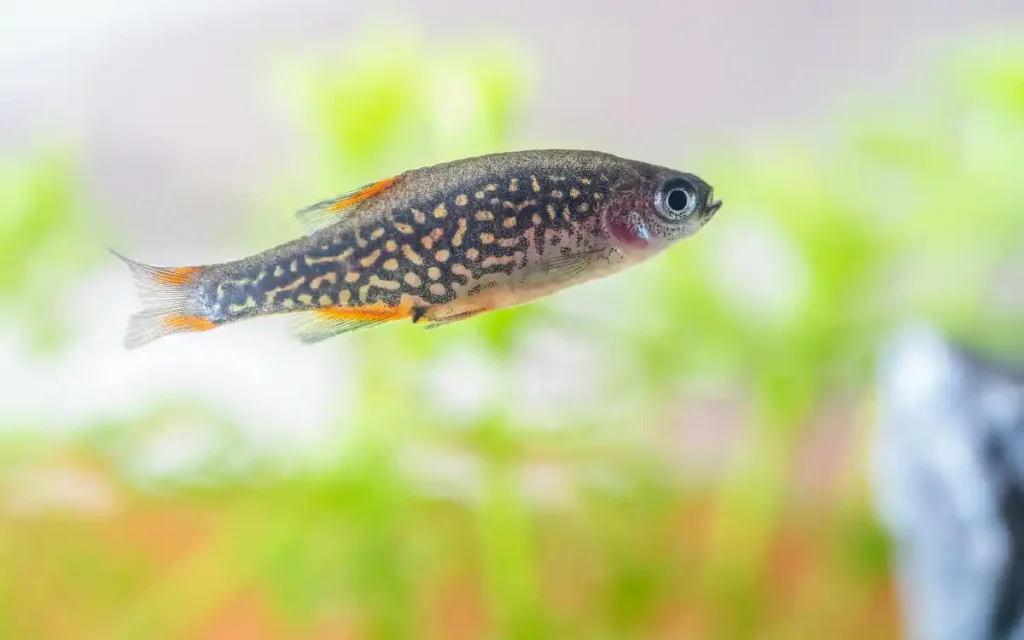
Best Water Parameters for Zebra Danios
Zebra danios tolerate a broad range of water conditions, but they still need consistency.
Keep the temperature between 64 and 77°F, with approximately 68 to 74°F working well for most home aquariums. They can tolerate warmer periods, but keeping them in very warm water year-round can speed up their metabolism and reduce the number of suitable tank mates.
A heater may not be necessary if the room remains within their preferred range. Use one if the temperature drops sharply at night or changes from day to day.
Keep these readings stable:
- pH: 6.0 to 8.0
- Hardness: 5 to 19 dGH
- Ammonia: 0 ppm
- Nitrite: 0 ppm
- Nitrate: As low as practical, preferably below 20 ppm
Don’t add chemicals just to force the pH toward 7.0. A steady pH of 7.6 is usually safer than water that swings between 6.8 and 7.4 every time you try to correct it.
What Do Zebra Danios Eat?
Zebra danios are omnivores. They readily accept flakes and small pellets, but feeding only one dry food can leave their diet limited.
Use a quality tropical flake or micro pellet as the main food. Add frozen, live, or freeze-dried foods several times each week.
Suitable foods include:
- Small tropical flakes
- Micro pellets
- Baby brine shrimp
- Daphnia
- Mosquito larvae from a safe source
- Chopped bloodworms
- Small insect-based foods
Feed once or twice daily. Give only what the group can finish in about one minute.
Watch the whole school eat. Fast fish may grab most of the food while smaller or weaker individuals miss out. Spread the food across the surface instead of dropping everything into one corner.
Overfeeding causes more trouble than slightly underfeeding. Uneaten food breaks down, raises ammonia, and makes the substrate dirty. The danios will still act hungry five minutes later. That is normal. Fish are excellent actors when food is involved.
Are Zebra Danios Aggressive?
Zebra danios are usually peaceful, but they chase one another as part of their social behavior. Short chases that move between different fish are generally normal.
Bullying is more likely when one fish is chased constantly, prevented from eating, or forced to hide near the filter or bottom.
Warning signs include:
- Torn or clamped fins
- One fish separated from the group
- A fish hiding for most of the day
- Rapid breathing after repeated chasing
- Weight loss
- One dominant fish guarding a large area
Start by testing the water and checking the group size. If both are correct, rearrange plants and decorations to break up open sightlines.
Avoid keeping zebra danios with slow, long-finned fish. Their speed and curiosity can stress bettas, fancy guppies, long-finned gouramis, and similar species. Even if no fins are bitten, constant activity may prevent calmer fish from resting or feeding comfortably.
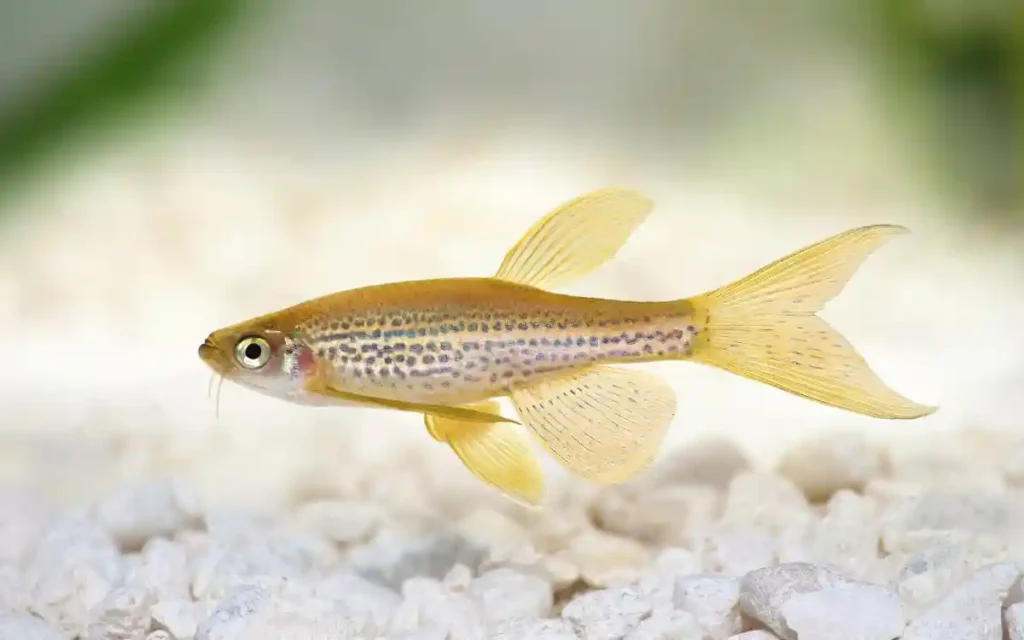
Best Tank Mates for Zebra Danios
Choose active, peaceful fish that enjoy similar temperatures. Tank mates should also be large enough to avoid being bullied or outcompeted for food.
Good choices include:
- White cloud mountain minnows
- Cherry barbs
- Bronze corydoras
- Hillstream loaches in a suitable setup
- Other zebra danios
- Peaceful cool-water fish of a similar size
Always compare water requirements before mixing species. For example, white cloud mountain minnows enjoy cooler water, while cherry barbs overlap with the warmer end of the danio’s range.
Avoid German blue rams, discus, and other fish that need consistently warm water. Bettas and fancy guppies are also poor choices because their long fins and slower movement can attract attention from an overactive danio school.
Zebra Danio Gasping at the Surface
Surface gasping can mean low oxygen, ammonia poisoning, nitrite poisoning, gill damage, or very warm water.
Take these steps:
- Test ammonia and nitrite.
- Change 40 to 50 percent of the water if either is above 0 ppm.
- Treat new water with conditioner.
- Increase surface movement.
- Check that the filter is running properly.
- Remove rotting food or dead plant matter.
- Check the temperature.
Don’t add medicine until you have tested the water. Poor water quality can cause the same symptoms as an infection.
Zebra Danio Hiding or Staying Alone
A lone fish may be stressed, sick, injured, or bullied. Check its fins, body shape, breathing, and appetite.
Test the water and observe the group for at least ten minutes. A fish that joins the school during feeding but hides afterward may be avoiding aggression.
Quarantine the fish if it has open wounds, white spots, unusual swelling, severe weight loss, or trouble swimming.
Zebra Danio Losing Color
Color can fade after transport, during stress, under poor lighting, or when the fish is ill. Water quality should be checked first.
Provide a varied diet and a dark background or natural-colored substrate. Bright bare tanks can make zebra danios look washed out.
Sudden color loss combined with clamped fins, fast breathing, or poor appetite needs immediate attention.
Zebra Danio Has White Spots
Small white dots resembling grains of salt may indicate ich. Confirm that the spots are on the body and fins rather than floating debris or breeding tubercles.
Move affected fish to a quarantine tank when possible. Use a treatment made for ich and follow its exact dosage. Some medicines affect shrimp, snails, plants, and filter bacteria.
Don’t raise the temperature aggressively. Zebra danios prefer cooler water, and a sudden temperature jump adds stress.
Zebra Danio Has Torn Fins
Torn fins may come from chasing, sharp decorations, or fin rot. Clean water allows minor injuries to heal.
If the fin edge becomes red, milky, or continues receding, infection may be present. Quarantine the fish and use a suitable antibacterial treatment only after correcting the water and removing the cause of the damage.
How to Clean a Zebra Danio Tank
Change around 25 to 35 percent of the water each week. Heavily stocked aquariums may need larger or more frequent changes.
During maintenance:
- Test the water before changing it.
- Use a gravel vacuum to remove waste from open areas.
- Clean algae from the glass with an algae scraper.
- Trim dead plant leaves.
- Rinse filter sponges in removed aquarium water.
- Refill the tank with conditioned water at a similar temperature.
Never wash all filter media under untreated tap water or replace every sponge and cartridge at once. That can remove much of the bacterial colony and cause an ammonia spike.
An algae scraper makes the glass look better, but it doesn’t clean the water. Water changes, substrate cleaning, sensible feeding, and filter care do the real maintenance work.
Male vs Female Zebra Danios
Adult females usually have rounder bellies and fuller bodies. Males are often slimmer and may show stronger golden coloring between the blue stripes.
Body shape is easier to compare when several mature fish are viewed together. A suddenly swollen belly isn’t always a sign that the fish is female or carrying eggs. Constipation, fluid buildup, and internal illness can also cause swelling.
Healthy females carrying eggs should still swim, eat, and breathe normally.
Breeding Zebra Danios
Zebra danios are egg scatterers and may breed without help in a mature aquarium. The adults will eat the eggs, so few fry survive in a community tank.
For planned breeding, place a conditioned male and female or a small group in a separate tank. Use spawning mops, fine-leaved plants, marbles, or mesh that lets eggs fall out of the adults’ reach.
Spawning often occurs in the morning. Remove the adults after eggs appear.
The eggs may hatch within a few days, depending on temperature. Newly swimming fry need very small food, such as infusoria or commercial liquid fry food. They can move to baby brine shrimp once their mouths are large enough.
Breeding is easy. Raising dozens of tiny fry without ruining the water is the part that tests your patience.
Frequently Asked Questions
How many zebra danios should be kept together?
Keep at least eight zebra danios, with ten or more preferred. A proper school spreads out chasing and helps the fish feel secure.
Can zebra danios live in a 10-gallon tank?
A 10-gallon aquarium is too cramped for a full school over the long term. A 20-gallon-long tank provides more swimming room and more stable water.
Do zebra danios need a heater?
Not always. You may not need a heater when the room keeps the aquarium between 64 and 77°F without sudden changes. Use a heater if the temperature regularly falls below this range.
Can zebra danios live with bettas?
I don’t recommend it. Zebra danios are fast and may nip or stress a slower, long-finned betta. Their preferred temperatures also don’t match perfectly.
Do zebra danios sleep?
Yes. They become less active and rest when the aquarium lights are off. Give them a regular light schedule with eight to ten hours of light followed by a dark period.
Why are my zebra danios chasing each other?
Brief chasing is normal. Constant targeting usually points to a small school, cramped aquarium, poor layout, breeding behavior, or stress from bad water.
Are zebra danios good beginner fish?
Yes, when the tank is cycled and the fish are kept in a proper group. They handle a wider range of conditions than many tropical fish, but they still require clean water, enough swimming space, and compatible tank mates.
Zebra danios are easiest to keep when you work with their natural behavior. Give them a long tank, clean cooler water, a group of at least eight, and room to race. Once those needs are met, most of the frantic chasing and mysterious stress becomes much easier to manage.
