
10 Best Plants for Goldfish Tanks

Goldfish can live with live plants, but not every aquarium plant will survive them.
The best plants for goldfish tanks are tough, easy to attach to rocks or driftwood, or fast-growing enough to recover from light nibbling. Goldfish are curious fish. They dig through substrate, test leaves with their mouth, and push plants around while searching for food.
That does not mean a planted goldfish tank is impossible. It just means you need the right plants and the right planting method.
In this guide, you’ll learn the best live plants for goldfish tanks, which plants goldfish usually avoid, how to stop goldfish from uprooting plants, and which plants are better to avoid.
If you are still learning basic goldfish care, read our full goldfish care guide before setting up a planted tank.
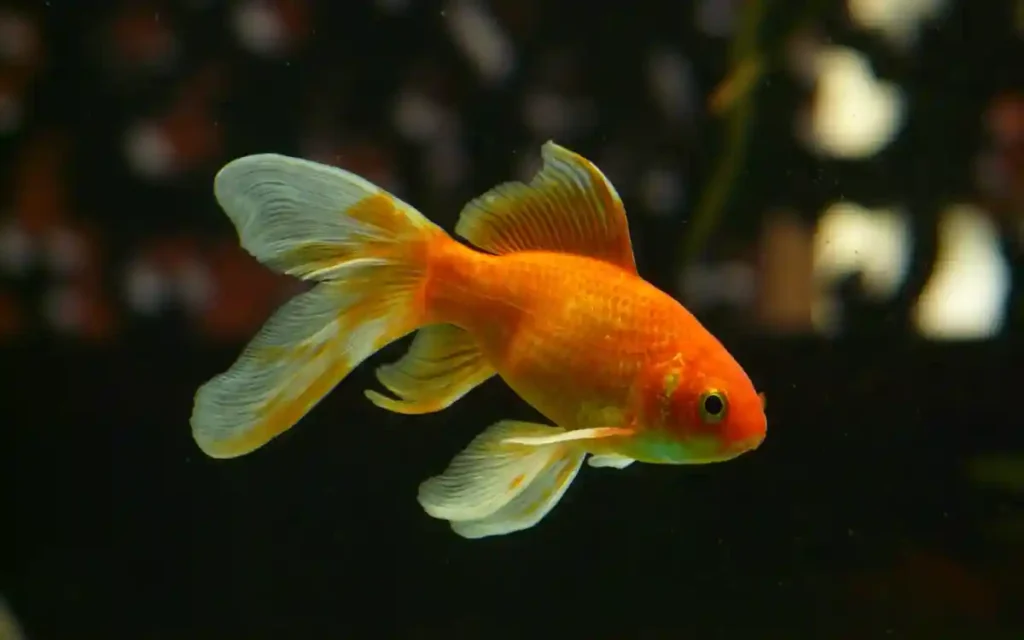
Why Goldfish Are Hard on Live Plants
Goldfish are not always serious plant eaters, but they are rough with plants.
They dig through gravel, nibble soft leaves, and move things around while searching for food. Even fancy goldfish, which are slower than common goldfish, can still pull up weak plants. Larger single-tail goldfish are even more active and need tougher plant choices.
Goldfish also produce a lot of waste. That waste can feed plants, but it can also cause algae if the tank has too much light or poor maintenance.
The main point is simple: planting method matters almost as much as plant choice.
A Java Fern attached to rock has a much better chance than a soft stem plant pushed loosely into gravel. When goldfish cannot uproot the plant, the tank becomes much easier to manage.
If you are still choosing goldfish types for your tank, read our guide on types of goldfish because common goldfish, fancy goldfish, and pond goldfish do not behave exactly the same.
What Makes a Plant Good for a Goldfish Tank?
A good goldfish tank plant usually has one or more of these features:
- Tough leaves
- Strong roots
- Fast growth
- Bitter or leathery texture
- Ability to attach to rock or driftwood
- Ability to float without being planted
Attached plants are usually the easiest for beginners. Anubias, Java Fern, and Bucephalandra can be tied or glued to rocks and driftwood. Goldfish can still explore around them, but they cannot dig them out of the substrate.
Rooted plants can also work, but they need protection. Smooth stones around the base, plant pots, or deeper planting can help keep them in place.
1. Anubias
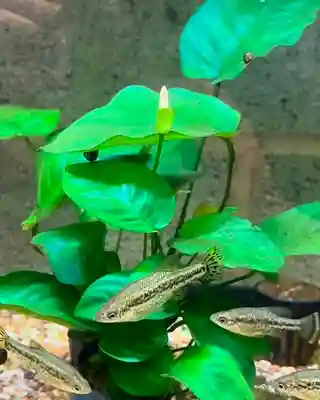
Anubias is one of the best plants for goldfish tanks. It has thick, leathery leaves that most goldfish ignore after a few test bites.
The best part is that Anubias does not need to be buried in substrate. You can attach it to a rock, driftwood, or aquarium decoration. This makes it perfect for goldfish tanks because the fish cannot easily uproot it.
Anubias also does well in low to medium light. It grows slowly, so it does not need constant trimming.
Good Anubias types for goldfish tanks include Anubias nana, Anubias barteri, and Anubias nana petite.
The most important care tip is this: do not bury the rhizome. The rhizome is the thick horizontal stem where the leaves grow from. If you bury it, the plant may rot.
| Care Detail | Anubias |
| Best Placement | Rock or driftwood |
| Light | Low to medium |
| Growth Speed | Slow |
| Care Level | Easy |
| Goldfish Safety | Excellent |
2. Java Fern
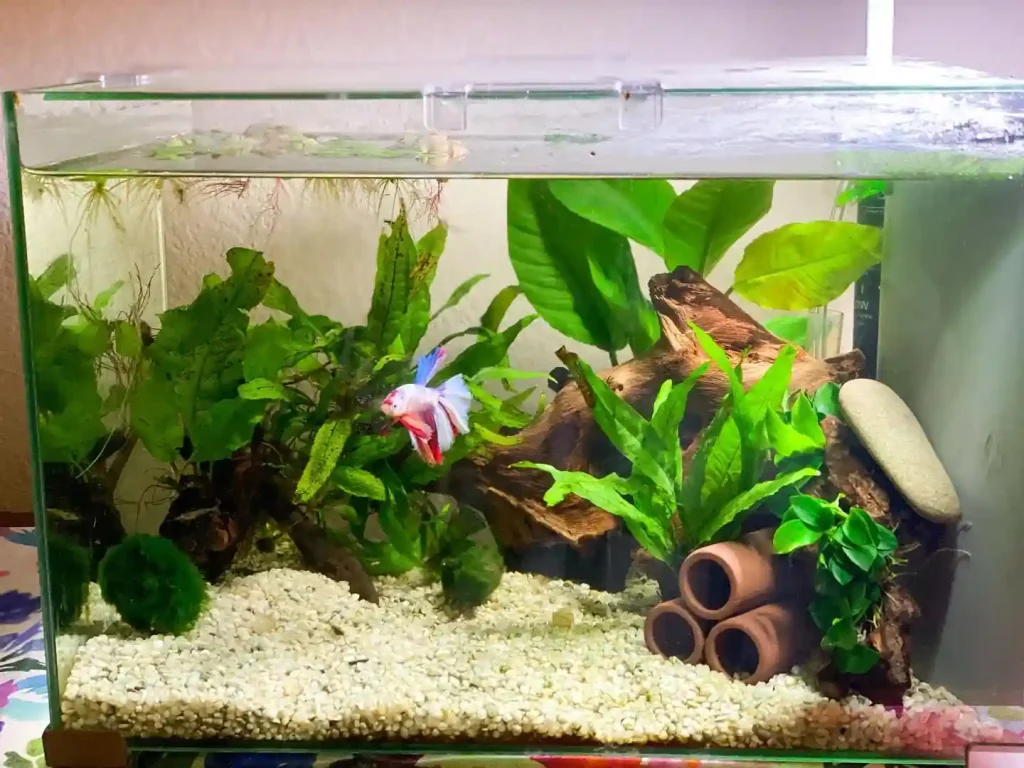
Java Fern is another excellent plant for goldfish tanks because it grows attached to hardscape instead of being planted in the gravel.
Its leaves are tough, and many goldfish leave it alone. Even if they nibble a little, Java Fern usually handles it better than soft plants.
You can attach Java Fern to driftwood, rocks, or decorations. Like Anubias, its rhizome should not be buried.
Regular Java Fern is the most common type, but Windelov Java Fern and Narrow Leaf Java Fern can also work well.
Beginners sometimes worry when they see brown spots or small baby plants growing on Java Fern leaves. This is often normal. Java Fern can grow tiny plantlets on older leaves, which can later be removed and attached somewhere else.
| Care Detail | Java Fern |
| Best Placement | Rock, wood, or decor |
| Light | Low to medium |
| Growth Speed | Slow |
| Care Level | Easy |
| Goldfish Safety | Excellent |
3. Amazon Sword Plants
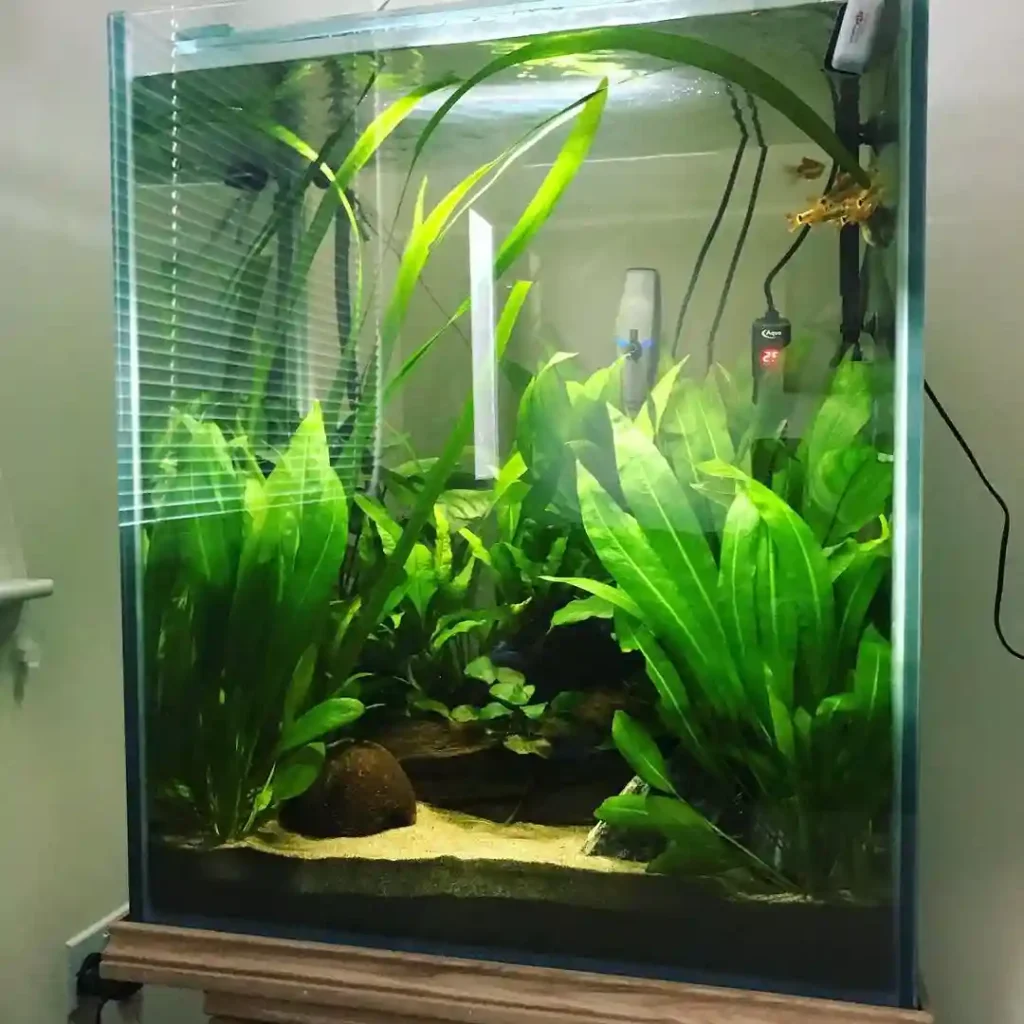
Amazon Sword is a strong choice for larger goldfish tanks. It grows big, creates a bold background, and can recover from light nibbling if the roots are healthy.
This plant does best in tanks around 30 gallons and up because it can grow large. In a small tank, it may take up too much room.
Goldfish may pull at Amazon Sword leaves or disturb the base while digging. To protect it, use root tabs and place smooth stones around the roots after planting.
Amazon Sword is a root-feeding plant, so it needs nutrients near the roots. If the leaves turn pale or weak, the plant may need more root nutrition.
| Care Detail | Amazon Sword |
| Best Placement | Back or center |
| Light | Medium |
| Growth Speed | Medium |
| Care Level | Easy to medium |
| Goldfish Safety | Good once rooted |
4. Vallisneria
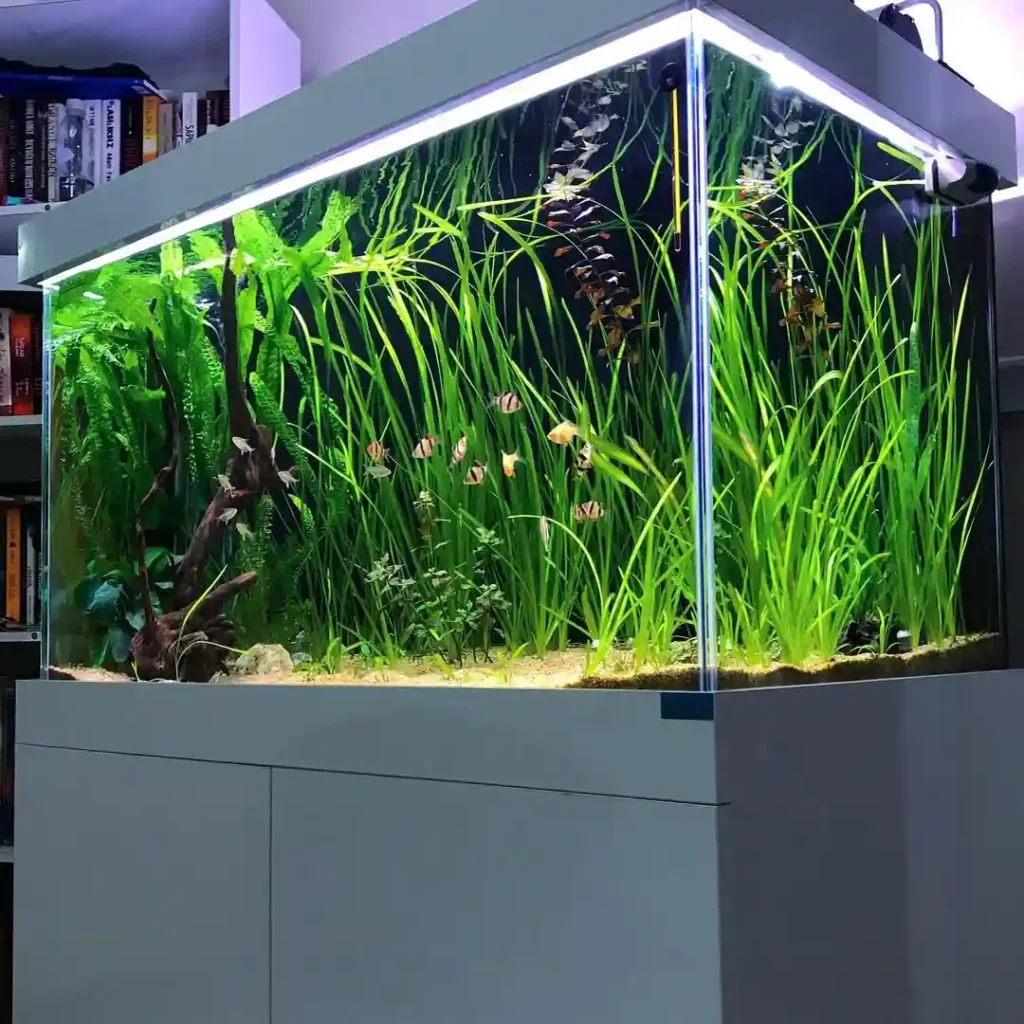
Vallisneria is a good background plant for goldfish tanks because it grows tall and spreads through runners.
Once established, it can handle some rough behavior. Goldfish may damage a few leaves, but healthy Vallisneria can keep growing if the roots are protected.
The first few weeks are the hardest. New plants can be pulled up before they root properly. Use smooth stones around the base or plant Vallisneria in groups so it has a better chance to settle.
Good types include Jungle Val, Italian Val, and Corkscrew Val.
Vallisneria works especially well in long tanks because it creates a grassy background without blocking too much swimming space.
| Care Detail | Vallisneria |
| Best Placement | Background |
| Light | Medium |
| Growth Speed | Fast |
| Care Level | Easy |
| Goldfish Safety | Good once established |
5. Java Moss
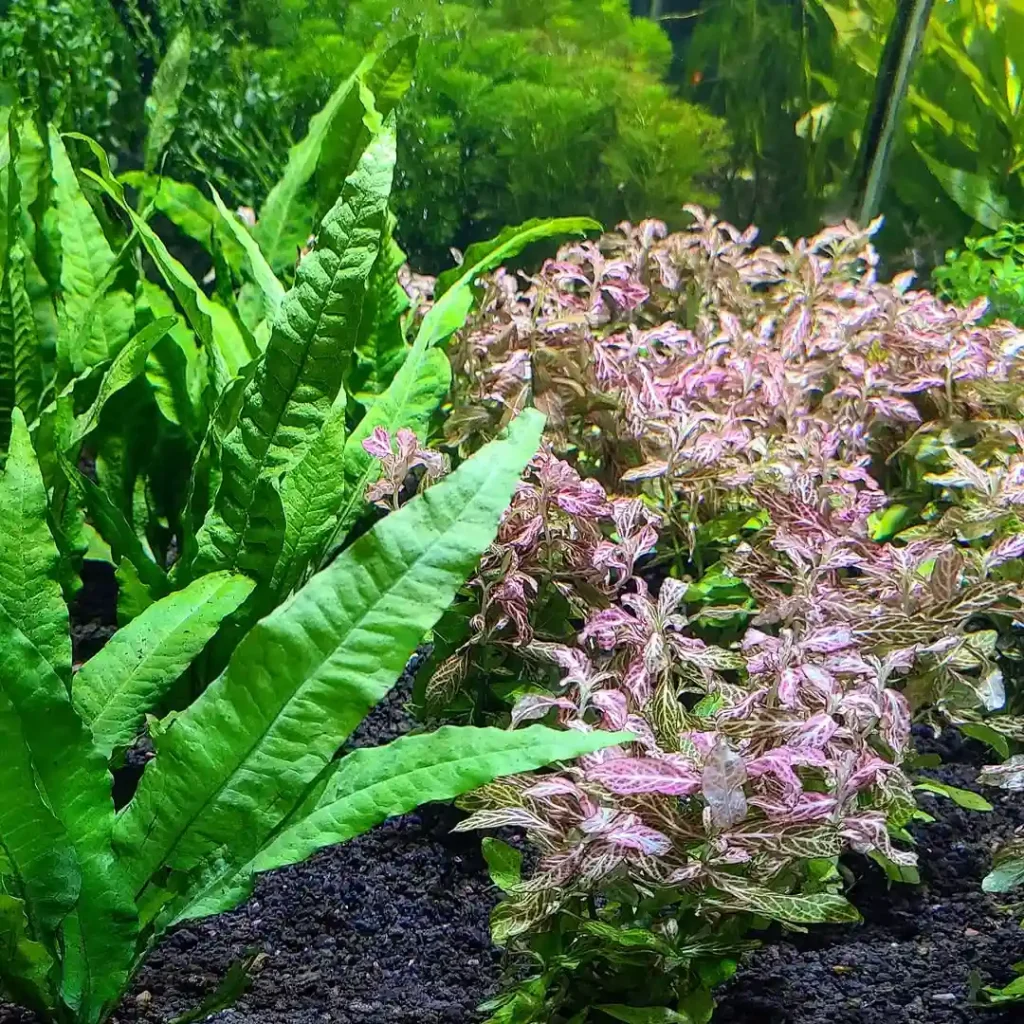
Java Moss can work in goldfish tanks, but it should not be left loose. Goldfish may pull at it if it floats Java Moss can work in goldfish tanks, but it needs to be used the right way.
Do not leave it loose in the tank. Goldfish may pull at it, scatter it around, or create a messy look. It works better when tied to rocks, driftwood, or mesh.
Java Moss gives a natural look and can soften hardscape. It also gives small organisms a place to grow, which some fish may enjoy picking at.
The downside is that moss can trap debris in goldfish tanks. Since goldfish produce a lot of waste, Java Moss should be cleaned gently during water changes.
Use old tank water to swish debris out of the moss instead of rinsing it under tap water.
| Care Detail | Java Moss |
| Best Placement | Rock, wood, or mesh |
| Light | Low to medium |
| Growth Speed | Medium |
| Care Level | Easy |
| Goldfish Safety | Good if attached |
6. Marimo Moss Balls
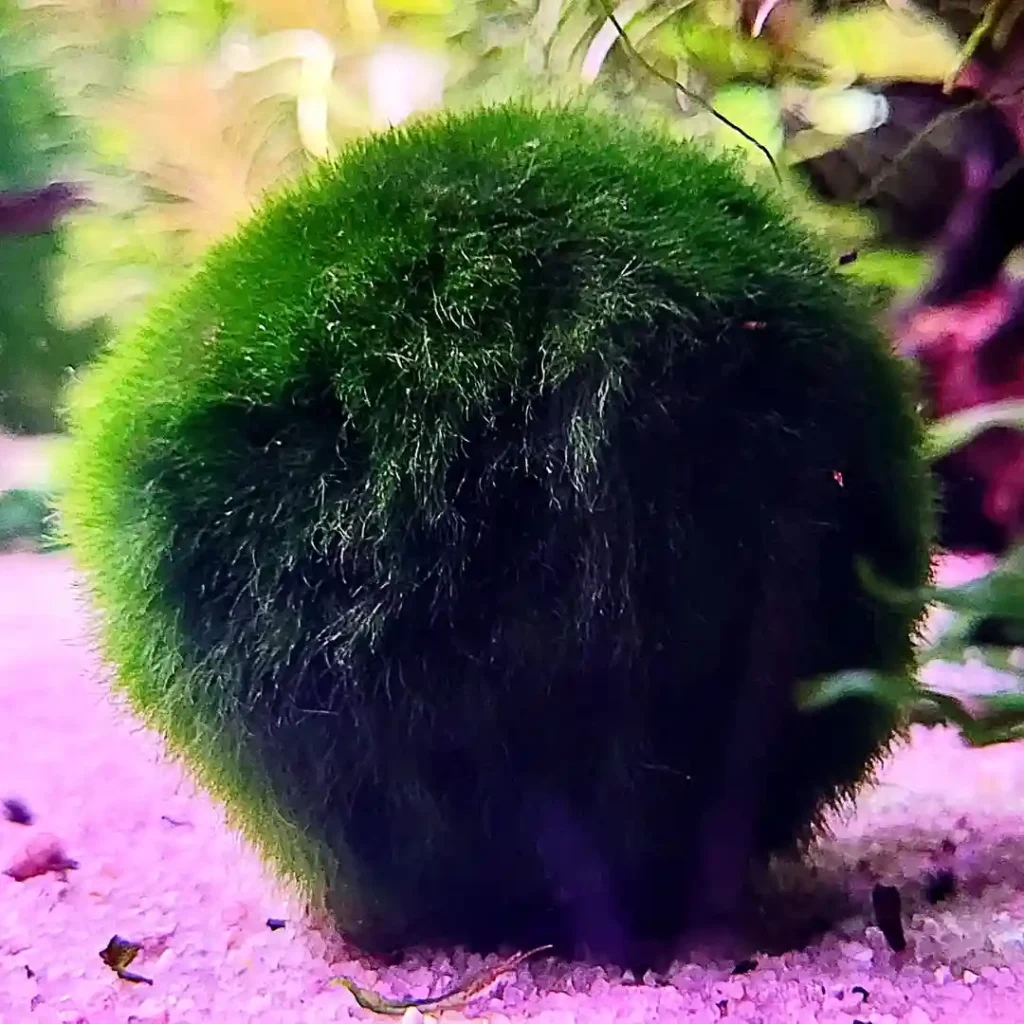
Marimo Moss Balls are one of the easiest options for beginners. Goldfish may push them around, but they Marimo Moss Balls are one of the easiest plant options for goldfish tanks.
They are not really a typical stem or rooted plant. They sit on the bottom of the tank and grow very slowly. Goldfish may push them around, but they usually cannot destroy them quickly.
This makes Marimo a good choice for beginners who want greenery without much work.
Marimo Moss Balls do best in low to medium light. Too much bright light can cause browning.
To care for them, gently rinse them in old tank water during maintenance and roll them between your hands so they keep their round shape. Rotate them now and then so all sides get light.
| Care Detail | Marimo Moss Ball |
| Best Placement | Bottom of tank |
| Light | Low |
| Growth Speed | Very slow |
| Care Level | Very easy |
| Goldfish Safety | Excellent |
7. Hornwort
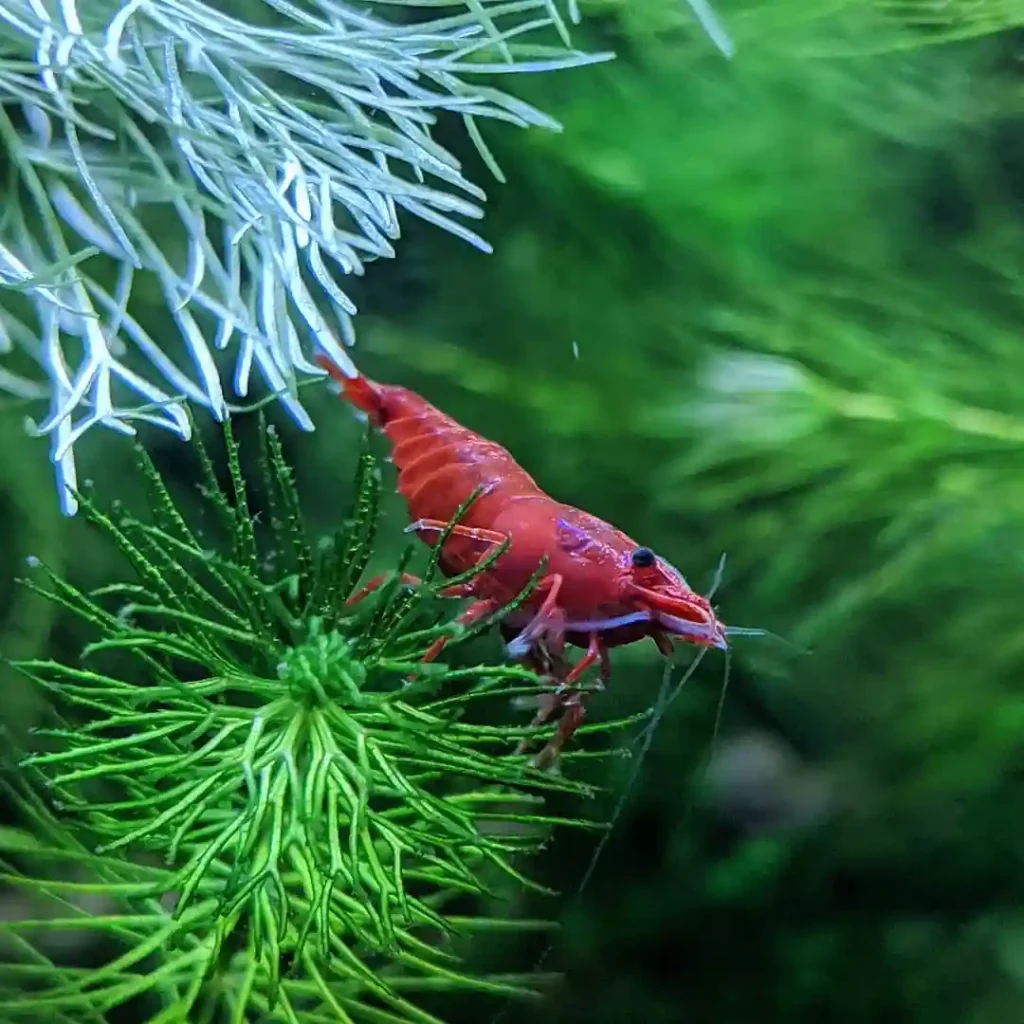
Hornwort is useful in goldfish tanks because it grows fast and can help use extra nutrients from fish waste.
It can float near the surface or be weighted down. Floating is often easier because goldfish cannot uproot it from the substrate.
Hornwort grows quickly under decent light. This can help create shade and cover, especially in larger tanks.
The honest downside is shedding. Hornwort may drop needle-like leaves when moved to a new tank or when water conditions change. This can look messy, but it often settles once the plant adjusts.
If your goldfish nibble it heavily, let it float instead of planting it.
| Care Detail | Hornwort |
| Best Placement | Floating or weighted |
| Light | Low to high |
| Growth Speed | Very fast |
| Care Level | Easy |
| Goldfish Safety | Good |
8. Water Sprite
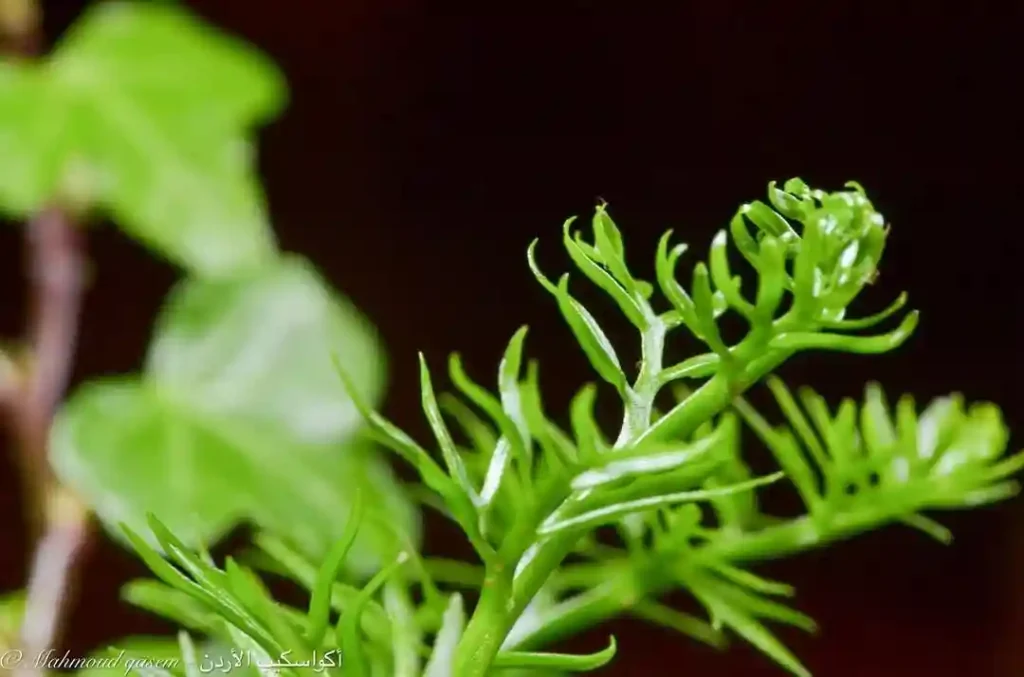
Water Sprite is a fast-growing plant that can be floated or planted. In goldfish tanks, floating is usually the safer choice.
When floated, goldfish cannot dig it up. It also gives shade and helps use extra nutrients in the water.
Water Sprite has softer leaves than Anubias or Java Fern, so some goldfish may nibble it. But because it grows quickly, it can recover better than slow-growing plants.
If your goldfish keep eating the lower leaves, let the plant float near the surface instead of planting it in the substrate.
| Care Detail | Water Sprite |
| Best Placement | Floating or planted |
| Light | Medium |
| Growth Speed | Fast |
| Care Level | Easy |
| Goldfish Safety | Moderate |
9. Cryptocoryne Wendtii
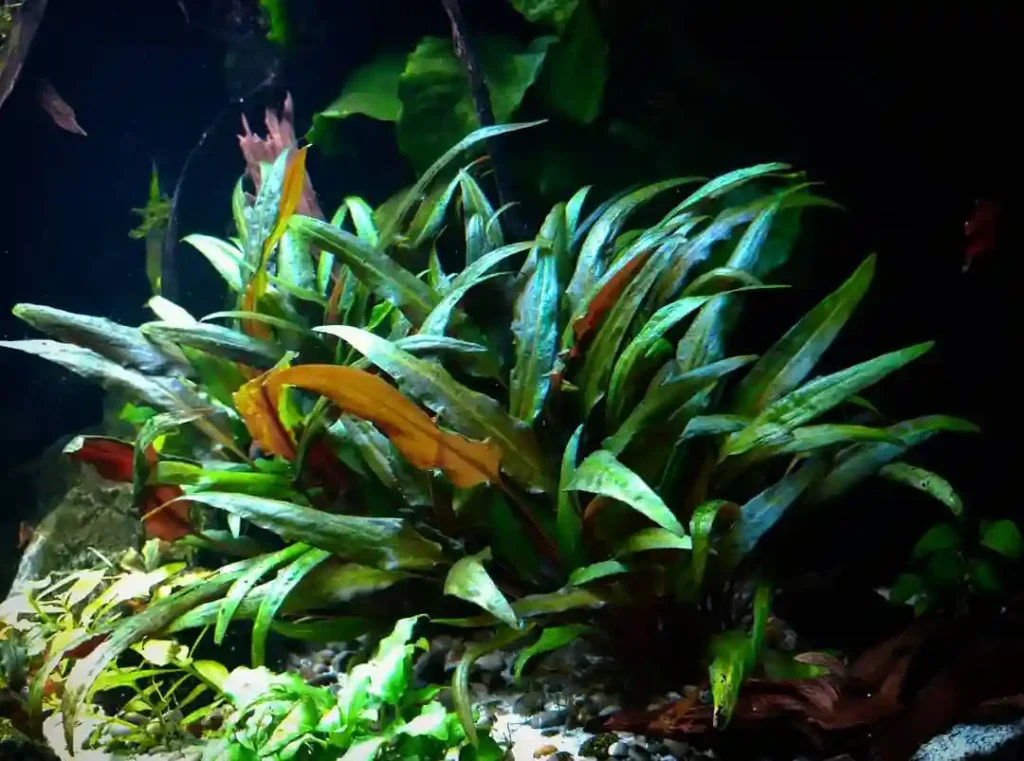
Cryptocoryne Wendtii is a hardy midground plant once it settles in. It has tougher leaves than many soft stem plants and can work in goldfish tanks if the roots are protected.
The main challenge is the early stage. New crypts may melt after being planted. This means the leaves can break down due to stress from a new environment.
Do not panic if this happens. If the roots are healthy, the plant can grow new leaves.
Because goldfish dig, it helps to place smooth stones around the base or grow Cryptocoryne in a small pot.
Cryptocoryne Wendtii is not as foolproof as Anubias or Java Fern, but it is a good option once you have a stable tank.
| Care Detail | Cryptocoryne Wendtii |
| Best Placement | Midground substrate |
| Light | Low to medium |
| Growth Speed | Slow |
| Care Level | Medium |
| Goldfish Safety | Good once rooted |
10. Bucephalandra
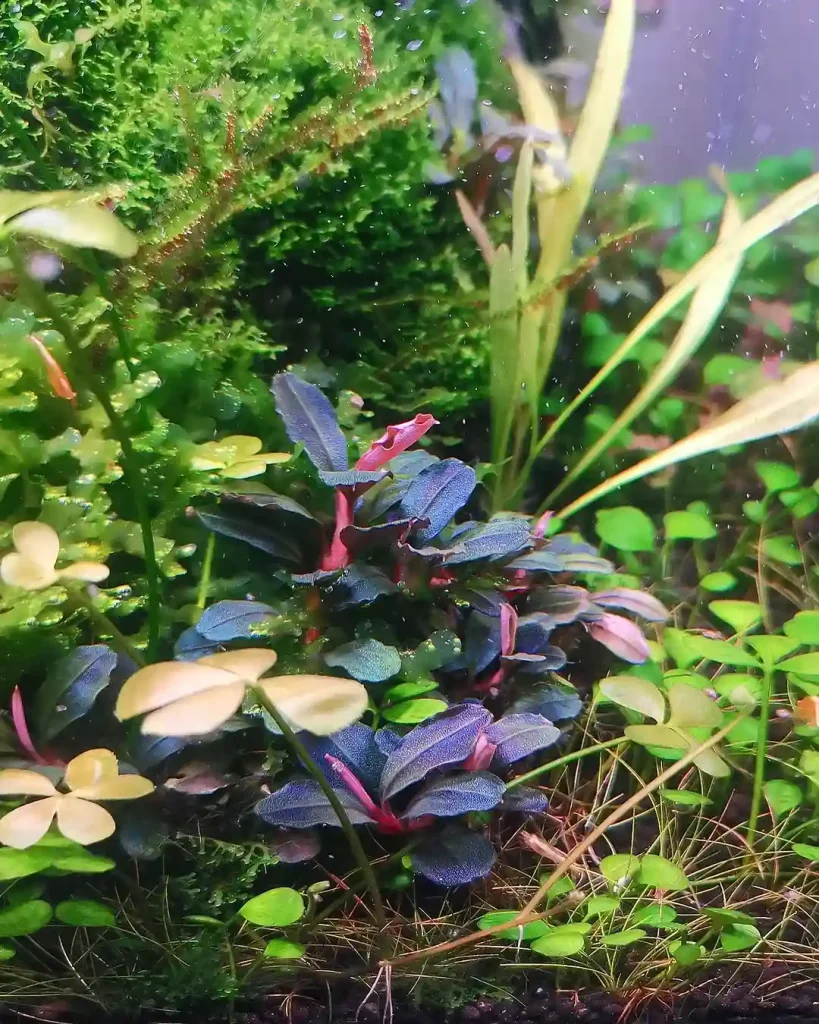
Bucephalandra is a strong plant for goldfish tanks because it has tough leaves and grows attached to rocks or driftwood.
It is similar to Anubias in how it grows, but it often has smaller leaves and a more polished look. Some types have dark green, blue, or reddish tones depending on lighting and variety.
The downside is price. Bucephalandra is usually more expensive than beginner plants like Anubias and Java Fern. It also grows very slowly, so it is not the best choice if your tank has algae problems.
For beginners, I would start with Anubias first. Add Bucephalandra later if you want a more detailed planted look.
Do not bury the rhizome. Attach it to hardscape instead.
| Care Detail | Bucephalandra |
| Best Placement | Rock or driftwood |
| Light | Low to medium |
| Growth Speed | Very slow |
| Care Level | Medium |
| Goldfish Safety | Excellent |
Best Floating Plants for Goldfish Tanks
Floating plants can work well in goldfish tanks because they avoid the main problem: digging.
Goldfish cannot uproot a plant that is floating at the surface. Floating plants also provide shade and help use extra nutrients in the water.
The best floating plants for goldfish tanks are Hornwort and Water Sprite. Both grow quickly and can handle some nibbling.
Duckweed is not a good long-term choice for most goldfish tanks. Goldfish often eat it quickly, and it can become messy if it spreads too much.
If you want floating plants, start with Hornwort. It is simple, fast-growing, and easy to remove if it gets too thick.
Plants Goldfish Usually Avoid
No aquarium plant is 100% goldfish-proof. A hungry or curious goldfish may test almost anything.
Still, some plants are usually ignored more often because they have tougher leaves or less appealing texture.
Goldfish are less likely to eat:
- Anubias
- Java Fern
- Bucephalandra
- Marimo Moss Ball
- Cryptocoryne Wendtii
Attached plants are usually safer because goldfish cannot pull them out of the substrate. This is why Anubias and Java Fern are often the best first choices.
Plants to Avoid in Goldfish Tanks
Some aquarium plants are too soft, too delicate, or too demanding for most goldfish tanks.
Plants to avoid or use with caution include:
- Cabomba
- Duckweed
- Dwarf Baby Tears
- Monte Carlo
- Rotala
- Soft stem plants
- High-tech carpet plants
- Plants that need CO2
These plants often have soft leaves, weak roots, or higher care needs. Many are better for tropical planted tanks than goldfish aquariums.
Carpeting plants like Monte Carlo and Dwarf Baby Tears are especially difficult because goldfish dig and disturb the substrate. They also need cleaner, more controlled conditions than many beginner goldfish tanks provide.
How to Stop Goldfish From Uprooting Plants
The best way to stop goldfish from uprooting plants is to avoid relying only on substrate.
Attach plants to rocks, driftwood, or decorations whenever possible. This works well for Anubias, Java Fern, Bucephalandra, and Java Moss.
For rooted plants like Amazon Sword, Vallisneria, and Cryptocoryne, protect the base. Place smooth river stones around the roots so goldfish cannot dig them up easily.
You can also plant in small terracotta pots. This keeps the roots contained and makes it easier to move plants during cleaning.
Another helpful trick is to let plants establish before adding very active goldfish. Strong roots make a big difference.
Feeding vegetables can also reduce plant nibbling. Goldfish often enjoy blanched spinach, zucchini, lettuce, and shelled peas. This does not guarantee they will ignore plants, but it can reduce constant picking.
Best Setup for a Planted Goldfish Tank
A planted goldfish tank should be built around space, filtration, and plant protection.
Tank Size
Larger tanks are easier for planted goldfish setups. Goldfish produce heavy waste, and larger water volume keeps conditions more stable.
A small tank with goldfish and plants can become messy quickly. If the tank is crowded, plants may collect debris and algae instead of helping the setup look better.
Substrate
Smooth gravel, sand, or potted plants can all work.
For root-feeding plants, use root tabs near the plant base. If you use plant substrate, cap it with smooth gravel or sand so goldfish do not scatter it everywhere.
Avoid sharp substrate because goldfish search the bottom with their mouths.
Lighting
Most goldfish-safe plants do well with low to medium aquarium lighting.
Start with 6 to 8 hours of light per day. Too much light can cause algae, especially on slow-growing plants like Anubias and Java Fern.
Fertilizer
Root tabs help Amazon Sword and Cryptocoryne grow better.
Liquid fertilizer can be used carefully, but do not overdo it. Goldfish tanks already have a lot of nutrients from fish waste.
Plants help use some nutrients, but they do not replace water changes.
Filtration
Goldfish need strong filtration. Plants also do better when waste does not collect on their leaves.
Use enough filtration for the tank size, but avoid blasting delicate plants with direct current. Place plants where they will not be constantly pushed around.
Goldfish Plant Care Tips
A planted goldfish tank needs regular maintenance.
Trim damaged leaves before they rot. Remove loose plant pieces during water changes. Clean moss gently so it does not trap too much waste.
Slow-growing plants like Anubias, Java Fern, and Bucephalandra can collect algae on their leaves if the light is too strong or the tank has too many nutrients.
If a rhizome plant comes loose after cleaning, reattach it to rock or driftwood. Do not bury the rhizome.
Keep water changes consistent. Live plants can help the tank, but they cannot handle all the waste goldfish create.
Common Problems With Goldfish and Plants
My Goldfish Keep Eating Plants
This usually happens with soft plants.
Try tougher plants like Anubias, Java Fern, Bucephalandra, and Marimo Moss Balls. You can also offer blanched vegetables so your goldfish have something else to nibble.
My Goldfish Keep Digging Plants Up
Use attached plants first.
Anubias and Java Fern are the best starting choices because they do not need substrate. For rooted plants, use stones around the base or plant them in small pots.
My Plants Are Melting
Some plants melt after being moved into a new tank. Cryptocoryne is well known for this.
If the roots are healthy, the plant can regrow. Remove dead leaves and give the plant time.
My Tank Has More Algae After Adding Plants
Algae usually comes from too much light, too many nutrients, or slow plant growth.
Reduce lighting, keep up with water changes, and remove waste from plant leaves. Fast growers like Hornwort and Water Sprite can help use extra nutrients.
Best Plant Combos for Goldfish Tanks
Easy Beginner Combo
Anubias, Java Fern, and Marimo Moss Balls make the easiest beginner combo.
This setup is low-maintenance and does not depend much on substrate. Attach Anubias and Java Fern to rocks or driftwood, then place Marimo Moss Balls on the bottom.
Large Tank Combo
Amazon Sword, Vallisneria, Java Fern, and Hornwort work well in larger tanks.
This gives you background height, attached plants, and fast-growing floating or weighted growth.
Floating Plant Combo
Hornwort and Water Sprite are the best simple floating combo.
This works well if your goldfish keep digging up rooted plants.
Hardscape-Only Combo
Anubias, Java Fern, Bucephalandra, and Java Moss are best for goldfish that dig nonstop.
Attach everything to rocks, driftwood, or mesh. This setup is safer because goldfish cannot pull plants out of the substrate.
Final Goldfish Plant Comparison Table
| Plant | Can Be Planted? | Can Be Attached? | Can Float? | Risk of Being Eaten | Best Skill Level |
| Anubias | No | Yes | No | Low | Beginner |
| Java Fern | No | Yes | No | Low | Beginner |
| Amazon Sword | Yes | No | No | Medium | Beginner |
| Vallisneria | Yes | No | No | Medium | Beginner |
| Java Moss | No | Yes | Sometimes | Medium | Beginner |
| Marimo Moss Ball | No | No | No | Low | Beginner |
| Hornwort | Sometimes | No | Yes | Medium | Beginner |
| Water Sprite | Yes | No | Yes | Medium | Beginner |
| Cryptocoryne Wendtii | Yes | No | No | Medium | Medium |
| Bucephalandra | No | Yes | No | Low | Medium |
FAQs About Plants for Goldfish Tanks
Can goldfish live with live plants?
Yes, goldfish can live with live plants, but you need hardy plants that can handle digging, nibbling, and heavy waste.
What plants will goldfish not eat?
Goldfish are less likely to eat Anubias, Java Fern, Bucephalandra, Marimo Moss Balls, and Cryptocoryne Wendtii. No plant is completely safe from every goldfish.
Do goldfish eat Java Fern?
Most goldfish do not eat Java Fern because the leaves are tough and not very tasty. It is one of the better plants for goldfish tanks.
Can I put Anubias in a goldfish tank?
Yes, Anubias is one of the best plants for goldfish tanks. Attach it to rock or driftwood instead of burying the rhizome.
Are floating plants good for goldfish?
Some floating plants are good for goldfish tanks. Hornwort and Water Sprite are better choices than duckweed because duckweed is often eaten quickly.
Why do goldfish pull up plants?
Goldfish dig while searching for food. They also test plants with their mouth, which can loosen weak or newly planted roots.
Do goldfish need live plants?
No, goldfish do not need live plants. But live plants can improve the tank’s look, offer shade, and use some extra nutrients from the water.
What is the easiest plant for a goldfish tank?
Anubias is one of the easiest plants for a goldfish tank because it has tough leaves and can be attached to rocks or driftwood.
Can goldfish live with Amazon Sword?
Yes, goldfish can live with Amazon Sword in larger tanks. Protect the roots with stones and use root tabs to support growth.
Do live plants replace water changes in goldfish tanks?
No, live plants do not replace water changes. Goldfish produce a lot of waste, so regular maintenance is still needed.
