
Cherry Shrimp Care Guide: Tank Setup, Diet, Breeding

Cherry shrimp are one of the best freshwater shrimp for beginners because they are colorful, peaceful, active, and fun to watch in a planted tank. They spend most of the day picking at moss, plants, wood, and rocks while searching for biofilm and tiny bits of food.
But cherry shrimp are not “add and forget” aquarium animals. Most losses happen because the tank is not fully cycled, the water changes too quickly, the shrimp are added without drip acclimation, or the tank has hidden copper from medication or fertilizer.
The basic care is simple: keep the water clean, stable, and shrimp-safe. The better care comes from understanding GH, KH, TDS, molting, biofilm, and how to build a tank where adults and baby shrimp both feel safe.
This guide covers everything you need to keep cherry shrimp healthy, from setup and feeding to breeding, color grades, tank mates, and common problems.
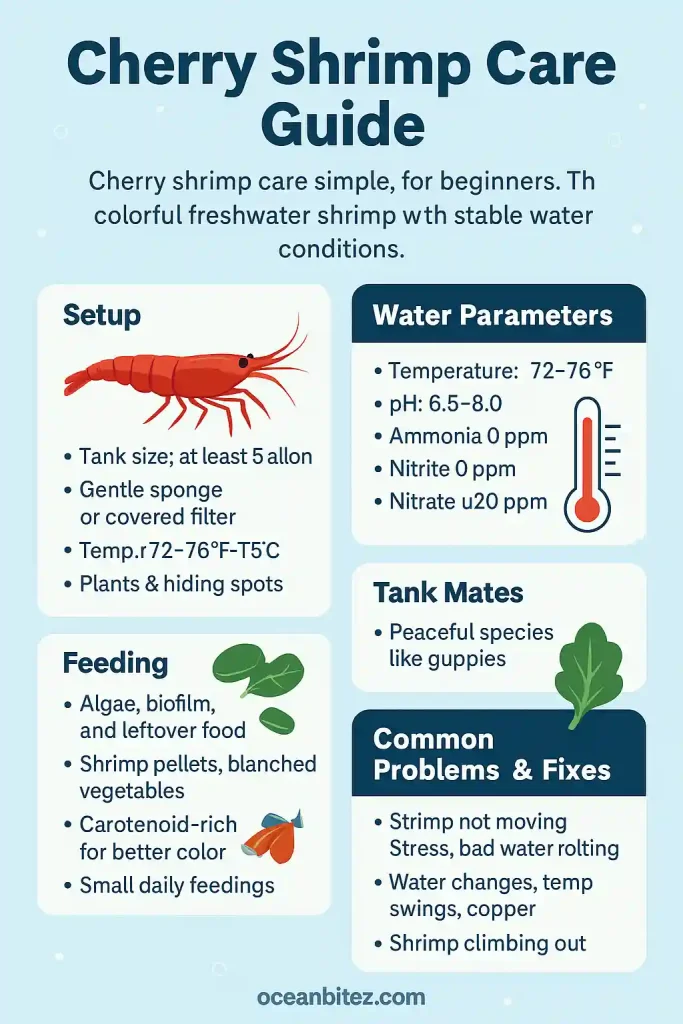
The earlier draft already covered the basic cherry shrimp care points such as tank size, temperature, pH, diet, breeding, and tank mates . This version builds on that with deeper water parameter details, drip acclimation, molting support, and long-term colony care.
What Are Cherry Shrimp?
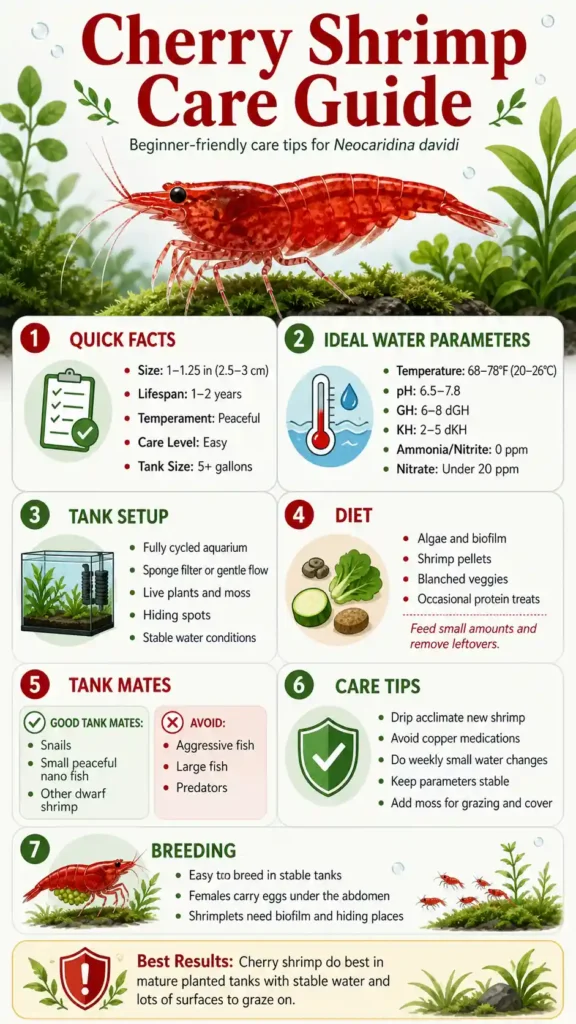
Cherry shrimp are a red color form of Neocaridina davidi, a small freshwater shrimp often kept in planted aquariums. They are peaceful scavengers that graze on algae, biofilm, leftover food, soft plant surfaces, and natural debris.
They usually grow to around 1 to 1.5 inches, so they do not need a huge aquarium. A small group can live in a 5-gallon tank, but a 10-gallon tank is much easier for beginners because the water stays more stable.
Cherry shrimp are popular because they breed in freshwater, do not need saltwater for their young, and are easier to care for than many Caridina shrimp, such as Crystal Red Shrimp.
They are also great for planted tanks. They pick through moss, clean soft algae from surfaces, and add constant movement to the aquarium without bothering fish or plants.
Cherry Shrimp Quick Care Stats
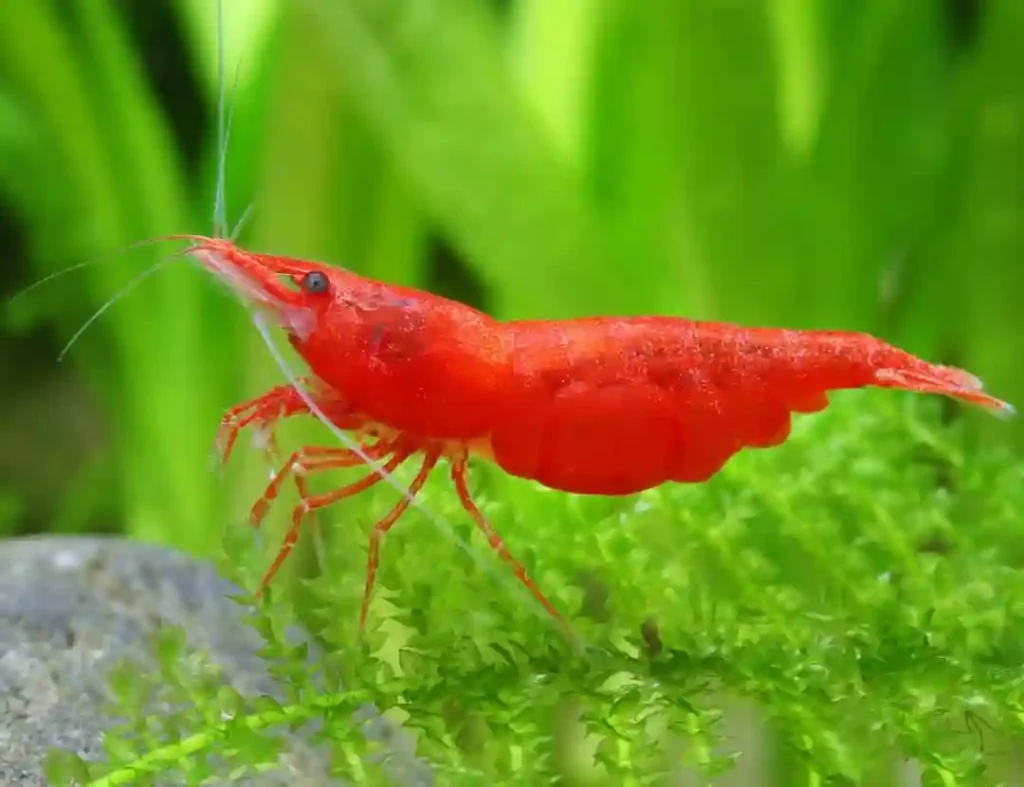
| Care Factor | Best Range for Cherry Shrimp |
| Scientific Name | Neocaridina davidi |
| Common Name | Cherry Shrimp, Red Cherry Shrimp |
| Adult Size | Around 1–1.5 inches |
| Lifespan | 1–2 years |
| Minimum Tank Size | 5 gallons |
| Better Tank Size | 10 gallons or larger |
| Temperature | 68–78°F |
| pH | 6.5–7.8 |
| GH | 6–8 dGH |
| KH | 2–5 dKH |
| TDS | 150–250 ppm |
| Diet | Biofilm, algae, shrimp food, blanched vegetables |
| Temperament | Peaceful |
| Breeding Difficulty | Easy in stable tanks |
| Best Filter | Sponge filter |
| Main Risk | Unstable water, copper, failed molts, unsafe tank mates |
Cherry shrimp are hardy for dwarf shrimp, but they still need stable water. A shrimp tank should be fully cycled before you add them. Ammonia and nitrite should always be 0 ppm.
Cherry Shrimp Water Parameters
Many beginner care guides only mention temperature and pH. That is not enough for shrimp. Cherry shrimp also need the right mineral balance, especially for molting.
The most useful numbers to track are temperature, pH, GH, KH, TDS, ammonia, nitrite, and nitrate.
Temperature
Cherry shrimp do well between 68°F and 78°F. They can handle slightly outside this range for short periods, but stable temperatures are better.
Warmer water can make shrimp more active and may increase breeding, but it can also shorten their lifespan and reduce oxygen in the tank. Cooler water usually slows breeding and growth.
For most home tanks, around 72–75°F is a safe middle range.
pH
A good pH range for cherry shrimp is 6.5 to 7.8.
Do not chase pH with chemicals every few days. A stable pH of 7.4 is safer than a pH that jumps from 6.8 to 7.6 because you keep adjusting it.
Shrimp care is often about stability more than hitting one perfect number.
GH
GH stands for general hardness. It measures minerals like calcium and magnesium in the water.
Cherry shrimp need these minerals to build strong shells and molt properly. If GH is too low, shrimp may struggle to shed their old shell. If GH is too high, they may also have molting stress.
A good target is: GH: 6–8 dGH
If your shrimp keep failing molts or you see the “white ring of death,” GH should be one of the first things you test.
KH
KH stands for carbonate hardness. It helps keep pH stable.
Cherry shrimp usually do well with: KH: 2–5 dKH
If KH is too low, pH can swing. If KH is very high, the water may become harder and less suitable for some shrimp setups.
TDS
TDS stands for total dissolved solids. It tells you how many dissolved minerals and substances are in the water.
For cherry shrimp, a good target is: TDS: 150–250 ppm
TDS is useful, but it does not tell the full story. A TDS meter cannot tell you exactly what is in the water. That is why you should use it with GH and KH tests.
For example, two tanks can both show 200 ppm TDS, but one may have healthy mineral content while the other may have waste buildup.
Ammonia, Nitrite, and Nitrate
Ammonia and nitrite should always be:
0 ppm
Even small amounts can hurt shrimp.
Nitrate should be kept low with water changes, plants, and careful feeding. Cherry shrimp can handle some nitrate better than ammonia or nitrite, but cleaner water is still safer.
Copper Warning for Cherry Shrimp
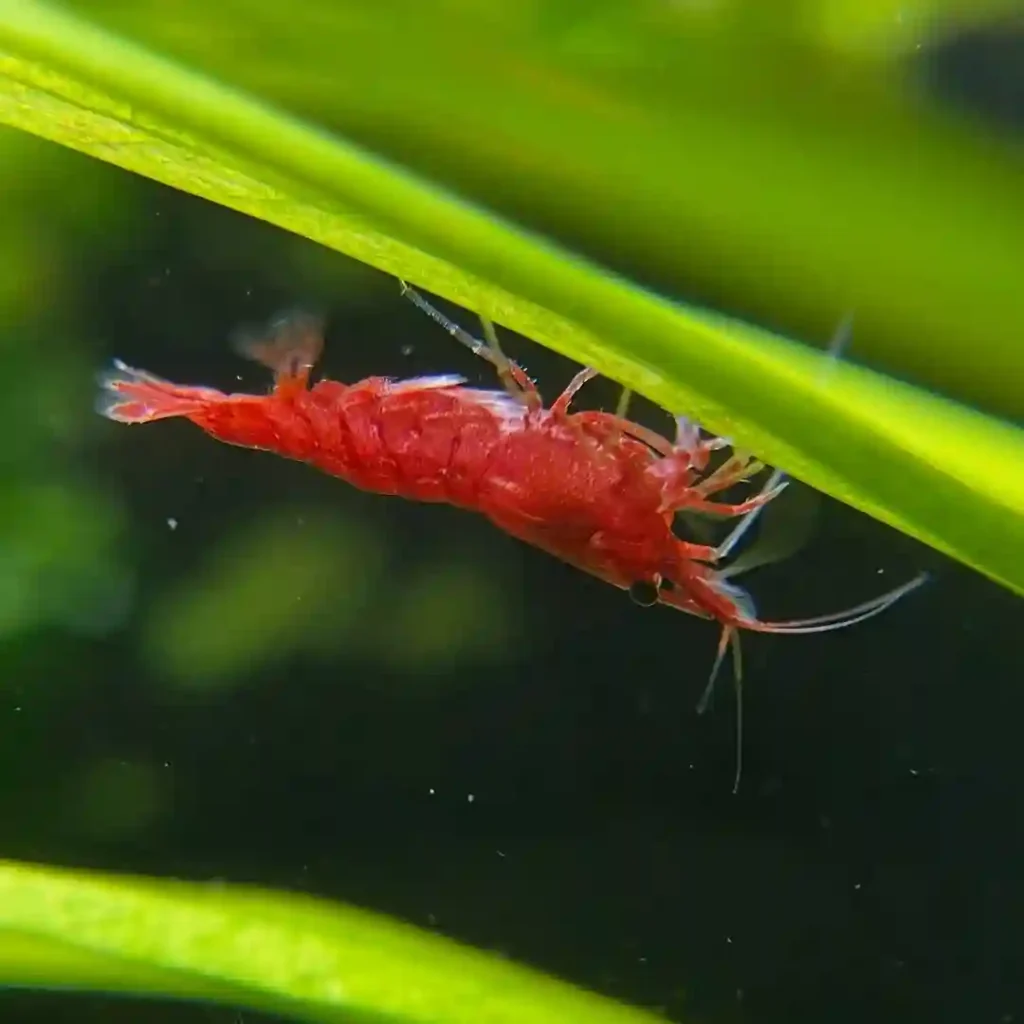
Copper is dangerous for shrimp. This is one of the biggest beginner mistakes.
Some fish medications, plant fertilizers, and tap water sources may contain copper. Fish may survive a product that shrimp cannot handle.
Before adding anything to a shrimp tank, check the label carefully.
Avoid using:
- Copper-based fish medication
- Unknown plant fertilizers
- Untested tap water with possible copper
- Decorations or metals not made for aquariums
Old pipes can also add copper to tap water in some homes. If shrimp die after water changes and your tank tests fine for ammonia and nitrite, copper is worth checking.
Pro tip: When in doubt, use a shrimp-safe dechlorinator and test your water before adding new shrimp.
Read also: 12 Shrimp Tank Ideas That Are Easy to Recreate
Cherry Shrimp Tank Setup
Cherry shrimp do best in a calm, mature aquarium with gentle filtration, plants, moss, and plenty of grazing surfaces.
You do not need a complicated setup. In fact, simple is often better.
Tank Size
A 5-gallon tank is the minimum for a small cherry shrimp group, but a 10-gallon tank is better.
A larger tank gives you more room for plants, wood, and a growing colony. It also gives you more stable water, which is one of the most important parts of shrimp care.
If you are new to shrimp, start with a 10-gallon planted tank instead of a tiny bowl or desktop tank.
Filter
A sponge filter is the best filter for cherry shrimp.
It gives gentle flow, keeps baby shrimp safe, and grows biofilm on the sponge surface. Shrimp often graze on the sponge filter throughout the day.
If you use a hang-on-back filter or internal filter, cover the intake with a sponge pre-filter. Baby shrimp can easily get pulled into open filter intakes.
Substrate
Cherry shrimp can live on sand, gravel, or planted tank substrate.
For beginners, inert substrate is often easier because it does not change your water chemistry much. Sand or small gravel works well.
Active buffering substrates are more common in Caridina shrimp tanks. They can lower pH and KH, which may not be needed for cherry shrimp.
If you are making a planted shrimp tank, you can use nutrient-rich substrate, but make sure the tank is fully cycled and safe before adding shrimp.
Plants
Live plants make cherry shrimp feel safer and help grow biofilm.
Great plant choices include:
- Java moss
- Christmas moss
- Subwassertang
- Java fern
- Anubias
- Hornwort
- Frogbit
- Water sprite
- Guppy grass
Moss is one of the best additions because baby shrimp hide inside it and graze on tiny food particles.
Wood and Hiding Spots
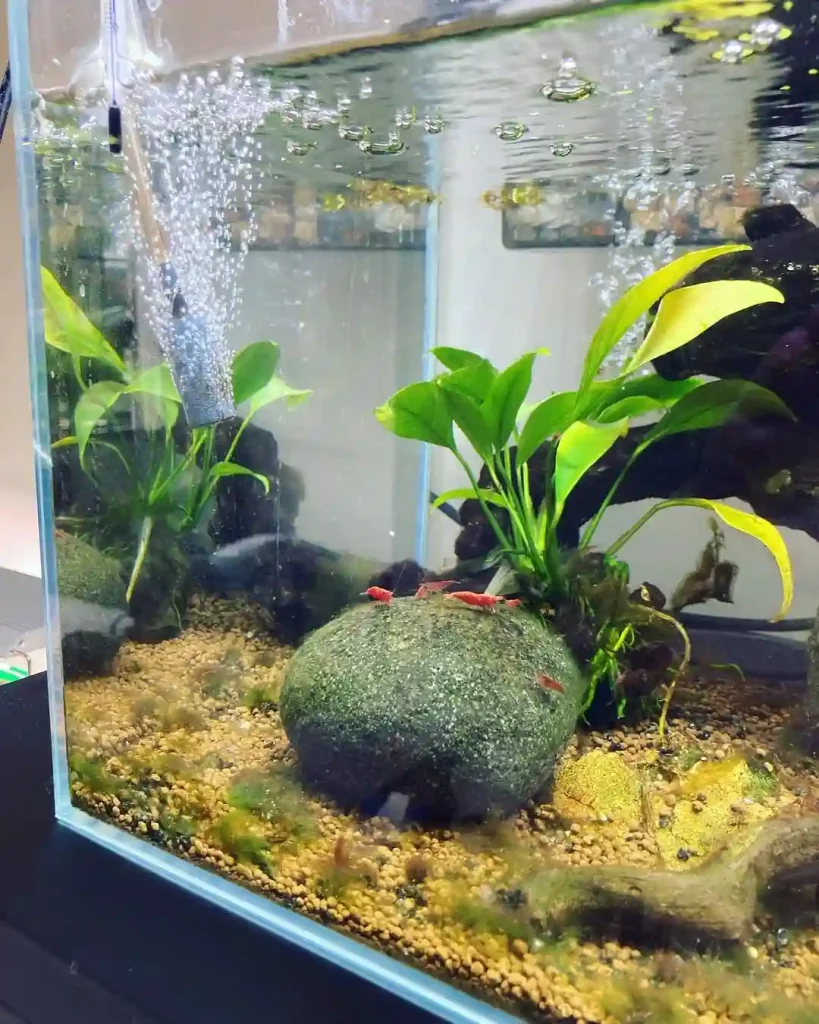
Cherry shrimp love surfaces. The more safe surfaces you add, the more natural grazing areas they get.
Good options include:
- Cholla wood
- Driftwood
- Lava rock
- Shrimp caves
- Moss-covered rocks
Cholla wood is especially useful because it has small holes where baby shrimp can hide. It also grows biofilm, which shrimp graze on all day.
Botanicals
Botanicals can make a shrimp tank feel more natural.
Good options include:
- Indian almond leaves
- Alder cones
- Mulberry leaves
- Banana leaves
Indian almond leaves, also called catappa leaves, slowly break down and support biofilm growth. Shrimp will often graze on the leaf surface as it softens.
Alder cones may release tannins and add a natural look to the tank. Use them lightly, especially in smaller aquariums.
Drip Acclimation for Cherry Shrimp
Drip acclimation is one of the most important steps when adding cherry shrimp.
Many beginners float the bag for temperature and then pour the shrimp into the tank. This can shock shrimp, especially if the store water has different GH, KH, pH, or TDS than your tank.
Shrimp are sensitive to sudden water changes. A fast change can cause osmotic shock, stress, failed molts, or deaths within the first 24 to 48 hours.
How to Drip Acclimate Cherry Shrimp
Place the shrimp and bag water into a clean container.
Use airline tubing to siphon water from your tank into the container.
Tie a loose knot in the tubing or use an air valve.
Set the drip speed to around 1–2 drops per second.
Let the water volume slowly double or triple.
Take your time. One to two hours is normal.
Gently net the shrimp and move them into the tank.
Do not pour store water into your aquarium.
Keep the lights low after adding them. New shrimp may hide for the first day, and that is normal.
Pro tip: If your shrimp are shipped or the bag water smells bad, do not stretch acclimation too long. In that case, focus on slow but safe acclimation and move them into clean tank water once the container water has been diluted enough.
Cherry Shrimp Diet
Cherry shrimp are natural grazers. In a mature tank, they eat biofilm, soft algae, tiny organisms, leftover food, and plant debris.
That natural grazing is their main food source. Packaged foods should support the diet, not replace a healthy tank.
Best Foods for Cherry Shrimp
Good cherry shrimp foods include:
- Shrimp pellets
- Algae wafers
- Blanched zucchini
- Blanched spinach
- Blanched cucumber
- Mulberry leaves
- Indian almond leaves
- Snowflake food
- Biofilm powder
- Mineral foods
Feed small amounts. Shrimp have tiny stomachs, and overfeeding can foul the water quickly.
If food is still sitting in the tank after several hours, you are feeding too much.
Biofilm Is Their Main Food
Biofilm is the thin living layer that grows on plants, wood, leaves, rocks, glass, and filter sponges.
Cherry shrimp spend most of their day picking through biofilm. A new tank often does not have enough of it, which is one reason shrimp do better in mature aquariums.
To support biofilm, add moss, wood, leaves, and avoid over-cleaning every surface.
Bacter AE and Biofilm Boosters
Many shrimp keepers use powdered biofilm boosters such as Bacter AE. These foods can help baby shrimp and colonies because tiny particles spread through the tank.
Use them carefully. A tiny amount is enough. Too much powder can cause cloudy water, bacterial blooms, or oxygen problems.
For a small tank, start with much less than the package amount.
Snowflake Food
Snowflake food is usually made from soybean hulls. It breaks down slowly and lets shrimp graze for a long time.
It is useful because it can stay in the tank longer than soft vegetables without polluting the water as fast, as long as you do not overfeed.
This is a good food for colonies because adults and baby shrimp can pick at it over time.
Molting and Cherry Shrimp Health
Molting is how shrimp grow. They shed their old shell and form a new one.
You may see an empty white shell in the tank. This is usually normal. Do not panic, and do not always remove it. Shrimp often eat the old shell to recover minerals.
After molting, shrimp are soft and vulnerable. They may hide for a day or two until the new shell hardens.
Normal Molting Signs
Normal molting may look like:
- An empty shell in the tank
- Shrimp hiding after molting
- A shrimp looking slightly pale after molting
- Other shrimp grazing on the old shell
This is all normal as long as the shrimp is active again later.
What Is the White Ring of Death?
The “white ring of death” is a pale ring or split behind the shrimp’s head. It often means the shrimp is having trouble molting.
In a healthy molt, the shrimp should split properly and slide out of the old shell. In a failed molt, the shell may split in the wrong way, leaving the shrimp trapped.
This is often linked to mineral imbalance, unstable water, poor diet, or sudden water changes.
Causes of Failed Molts
Common causes include:
- GH too low
- KH unstable
- Large water changes
- TDS swings
- Poor diet
- Lack of calcium and minerals
- Stress from shipping
- Uncycled tank
- Poor acclimation
If you see repeated failed molts, test GH, KH, TDS, ammonia, nitrite, and nitrate.
How to Help Prevent Molting Problems
Keep GH around 6–8 dGH.
Keep KH around 2–5 dKH.
Avoid large sudden water changes.
Feed a varied shrimp diet.
Keep the tank fully cycled.
Do not chase pH with chemicals.
Use remineralized RO water if tap water is unstable.
You can use products such as SaltyShrimp GH/KH+ if you are using RO or distilled water. Crushed coral can also raise KH and GH slowly, but do not add it blindly. Use it only when your water is too soft and you need more mineral support.
Cherry Shrimp Color Grades
Not all cherry shrimp are the same color quality. Some are light red and partly clear, while others are deep red with almost no transparent areas.
Color depends on genetics, stress, diet, age, sex, substrate color, and tank conditions.
Females are usually darker and larger than males.
Low Grade Cherry Shrimp
Low grade cherry shrimp are usually light red with many clear patches. They are still healthy shrimp, but they do not have the deep red color many breeders want.
These are often cheaper and good for beginners.
Sakura Cherry Shrimp
Sakura shrimp have stronger red coverage than basic cherry shrimp. They may still have some clear areas, especially on the legs or lower body.
High Grade Sakura
High Grade Sakura shrimp have better red coverage and fewer transparent patches. They look much richer than basic cherry shrimp.
Fire Red Cherry Shrimp
Fire Red shrimp have deep red bodies with strong coverage. They usually look more solid than Sakura shrimp and are often more expensive.
Painted Fire Red Cherry Shrimp
Painted Fire Red is one of the highest cherry shrimp grades. These shrimp should have strong, solid red color with very little transparency. Even the legs may show red.
Why Are My Cherry Shrimp Turning Clear?
Cherry shrimp may turn clear or pale because of:
- Stress
- Recent molting
- Poor genetics
- Low color grade
- Light substrate
- Poor diet
- Aggressive tank mates
- Unstable water
If the shrimp are acting normal, eating, and breeding, the issue may simply be genetics or grade. If they are hiding, twitching, or dying, test the water.
What Is Culling?
Culling means separating lower-grade shrimp from your main breeding colony to keep the red color strong over generations.
Culling does not have to mean killing shrimp. Many hobbyists move lower-grade shrimp to another tank, sell them cheaply, trade them, or keep them in a mixed colony.
If you do not cull, a red colony can slowly produce more clear, brown, or lower-grade shrimp over time.
Cherry Shrimp Breeding
Cherry shrimp are easy to breed when they feel safe and the water is stable.
You do not need a special breeding tank if your main tank is shrimp-safe. In fact, a mature planted shrimp-only tank is one of the easiest ways to grow a colony.
Male vs Female Cherry Shrimp
Females are usually larger, rounder, and deeper red.
Males are usually smaller, slimmer, and lighter in color.
Females may also show a “saddle,” which is a patch of developing eggs behind the head before they move under the tail.
What Does Berried Mean?
A berried shrimp is a female carrying eggs under her tail.
She fans the eggs with her swimmerets to keep them clean and oxygenated. The eggs are usually yellow, green, or dark depending on development.
Cherry shrimp eggs usually hatch in about 2–4 weeks, depending on temperature.
Baby Cherry Shrimp Care
Baby cherry shrimp hatch as tiny versions of the adults. They do not need saltwater or a separate larval stage.
The main challenge is keeping them safe and fed.
To help baby shrimp survive:
- Use moss
- Add cholla wood
- Keep a sponge filter
- Avoid fish that hunt shrimplets
- Feed powdered foods lightly
- Keep biofilm growing
Avoid heavy gravel cleaning in baby shrimp areas
A shrimp-only tank gives you the highest baby survival rate.
Best Tank Mates for Cherry Shrimp
Cherry shrimp are peaceful, but they are also small. Many fish will eat baby shrimp, and some will eat adults too.
If your goal is breeding, keep a shrimp-only tank. If your goal is a peaceful display tank, choose tank mates carefully.
| Safety Level | Tank Mate | Notes |
| Safest | Nerite Snails | Peaceful and good algae eaters |
| Safest | Mystery Snails | Usually safe with shrimp |
| Safest | Other Neocaridina Shrimp | Safe, but colors may mix |
| Mostly Safe | Otocinclus | Peaceful, best in mature tanks |
| Mostly Safe | Chili Rasboras | May eat tiny babies |
| Mostly Safe | Ember Tetras | Adults usually safe, babies at risk |
| Risky | Guppies | May hunt shrimplets |
| Risky | Betta Fish | Depends on personality |
| Avoid | Gouramis | Often hunt shrimp |
| Avoid | Cichlids | Too predatory |
| Avoid | Large Tetras | Can eat shrimp |
More details explain is here cherry shrimp tankmates
Can Cherry Shrimp Live With Bettas?
Sometimes, but I would not call it safe.
Some bettas ignore shrimp. Others hunt them immediately. Even a peaceful betta may eat baby shrimp.
If you try it, use a heavily planted tank with moss, wood, and hiding spots. Add the shrimp first and monitor the betta closely.
For a breeding colony, skip the betta.
Internal link idea: Best Tank Mates for Cherry Shrimp
Daily, Weekly, and Monthly Cherry Shrimp Maintenance
Cherry shrimp do not need heavy maintenance, but they do need steady care. Sudden changes cause more problems than a slightly “messy” natural shrimp tank.
Daily Checks
- Look at shrimp behavior.
- Check if they are grazing normally.
- Make sure the filter is running.
- Remove uneaten food if needed.
- Watch for dead shrimp.
If all shrimp are hiding, twitching, or swimming strangely, test the water.
Weekly Care
- Test ammonia, nitrite, and nitrate.
- Do a small water change if needed.
- Feed a varied diet.
- Remove old food.
- Trim plants if they block too much flow.
- Check the sponge filter flow.
Small water changes are better than huge sudden changes. For shrimp tanks, 10–20% weekly is often safer than rare large water changes.
Monthly Care
- Test GH, KH, and TDS.
- Clean the sponge filter gently in old tank water.
- Check colony size.
- Watch for color quality.
- Look for repeated failed molts.
- Check if plants need trimming.
Never wash filter media under tap water. Chlorine can kill beneficial bacteria.
Common Cherry Shrimp Problems
Why Are My Cherry Shrimp Dying?
The most common causes are:
- Uncycled tank
- Ammonia or nitrite
- Copper exposure
- Poor drip acclimation
- Large water change
- GH or KH imbalance
- Aggressive fish
- Overfeeding
- Tank too new
Start by testing water. Then think about what changed recently. New fertilizer, new medication, new plants, new water source, or a big water change can all cause problems.
Why Are My Shrimp Swimming Frantically?
Sometimes this is normal. Male shrimp may swim around the tank when a female has freshly molted and is ready to breed.
But if all shrimp are rushing around, climbing to the top, or acting panicked, test the water right away. It can also mean ammonia, nitrite, low oxygen, copper, or another sudden problem.
Why Are My Shrimp Hiding?
Shrimp hide when they are new, molting, stressed, or scared by fish.
Add more plants, moss, and wood. If fish are constantly chasing them, the tank mates may not be suitable.
Why Are My Cherry Shrimp Not Breeding?
Common reasons include:
- Too few shrimp
- Only males or only females
- Tank is too new
- Water is unstable
- Not enough food
- Not enough hiding spots
- Fish are eating babies
- Temperature is too low
If adults are healthy but you never see babies, fish may be eating the shrimplets before you notice them.
Why Do I See Empty Shells?
Empty shells are usually normal molts. Leave them in the tank unless there are too many. Shrimp may eat them for minerals.
Why Are My Shrimp Turning Brown?
If you mix different Neocaridina colors, the babies may slowly turn wild-type brown or clear over generations.
This is normal genetics. To keep a strong red colony, keep only red shrimp together and cull lower-grade offspring.
Can You Mix Different Cherry Shrimp Colors?
You can mix red, blue, yellow, orange, and other Neocaridina shrimp, but the babies may not keep the same bright colors.
Over time, mixed-color colonies often produce wild-type shrimp, which are usually brown, clear, or dull-colored.
If you want a colorful mixed tank, mixing is fine. If you want a high-grade red colony, do not mix colors.
Are Cherry Shrimp Good for Beginners?
Yes, cherry shrimp are good for beginners, but only when the tank is ready.
They are not good for uncycled tanks, bowls without filtration, or tanks with aggressive fish.
A good beginner setup looks like this:
- 10-gallon planted tank
- Fully cycled filter
- Sponge filter
- Moss and wood
- Indian almond leaf or cholla wood
- Stable GH, KH, and TDS
- 10–20 cherry shrimp
- No fish at first
If you set up the tank this way, cherry shrimp can become one of the easiest and most rewarding aquarium animals to keep.
FAQs
How many cherry shrimp should I start with?
Start with at least 10 cherry shrimp. This gives them a better sense of safety and increases your chance of getting both males and females.
Do cherry shrimp need a filter?
Yes, a filter is strongly recommended. A sponge filter is best because it has gentle flow, protects baby shrimp, and grows biofilm.
Do cherry shrimp need a heater?
Not always. If your room stays between 68°F and 78°F, you may not need one. If the room gets cold, use a small adjustable heater.
Can cherry shrimp live with bettas?
Sometimes, but it is risky. Some bettas ignore shrimp, while others hunt them. A shrimp-only tank is safer if you want breeding.
Why are my cherry shrimp turning clear?
They may be stressed, recently molted, low-grade, poorly fed, or kept in unstable water. Genetics also plays a big role.
Can I mix different colors of cherry shrimp?
Yes, but the babies may become brown or clear over time. Keep one color line if you want strong red shrimp.
What is the white ring of death?
It is a failed molt sign where a pale ring appears behind the shrimp’s head. It is often linked to GH, KH, TDS, diet, or sudden water changes.
Do cherry shrimp eat algae?
Yes, cherry shrimp eat soft algae and biofilm. They help keep surfaces cleaner, but they will not replace normal tank maintenance.
How fast do cherry shrimp breed?
In a healthy tank, females can carry eggs every few weeks. Eggs usually hatch in about 2–4 weeks.
Should I remove shrimp molts?
Usually no. Shrimp often eat their old molts to recover minerals. Remove molts only if there are too many or the tank looks dirty.
