
Ranchu Goldfish Care Guide

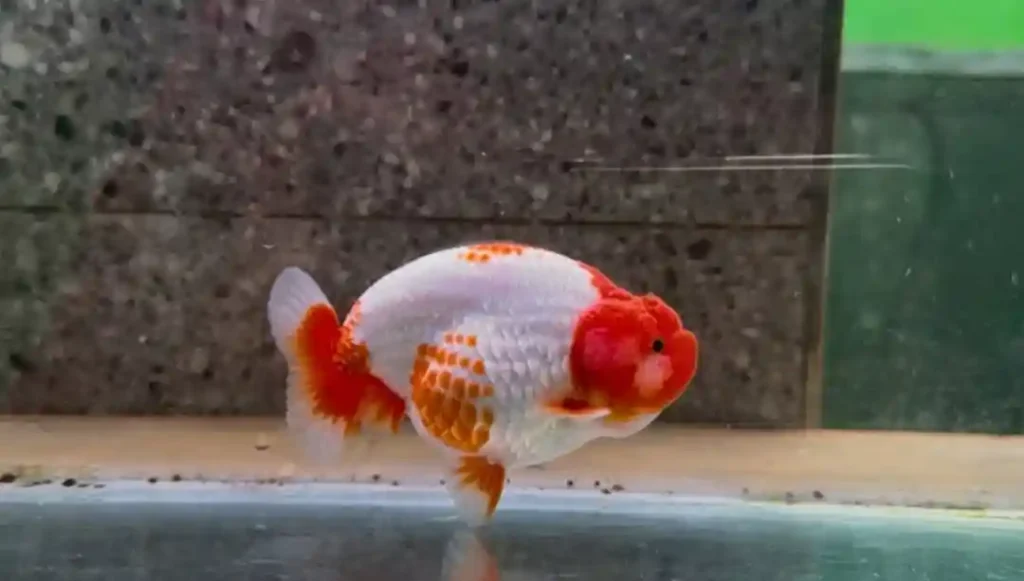
Ranchu goldfish are one of the most unique fancy goldfish you can keep. They have a rounded body, no dorsal fin, a smooth curved back, and a soft head growth called a wen.
They are often called the “king of goldfish,” and it is easy to see why. A healthy Ranchu has a calm swimming style and a beautiful side profile. But this fish is not the same as a common goldfish. Ranchus are slow, delicate, and need a safe tank with clean water.
This guide covers Ranchu tank size, setup, food, water parameters, tank mates, lifespan, health problems, and beginner mistakes to avoid.
If you are still comparing fancy goldfish varieties, read our full guide on types of goldfish. For general goldfish basics, start with our main goldfish care guide.
Ranchu Goldfish at a Glance
| Feature | Details |
| Scientific Name | Carassius auratus |
| Common Name | Ranchu Goldfish |
| Goldfish Type | Fancy Goldfish |
| Adult Size | 5–8 inches |
| Lifespan | 10–15 years |
| Care Level | Moderate |
| Minimum Tank Size | 20 gallons for one |
| Better Tank Size | 30 gallons or more |
| Temperature | 65–75°F |
| pH Range | 7.0–8.4 |
| Temperament | Peaceful |
| Swimming Level | Slow |
| Best Tank Mates | Other slow fancy goldfish |
| Best For | Keepers who can maintain clean water and gentle flow |
What Is a Ranchu Goldfish?
A Ranchu goldfish is a fancy goldfish known for its rounded body, curved back, and missing dorsal fin. That missing dorsal fin is one of the main things that separates Ranchus from many other fancy goldfish.
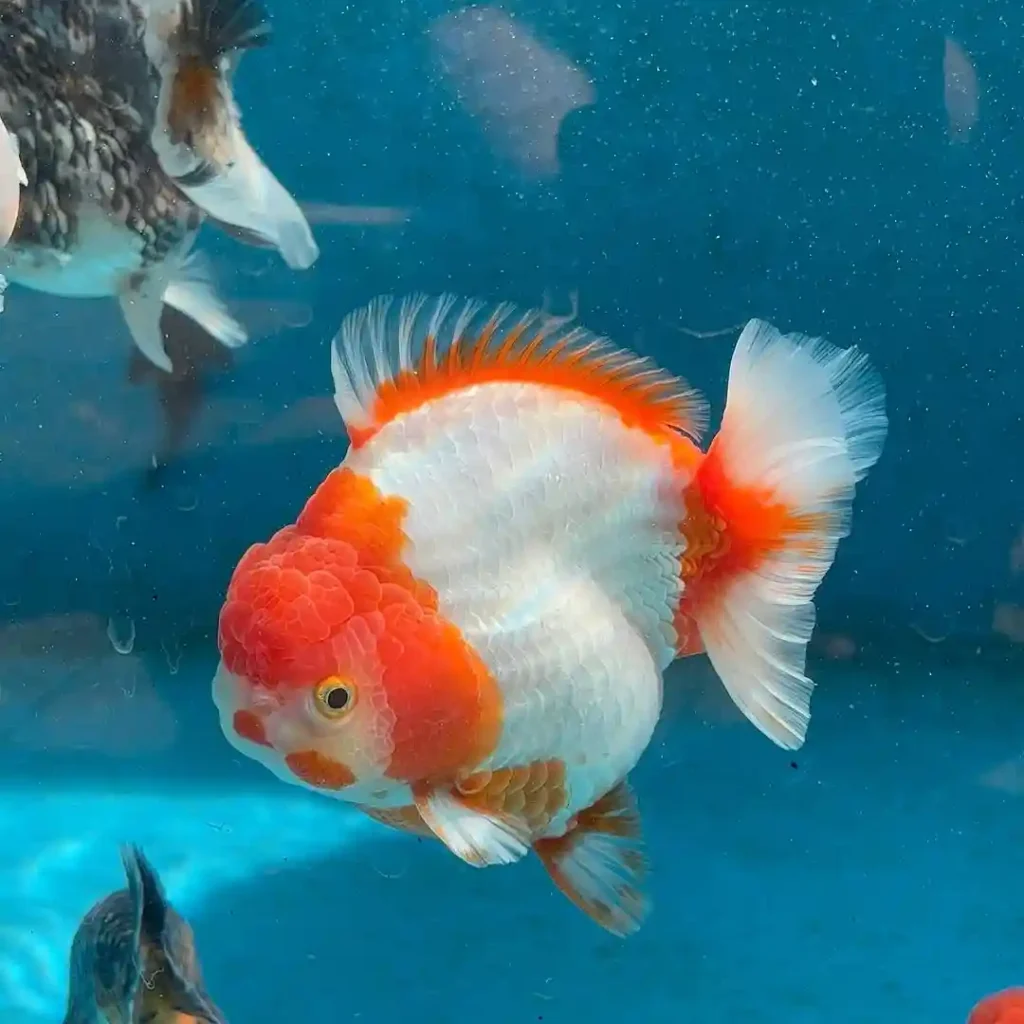
They also develop a head growth called a wen. The wen may cover the top of the head, cheeks, and face as the fish matures. A healthy wen should look clean and smooth, not red, fuzzy, or damaged.
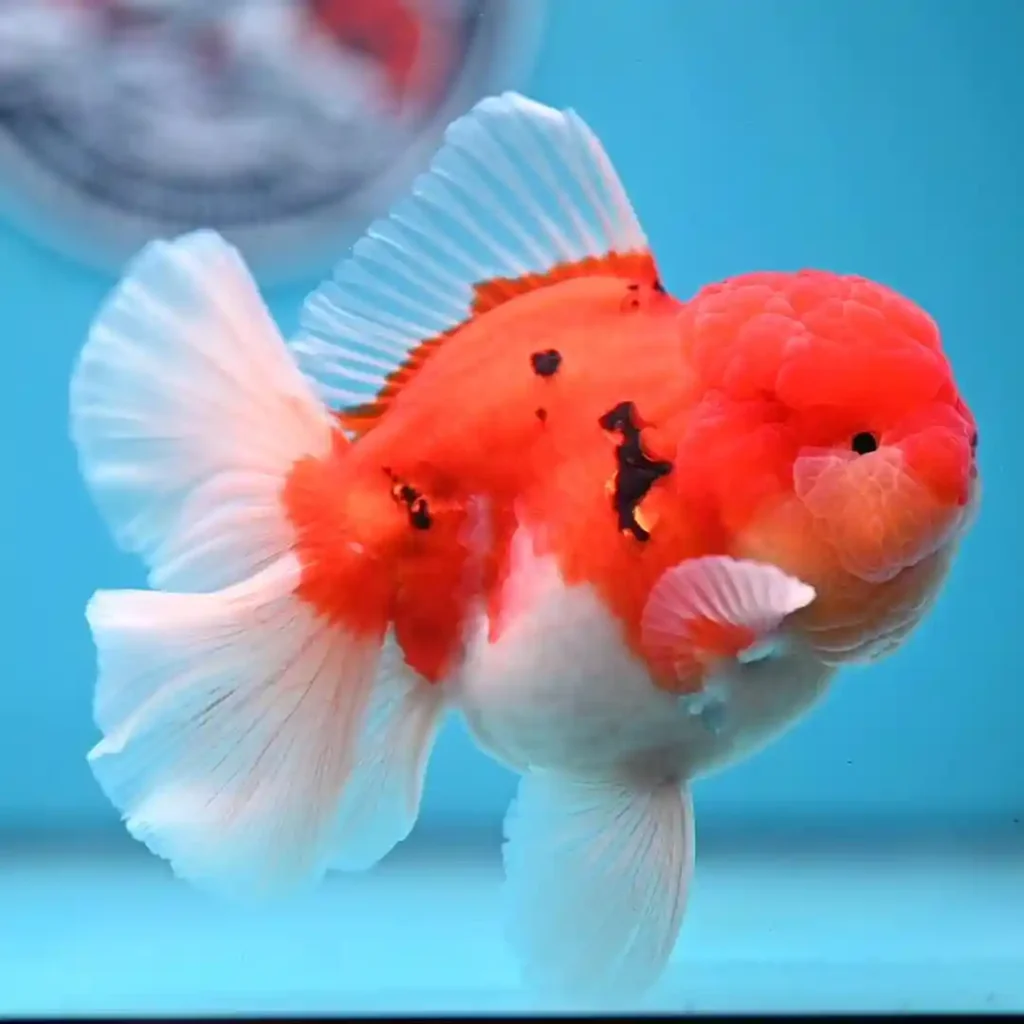
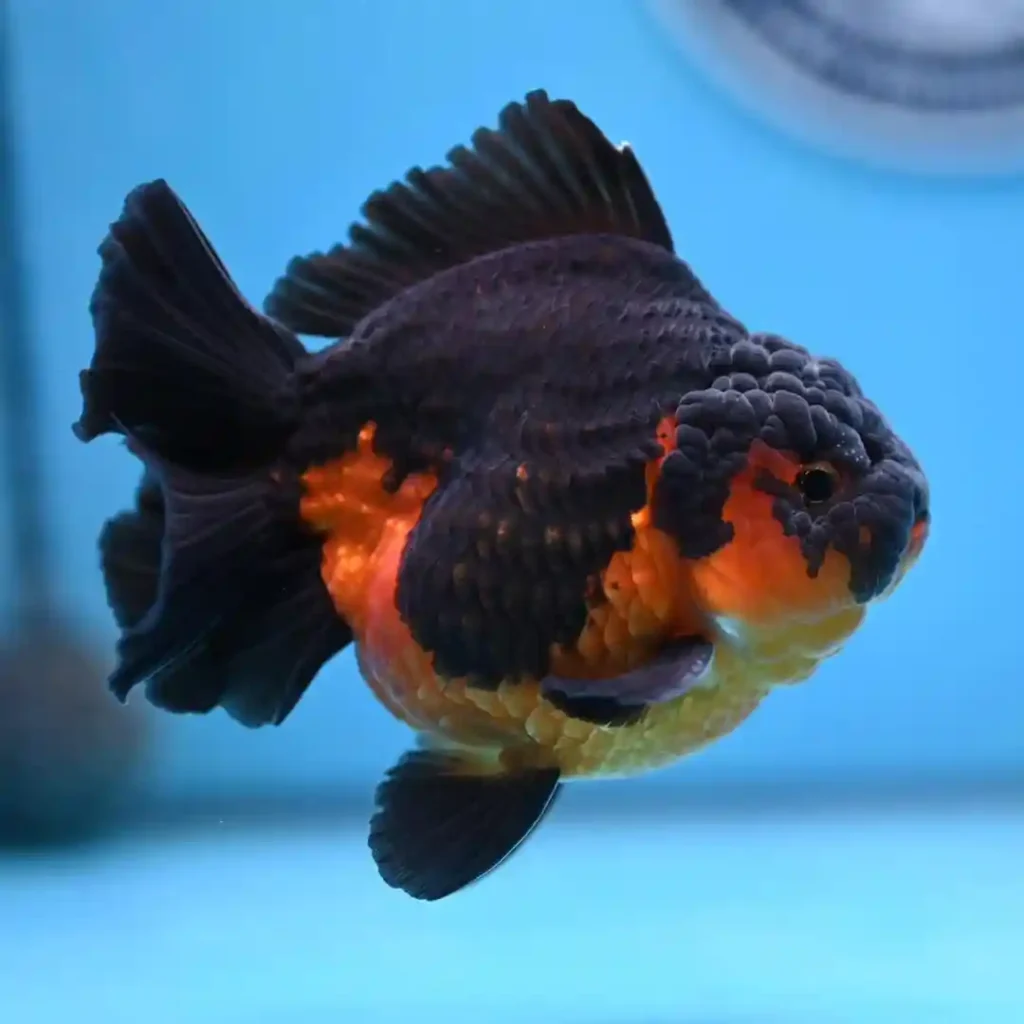
Ranchus come in many colors, including red, orange, white, red and white, black, calico, and yellowish tones. Some are bred for side-view aquariums, while others are judged from above, especially in traditional goldfish keeping.
Their look is beautiful, but their body shape affects their care. Ranchus are not strong swimmers. They need gentle water movement, smooth decor, and tank mates that will not outcompete them for food.
Are Ranchu Goldfish Good for Beginners?
Ranchu goldfish can be kept by beginners, but they are not the easiest beginner goldfish.
My direct opinion: if someone is keeping goldfish for the first time, a Fantail is usually a safer choice. Ranchus are slower, more delicate, and need more attention to water quality and tank flow.
Ranchus are not difficult because they are aggressive or picky. They are difficult because their body shape makes them less stable in the water. Strong current, sharp decor, poor water, and overfeeding can cause problems quickly.
They are easier than Bubble Eye goldfish, but harder than Fantails. If you want a first fancy goldfish, compare them with the Fantail Goldfish Care Guide before choosing.
Ranchu Goldfish Appearance
The Ranchu has a short, rounded body with a smooth arched back. Unlike many goldfish, it does not have a dorsal fin. This gives the fish its classic curved shape.
The tail is usually short and spread out, helping the fish move slowly through the water. Ranchus do not swim fast, and they should never be placed in strong current.
The wen is another key feature. It develops as the fish grows and may become more noticeable with age. Not every Ranchu grows a huge wen, and wen size depends on genetics, age, food, and care.
Because of their body shape, Ranchus need open swimming space and soft surroundings. Rough decorations can scrape the wen, body, or fins.
Ranchu Goldfish Size
Adult Ranchu goldfish usually grow 5 to 8 inches long. Some may stay smaller, while others can grow larger with excellent care.
Their growth depends on tank size, diet, genetics, and water quality. A small tank can slow growth and cause stress, especially because goldfish produce a lot of waste.
Even though Ranchus are not fast swimmers, they still need space. They may not race across the tank like common goldfish, but they need enough room to turn, search for food, and rest comfortably.
Ranchu Goldfish Lifespan
Ranchu goldfish usually live 10 to 15 years with proper care. Some may live longer in large, clean aquariums with stable water and a good diet.
Poor care can shorten their life. The most common reasons Ranchus die early are small tanks, weak filtration, ammonia problems, overfeeding, and injuries from sharp decor.
If you want your Ranchu to live longer, keep the setup simple: clean water, gentle flow, smooth decor, and a steady feeding routine.
Best Tank Size for Ranchu Goldfish
The minimum tank size for one Ranchu goldfish is 20 gallons. A 30-gallon tank is better because it gives more water volume and helps keep water quality stable.
For two Ranchus, use at least 40 gallons. For three, a 55-gallon tank or larger is a better choice.
| Number of Ranchus | Recommended Tank Size |
| 1 Ranchu | 20 gallons minimum |
| 1 Ranchu | 30 gallons better |
| 2 Ranchus | 40 gallons or more |
| 3 Ranchus | 55 gallons or more |
Ranchus should not live in bowls. Bowls are too small, unstable, and hard to filter. Clear water does not always mean safe water, so a proper tank and water testing are still needed.
Ranchu Goldfish Tank Setup
A Ranchu tank should be calm, clean, and safe. These fish do not need a crowded aquarium. They need open space and gentle water movement.
Filtration
Ranchus need strong filtration because they are still goldfish, and goldfish produce a lot of waste.
Use a filter rated higher than your tank size if possible. For example, a 30-gallon Ranchu tank often benefits from filtration rated for a larger aquarium.
The flow should not be harsh. Ranchus are poor swimmers because they lack a dorsal fin. Strong current can push them around and make feeding stressful.
Good filter options include sponge filters, canister filters with adjusted flow, or hang-on-back filters with a baffle.
Substrate
Smooth sand, smooth gravel, or a bare-bottom tank can work well.
Bare-bottom tanks are easy to clean and are popular with many fancy goldfish keepers. Sand looks more natural and lets Ranchus search the bottom for food.
Avoid sharp gravel or rough stones. Ranchus may scrape their body or wen while searching for food.
Decorations
Keep decorations smooth and simple. Avoid sharp rocks, rough ornaments, pointed fake plants, and tight spaces.
Ranchus are slow and not very flexible swimmers. They can bump into objects more easily than slimmer goldfish.
A simple layout with open swimming room is safer than a crowded tank.
Plants
Ranchus can live with live plants, but goldfish may nibble leaves or uproot weak plants.
Good plant choices include Anubias, Java Fern, Hornwort, Vallisneria, and Amazon Sword. Tough plants usually do better than soft plants.
For more options, read our guide on goldfish plants.
Water Parameters for Ranchu Goldfish
Stable water is more important than chasing perfect numbers. Ranchus need clean, oxygen-rich water with no ammonia or nitrite.
| Water Parameter | Best Range |
| Temperature | 65–75°F |
| pH | 7.0–8.4 |
| Ammonia | 0 ppm |
| Nitrite | 0 ppm |
| Nitrate | Under 40 ppm |
| Water Change | 25–30% weekly |
Ammonia and nitrite should always be 0 ppm. If either one appears, the tank is unsafe and needs attention.
Nitrate should be controlled with water changes. In a goldfish tank, nitrate can rise quickly because these fish eat often and create a lot of waste.
Change around 25–30% of the water each week. If the tank is small, crowded, or heavily fed, you may need larger or more frequent water changes.
Do Ranchu Goldfish Need a Heater?
Ranchu goldfish usually do not need a heater if the room temperature stays stable between 65 and 75°F.
A heater can help if your room gets too cold or the temperature changes quickly. Sudden temperature swings can stress Ranchus.
Do not keep the water too warm for long periods. Warmer water can increase waste breakdown and lower oxygen levels, so stable cooler water is usually better.
Ranchu Goldfish Food and Diet
Ranchus are omnivores. They eat both plant-based and animal-based foods.
Their diet should support slow, steady growth and good digestion. Because Ranchus have round bodies, they can be more prone to bloating and swim bladder problems.
Use high-quality sinking goldfish pellets or gel food as the main diet. Sinking foods are better than floating foods because Ranchus may gulp air at the surface.
Good staple foods include sinking pellets, gel food, and vegetable-based goldfish food.
You can also offer small treats such as shelled peas, blanched spinach, zucchini, daphnia, bloodworms, and brine shrimp.
Feed adult Ranchus once or twice a day. Only give what they can finish in about 1 to 2 minutes.
Overfeeding is a common mistake. Ranchus always act hungry, but too much food can cause dirty water, bloating, and balance problems.
Wen Care for Ranchu Goldfish
The wen is the soft head growth that develops on Ranchu goldfish as they mature. It is one of their most attractive features, but it needs clean water to stay healthy.
A healthy wen should look smooth and clean. It should not have red patches, fuzzy growth, open sores, or swelling.
Because the wen has folds, waste and bacteria can collect there if the tank is dirty. This can lead to irritation or infection.
Signs of wen problems include redness, swelling, white patches, sores, head rubbing, loss of appetite, or unusual behavior.
The best way to protect the wen is simple: clean water, smooth decor, and regular observation.
Do not try to trim a Ranchu’s wen at home unless you have proper experience or help from an aquatic vet or skilled goldfish keeper. Wen trimming is advanced and can hurt the fish if done incorrectly.
Ranchu Goldfish Behavior
Ranchus are peaceful, slow-moving goldfish. They are not aggressive and usually spend their time gently swimming, resting, and searching the bottom for food.
Because they do not have a dorsal fin, they may look less stable in the water than other goldfish. This is normal for the breed, but they should still be able to swim, eat, and balance comfortably.
A healthy Ranchu should be alert, interested in food, and able to swim without floating sideways or sinking uncontrollably.
If your Ranchu is hiding, bottom-sitting, clamping its fins, floating upside down, or refusing food, check the water first.
Ranchu Goldfish Tank Mates
Ranchus should live with other slow fancy goldfish. They should not be mixed with fast single-tail goldfish like Common goldfish, Comets, or Shubunkins.
Fast goldfish often reach food first and can stress Ranchus over time.
Good Ranchu tank mates include Oranda goldfish, Fantail goldfish, Black Moor goldfish, Telescope goldfish, Lionhead goldfish, and other Ranchus.
Orandas are a good match because they are also slow fancy goldfish with wen care needs. You can compare them in our Oranda Goldfish Care Guide.
Black Moors and Telescope goldfish can also work, but their poor eyesight means the tank needs to be extra safe. Read the Black Moor Goldfish Care Guide or Telescope Goldfish Care Guide before mixing them.
Lionheads are similar to Ranchus because they also lack a dorsal fin and have head growth. You can learn more in our Lionhead Goldfish Care Guide.
Avoid aggressive fish, fin nippers, tropical fish that need warmer water, and tiny fish that may fit in the Ranchu’s mouth.
Can Ranchu Goldfish Live Alone?
Yes, a Ranchu goldfish can live alone in a proper tank.
Still, goldfish are social and often do well with another peaceful fancy goldfish. The important part is tank size. Do not add another fish unless your aquarium and filter can handle the extra waste.
For two Ranchus, use at least 40 gallons. More space is better.
Common Ranchu Goldfish Health Problems
Ranchus are not weak fish, but their body shape and wen make some problems more likely.
Swim Bladder Problems
Swim bladder problems are common in round-bodied fancy goldfish. Signs include floating, sinking, swimming sideways, or struggling to stay balanced.
Possible causes include overfeeding, constipation, poor food, gulping air, dirty water, or internal illness.
Start by testing the water. If water is safe, reduce feeding for a short time and offer easy-to-digest foods like daphnia or shelled peas.
Wen Infection
The wen can become irritated or infected if waste collects in the folds or if the fish gets scratched.
Watch for redness, swelling, white fuzzy patches, sores, or the fish rubbing its head.
Clean water is the best prevention. Serious infections may need proper treatment and help from someone experienced with goldfish.
Fin Rot
Fin rot can make fins look torn, red, cloudy, or melted at the edges. It often happens after poor water quality or injury.
Test ammonia, nitrite, and nitrate first. Improve water changes and remove sharp decor.
Ammonia Burns
Ammonia burns can happen when the tank is uncycled, overstocked, or poorly maintained.
Signs may include red streaks, dark patches, clamped fins, gasping, or bottom-sitting.
Ammonia should always be 0 ppm. If it is not, the tank needs immediate care.
Constipation and Bloating
Ranchus can become bloated if they are overfed or given too much dry food.
Feed smaller portions and add fiber-rich foods like peas, spinach, or daphnia now and then.
Male vs Female Ranchu Goldfish
It can be difficult to tell male and female Ranchu goldfish apart when they are young.
During breeding season, males may develop small white breeding stars on the gill covers and front fins. Males may also chase females around the tank.
Females may look rounder from above, especially when carrying eggs.
Outside of breeding condition, the difference can be hard to see.
Breeding Ranchu Goldfish
Ranchu goldfish can breed in aquariums, but breeding is better for keepers who already understand water quality and fry care.
Males chase females during spawning. Females scatter eggs on plants, spawning mops, or tank surfaces.
Adult goldfish may eat the eggs, so breeders often move the eggs or remove the adults after spawning.
Fry need tiny foods at first, such as infusoria or baby brine shrimp. As they grow, they can move to crushed pellets and other small foods.
Ranchu vs Other Fancy Goldfish
Ranchus are often compared with Orandas and Lionheads because all three can have wen growth.
| Goldfish Type | Main Difference |
| Ranchu | No dorsal fin, rounded back, wen growth |
| Oranda | Has dorsal fin and wen growth |
| Lionhead | No dorsal fin, heavier head growth, similar care |
| Fantail | Easier fancy goldfish, no wen |
| Black Moor | Telescope eyes and poor eyesight |
| Bubble Eye | Very delicate eye sacs |
Choose Ranchu if you like the smooth back, round body, and slow swimming style.
Choose Oranda if you want a wen-type goldfish with a dorsal fin.
Choose Fantail if you want an easier fancy goldfish.
Avoid Bubble Eye as a first fancy goldfish because it is much more delicate. Read the Bubble Eye Goldfish Care Guide if you are thinking about keeping one.
Beginner Mistakes to Avoid
The biggest mistake is keeping Ranchus in bowls. These fish need a real aquarium with filtration and stable water.
Another mistake is using strong water flow. Ranchus are poor swimmers, and harsh current can stress them.
Do not use sharp decorations. Their wen, body, and fins can be injured.
Avoid mixing Ranchus with fast single-tail goldfish. They may lose food competition and become stressed.
Do not overfeed. Ranchus are round-bodied fish, and too much food can lead to bloating and swim bladder issues.
Do not skip water testing. Clear water can still contain ammonia or nitrite.
Ranchu Goldfish Care Checklist
| Care Need | Best Practice |
| Tank Size | 20 gallons minimum for one |
| Better Tank Size | 30 gallons or more |
| Filtration | Strong filter with gentle flow |
| Temperature | 65–75°F |
| pH | 7.0–8.4 |
| Ammonia | 0 ppm |
| Nitrite | 0 ppm |
| Food | Sinking pellets and gel food |
| Decor | Smooth and simple |
| Tank Mates | Slow fancy goldfish |
| Water Changes | 25–30% weekly |
| Special Care | Check wen and swimming balance |
FAQs
Are Ranchu goldfish easy to care for?
Ranchu goldfish are moderate-care fish. They are peaceful, but their round body, missing dorsal fin, and wen growth mean they need clean water, gentle flow, and careful feeding.
How big do Ranchu goldfish get?
Most Ranchu goldfish grow 5 to 8 inches long in aquariums. Their size depends on tank space, genetics, food, and water quality.
How long do Ranchu goldfish live?
Ranchu goldfish usually live 10 to 15 years with proper care. Some can live longer in clean, stable aquariums.
What size tank does a Ranchu goldfish need?
One Ranchu goldfish needs at least 20 gallons. A 30-gallon tank is better. Two Ranchus should have at least 40 gallons.
Do Ranchu goldfish need a heater?
Ranchu goldfish usually do not need a heater if the room temperature stays stable between 65 and 75°F. A heater may help if the room gets too cold or changes temperature quickly.
Can Ranchu goldfish live with Oranda goldfish?
Yes, Ranchu goldfish can live with Oranda goldfish if the tank is large enough and the flow is gentle. Both are slow fancy goldfish with similar care needs.
Can Ranchu goldfish live with common goldfish?
No, it is not recommended. Common goldfish are faster and more active. They can outcompete Ranchus for food and cause stress.
What do Ranchu goldfish eat?
Ranchu goldfish eat sinking pellets, gel food, vegetables, daphnia, bloodworms, and brine shrimp. Sinking foods are usually better than floating foods.
Why is my Ranchu floating upside down?
Floating upside down can be linked to swim bladder problems, constipation, overfeeding, poor food, or poor water quality. Test the water first and check the feeding routine.
What makes Ranchu goldfish different?
Ranchu goldfish have no dorsal fin, a rounded back, and a wen on the head. This gives them their special shape but also makes them slower swimmers.
