
Guppy Fish Food Guide: What to Feed Guppies

Guppies are small, active fish, but their food makes a big difference in their color, growth, breeding, and health. Many beginners feed only flakes every day and wonder why their guppies look dull, grow slowly, or become weak after breeding.
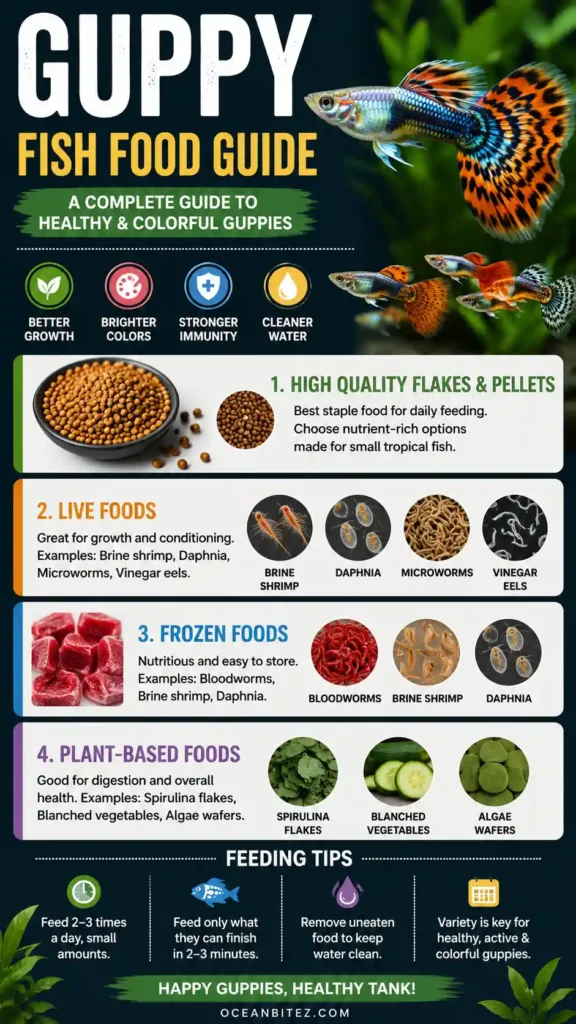
Guppies can eat flakes, micro pellets, brine shrimp, daphnia, bloodworms, spirulina foods, algae, biofilm, and small soft vegetables. They are omnivores, which means they need both protein-based and plant-based foods.
A good guppy diet does not need to be complicated. The main goal is to feed a quality daily food and add variety during the week. This keeps them active, colorful, and less likely to suffer from poor digestion or weak body condition.
If you are new to keeping guppies, you may also want to read our Guppy Care Guide before setting a feeding routine.
What Do Guppies Eat?
Guppies eat a mix of animal-based and plant-based foods. In an aquarium, the best diet usually includes tropical flakes or micro pellets as the main food, with small amounts of live, frozen, or vegetable-based foods added during the week.
In the wild, guppies graze throughout the day. They pick at algae, biofilm, insect larvae, tiny worms, small crustaceans, and soft plant matter. This is why guppies usually do better with variety instead of one food every day.
In a home tank, flakes alone can keep guppies alive, but a mixed diet gives better results. Fish that get a balanced diet usually show better color, stronger growth, and better breeding condition.
Best Food for Guppies
The best food for guppies is small, easy to eat, and made for tropical fish or livebearers. Since guppies have small mouths, avoid large pellets or big frozen food pieces.
| Food | Best For | How Often |
| Tropical flakes | Daily feeding | Daily |
| Micro pellets | Cleaner feeding | Daily |
| Spirulina flakes | Digestion and color | 2–3 times weekly |
| Brine shrimp | Growth and breeding | 2–3 times weekly |
| Daphnia | Digestion and variety | 1–2 times weekly |
| Bloodworms | Protein treat | Once weekly |
| Soft vegetables | Fiber | 1–2 times weekly |
Tropical flakes are the easiest daily food for guppies. Choose a good-quality flake made for tropical community fish or livebearers. A better flake food usually contains fish protein, spirulina, vitamins, and natural color-supporting ingredients.
Micro pellets are also a strong choice. They are usually less messy than flakes and are easier to measure. Some guppies enjoy chasing slowly sinking pellets, which can help shy fish get food before the faster fish eat everything.
Spirulina flakes or algae-based foods are useful because guppies naturally graze on plant matter. These foods can help digestion and may also support better color when used as part of a mixed diet.
You can check this guppy fish food here if you want an easy option for daily feeding.
Live and Frozen Foods for Guppies
Live and frozen foods are useful, but they should not replace the main diet. They are best used a few times per week to add protein and variety.
Brine shrimp is one of the best foods for guppies. It is small, easy to eat, and useful for growth, breeding condition, and fry development. Frozen brine shrimp is easy to use, while live baby brine shrimp is excellent for guppy fry.
Daphnia is another great option because it adds protein without being too heavy. It also has a lot of roughage, which can help with digestion. If your guppies often look bloated, daphnia is usually a better treat than bloodworms.
Bloodworms are loved by many guppies, but they are rich. Feed them only as a treat. Once per week is enough for most guppy tanks.
Mosquito larvae are close to what guppies may eat in nature, but only use them if they come from a clean and safe source. Never feed anything collected from dirty water, drains, or areas that may contain chemicals.
What Human Food Can Guppies Eat?
Guppies can eat a few simple human foods, but these should only be used as occasional treats or short-term backup food. Human food should not become their main diet.
| Human Food | Safe for Guppies? | How to Feed |
| Peas | Yes | Remove skin and crush |
| Spinach | Yes | Blanch and offer tiny pieces |
| Cucumber | Yes | Use a soft thin slice |
| Zucchini | Yes | Blanch first |
| Egg yolk | Only for fry | Tiny amount only |
| Bread | No | Avoid |
| Rice | No | Avoid |
| Crackers | No | Avoid |
Blanched peas are useful when guppies seem constipated or bloated. Remove the skin and crush the soft inside into tiny pieces. Spinach, cucumber, and zucchini can also be offered in very small amounts.
Always remove leftover vegetables after a few hours. Soft vegetables can spoil quickly and pollute the water, especially in smaller tanks.
Avoid bread, rice, biscuits, crackers, oily food, spicy food, salty food, and sugary food. These foods do not offer the right nutrition and can dirty the water fast.
What to Feed Guppies When Out of Fish Food
If you run out of fish food, you can feed guppies a small amount of blanched peas, blanched spinach, cucumber, or zucchini for a short time. These are backup options, not a full replacement for proper guppy food.
For guppy fry, a tiny amount of boiled egg yolk can be used in an emergency, but it must be used carefully. Egg yolk clouds water very fast, so only use a tiny amount and remove waste quickly.
Do not feed bread, rice, biscuits, chips, cooked spicy food, oily food, or salty kitchen food. It is better to feed less for a day than to add the wrong food and damage water quality.
Healthy adult guppies can usually go a short time without food, especially if the tank has algae or biofilm to graze on. Once you get proper fish food again, return to a normal feeding routine.
How Often Should You Feed Guppies?
Adult guppies usually do well with one or two small meals per day. Feed only what they can finish in about 30–60 seconds.
Guppies often act hungry, even when they do not need more food. This is one reason beginners overfeed them. Extra food sinks, breaks down, and can lead to cloudy water, ammonia problems, and disease.
Young guppies need food more often because they are growing. Juveniles can be fed two or three small meals per day. Guppy fry can be fed three to five tiny meals per day if you are raising them for faster growth.
The smaller the tank, the more careful you need to be. Uneaten food can spoil water quickly in small aquariums.
What Do Guppy Fry Eat?
Guppy fry are tiny when born, but they start eating very soon. Their food must be small enough to fit in their mouths.
Baby brine shrimp is one of the best foods for guppy fry because it is small and rich in nutrition. Fry powder, microworms, finely crushed flakes, and crushed micro pellets can also work well.
Feed fry small meals several times per day. They grow faster when they get steady food, but the water must stay clean. Too much food in a fry tank can cause problems quickly.
If you are raising newborn guppies, read our Guppy Fry Care Guide for a full setup and feeding plan.
Can Guppies Eat Bloodworms Every Day?
No, guppies should not eat bloodworms every day. Bloodworms are rich and can cause digestive problems if used too often.
For most guppy tanks, bloodworms once per week is enough. They are better as a treat than a daily food. If you want to feed protein more often, rotate with brine shrimp and daphnia instead.
A simple rule is to keep flakes or micro pellets as the base diet, then use bloodworms only as a small extra food.
Can Guppies Eat Goldfish Food?
Guppies may eat goldfish food, but it should not be their main diet. Goldfish and guppies have different feeding needs, and many goldfish foods are not the best choice for small tropical livebearers.
If you only have goldfish flakes for a short time, guppies can usually eat a small amount if the flakes are crushed small enough. Still, it is better to use tropical fish flakes, livebearer food, or guppy-specific food as the regular diet.
If the food pieces are too large, guppies may spit them out or ignore them.
Feeding Guppies for Better Color
Food cannot change guppy genetics, but it can help them show their best color. A weak diet can make guppies look dull, while a balanced diet helps them look brighter and healthier.
Spirulina foods, brine shrimp, daphnia, shrimp-based foods, krill-based foods, and foods with natural carotenoids can support red, orange, yellow, and blue tones. Clean water also matters. Even the best food will not make guppies look good in poor water conditions.
If you keep colorful strains, our Types of Guppies guide can help you compare different varieties.
Feeding Guppies in a Breeding Tank
Breeding guppies need a better diet than guppies kept only for display. Pregnant females use a lot of energy, and poor feeding can lead to weak females, smaller fry, and slower recovery after giving birth.
Use flakes or micro pellets as the base food. Add brine shrimp, daphnia, and occasional bloodworms during the week. A small vegetable treat or spirulina food can also help keep digestion normal.
Do not overfeed a breeding tank. Breeding tanks can become crowded quickly, and extra food can make the water dirty. Feed small meals and remove uneaten food when needed.
For a complete breeding setup, read our Guppy Breeding Guide.
Simple Weekly Guppy Feeding Plan
You do not need a strict feeding schedule, but a simple plan can help beginners avoid feeding the same thing every day.
| Day | Food |
| Monday | Tropical flakes |
| Tuesday | Micro pellets |
| Wednesday | Brine shrimp |
| Thursday | Spirulina flakes |
| Friday | Daphnia |
| Saturday | Flakes or micro pellets |
| Sunday | Small vegetable treat |
This is only a sample. You can adjust it based on your tank, fish age, and water quality. If your tank is new, crowded, or showing water problems, feed less until the tank becomes stable.
Foods Guppies Should Avoid
Guppies should not eat bread, rice, crackers, chips, dairy, sweets, salty food, spicy food, oily food, or spoiled food. These foods can cause digestion issues and pollute the tank.
Also avoid large food pieces. Guppies have small mouths, so food should be crushed or broken into tiny pieces. If your guppies keep spitting food out, the pieces are probably too large.
Old fish food can also be a problem. If flakes smell bad, look damp, or have lost their normal texture, replace them.
Common Guppy Feeding Mistakes
The most common mistake is overfeeding. Guppies are active fish and will often rush to the surface when they see you. That does not always mean they need more food.
Another mistake is feeding only one type of food. Flakes are fine as a base, but guppies usually do better with variety. Adding brine shrimp, daphnia, spirulina foods, and occasional vegetables can improve the diet without making it hard to manage.
Leaving vegetables in the tank too long is also a common problem. Vegetables can break down and dirty the water, so remove leftovers after a few hours.
Poor feeding can also lead to weak fish that are more likely to get sick. If your guppies show clamped fins, bloating, fin damage, or unusual swimming, check our Guppy Diseases Guide.
Does Tank Setup Affect Feeding?
Yes, tank setup can affect how well guppies eat. In a crowded tank, stronger fish may take most of the food while shy fish get less. In tanks with too much flow, food may move away before smaller guppies can eat properly.
Live plants can help. They give shy guppies and fry places to hide, and they also grow biofilm that guppies may graze on between meals. For plant ideas, see our Plants for Guppies guide.
Tank size matters too. In a small tank, uneaten food can pollute the water faster. A larger, stable tank is easier to feed and maintain.
FAQ‘s
What is the best food for guppies?
The best food for guppies is a mix of tropical flakes or micro pellets with occasional brine shrimp, daphnia, spirulina foods, and soft vegetables. A varied diet is better than feeding only one food every day.
What do guppies eat?
Guppies eat flakes, micro pellets, brine shrimp, daphnia, bloodworms, algae, biofilm, spirulina foods, and small soft vegetables. They are omnivores, so they need both protein and plant-based foods.
How many times a day should I feed guppies?
Adult guppies should be fed one or two small meals per day. Fry and young guppies can be fed more often, but each meal should be tiny.
What can I feed guppies if I run out of fish food?
You can feed small amounts of blanched peas, spinach, cucumber, or zucchini for a short time. For fry, a tiny amount of boiled egg yolk can be used carefully. Avoid bread, rice, biscuits, spicy food, oily food, and salty food.
Can guppies eat human food?
Guppies can eat a few simple human foods like peas, spinach, cucumber, and zucchini in tiny amounts. These should only be occasional treats or backup foods, not the main diet.
Can guppies eat goldfish food?
Guppies can eat a small amount of goldfish food if needed, but it should not be their regular food. Tropical flakes, livebearer food, or guppy food are better choices.
Can guppies eat bloodworms every day?
No, bloodworms should not be fed every day. They are rich and should only be used as a treat, usually once per week.
What is the best food for guppy fry?
Baby brine shrimp is one of the best foods for guppy fry. Fry powder, microworms, crushed flakes, and finely crushed micro pellets are also good options.
Do guppies need vegetables?
Guppies do not need vegetables every day, but small amounts of soft vegetables and spirulina foods can help with digestion and add variety to the diet.
