
Clown Goby Care Guide: Tank Setup, Feeding, and Behavior

If you’ve ever wanted a small saltwater fish that doesn’t require a huge tank but still brings color and personality, the Clown Goby might be the perfect fit. These tiny reef dwellers are known for their calm behavior, charming perching habits, and eye-catching colors.
Despite their size, Clown Gobies are full of character. They spend their days hopping from rock to coral, often choosing a favorite spot to rest and watch the tank. Because they’re hardy and stay small, they’re popular choices for reef aquariums and nano tanks alike. In this guide, we’ll cover everything you need to know about keeping Clown Gobies healthy and happy in your home aquarium.
Species Overview
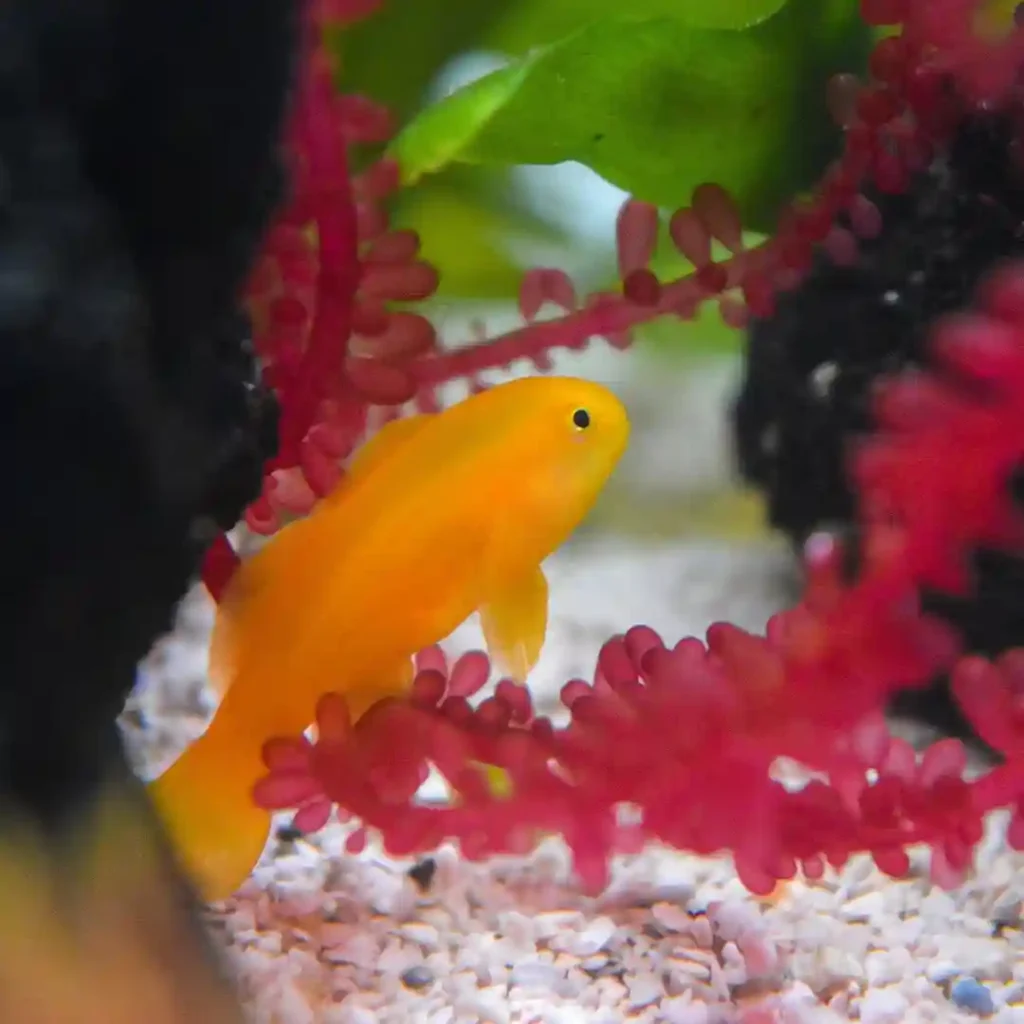
Clown Gobies belong to the Gobiodon genus, which includes several colorful variations. These fish are naturally found in the Indo-Pacific, where they live among branching corals in shallow reefs. Their small size and peaceful nature make them appealing to aquarists looking for manageable, reef-friendly species.
- Size: 1.5–2 inches
- Lifespan: 3–5 years in captivity
- Temperament: Peaceful, slightly territorial with their own kind
- Diet: Carnivorous (zooplankton, tiny crustaceans)
- Tank Level: Bottom to mid-level, often perched on corals or rocks
Appearance and Variants
Clown Gobies are compact fish with a rounded body and fused pectoral fins that help them “perch” on surfaces. They don’t swim long distances like other fish; instead, they hop from spot to spot.
Popular types include:
- Yellow Clown Goby (Gobiodon okinawae): Bright golden yellow, the most common variety.
- Green Clown Goby (Gobiodon atrangulatus): Olive to green body with faint blue markings.
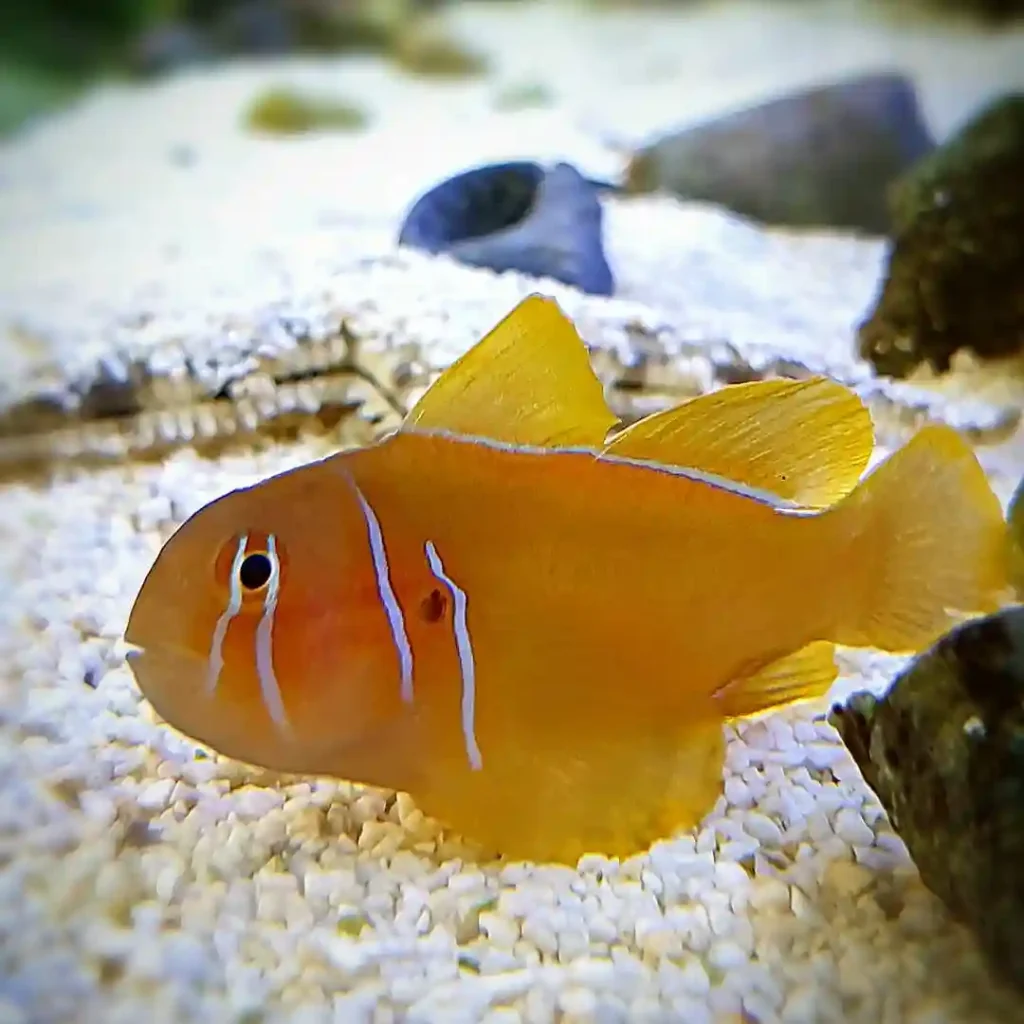
- Citron Goby (Gobiodon citrinus): Deeper yellow with blue lines around the eyes.
Males and females are hard to tell apart, but during breeding, males often guard nests while females lay eggs.
Clown Goby Tank Setup
Tank Size Requirements
Because they stay so small, a 10-gallon nano reef can house a single Clown Goby. If you’d like to keep a pair or add them to a community setup, aim for 20 gallons or more. While they don’t need a lot of space to swim, stable water quality is critical in smaller aquariums.
Water Parameters
Clown Gobies thrive when their environment is stable and close to natural reef conditions:
- Temperature: 72–78°F
- Salinity (SG): 1.020–1.025
- pH: 8.1–8.4
- Hardness (dKH): 8–12
Testing your water regularly and topping off evaporated water with fresh RO/DI water helps maintain balance.
Filtration and Flow
These fish prefer low to moderate water flow, similar to the calmer zones of a coral reef. A reliable filter and live rock provide biological filtration. A protein skimmer isn’t essential for small setups but can help keep water clear in larger or heavily stocked tanks.
Aquascape
Clown Gobies love branching live rock and corals, which mimic their natural habitat. They use these as resting perches and potential nesting sites. Be sure to create both open swimming areas and plenty of hiding spots.
One important note: when breeding, Clown Gobies may nip at SPS coral polyps to prepare nesting sites. This usually doesn’t kill the coral, but it can cause temporary damage.
Diet and Feeding
In the wild, Clown Gobies eat small crustaceans and plankton. In the aquarium, they adapt to prepared foods but may need patience at first.
Offer a mix of:
- Frozen mysis shrimp
- Brine shrimp (enriched for nutrition)
- Copepods and other live foods
- High-quality marine micro-pellets
Feed small portions twice daily, as their stomachs are tiny. If you notice a sunken belly, they may not be getting enough food. Spot feeding with a turkey baster near their perch can help.
Read also: Royal Gramma 101: Care, Compatibility, Lifespan & More
Temperament and Tank Mates
Clown Gobies are peaceful and shy, making them great community fish. They rarely bother others, though they can be territorial with other gobies in smaller tanks.
Good tank mates include:
- Clownfish
- Firefish
- Blennies
- Small wrasses (peaceful types)
- Cleaner shrimp, hermits, and snails
Avoid housing them with aggressive species like dottybacks or large predatory fish, which may see them as food.
Clown Goby in Reef Tanks
Many aquarists choose Clown Gobies because they’re considered reef-safe. They won’t harm most corals, and their perching behavior is entertaining to watch. However, breeding pairs may irritate SPS corals by clearing spots for eggs.
If you keep valuable SPS colonies, consider providing artificial branching structures or extra live rock to reduce coral stress.
Breeding Clown Gobies
Breeding Clown Gobies is possible in home aquariums, though raising fry is challenging.
- The male prepares a nest inside coral branches or rock holes.
- The female lays eggs, and the male guards them until they hatch.
- Fry are tiny and need live plankton like rotifers, which makes survival difficult for beginners.
While breeding adds natural behavior to your tank, raising fry successfully usually requires a dedicated setup.
Common Health Issues
Like most marine fish, Clown Gobies are sensitive to poor water quality and sudden changes.
- Marine Ich (Cryptocaryon): White spots on body, scratching against rocks.
- Malnutrition: Sunken belly from not eating enough.
- Stress: Hiding constantly or refusing food due to aggressive tank mates.
Quarantining new fish before adding them to the display tank can prevent most problems. Keeping water clean and feeding a varied diet goes a long way in avoiding illness.
Tips for Success with Clown Gobies
- Acclimate slowly to reduce stress when introducing them to your tank.
- Start with one unless you have enough space for a pair.
- Provide live rock and coral branches for perching and hiding.
- Feed small but frequent meals instead of one large feeding.
- Keep tank mates peaceful to avoid bullying.
FAQs
Are Clown Gobies reef-safe?
Yes, they are generally reef-safe. The only exception is when they spawn, as they may nip at SPS coral polyps to make space for eggs.
Can Clown Gobies live in nano aquariums?
Yes. A single Clown Goby can thrive in a 10-gallon tank, though larger tanks are better for pairs or communities.
Do they eat coral?
They don’t eat coral tissue for food, but may nip polyps while nesting. Providing alternative structures can reduce this behavior.
Can you keep multiple Clown Gobies together?
In larger tanks, yes. In small tanks, they may fight over territory. A bonded pair is the safest option.
How long do Clown Gobies live in captivity?
With good care, they usually live 3–5 years. Stable water quality and proper feeding are key to longevity.
Final Thoughts
Clown Gobies are one of the most beginner-friendly saltwater fish, offering a great mix of bright color and calm personality. They don’t demand huge tanks, making them perfect for nano reef enthusiasts. As long as you provide stable water, a balanced diet, and peaceful tank mates, these little gobies will bring years of enjoyment to your aquarium.
