
Ocellaris Clownfish Care Guide: Tank Setup, Diet, and Breeding

Few saltwater fish are as iconic as the Ocellaris Clownfish. Thanks to their bright orange colors and starring role in popular movies, they’ve become the face of marine aquariums worldwide. But beyond the fame, Ocellaris Clownfish (Amphiprion ocellaris) are hardy, personable, and relatively easy to care for making them one of the best beginner choices for reef and marine tanks.
These fish are small in size but big in character. They form strong bonds with their chosen territory, interact readily with their owners, and may even accept anemones or corals as their hosts. In this guide, we’ll cover everything you need to know about keeping Ocellaris Clownfish healthy and thriving in your aquarium.
Species Overview
The Ocellaris Clownfish is part of the damselfish family (Pomacentridae) and is closely related to the Percula Clownfish, which it often gets confused with. Native to the Indo-Pacific region, these fish inhabit shallow coral reefs where they live in symbiosis with sea anemones.
- Scientific Name: Amphiprion ocellaris
- Common Names: False Percula Clownfish, Common Clownfish, Nemo
- Size: Up to 3–4 inches (females larger than males)
- Lifespan: 10–15 years in captivity with proper care
- Temperament: Semi-aggressive, but generally peaceful in community tanks
- Diet: Omnivore
- Tank Level: Middle to bottom areas, often close to a host or rock
Quick Fact Table:
| Characteristic | Details |
| Size | 3–4 inches |
| Lifespan | 10–15 years |
| Temperament | Semi-aggressive |
| Minimum Tank Size | 20 gallons (pair) |
| Diet | Omnivorous |
| Reef Compatibility | Yes, reef-safe |
Appearance and Varieties
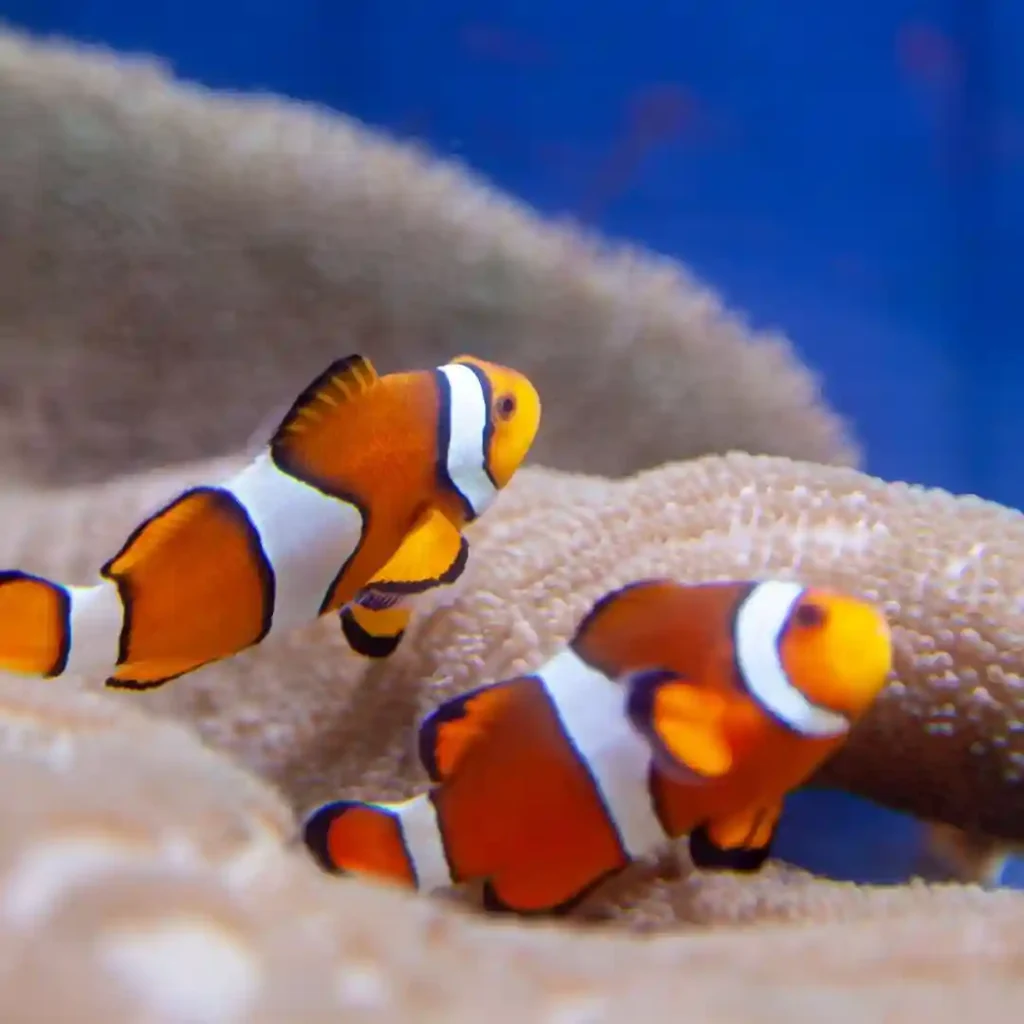
Ocellaris Clownfish are easily recognized by their orange body, accented with three white vertical bars outlined in black. But selective breeding has produced a wide range of stunning color morphs that are now common in the hobby.
- Standard Ocellaris: Bright orange with three white bands.
- Black Ocellaris (Black Darwin): Entirely black with white bands.
- Snowflake: Irregular or wider white bands, resembling snowy patterns.
- Misbar: Incomplete or broken white stripes.
- Designer morphs: Frostbite, Picasso, and others developed through captive breeding.
In terms of sexual differences, females are larger and more dominant, while males stay smaller. Interestingly, Ocellaris are protandrous hermaphrodites—they’re all born male, but the dominant one in a group becomes female.
Ocellaris Clownfish Tank Setup
Tank Size Requirements
For a pair of Ocellaris, a 20-gallon tank is the recommended minimum. A single fish can be kept in smaller setups, but pairs are more natural and interesting to observe. If you plan to keep them in a community reef, aim for 30 gallons or more to reduce territorial disputes.
Water Parameters
Consistency is more important than perfection. Ocellaris tolerate small fluctuations, but they thrive when conditions are stable:
- Temperature: 74–78°F
- Salinity (SG): 1.020–1.025
- pH: 8.1–8.4
- Hardness (dKH): 8–12
Test water regularly, especially in smaller tanks where changes happen faster.
Filtration and Flow
Clownfish don’t require strong currents. Moderate water flow works best, simulating the calmer reef zones where they naturally live. A good filter, live rock, and optional protein skimmer will help maintain clean, stable conditions.
Aquascaping and Environment
Ocellaris like having a “territory” to claim. Provide live rock caves, overhangs, and crevices for shelter. While they are famous for hosting anemones, they do not require one to survive. Many will host in corals (like frogspawn or hammer corals), rock crevices, or even equipment like a powerhead.
Diet and Feeding
Ocellaris are omnivores, which means they need both meaty foods and plant matter. In the wild, they feed on zooplankton, algae, and small invertebrates.
Good aquarium diet options include:
- Frozen mysis shrimp and brine shrimp
- Marine pellets and flakes designed for omnivores
- Chopped clams, squid, or shrimp
- Occasional algae-based foods like spirulina
Feed once or twice daily in small amounts. They’re not picky eaters, but variety ensures good health and color.
Read also: Bicolor Angelfish 101: Diet, Tank Mates & Reef Safety Guide
Temperament and Tank Mates
Ocellaris are generally peaceful, but they can become territorial, especially when breeding. They usually coexist well with other non-aggressive species.
Great tank mates include:
- Firefish
- Gobies
- Blennies
- Cardinalfish
- Cleaner shrimp, hermits, and snails
Tank mates to avoid: aggressive damselfish, large wrasses, groupers, or any predator that may see them as food.
Ocellaris Clownfish and Anemones
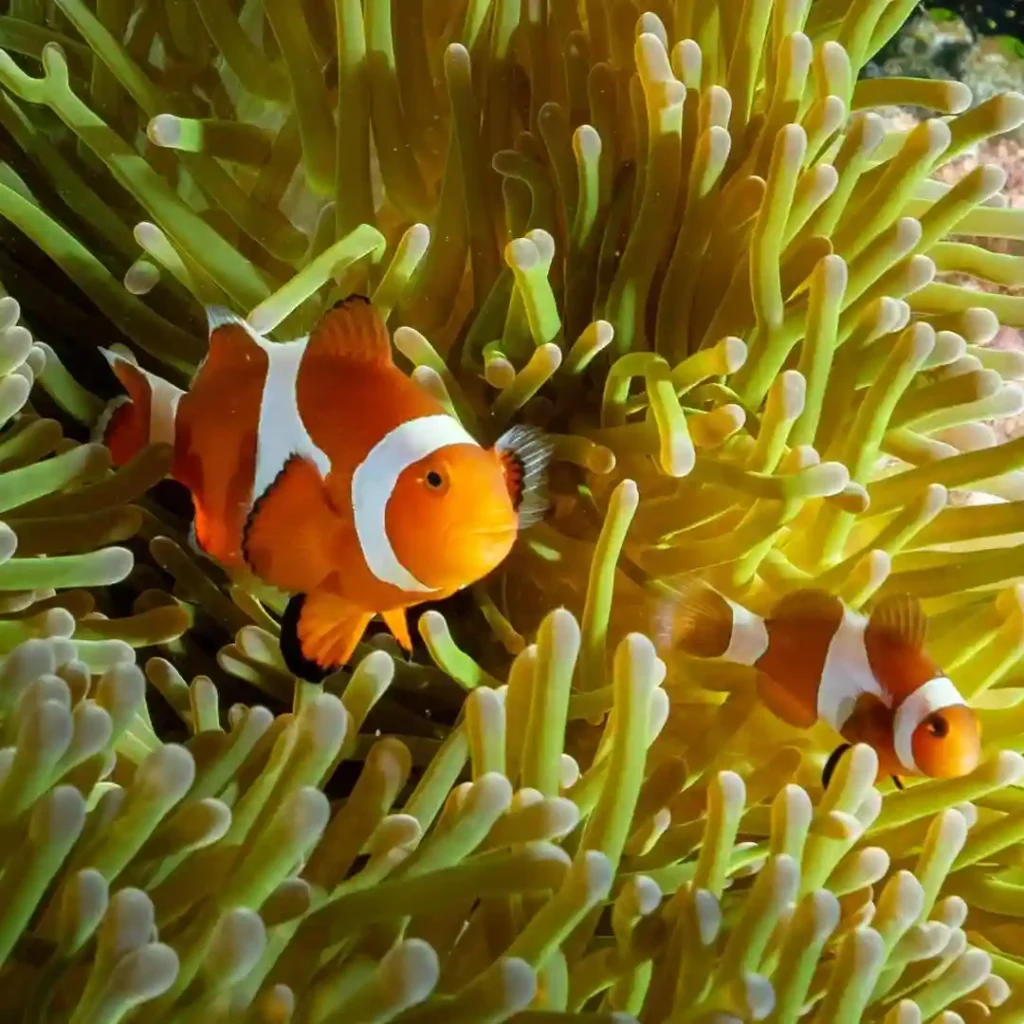
One of the most fascinating aspects of Ocellaris is their symbiotic relationship with sea anemones. In the wild, they live among the stinging tentacles, gaining protection while providing the anemone with food scraps.
Do they need an anemone in an aquarium? No. Ocellaris will live happily without one. Many captive-bred clowns have never seen an anemone and may host in alternatives like corals or rocks.
If you want to add an anemone:
- Choose species they naturally host, like the Bubble Tip Anemone (Entacmaea quadricolor).
- Provide strong lighting (anemones need photosynthesis).
- Keep water stable, as anemones are sensitive.
Breeding Ocellaris Clownfish
Breeding Ocellaris in captivity is very common, which is why many available today are captive-bred.
- Pairing: Two juveniles will form a dominance hierarchy; the larger becomes female.
- Courtship: They display “trembling” dances and clean nest sites together.
- Spawning: The female lays eggs on a flat rock or near their host, and the male guards and aerates them.
- Egg development: Eggs hatch in 7–10 days, usually at night.
- Raising fry: The hardest part. Fry need tiny live foods like rotifers and copepods before transitioning to baby brine shrimp.
While breeding is possible in display tanks, raising fry requires a separate setup.
Common Health Issues
Ocellaris are hardy but not immune to disease. The most common problems include:
- Marine Ich (Cryptocaryon): White spots, scratching against rocks.
- Brooklynella (Clownfish disease): Slime coat shedding, rapid breathing.
- Marine Velvet: Fine dust-like spots, lethargy.
- Bacterial infections: Cloudy eyes, fin rot.
Prevention tips:
- Quarantine new fish before introducing them.
- Keep water quality stable.
- Feed a varied diet to boost immunity.
Tips for Success with Ocellaris Clownfish
- Choose captive-bred fish whenever possible—they’re hardier and already adapted to aquariums.
- Avoid keeping more than two unless you have a very large tank.
- Introduce them early if you plan to keep semi-aggressive tank mates.
- Be patient with hosting—some may never choose an anemone or coral, and that’s perfectly fine.
- Keep a lid on the tank; while they don’t jump as often as some fish, it can still happen.
Read also: Flame Hawkfish Care Guide: Feeding, Compatibility, Tank Tips & Behavior
FAQs
Can Ocellaris Clownfish live without an anemone?
Yes. They don’t require an anemone to survive and often host alternative spots in captivity.
How long do Ocellaris Clownfish live in aquariums?
With good care, they can live 10–15 years, sometimes even longer.
Can you keep more than two Ocellaris together?
In small tanks, no. They form pairs, and extra clowns will be bullied. Large tanks may house a group, but aggression can still occur.
Are they reef-safe?
Yes. They won’t bother corals or invertebrates. In fact, they’re one of the best beginner reef fish.
Do Ocellaris always host anemones?
No. Many captive-bred clowns never seek an anemone, and some may adopt corals, rocks, or aquarium equipment instead.
Final Thoughts
The Ocellaris Clownfish is a fantastic choice for both beginners and experienced reef keepers. They’re hardy, colorful, and entertaining, with a personality that makes them stand out among saltwater fish. Whether you keep them in a small species tank or a larger reef, they’ll quickly become the stars of your aquarium.
By providing stable water, a balanced diet, and a peaceful community, your Ocellaris Clownfish can live a long and healthy life—bringing color and energy to your tank for over a decade.
