
Hornwort Care Guide: Floating, Planting, Growth & Tank Benefits

Few plants have earned as much trust among aquarium keepers as hornwort. If you’ve ever dealt with cloudy water, algae outbreaks, or skittish fish that need more cover, this is often the first plant experienced keepers reach for.
I’ve kept hornwort in everything from bare 10-gallon quarantine tanks to heavily planted community setups, and it’s rarely let me down.
This guide covers everything you need to know to grow hornwort successfully, whether you’re a complete beginner or looking to use it more strategically in your tank.
Want more easy plants? See Floating Aquarium Plants for Beginners
What Is Hornwort?
Hornwort (Ceratophyllum demersum) is a rootless, free-floating aquatic plant that’s been used in aquariums for decades.
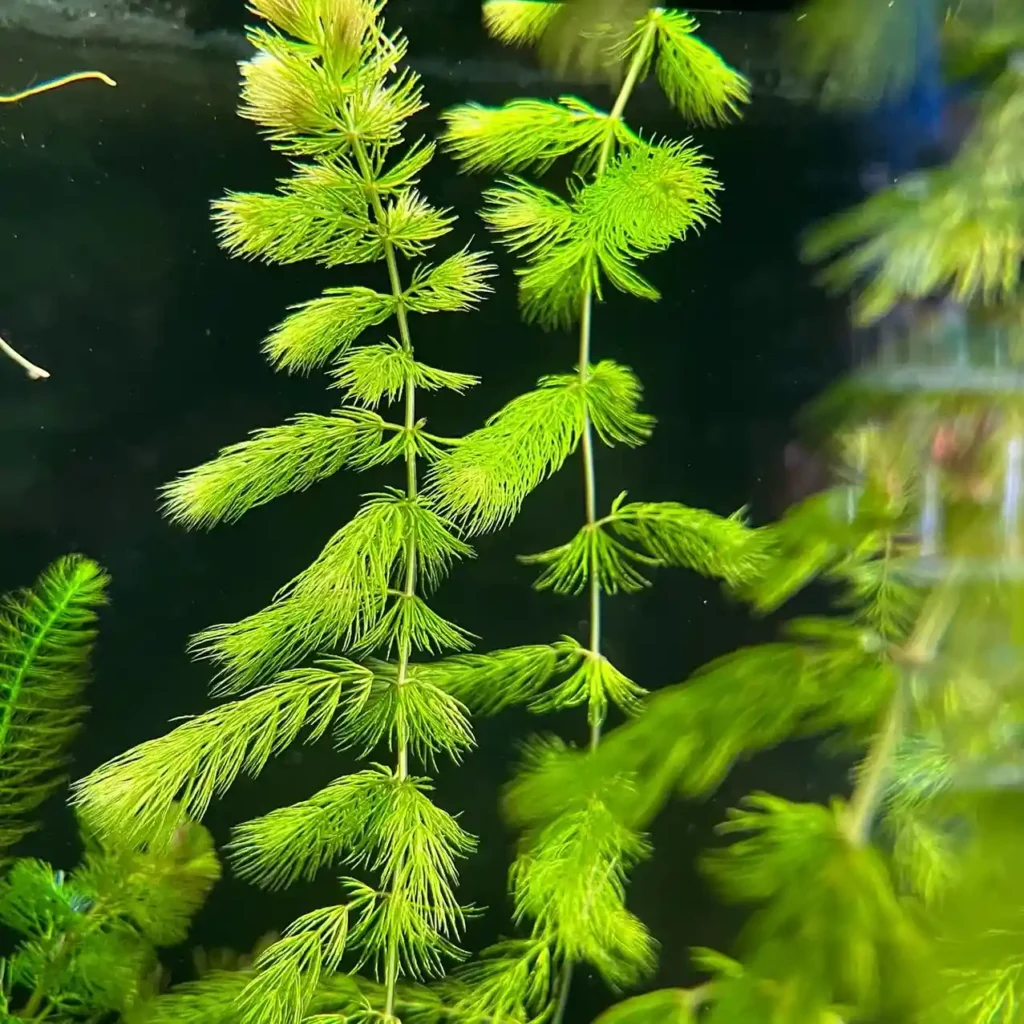
It’s not a true rooted plant instead, it grows in dense, feathery strands that either float at the surface or can be weighed down to grow submerged.
Its needle-like, forked leaves grow in whorls around the stem, giving it a bushy, almost pine-like appearance.
It’s native to freshwater habitats worldwide and is incredibly hardy, which is exactly why it’s become a staple in the hobby.
Why Keepers Love Hornwort
Before getting into care specifics, it’s worth understanding why this plant has such a strong reputation:
- Excellent nutrient uptake — hornwort is a nitrate and ammonia sponge, making it ideal for new tanks going through cycling or tanks with heavier bioloads
- Natural algae control — by competing with algae for nutrients and light, it can noticeably reduce algae growth
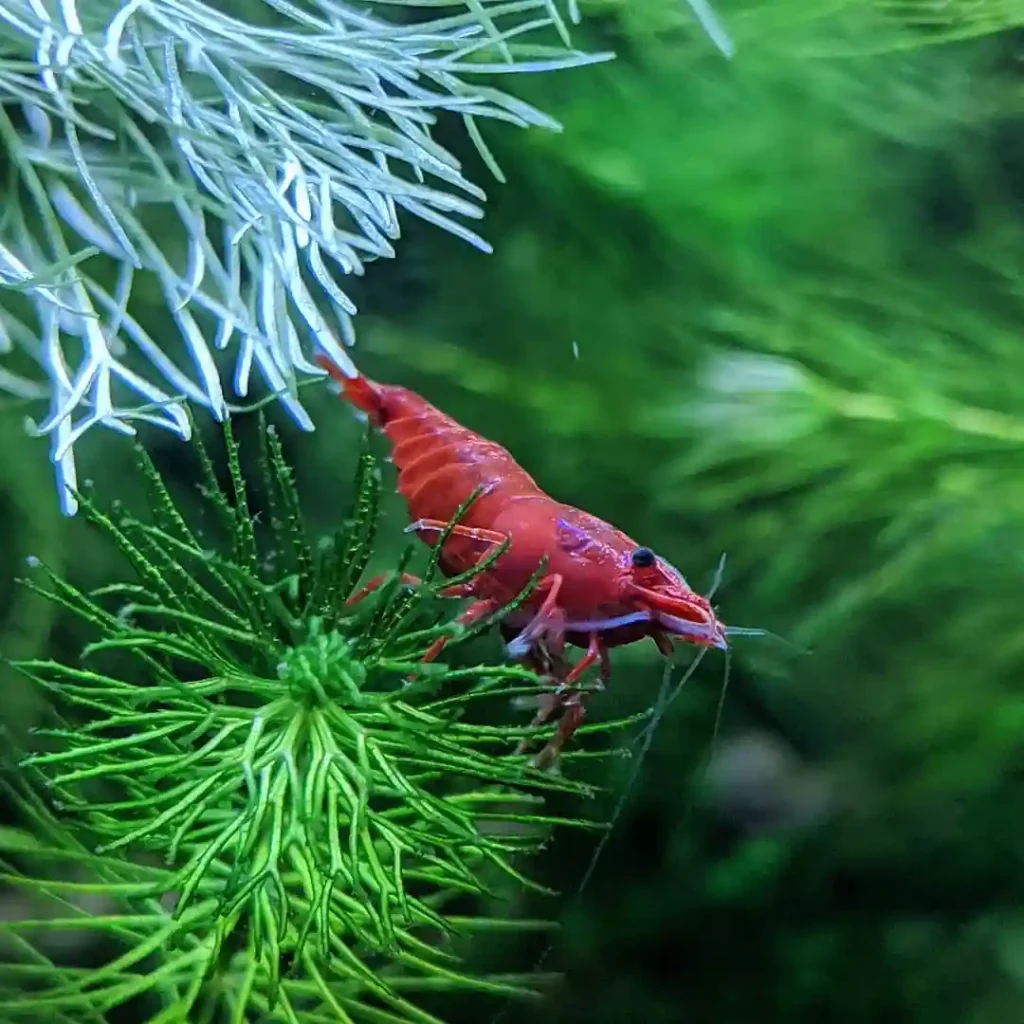
- Fry and shrimp shelter — the dense foliage gives baby fish and shrimp somewhere to hide from predators
- Spawning support — many egg-scattering fish use hornwort’s fine leaves as a place to deposit eggs
- Zero substrate requirement — since it doesn’t root, it works in any tank setup, including bare-bottom breeding tanks
Hornwort Care Requirements
Lighting
Hornwort tolerates a wide range of lighting but grows fastest under moderate to high light. In low light, it survives but grows more slowly and can start shedding needles from the lower stem. If you notice this, moving it closer to your light source usually resolves it.
Water Parameters
This is where hornwort really shines — it’s forgiving.
- Temperature: 59–86°F (15–30°C), making it suitable for both coldwater and tropical setups
- pH: 6.0–7.5
- Hardness: Adapts to soft and moderately hard water
- Water flow: Tolerates both still and moderately flowing water
CO2 and Fertilization
Hornwort doesn’t require injected CO2 or liquid fertilizers to survive, but it will grow faster with both. If you’re running a high-tech planted tank, it responds well to the extra nutrients.
In a low-tech setup, it typically does fine on fish waste alone this is part of why it’s such a good nutrient export plant.
Floating vs. Submerged
You have two options with hornwort:
- Let it float — this is the lowest-maintenance approach and mimics its natural growth habit. Floating hornwort also helps diffuse light for fish that prefer shaded areas.
- Weigh it down — using a plant weight or tucking a stem lightly into substrate lets it grow submerged, though it won’t root in the traditional sense. This works well if you want mid-ground or background coverage.
Both methods work fine; it comes down to what look and function you want in the tank.
Propagation
Hornwort is one of the easiest aquarium plants to propagate. Simply cut a healthy stem section and place it wherever you’d like new growth no rooting hormone or special technique needed. Each cutting will continue growing independently.
Because of how quickly it multiplies, most keepers end up trimming it regularly rather than trying to propagate more.
Common Issues and Troubleshooting
Shedding needles: The most common complaint with hornwort is that it sheds its fine leaves, especially lower on the stem or after being moved to a new tank. This is normal — it’s the plant’s response to environmental change. Trim off the bare lower stem and the top growth will usually continue fine.
Turning brown or falling apart: Usually caused by insufficient light or a sudden parameter swing. Increasing light exposure or moving it closer to the surface typically helps.
Overgrowth: Because it grows so fast, hornwort can quickly take over a tank or block light to other plants. Regular trimming keeps it in check — and the trimmings can be shared, sold, or composted.
Tangling with other plants: Its bushy structure can trap debris and tangle with slower-growing plants. Periodic thinning prevents this from becoming a maintenance headache.
Is Hornwort Right for Your Tank?
Hornwort is a great fit if you want:
- A low-maintenance plant with minimal care requirements
- Natural nitrate control, especially in newer or heavily stocked tanks
- Shelter for fry, shrimp, or shy fish
- A fast-growing plant that establishes quickly
It may be less ideal if you’re aiming for a manicured, aquascaped look, since its fast, unruly growth requires regular trimming to stay tidy.
Frequently Asked Questions
Does hornwort need to be planted in substrate?
No. Hornwort is rootless and grows fine either floating at the surface or loosely tucked into substrate. It doesn’t develop true roots either way.
Can hornwort survive in a coldwater or goldfish tank?
Yes. Its wide temperature tolerance (59–86°F) makes it one of the few plants that works well in coldwater and goldfish setups, though goldfish may nibble on it.
Will hornwort outcompete algae?
It can significantly reduce algae by competing for the same nutrients and light, but it won’t eliminate an existing algae problem on its own. It works best as part of a broader approach to nutrient control.
How fast does hornwort grow?
Under good lighting and nutrient availability, hornwort can grow several inches per week, making it one of the fastest-growing aquarium plants available.
Is hornwort safe for shrimp and fry?
Yes, it’s considered one of the safest and most beneficial plants for shrimp and fry tanks, offering both shelter and a grazing surface for biofilm.
Why is my hornwort turning yellow or losing needles?
This is typically a sign of low light, nutrient deficiency, or stress from being moved. Trimming affected areas and improving light exposure usually resolves it within a few weeks.
