
Congo Tetra Care Guide Tank Size, Diet, Lifespan & Tank Mates

Congo Tetra is one of the most beautiful freshwater fish you can keep in a home aquarium. Known for its shimmering rainbow colors and long flowing fins, it stands out in larger community tanks.
Unlike smaller tetras, Congo Tetras need more space and slightly better care. They are peaceful but active swimmers, and they look their best when kept in groups. If you can provide a larger tank with stable water, they become a stunning centerpiece fish.
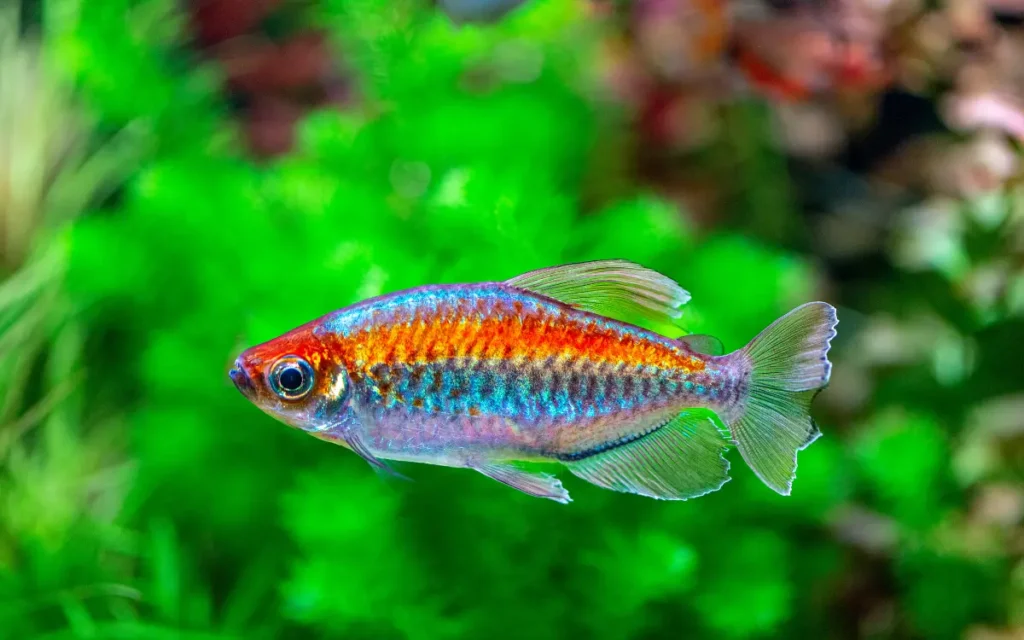
Congo Tetra Care Overview
| Category | Details |
| Scientific Name | Phenacogrammus interruptus |
| Common Names | Congo Tetra |
| Size | 3 – 3.5 inches |
| Lifespan | 3 – 5 years |
| Tank Size | 30 gallons (minimum) |
| Temperature | 73–82°F |
| pH | 6.0 – 7.5 |
| Temperament | Peaceful |
| Care Level | Easy to Moderate |
| Diet | Omnivore |
Appearance
Congo Tetras are known for their iridescent body that reflects shades of blue, gold, and violet depending on the light. Males are more colorful and have long, flowing fins that give them a graceful look as they swim.
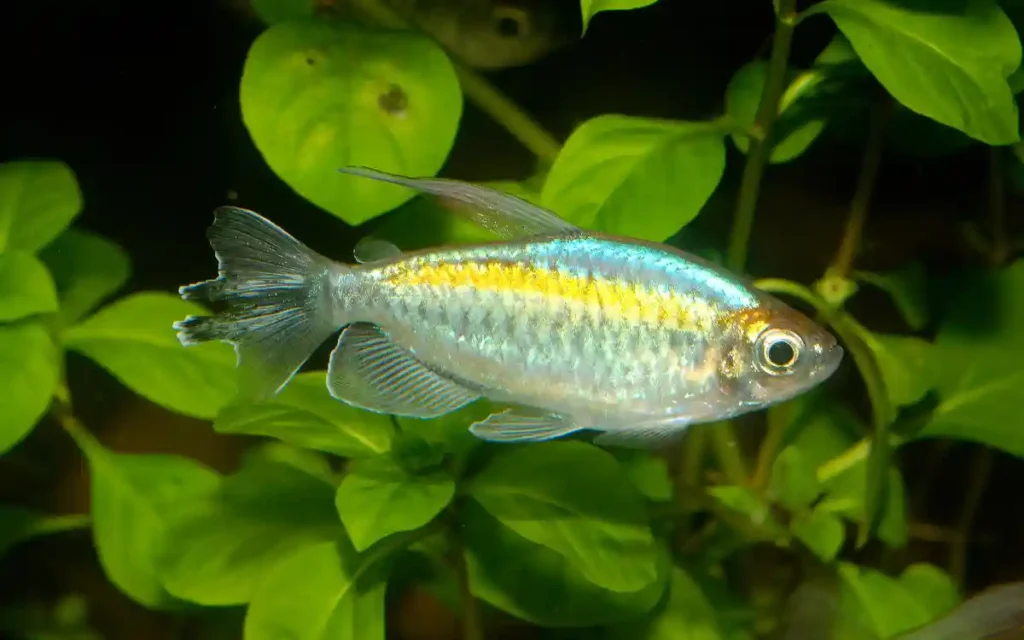
Females are slightly smaller and less colorful, with shorter fins. In a well-maintained tank, males display their full color and fin extensions, especially when kept in groups.
Tank Size and Setup
Minimum Tank Size
A 30-gallon tank is the minimum for Congo Tetras, but a 40-gallon or larger tank is a better choice. These fish are active swimmers and need enough horizontal space to move comfortably.
Keeping them in smaller tanks often leads to stress and reduced activity.
Ideal Tank Setup
Congo Tetras do best in a setup that offers both space and cover. They prefer a tank with plants along the sides and back, leaving open swimming space in the center. Soft lighting works well to highlight their colors without causing stress.
A slightly darker substrate helps enhance their natural shine. Gentle water flow is preferred, as strong currents can disturb their movement.
Water Parameters
Congo Tetras are fairly adaptable but still prefer stable conditions.
- Temperature: 73–82°F
- pH: 6.0 – 7.5
- Soft to moderately hard water
Regular water changes help maintain their color and overall health.
Behavior
Congo Tetras are peaceful and social fish that do best in groups. They swim actively in the middle level of the tank and often move together in loose schools.
They are not aggressive, but their long fins can sometimes attract attention from fin-nipping fish. In a proper setup with the right tank mates, they remain calm and active.
Related article: Black Neon Tetra Care Guide
How Many Congo Tetras Should Be Kept Together?
A group of at least 6 Congo Tetras is recommended, but keeping 8–10 fish gives much better results. Larger groups reduce stress and bring out more natural behavior, especially in males.
When kept alone or in small numbers, they may become shy and less colorful.
Best Tank Mates
Congo Tetras do well with other peaceful fish that are similar in size or temperament. Corydoras catfish, rasboras, and other calm tetras are good choices. Dwarf gouramis can also work in a balanced setup.
Avoid aggressive fish or known fin nippers. Species like tiger barbs or certain cichlids may damage their long fins and cause stress.
Diet and Feeding
Congo Tetras are omnivores and accept a wide variety of foods. A balanced diet helps maintain their color and fin health.
They do well on high-quality flakes or pellets, along with occasional frozen or live foods like bloodworms and brine shrimp. Feeding them a mix of foods keeps them active and healthy.
Feed them once or twice daily in small portions, making sure there is no excess food left in the tank.
Lifespan and Growth
Congo Tetras usually live between 3 to 5 years with proper care. They grow up to around 3 to 3.5 inches, making them larger than most common tetras.
Their size and active nature are the main reasons they need a bigger tank compared to smaller tetra species.
Breeding Congo Tetras
Breeding Congo Tetras is possible but requires a controlled setup. They are egg scatterers and need soft, slightly acidic water to spawn.
A separate breeding tank with plants or spawning mops improves success. After spawning, the adults should be removed to prevent them from eating the eggs.
The eggs hatch within a few days, and the fry require very fine food at the beginning.
Common Problems
Faded Colors
If Congo Tetras lose their shine, it usually means poor water quality or stress. Regular water changes and a balanced diet help restore their color.
Fin Damage
Their long fins can get damaged if they are kept with fin-nipping fish. Choosing the right tank mates is important to avoid this issue.
Stress
Stress can occur due to overcrowding, unstable water conditions, or lack of group size. Keeping them in a proper group and maintaining stable water helps prevent this.
Pros and Cons
Congo Tetras are attractive and peaceful, making them a great addition to larger community tanks. Their colors and movement add a unique look that smaller fish cannot match.
However, they do need more space and are not ideal for small tanks. Their long fins also make them more vulnerable to certain tank mates.
Is Congo Tetra Right for You?
Congo Tetras are a great choice if you have a medium to large aquarium and want a peaceful but eye-catching fish. They are not difficult to care for, but they do require more space and attention compared to smaller tetras.
If your tank is stable and you can keep them in a proper group, they will reward you with beautiful colors and active behavior.
FAQs
Are Congo Tetras aggressive?
No, they are peaceful fish and do well in community tanks.
How many Congo Tetras should be kept together?
At least 6, but 8–10 is ideal for better behavior and color.
Can Congo Tetras live with smaller fish?
Yes, as long as the smaller fish are not aggressive or fin nippers.
Do Congo Tetras need a heater?
Yes, they need stable temperatures between 73–82°F.
Why are my Congo Tetras losing color?
Usually due to stress, poor water quality, or an unbalanced diet.
