
Peacock Cichlid Care Guide

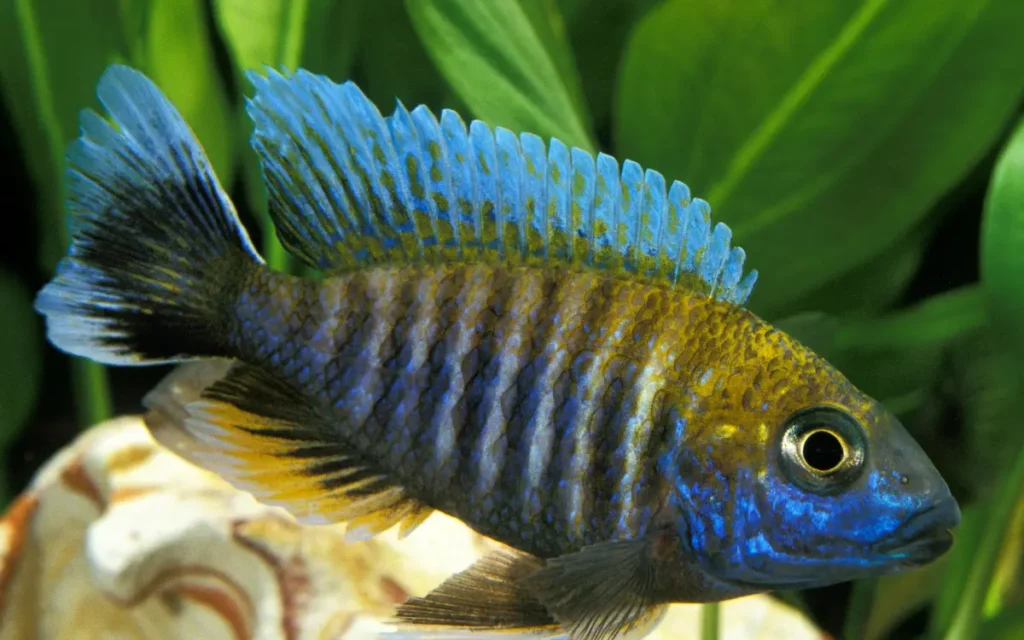
Peacock Cichlids are some of the best-looking African cichlids you can keep in a freshwater aquarium. They have bold colors, active behavior, and a calmer personality than many rough Mbuna cichlids.
But they are still cichlids. A small tank, poor male ratio, weak filtration, or the wrong tank mates can quickly turn a peaceful-looking setup into a chasing problem.
The best setup for Peacock Cichlids is a 55-gallon tank or larger with hard, alkaline water, sand, open swimming space, strong filtration, and carefully chosen tank mates from similar Lake Malawi conditions.
Quick Peacock Cichlid Care Overview
| Care Category | Best Range or Advice |
| Scientific Name | Aulonocara spp. |
| Common Name | Peacock Cichlid |
| Family | Cichlidae |
| Origin | Lake Malawi, East Africa |
| Adult Size | Usually 4–6 inches |
| Minimum Tank Size | 55 gallons |
| Better Tank Size | 75 gallons or larger for groups |
| Temperature | 76–82°F |
| pH | 7.8–8.6 |
| Water Hardness | Hard water, usually 10–20 dGH |
| Diet | Mainly quality cichlid pellets with frozen and plant-based foods |
| Temperament | Semi-aggressive |
| Lifespan | Around 6–10 years with good care |
| Breeding Type | Maternal mouthbrooder |
| Best For | Intermediate beginners and African cichlid keepers |
What Is a Peacock Cichlid?
Peacock Cichlids are African cichlids from the genus Aulonocara. They come from Lake Malawi, where many species live around sandy areas, scattered rocks, and reef edges.
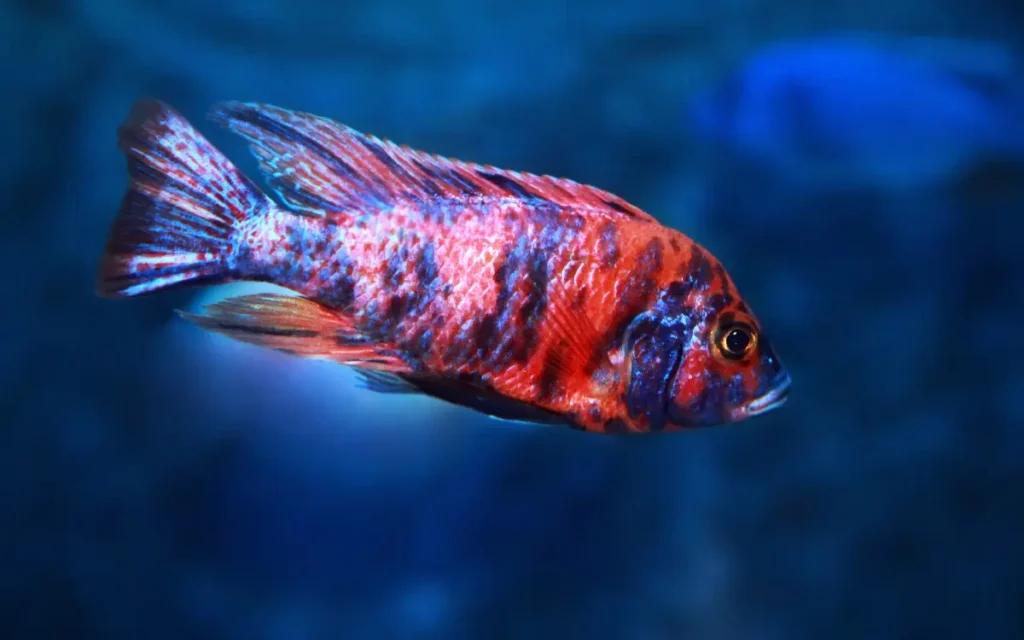
In aquariums, most Peacock Cichlids are kept for their color. Males are usually much brighter than females, with blue, yellow, orange, red, or mixed color patterns depending on the species or strain.
Females are usually smaller and duller, often silver, brownish, or grey. That does not mean they are unhealthy. It is normal for female Peacocks to look much less colorful than adult males.
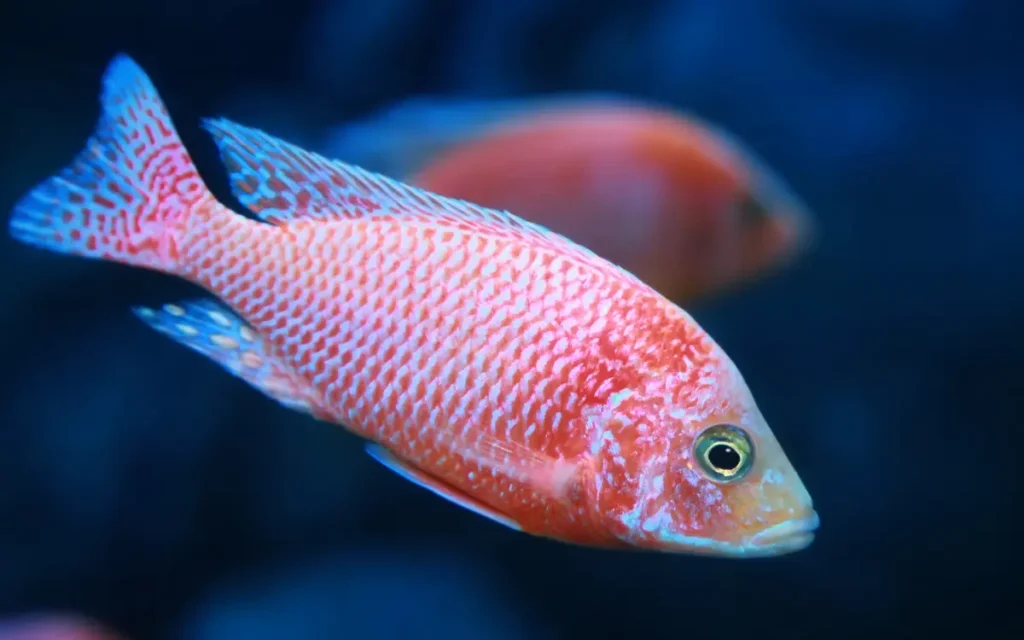
Many fish sold as “Peacock Cichlids” are hybrids or line-bred color strains. Dragon Blood, OB Peacock, Strawberry Peacock, and Blue Peacock are common examples in the hobby.
Are Peacock Cichlids Good for Beginners?
Peacock Cichlids are not the easiest beginner fish, but they are easier than many aggressive African cichlids.
They can work for newer fishkeepers who already understand cycling, water changes, filtration, and basic fish behavior. They are not a good choice for tiny tanks or soft-water community aquariums.
A beginner can keep them successfully if the tank is large enough and the stocking plan is simple.
The main challenge is not feeding them. The hard part is managing aggression, water quality, and tank mates.
If this is your first larger aquarium, read this guide on how to set up a freshwater aquarium before adding fish. A Peacock Cichlid tank should also be fully cycled, so it is worth reading the fish tank cycling guide first.
Peacock Cichlid Tank Size
A 55-gallon tank is the minimum size I would use for Peacock Cichlids.
A single male with a few females may work in a 55-gallon setup, but a 75-gallon tank gives you more room to build a better group. More water volume also helps keep the tank stable because African cichlids eat well and produce plenty of waste.
For a mixed Peacock and Hap tank, 75 gallons or larger is a better plan. These fish need swimming space, not just caves.
A 40-gallon tank may look large when the fish are young, but adult males become more territorial. Once breeding behavior starts, a small tank leaves weaker fish with nowhere to go.
For more stocking ideas by aquarium size, you can link readers to your aquarium fish by tank size guide.
Best Tank Setup for Peacock Cichlids
A good Peacock Cichlid tank should have open swimming space in the middle and front, with rocks placed in a way that breaks up the view across the tank.
Do not fill the whole aquarium with rock piles. Peacocks are not heavy rock-dwellers like many Mbuna. They often cruise over sand and open areas while still using rocks for shelter and territory.
Substrate
Sand is the best substrate for Peacock Cichlids.
These fish naturally search around sandy areas, so sand lets them behave more normally. It also looks better in a Lake Malawi-style aquarium.
Avoid sharp gravel. It can trap waste and may bother fish that sift or pick around the bottom.
For a deeper setup guide, add an internal link to your aquarium substrate guide.
Rocks and Hiding Spaces
Use rocks to create caves, shaded areas, and broken sight lines. This gives weaker fish places to move away from dominant males.
The rocks must be stable. Place heavy rocks directly on the tank bottom before adding sand. Peacock Cichlids can dig, and loose rock piles can shift if they dig underneath.
A good layout has rocks on the back and sides, with open space in the front. This gives the tank a natural look without turning it into a crowded wall of stones.
Plants
Peacock Cichlids do not need live plants, but hardy plants can work if you secure them well.
Anubias and Java Fern are better choices because they can be attached to rock or wood instead of planted in loose sand. Soft or delicate plants may be dug up or damaged.
If you mention plants inside the article, add a natural link to your Anubias plant care guide.
Filtration
Use stronger filtration than you would use for a peaceful community tank.
Peacock Cichlids are active fish, and they create a lot of waste. A canister filter, large hang-on-back filter, sponge filter, or a mix of filters can work.
The filter should keep the water clear, but it also needs enough biological filtration to handle ammonia and nitrite. Surface movement is helpful because it keeps oxygen levels higher.
Weekly water changes of 25–30% are a good routine for most Peacock Cichlid tanks. If the tank is heavily stocked, test nitrate and adjust your water change schedule.
Water Parameters
Peacock Cichlids need hard, alkaline water. They should not be kept in soft, acidic community tanks.
| Parameter | Recommended Range |
| Temperature | 76–82°F |
| pH | 7.8–8.6 |
| Hardness | 10–20 dGH |
| Ammonia | 0 ppm |
| Nitrite | 0 ppm |
| Nitrate | Keep as low as possible with water changes |
Stable water is more important than chasing an exact number every day.
If your tap water is already hard and alkaline, you may not need to change much. If your water is soft, you may need a Malawi cichlid buffer, crushed coral, aragonite sand, or another safe method to raise hardness and pH.
Do not swing the pH up and down. Sudden changes are harder on fish than a slightly imperfect but stable range.
Peacock Cichlid Food and Feeding
Peacock Cichlids do best on a quality cichlid pellet as their main food.
Choose a pellet made for African cichlids, preferably one that sinks slowly or reaches the middle of the tank. Peacocks are active feeders and will usually learn your feeding routine quickly.
You can add variety with frozen or live foods, but do not overdo rich foods.
Good food options include:
Quality African cichlid pellets
Spirulina-based flakes or pellets
Frozen brine shrimp
Frozen mysis shrimp
Daphnia
Blanched spinach or zucchini in small amounts
Feed adults once or twice a day. Give only what they can finish quickly.
Overfeeding is one of the easiest ways to ruin water quality in a cichlid tank. If food is falling into the rocks and staying there, you are feeding too much.
I would be careful with bloodworms. Some keepers use them occasionally, but many African cichlid keepers avoid feeding them often because rich foods can cause digestive problems in sensitive cichlids.
Peacock Cichlid Behavior
Peacock Cichlids are semi-aggressive.
They are usually calmer than many Mbuna, but males still claim space, chase rivals, and become pushier during breeding. A male may look peaceful one week and start guarding an area the next.
Most problems come from one of these issues:
The tank is too small
There are too many males
The fish look too similar
There are not enough hiding spaces
Weak fish cannot escape chasing
The tank mates are too small or too peaceful
Some chasing is normal in a Peacock Cichlid tank. Constant attacks, torn fins, fish hiding all day, or fish missing food are signs that the setup needs changes.
Male vs Female Peacock Cichlids
Male Peacock Cichlids are usually the colorful fish people buy first. They are brighter, more territorial, and more likely to display.
Females are usually duller and less aggressive, but they still matter in the group. A tank with one male and several females often works better than a tank with one male and one female.
A good ratio is usually one male with three or more females.
Avoid keeping several similar-looking males in a small tank. Males with similar colors may see each other as direct rivals. In larger tanks, some keepers keep all-male Peacock tanks, but that setup needs careful stocking and close observation.
Peacock Cichlid Tank Mates
The best Peacock Cichlid tank mates are fish that enjoy hard, alkaline water and can handle a semi-aggressive African cichlid setup.
Good options include Haps, other Peacock Cichlids, Yellow Lab Cichlids, Synodontis Catfish, Bristlenose Plecos, and Giant Danios in the right tank.
This care guide should not repeat your full tank-mate article. Add one short section here, then send readers to the full guide.
For a deeper list, read: 5 Peacock Cichlid Tank Mates
You can also link to your broader guide: 7 Best Tank Mates for African Cichlids
Fish to Avoid
Avoid tiny community fish such as Neon Tetras, Guppies, small Rasboras, and small Corydoras. They are too small, too peaceful, or need different conditions.
Angelfish are also a poor match. They prefer calmer setups and different water conditions.
Very aggressive Mbuna can also cause trouble. Some Mbuna are much rougher than Peacocks and may dominate the tank.
Breeding Peacock Cichlids
Peacock Cichlids are maternal mouthbrooders.
This is where the old article needed the biggest correction. They are not typical flat-surface egg layers where eggs hatch openly on a stone. The female carries the eggs and young fry in her mouth.
A male will display to attract a female. After spawning, the female picks up the eggs and holds them in her mouth while they develop.
The holding period is usually around three to four weeks. During this time, the female may eat very little or stop eating completely.
Do not keep bothering a holding female. Stress can cause her to release or swallow the eggs.
Breeding Tank Setup
A separate breeding tank can help if you want to raise fry safely.
Use a tank of at least 40–55 gallons for adult breeding groups, with sand, a few flat stones, and hiding spots. Keep the water clean and stable.
A common setup is one healthy male with three or more females. This spreads male attention across the group and lowers stress on one female.
Once a female is holding, some keepers move her to a separate tank. This should be done carefully because moving her too early or roughly can stress her.
Caring for Peacock Cichlid Fry
Once the fry are released, they can usually eat baby brine shrimp, finely crushed cichlid flakes, or quality fry food.
Use a sponge filter or covered filter intake so fry do not get pulled in. Keep the tank clean with small, careful water changes.
Do not add fry back to the main tank too early. Adult cichlids may eat them, especially if the fry are still tiny.
Common Health Problems
Peacock Cichlids are hardy when the tank is clean and stable, but poor care can still cause problems.
Malawi Bloat
Malawi bloat is a serious problem seen in African cichlids. It is often linked with stress, poor water quality, overfeeding, or the wrong diet.
Signs may include swelling, loss of appetite, hiding, and stringy waste.
The best prevention is simple: clean water, a proper diet, and no heavy feeding of rich foods.
Fin Damage
Fin damage usually comes from fighting, sharp décor, or poor water quality.
If one fish keeps getting torn fins, check the stocking first. Medicine will not fix the problem if the same bully keeps attacking.
Ich
Ich looks like tiny white spots on the body or fins. It often appears after stress, temperature swings, or adding new fish without quarantine.
Quarantine new fish when possible. It is easier to treat one new fish in a separate tank than to treat a full cichlid aquarium.
Common Peacock Cichlid Mistakes
The most common mistake is buying several colorful males without planning the tank size or aggression.
Young males may look fine together at first. As they mature, they may start chasing each other, especially if they have similar colors.
Another mistake is mixing Peacocks with random community fish. Peacock Cichlids need different water from many common tropical fish.
Many beginners also underestimate filtration. A 55-gallon cichlid tank with active fish needs stronger filtration and more water changes than a lightly stocked community tank.
Do not skip cycling. Peacock Cichlids are not “test fish” for a new aquarium.
Are Peacock Cichlids Worth Keeping?
Yes, Peacock Cichlids are worth keeping if you can give them the right tank.
They are colorful, active, and easier to manage than many aggressive African cichlids. They are also fun to feed and often learn to come toward the front of the tank when someone approaches.
But they are not a casual small-tank fish. They need space, hard water, strong filtration, and smart stocking.
For most keepers, a 75-gallon Peacock and Hap setup is far better than trying to force too many fish into a 55-gallon tank.
FAQs
Are Peacock Cichlids aggressive?
Peacock Cichlids are semi-aggressive. They are usually calmer than many Mbuna, but males can still chase each other and guard territory.
What size tank do Peacock Cichlids need?
A 55-gallon tank is the minimum. A 75-gallon tank or larger is better for groups, mixed Peacock tanks, or Peacock and Hap setups.
How many Peacock Cichlids should be kept together?
A common setup is one male with three or more females. Some keepers also keep all-male Peacock tanks, but that needs a larger aquarium and careful selection.
Can Peacock Cichlids live with Mbuna?
Some calmer Mbuna, such as Yellow Labs, may work in the right tank. Very aggressive Mbuna are usually a poor match because they can bully Peacocks.
Can Peacock Cichlids live with Angelfish?
No, Angelfish are not a good match. They prefer different water conditions and a calmer tank.
Do Peacock Cichlids eat other fish?
They may eat fish small enough to fit in their mouth. Avoid tiny tetras, small livebearers, and small bottom dwellers.
What do Peacock Cichlids eat?
They should eat quality African cichlid pellets as their main food, with occasional frozen foods such as brine shrimp, mysis shrimp, or daphnia.
Do Peacock Cichlids lay eggs?
Yes, but females carry the eggs in their mouth. Peacock Cichlids are maternal mouthbrooders.
How long do Peacock Cichlids live?
Most Peacock Cichlids live around 6–10 years when kept in clean water with proper food and enough space.
Are Peacock Cichlids poisonous?
No, Peacock Cichlids are not poisonous. They are safe aquarium fish, but they should still be handled gently and only when needed.
Can different Peacock Cichlid species breed together?
Yes, different Peacock Cichlids can crossbreed. If you want to keep clean strains, do not mix similar species or color forms randomly.
Can Peacock Cichlids recognize their owner?
They can learn feeding routines and often respond when the person who feeds them comes near the tank. This is one reason many keepers enjoy them so much.
