
14 Best Fish for a 40 Gallon Tank

A 40 gallon tank is where your options open up in a serious way. You’re no longer choosing fish because they “fit.” You’re choosing fish because they belong in the environment you want to build.
Compared to smaller setups like a 20 gallon aquarium, 40 gallons gives you stronger biological stability, larger schools, and the ability to keep fish that simply wouldn’t thrive in tighter quarters. If you’re mapping out your upgrade path, it also fits naturally inside your broader Aquarium Fish by Tank Size guide.
This article will walk you through realistic stocking ideas, compatible species, and common mistakes people make with 40 gallon tanks.
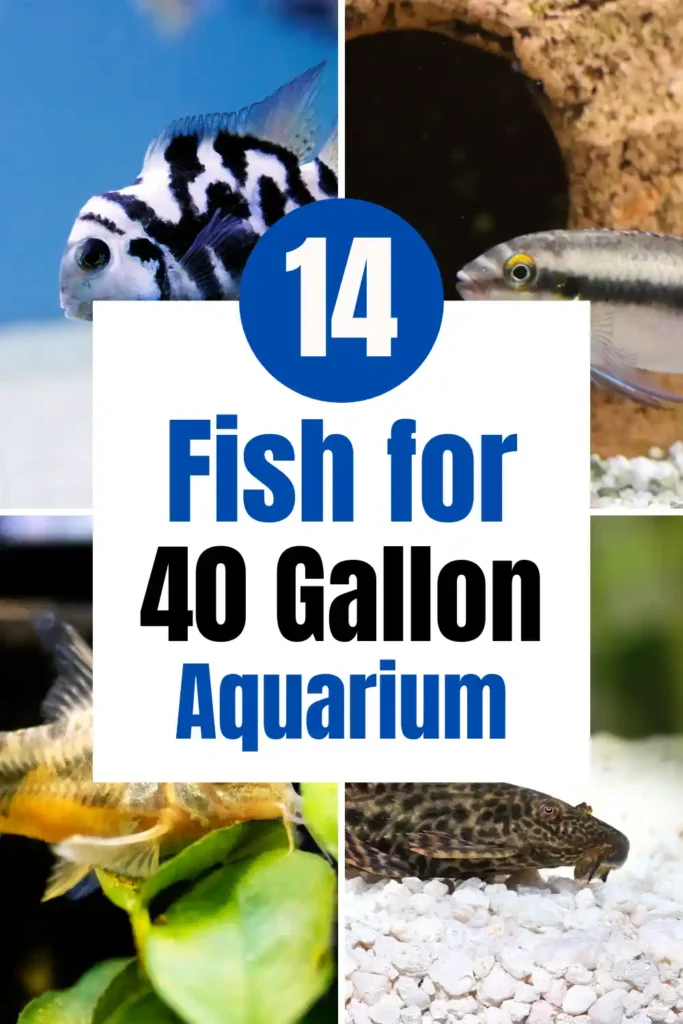
Read also: Aquarium Fish by Tank Size (3 to 75 Gallons Guide)
Why a 40 Gallon Tank Is a Major Upgrade
Here’s what changes at 40 gallons:
- Water chemistry is much more stable
- You can keep larger fish safely
- Territorial species have room to establish space
- Big schooling displays become possible
- Aquascaping becomes more dynamic
In my opinion, 40 gallons is the first size where you can confidently keep medium fish without constantly worrying about overstocking.
40 Gallon Breeder vs Standard 40 Gallon
Shape matters more at this size.
40 Gallon Breeder (Wide and Shallow)
- Excellent horizontal swim space
- Ideal for cichlids and schooling fish
- Better surface area for oxygen exchange
- Easier aquascaping
Many hobbyists consider this one of the best all-around tank shapes.
40 Gallon Standard (Taller)
- Good for fish that use vertical space
- Works for angelfish groups
- Slightly less horizontal swim room
If you want versatility, the breeder is usually the stronger choice.
How Many Fish Can You Keep in a 40 Gallon Tank?
You don’t want to “max out” a 40 gallon just because you can.
A balanced structure might look like:
- 1–3 centerpiece fish (depending on species)
- 15–20 small schooling fish
- 6–10 bottom dwellers
- 1 algae grazer
The real limit depends on species size, temperament, and filtration strength.
Planning Table
| Category | Typical Range | Notes |
| Centerpiece fish | 1–3 | Avoid mixing strong personalities |
| Small schooling fish | 15–20 | Bigger groups look natural |
| Bottom dwellers | 6–10 | Keep same species |
| Pleco | 0–1 | Choose size carefully |
Best Centerpiece Fish for a 40 Gallon Tank
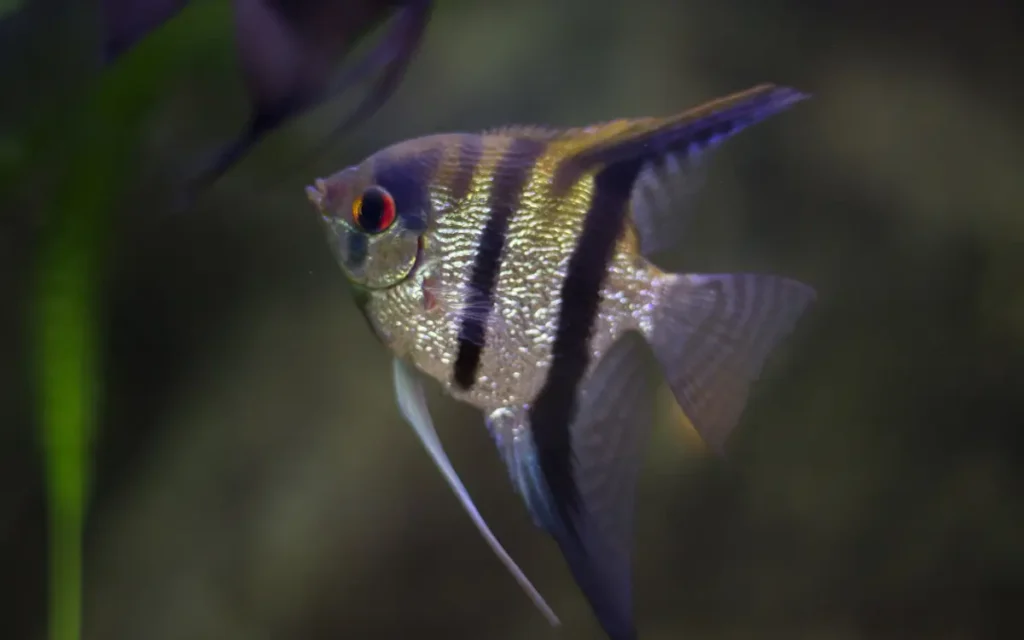
This is where medium-sized species become realistic.
Angelfish
A small group (3–5 juveniles) can work in a 40 gallon breeder. Monitor aggression as they mature.
Electric Blue Acara
A striking centerpiece fish that works well in a 40 gallon with peaceful but sturdy tank mates.
Pearl Gourami
A pair or small group can work in planted setups.
Severum
Only one juvenile long term. A full adult may eventually require more space.
Best Schooling Fish for a 40 Gallon Aquarium
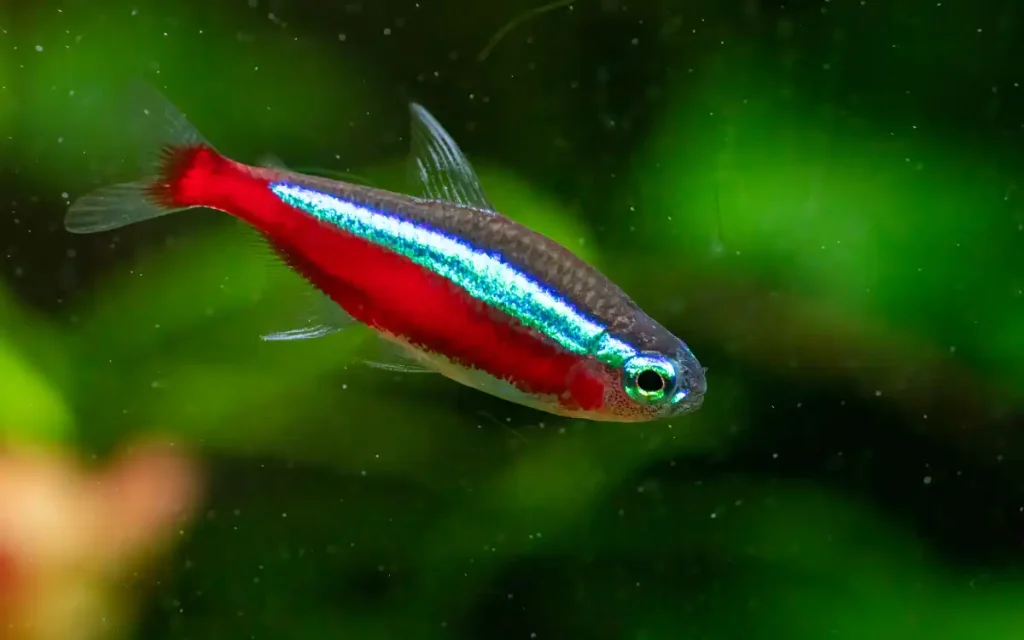
Large schools finally look impressive at this size.
Cardinal Tetra
A group of 20 creates a dramatic planted-tank display.
Rummy Nose Tetra
They move as a unit and reward stable water.
Congo Tetra
Larger than typical tetras, better suited for 40 gallons than 20 or 30.
Boesemani Rainbowfish
Active and colorful. Keep groups balanced with more females than males.
Bottom Dwellers That Thrive in 40 Gallons
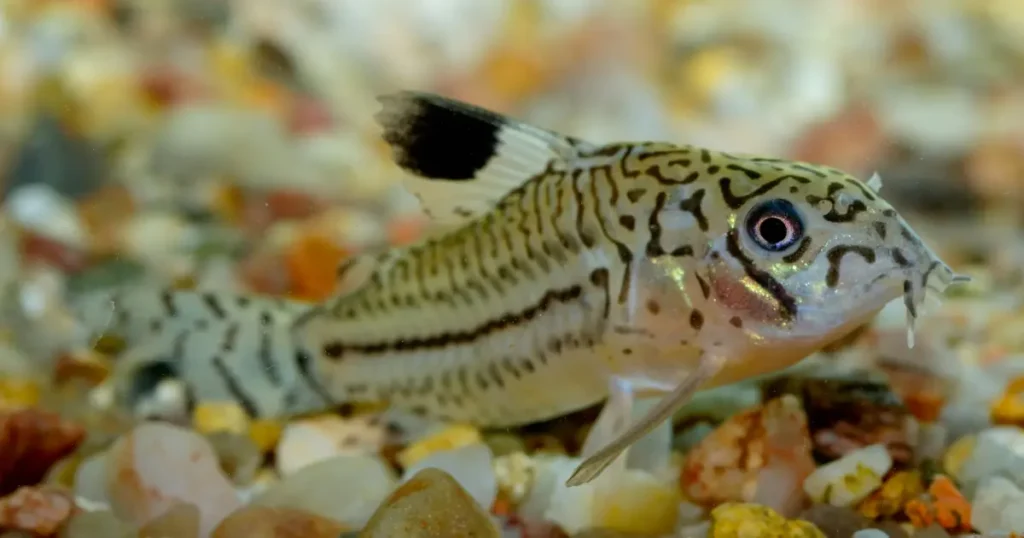
With more floor space, bottom fish become more comfortable.
Corydoras
Larger species like bronze or albino corydoras work well here.
Kuhli Loach
A bigger group looks more natural.
Bristlenose Pleco
A good algae grazer for this size.
Semi-Aggressive Fish That Work in 40 Gallons
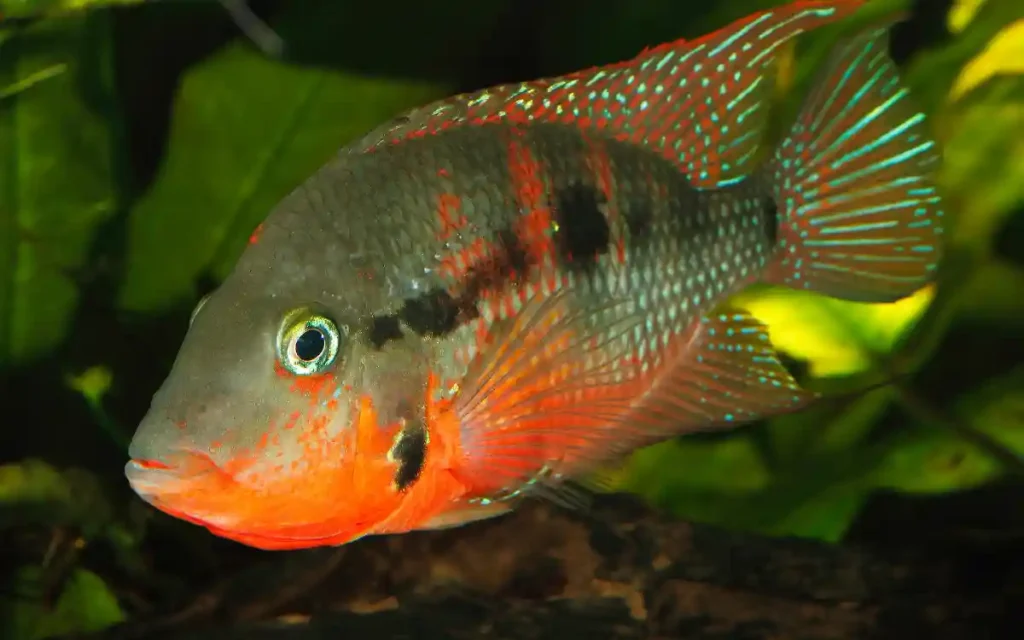
40 gallons allows controlled semi-aggressive setups.
Firemouth Cichlid
A pair can work with careful layout planning.
Kribensis
Territorial but manageable in this space.
Convict Cichlid
Best in species-focused setups. They breed easily and defend territory strongly.
Aggression increases during breeding periods, so layout and hiding spots matter.
Fish to Avoid in a 40 Gallon Tank
Even 40 gallons has limits.
- Common goldfish
- Oscar cichlids
- Large plecos (common pleco types)
- Silver dollar fish (need larger groups and tanks)
- Arowana species
If the adult size exceeds 10–12 inches or requires large territories, consider a 75 gallon or larger.
Sample 40 Gallon Stocking Plans
Large School Community
20 Cardinal Tetras 8 Corydoras 1 Electric Blue Acara
Balanced, peaceful, visually striking.
Angelfish Planted Tank
4 Angelfish (juveniles grown together) 15 Rummy Nose Tetras 6 Corydoras
Monitor adult aggression.
Rainbow Community
6 Boesemani Rainbowfish 12 Harlequin Rasboras 1 Bristlenose Pleco
Active but compatible.
Semi-Aggressive Setup
Pair of Firemouth Cichlids 10 Congo Tetras 1 Bristlenose Pleco
Requires strong filtration and territory planning.
Aquascaping a 40 Gallon Tank
This size supports:
- Large driftwood centerpieces
- Rock caves for territories
- Open swim lanes
- Heavily planted backgrounds
Dividing sight lines reduces aggression dramatically.
Filtration and Equipment Recommendations
- Strong hang-on-back or canister filter
- Heater rated appropriately
- Secure lid for jumpers
- Good lighting for plant growth
In my opinion, under-filtering is the most common mistake in 40 gallon tanks.
Maintenance Routine
- 30% weekly water change
- Gravel vacuum as needed
- Clean filter media gently
- Monitor fish behavior regularly
Larger tanks are more stable but still require consistency.
Frequently Asked Questions
Is 40 gallons good for angelfish?
Yes, especially a breeder-style tank.
Can I keep two electric blue acaras?
It depends on pairing and layout. One is safer unless you want a breeding pair.
How many tetras can I keep in 40 gallons?
15–20 small tetras is common in balanced communities.
Is a 40 gallon tank beginner friendly?
Yes, if you have the space. It’s easier to stabilize than smaller tanks.
What’s better: 30 or 40 gallons?
If space allows, 40 gallons gives noticeably more flexibility and reduces stocking stress.
Final Thoughts
A 40 gallon tank is where you start building ecosystems instead of just keeping fish. It allows larger schools, medium-sized centerpiece fish, and structured territories that reduce conflict.
For your OceanBitez tank-size cluster, this article should sit naturally after your 30 gallon guide and lead into future larger-tank posts like 55 gallon or 75 gallon setups.
