
Dwarf Chain Loach Care Guide

The Dwarf Chain Loach is one of the best loaches for aquarists who want an active bottom fish without the rough behavior of larger loach species.
It stays small, has a beautiful chain-like pattern, and is much more suitable for peaceful community tanks than Skunk Loaches or Clown Loaches. But there is one thing many beginners get wrong: this fish should not be kept alone.
Dwarf Chain Loaches are social, active, and curious. They do best in groups, with plenty of swimming space, clean water, soft substrate, and hiding spots. When kept properly, they are fun to watch because they do not always stay hidden at the bottom. They often swim in groups, explore the tank, and come out during the day.
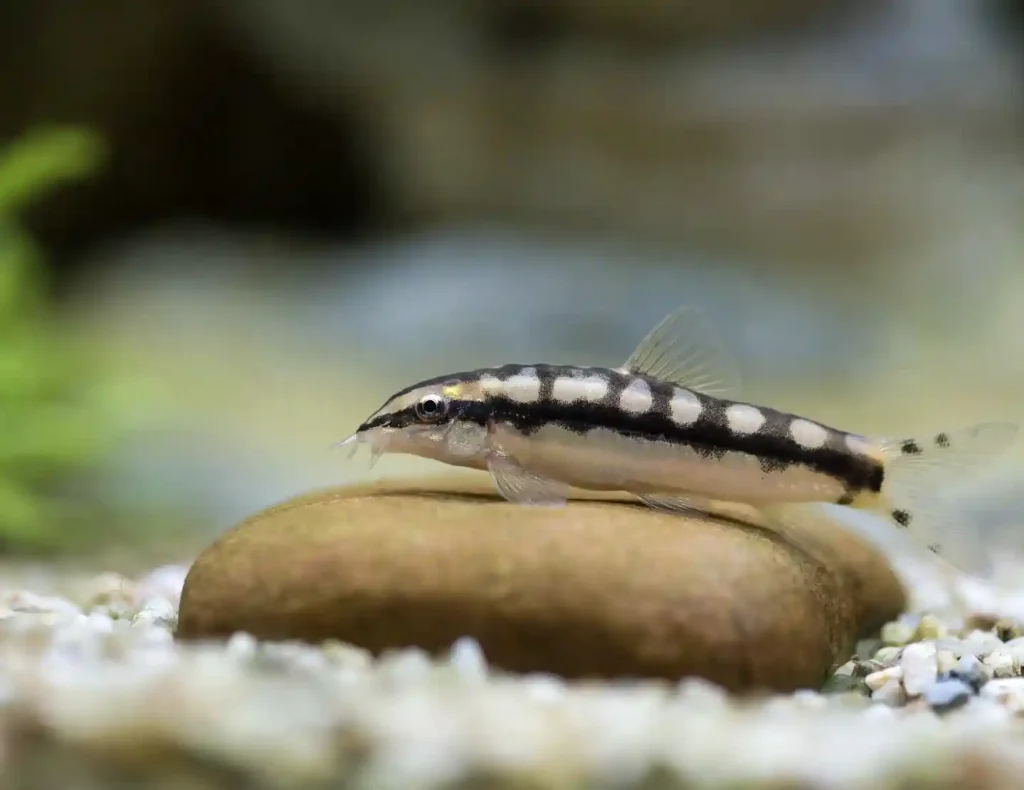
Dwarf Chain Loach Species Overview
| Category | Details |
| Scientific Name | Ambastaia sidthimunki |
| Common Names | Dwarf Chain Loach, Dwarf Loach, Dwarf Botia |
| Adult Size | Around 2–2.5 inches |
| Lifespan | 8–12 years with good care |
| Minimum Tank Size | 20 gallons minimum, 30 gallons or larger is better |
| Temperament | Peaceful to mildly nippy |
| Care Level | Moderate |
| Tank Level | Bottom to middle |
| Diet | Omnivore, prefers protein-rich foods |
| Best For | Peaceful community tanks with active fish |
What Does a Dwarf Chain Loach Look Like?
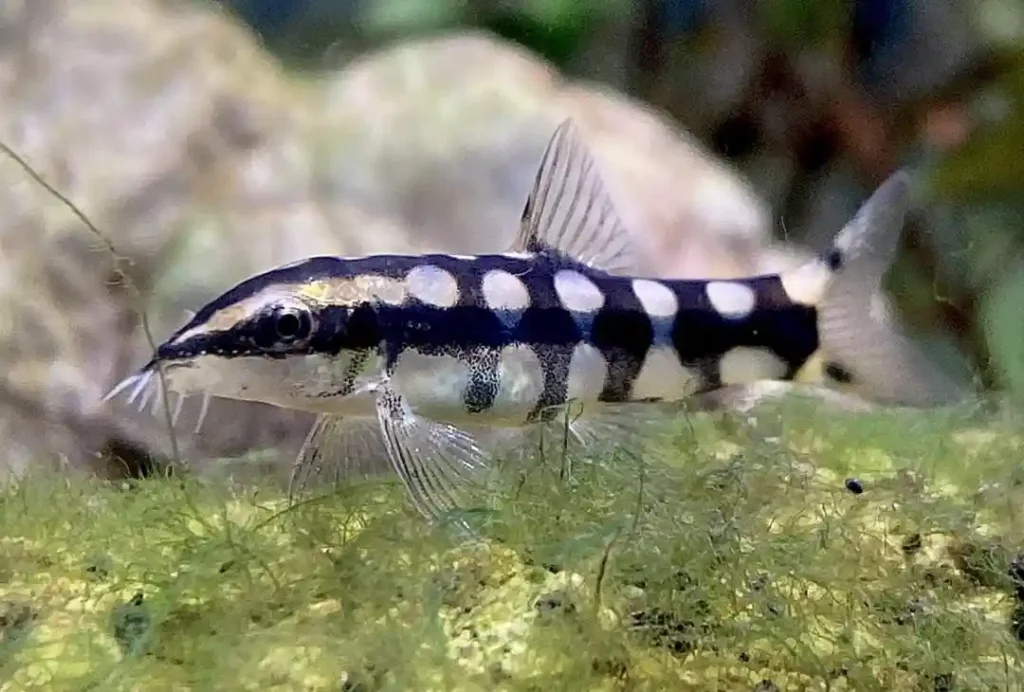
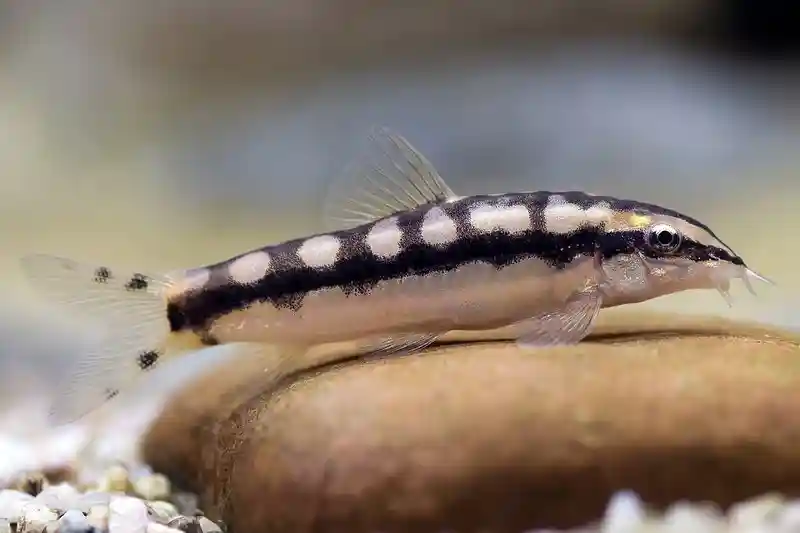
Dwarf Chain Loaches are small, slim loaches with a bold chain-like pattern across the body. Their base color is usually light gold, cream, or tan, with dark markings that form broken lines or chain shapes.
This pattern is what gives them their common name.
They also have small barbels around the mouth. These help them search for food along the bottom, between plants, and around rocks or wood.
Unlike many loaches that hide most of the day, Dwarf Chain Loaches are often visible. In a comfortable tank, they swim around in groups and may even explore the middle levels of the aquarium.
Natural Habitat
Dwarf Chain Loaches come from freshwater habitats in Thailand and nearby river systems.
In the wild, they are found in rivers, flooded areas, muddy lakes, and slow to moderate-moving waters. These habitats often include sand, mud, plants, roots, and open areas for swimming.
This tells us two important things for aquarium care.
First, they need soft substrate because they spend time searching near the bottom. Second, they need both hiding places and open swimming room. A tank that is too bare can make them stressed, but a tank that is too crowded can limit their movement.
Dwarf Chain Loach Tank Size
A 20-gallon tank is often listed as the minimum, but a 30-gallon tank or larger is a better choice.
This fish may be small, but it is active. It also needs to be kept in a group, which means you need enough floor space for several loaches to move around comfortably.
For long-term care, do not think of them as a single small fish. Think of them as a group fish.
Best Tank Size Recommendation
| Setup Type | Tank Size |
| Minimum group setup | 20 gallons |
| Better long-term setup | 30 gallons or larger |
| Larger community tank | 40 gallons or larger |
| Single fish setup | Not recommended |
If your tank is under 20 gallons, choose a smaller peaceful bottom fish instead. Dwarf Chain Loaches need space and group activity to behave naturally.
How Many Dwarf Chain Loaches Should You Keep?
Keep at least 6 Dwarf Chain Loaches if possible.
A group of 8–10 is even better in a larger tank. These fish are social and feel more secure when kept with their own kind.
When kept alone or in pairs, they may hide more, become stressed, or act nippy toward other fish. A proper group spreads out social behavior and helps them feel safer.
This is one of the biggest differences between Dwarf Chain Loaches and more aggressive loaches. They are not fish you buy one at a time just to “clean the bottom.”
Best Tank Setup for Dwarf Chain Loaches
A good Dwarf Chain Loach tank should feel natural, active, and safe.
They need open swimming space, but they also need places to rest and hide. The best setup uses plants, wood, caves, and smooth substrate.
Substrate
Use soft sand or smooth fine gravel.
Sand is the safest option because Dwarf Chain Loaches have delicate barbels. Sharp gravel can damage their mouth area over time, especially if they spend a lot of time searching through the bottom.
Avoid rough gravel, crushed coral, sharp rocks, or jagged decorative stones.
Hiding Places
Dwarf Chain Loaches are more outgoing than many loaches, but they still need cover.
Good hiding spots include:
- Driftwood
- Smooth rock caves
- Ceramic caves
- Plant clusters
- Leaf litter
- Small tunnels
- Coconut caves
Add several hiding spots across the tank, not just one cave in the corner. This helps the group spread out and reduces chasing.
Plants
Dwarf Chain Loaches work well in planted aquariums.
Good plant choices include Java Fern, Anubias, Cryptocoryne, Java Moss, Vallisneria, Water Wisteria, and floating plants.
They may dig around the substrate a little, but they are not heavy plant destroyers. If you use delicate foreground plants, make sure they are well rooted before adding loaches.
Plants also help nervous tank mates feel safer.
Water Flow and Filtration
Dwarf Chain Loaches like clean, oxygen-rich water.
Use a reliable filter and aim for gentle to moderate flow. They do not need a strong river-style current, but dead spots with dirty substrate should be avoided.
Because they are active and eat protein-rich foods, leftover food can collect near the bottom. Regular cleaning is important.
Ideal Water Parameters
Dwarf Chain Loaches are fairly adaptable, but stable water matters more than chasing exact numbers.
| Parameter | Ideal Range |
| Temperature | 74–82°F |
| pH | 6.0–7.5 |
| Hardness | Soft to medium |
| Water Flow | Gentle to moderate |
| Ammonia | 0 ppm |
| Nitrite | 0 ppm |
| Nitrate | Ideally under 20–30 ppm |
Do not add Dwarf Chain Loaches to a brand-new tank. Like most loaches, they do better in a mature aquarium with stable water and a clean bottom.
Dwarf Chain Loach Diet
Dwarf Chain Loaches are omnivores, but they enjoy protein-rich foods.
In the wild, they feed on small aquatic animals, insect larvae, worms, snails, and other tiny invertebrates. In the aquarium, they usually accept many prepared foods once settled.
Best Foods for Dwarf Chain Loaches
A good diet can include:
- Sinking pellets
- Sinking wafers
- Frozen bloodworms
- Frozen brine shrimp
- Daphnia
- Tubifex worms from clean sources
- Small snails
- High-quality community flakes
- Blanched vegetables in small amounts
They may eat some algae-based foods, but they are not true algae cleaners. Do not buy them expecting them to clean algae from the tank.
Do Dwarf Chain Loaches Eat Snails?
Yes, Dwarf Chain Loaches may eat pest snails, especially smaller ones.
They have a pointed snout that helps them pick at small snails, worms, and hidden foods. This makes them useful in tanks with small pest snails.
But they should not be bought only for snail control. They need a proper group, a suitable tank size, and long-term care. If your tank has too many snails, you should also reduce overfeeding and clean extra waste.
A loach can help, but it will not fix poor tank habits by itself.
Feeding Tips
Feed Dwarf Chain Loaches once or twice a day in small portions.
Make sure food reaches the bottom, especially if you keep fast tetras, danios, or barbs. These fish may eat food before the loaches get enough.
A good method is to feed the upper-level fish first, then drop sinking pellets or frozen food near the loach group.
Do not rely on leftovers. Dwarf Chain Loaches need their own food, not just scraps from other fish.
Behavior and Temperament
Dwarf Chain Loaches are peaceful compared to many other loaches, but they are not lazy or shy.
They are active, curious, and social. A healthy group may swim together, chase each other lightly, search through the bottom, and explore the middle of the tank.
This chasing is usually normal group behavior, not serious aggression.
Are Dwarf Chain Loaches Aggressive?
Dwarf Chain Loaches are not aggressive like Skunk Loaches, but they can be mildly nippy in the wrong setup.
Problems usually happen when they are kept in too small a group, in a cramped tank, or with very slow long-finned fish.
In a proper group, their social energy is usually focused on each other instead of tank mates.
Are Dwarf Chain Loaches Active During the Day?
Yes. One of the best things about this species is that it is often active during the day.
Many loaches hide until the lights go off, but Dwarf Chain Loaches are more visible. If the tank feels safe, you may see them swimming in small groups, searching plants, and moving above the bottom.
This makes them a great choice for aquarists who want a loach they can actually watch.
Best Tank Mates for Dwarf Chain Loaches
Dwarf Chain Loaches work well with many peaceful community fish.
The best tank mates are active, peaceful fish that enjoy similar warm tropical water.
Good options include:
- Neon Tetras
- Cardinal Tetras
- Harlequin Rasboras
- Cherry Barbs
- Zebra Danios
- Celestial Pearl Danios
- Honey Gouramis
- Dwarf Rainbowfish
- Corydoras in larger tanks
- Small peaceful plecos
- Otocinclus
- Peaceful livebearers
They usually do best with fish that are not too slow and not too delicate.
Fish to Avoid
Avoid large, aggressive, or long-finned fish.
Dwarf Chain Loaches may also bother tiny shrimp, especially baby shrimp. If you keep expensive shrimp, this fish is not the safest choice.
Avoid keeping them with:
- Bettas with long fins
- Fancy guppies with large tails
- Very slow fish
- Large cichlids
- Aggressive barbs
- Large predatory fish
- Small baby shrimp
- Sick or weak fish
They are much safer than Skunk Loaches, but they are still active bottom hunters. Tiny shrimp and fry may be eaten.
Can Dwarf Chain Loaches Live With Shrimp?
This depends on the shrimp.
Adult Amano Shrimp may be okay in a well-planted tank. Adult Cherry Shrimp may survive, but baby shrimp are at risk.
Dwarf Chain Loaches naturally hunt small invertebrates, so they may pick off shrimplets. If your goal is to breed shrimp, do not keep them with Dwarf Chain Loaches.
If you only keep larger shrimp as part of a planted community tank, the risk is lower but still not zero.
Common Problems and Mistakes
Keeping Only One
This is the biggest mistake. Dwarf Chain Loaches are social fish and should not be kept alone.
A single loach may hide, become stressed, or act strangely. Always plan for a group.
Buying Them Only for Snail Control
They can eat snails, but they are not a tool. They are long-lived fish with specific care needs.
If you only want snail control, first reduce overfeeding and remove extra snails manually.
Using Sharp Substrate
Sharp gravel can damage their barbels. Use sand or smooth gravel.
Keeping Them in a Tiny Tank
They are small, but they are not inactive. A cramped tank can lead to stress and chasing.
Mixing With Long-Finned Fish
Dwarf Chain Loaches are usually peaceful, but they may nip flowing fins if bored, underfed, or kept in a poor group size.
Health and Disease
Dwarf Chain Loaches are not extremely fragile, but they do need clean water.
Poor water quality can lead to stress, fin damage, thin body condition, and disease. Because they spend so much time near the bottom, dirty substrate can affect them quickly.
Watch for these signs:
- Clamped fins
- Heavy breathing
- White spots
- Thin body
- Loss of appetite
- Constant hiding
- Red marks near the mouth or barbels
- Scratching against objects
Loaches can be sensitive to some fish medications, so always check if a treatment is safe for scaleless or sensitive fish before dosing.
Breeding Dwarf Chain Loaches
Breeding Dwarf Chain Loaches in home aquariums is possible but uncommon.
Most aquarists should not expect regular breeding in a normal community tank. They are egg-laying fish, but successful breeding usually requires excellent conditioning, stable water, and a proper group.
If your goal is easy breeding, livebearers or many shrimp species are better choices.
For most fishkeepers, the focus should be long-term health, group behavior, and a good tank setup.
Are Dwarf Chain Loaches Good for Beginners?
Dwarf Chain Loaches can be good for careful beginners, but they are not the cheapest or simplest bottom fish.
They need a group, a mature tank, clean water, soft substrate, and proper feeding. If you are willing to provide those things, they are easier than many aggressive loaches.
But if you have a small tank or only want one bottom fish, choose a different species.
Good beginner alternatives include Kuhli Loaches, Corydoras, or Otocinclus, depending on your tank setup.
Should You Keep Dwarf Chain Loaches?
You should keep Dwarf Chain Loaches if you want a small, active, social loach for a peaceful community tank.
They are a great choice if you have room for a group and want a fish that stays visible during the day. They also add movement to the lower and middle levels of the aquarium.
You should avoid them if your tank is too small, if you keep breeding shrimp, or if you do not want to buy a group.
My honest opinion: Dwarf Chain Loaches are one of the best small loaches for planted community tanks, but only when kept in proper numbers. A single Dwarf Chain Loach in a small tank is not a good setup.
FAQs
Are Dwarf Chain Loaches aggressive?
No, they are not usually aggressive. They are active and may chase each other, but this is often normal group behavior. Problems are more likely in small groups or cramped tanks.
How many Dwarf Chain Loaches should be kept together?
Keep at least 6 if possible. A group of 8–10 is even better in a larger tank.
Do Dwarf Chain Loaches eat snails?
Yes, they may eat small pest snails. However, they should not be bought only for snail control because they need a proper group and long-term care.
Can Dwarf Chain Loaches live with shrimp?
They may live with larger shrimp, but baby shrimp are at risk. If you want to breed shrimp, avoid this mix.
What tank size do Dwarf Chain Loaches need?
A 20-gallon tank is the minimum, but a 30-gallon tank or larger is better for a proper group.
Are Dwarf Chain Loaches good for planted tanks?
Yes. They are a good choice for planted aquariums, especially when the tank has soft substrate, hiding spots, and open swimming space.
Can Dwarf Chain Loaches live with Corydoras?
They can work with Corydoras in a larger tank, but make sure there is enough bottom space and food for both species.
