
How to Set Up a Cichlid Tank: Step-by-Step Guide

To set up a cichlid tank, first choose the exact type of cichlid you want to keep. Then pick a long tank that fits its adult size, add a strong filter and heater, arrange safe hiding places, and cycle the aquarium before adding any fish.
I never recommend setting up a “general cichlid tank” without choosing the fish first. African, South American, and Central American cichlids can need very different water, food, and tank decorations.
A setup that works for a peacock cichlid may be wrong for a Bolivian ram. Planning around one species or one compatible group is the safest way to begin.
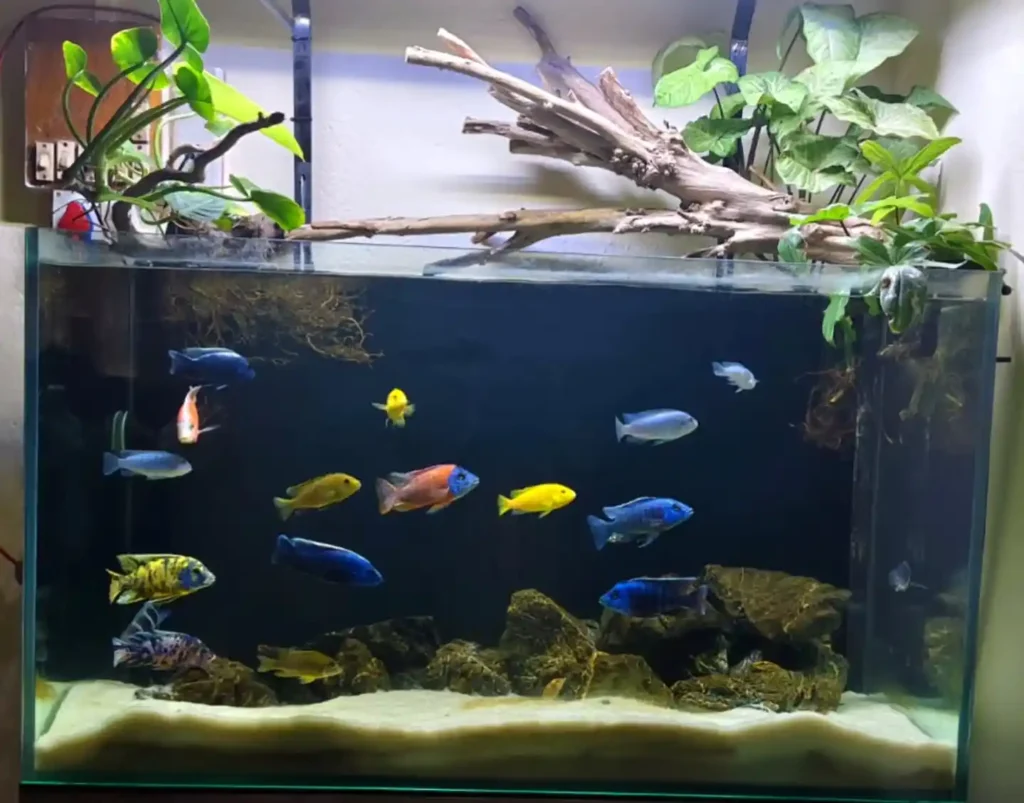
What You Need for a Cichlid Tank
Your shopping list will change based on the species, but most cichlid tanks need:
- A suitable aquarium and secure lid
- A strong aquarium filter
- An adjustable heater
- A thermometer
- Sand or smooth gravel
- Rocks, caves, wood, or plants
- Water conditioner
- A freshwater test kit
- A gravel vacuum and bucket
- Food made for your type of cichlid
- A net and algae cleaner
Don’t buy everything based only on the fish’s current size. Most cichlids sold in stores are young and will need much more room as they grow.
Step 1: Choose Your Type of Cichlid
I choose the fish before choosing the tank. This helps me avoid buying an aquarium that is too small or arranging it in the wrong way.
Cichlids come from several parts of the world. The three common groups kept in home aquariums have different needs.
African Cichlids
Many popular African cichlids come from Lake Malawi, Lake Tanganyika, or Lake Victoria.
They usually prefer hard, alkaline water. Many also need rockwork, caves, open swimming room, and careful group planning.
Popular examples include:
- Yellow labs
- Peacock cichlids
- Mbuna
- Frontosa
- Shell-dwelling cichlids
African cichlids are colorful and active, but their aggression can surprise a new fishkeeper. Don’t mix several species only because their colors look good together.
A Peacock Cichlid aquarium, for example, needs enough swimming room and the correct social group. It should not be treated like a peaceful tropical community tank.
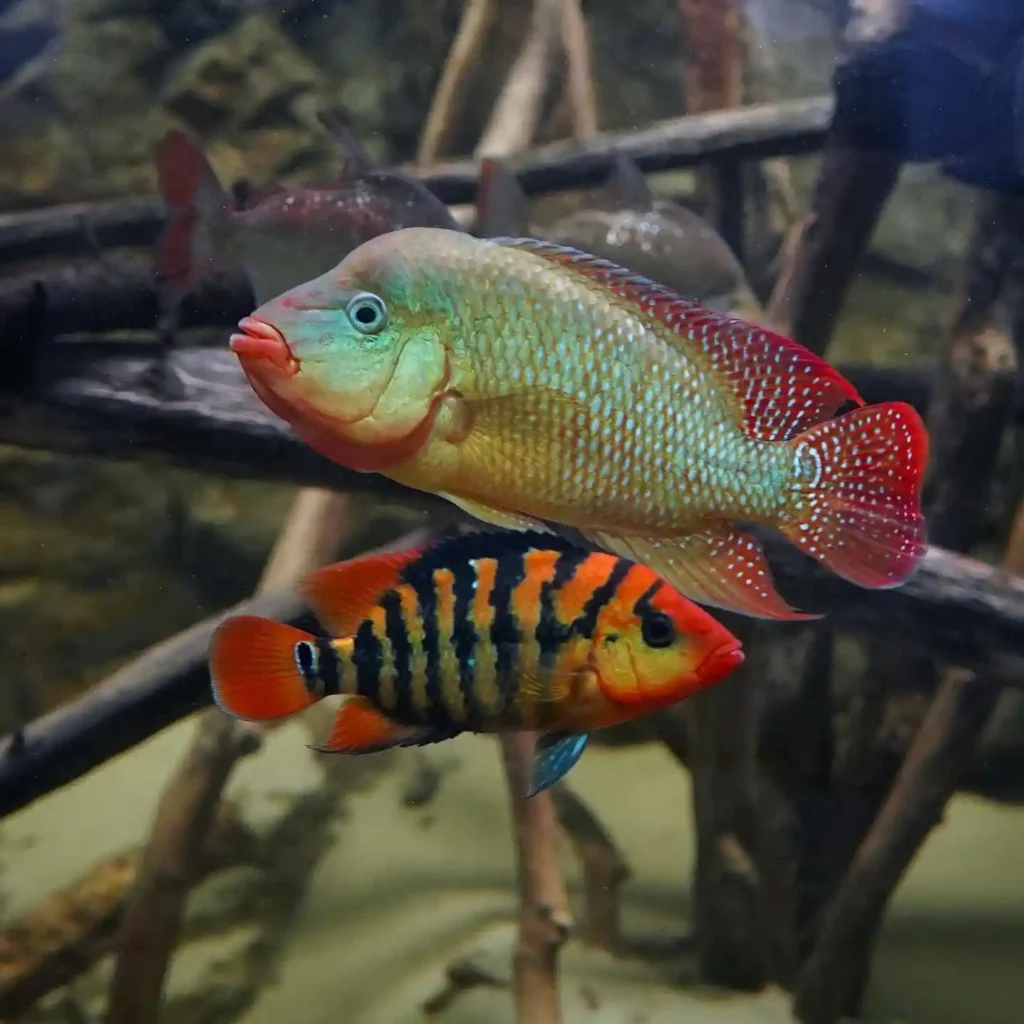
South American Cichlids
Many South American cichlids prefer softer water. Some enjoy planted aquariums with driftwood, shaded areas, and calm tank mates.
Examples include:
- Bolivian rams
- German blue rams
- Apistogramma
- Angelfish
- Discus
- Oscars
These fish do not all have the same care needs. A Bolivian ram can be forgiving, while a German blue ram needs warmer and more stable water.
If you want a calmer first setup, read my Bolivian Ram Cichlid guide before buying your fish.
Central American Cichlids
Central American cichlids are often hardy, but many are territorial.
Common examples include:
- Convict cichlids
- Firemouth cichlids
- Jack Dempseys
- Rainbow cichlids
Some of these fish become much more aggressive when they form pairs or lay eggs. A peaceful tank can change quickly once breeding starts.
I would start with a rainbow cichlid or carefully planned firemouth setup before choosing a more aggressive species.
Step 2: Choose the Correct Tank Size
Tank size depends on the cichlid’s adult size, activity, and social behavior.
A dwarf cichlid may live in a 20- or 30-gallon aquarium. A medium fish may need 40 to 55 gallons. Large cichlids can need 75 gallons or much more.
Here are rough starting points:
| Cichlid Type | Suggested Starting Tank |
| Small dwarf cichlid | 20–30 gallons |
| Pair of small cichlids | 30 gallons or larger |
| Medium single cichlid | 40–55 gallons |
| African cichlid group | 55 gallons or larger |
| Large cichlid | 75 gallons or larger |
These are only starting points. The exact species may need a larger aquarium.
I also pay attention to the tank’s shape. A long tank is usually better than a tall, narrow one because it gives cichlids more floor space and room to form separate territories.
A longer tank also makes it easier for a weaker fish to swim away from an aggressive one.
Step 3: Find a Safe Place for the Aquarium
A filled aquarium is very heavy. Water, glass, substrate, rocks, and equipment can add hundreds of pounds.
Place the tank on a strong, level stand made for its size. Check that the entire aquarium base is properly supported.
Keep it away from:
- Direct sunlight
- Doors that open into the tank
- Heating or cooling vents
- Busy areas where it may be bumped
- Weak or uneven furniture
You will also need room behind the tank for the filter, heater cord, and other equipment.
Keep a nearby electrical outlet dry. Make a drip loop in each cord so water cannot run directly into the outlet.
Step 4: Choose Sand or Gravel
The right substrate depends on the fish.
I normally choose smooth aquarium sand for cichlids that dig, sift, or search the bottom for food. Bolivian rams, firemouths, and peacock cichlids are good examples.
Sand also makes waste easy to see. However, uneaten food and dirt may collect on its surface, so it still needs cleaning.
Smooth gravel can work for species that do not sift deeply. Avoid sharp gravel because it may damage the fish’s mouth or body.
Substrate for African Cichlids
Some African cichlid keepers use aragonite or crushed coral to help support hard, alkaline water.
I would not use these materials without testing my tap water first. If the water is already hard and alkaline, pushing the pH higher may not be needed.
Substrate for South American Cichlids
Soft sand usually works well for dwarf South American cichlids.
Dark sand can help shy fish feel less exposed. It may also make their colors easier to see.
Rinse the substrate with clean water before adding it. Never wash aquarium materials with soap.
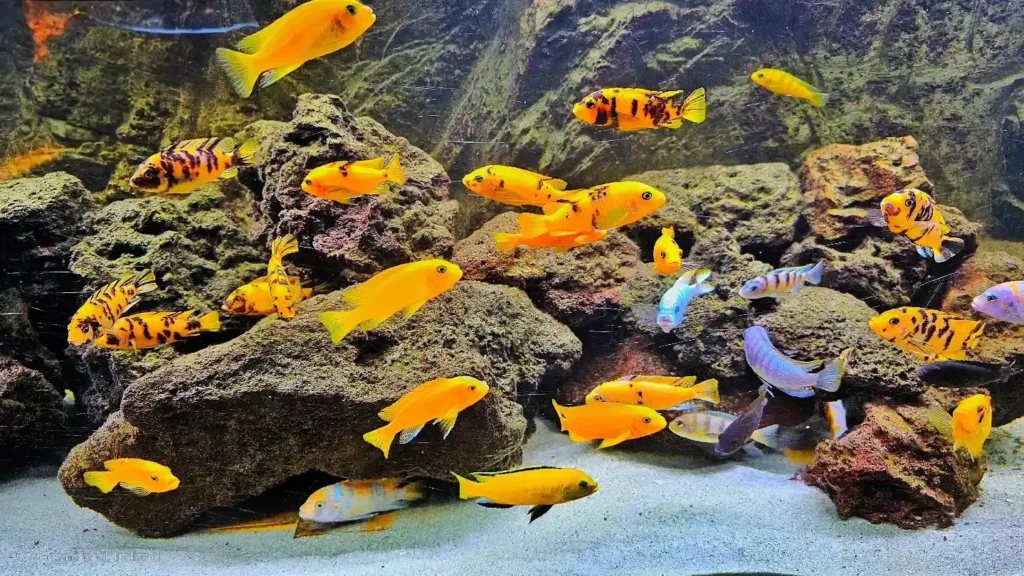
Step 5: Add Rocks, Caves, Wood, and Plants
Tank decorations are not only there to look nice. They help cichlids feel safe and create clear territory lines.
A fish being chased should be able to move behind a rock or piece of wood and disappear from the other fish’s view.
Building Rockwork
Rocks are common in African cichlid tanks. They create caves, feeding areas, and hiding places.
Place heavy rocks securely before adding deep sand. A cichlid may dig under a rock sitting loosely on top of the substrate and cause it to fall.
Make sure:
- The rocks cannot wobble
- No sharp edges face the swimming area
- Caves are large enough for the fish
- Fish cannot become trapped inside small holes
- The rock structure does not press against the glass
Aquarium-safe rocks are the easiest choice. Some natural rocks can change the water or break apart, so identify them before using them.
Using Driftwood
Driftwood is more common in South American setups. It creates shaded areas and makes shy cichlids feel safer.
Use wood sold for aquarium use. Some types can release tannins and turn the water light brown. This is usually harmless, though you may not like the color.
Wood can also lower pH slightly in water with low buffering ability. Test the water instead of guessing what the wood is doing.
Adding Live Plants
Some cichlids live well with plants. Others dig them up, tear their leaves, or move the substrate around their roots.
Bolivian rams, keyhole cichlids, Apistogramma, and some peaceful community cichlids may work in a planted tank.
For fish that dig, try:
- Anubias attached to wood or rocks
- Java fern attached to hard surfaces
- Plants grown in protected pots
- Floating plants
- Strong plants with tough leaves
Plants cannot fix poor water quality on their own. You will still need a filter, water changes, and regular testing.
Step 6: Choose a Strong Filter
Cichlids eat well and can produce a lot of waste. Large species and crowded African groups can make the water dirty quickly.
I choose a filter that provides strong biological filtration and can handle more than the tank’s basic volume.
Common choices include:
- Hang-on-back filters
- Canister filters
- Internal filters
- Sponge filters
- A combination of two filter types
A canister filter works well for many medium and large tanks because it can hold plenty of filter material. Sponge filters can add gentle biological filtration, but one small sponge filter may not be enough for a large, messy cichlid.
The filter intake should not be easy for a small fish to enter. A pre-filter sponge can protect young fish and keep larger dirt from entering the filter.
Don’t replace all the filter media at once. That may remove many of the helpful bacteria that process fish waste.
Rinse reusable filter media gently in removed tank water. Avoid washing it under untreated tap water if chlorine may harm the bacteria.
Step 7: Install the Heater and Thermometer
Most commonly kept cichlids are tropical fish and need stable warmth.
Use an adjustable heater made for your aquarium size. Place it where water can move around it so heat spreads through the tank.
I always use a separate thermometer. The number on the heater dial may not match the actual water temperature.
The correct temperature depends on the species. Don’t choose one “cichlid temperature” for every fish.
German blue rams often need warmer water than many African cichlids. Some fish that seem compatible may need different temperatures and should not share a tank.
Step 8: Fill and Treat the Water
Place a plate or plastic bag on the substrate before pouring in water. Pour onto that surface so the sand is not pushed around.
Treat tap water with a conditioner that removes chlorine or chloramine. Untreated tap water can harm fish and the bacteria living in the filter.
Turn on the filter and heater after the tank is filled. Check for leaks and make sure water is moving through the filter correctly.
Allow the heater time to warm the aquarium. Check the temperature again before adding any live animal.
Step 9: Test pH, GH, and KH
Water that looks clean can still be wrong for the fish.
Before buying cichlids, I test:
- pH
- General hardness, or GH
- Carbonate hardness, or KH
- Ammonia
- Nitrite
- Nitrate
GH tells you about minerals such as calcium and magnesium in the water. KH helps you understand how well the water can resist sudden pH changes.
African Rift Lake cichlids usually need harder, more alkaline water. Many South American species prefer softer water.
Stable water close to the species’ normal range is safer than water that is changed with several chemicals every week.
If your tap water is far outside the fish’s needs, choose a species that suits your water or learn how to mix and test water safely before buying the fish.
Step 10: Cycle the Cichlid Tank
Cycling means growing helpful bacteria that process fish waste.
Fish release ammonia through waste and breathing. Ammonia is toxic. One group of bacteria changes it into nitrite, which is also toxic. Another group changes nitrite into nitrate.
Before adding cichlids, the tank should be able to process an ammonia source without leaving ammonia or nitrite behind.
At the end of the cycle:
- Ammonia should read 0 ppm
- Nitrite should read 0 ppm
- Nitrate will usually be present
- The filter should stay running all day and night
Cycling is not the same as letting the tank sit for a few days. An empty tank with no ammonia source may not grow enough bacteria.
A fishless cycle is safer because no fish is exposed to ammonia or nitrite. You can use a measured aquarium ammonia source or another tested cycling method.
The process can take several weeks. A test kit tells you when the tank is ready. The calendar cannot.
Step 11: Plan the Cichlid Group
Don’t buy random cichlids one at a time without knowing their adult behavior.
Before stocking, check:
- Adult size
- Water needs
- Diet
- Male and female differences
- Group or pair requirements
- Breeding behavior
- Swimming level
- Aggression
- Tank-mate safety
A cichlid that is calm at the store may become territorial after it settles into your aquarium.
Keeping One Cichlid
A single cichlid can be the simplest choice.
Blood parrots, Flowerhorns, Oscars, and some other larger species may work as single centerpiece fish. The tank still needs to fit the fish’s full adult size.
Read the Blood Parrot Cichlid Care Guide if you are thinking about a larger single fish.
Keeping a Pair
A male and female do not always become a peaceful pair. One fish may reject or attack the other.
Pairs can also become far more aggressive after laying eggs. They may claim a large area and push every other fish away.
Add extra caves and keep a divider or backup tank ready.
Keeping an African Cichlid Group
African cichlid groups need careful planning. The correct number and male-to-female balance depend on the species.
Some keepers add several compatible African cichlids together so one newcomer is not singled out. This should only be done when the filter and cycle can handle the added waste.
Use my guide to tank mates for African cichlids when planning the group.
Step 12: Add the Cichlids Safely
Buy fish from a clean, trusted seller. Watch them swim and breathe before making your choice.
Avoid fish with:
- White spots
- Open wounds
- Cloudy eyes
- Clamped fins
- Very fast breathing
- A sunken belly
- Trouble swimming
- Cotton-like growth
- No interest in food
Quarantine new fish in a separate tank when possible. This gives you time to watch for disease before placing them with your main group.
Turn the aquarium light down when introducing fish. Float the closed bag to bring its temperature closer to the tank temperature.
Water mixing methods vary because long bag travel can change the water chemistry. Follow a safe process based on how long the fish has been in the bag, and don’t pour store water into the aquarium.
Watch the fish closely during the first few hours. Some chasing is common, but nonstop attacks, biting, or trapping a fish in one corner needs action.
Step 13: Feed the Correct Food
Cichlids do not all eat the same diet.
Use a quality pellet made for the type of cichlid you keep. Check whether the species is mainly an herbivore, omnivore, or meat-eater.
African mbuna often need more plant matter. Feeding them too much rich, meaty food may cause digestive trouble.
Many South American and Central American cichlids do well with a mixed diet based on a good pellet, with suitable frozen or fresh foods added sometimes.
Feed only what the fish can eat in a short time. Remove leftover food before it breaks apart and harms the water.
I would rather give two small meals than one large pile of food. Overfeeding is one of the fastest ways to make a new tank dirty.
Step 14: Follow a Weekly Cleaning Routine
A cichlid tank needs regular care even when the water looks clear.
Each week, I would:
- Test ammonia, nitrite, and nitrate.
- Check the temperature.
- Remove part of the water.
- Vacuum dirt from open areas of the substrate.
- Wipe algae from the glass.
- Check the filter flow.
- Look for damaged fins or unusual behavior.
- Refill with treated water at a similar temperature.
The amount of water you change depends on the tank’s nitrate level and waste load. Many tanks need a partial water change every week.
Don’t remove all the water or scrub every surface clean. Helpful bacteria live mainly in the filter and on tank surfaces.
Clean one part at a time. A tank does not need to look sterile to be healthy.
Common Cichlid Tank Setup Mistakes
Mixing African and South American Cichlids
These fish may need different water, diets, and social arrangements.
Two species having similar body sizes does not mean they belong together. Build the tank around one compatible group.
Choosing the Tank by Juvenile Size
A two-inch fish may not stay small.
Check its adult size and growth rate. A fish that outgrows its aquarium can become stressed, aggressive, and difficult to rehome.
Adding Fish Before the Cycle Is Complete
Clear water does not prove that a tank is cycled.
Test the water. Ammonia and nitrite should stay at zero before the cichlids are added.
Building Unstable Rock Piles
Cichlids may dig under rocks.
Build heavy structures securely and test them before filling the aquarium. Never depend on loose sand to hold a large rock upright.
Creating One Large Cave
One cave may become a territory that the strongest fish controls.
Several entrances, hiding areas, and broken sight lines give weaker fish more choices.
Changing the pH Too Quickly
Fast changes can be more stressful than a slightly imperfect but stable pH.
Test your tap water first. Don’t add pH-changing products unless you understand how they affect GH and KH.
Keeping a Breeding Pair Without a Backup Plan
Cichlids can breed sooner than expected.
Keep a divider, spare tank, or rehoming plan ready. You may need to separate a fish if one partner becomes aggressive.
Overstocking Without Enough Filtration
Some African cichlid tanks use planned higher stocking levels to spread aggression. That method also creates more waste.
It does not replace a large enough tank, strong filtration, water testing, or weekly cleaning.
A Simple Cichlid Tank Setup Example
Here is one beginner-friendly example for a Bolivian ram community:
- A long 30-gallon aquarium
- An adjustable heater
- A suitable hang-on-back or canister filter
- Smooth sand
- Driftwood and several shaded hiding places
- Easy plants around the sides
- Open substrate for feeding
- One Bolivian ram or a carefully chosen pair
- Peaceful schooling fish with matching water needs
This setup will not work for every cichlid. A peacock cichlid group would need a larger aquarium, harder water, and a different layout.
Which Cichlid Setup Is Best for a Beginner?
For a first cichlid aquarium, I would choose one of these:
- A Bolivian ram in a calm community tank
- A keyhole cichlid pair in a planted 30-gallon or larger tank
- One electric blue acara in a 40- to 55-gallon aquarium
- A properly planned yellow lab group in a 55-gallon tank
My first choice would be a Bolivian ram setup. It gives you real cichlid behavior without the large size or strong aggression found in many other species.
Frequently Asked Questions
How long should a cichlid tank run before adding fish?
There is no fixed number of days. The tank is ready when its filter can process an ammonia source and the tests show 0 ppm ammonia and 0 ppm nitrite. A fishless cycle often takes several weeks.
Do cichlids need sand or gravel?
Many cichlids do well with sand because they dig or sift through the bottom. Smooth gravel may work for species that do not sift. Avoid sharp substrate that could damage the fish.
Do cichlids need caves?
Most cichlids benefit from caves or covered areas. These spaces help them rest, hide, breed, and avoid stronger fish. Use several hiding places instead of creating only one.
Can I put live plants in a cichlid tank?
Yes, but it depends on the species. Dwarf and peaceful cichlids often live well with plants. Larger or digging species may pull them up. Plants attached to wood or rocks are harder to disturb.
Do cichlids need a strong filter?
Most cichlid tanks need good filtration because these fish can produce plenty of waste. Larger fish and stocked African tanks need more filter capacity than a lightly stocked dwarf-cichlid tank.
Can different cichlid species live together?
Some can, but they must match in water needs, adult size, diet, and behavior. Don’t mix species based only on color or store labels.
Can cichlids live in tap water?
Many cichlids can live in treated tap water if its pH and hardness fit the species. Always remove chlorine or chloramine and test the water before adding fish.
Should I add all my cichlids at once?
That depends on the setup. Peaceful community fish can often be added in small stages. Some African cichlid groups are introduced together to reduce bullying, but the tank must be fully cycled and able to process their waste.
How often should I clean a cichlid tank?
Check the tank and change part of the water every week. Use nitrate readings and the amount of waste to decide how much water to replace. Clean filter media only when the flow slows or dirt builds up.
What is the biggest mistake new cichlid keepers make?
The biggest mistake is buying the fish before planning for its adult size and behavior. A small young cichlid may grow large, become territorial, or need completely different water from its tank mates.
