
Why Is My Fish Swimming Sideways?

A fish may swim sideways when it cannot control its balance or buoyancy. Poor water quality, low oxygen, sudden temperature changes, injury, digestive trouble, infection, or a swim bladder problem can all cause it. Test the water and increase aeration first. Do not add medicine until you have more signs pointing to a specific illness.
Explain that sideways swimming is a symptom, not a disease by itself. A fish that tilts briefly while turning or searching for food may be behaving normally. A fish that remains on its side, spins, floats helplessly, or cannot eat needs attention.
Low oxygen and high ammonia are two of the most dangerous water problems for fish, so these checks should come before home remedies or medication. Merck Veterinary Manual
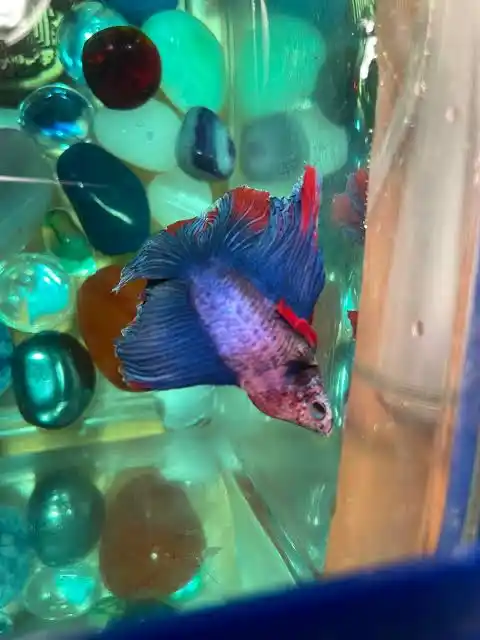
Quick Answer: What Should I Do Right Now?
Create a short numbered emergency checklist:
- Watch the fish for two or three minutes.
- Check whether other fish are acting strangely.
- Test ammonia, nitrite, nitrate, pH, and temperature.
- Increase surface movement or add an air stone.
- Perform a partial water change if ammonia or nitrite is present.
- Remove uneaten food and check that the filter is working.
- Place the fish in a quiet hospital tank if tank mates are attacking it.
- Look for swelling, sores, pineconing scales, rapid breathing, or damaged fins.
Add a caution that a very large water change can cause further stress if the new water has a different temperature or pH. Match the replacement water closely and use a water conditioner.
Is Sideways Swimming Always a Swim Bladder Problem?
Explain that “swim bladder disease” is often used as a general label, but it does not identify the real cause.
The swim bladder helps many fish rise, sink, and remain level. However, a fish can lose its balance because of:
- Toxic or unsuitable water
- Low oxygen
- Sudden shock
- Injury
- Abnormal body shape
- Digestive gas
- Infection or parasites
- Internal swelling or a growth
- Nervous-system damage
- Exhaustion caused by strong water flow
State clearly that water testing should come before diagnosing a swim bladder condition. Aquatic veterinarians report that poor water quality causes many apparent buoyancy problems. California Fish Vet
Common Reasons a Fish Swims Sideways
Use a comparison table near the beginning of this section.
| Possible cause | Other signs to watch for | First response |
| Poor water quality | Gasping, red gills, clamped fins, several fish affected | Test water and make a partial water change |
| Low oxygen | Fish gather near the surface or filter outlet | Add aeration and increase surface movement |
| Feeding-related buoyancy trouble | Starts after eating, floating or rolling | Pause feeding briefly and review the diet |
| Sudden temperature or pH change | Problem begins after a water change | Check temperature and pH |
| Injury or aggression | Torn fins, missing scales, hiding | Separate the fish and remove the cause |
| Infection or parasites | Sores, swelling, weight loss, white spots | Isolate and seek a proper diagnosis |
| Internal growth or organ problem | One-sided swelling or a long-lasting tilt | Contact an aquatic veterinarian |
| Strong filter current | Fish is normal in calmer areas | Reduce or redirect the flow |
1. Poor Water Quality
Explain how ammonia, nitrite, high nitrate, chlorine, or an unsuitable pH can affect breathing, balance, and normal swimming.
Mention that the risk is higher in:
- New or uncycled tanks
- Overcrowded aquariums
- Tanks with missed water changes
- Tanks where the filter recently stopped
- Aquariums treated with untreated tap water
- Tanks where many fish were added at once
Recommended general readings:
- Ammonia: 0 ppm
- Nitrite: 0 ppm
- Nitrate: kept low and within the range suitable for the species
- Temperature and pH: stable and suitable for the fish
Avoid presenting one pH or nitrate reading as safe for every species.
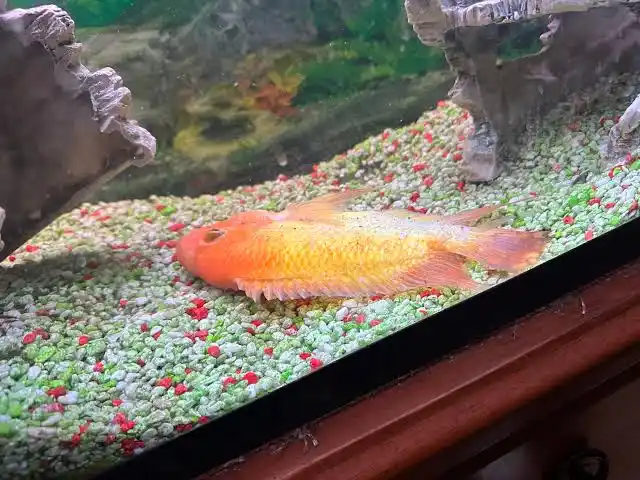
2. Low Oxygen
Describe common signs:
- Gasping at the surface
- Fast gill movement
- Staying close to the filter outlet
- Several fish becoming weak
- Sideways swimming followed by lying still
Explain possible causes such as warm water, overcrowding, poor circulation, a stopped filter, bacterial bloom, or decaying waste.
3. Feeding and Digestive Problems
Explain that some fish become temporarily buoyant after eating at the surface and swallowing air. Fancy goldfish are especially prone because of their compact body shape.
Suggest reviewing:
- Portion size
- Food type
- Floating versus sinking pellets
- Feeding competition
- Whether symptoms appear only after meals
Do not present peas as a cure for every sideways-swimming fish. Peas do not provide a complete diet, and their apparent benefit in floating goldfish may come from sinking rather than from curing “constipation.” California Fish Vet
4. Sudden Temperature or pH Shock
Cover sideways swimming after:
- A water change
- Moving the fish
- A heater failure
- Adding untreated water
- Cleaning the tank too heavily
- Moving the fish between tanks
Explain that the keeper should compare the tank’s current temperature and pH with its normal readings and with the newly added water.
5. Injury or Tank-Mate Aggression
Explain how collisions, attacks, rough netting, sharp décor, and being pulled toward a filter intake may affect swimming.
Include signs such as:
- Torn fins
- Missing scales
- Bruising
- Bent body
- Hiding when another fish approaches
- Swimming normally only when the aggressive fish is absent
6. Strong Filter Current
Explain that bettas, fancy goldfish, long-finned fish, and weak or sick fish may be pushed sideways by fast water.
Give simple solutions:
- Redirect the outlet toward the glass
- Add a suitable filter baffle
- Use plants or décor to create a calm area
- Check whether the filter is oversized for the aquarium
Do not recommend switching off the filter for long periods.
7. Infection or Parasites
Explain that infection becomes more likely when sideways swimming appears with:
- Open sores
- Red patches
- White spots
- Swollen eyes
- Rapid breathing
- Weight loss
- Refusal to eat
- Stringy waste combined with other signs
- Several fish becoming ill
Warn against using random antibiotics or parasite treatments. The wrong medication can stress the fish, harm the biological filter, and delay the correct treatment.
8. Internal Swelling, Organ Trouble, or a Growth
Discuss a swollen belly, fluid buildup, organ enlargement, egg retention, cysts, or tumors.
Clarify that dropsy describes a group of signs, especially swelling and raised “pinecone” scales. It is not one single disease. California Fish Vet
9. Physical Deformity or Age-Related Trouble
Explain that some fish have long-term balance trouble because of their body shape, spine, swim bladder anatomy, previous injury, or old age.
Fancy goldfish such as ranchus, orandas, ryukins, and fantails may be more prone to lasting buoyancy trouble.
What the Fish’s Position May Tell You
Fish Swimming Sideways at the Surface
Possible causes:
- Positive buoyancy
- Swallowed air
- Low oxygen
- Water-quality trouble
- Weakness or exhaustion
Fish Swimming Sideways at the Bottom
Possible causes:
- Negative buoyancy
- Severe weakness
- Injury
- Poor water quality
- Inability to compete for food
Fish Spinning or Swimming in Circles
Explain that spinning is more concerning than a mild tilt. It may be connected to severe poisoning, infection, physical trauma, or nervous-system trouble.
Fish Swimming Sideways After a Water Change
Focus on:
- Temperature mismatch
- Sudden pH movement
- Chlorine or chloramine exposure
- Incomplete water conditioning
- Disturbing a dirty substrate
- A very large change after poor maintenance
Fish Swimming Sideways After Eating
Explain that this pattern points more strongly toward feeding-related buoyancy trouble, especially when the fish becomes normal again later.
How to Help a Fish Swimming on Its Side
Step 1: Test the Water
Tell the reader to record actual numbers rather than saying the water “looks clean.”
Test:
- Ammonia
- Nitrite
- Nitrate
- pH
- Temperature
- Salinity for saltwater or brackish fish
Step 2: Improve Oxygen and Water Movement
Explain how to add an air stone, check the filter, lower an unsafe temperature gradually, and remove waste.
Step 3: Make a Safe Partial Water Change
Provide simple instructions:
- Condition the new water
- Match its temperature
- Avoid sudden pH changes
- Siphon out uneaten food and waste
- Do not replace all filter media at the same time
Step 4: Reduce Stress
Dim the light, stop tapping the glass, reduce loud movement near the tank, and protect the fish from aggressive tank mates.
Step 5: Review Feeding
If the fish became sideways immediately after a heavy meal, pause feeding for a short period and then offer a smaller amount of suitable food.
Avoid giving a fixed fasting period for every species. Young, tiny, sick, and plant-eating fish can have different feeding needs.
Step 6: Use a Hospital Tank When Needed
Explain when separation helps:
- The fish is being attacked
- You need to monitor eating and waste
- Treatment is required
- The main aquarium contains animals sensitive to medication
Mention that a hospital tank should have stable temperature, suitable aeration, and safe water. An uncycled bowl can make the fish worse.
Step 7: Contact an Aquatic Veterinarian
Recommend professional help when symptoms are severe, unexplained, or do not improve after environmental problems are corrected.
Treatments to Avoid
Create a clear “do not” section:
- Do not assume every case is swim bladder disease.
- Do not pour several medicines into the tank.
- Do not use antibiotics without signs or a diagnosis.
- Do not squeeze, massage, puncture, or “pop” the fish.
- Do not add aquarium salt without checking whether the species can tolerate it.
- Do not move the fish into untreated tap water.
- Do not completely clean the tank and filter at the same time.
- Do not feed peas as the fish’s only food.
- Do not raise the temperature unless it suits the species and suspected condition.
When Is Sideways Swimming an Emergency?
Tell readers to act quickly if:
- More than one fish is affected
- Fish are gasping at the surface
- Ammonia or nitrite is detected
- The filter or heater has failed
- The fish is spinning or having convulsive movements
- The fish cannot reach food
- The body is swollen or the scales stick outward
- There are open sores or bleeding
- The fish is trapped at the surface and its skin is drying
- Symptoms started after chemical exposure
- The fish has not improved after correcting the tank conditions
Can a Fish Recover From Swimming Sideways?
Explain that recovery depends on the cause.
Water-quality, oxygen, current, and feeding-related problems may improve when the cause is corrected early. Injuries, infections, internal growths, or physical deformities may need longer care and may not fully resolve.
Avoid promising that the fish will recover within a fixed number of days.
How to Prevent the Problem From Returning
- Cycle the aquarium before fully stocking it
- Test the water regularly
- Perform steady partial water changes
- Avoid overfeeding
- Choose food suited to the species
- Maintain the filter without killing beneficial bacteria
- Keep the temperature stable
- Avoid overcrowding
- Quarantine new fish
- Choose compatible tank mates
- Observe each fish during feeding
Frequently Asked Questions
Why is my fish swimming sideways but still alive?
Answer that it is alive but unable to maintain a normal position. Check water quality and oxygen immediately, then look for feeding, injury, or disease-related signs.
Why is my fish lying on its side but breathing?
Explain that the fish may be weak, stressed, injured, or experiencing a buoyancy problem. Breathing does not mean it is safe to wait without checking the tank.
Why is my fish swimming sideways after a water change?
Cover temperature, pH, chlorine, and sudden chemistry changes.
Can overfeeding make a fish swim sideways?
Explain that overeating or swallowing air may affect buoyancy in some fish, but water problems and other illnesses should still be ruled out.
Should I isolate a fish that is swimming sideways?
Recommend isolation when it is being attacked, needs close monitoring, or may have a contagious illness. The separate tank must have suitable water and aeration.
Does aquarium salt cure swim bladder problems?
No. Salt is not a general cure for loss of balance, and some fish, plants, snails, and shrimp tolerate it poorly.
How long can a fish survive swimming on its side?
There is no reliable fixed time. The cause and the fish’s ability to breathe, eat, and avoid injury matter more than the number of hours or days.
Why is only one fish swimming sideways?
A problem affecting one fish may point toward injury, anatomy, feeding, or internal illness. Poor water quality can still affect the weakest fish first, so test the water even when the others seem normal.
