
15 Freshwater Fish That Stay Small

Chili rasboras, ember tetras, green neon tetras, celestial pearl danios, pygmy corydoras, and clown killifish are some of the smallest freshwater aquarium fish. Most remain between 0.75 and 1.5 inches long as adults.
Small bodies don’t always mean small care needs. Many nano fish need groups of eight or more, stable water parameters, gentle filtration, and enough horizontal swimming room. A one-inch fish may technically fit inside a tiny aquarium, but squeezing a school into a desktop cube is how a peaceful hobby becomes a daily water-testing emergency.
For most species on this list, a mature 10-to-20-gallon planted aquarium is safer than a bowl or jar. Choose by temperament and water needs, not adult length alone.
Small Freshwater Fish at a Glance
| Fish | Typical adult size | Recommended starting tank | Group needs | Care level |
| Chili rasbora | 0.7–0.8 inches | 10 gallons | 10 or more | Intermediate |
| Ember tetra | About 0.8 inches | 10 gallons | 8 or more | Beginner |
| Green neon tetra | 0.8–1 inch | 15 gallons | 10 or more | Intermediate |
| Celestial pearl danio | 0.8–1 inch | 10–15 gallons | 8 or more | Beginner to intermediate |
| Neon green rasbora | About 0.75 inches | 15 gallons | 10 or more | Intermediate |
| Pygmy corydoras | 1–1.2 inches | 15 gallons | 8 or more | Beginner |
| Dwarf pencilfish | 1–1.3 inches | 15 gallons | 8 or more | Intermediate |
| Clown killifish | 1.2–1.4 inches | 10 gallons | 6 or more | Intermediate |
| Least killifish | 0.75–1.4 inches | 10 gallons | Small colony | Beginner |
| Endler’s livebearer | 1–1.8 inches | 10–20 gallons | Small group | Beginner |
| Scarlet badis | 0.6–0.8 inches | 10 gallons | Carefully selected group | Intermediate |
| Pea puffer | About 1 inch | 20 gallons for a group | Species-only group | Intermediate |
| Sparkling gourami | 1.5 inches | 15 gallons | Pair or small group | Intermediate |
| Asian stone catfish | 1.2–1.4 inches | 10–15 gallons | 6 or more | Intermediate |
| White cloud minnow | 1.5 inches | 20 gallons | 8 or more | Beginner |
Tank sizes assume proper filtration and sensible stocking. Adding several species to the same tank changes the space required.
1. Chili Rasbora
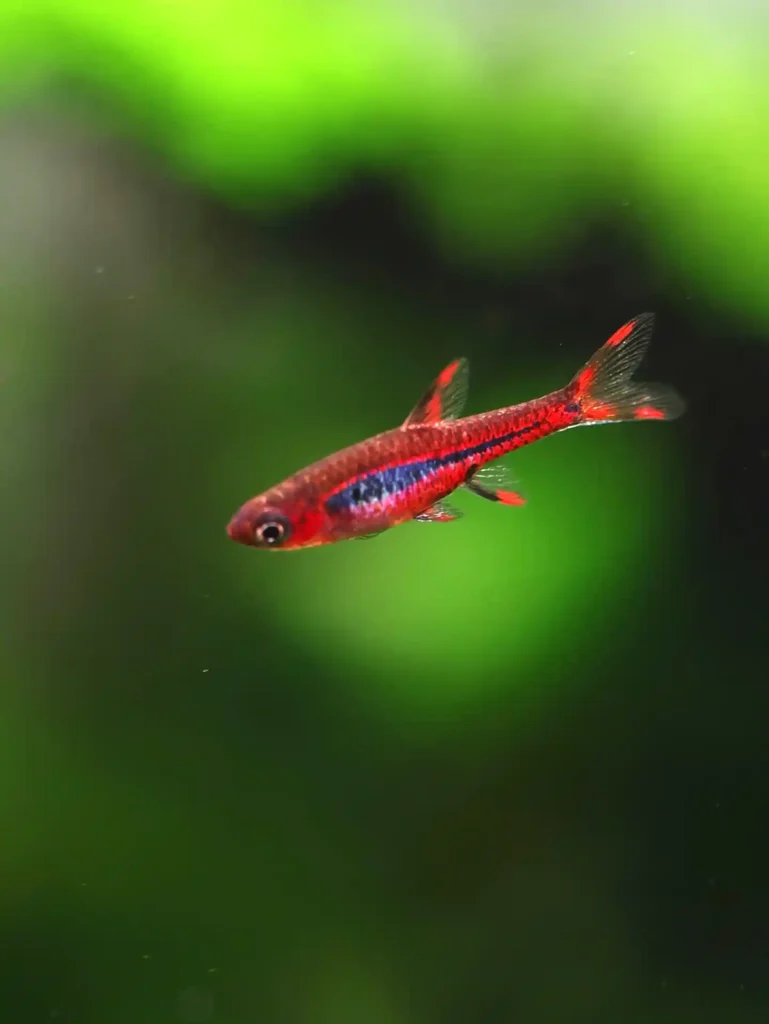
Chili rasboras are among the smallest colorful fish commonly kept in freshwater aquariums. Their red bodies and dark side markings become much clearer once they settle into a planted tank.
They are tiny, peaceful, and easily intimidated. I wouldn’t place them with fast feeders or fish large enough to treat them like swimming snacks.
Scientific name: Boraras brigittae
Typical adult size: Around 0.7–0.8 inches
Tank size: 10 gallons or larger
Group size: At least 10
Temperature: 75–82°F
Temperament: Peaceful and timid
Swimming level: Middle and upper areas
Best Aquarium Setup
Use gentle filtration, dim lighting, dark substrate, and dense plants around the edges. Floating plants help soften the light and make the group feel less exposed.
Leave some open swimming space in the middle. A tank filled wall-to-wall with stems may look safe but makes it difficult to see whether every fish is eating.
Feeding Chili Rasboras
Their mouths are extremely small. Offer crushed flakes, nano pellets, baby brine shrimp, microworms, and small frozen foods.
Watch during meals. Larger tank mates can finish everything before chili rasboras work up the courage to approach.
Main Care Warning
Chili rasboras do best in mature, stable aquariums. Sudden changes in temperature or water chemistry can affect them quickly.
FishBase lists a common standard length of about 1.8 cm, although larger maximum measurements have been recorded. FishBase species profile
2. Ember Tetra
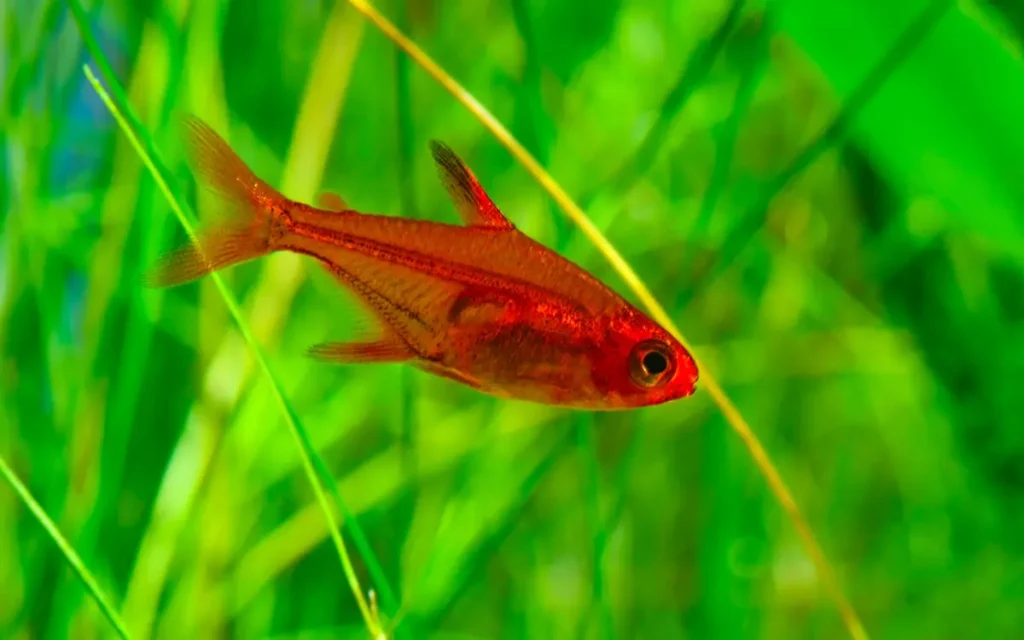
Ember tetras are tiny orange fish that work well in peaceful planted communities. Their warm color looks strongest against dark substrate and green plants.
They remain small, but they need companions. One or two ember tetras usually hide and look washed out.
Scientific name: Hyphessobrycon amandae
Adult size: About 0.8 inches
Tank size: 10 gallons or larger
Group size: At least 8, preferably 10 or more
Temperature: 73–82°F
Temperament: Peaceful
Swimming level: Middle
Best Tank Mates
Good companions include pygmy corydoras, small rasboras, gentle pencilfish, and peaceful shrimp where predation on shrimplets isn’t a concern.
Avoid large tetras, active barbs, and aggressive centerpiece fish. Ember tetras are unlikely to fight back when bullied.
Food and Feeding
Use fine flakes, micro pellets, baby brine shrimp, daphnia, and finely sized frozen foods. Feed in more than one spot if faster fish are present.
A well-fed ember tetra should have a gently rounded belly, not a hollow underside.
Main Care Warning
Their small size doesn’t make them suitable for an uncycled tank. Ammonia and nitrite can harm them before the water starts looking dirty.
FishBase records an adult standard length of about 2 cm. FishBase ember tetra profile
3. Green Neon Tetra
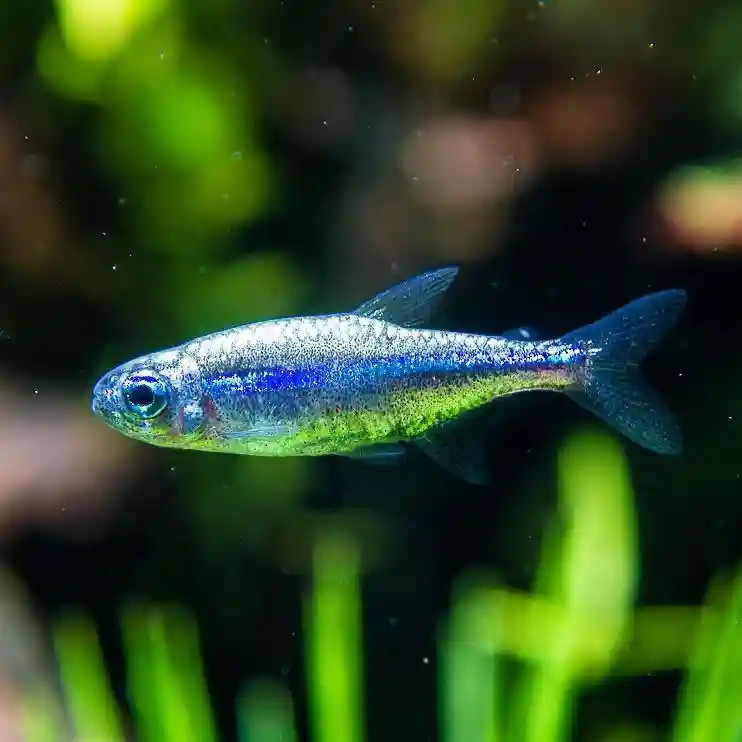
Green neon tetras are smaller and slimmer than common neon tetras. Their blue-green stripe runs farther along the body, giving a school a bright flash under soft aquarium lighting.
They come from naturally soft, acidic environments and are less forgiving of unstable or mineral-heavy water than many common community fish.
Scientific name: Paracheirodon simulans
Adult size: Around 0.8–1 inch
Tank size: 15 gallons or larger
Group size: At least 10
Temperature: 75–82°F
Temperament: Peaceful and shy
Swimming level: Middle
Best Aquarium Setup
A mature planted aquarium with subdued lighting, leaf litter, wood, and dark substrate suits them well. Give the group open room between planted areas.
Keep the current gentle to moderate. Strong flow can push these small fish around and make feeding difficult.
Suitable Tank Mates
Choose similarly small, calm species that accept warm, soft water. Large fish should be avoided even if they are normally peaceful.
A fish doesn’t need to be aggressive to eat a one-inch tank mate. It only needs a large enough mouth.
Main Care Warning
Test your source water before buying them. Continually forcing hard tap water toward a low pH with quick-fix chemicals can cause dangerous swings.
4. Celestial Pearl Danio
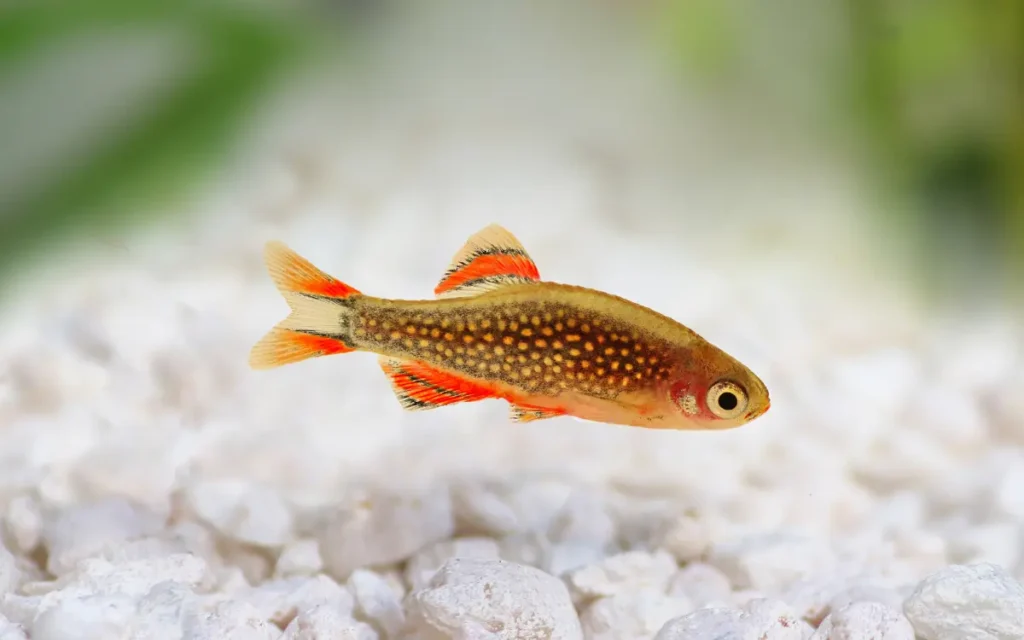
Celestial pearl danios have spotted bodies, red fins, and an adult length of roughly one inch. They are also sold as galaxy rasboras, although they belong to the danio group.
They spend much of their time around plants rather than forming one tight school.
Scientific name: Danio margaritatus
Adult size: Around 0.8–1 inch
Tank size: 10–15 gallons or larger
Group size: At least 8
Temperature: 68–76°F
Temperament: Peaceful, with mild male sparring
Swimming level: Lower and middle areas
Best Aquarium Setup
Use thick plants, moss, wood, and shaded hiding places. Leave small open areas where males can display.
These fish often look nervous in bright, bare aquariums. A planted background and broken lines of sight help them move around more confidently.
Group Behavior
Males display and chase one another. This usually causes little harm in a spacious planted tank, but one male can receive too much attention when the group is small.
Keep several females and plenty of cover if possible.
Main Care Warning
Celestial pearl danios prefer cooler conditions than many tropical community fish. Don’t pair them with fish that require permanently hot water.
They may also breed among moss, leaving a few tiny fry to appear without warning.
5. Neon Green Rasbora
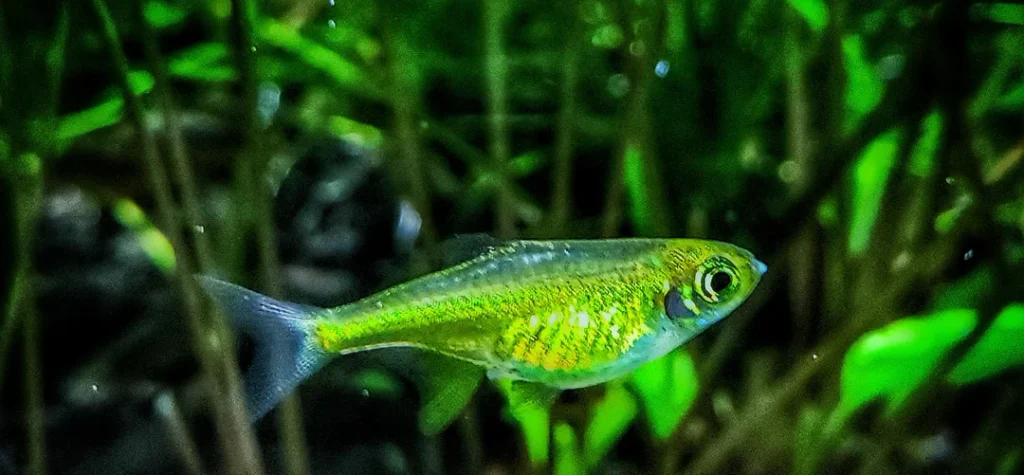
Neon green rasboras, also called Kubotai rasboras, remain under an inch in many aquariums. Their bright green bodies become much more noticeable in a dark planted setup.
They are more active than chili rasboras and need horizontal swimming room despite their tiny size.
Scientific name: Microdevario kubotai
Adult size: Around 0.75 inches
Tank size: 15 gallons or larger
Group size: At least 10
Temperature: 72–79°F
Temperament: Peaceful and active
Swimming level: Middle and upper areas
Best Aquarium Setup
Choose a longer tank with open swimming space and planted edges. Moderate water movement suits them better than completely still water.
Use a secure lid because active nano fish can reach small openings faster than you can reach the net.
Food and Tank Mates
Offer micro pellets, crushed flakes, baby brine shrimp, and small frozen foods.
Suitable companions include other small, active community fish with similar water needs. Don’t combine them with very shy feeders in a cramped aquarium.
Main Care Warning
A school of 12 neon green rasboras needs more space than one slow-moving one-inch fish. Activity and group size matter as much as body length.
FishBase records a maximum standard length of about 1.9 cm. FishBase species profile
6. Pygmy Corydoras
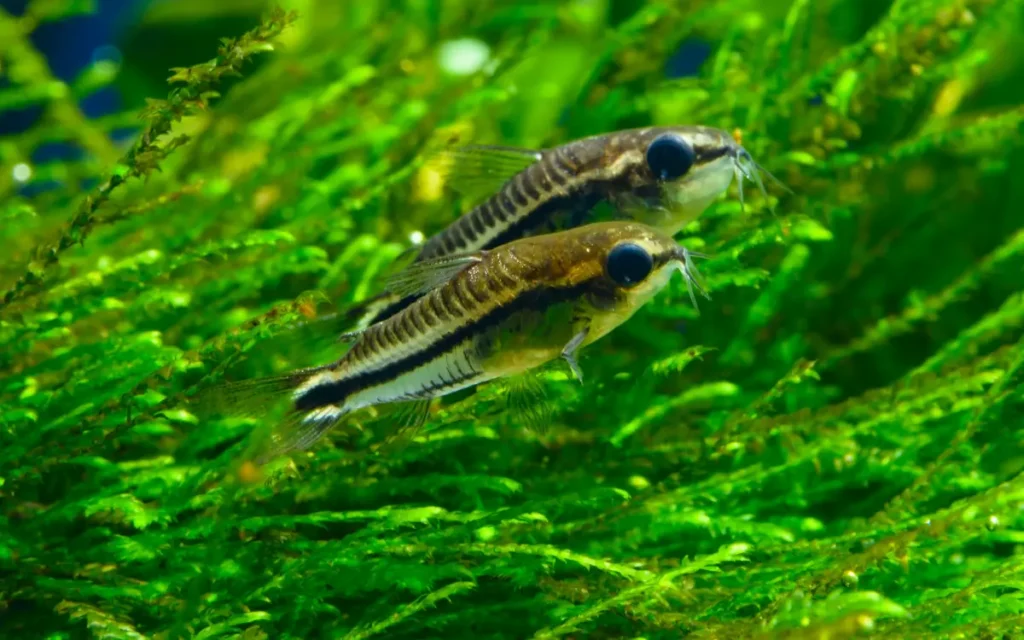
Pygmy corydoras are miniature catfish that behave differently from many larger cory species. They rest on leaves and regularly swim through the middle of the aquarium instead of staying on the bottom all day.
They need a proper group and shouldn’t be purchased as single “cleanup fish.”
Scientific name: Corydoras pygmaeus
Adult size: Around 1–1.2 inches
Tank size: 15 gallons or larger
Group size: At least 8
Temperature: 72–79°F
Temperament: Peaceful
Swimming level: Bottom and middle
Best Aquarium Setup
Use smooth sand or fine rounded substrate. Add plants, wood, shaded resting places, and open areas where the group can search for food.
Sharp gravel can damage their barbels and makes it harder for them to feed naturally.
Feeding Pygmy Corydoras
They need small sinking pellets, baby brine shrimp, microworms, and suitable frozen foods. They cannot survive on waste from other fish.
Feed after faster midwater fish have eaten or place food in several areas.
Main Care Warning
Pygmy corydoras need access to the surface because corys occasionally gulp air. Keep the surface open and avoid covers that trap them beneath dense floating plants.
7. Dwarf Pencilfish
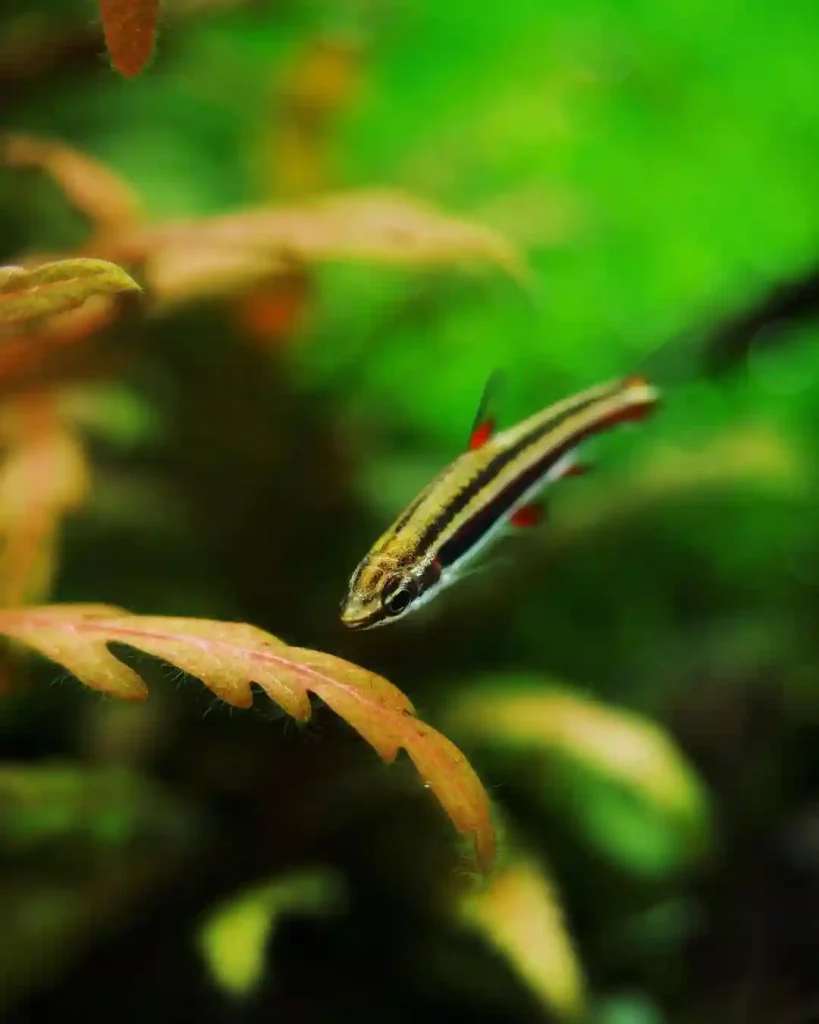
Dwarf pencilfish are slender, calm fish that remain close to the surface and middle areas. Their quiet swimming style works well in planted aquariums containing other gentle nano species.
They can be overlooked during feeding, especially beside fast rasboras or danios.
Scientific name: Nannostomus marginatus
Adult size: Around 1–1.3 inches
Tank size: 15 gallons or larger
Group size: At least 8
Temperature: 75–82°F
Temperament: Peaceful
Swimming level: Upper and middle areas
Best Aquarium Setup
Use floating plants, shaded corners, and gentle water flow. Leave open space below the floating cover so the group can feed and display.
A dark background helps their side markings remain visible.
Diet and Feeding
Offer tiny floating or slowly sinking food. Fine flakes, micro pellets, baby brine shrimp, and small daphnia work well.
Don’t depend on large flakes breaking apart by accident. Food needs to fit inside their small, upward-facing mouths.
Main Care Warning
Dwarf pencilfish can jump, and their narrow bodies fit through small lid gaps. Cover openings around filters and cables.
They also prefer calm tank mates. Constant activity above them can leave the group hiding.
8. Clown Killifish
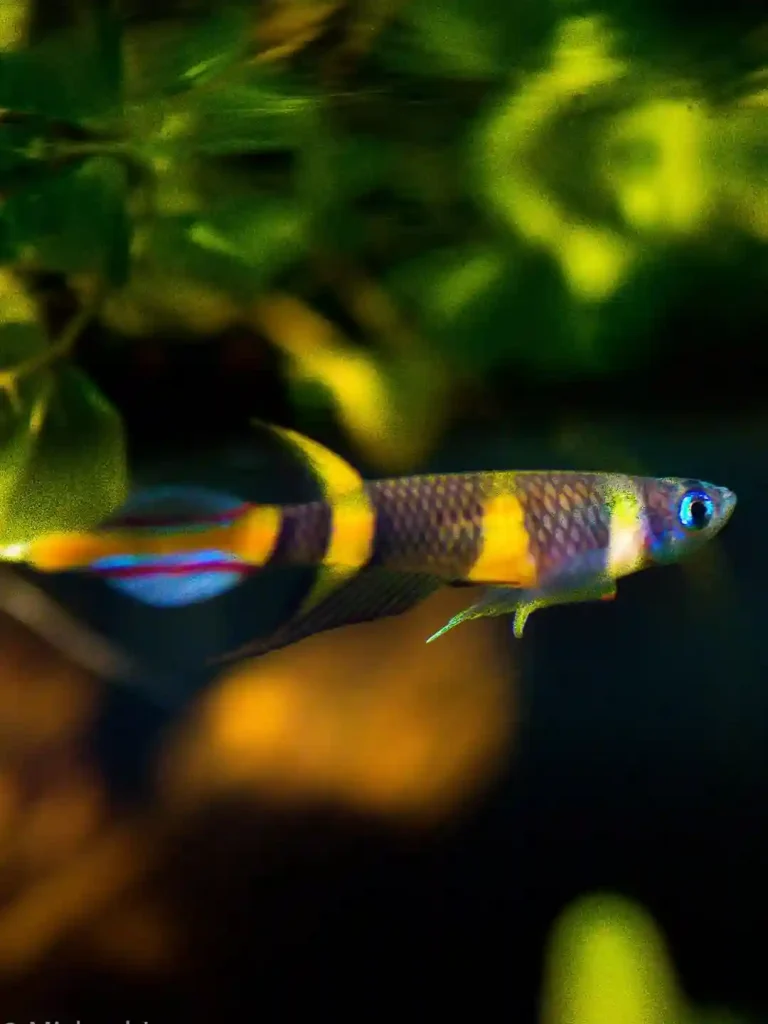
Clown killifish have striped bodies and colorful, fan-shaped tails. They stay close to the surface and resemble tiny rockets that have somehow developed opinions about floating plants.
They remain small but aren’t ideal for an open-top aquarium.
Scientific name: Epiplatys annulatus
Adult size: Around 1.2–1.4 inches
Tank size: 10 gallons or larger
Group size: At least 6
Temperature: 72–79°F
Temperament: Peaceful
Swimming level: Surface
Best Aquarium Setup
Provide floating plants, gentle filtration, and a tightly fitted lid. Leave a small open feeding area among the plants.
They prefer calm upper water. A strong filter outlet can push them away from their preferred feeding zone.
Feeding Clown Killifish
Their mouths point upward, so floating and slowly sinking foods are easiest to reach. Offer fine flakes, micro pellets, baby brine shrimp, fruit flies, and other suitably small foods.
Make sure every fish eats. Dominant males may hold the best surface positions.
Main Care Warning
They will eat very small shrimp and fish fry. Peaceful doesn’t mean vegetarian.
They can also spawn among floating plants or mops, so unexpected fry may appear in a mature planted tank.
9. Least Killifish
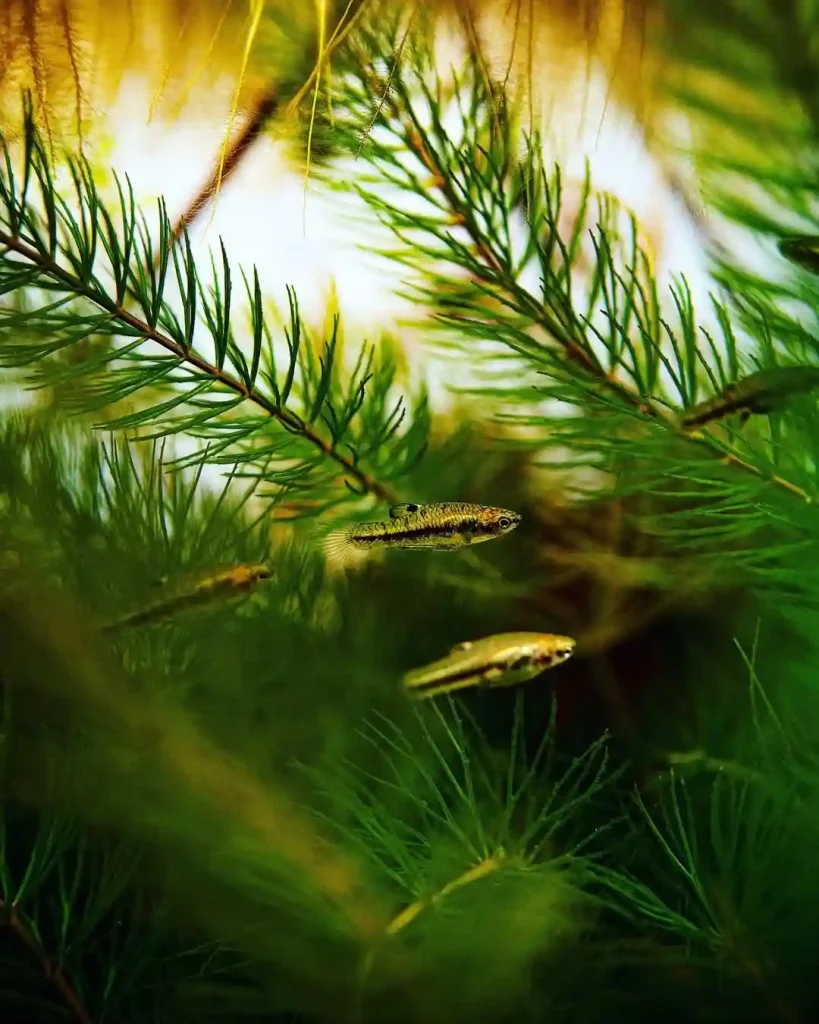
Despite the name, the least killifish is a livebearer rather than a true killifish. It is one of the smallest livebearing fish available.
Females grow larger than males but usually remain below 1.5 inches.
Scientific name: Heterandria formosa
Adult size: Males around 0.75 inches; females up to about 1.4 inches
Tank size: 10 gallons or larger
Group size: Small colony
Temperature: 68–78°F
Temperament: Peaceful
Swimming level: All levels
Best Aquarium Setup
Use dense plants, moss, floating cover, and gentle filtration. Their tiny newborn fry benefit from narrow hiding spaces.
They prefer stable water and generally suit moderately hard conditions better than soft-water specialists such as green neon tetras.
Breeding Behavior
Females produce small numbers of fry over time rather than releasing one huge brood all at once. This can make population growth appear slow at first.
Once several generations mature, the colony may grow much faster.
Main Care Warning
Avoid mixing them with common livebearers that are much larger and more aggressive at feeding time. Tiny least killifish can easily disappear in a busy community.
10. Endler’s Livebearer
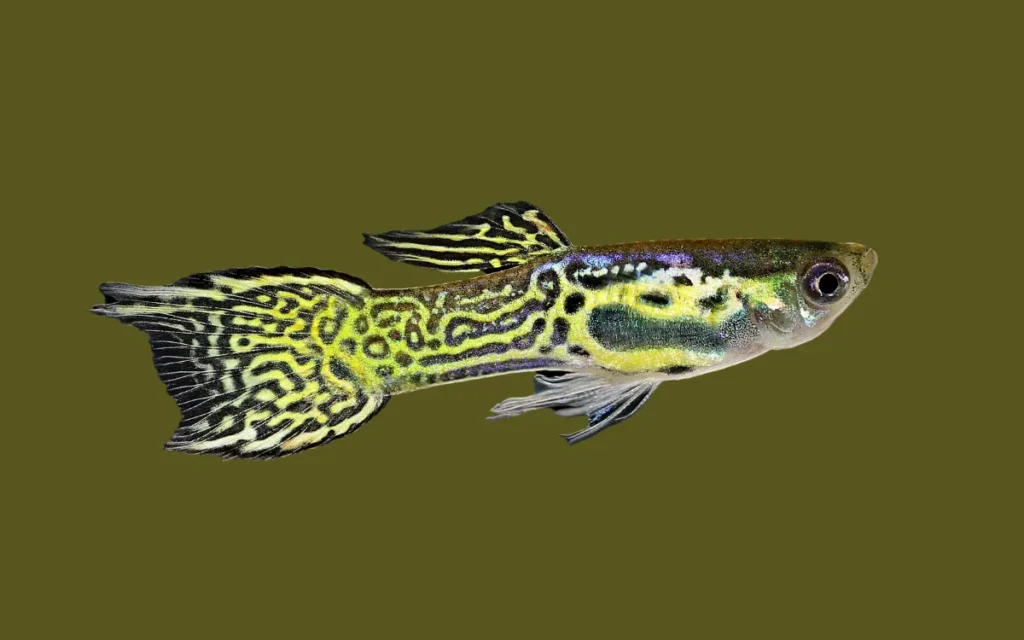
Male Endlers usually remain around one inch, while females can approach 1.5–1.8 inches. Their bright colors, active behavior, and simple diet make them one of the easier small fish for beginners.
Their easy breeding is both a feature and a warning label.
Scientific name: Poecilia wingei
Adult size: Males around 1 inch; females up to about 1.8 inches
Tank size: 10 gallons for males; 20 gallons or larger for a mixed colony
Group size: At least 6
Temperature: 72–82°F
Temperament: Peaceful and active
Swimming level: All levels
Male-Only or Mixed Group?
A male-only group avoids constant fry. Keep enough males to spread chasing, and add plants that break their view of one another.
For a mixed colony, keep more females than males. One male for every two or three females reduces pressure on any single female.
Water and Feeding
Endlers usually do better in mineral-rich water than soft-water nano fish. Test your hardness before mixing them with blackwater species.
Feed fine flakes, small pellets, baby brine shrimp, and suitable frozen food.
Main Care Warning
Endlers and guppies can interbreed. Keep them separate if you want to maintain pure lines.
Females may also store sperm and produce later broods after males are removed.
11. Scarlet Badis
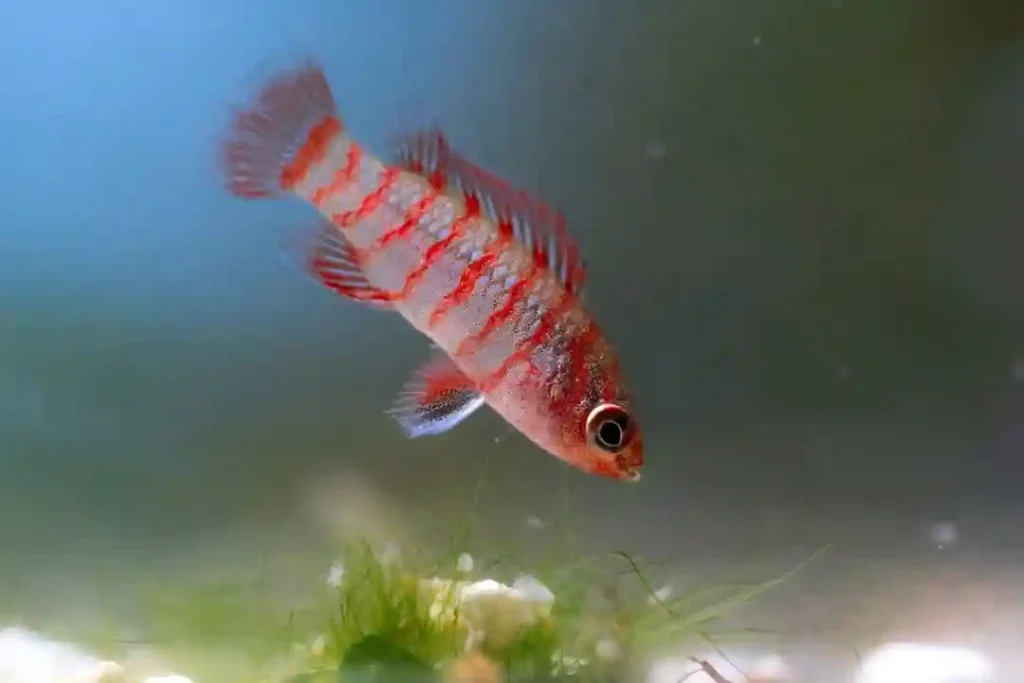
Scarlet badis are among the smallest colorful freshwater predators. Males develop red bands and blue-white markings, while females remain plainer and are often difficult to find in stores.
Their size is beginner-friendly. Their feeding behavior isn’t.
Scientific name: Dario dario
Adult size: Around 0.6–0.8 inches
Tank size: 10 gallons or larger
Group size: One male or a carefully planned group
Temperature: 68–79°F
Temperament: Territorial toward their own kind
Swimming level: Lower and middle areas
Best Aquarium Setup
Create a heavily planted tank with wood, stones, moss, caves, and many visual barriers. Male territories need clear boundaries.
A small tank may support one male, but placing several males together requires more space and careful observation.
Feeding Scarlet Badis
Many refuse dry flakes and pellets. Be prepared to offer live or frozen foods such as baby brine shrimp, daphnia, microworms, grindal worms, and other small prey.
Watch each fish eat. A scarlet badis may slowly starve in a tank where other fish finish meals first.
Main Care Warning
I wouldn’t recommend this species as a beginner’s first fish. It stays tiny but needs patient feeding and careful social planning.
That is the recurring lesson of nano fish: small does not automatically mean simple.
12. Pea Puffer
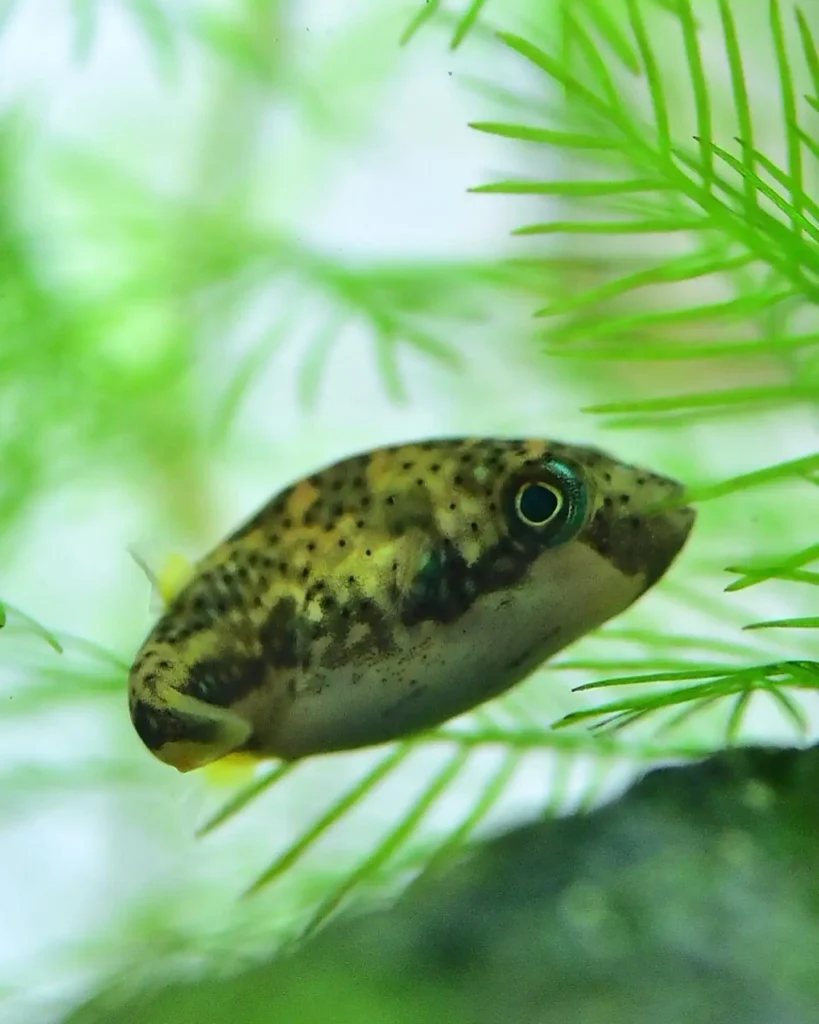
Pea puffers grow to only about one inch, but they behave like fish several times their size. They are intelligent, curious, territorial, and capable of biting fins or killing small tank mates.
Keep them in a carefully designed species-only aquarium rather than adding one to a random nano community.
Scientific name: Carinotetraodon travancoricus
Adult size: Around 1 inch
Tank size: About 20 gallons for a properly planned small group
Group size: Social group with more females than males when possible
Temperature: 74–82°F
Temperament: Territorial
Swimming level: All levels
Best Aquarium Setup
Use dense planting, wood, caves, and broken lines of sight. Each fish should be able to leave another puffer’s view.
A bare, open tank gives a dominant fish too many chances to patrol and chase others.
Feeding Pea Puffers
Pea puffers are carnivores. Suitable foods may include pest snails, frozen bloodworms, brine shrimp, daphnia, and other small animal foods.
Don’t assume they will accept dry pellets. Confirm what the fish currently eats before buying it.
Main Care Warning
Pea puffers aren’t reliable community fish. Their small bodies do not make shrimp, long-finned fish, or slow tank mates safe.
They also need close observation during meals because timid individuals can be pushed away.
13. Sparkling Gourami
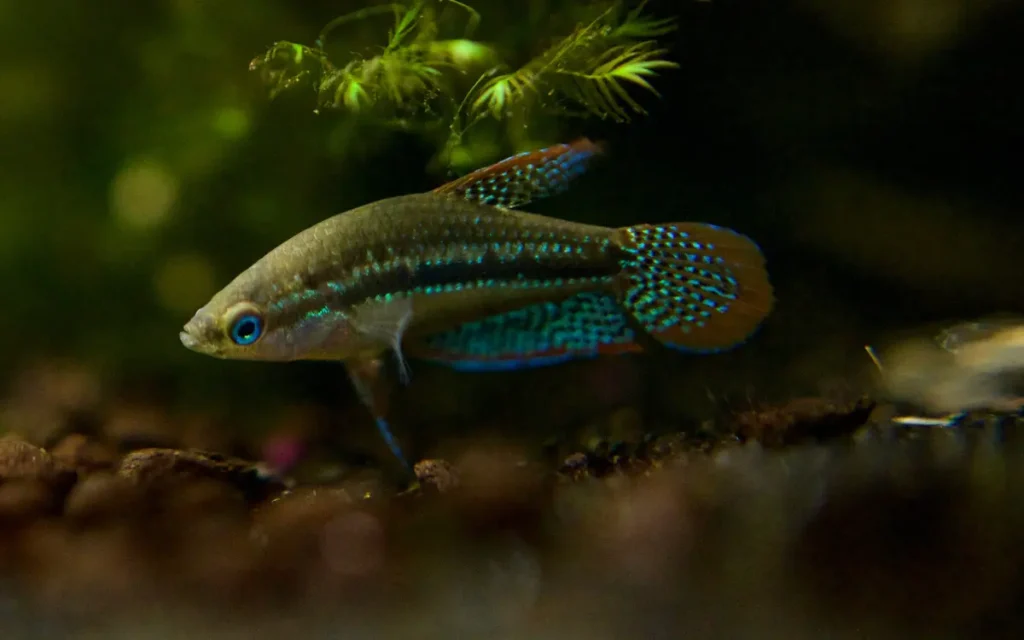
Sparkling gouramis are small labyrinth fish known for producing faint clicking or croaking sounds. They remain around 1.5 inches and suit quiet, heavily planted aquariums.
They are calmer than many larger gouramis but can still become territorial.
Scientific name: Trichopsis pumila
Adult size: Around 1.5 inches
Tank size: 15 gallons or larger
Group size: Pair or carefully managed small group
Temperature: 75–82°F
Temperament: Peaceful with territorial moments
Swimming level: Middle and upper areas
Best Aquarium Setup
Provide floating plants, broad leaves, wood, and shaded cover. Keep the filter flow gentle and leave open surface access.
Like other labyrinth fish, sparkling gouramis can breathe air at the surface.
Tank Mates and Feeding
Choose calm nano fish that won’t outcompete them. Avoid fin nippers and highly active species.
Feed fine flakes, micro pellets, baby brine shrimp, and small frozen or live foods.
Main Care Warning
Males may defend bubble nests and chase other fish during breeding. A peaceful community can become noticeably less peaceful once romance arrives.
Monitor small groups for one fish being repeatedly excluded.
14. Asian Stone Catfish
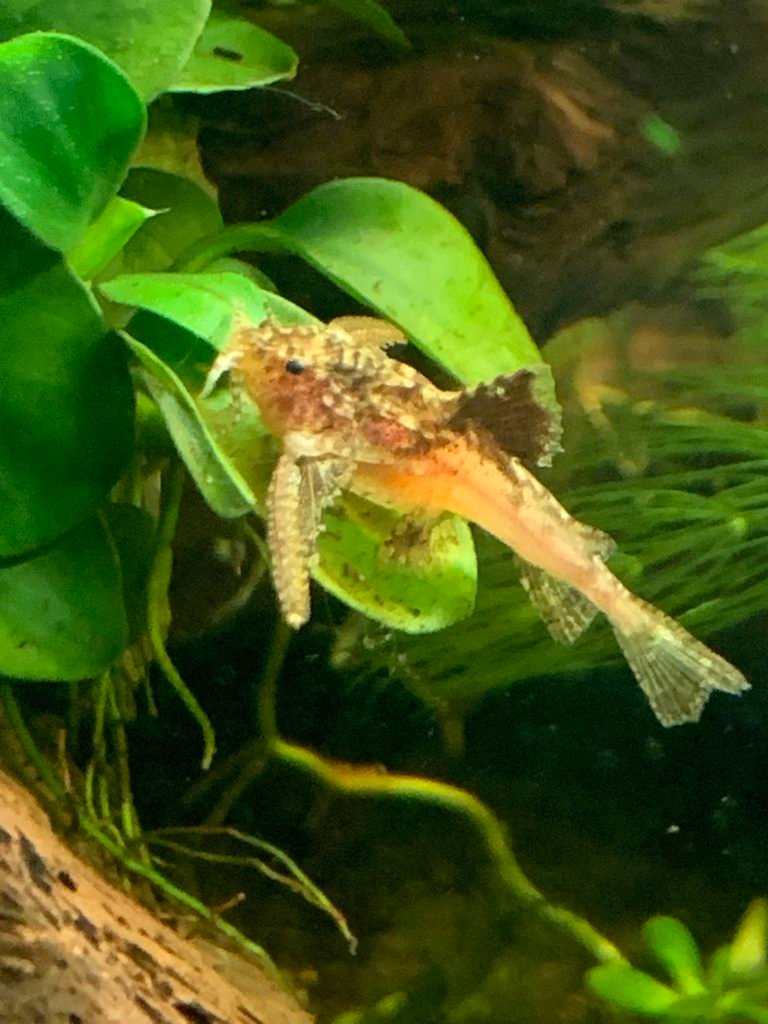
Asian stone catfish, also called dwarf anchor catfish or moth catfish, are tiny bottom dwellers with broad heads and camouflaged bodies.
They spend much of the day resting under plants, wood, or leaf litter. Their quiet habits make them easy to overlook during feeding.
Scientific name: Hara jerdoni
Adult size: Around 1.2–1.4 inches
Tank size: 10–15 gallons or larger
Group size: At least 6
Temperature: 64–75°F
Temperament: Peaceful
Swimming level: Bottom
Best Aquarium Setup
Use sand, leaf litter, small pieces of wood, smooth stones, and shaded hiding places. Gentle to moderate current and clean, oxygenated water suit them.
Avoid sharp gravel that traps food beyond their reach.
Feeding Asian Stone Catfish
Offer small sinking foods after the lights dim. Frozen cyclops, baby brine shrimp, daphnia, microworms, and fine sinking pellets may be accepted.
Use a feeding dish or pipette to place food near their hiding areas.
Main Care Warning
They can starve quietly in a community aquarium. A round of food disappearing from the surface doesn’t prove that a nocturnal catfish received any.
They also prefer cooler water than many tropical nano species, so check temperature compatibility carefully.
15. White Cloud Mountain Minnow
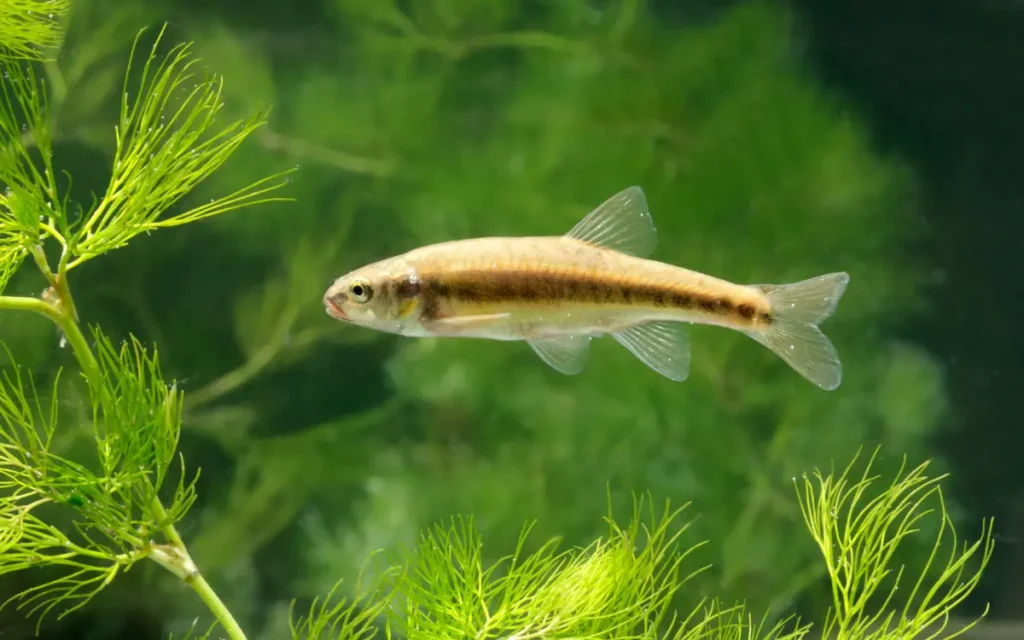
White cloud mountain minnows remain around 1.5 inches. They are hardy, active schooling fish that work well in cooler freshwater aquariums.
Their small size sometimes leads to 5-gallon recommendations, but they need a group and room to swim.
Scientific name: Tanichthys albonubes
Adult size: Around 1.5 inches
Tank size: 20 gallons preferred
Group size: At least 8–10
Temperature: 64–72°F
Temperament: Peaceful and active
Swimming level: Middle and upper areas
Best Aquarium Setup
Use a long tank with open swimming room, plants around the edges, and moderate filtration.
A lid prevents jumping. Dark substrate and green plants make their red fins and pale side stripe easier to see.
Food and Tank Mates
White clouds accept fine flakes, small pellets, baby brine shrimp, and daphnia. Feed a varied diet in small servings.
Suitable companions must enjoy similar cooler conditions. Don’t keep them permanently at high tropical temperatures simply to match warm-water tank mates.
Main Care Warning
They may breed among moss and plants, but adults provide no parental care. Eggs and tiny fry can become food for the community.
Which Small Freshwater Fish Is Best for Beginners?
The best options for most beginners are:
- Ember tetras for a warm planted community
- Pygmy corydoras for a peaceful bottom and midwater group
- Male Endlers for color without constant fry
- White cloud minnows for a cooler aquarium
- Celestial pearl danios for a quiet planted tank
Chili rasboras and green neon tetras are better after the aquarium has matured. Scarlet badis, pea puffers, and Asian stone catfish need more specialized feeding or social planning.
Which Small Fish Should Be Kept Alone?
Most fish on this list shouldn’t live alone. Chili rasboras, tetras, danios, corydoras, pencilfish, killifish, and white clouds need companions of their own species.
A single male scarlet badis can be kept without another badis if its tank and diet are suitable. Pea puffers should be kept in a properly planned species-only group rather than isolated permanently in a tiny container.
“Only one fish” and “only one species” are not the same thing.
Can Small Freshwater Fish Live in a 5-Gallon Tank?
A 5-gallon aquarium has very limited stocking options. Most species on this list need a group, which makes a 10-to-20-gallon tank safer.
A small tank also experiences faster changes in:
- Temperature
- Ammonia
- Nitrite
- Nitrate
- pH
- Oxygen
- Salinity caused by evaporation
The fact that one fish physically fits doesn’t mean it can display normal movement or social behavior there.
Use the Aquarium Fish by Tank Size Guide before choosing livestock.
How to Build a Tank for Small Freshwater Fish
Step 1: Choose One Main Species
Pick the fish before buying equipment. Check adult size, group needs, temperature, water hardness, diet, and temperament.
Step 2: Choose a Long Tank
Horizontal swimming room is more useful than extra height for many nano schooling fish. A 10-gallon tank can support selected species, but a 15- or 20-gallon-long aquarium gives you more room for proper groups.
Step 3: Cycle the Aquarium
Establish the biological filter before adding fish. Test ammonia and nitrite rather than judging the tank by water clarity.
Follow the Fish Tank Cycling Guide.
Step 4: Use Fry-Safe Filtration
Small fish can be pulled into uncovered filter intakes. Add a fine pre-filter sponge or use a mature sponge filter.
Step 5: Add Dense Cover
Use plants, moss, floating roots, wood, and safe caves. Keep an open area for swimming and feeding.
Step 6: Cover Every Gap
Nano fish can jump through surprisingly small openings. Check spaces around cables, pipes, filters, and feeding holes.
Step 7: Add the Complete Group
Don’t buy two schooling fish and leave the group unfinished. Add an appropriate number without overwhelming the biological filter.
Step 8: Feed at the Correct Size
Use nano pellets, fine flakes, baby brine shrimp, daphnia, microworms, or another food small enough to swallow.
Watch every fish eat.
Small-Fish Tank Mates to Avoid
Avoid combining tiny fish with:
- Angelfish
- Large gouramis
- Medium and large cichlids
- Predatory catfish
- Large barbs
- Large tetras
- Crayfish
- Fin-nipping species
- Fast fish that take all the food
- Any fish capable of swallowing them
A tank mate doesn’t have to be aggressive to be dangerous. If a chili rasbora fits inside its mouth, the community experiment may be very brief.
Common Mistakes With Nano Fish
Keeping Too Few
A pair doesn’t replace a proper school. Small groups can become nervous or direct aggression toward one fish.
Choosing a Tank by Body Length Alone
Active fish need swimming room. Territorial species need separate visual areas. Schooling fish need space for the whole group.
Using an Uncovered Filter Intake
Tiny fish and fry can enter filters that are safe for larger fish.
Feeding Normal-Sized Pellets
Food that looks small to you may be too large for a fish with a mouth smaller than a breadcrumb.
Mixing Warm- and Cool-Water Species
White clouds and Asian stone catfish prefer cooler conditions than many tropical nano fish.
Assuming Every Small Fish Is Peaceful
Pea puffers and male scarlet badis are small but territorial.
Adding Them to a New Aquarium
Tiny fish can react badly to rapid changes in ammonia, nitrite, temperature, or pH. A mature, stable tank is safer.
Frequently Asked Questions
What is the smallest freshwater aquarium fish?
Chili rasboras, least killifish males, scarlet badis, neon green rasboras, and ember tetras are among the smallest aquarium fish commonly available.
What small fish are easiest for beginners?
Ember tetras, male Endlers, pygmy corydoras, and white cloud mountain minnows are good starting choices when their group size, temperature, and tank requirements are met.
Can small freshwater fish live with bettas?
Some can, but compatibility depends on tank size, the betta’s behavior, water needs, feeding speed, and available cover. The betta may chase or eat very small fish.
Check the Betta Fish Tank Mates Guide before trying the combination.
What small fish can live with shrimp?
Small rasboras, ember tetras, pygmy corydoras, and least killifish may live with adult shrimp. Almost any fish can eat baby shrimp when they are small enough to swallow.
Do nano fish need a heater?
Warm-water species do. White clouds and Asian stone catfish prefer cooler conditions. Choose equipment based on the species and room temperature.
How many nano fish should be kept together?
It depends on the species. Many schooling fish need at least eight to ten of their own kind, while territorial fish require a different social setup.
Are nano fish easier than large fish?
Not always. Their tanks use less space, but small fish can be sensitive to unstable water, strong filters, large food, and aggressive tank mates.
Usually, one well-sized group is better than several incomplete groups. A 10-gallon aquarium has limited swimming room and biological capacity.
Do small freshwater fish breed easily?
Endlers and least killifish reproduce readily. Celestial pearl danios, white clouds, chili rasboras, and other egg layers may also spawn in planted tanks, but adults can eat their eggs and fry.
How do I stop nano fish from entering the filter?
Cover the intake with a fine pre-filter sponge or use a sponge filter. Check the cover regularly because fine sponges clog faster.
