
Rainbow Shark Care: Tank, Diet and Tank Mates

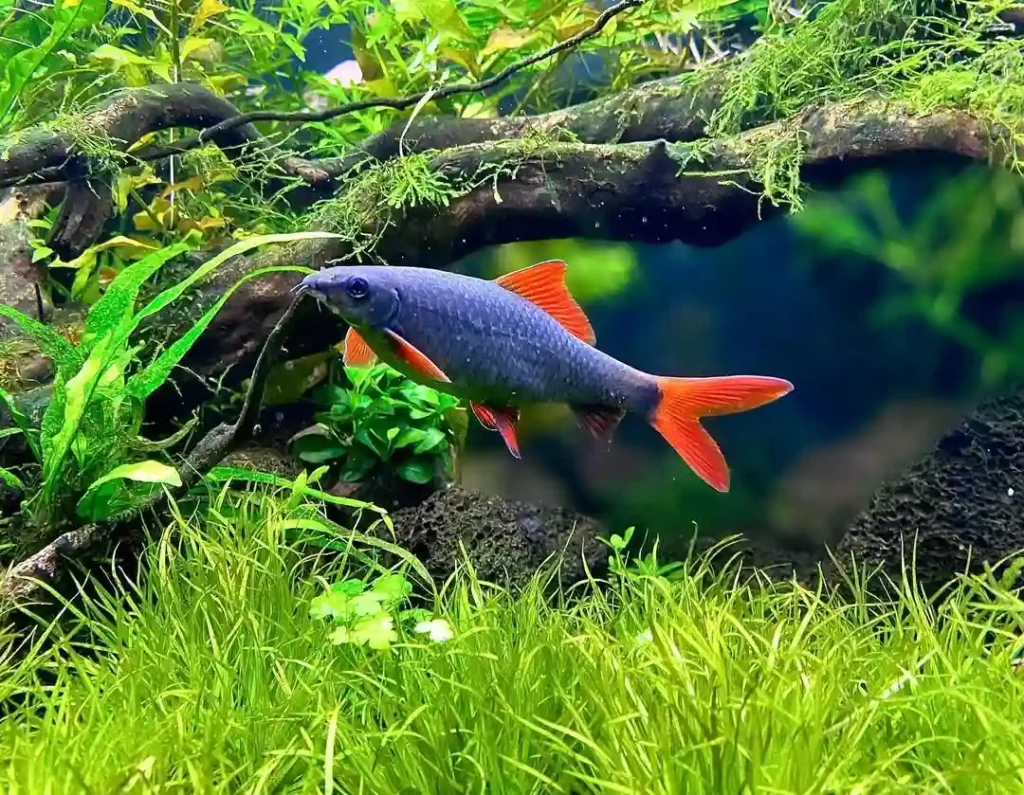
A rainbow shark can be a striking addition to a large freshwater aquarium, but it needs more room than its small store size suggests. I recommend one rainbow shark in a mature 55-gallon or larger tank with caves, plants, open swimming space, and carefully chosen tank mates. It can grow to about six inches and often becomes more territorial as it matures.
Explain that this fish is not a true shark. It is a freshwater member of the carp and minnow family. Its tall dorsal fin and streamlined body created the shark name.
If you are deciding whether this fish will work in your community tank, start with the care chart below. I explain each requirement in more detail afterward.
Rainbow Shark Care at a Glance
| Care requirement | Recommended range |
| Scientific name | Epalzeorhynchos frenatum |
| Adult size | Up to 6 inches |
| Minimum tank size | 55 gallons for one adult |
| Tank length | At least 4 feet preferred |
| Temperature | 75–81°F |
| pH | 6.5–7.5 for stable home care |
| Water hardness | 5–12 dGH |
| Temperament | Semi-aggressive and territorial |
| Diet | Omnivore |
| Swimming level | Mostly bottom and middle |
| Group size | Keep one in most home aquariums |
| Lifespan | About 5–8 years with good care |
| Care level | Intermediate |
| Breeding | Very difficult in home aquariums |
What Is a Rainbow Shark?
Include these points naturally in paragraphs:
- Dark gray or brownish body
- Red or orange-red fins
- Long, streamlined shape
- Downward-facing mouth used for grazing
- Native to the Mekong, Chao Phraya, Xe Bangfai, and Maeklong river basins
- Often found near sandy or rocky surfaces in moving water
Clarify that its natural feeding behavior explains why the fish spends so much time inspecting rocks, wood, glass, and the aquarium floor.
How Big Do Rainbow Sharks Get?
Explain why juvenile store size is misleading. A two-inch rainbow shark may look suitable for a 20-gallon tank, but it needs far more floor space once it matures and starts guarding territory.
Discuss growth rate carefully. Growth depends on diet, water quality, temperature, genetics, and available space. Avoid promising an exact monthly growth rate.
Add a useful observation:
A fish that remains unusually small may not be “growing to the tank.” Poor diet, crowding, stress, or unstable water can limit healthy growth.
What Size Tank Does a Rainbow Shark Need?
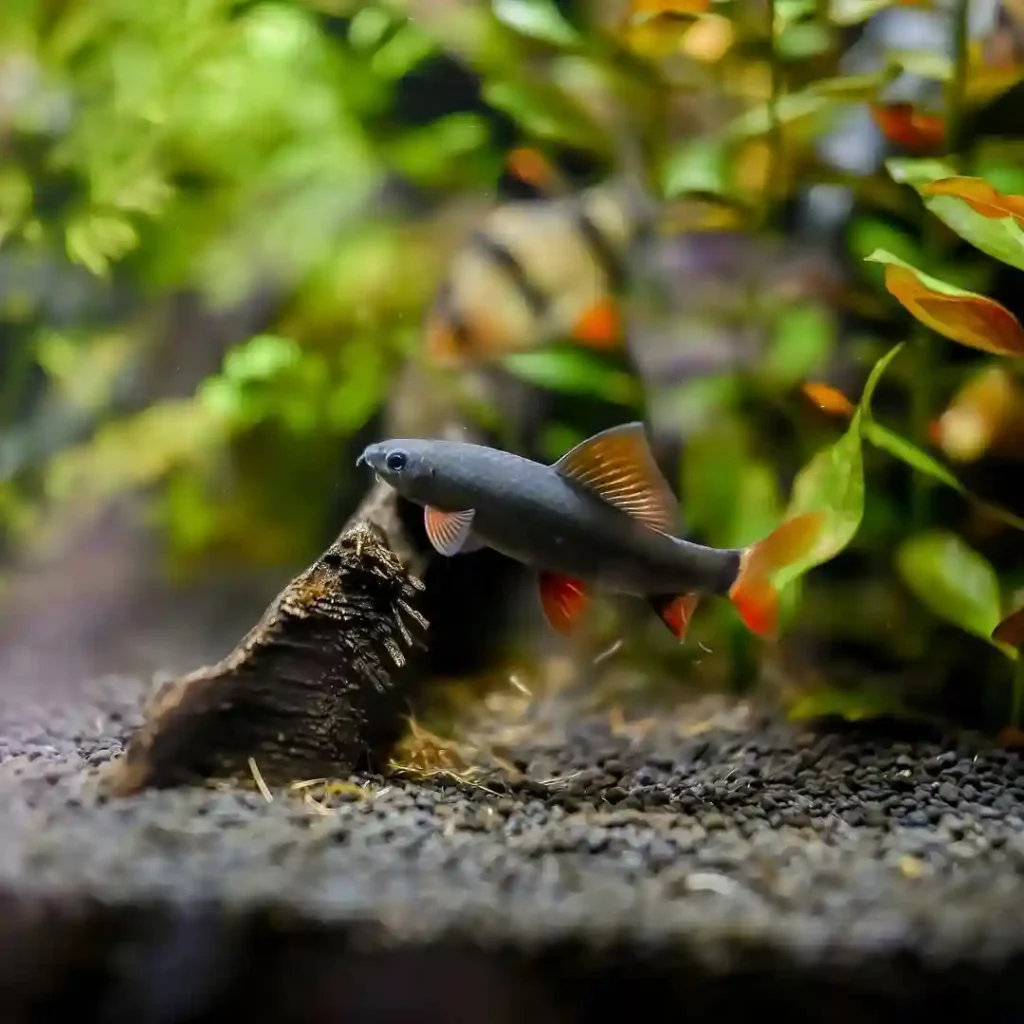
A 40-gallon breeder has useful floor space, but I would still choose a longer 55-gallon tank for an adult. The extra swimming length makes it easier to create separate zones and gives other fish room to leave the shark’s territory.
Cover why 20- and 29-gallon tanks are poor long-term choices. The problem is not only body size. It is the area the fish tries to control.
How I Would Set Up the Tank
Write this as practical first-person advice rather than a long equipment list.
Create One Clear Territory
Explain how to use driftwood, smooth rocks, caves, and dense plants to create a sheltered zone. The fish should have a place it can claim without controlling the entire aquarium.
Break the Line of Sight
Show readers how tall wood, rocks, and plants interrupt chasing. A wide-open tank lets the shark see every other bottom swimmer, which can make territorial behavior worse.
Keep Open Swimming Space
Avoid filling every inch with decorations. Keep a clear route through the middle of the tank.
Choose a Safe Substrate
Recommend fine gravel or sand without sharp edges. The fish spends time grazing near the bottom, so rough substrate may damage its mouth or barbels.
Provide Moderate Water Movement
Use filtration that keeps the water clean and creates gentle to moderate movement without turning the entire tank into a strong current.
Use a Secure Lid
Mention that startled rainbow sharks can jump, especially during maintenance or conflict.
Water Parameters
Recommended home aquarium targets:
| Parameter | Practical target |
| Temperature | 75–81°F |
| pH | 6.5–7.5 |
| Hardness | 5–12 dGH |
| Ammonia | 0 ppm |
| Nitrite | 0 ppm |
| Nitrate | Preferably below 20–30 ppm |
Rainbow Shark Diet and Feeding
What to Feed
Recommend a sinking omnivore pellet or wafer as the main food. Add algae wafers and vegetable-based foods several times per week. Offer frozen or live foods such as brine shrimp, daphnia, or bloodworms in smaller amounts.
Suitable fresh foods can include thin pieces of blanched zucchini, shelled peas, spinach, or cucumber. Remove uneaten vegetables before they soften and foul the water.
How Often to Feed
Recommend one or two small feedings per day. Give only what the fish can finish within a few minutes.
Explain that a rainbow shark may miss floating food when faster fish feed at the surface. Sinking food should reach its territory.
Will It Clean the Tank?
Be direct: no.
It may graze soft algae and biofilm, but it will not replace glass cleaning, water changes, or algae control. It may also ignore tougher algae as it grows.
Link naturally to the existing Oceanbitez algae-eater article here.
Temperament: Are Rainbow Sharks Aggressive?
Describe normal and worrying behavior:
Normal behavior may include defending a cave, short chases, grazing, resting under wood, and patrolling the lower tank.
Problem behavior includes chasing one fish repeatedly, blocking other fish from food, biting fins, pinning fish in a corner, or controlling most of the aquarium.
Mention that each fish has a different temperament. Tank size and layout reduce conflict, but they cannot turn an aggressive individual into a peaceful fish.
Can You Keep Two Rainbow Sharks Together?
Explain that rainbow sharks often react strongly to their own species and other similarly shaped bottom fish. Keeping two usually creates a dominant fish and a constantly stressed weaker fish.
A very large aquarium with extensive visual barriers may offer more options, but it is still risky. Beginners should keep one.
Best Rainbow Shark Tank Mates
Explain the selection rules before naming fish. Suitable tank mates should be active, large enough not to be bullied, and able to spend much of their time away from the shark’s bottom territory.
Potential choices include:
- Tiger barbs in a proper group
- Rosy barbs
- Larger danios
- Congo tetras
- Rainbowfish
- Some medium-sized gouramis
- Peaceful medium-sized loaches only with caution and ample room
Make clear that no compatibility list is guaranteed. Introduce the rainbow shark last when possible, and rearrange decorations before adding new fish so it cannot defend an established map of the tank.
Tank Mates I Would Avoid
Other Rainbow and Red Tail Sharks
They have similar body shapes and territorial habits, making conflict highly likely.
Small Bottom-Dwelling Fish
Small corydoras, kuhli loaches, and other gentle bottom fish may be chased away from food or shelter.
Slow Fish With Long Fins
Bettas, fancy guppies, and long-finned varieties may struggle to escape repeated attention.
Tiny Fish and Shrimp
Adult shrimp and small fish are not always attacked, but young shrimp and fry may be eaten. A territorial rainbow shark can also make a nano species feel unsafe.
Large Aggressive Cichlids
Avoid assuming another aggressive fish will “stand up” to the shark. This can create injuries rather than balance.
How to Introduce a Rainbow Shark
Create a short step-by-step section, but keep it to five useful steps:
- Cycle the aquarium fully.
- Build caves and visual barriers.
- Add other community fish first.
- Acclimate the rainbow shark carefully.
- Watch feeding and chasing for the first two weeks.
Signs of Stress or Illness
Discuss faded color, clamped fins, rapid breathing, hiding constantly, refusing food, flashing, white spots, damaged fins, and swollen or sunken body shape.
Explain that pale color does not automatically mean disease. Stress from transport, lights, aggression, or poor water can also dull its body and fins.
Tell readers to test ammonia, nitrite, nitrate, temperature, and pH before reaching for medication.
Why Is My Rainbow Shark Hiding?
A newly introduced fish may hide for several days. Bright lighting, a bare aquarium, bullying, sudden water changes, or too much activity near the tank can also keep it under cover.
The response should depend on the cause. Add shelter and reduce stress, but do not remove every hiding place to force the fish into view.
Why Is My Rainbow Shark Chasing Other Fish?
Provide a practical response order:
First, test the water and confirm the tank is large enough. Then rearrange the decorations, add line-of-sight barriers, and spread food across more than one area. Remove the aggressor or targeted fish if injuries or nonstop chasing continue.
Male vs. Female Rainbow Shark
Mature females may have fuller bodies. Mature males may appear slimmer and can develop darker edging on the anal fin. These differences are subtle and should not be presented as certain identification methods.
Rainbow Shark Breeding
Rainbow sharks are commercially bred with controlled methods that ordinary aquariums cannot easily reproduce. Their territorial behavior also makes pairing adults risky.
Avoid giving readers an unrealistic home-breeding recipe. A deeper but honest section will be more useful than repeating vague instructions found on other care sites.
Rainbow Shark vs. Red Tail Shark
Many people do confuse about this two shark often, here is the side by side comparision
| Feature | Rainbow shark | Red tail shark |
| Scientific name | Epalzeorhynchos frenatum | Epalzeorhynchos bicolor |
| Fin color | Most fins are red or orange | Only the tail is red |
| Body color | Gray, brown-gray, or dark | Usually deep black |
| Temperament | Territorial | Often more territorial |
| Adult size | Around 6 inches | Around 5–6 inches |
Read details about Red Tail Shark Care Guide
Is a Rainbow Shark Right for You?
I would recommend a rainbow shark if you have a mature 55-gallon or larger tank, enjoy active fish, and are willing to manage territorial behavior. I would skip it if your aquarium is small, filled with gentle bottom dwellers, or intended to be a completely peaceful community.
This section lets readers make a decision rather than simply finishing with a care summary.
Frequently Asked Questions
Can a rainbow shark live in a 20-gallon tank?
No. A juvenile may physically fit for a short time, but an adult does not have enough swimming or territorial space.
Can a rainbow shark live in a 40-gallon tank?
A long 40-gallon tank may work temporarily for a juvenile, but I recommend a 55-gallon or larger aquarium for long-term care.
Do rainbow sharks eat other fish?
They are not active fish hunters, but they may injure small, slow, or weakened fish. They may also eat fry or tiny shrimp.
Do rainbow sharks need to be kept in groups?
No. One rainbow shark is the safest choice for most community aquariums.
Can rainbow sharks live with bettas?
I would not recommend it. Bettas are slower, have long fins, and may be stressed by a territorial fish patrolling the tank.
Do rainbow sharks eat algae?
They graze some algae and biofilm, but they still need a varied omnivorous diet and will not keep an aquarium clean by themselves.
Why is my rainbow shark turning pale?
Stress, poor water quality, illness, lighting changes, and conflict can all cause fading. Test the water and observe its breathing, appetite, and behavior.
