
Rotala Care Guide

Rotala is one of the most popular stem plants in the aquarium hobby. It is loved for its delicate leaves, fast growth, and ability to add shades of green, orange, pink, and red to a planted tank. Whether you’re creating a nature aquarium, Dutch aquascape, or simple community tank, Rotala can provide color and movement that few plants can match.
Many beginners start with Rotala because it grows faster than many red plants while remaining relatively easy to maintain. However, getting the brightest colors and bushiest growth requires understanding its lighting, nutrients, and trimming needs.
This guide covers everything you need to know about growing healthy Rotala plants.
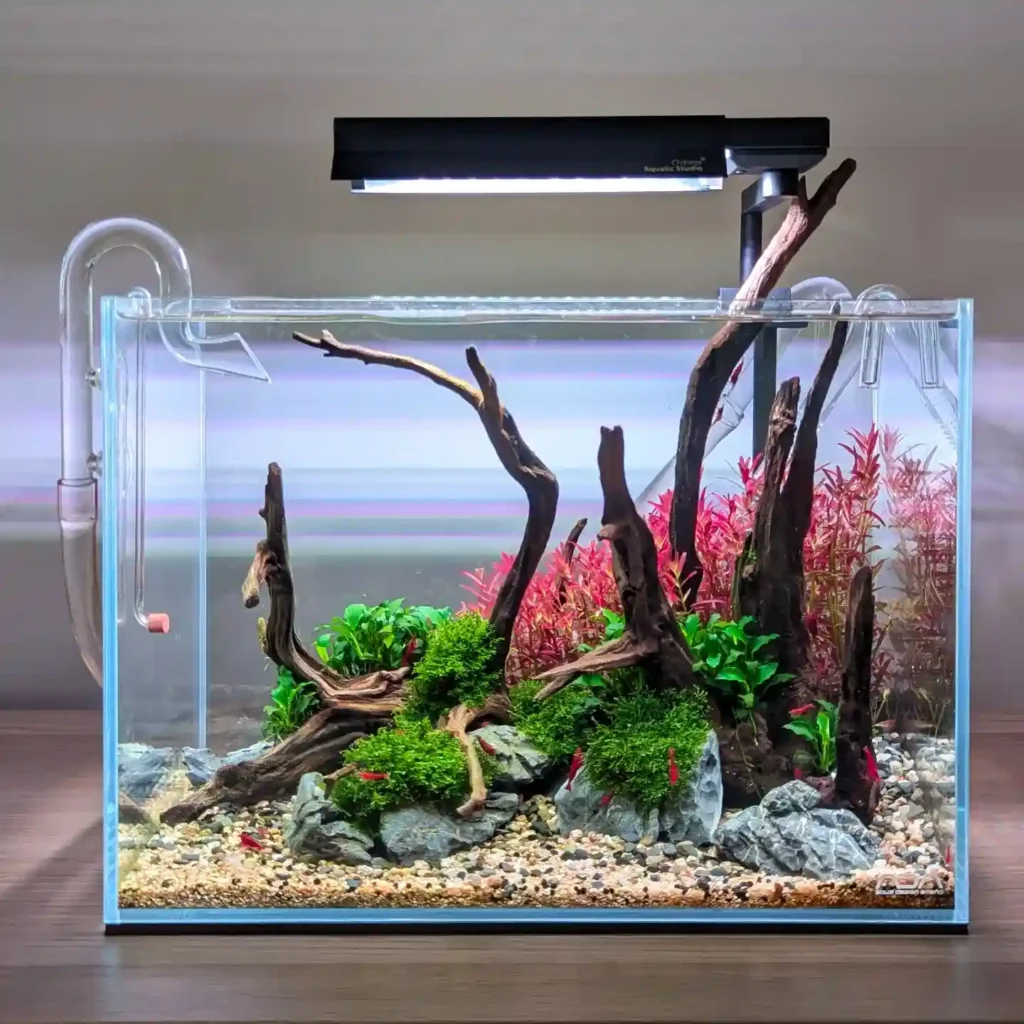
Rotala Plant Profile
| Information | Details |
| Scientific Name | Rotala spp. |
| Common Name | Rotala |
| Origin | Asia |
| Growth Rate | Fast |
| Difficulty | Easy to Moderate |
| Placement | Midground to Background |
| Lighting | Moderate to High |
| CO2 | Recommended |
| Temperature | 68–82°F |
| pH | 5.5–7.5 |
What Is Rotala?
Rotala is a group of aquatic stem plants commonly found in wetlands and shallow waters throughout Asia. Several species are available in the aquarium hobby, but Rotala rotundifolia is by far the most popular.
Unlike carpeting plants that spread across the substrate, Rotala grows vertically toward the surface. When trimmed regularly, it develops dense side shoots and creates colorful bushes that become a focal point in planted aquariums.
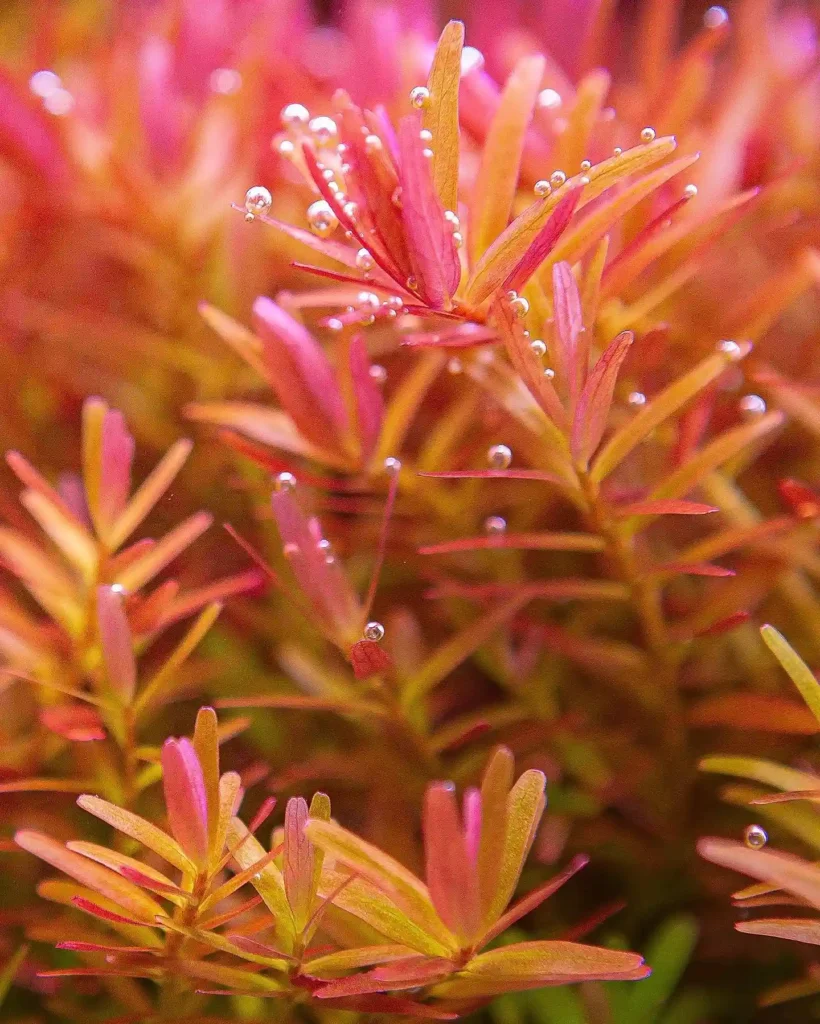
Its ability to change color depending on lighting conditions makes it especially attractive to aquascapers.
Popular Types of Rotala
The term “Rotala” actually includes several different species and varieties.
Rotala Rotundifolia
The most common and beginner-friendly Rotala. Under stronger lighting, the leaves often develop orange or pink tones.
Rotala H’ra
Known for its narrow leaves and intense orange-red coloration.
Rotala Colorata
A colorful variety that can develop bright pink and red hues under ideal conditions.
Rotala Green
A green version of Rotala rotundifolia that remains bright green even under strong lighting.
Rotala Wallichii
A more advanced species with fine needle-like leaves and higher care requirements.
Most beginners should start with Rotala rotundifolia because it is the easiest to grow.
Tank Requirements
Rotala grows well in a wide range of aquarium sizes.
Nano tanks, medium community tanks, and large aquascapes can all support healthy growth.
More important than tank size are stable water conditions and consistent maintenance.
Water Parameters
| Parameter | Recommended Range |
| Temperature | 68–82°F |
| pH | 5.5–7.5 |
| GH | 2–12 dGH |
| KH | 1–8 dKH |
Rotala generally prefers slightly soft water but adapts well to most community aquariums.
Lighting Requirements
Lighting is one of the biggest factors affecting Rotala’s appearance.
Under low light, many Rotala species stay green and grow tall with wider spacing between leaves.
Under stronger lighting, the stems become more compact and colorful.
Low Light
Rotala can survive but may become leggy and less attractive.
Moderate Light
Provides healthy growth and moderate coloration.
High Light
Produces compact growth and stronger red, orange, or pink coloration.
If your goal is vibrant color, moderate to high lighting is usually necessary.
Does Rotala Need CO2?
Rotala can grow without CO2, but it performs much better with it.
Without CO2, growth is slower and coloration is often less impressive.
With CO2 injection, Rotala typically develops:
- Faster growth
- Stronger colors
- Thicker stems
- Denser bushes
- Better overall health
For high-end aquascapes, CO2 is strongly recommended.
Best Substrate for Rotala
Rotala develops roots through the substrate and benefits from nutrient-rich planting media.
Popular choices include:
- Aquasoil
- Plant substrates
- Nutrient-rich aquarium soils
While Rotala can survive in gravel, growth is usually stronger in planted tank substrates.
Root tabs can help if nutrients become depleted.
How to Plant Rotala
Rotala is usually sold as individual stems bundled together.
Before planting, separate the stems and plant them individually rather than as one large clump.
Spacing the stems slightly apart allows light and water circulation to reach the lower portions of the plant.
Plant the stems deeply enough that they remain anchored while new roots develop.
Over time the stems will form dense groups.
Fertilizer Requirements
Fast-growing plants require nutrients.
Rotala responds especially well to regular fertilization.
A complete fertilizer program often includes:
- Nitrogen
- Phosphate
- Potassium
- Iron
- Trace elements
Iron is particularly important for maintaining strong red and orange coloration.
Nutrient deficiencies often appear as pale leaves, slow growth, or weak colors.
Growth Rate
Rotala is considered a fast-growing stem plant.
Under ideal conditions, stems may grow several inches within a few weeks.
This rapid growth makes Rotala useful for:
- Filling empty spaces
- Competing with algae
- Creating dense backgrounds
The downside is that frequent trimming becomes necessary.
How to Trim Rotala
Regular trimming is essential for keeping Rotala attractive.
Without trimming, the lower sections often become shaded and lose leaves.
The simplest method is to cut the tops once they reach the desired height.
New side shoots emerge below the cut, creating a fuller appearance.
Repeated trimming eventually forms dense colorful bushes.
Many Dutch-style aquariums rely heavily on this technique.
How to Propagate Rotala
Propagation is extremely simple.
Whenever you trim the top portion of a healthy stem, the cutting can be replanted into the substrate.
The cutting quickly develops roots and becomes a new plant.
This allows a small group of stems to eventually fill a large area of the aquarium.
Common Rotala Problems
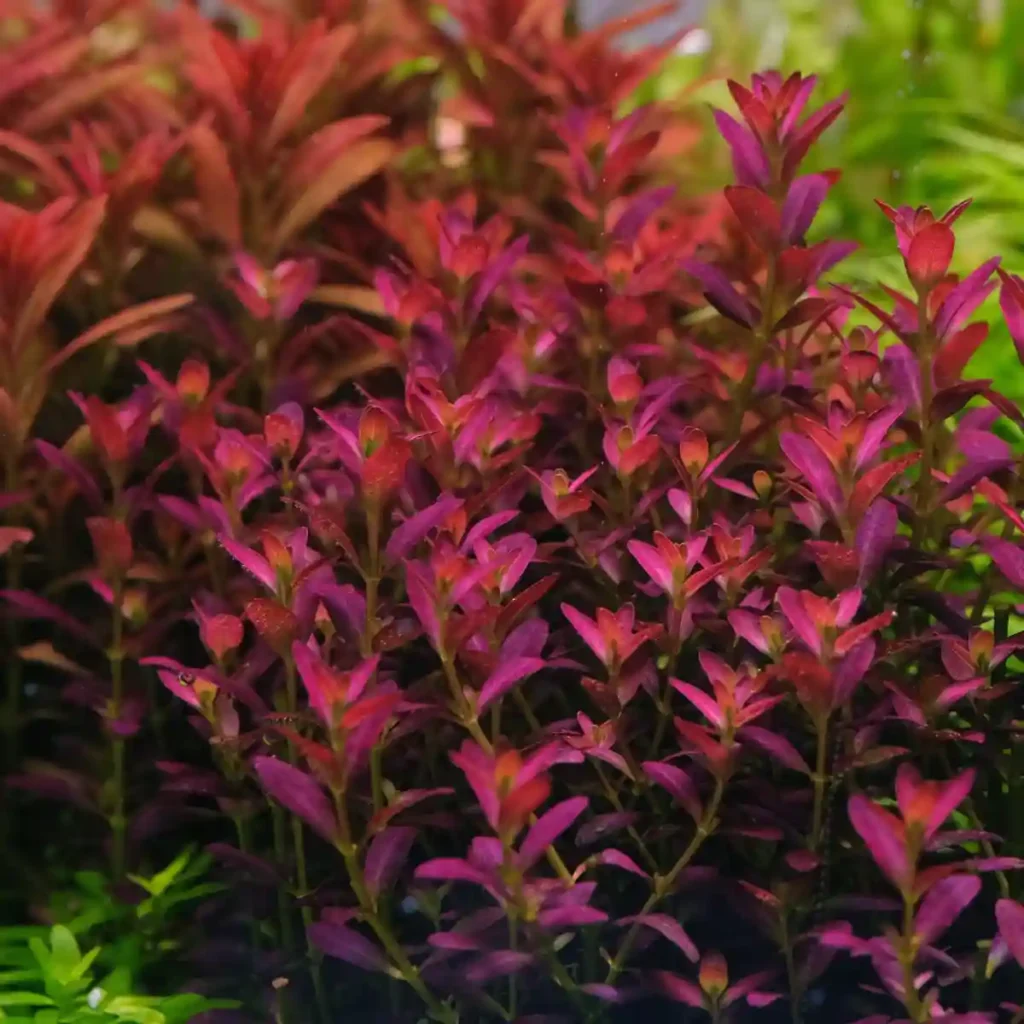
Rotala Turning Green
Many hobbyists expect red coloration immediately.
In most cases, green growth simply indicates insufficient lighting or limited nutrients.
Leggy Growth
Large spaces between leaves usually indicate weak lighting.
Increasing light intensity often produces more compact growth.
Melting After Planting
Some leaf loss is common after introduction to a new aquarium.
Healthy stems usually recover once established.
Lower Leaves Falling Off
This often occurs when dense upper growth blocks light from reaching the bottom portions of the plant.
Regular trimming helps prevent this issue.
Best Tank Mates for Rotala
Rotala is compatible with most peaceful aquarium fish.
Good choices include:
- Guppies
- Neon Tetras
- Ember Tetras
- Rasboras
- Corydoras
- Otocinclus
- Shrimp
Avoid fish that uproot plants or aggressively dig through the substrate.
Rotala in Aquascaping
Rotala is one of the most commonly used background plants in aquascaping.
Its fine leaves and colorful stems create movement and contrast behind rocks, driftwood, and carpeting plants.
It works especially well in:
- Nature aquariums
- Dutch aquascapes
- Jungle layouts
- Community planted tanks
Many award-winning aquascapes use Rotala as their primary background plant.
Is Rotala Good for Beginners?
Yes.
Rotala rotundifolia is one of the best beginner stem plants available.
It grows quickly, propagates easily, and tolerates a range of conditions.
While advanced aquascapers may use stronger lighting and CO2 to maximize color, beginners can still enjoy healthy growth with a simple setup.
Frequently Asked Questions
Does Rotala need CO2?
No, but CO2 significantly improves growth and coloration.
Why is my Rotala green instead of red?
Insufficient lighting or nutrients are usually responsible.
How fast does Rotala grow?
Rotala is a fast-growing plant and may require trimming every few weeks.
Can Rotala grow in gravel?
Yes, but nutrient-rich substrates generally produce better results.
How do you make Rotala bushy?
Regular trimming encourages side shoots and denser growth.
Is Rotala suitable for beginners?
Yes. Rotala rotundifolia is considered one of the easiest stem plants for planted aquariums.
