
Why Is My Aquarium Filter Making Noise? Causes and Easy Fixes

An aquarium filter may become noisy when air enters the system, the impeller gets dirty, the water level drops, or the filter vibrates against the tank. A faint hum and gentle water movement are normal. Grinding, rattling, clicking, or sudden loud buzzing usually means something needs attention.
Unplug the filter before opening it or touching the impeller. Never run a filter motor dry unless its instructions specifically allow it.
Quick Filter Noise Guide
| Sound | Likely cause | First thing to check |
| Rattling | Dirty, loose, or damaged impeller | Clean and reseat the impeller |
| Grinding | Sand, gravel, or debris in the impeller chamber | Unplug and inspect immediately |
| Loud humming | Vibration or struggling motor | Check the lid, media, and tank contact |
| Buzzing | Jammed impeller or electrical problem | Unplug and inspect |
| Gurgling | Air trapped in the filter | Prime the filter and check for air leaks |
| Splashing | Low aquarium water level | Raise the water near the outlet |
| Clicking | Impeller striking debris or a worn shaft | Clean and inspect the impeller assembly |
| Slurping | Intake pulling in air | Raise the water or reposition the intake |
| Whistling | Restricted flow or partially closed valve | Check hoses, valves, and clogged media |
| Noise after cleaning | Incorrect reassembly or trapped air | Refit the parts and prime the filter |
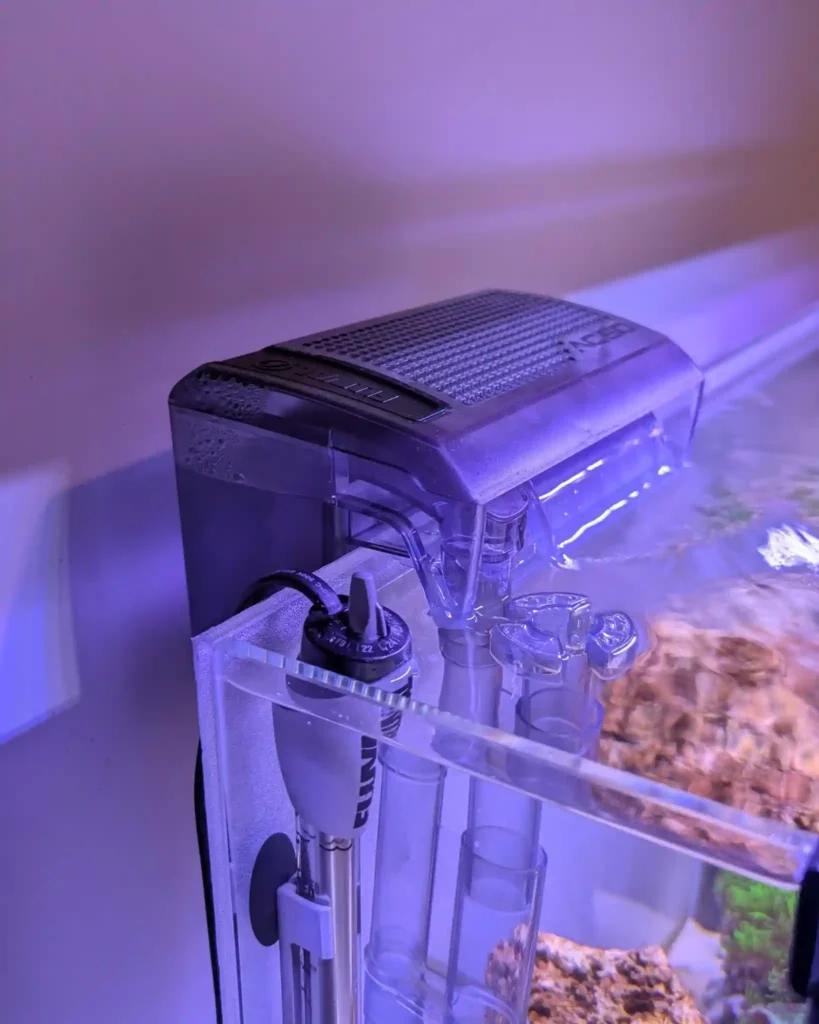
Is Aquarium Filter Noise Normal?
No aquarium filter is completely silent. The motor, impeller, moving water, and air entering the aquarium can all produce some sound.
Normal filter sounds include:
- A low, steady hum
- Gentle water movement
- A quiet trickling sound from a hang-on-back filter
- Soft bubbles when a venturi or spray bar adds air
The sound should remain steady and quiet enough to fade into the background. A new rattle, grind, click, or strong vibration is not something to ignore.
Pay more attention when the noise is accompanied by weak flow, repeated stopping, overheating, a burning smell, or fish gasping at the surface.
Why Aquarium Filters Become Noisy
Most filter noise comes from one of four areas:
- The impeller and motor
- Air trapped inside the filter
- Water falling from the outlet
- Vibration passing into the aquarium, cabinet, or wall
Finding the type of sound is faster than taking the entire filter apart without a plan.
Rattling From the Filter
A rattling noise often comes from the impeller. This small magnetic rotor spins inside the motor housing and moves water through the filter.
Waste can collect around the impeller and prevent it from spinning evenly. A loose cover, worn shaft, or damaged impeller can produce the same sound.
Clean the Impeller
Unplug the filter and remove it from the tank if necessary. Open the impeller chamber according to the manufacturer’s instructions.
Remove:
- Slime
- Plant pieces
- Hair algae
- Snail shells
- Sand
- Gravel dust
- Pieces of filter floss
Clean the chamber with a small filter brush or cotton swab. Rinse reusable parts with removed aquarium water or conditioned water.
Avoid forcing the impeller out with a metal tool. Ceramic shafts can snap, and small rubber end caps are easy to lose.
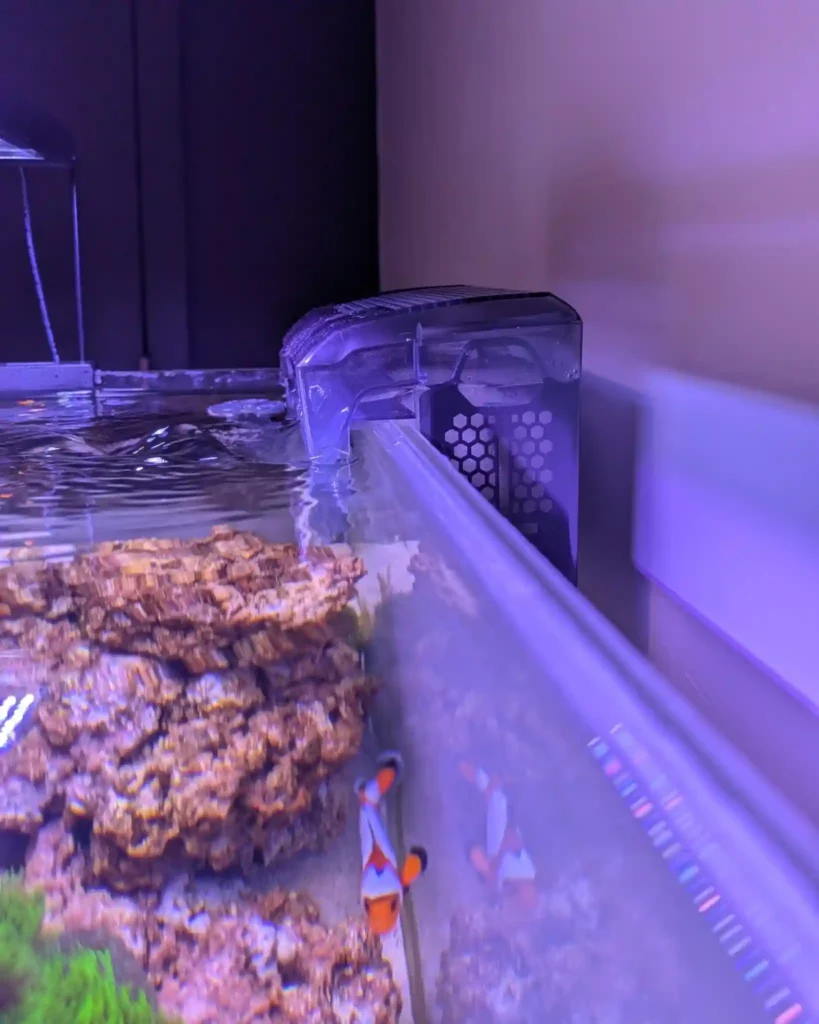
Check How the Impeller Sits
The impeller should sit straight on its shaft and move without scraping the chamber walls. Check that its rubber bushings, caps, and cover are fitted correctly.
A slightly misplaced impeller cover can cause a surprisingly loud rattle.
If the magnet is swollen, the blades are broken, or the shaft is bent, cleaning will not solve the problem. Replace the damaged part with one made for the exact filter model.
Grinding or Harsh Scraping
A grinding sound needs quick attention. It often means the impeller is spinning against sand, gravel, or another hard object.
Fine sand can enter through a low intake, especially when bottom-dwelling fish disturb the substrate. It can scratch the impeller well and wear down the shaft.
Unplug the filter rather than letting it “work the debris out.” Continued grinding can damage the motor assembly.
After cleaning it, check the intake position. Raise it farther above the substrate or fit a coarse pre-filter sponge if sand keeps entering.
A pre-filter sponge also protects small fish and shrimp, though it must be rinsed regularly so it does not restrict the flow.
Loud Humming or Vibration
A humming motor may be working normally, but the aquarium can amplify the sound. Glass, lids, hoses, cabinets, and nearby walls all carry vibration.
Place a finger lightly on different parts of the filter while it is running. If the sound changes, you have probably found the vibrating part.
Common sources include:
- A loose filter lid
- Media touching the cover
- A hang-on-back filter pressed against the tank
- A power cord vibrating against the glass
- A canister filter touching the cabinet wall
- Hard tubing resting against furniture
- An uneven motor head
- Loose clips or suction cups
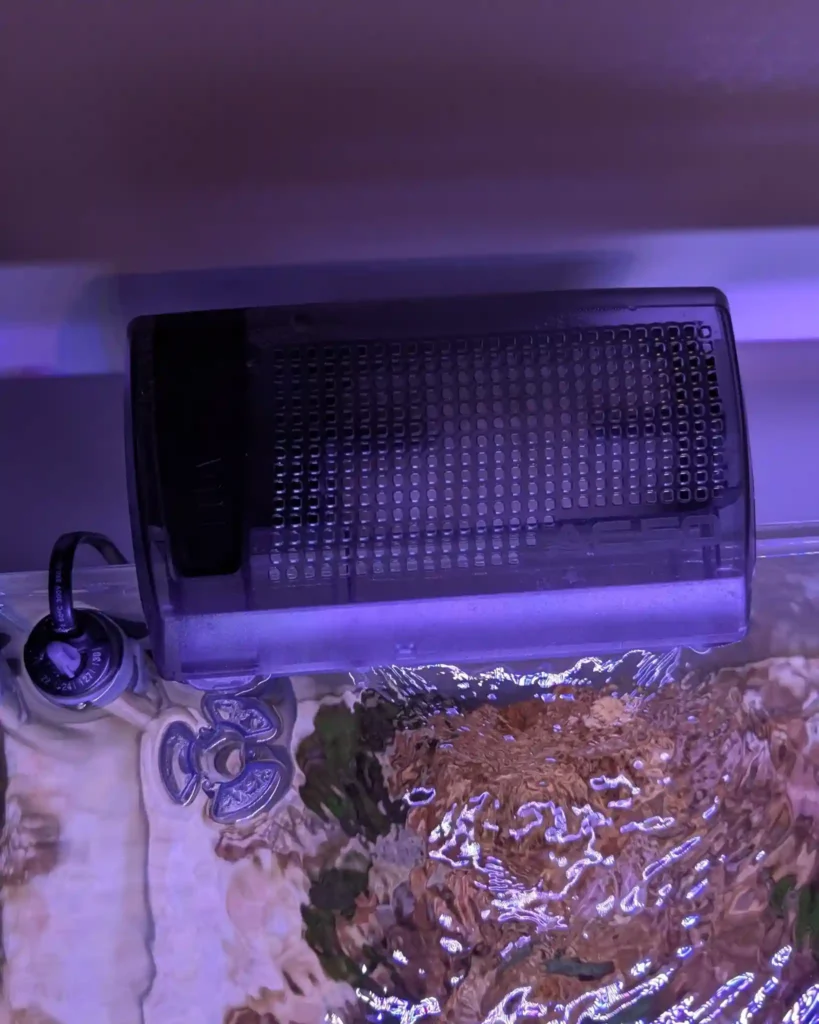
Stop the Filter From Touching Hard Surfaces
Move the filter, cord, or hose slightly so it no longer taps against the glass or cabinet.
A thin rubber pad beneath an external canister filter may reduce transmitted vibration. Keep the filter upright and do not block its ventilation or place it on unstable foam.
For a hang-on-back filter, use its adjustment foot or leveling control if it has one. The filter should sit straight rather than leaning heavily against the glass.
Do not wedge cloth around an electrical motor. Fabric can hold moisture and interfere with cooling.
Gurgling From a Canister Filter
Canister filters often gurgle when air becomes trapped inside the housing. You may also see bursts of tiny bubbles leaving the outlet.
Air can enter because:
- The filter was recently cleaned
- It was not completely primed
- An intake connection is loose
- A hose seal is leaking
- The intake sits too close to the surface
- The tank’s water level is low
- A cracked hose is drawing in air
- The flow is creating a vortex near the intake
- An air stone is positioned beneath the intake
Check the intake side first. A connection can draw air without leaking water outward.
Fill or prime the canister according to its instructions. Make sure the hoses contain water and the valves are fully open.
Some models release trapped air when gently tilted from side to side while running. Do this carefully, keep the canister upright overall, and follow the manufacturer’s instructions. Never shake a full canister aggressively.
If bubbles return after the trapped air has been released, inspect the hose connections, O-ring, priming mechanism, and intake assembly.
Splashing From a Hang-on-Back Filter
A hang-on-back filter returns water over the aquarium’s edge. When the water level drops, the return has farther to fall and becomes louder.
Evaporation is usually the reason. Raise the aquarium water until it sits near the bottom of the filter’s return lip, while staying within the tank and filter manufacturer’s limits.
Topping off evaporated water quiets the filter but does not replace a water change. Evaporation leaves nitrate and dissolved minerals behind.
You should still follow a regular maintenance schedule. If nitrate has been building up, use our guide to lower nitrate in a fish tank rather than relying on top-offs alone.
Check Whether the Filter Is Level
A tilted filter may send most of the water over one side, producing uneven splashing. Make sure it sits level and that the intake tube is assembled correctly.
A dirty return lip can also send water in several directions. Wipe away algae and mineral buildup with an aquarium-safe cleaning method.
Slurping or Sucking Sounds
A filter makes slurping sounds when the intake pulls air along with water.
This often happens when:
- The water level is too low
- The intake is partly exposed
- A surface skimmer is adjusted incorrectly
- Floating plants block the intake
- Debris restricts the intake and creates a vortex
Restore the correct water level and clear the intake. If the filter has a surface-skimming attachment, adjust it so it floats correctly without gulping air.
A small whirlpool above the intake is another clue. Lower the intake slightly or reduce the flow if the model allows safe adjustment.
Clicking From the Motor
Repeated clicking may mean the impeller is starting and stopping. It can also happen when a damaged blade strikes the housing.
Turn off the filter and inspect:
- The impeller blades
- The ceramic or metal shaft
- Rubber end caps
- The impeller cover
- The magnet
- The inside of the impeller well
A filter may click briefly when it starts because the magnetic impeller changes direction before settling. Clicking that continues is not normal.
Low voltage, a failing motor, or an electrical fault may also cause irregular operation. Stop using the filter if the sound is accompanied by overheating, a burning smell, sparking, or a damaged cable.
Buzzing but No Water Flow
A filter that buzzes without moving water often has a jammed impeller or has lost its prime.
Switch it off promptly. A stalled motor may heat up when left powered.
For a hang-on-back filter:
- Unplug it.
- Fill the filter box with aquarium water.
- Check that the intake tube is connected.
- Clean the impeller.
- Reassemble it.
- Fill the box again.
- Plug it in and watch for flow.
For a canister filter, check that its valves are open, the hoses are not kinked, and the unit has been primed correctly.
For an internal filter, confirm that it is submerged to the level stated in the manual. Some internal filters become noisy or stop pumping when the water level falls below their motor housing.
Noise Caused by Clogged Filter Media
Dirty media restricts water movement. The pump then struggles to pull water through the filter, which can cause humming, surging, whistling, or irregular flow.
Inspect the mechanical media first. Fine pads and filter floss clog faster than ceramic rings or coarse sponges.
Rinse a reusable sponge gently in a bucket of aquarium water removed during a water change. Replace disposable floss when it can no longer be cleaned.
Do not replace all biological media merely because it looks brown. Much of the aquarium’s useful bacterial population lives on that media.
Removing all of it can lead to ammonia or nitrite problems. Our nitrogen cycle guide explains why those bacterial colonies need to remain in the filter.
Noise After Cleaning the Filter
A filter may become louder immediately after maintenance even when nothing is broken.
The usual reasons are:
- Air remains in the housing
- The impeller was fitted incorrectly
- A rubber cap was lost
- The lid is not seated properly
- Media was packed too tightly
- A hose was kinked during reassembly
- A valve was left partly closed
- The filter was not primed
Do not assume the filter needs time to “wear in” if it is grinding or rattling. Unplug it and check your work.
Compare the parts with the filter manual. Impeller shafts, small seals, spacers, and rubber bushings can be easy to overlook.
Noise From Low Water Flow
Low flow and filter noise often occur together. The cause may be anywhere along the water path.
Check these areas in order:
- Intake screen
- Pre-filter sponge
- Intake tube
- Impeller chamber
- Mechanical media
- Canister baskets
- Hoses
- Valves
- Outlet or spray bar
A hose can appear open while algae and waste narrow the inside. Use a proper hose brush to clean it.
Make sure media baskets sit in the correct order. Overpacked filter floss can stop water from passing freely.
If the filter remains weak after cleaning, the impeller may be worn or the motor may be failing.
Air Bubbles Can Make the Filter Noisy
Air from an air stone or protein skimmer can enter the filter intake. The filter may then release bursts of bubbles and make a crackling or gurgling sound.
Move the air stone away from the intake. The bubbles should rise to the surface instead of being pulled into the filter.
In a planted aquarium with injected CO₂, avoid placing the intake where it repeatedly draws in a large pocket of gas. Fine bubbles may be intentional in some setups, but a filter should not lose its prime.
Filter Noise After a Water Change
Noise following a water change usually comes from a lower water level or air entering the filter.
Before restarting the equipment:
- Refill the aquarium to its normal level
- Confirm that the intake is submerged
- Fill a hang-on-back filter box if required
- Prime a canister filter
- Open all valves
- Check that hoses were not moved or kinked
- Make sure the impeller cover is secure
Always treat new tap water before it enters the aquarium. The tap-water dechlorination guide covers conditioner dosing and what to do if untreated water enters the tank.
Noise From Different Filter Types
Hang-on-Back Filters
The most common sounds are splashing, humming, rattling, and intake slurping.
Check the water level first. Then clean the impeller, level the filter, and make sure the lid and intake tube fit properly.
If the lid vibrates, reseat it rather than placing a heavy object on top. Extra weight can damage the housing or fall into the aquarium.
Canister Filters
Gurgling and intermittent bubble bursts usually point to trapped air or an intake leak. Humming may be amplified by the cabinet.
Inspect hose connections, the main O-ring, valves, impeller, and priming system. Keep the canister below the aquarium if the model requires gravity-assisted intake.
Never open a canister while it is running or pressurized. Unplug it and close the valves according to its instructions.
Internal Filters
Internal filters may rattle against the glass when their suction cups become hard, loose, or dirty. Remove algae from the glass and clean or replace worn suction cups.
Keep the filter submerged to the required depth. A low water level can expose the motor or cause it to draw air.
Sponge Filters
Sponge filters do not contain a motor unless they use a separate powerhead. Most of their noise comes from the air pump, bubbles, or airline vibration.
Place the air pump on a level surface outside the aquarium. A rubber mat can reduce vibration. Do not cover the pump because it needs airflow for cooling.
A worn diaphragm may make an older air pump much louder. Replacement diaphragm kits are available for some models.
A control valve can reduce excessive airflow, but never restrict the air pump so severely that it overheats. A bleed valve or gang valve is often a safer way to release extra air.
Undergravel Filters
These filters may produce bubbling, humming, or air-pump vibration. Check the uplift tube, air stone, airline, and pump.
If a powerhead runs the undergravel plate, grinding can mean debris has entered its impeller.
How to Quiet a Noisy Aquarium Filter
Use this order so you do not miss a simple cause.
1. Check the Water Level
Bring the tank back to its normal level. This often fixes splashing and slurping within seconds.
2. Look at the Water Flow
Weak, pulsing, or irregular flow suggests a blockage, trapped air, or impeller problem.
3. Disconnect the Power
Unplug the filter before opening the motor housing or removing parts.
4. Clear the Intake
Remove plant leaves, algae, waste, and debris from the intake screen and pre-filter sponge.
5. Clean the Impeller
Remove buildup from the blades, magnet, shaft, and chamber. Reassemble every small part in its original position.
6. Rinse Clogged Mechanical Media
Use removed aquarium water for reusable media. Do not replace all biological media at once.
7. Prime the Filter
Fill the filter and hoses as required by the model. Release trapped air from a canister carefully.
8. Stop External Vibration
Move cords, hoses, lids, and the filter body away from hard surfaces that amplify the motor sound.
9. Replace Worn Parts
A damaged impeller, shaft, O-ring, suction cup, or motor cannot always be repaired through cleaning.
Should You Use Petroleum Jelly on the Impeller?
Do not apply ordinary petroleum jelly, cooking oil, soap, or household lubricant to filter parts.
Some manufacturers allow a small amount of aquarium-safe silicone lubricant on O-rings. Use only a product intended for aquarium equipment and only where the manual permits it.
Impeller shafts are generally lubricated by water and should not need household oil.
Can a Noisy Filter Harm Fish?
The sound itself is unlikely to damage most fish, though constant vibration may disturb species that are sensitive to movement.
The underlying fault is the bigger concern. A noisy filter may have:
- Reduced flow
- Poor oxygen exchange
- A blocked intake
- A failing motor
- Interrupted biological filtration
- An electrical fault
Fish breathing rapidly or gathering near the surface may not be reacting to the noise. They may be responding to low oxygen, ammonia, nitrite, or lost water circulation.
Test ammonia and nitrite if the filter stopped for a long period or flow has been weak. Both should read 0 ppm in a stocked, cycled aquarium.
How Long Can Fish Manage Without a Filter?
There is no single safe time. Risk depends on stocking, temperature, surface movement, tank size, and how long the biological media remains wet and oxygenated.
If the filter cannot be restarted:
- Add an air stone or create surface movement
- Keep the filter media wet in aquarium water
- Feed lightly
- Test ammonia and nitrite
- Complete treated partial water changes when readings rise
- Repair or replace the filter promptly
Do not allow biological media to dry. If possible, place it in a temporary filter or in an area with oxygenated aquarium water.
Do not feed heavily while filtration is unavailable. Less food means less waste for the tank to process.
When to Replace the Filter
Do not replace an entire filter solely because it makes a small amount of noise. Impellers, shafts, seals, and suction cups can often be replaced separately.
A full replacement may be sensible when:
- The motor repeatedly stops
- The housing is cracked
- The cable is damaged
- The motor overheats
- Replacement parts are unavailable
- The filter leaks after its seals are replaced
- The cost of repair is close to a suitable new unit
When installing a new filter, move the mature biological media into it or run both filters together for several weeks. This helps preserve the bacterial population.
Do not throw away all established media on the day the new filter is installed.
Electrical Warning Signs
Unplug the filter immediately if you notice:
- A burning or melted-plastic smell
- Smoke
- Sparking
- A damaged power cable
- Water inside a part that should remain dry
- A plug or adapter becoming unusually hot
- A tingling sensation when touching the aquarium water
Do not put your hands back into the water until the power is disconnected.
Aquarium equipment should use a properly installed ground-fault circuit interrupter, commonly called a GFCI or RCD. Make a drip loop in every power cable so water cannot run directly into the socket.
A filter with a damaged sealed electrical unit should be replaced, not opened for a home repair.
Preventing Filter Noise
Check the intake during each water change and rinse the pre-filter sponge before it becomes completely blocked.
The impeller does not need to be cleaned every few days, but it should be inspected when flow decreases or the sound changes. Filters in tanks with sand, heavy plant growth, or snails may need more frequent attention.
Keep the aquarium filled to its normal level and avoid packing fine media too tightly. Make sure cables and hoses do not rest against resonant surfaces.
A suitable filter also matters. A unit that is too small may run continuously at its limit, while an oversized filter can create excessive water noise and current. When planning a new aquarium, the freshwater aquarium setup guide can help you arrange the main equipment.
Frequently Asked Questions
Why is my aquarium filter suddenly so loud?
A sudden change usually points to a low water level, trapped air, a clogged intake, dirty impeller, loose lid, or debris inside the motor chamber. Check the water level and flow, then unplug the filter and inspect the impeller.
Why does my filter make noise but not pump water?
The impeller may be jammed, the intake may be blocked, or the filter may have lost its prime. Unplug it promptly, clean the impeller and intake, then refill or prime it according to its instructions.
Why is my filter rattling after I cleaned it?
The impeller, shaft, rubber end cap, or cover may not be seated correctly. Media could also be touching the lid. Unplug the unit and compare the assembly with the manufacturer’s diagram.
Why is my hang-on-back filter making a waterfall sound?
The aquarium water is probably too low beneath the return. Top off the tank to its normal level and check that the filter sits level.
Why does my canister filter keep gurgling?
Air is entering or remaining inside the canister. Prime it, check the intake connections, inspect the O-ring, and keep air stones away from the intake. Recurring bubbles often point to an intake-side air leak.
Can sand damage an aquarium filter?
Yes. Sand can enter the impeller chamber and scratch the shaft, magnet, or housing. Raise the intake above the substrate and add a pre-filter sponge when fish regularly stir up sand.
Is it safe to turn off a noisy filter at night?
No. A filter should normally run continuously. Switching it off reduces circulation and oxygen reaching the bacteria inside it. Find the cause of the noise instead.
Can I put a towel under my aquarium filter?
A thin rubber vibration pad can be used beneath some external filters, but towels can absorb leaks and may block ventilation. Never place fabric around a motor or electrical connection.
How often should I clean the impeller?
Inspect it when flow weakens, noise increases, or maintenance instructions recommend it. Many filters benefit from impeller cleaning every one to three months, but tanks with sand, snails, or heavy waste may need it sooner.
Why does the filter get noisy when the tank water evaporates?
The return has farther to fall, and the intake may begin drawing air. Restore the usual water level with suitable water. Remember that top-offs do not remove nitrate or other dissolved waste.
Will a filter become quieter after breaking in?
A new filter may quiet down slightly after trapped air escapes and the impeller develops a thin biofilm. Grinding, strong rattling, repeated clicking, and overheating should be checked immediately rather than dismissed as break-in noise.
Do aquarium filters wear out?
Yes. Impellers, shafts, seals, diaphragms, and motors wear with use. Many noises can be fixed by cleaning or replacing one part, but an unsafe or failing sealed motor requires replacement.
Suggested URL:
https://oceanbitez.com/why-is-my-aquarium-filter-making-noise/
SEO title:
Why Is My Aquarium Filter Making Noise? Easy Fixes
Meta description:
Find out why your aquarium filter is rattling, buzzing, humming, grinding, or gurgling and learn how to quiet it without harming the filter bacteria.
Primary keyword:
why is my aquarium filter making noise
Secondary keywords:
noisy aquarium filter, fish tank filter making noise, aquarium filter rattling, fish tank filter buzzing, canister filter gurgling, how to quiet an aquarium filter
