
Why Is My Fish Hiding? 10 Common Reasons and What to Do

Your fish may be hiding because it is new, frightened, resting, avoiding an aggressive tank mate, or following its natural behavior. Constant hiding can also warn you about poor water quality, unsuitable temperature, low oxygen, or illness.
Start by testing the water and watching how the other fish behave. If the hidden fish still eats, breathes normally, and comes out during quieter hours, there may be no emergency. If it suddenly disappears, stops eating, gasps, or looks injured, investigate right away.
Is It Normal for Fish to Hide?
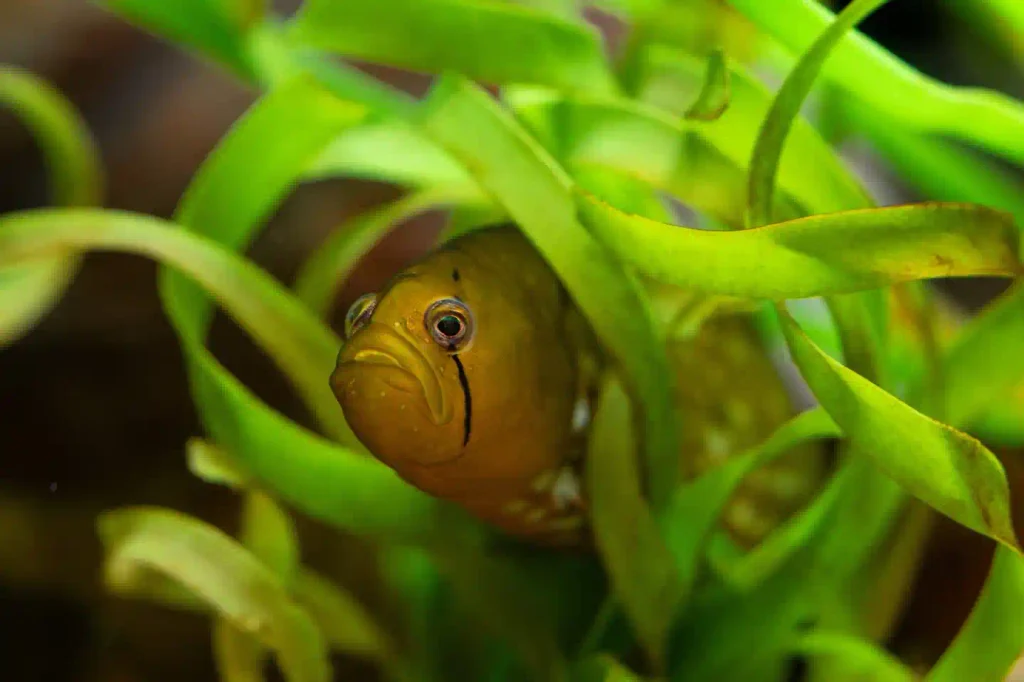
Yes, hiding is normal for many fish. Caves, plants, wood, and shaded areas give fish a place to sleep, escape bright light, avoid conflict, or rest after feeding.
Some species naturally spend much of the day out of sight. Kuhli loaches, many plecos, catfish, firefish, gobies, and other shy or nocturnal fish may become active after the aquarium lights turn off.
The key question is whether hiding is normal for that fish or a sudden change.
A fish that has always rested beneath a piece of wood may be fine. A normally active fish that suddenly wedges itself behind the filter needs closer attention.
What Should I Check First?
Before moving decorations or trying to catch the fish, check these areas:
- Test ammonia, nitrite, nitrate, pH, and temperature.
- Watch for fast breathing or surface gasping.
- Confirm that the filter and heater are working.
- Observe the tank for chasing or fin nipping.
- Check whether the fish comes out to eat.
- Look for spots, sores, swelling, torn fins, or weight loss.
- Compare its behavior during the day and after dark.
- Make sure the aquarium has suitable shelter.
- Count every fish and check around the tank for jumpers.
This first check can tell you whether the fish wants privacy or is trying to escape a problem.
Quick Hiding Behavior Guide
| What you notice | Possible cause | What to check |
| New fish hides but looks healthy | Relocation stress | Water, lighting and tank mates |
| Fish hides only during the day | Nocturnal behavior | Species’ natural schedule |
| All fish suddenly hide | Water, temperature or outside disturbance | Full water test and equipment |
| One fish hides during feeding | Bullying or competition | Tank-mate behavior |
| Fish hides and breathes rapidly | Water trouble, low oxygen or illness | Ammonia, nitrite and aeration |
| Fish stays near the heater | Water may be too cold | Heater and thermometer |
| Fish stays near the filter outlet | Low oxygen or preferred current | Surface movement and breathing |
| Fish hides after a water change | Sudden change or maintenance stress | Temperature, pH and conditioner |
| Fish hides and has torn fins | Aggression | Compatibility and territories |
| Fish guards one cave | Breeding or territorial behavior | Eggs, mate and tank mates |
1. Your Fish Is New and Feels Unsafe
A new aquarium may look peaceful to you, but the fish has entered an unfamiliar space filled with new smells, shadows, sounds, and tank mates.
Transport adds even more stress. The fish may have been caught, bagged, driven home, acclimated, and released within a few hours. Hiding is one way it protects itself while learning the new environment.
Some fish explore within hours. Shy species may take several days or longer to become comfortable.
Help a new fish settle
- Dim the aquarium lights.
- Keep the room quiet.
- Provide suitable plants, caves, or wood.
- Avoid tapping the glass.
- Don’t keep rearranging decorations.
- Offer a small amount of familiar food.
- Watch from a distance.
Ask the seller what food the fish ate and whether it was kept alone or in a group. Familiar food and a suitable social setup can make the transition easier.
Don’t add more fish immediately. First confirm that the new arrival is healthy and that the filter can handle the added waste.
Read also: How to Lower Ammonia in a Fish Tank: Emergency Steps That Work
2. Hiding Is Natural for That Species
Not every fish is meant to swim in open water all day. Some live near rocks, roots, plants, reefs, or the bottom, where staying hidden helps them avoid predators.
Common aquarium fish that may hide regularly include:
- Kuhli loaches
- Plecos
- Many catfish
- Clown loaches
- Firefish
- Gobies
- Royal grammas
- Some cichlids
- Eels
- Nocturnal reef fish
Research the species rather than comparing it with the most active fish in the tank.
A pleco resting under wood during the day may be behaving normally. A schooling tetra hiding alone behind the heater is more concerning because it has separated from its group.
3. The Aquarium Is Too Bright
Bright lighting can make shy fish feel exposed, especially when the tank has few plants or shaded areas.
The light may also turn on suddenly while the room is still dark. This quick change can startle fish and send them toward the nearest shelter.
Make the lighting feel safer
- Use a timer to create a regular schedule.
- Let room light come on before the aquarium light.
- Add floating plants if they suit the setup.
- Provide taller plants and shaded areas.
- Avoid leaving the aquarium light on all day and night.
- Choose an intensity that fits the fish as well as the plants.
Fish need a clear period of darkness for rest. Leaving blue or “moonlight” LEDs on throughout the night may still interrupt that dark period.
If the fish becomes more active as soon as the light turns off, excessive brightness or a lack of shaded cover may be part of the problem.
Read also: How to Dechlorinate Tap Water for Fish
4. Another Fish Is Bullying It
An aggressive fish may chase, nip, corner, or block a weaker tank mate from food. The victim often responds by staying behind the filter, inside a cave, or near the surface.
You may not see the aggression during a quick glance. Some fish become territorial around feeding time, after the lights turn on, or when they are breeding.
Signs of bullying
- Torn or frayed fins
- Missing scales
- A fish separated from its group
- Rapid dashes into hiding
- One fish guarding a large area
- A hidden fish that won’t approach food
- Repeated chasing
- Faded color or clamped fins
Watch the aquarium quietly for at least 10–15 minutes. Pay special attention during feeding.
What to do
Rearranging decorations can break up established territories. Adding visual barriers, plants, or more than one cave may also help.
Check whether the species are compatible and whether the tank is large enough. Some aggression comes from placing territorial species in a small space, while other aggression appears when schooling fish are kept in an unsuitable group.
Separate the aggressor or injured fish when necessary. Use a heated, filtered, cycled setup rather than an uncycled bowl or container.
5. The School or Shoal Is Too Small
Many tetras, rasboras, danios, barbs, corydoras, and other social fish feel safer with members of their own species.
When kept alone or in a tiny group, they may become nervous, hide frequently, or act aggressively. Seeing companions helps them feel that the open area is safe.
This doesn’t mean you should immediately buy more fish. First check:
- The recommended group size
- The aquarium’s dimensions
- Adult fish size
- Filtration capacity
- Compatibility
- Current water quality
Adding six more fish to an already crowded aquarium will create a different problem. If the tank can’t hold a proper group, upgrading or rehoming may be safer.
6. The Tank Doesn’t Have Enough Cover
It sounds backward, but fish often come out more when they have good hiding places.
A bare tank leaves a shy fish feeling exposed. With no safe retreat nearby, it may remain pressed behind the heater or filter instead of swimming into open water.
Create cover using materials suited to the species:
- Live or artificial plants
- Smooth caves
- Driftwood
- Rock formations
- Floating plants
- Leaf litter for appropriate freshwater setups
- Reef-safe structures in marine tanks
Check every opening before adding a decoration. Fish can become trapped in narrow holes or inside hollow ornaments.
Spread shelters around the aquarium so one territorial fish can’t guard them all. Arrange them to block long lines of sight rather than placing every cave in one corner.
7. Poor Water Quality Is Making the Fish Uncomfortable
Sudden hiding may be one of the first signs that something has changed in the water.
Ammonia, nitrite, chlorine, extreme nitrate, unstable pH, or a sudden temperature shift can stress fish. A clear-looking aquarium can still have unsafe chemistry.
Test:
- Ammonia
- Nitrite
- Nitrate
- pH
- Temperature
- Salinity in marine or brackish tanks
Ammonia and nitrite should read 0 ppm in an established aquarium. High ammonia and low dissolved oxygen are two water problems most likely to kill fish directly, according to the Merck Veterinary Manual.
If ammonia or nitrite is present
Perform a conditioned partial water change, remove decaying waste, increase aeration, and confirm that the filter is working. Retest the water after it circulates.
Don’t replace all filter media. Much of the bacterial colony that processes ammonia and nitrite lives on that media.
Also avoid correcting pH or temperature too quickly. A fast swing can place additional stress on a fish that is already struggling.
8. The Water Temperature Is Unsuitable
A tropical fish kept too cold may become sluggish and remain near the heater. Water that is too warm can lower available oxygen and push fish toward areas with stronger flow.
Use a separate thermometer. Heater settings and displays aren’t always accurate.
Check for:
- Daily temperature swings
- A heater that no longer turns on
- A heater that remains on constantly
- An aquarium near a cold window
- Direct afternoon sunlight
- Heat from nearby equipment
- A tank too small to hold a stable temperature
Correct the temperature gradually. Pouring hot or cold water into the tank can shock the fish.
Choose the temperature for the species you keep rather than using one universal “tropical” setting. Fish from the same shop aisle may have different needs.
9. Oxygen Is Low
Fish may gather near the filter outlet, air stone, or surface when dissolved oxygen is low. Some fish hide near these areas because that is where moving water brings relief.
Warning signs include:
- Fast gill movement
- Surface gasping
- Fish crowding near the filter return
- Unusual lethargy
- Several fish changing behavior at once
- Snails moving toward the waterline
Increase surface movement, check the filter flow, and add an air stone when needed. Remove decaying material and test ammonia and nitrite as well.
Warm water, overcrowding, bacterial blooms, power cuts, dirty filters, and heavy organic waste can all reduce available oxygen.
Surface gasping is not ordinary hiding. Treat it as an urgent water-quality or breathing problem.
10. The Fish May Be Sick or Injured
Sick fish often separate from the group and seek a quiet, protected area. Hiding alone doesn’t identify a disease, but the other symptoms can tell you when professional help is needed.
Look for:
- Loss of appetite
- Fast or labored breathing
- White spots
- Fuzzy growth
- Open sores
- Red areas
- Cloudy or swollen eyes
- A bloated or sunken belly
- Raised scales
- Torn fins
- Weight loss
- Scratching against objects
- Trouble swimming
- Long or unusual feces
Don’t add random medication based only on hiding. Poor water, parasites, bacterial infections, injuries, and social stress can look similar at first.
A fish veterinarian recommends checking water quality before attempting to treat a sick fish because poor water is a common source of health trouble. See this aquatic veterinarian’s sick-fish checklist.
If the water is safe but the fish continues declining, contact an aquatic veterinarian for diagnosis.
11. The Fish Is Resting or Sleeping
Fish don’t close their eyes because most species don’t have eyelids. They may rest by remaining still among plants, under wood, inside a cave, or near the bottom.
A sleeping fish may:
- Become less active
- Lower its fins
- Fade slightly in color
- Stay in the same location
- Ignore mild activity outside the tank
- Return to normal after the lights come on
Keep a regular light and dark schedule. Sudden light during the night can frighten resting fish.
Before assuming something is wrong, check the behavior again during the fish’s usual active period.
12. Breeding or Egg Guarding Has Changed Its Behavior
Breeding fish may choose a cave, plant, rock, or corner and remain close to it. Some species guard eggs or fry, while others hide when carrying eggs or preparing to spawn.
You may notice:
- One fish cleaning a flat surface
- A pair guarding a cave
- Increased territorial behavior
- A fish refusing to leave one area
- Eggs attached to glass, plants, or décor
- Tiny fry hiding near cover
Research the breeding behavior of that species before disturbing the area.
Parents can become aggressive during this time. Other fish may also eat the eggs or fry, so the correct response depends on the species and your breeding plans.
Why Is My Fish Hiding After a Water Change?
A fish may hide after maintenance because the siphon, moving decorations, and hands inside the tank frightened it. The behavior should ease once the aquarium becomes quiet.
Persistent hiding can point to a problem with the new water. Check whether:
- The new water was conditioned.
- The temperature matched the tank.
- The pH changed sharply.
- Chlorine or chloramine was treated.
- Too much water was changed in a neglected tank.
- The filter was cleaned too aggressively.
- Salt or another additive was dosed incorrectly.
Test the water if the fish breathes rapidly, loses balance, clamps its fins, or fails to recover.
Why Is My Fish Hiding Behind the Filter?
The space behind a filter is dark, narrow, and protected. A new or shy fish may use it as a substitute cave.
It may also hide there because:
- The tank lacks better shelter.
- A bully can’t reach it.
- Flow is stronger nearby.
- Oxygen is low elsewhere.
- The heater is close.
- It is sick and withdrawing.
Cover the filter intake with a suitable pre-filter sponge if a small fish could be pulled against it. Make sure the fish can’t become trapped between the equipment and glass.
Add safer shelter elsewhere and watch whether it chooses the new location.
Why Are All My Fish Hiding Suddenly?
When the whole tank changes behavior at once, look for a shared cause.
Test the water and inspect the equipment immediately. Possible reasons include:
- Ammonia or nitrite
- Sudden temperature change
- Heater failure
- Low oxygen
- Filter failure
- Chlorine exposure
- Sudden pH change
- Loud noise or vibration
- Bright or flashing light
- Aerosols or chemicals used near the tank
- A predator visible outside the aquarium
If every fish is hiding and breathing heavily, treat it as a possible water emergency rather than a simple fear response.
How to Help a Hiding Fish Feel Safe
Once you know the water is safe and there are no obvious injuries, make the environment calmer.
Add suitable hiding places
Provide enough caves, plants, or wood for the number and type of fish you keep.
Create visual barriers
Plants and decorations can interrupt long sightlines and reduce chasing.
Dim the light
Lower intensity temporarily or add shaded areas without leaving the tank dark all day.
Keep a regular routine
Feed and operate the lights at consistent times. Fish often become more confident when the daily pattern is predictable.
Feed near the hiding place
Place a small amount of suitable food nearby. Confirm that the fish eats, then remove leftovers.
Step away from the aquarium
Some fish won’t leave cover while a person stands close to the glass. Watch quietly from across the room.
Fix compatibility problems
No amount of décor will make an unsuitable predator, fin-nipper, or territorial tank mate safe.
What Not to Do
A hiding fish is already cautious or stressed. Avoid making the situation harder.
- Don’t tap on the glass.
- Don’t repeatedly lift its cave.
- Don’t chase it with a net to “check” it.
- Don’t add random medication.
- Don’t suddenly change the pH or temperature.
- Don’t overfeed near the hiding place.
- Don’t add new tank mates without checking capacity.
- Don’t block all access to its shelter.
- Don’t move it into an uncycled container.
Observation usually tells you more than repeatedly disturbing the fish.
When Should You Be Concerned?
Hiding needs quick attention when it comes with:
- Refusal to eat
- Weight loss
- Fast breathing
- Surface gasping
- Clamped or torn fins
- Sores, spots, swelling, or growths
- Trouble swimming
- Isolation from a normally social group
- Detectable ammonia or nitrite
- A missing fish that cannot be found
- Several fish changing behavior together
If the fish is injured, declining, or still hiding after water and social problems are corrected, contact an aquatic veterinarian.
You can search for one through the American Association of Fish Veterinarians directory.
What If the Fish Has Completely Disappeared?
Check the aquarium carefully before assuming the fish is hiding.
Look:
- Behind and inside decorations
- Beneath wood
- Around dense plants
- Inside filter compartments
- Near the filter intake
- Under the lid
- Behind the aquarium stand
- On the floor around the tank
Some fish jump through surprisingly small gaps. Others become trapped inside hollow ornaments.
If you find a dead fish, remove it and test ammonia and nitrite. A hidden body can decay and affect the water.
Never insert your hand into a running filter or electrical compartment. Unplug the relevant equipment before inspecting it safely.
Frequently Asked Questions
How long will a new fish hide?
Some fish come out within hours, while shy species may need several days or longer. The fish should slowly become more active, show normal breathing, and begin eating. Test the water if it continues hiding or develops other symptoms.
Should I remove a hiding place?
No. Removing the fish’s only secure shelter can increase stress. Provide several safe hiding places instead, then correct any bullying or environmental problem that keeps it hidden.
Why does my fish hide when I enter the room?
The fish may associate your movement with danger, especially if it is new or the aquarium sits in a busy area. Approach slowly, avoid tapping the glass, and use a regular feeding routine.
Why does my fish hide during the day but swim at night?
It may be nocturnal or uncomfortable with bright lighting. Check the species’ natural schedule and provide shaded areas. Offer appropriate food shortly before the lights go out.
Why is my fish hiding and not eating?
Test the water first. Stress, bullying, unsuitable food, illness, or injury may also be responsible. Watch for fast breathing, weight loss, sores, swelling, or unusual swimming.
Do fish need caves?
Many species benefit from caves or similar cover, but the right shelter depends on the fish. Open-water schooling species may prefer tall plants, while plecos, gobies, and some cichlids often use enclosed spaces.
Can too many decorations make fish hide more?
Dense décor can make observation harder, but suitable cover often helps fish become more confident. Leave open swimming areas and ensure water can circulate around the decorations.
Give the Fish Safety Before Expecting Confidence
A hiding fish isn’t always a sick fish. It may be resting, adjusting to a new home, avoiding bright light, or following its natural nighttime schedule.
Still, a sudden change should never be ignored. Test the water, observe feeding, check for aggression, and look for physical symptoms.
Once the water is safe and the fish has suitable shelter and compatible tank mates, it should begin using more of the aquarium at its own pace.
