
Dwarf Gourami Care Guide

Dwarf Gouramis are one of the most eye-catching small freshwater fish you can keep. Their bright colors, calm swimming style, and curious behavior make them a popular choice for planted community tanks. But while they are often marketed as easy beginner fish, many problems happen when their specific needs are ignored.
This guide fixes that. Below, you’ll find realistic care advice, proper tank setup, feeding routines, breeding tips, and compatibility guidance based on long-term hobby experience. If you want your Dwarf Gourami to stay colorful, active, and stress-free, this is what actually works.
Dwarf Gourami Species Profile
| Characteristic | Details |
| Scientific Name | Trichogaster lalius |
| Origin | India, Bangladesh, and Pakistan |
| Adult Size | 2–3 inches |
| Lifespan | 4–6 years |
| Temperament | Peaceful, sometimes territorial |
| Ideal Tank Size | Minimum 10 gallons (20+ ideal) |
| Water Temperature | 76–82°F |
| pH Range | 6.0–7.5 |
| Water Hardness | 4–10 dGH |
| Diet | Omnivore |
Species Overview
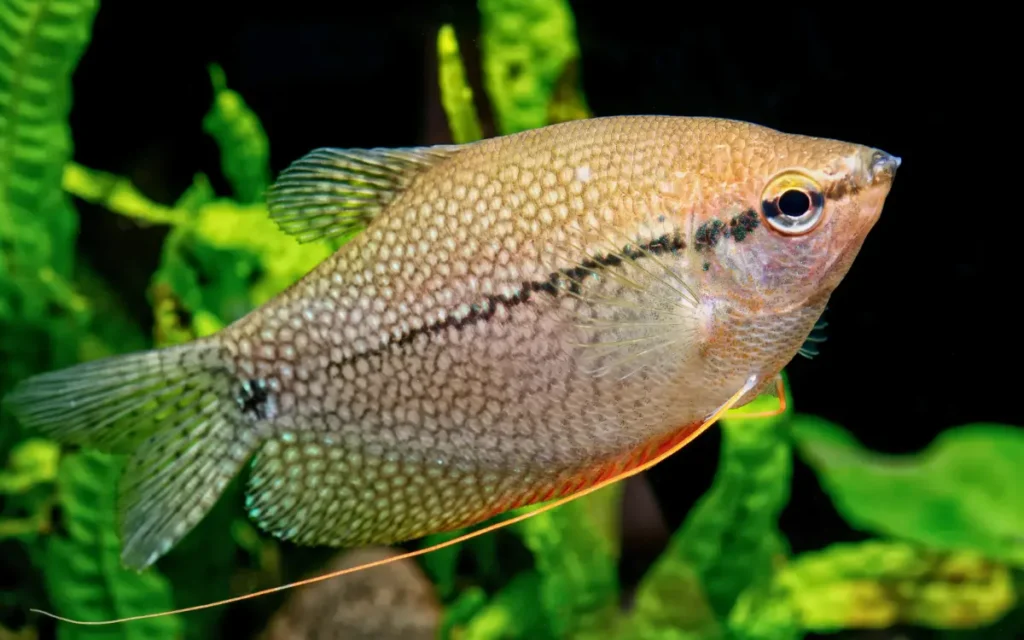
Dwarf Gouramis are labyrinth fish native to slow-moving rivers, ponds, and rice paddies in South Asia. Like other gouramis, they possess a labyrinth organ that allows them to breathe surface air. This makes them tolerant of lower oxygen levels, but it does not mean poor water quality is acceptable.
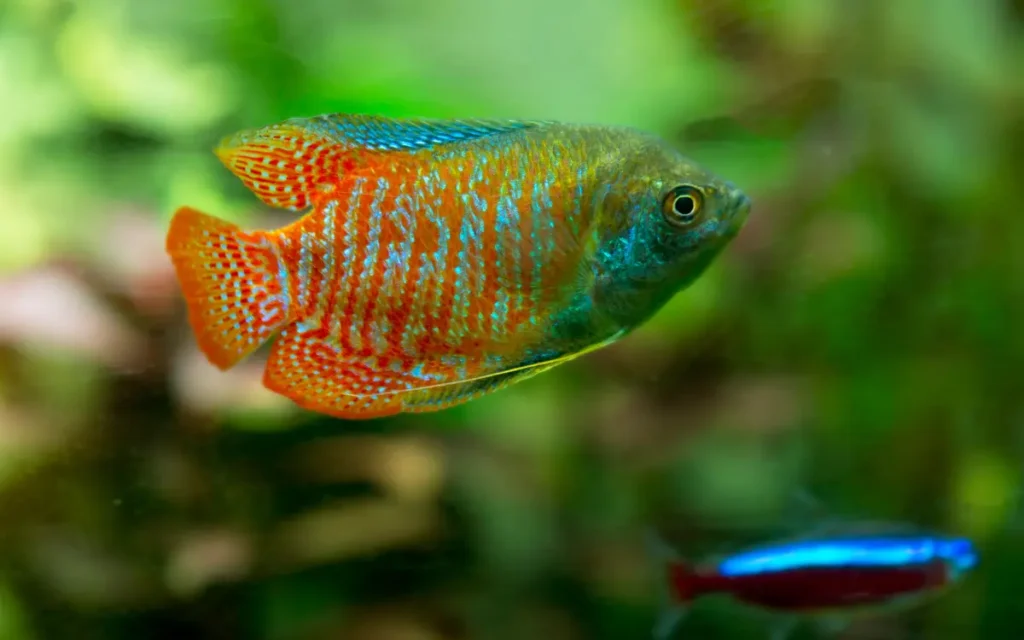
Males are brightly colored, often displaying red, blue, turquoise, or flame patterns. Females are usually duller, with silver-gray bodies and shorter fins. When kept in stable conditions, Dwarf Gouramis become confident, interactive fish that often act as a centerpiece in smaller tanks.
Appearance and Behavior
Male Dwarf Gouramis are known for long fins and vivid coloration, especially in flame red and neon blue strains. Females are rounder and less colorful.
Behavior-wise, they are calm and observant. They often hover mid-water or near the surface, watching their surroundings. While peaceful, males can show territorial behavior toward similar-looking fish or other gouramis in tight spaces.
Real experience: Every Dwarf Gourami I’ve kept had a different personality. Some were shy and preferred plant cover, while others actively patrolled their tank. Problems only appeared when tanks were overcrowded or flow was too strong.
Ideal Tank Setup for Dwarf Gouramis
Tank Size and Layout
While 10 gallons is the minimum, a 20-gallon tank is far more stable and forgiving. Larger tanks reduce territorial behavior and improve water consistency.
Horizontal space matters more than height. Dwarf Gouramis enjoy calm areas near the surface and mid-water zones.
Substrate and Plants
A planted setup works best. Use:
- Anubias
- Java fern
- Cryptocoryne
- Floating plants
Floating plants are especially important. They reduce light intensity and give Gouramis a sense of security.
This setup pairs well with other peaceful gourami species such as those discussed in the Honey Gourami Care Guide and Pearl Gourami Care Guide, though mixing gourami species should only be done in larger tanks.
Filtration and Flow
Low flow is critical. Strong currents cause stress and can prevent surface breathing.
Recommended options:
- Sponge filters
- Low-flow hang-on-back filters
Avoid powerful spray bars or wavemakers.
Water Parameters and Stability
Dwarf Gouramis are sensitive to sudden changes.
- Temperature: 76–82°F
- pH: 6.0–7.5
- Hardness: 4–10 dGH
Perform weekly water changes of 20–25%. Always match temperature closely.
Feeding and Diet
Dwarf Gouramis are omnivores but can be picky eaters.
Staple Foods
- High-quality flakes
- Micro pellets
Protein Foods (2–3 times per week)
- Bloodworms
- Brine shrimp
- Daphnia
Soaking dry food helps prevent floating food issues and improves acceptance.
Compared to larger gouramis like those covered in the Blue Gourami Care Guide or Snakeskin Gourami Care Guide, Dwarf Gouramis need much smaller food portions and gentler feeding schedules.
Compatible Tank Mates
Dwarf Gouramis do best in calm community tanks.
Good Tank Mates
- Neon Tetras
- Ember Tetras
- Corydoras
- Otocinclus
- Kuhli Loaches
- Peaceful shrimp and snails
These species occupy different tank zones and reduce conflict.
Fish to Avoid
- Tiger Barbs
- Fin-nipping species
- Aggressive cichlids
- Other male gouramis in small tanks
If you enjoy gourami species, keep only one male Dwarf Gourami per tank unless the tank is very large.
Dwarf Gourami Behavior Problems and Fixes
Dwarf Gourami Hiding Constantly
Common causes:
- Bright lighting
- Lack of plants
- Aggressive tank mates
Add floating plants and reduce flow.
Faded Color
Often linked to:
- Stress
- Poor diet
- Unstable parameters
Improving food quality and water stability usually fixes this.
Chasing or Aggression
Usually male-on-male behavior. Remove one fish or increase tank size.
Breeding Dwarf Gouramis
Breeding Dwarf Gouramis is possible and rewarding.
Breeding Setup
- Separate breeding tank
- Shallow water
- Floating plants
- Minimal water movement
Spawning Process
The male builds a bubble nest at the surface. Once spawning occurs, eggs float into the nest.
Remove the female after spawning, as the male becomes protective.
Fry Care
- Eggs hatch in 24–36 hours
- Feed infusoria or powdered fry food
- Gradually introduce micro foods
Breeding behavior is similar to what you’ll see in species like those discussed in the Moonlight Gourami Guide, though Dwarf Gouramis are easier to manage in smaller tanks.
Common Health Issues
Dwarf Gouramis are unfortunately prone to health problems when stressed.
Dwarf Gourami Disease
This viral condition has no cure. Prevention through stable water and careful sourcing is essential.
Ich and Fungal Infections
Often triggered by stress or temperature swings.
Fin Damage
Caused by fin-nippers or sharp décor.
Good water quality is the best defense.
Are Dwarf Gouramis Good for Beginners?
Yes, but with conditions.
They are suitable for beginners who:
- Maintain stable water
- Avoid aggressive tank mates
- Use planted, low-flow tanks
They are not good for rushed setups or overcrowded aquariums.
Final Thoughts
Dwarf Gouramis are calm, intelligent fish that thrive in planted, peaceful environments. When given space, gentle flow, and proper companions, they become confident centerpiece fish with unique personalities. Most problems come from poor tank planning, not the fish itself.
If you enjoy gouramis and want to explore other species, OceanBitez already covers excellent guides on:
