
German Blue Ram Cichlid: Care, Diet & Tank Mates

German Blue Rams (Mikrogeophagus ramirezi) are among the most vibrant and popular dwarf cichlids in the freshwater aquarium hobby. Known for their electric colors and peaceful behavior, they make stunning additions to planted community tanks. This care guide is based on hands-on experience and includes tank setup, diet, compatible tank mates, and breeding tips for German Blue Rams and closely related types like Electric Blue and Gold Rams.
Species Overview
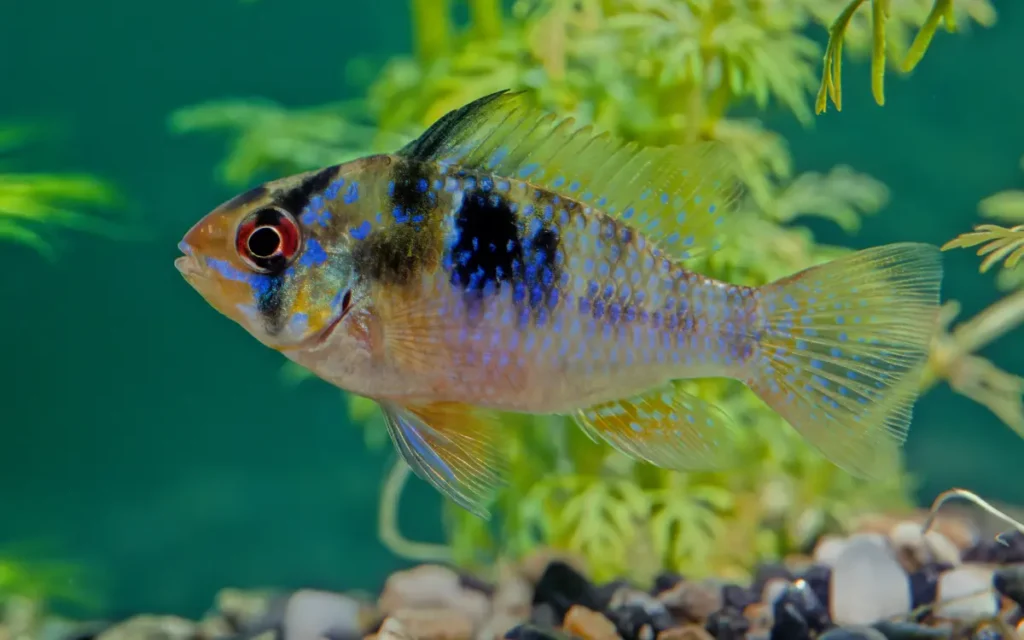
German Blue Rams originate from the Orinoco River Basin in Venezuela and Colombia. They typically grow up to 2.5 inches and live 2–4 years. These fish are sensitive to water conditions but thrive in well-maintained environments.
Appearance and Behavior
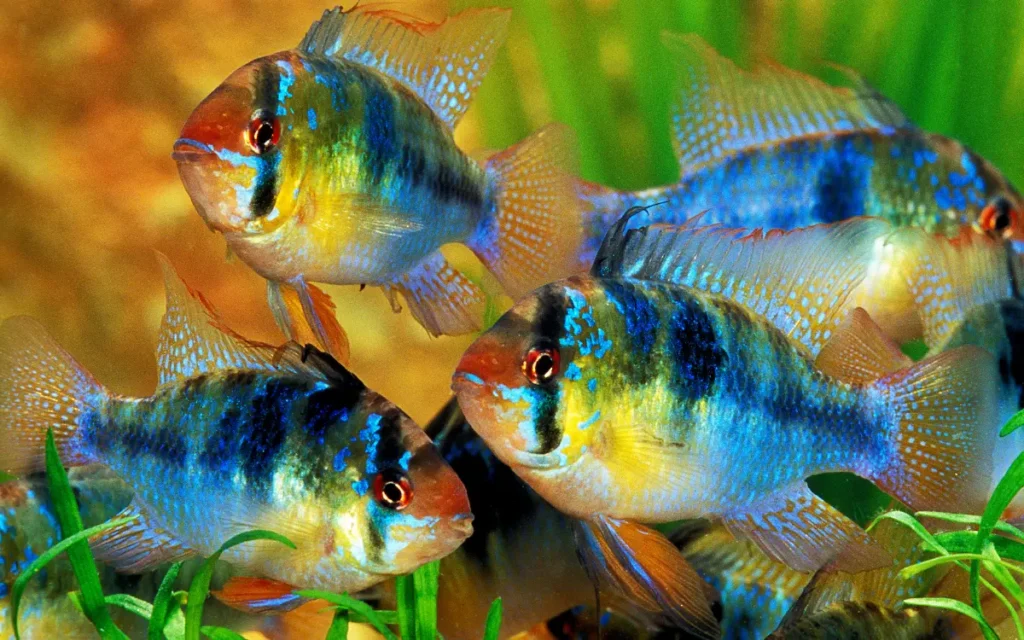
German Blue Rams are admired for their glowing blue scales, yellow bellies, and red eyes. Electric Blue Rams have a more uniform neon appearance, while Gold Rams have a bright golden body with less pattern contrast. Balloon Rams feature a rounded body shape. Rams are peaceful and inquisitive, often forming close bonds with their mates and exploring the tank with confidence.
My Experience: In my tanks, German Blues took time to settle but became highly interactive, especially at feeding time. Electric Blues displayed their best colors against dark substrates with subdued lighting.
German Blue Ram vs Other Ram Types
| Feature | German Blue Ram | Electric Blue Ram | Gold Ram | Balloon Ram |
| Size | 2.5 inches | 2.5 inches | 2.5 inches | 2 inches |
| Lifespan | 2–4 years | 2–3 years | 2–3 years | 2–3 years |
| Color Intensity | Moderate | Very High | High | Moderate |
| Water Sensitivity | Moderate | High | High | High |
| Beginner Friendly | Somewhat | No | No | No |
Ideal Tank Setup
Start with a 20-gallon tank for a pair of German Blue Rams. Use fine sand or smooth gravel substrate, and add driftwood, smooth rocks, and plenty of live plants like Amazon swords, Anubias, and Java fern. Keep the temperature between 78–82°F, pH between 6.0–7.0, and maintain soft water (1–5 dGH). A sponge filter or gentle-flow filter is ideal.
Real Tip: Rams feel safer and show better coloration in tanks with dark backgrounds and structured planting. They also appreciate calm water and minimal disturbance.
Compatible Tank Mates
German Blue Rams are peaceful and should be housed with other non-aggressive species. Ideal tank mates include Neon Tetras, Harlequin Rasboras, Rummy Nose Tetras, Corydoras, Otocinclus, and small peaceful gouramis. Avoid aggressive or fast-swimming species like Tiger Barbs or large cichlids.
Personal Note: I’ve successfully kept German Blue Rams with Corydoras and Ember Tetras. The Rams staked out their territory but never showed aggression, even during breeding.
Feeding and Diet
Offer a high-quality diet that includes micro pellets, flakes, frozen bloodworms, brine shrimp, and occasional live food. German Blue Rams are known to be picky, so ensure food reaches them directly. Feed twice daily in small amounts to reduce waste.
Breeding German Blue Rams
Rams form pairs and prefer flat stones or leaves as spawning sites. Raising the temperature to 82°F and slightly softening the water can trigger spawning. The pair will guard their eggs and fry, though stress or interruptions may lead them to eat the brood. For higher success, breed in a separate tank.
What I’ve Learned: My best breeding success came in a 20-gallon tank with sand substrate, minimal lighting, and no tank mates. The parents were much more confident without distractions.
If you’re looking for a more beginner-friendly and hardier alternative, check out our Bolivian Ram Cichlid Care Guide.
FAQ
Are German Blue Rams hard to keep?
They require stable water parameters and aren’t ideal for beginners without prior cichlid experience.
Can I keep German Blue and Electric Blue Rams together?
Yes, in larger tanks with plenty of hiding spots and clear territories.
Do German Blue Rams need soft water?
Yes, they prefer soft, slightly acidic water.
Can they live in community tanks?
Yes, if their tank mates are peaceful and tank conditions are stable.
Final Thoughts
German Blue Rams are stunning centerpiece fish for aquarists willing to provide stable, warm, and well-planted tanks. With proper care, they reward you with color, personality, and even fascinating breeding behavior.
