
12 Types of Gourami Fish for Home Aquariums

Gouramis are among the most recognizable freshwater aquarium fish. Their flat bodies, long feeler-like pelvic fins, and slow swimming style make them look very different from tetras, barbs, and other common community fish.
But gouramis are not all the same. Some stay under 2 inches and suit smaller planted tanks, while others become large, territorial fish that need much more room. A species that works well in a peaceful 20-gallon aquarium may behave very differently from one that grows over a foot long.
This guide compares 12 popular types of gourami fish, including their adult size, temperament, tank requirements, and care level. You will also find links to detailed guides for each species, making this page a useful starting point when choosing the right gourami for your aquarium.
Quick Comparison of Popular Gourami Fish
| Gourami Type | Approximate Adult Size | Temperament | Suggested Minimum Tank | Care Level |
| Honey Gourami | 2 inches | Very peaceful | 10 gallons | Beginner |
| Dwarf Gourami | 3–4 inches | Peaceful to territorial | 10–15 gallons | Beginner to intermediate |
| Sparkling Gourami | 1.5 inches | Peaceful and shy | 10 gallons | Intermediate |
| Licorice Gourami | 1.5–2 inches | Shy and peaceful | 10 gallons | Advanced |
| Pearl Gourami | 4–5 inches | Calm | 30 gallons | Beginner to intermediate |
| Thick-Lipped Gourami | 3.5–4 inches | Generally calm | 30 gallons | Beginner to intermediate |
| Blue Gourami | 5–6 inches | Semi-aggressive | 30 gallons | Intermediate |
| Moonlight Gourami | 5–6 inches | Usually peaceful | 30 gallons | Intermediate |
| Chocolate Gourami | 2–2.5 inches | Peaceful but delicate | 20 gallons | Advanced |
| Snakeskin Gourami | 8–10 inches | Usually calm | 55 gallons | Intermediate |
| Kissing Gourami | 8–12 inches | Territorial | 55 gallons | Intermediate |
| Giant Gourami | More than 16 inches | Usually calm but powerful | 100+ gallons | Advanced |
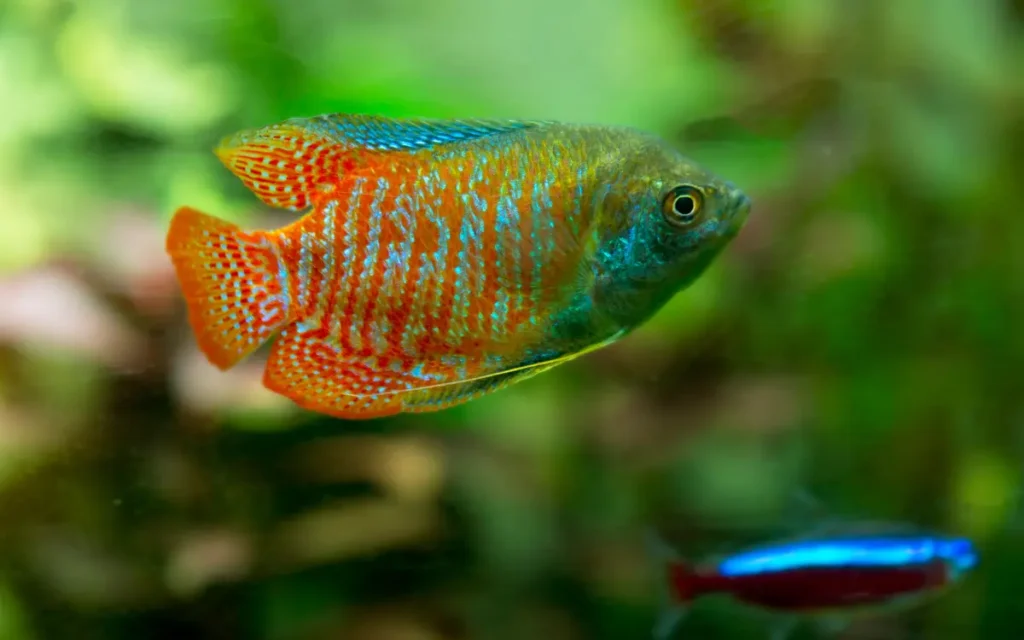
Popular Types of Gourami Fish
Tank size should be treated as a starting point rather than a fixed rule. A larger aquarium is often better when keeping territorial males, multiple gouramis, or active community fish.
1. Honey Gourami
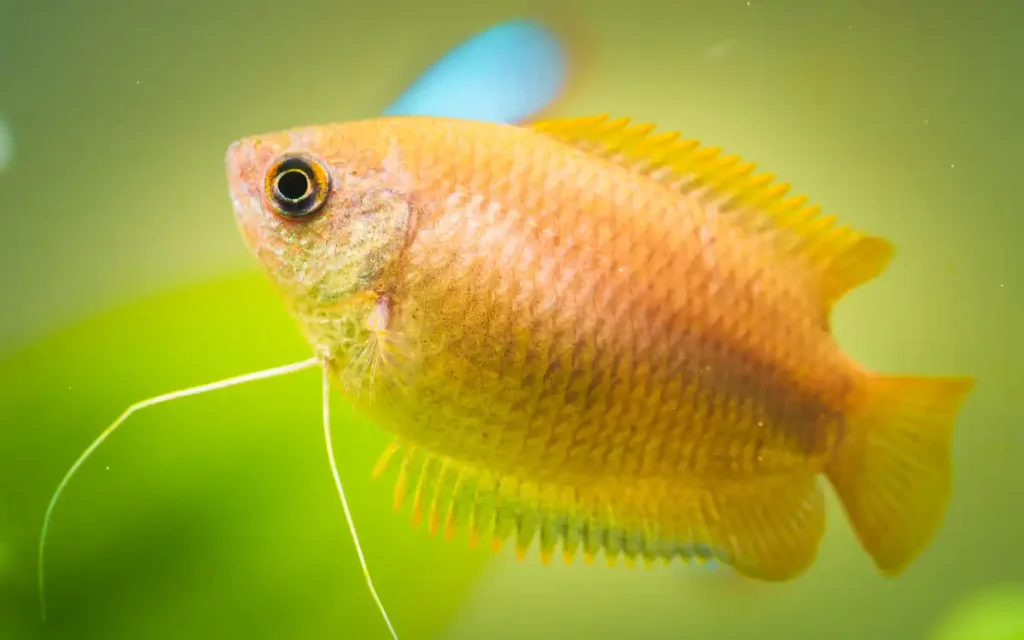
Honey Gouramis are one of the safest choices for beginners who want a calm centerpiece fish. They usually grow to around 2 inches and have soft yellow, gold, or orange coloring. Males often become brighter when mature or ready to breed.
These fish prefer peaceful tanks with live plants, gentle filtration, and calm tank mates. They can become nervous around fast swimmers or aggressive species, so avoid placing them with fin nippers or highly territorial fish.
Honey Gouramis spend much of their time near the upper and middle areas of the aquarium. Floating plants can help them feel secure without taking away all their surface access.
Read the complete Honey Gourami care guide for tank setup, feeding, water conditions, and compatible fish.
2. Sparkling Gourami
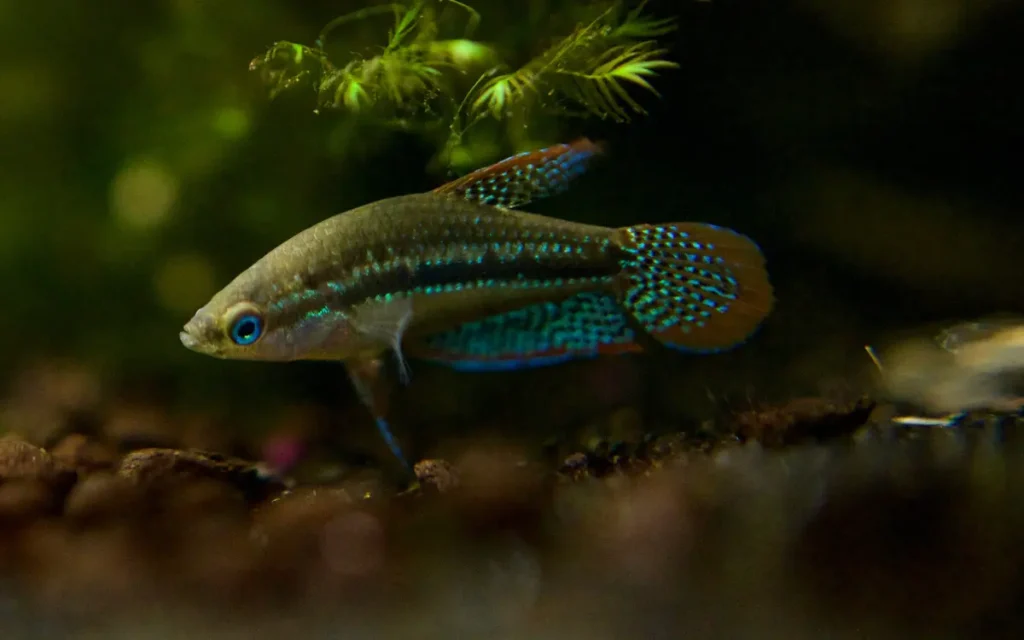
Sparkling Gouramis are tiny fish with iridescent blue, green, and red markings. They rarely grow much larger than 1.5 inches, but their small size does not mean they should be placed in an unfiltered bowl or cramped aquarium.
They prefer quiet, heavily planted tanks with gentle water movement. Floating plants, leaf litter, driftwood, and shaded areas can help copy the slow-moving environments they naturally favor.
Sparkling Gouramis are also known for producing soft clicking or croaking sounds. These sounds are often heard during courtship or territorial interactions.
Because they are shy, avoid keeping them with large, aggressive, or highly active fish. Our Sparkling Gourami care guide covers their complete setup and feeding needs.
3. Pearl Gourami
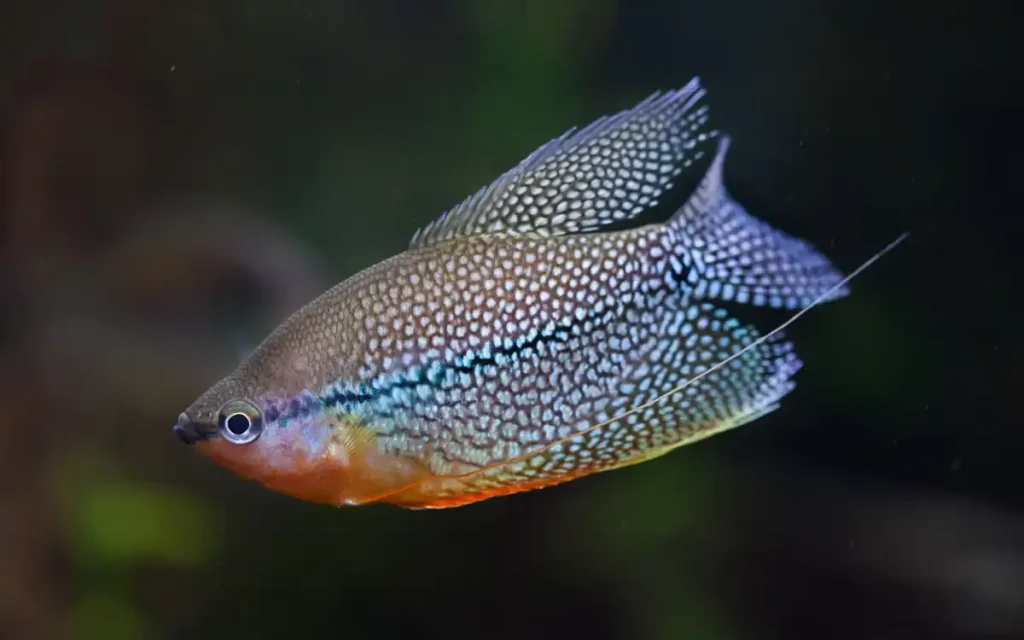
Pearl Gouramis have a silver body covered in small pearl-like spots, along with a dark horizontal line running from the head toward the tail. Mature males often develop stronger orange or red coloring around the throat and chest.
They are among the calmer medium-sized gouramis and can work well in peaceful community tanks. However, they still need enough space to swim and establish territory.
A planted 30-gallon aquarium is a better starting point than a smaller tank. Floating plants and gentle lighting help them feel comfortable, but they should always have open surface access.
Pearl Gouramis can be kept with calm rasboras, tetras, bottom dwellers, and other fish that do not nip fins. Read our Pearl Gourami care guide for detailed setup advice.
4. Blue Gourami
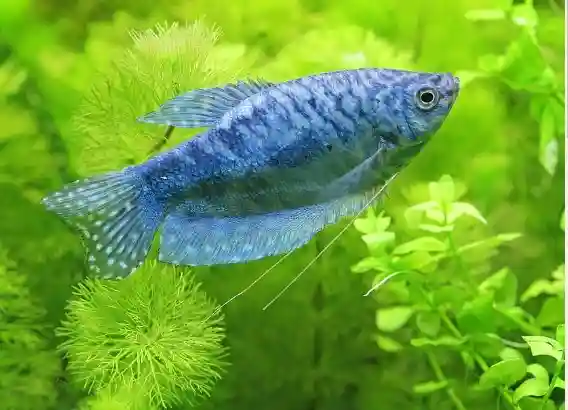
Blue Gouramis are a color form of the Three-Spot Gourami. They are larger and more assertive than Honey, Pearl, or Sparkling Gouramis, making them less predictable in small community tanks.
Adult males can become territorial, especially when there are few plants or hiding areas. Some individuals remain calm, while others may chase slower fish or other gouramis.
A larger aquarium with driftwood, tall plants, and broken lines of sight helps reduce conflict. Tank mates should be strong enough to avoid constant bullying but not so aggressive that fighting becomes common.
Blue Gouramis can be interesting centerpiece fish, but they are not the best choice for every peaceful community aquarium. Read our Blue Gourami care guide before adding one.
5. Kissing Gourami
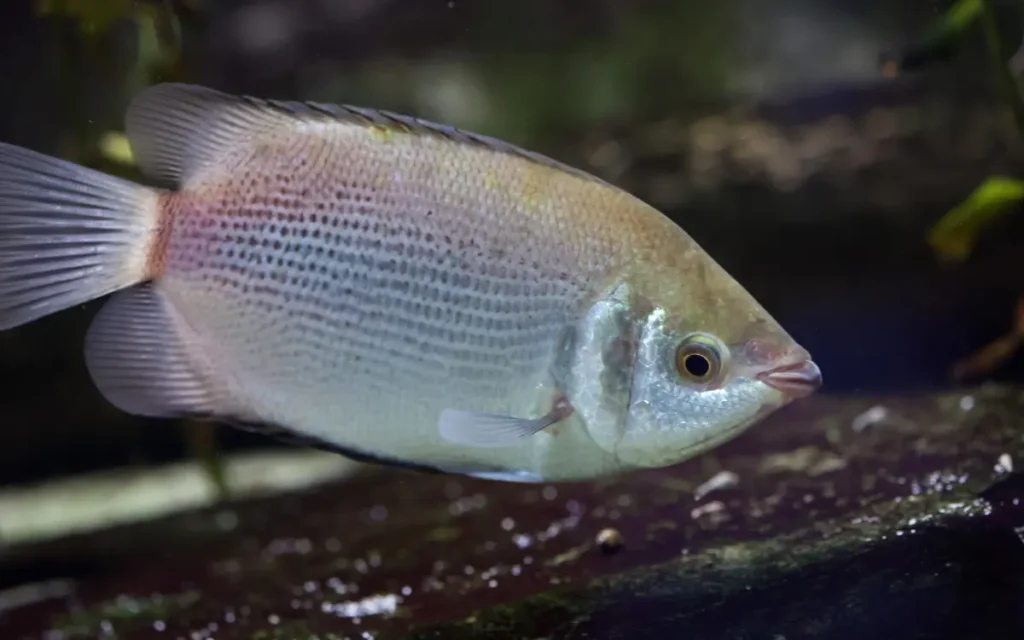
Kissing Gouramis are named after their habit of pressing their mouths together. This may look affectionate, but the behavior is usually a test of strength or dominance between fish.
They can grow much larger than they appear in aquarium stores. Young fish may fit comfortably in a smaller display tank, but adults need a spacious aquarium with good filtration.
Kissing Gouramis may become territorial toward their own kind or slower tank mates. They can also graze on algae and soft plant growth, so delicate plants may not remain untouched.
Their adult size and behavior should be considered before purchase. Read our Kissing Gourami care guide for proper setup and compatibility information.
6. Giant Gourami
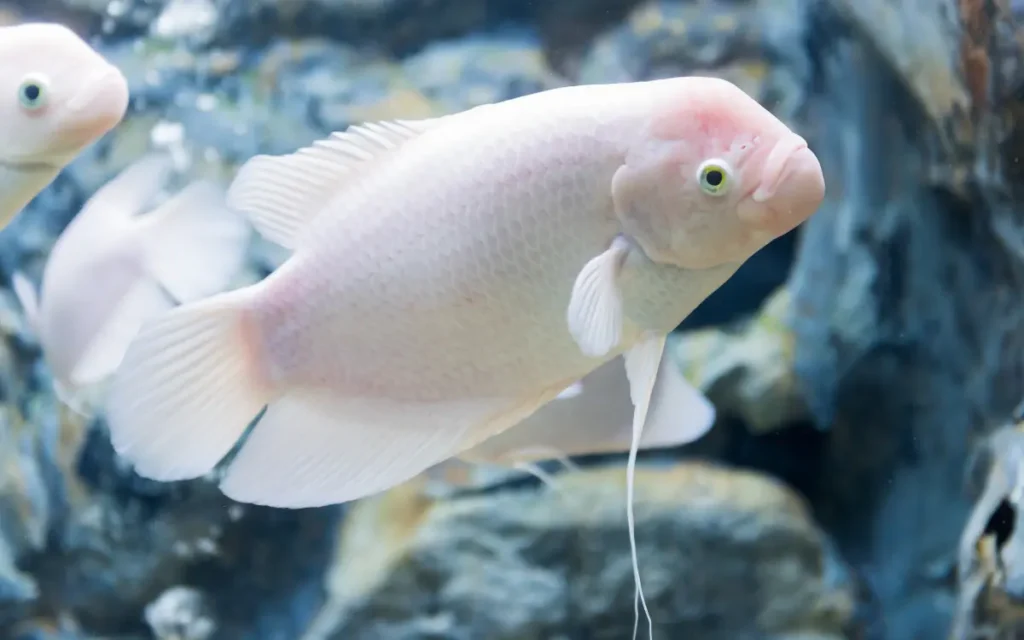
Giant Gouramis are intelligent, long-lived fish that can develop noticeable individual personalities. Some learn to recognize the person who feeds them and may become very responsive at the front of the tank.
Their main challenge is size. They can grow far beyond the dimensions of an ordinary community aquarium and need a very large, strongly filtered setup.
A young Giant Gourami should not be purchased with the plan to upgrade “sometime later.” The adult aquarium needs to be planned before bringing the fish home.
They are usually slow-moving, but their strength and size mean smaller tank mates can be injured or eaten. The Giant Gourami care guide explains the long-term space, diet, filtration, and maintenance they require.
7. Dwarf Gourami
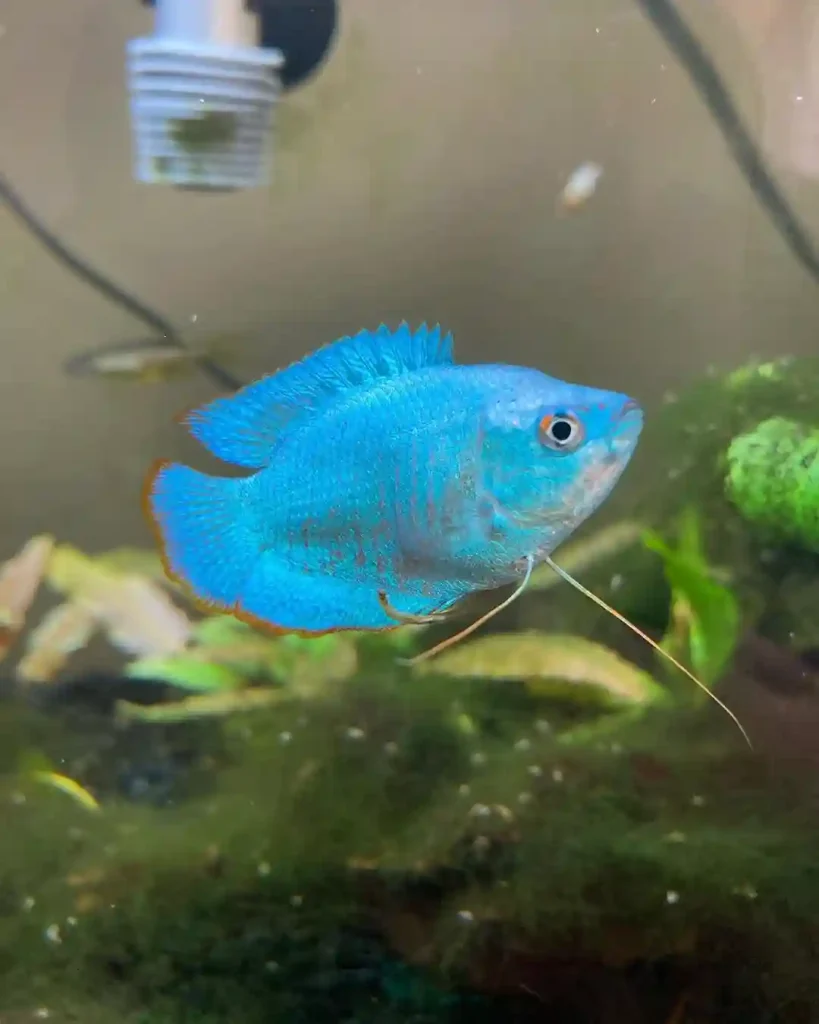
Dwarf Gouramis are small, colorful fish often sold as centerpiece fish for community aquariums. Common varieties include Flame, Powder Blue, Neon Blue, and Red Dwarf Gouramis.
They usually appear calm, but males may become territorial in small or poorly arranged tanks. Dense planting and clear visual barriers can prevent one fish from controlling the entire aquarium.
A single male often works better than keeping several males together. Tank mates should be peaceful and should not nip the gourami’s fins or constantly disturb it near the surface.
Learn more about their size, behavior, and setup in our Dwarf Gourami guide.
8. Snakeskin Gourami
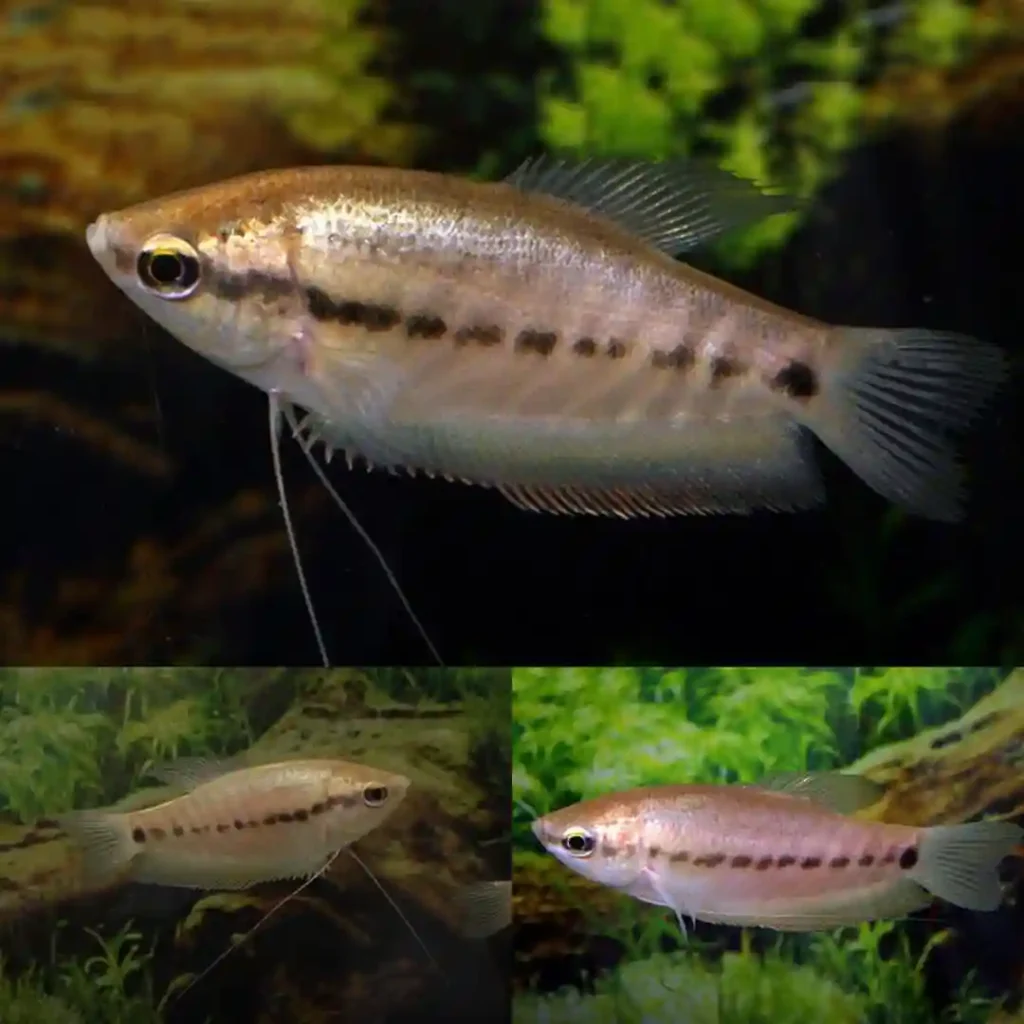
Snakeskin Gouramis are large fish with a subtle pattern across the body. Their coloring may look less dramatic than that of Dwarf or Pearl Gouramis, but their size makes them noticeable in a spacious aquarium.
They generally prefer slow-moving water, dimmer lighting, and plenty of swimming space. Plants can be used around the sides and back of the aquarium while leaving an open central area.
Although they are often calmer than Blue or Kissing Gouramis, their adult size makes them unsuitable for small tanks. They also need strong filtration because larger fish produce more waste.
Our Snakeskin Gourami care guide covers tank size, feeding, water conditions, and compatible species.
09. Moonlight Gourami
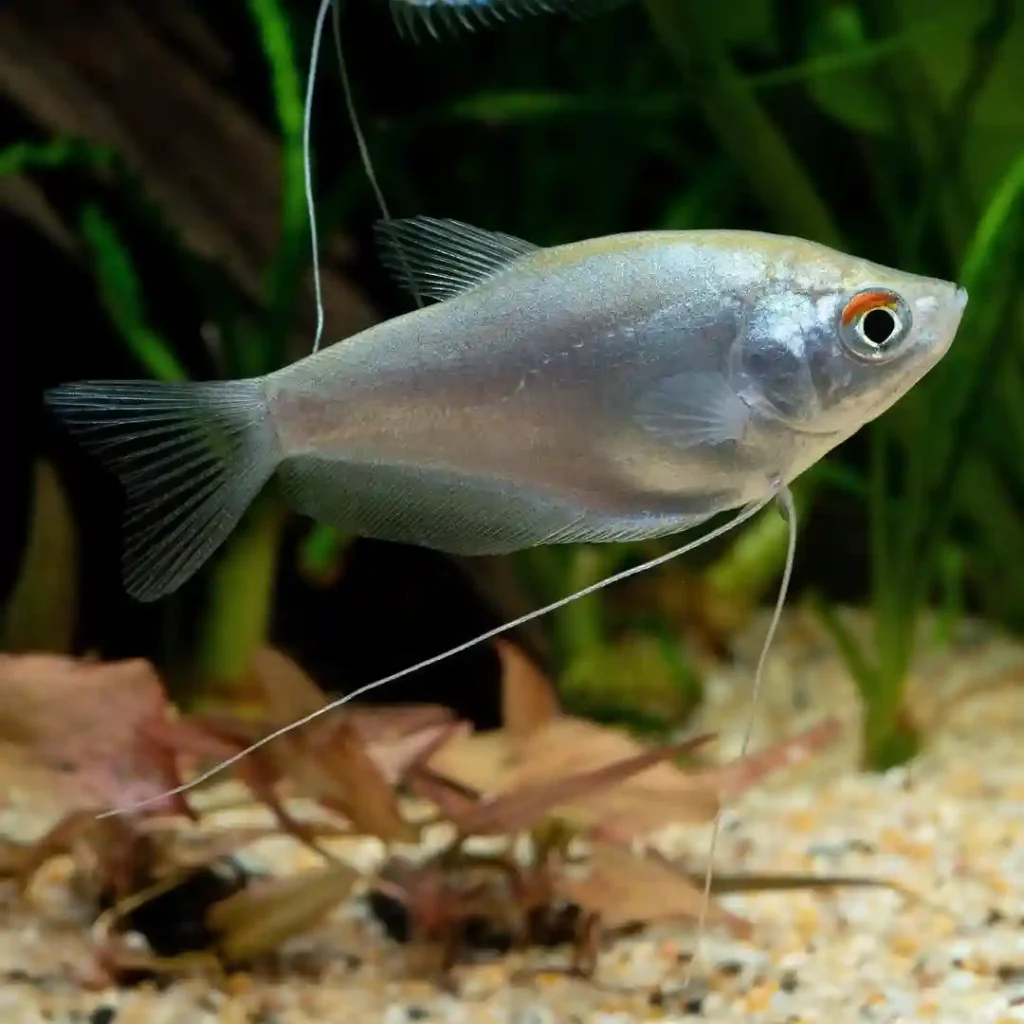
Moonlight Gouramis have a smooth silver body that can appear to glow under soft aquarium lighting. Their long pelvic fins are often orange, red, or yellow, adding a small amount of color to their otherwise pale appearance.
They usually behave peacefully, but their adult size is often underestimated. A fully grown Moonlight Gourami needs more swimming room than a Dwarf or Honey Gourami.
They prefer planted aquariums with gentle water movement and access to the surface. Avoid keeping them with aggressive cichlids, fin-nipping barbs, or fish that constantly compete for the same area of the tank.
The complete Moonlight Gourami guide explains their feeding, water conditions, behavior, and suitable companions.
10.Licorice Gourami
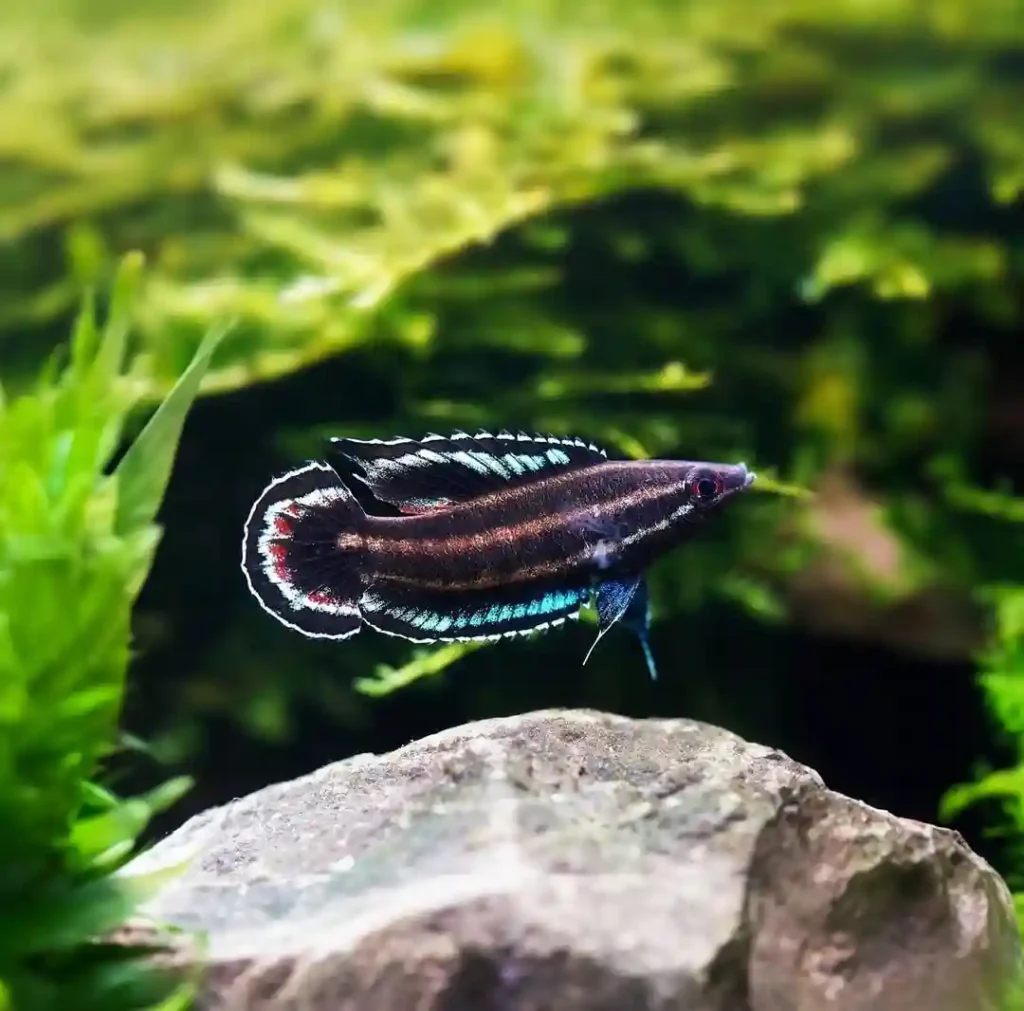
Licorice Gouramis are small, colorful fish best suited to experienced aquarium keepers. They need soft, acidic water and are less forgiving of unstable conditions than Honey or Dwarf Gouramis.
A dimly lit aquarium with dense plants, botanicals, driftwood, and very gentle filtration suits them best. Their darker colors and patterned fins become easier to see once the fish feel safe.
These gouramis are usually shy around active tank mates. Many keepers house them in carefully planned species tanks or with other tiny fish that need similar water conditions.
Licorice Gouramis are not a good choice for a new or recently cycled aquarium. Stable water and careful maintenance matter more than adding a large amount of equipment.
11.Thick-Lipped Gourami
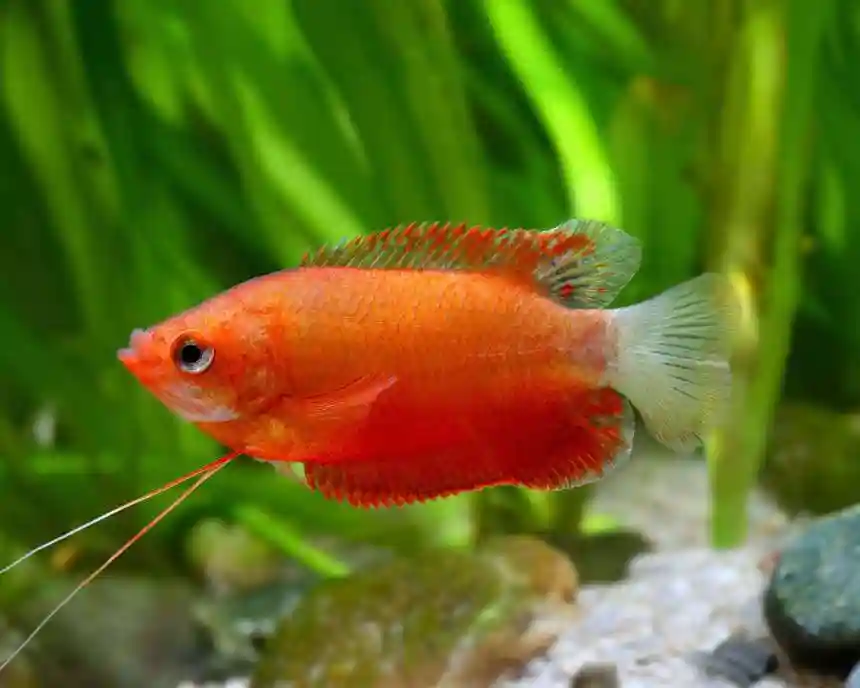
Thick-Lipped Gouramis are medium-sized fish with deeper bodies and noticeably thicker lips than many other gourami species. They are sometimes confused with Dwarf or Banded Gouramis in aquarium stores.
They are generally calm when kept in a spacious planted tank, although males may still become territorial. They need enough room to move away from each other and should not be crowded into a small aquarium.
Thick-Lipped Gouramis can adapt to a wider range of conditions than delicate species such as Chocolate Gouramis. Even so, stable water, regular maintenance, and suitable tank mates are still necessary.
The Thick-Lipped Gourami care guide explains their tank size, diet, temperament, and long-term care.
12. Chocolate Gourami
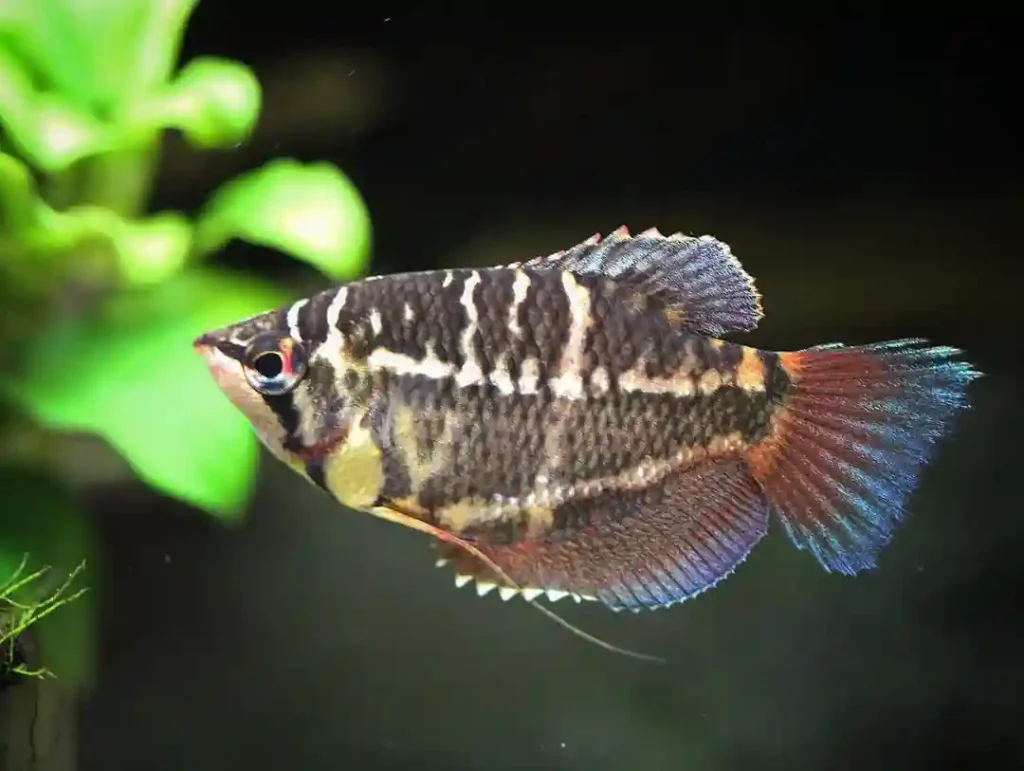
Chocolate Gouramis have a deep brown body marked with pale vertical bands. Their unusual appearance makes them attractive, but they are far more demanding than most gouramis sold for community tanks.
These fish need soft, acidic water and stable conditions. Sudden changes in temperature or water quality can quickly cause stress.
Chocolate Gouramis are also slow, careful feeders. Active tank mates may consume most of the food before they get a chance to eat. A quiet blackwater-style aquarium with plants, leaf litter, and low lighting suits them best.
They should not be treated as ordinary beginner community fish. Read the Chocolate Gourami care guide before attempting to keep this sensitive species.
Which Gourami Is Best for Your Aquarium?
The right choice depends on tank size, experience, water conditions, and the other fish already living in the aquarium.
For a peaceful beginner tank, Honey Gouramis are usually one of the safest choices. Pearl Gouramis are also suitable for newer keepers who have enough room for a larger planted aquarium.
Dwarf Gouramis can work well as centerpiece fish, but their behavior varies between individuals. Give them plant cover and avoid placing several males in a tight space.
Sparkling Gouramis suit quiet planted tanks with tiny companions. They are not a good match for fast barbs, large tetras, or aggressive fish.
Blue, Snakeskin, and Kissing Gouramis need more room and careful tank mate selection. Chocolate and Licorice Gouramis are better for experienced keepers who can maintain soft, acidic water.
Giant Gouramis should only be considered when a permanent extra-large aquarium is already available.
Tank Size Matters More Than the Fish’s Store Size
One of the most common gourami mistakes is choosing a tank based on the fish’s current size. Many gouramis are sold as juveniles and may look suitable for a small aquarium when purchased.
A small tank also gives territorial fish fewer places to retreat. This can lead to chasing, damaged fins, hiding, poor feeding, and constant stress.
Use the adult size of the species when choosing the aquarium. The tank should also provide horizontal swimming space, plant cover, and open access to the surface.
For smaller species, our 10-gallon fish tank setup guide can help with filtration, layout, and stocking.
Water Conditions and Filtration
Gouramis are often associated with slow-moving, plant-filled waters. In an aquarium, most species prefer gentle to moderate flow rather than a strong current across the entire tank.
A filter is still necessary. Gentle flow does not mean stagnant or dirty water. The filter should process waste while allowing the fish to rest and swim without being pushed around continuously.
Exact water requirements differ by species. Honey, Pearl, Dwarf, and Blue Gouramis generally adapt more easily to common aquarium conditions than Chocolate or Licorice Gouramis.
Keep the temperature and water chemistry stable. Sudden changes are often more stressful than conditions that remain slightly outside an ideal number.
Why Gouramis Need Surface Access
Gouramis have a labyrinth organ that allows them to take oxygen directly from the air. You will regularly see them rise to the surface and take a small gulp.
Do not cover the entire surface with floating plants. Leave open spaces where the fish can breathe and feed comfortably.
A lid is still useful because gouramis can jump. It also helps maintain a warm layer of humid air above the water, especially in cooler rooms.
Plants Help Reduce Stress and Aggression
Most gouramis feel more secure in planted aquariums. Tall plants, floating plants, driftwood, and other decorations break up open sightlines and create separate areas within the tank.
This is particularly helpful when keeping territorial males. A fish is less likely to chase another across the entire aquarium when plants block its view.
Useful choices include Java Fern, Anubias, Cryptocoryne, Water Sprite, Amazon Frogbit, and other plants that tolerate gentle flow.
Start with our freshwater planted tank setup guide or browse more aquarium plant guides.
Feeding Gourami Fish
Gouramis are generally omnivorous and accept a mix of prepared and frozen foods. A good-quality flake or small pellet can form the base of their diet.
You can add foods such as brine shrimp, daphnia, mosquito larvae, and bloodworms in suitable portions. Some larger species also eat more plant-based foods.
Feed only what the fish can finish within a short period. Uneaten food settles into the aquarium and reduces water quality.
Chocolate, Licorice, and Sparkling Gouramis may need smaller foods and a quieter feeding area because they can lose food to faster tank mates.
Gourami Behavior and Territorial Males
Gouramis are often described as peaceful, but that description is incomplete. Their behavior depends on species, sex, aquarium size, and tank layout.
Male gouramis may defend the surface area around floating plants, especially when building a bubble nest. Chasing often becomes worse when several males are placed in a small tank with no visual barriers.
Blue and Kissing Gouramis are more likely to cause compatibility problems than Honey or Pearl Gouramis. Even peaceful species can become territorial during breeding.
Do not assume two fish will get along simply because they belong to the same family. Watch for repeated chasing, torn fins, hiding, and fish that stop eating.
Choosing Tank Mates
Good gourami tank mates are usually peaceful fish that do not nip fins or compete aggressively near the surface.
Small rasboras, peaceful tetras, Corydoras, kuhli loaches, and other calm community fish may work depending on the gourami species and aquarium size.
Avoid placing slow gouramis with aggressive barbs, territorial cichlids, or fish that constantly bite long fins. Smaller tank mates may also be unsafe around Giant or large Kissing Gouramis.
Use our community fish guide to compare peaceful freshwater species before planning your stocking list.
Common Mistakes to Avoid
Buying a gourami without checking its adult size is one of the biggest problems. Kissing, Snakeskin, and Giant Gouramis quickly outgrow tanks that seemed spacious when the fish were young.
Keeping several males together without enough room can also lead to aggression. Plant cover helps, but it cannot correct severe overcrowding.
Other common problems include strong filter flow, unstable water, unsuitable tank mates, and choosing a delicate species for a new aquarium.
Allow the aquarium to cycle before adding fish. Regular water changes and careful feeding are more useful than constantly adding chemicals to correct preventable problems.
Frequently Asked Questions
What is the most peaceful gourami?
Honey Gouramis are often considered one of the most peaceful choices for community aquariums. Pearl Gouramis are also generally calm when kept in a suitably sized planted tank.
Individual behavior can still vary, especially among males.
What is the best gourami for beginners?
Honey Gouramis are a good starting choice because they remain small and are usually less aggressive than many other species.
Pearl Gouramis can also suit beginners who have a tank of around 30 gallons or larger.
Can different gourami species live together?
Different gourami species can sometimes live together, but the result depends on tank size, sex, temperament, and layout.
Mixing several territorial males in a small tank is risky. In many home aquariums, keeping one gourami species is easier than creating a mixed gourami group.
Can gouramis live in a community tank?
Many gouramis can live in community aquariums with calm, compatible fish. Honey, Pearl, Sparkling, and some Dwarf Gouramis are commonly kept this way.
Blue, Kissing, and Giant Gouramis need more careful planning because of their size or territorial behavior.
Do gouramis need to be kept in pairs?
Gouramis do not always need a partner. A single gourami can live successfully in a suitable community tank.
Keeping a male and female together does not guarantee peace. The male may chase the female, especially during breeding, so space and plant cover are necessary.
Do gouramis need live plants?
Live plants are not strictly required, but they make the aquarium more comfortable. Plants provide cover, reduce open sightlines, soften lighting, and give bubble-nesting species areas near the surface.
Artificial plants can provide some cover, but avoid sharp plastic leaves that may damage fins.
How long do gourami fish live?
Lifespan varies between species and depends on water quality, diet, genetics, and tank conditions. Smaller gouramis often live several years, while larger species may live much longer.
Choosing the correct tank from the beginning gives the fish a better chance of reaching its expected lifespan.
