
Blue Gourami Care Guide:Diet, Behavior & Tank Setup Guide

Blue Gouramis (Trichopodus trichopterus), also called Three-Spot Gouramis, are beautiful and hardy freshwater fish perfect for beginners. Known for their shimmering blue color and easygoing nature, these fish can thrive in a wide range of aquarium setups.
In this guide, you’ll learn how to care for Blue Gouramis—covering their size, feeding habits, tank setup, behavior, and breeding tips.
What Is a Blue Gourami?
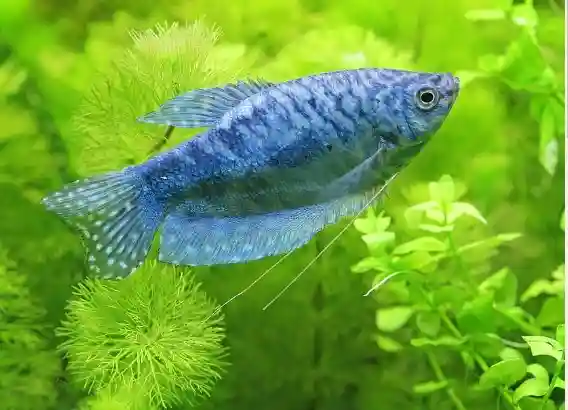
The Blue Gourami is a color morph of the Three-Spot Gourami. Its name comes from the two dark spots on its body (the eye is counted as the third spot). Native to slow-moving rivers and swamps in Southeast Asia, they’re part of the labyrinth fish family, which means they can breathe air from the surface.
Although usually peaceful, males can become territorial, especially in smaller or crowded aquariums.
Quick Care Sheet
| Feature | Details |
| Scientific Name | Trichopodus trichopterus |
| Common Names | Blue Gourami, Three-Spot Gourami |
| Size | 5–6 inches |
| Lifespan | 4–6 years |
| Tank Size | 30 gallons minimum |
| Temperature | 74–82°F |
| pH Range | 6.0–8.0 |
| Temperament | Semi-peaceful |
Ideal Tank Setup for Blue Gouramis
Creating the right environment is key to keeping your Blue Gourami happy. Aim to mimic their natural habitat — calm water, plants, and open swimming space.
Tank Setup Tips
- Minimum Tank Size: 30 gallons for one; more space if keeping multiples
- Substrate: Fine gravel or soft sand
- Plants: Java Fern, Anubias, Hornwort, and floating plants like Water Lettuce
- Decor: Driftwood, caves, and hiding spots for security
- Filtration: Low-flow filters or sponge filters (they dislike strong currents)
- Lighting: Moderate lighting is ideal
- Lid: A secure lid is recommended—Blue Gouramis can jump
Related read: Best Aquarium Plants for Beginners
What Do Blue Gouramis Eat?
Blue Gouramis are omnivores and very easy to feed. A balanced diet helps keep their colors vibrant and immune systems strong.
Best Foods to Offer
- Quality tropical flakes or pellets
- Frozen treats: bloodworms, brine shrimp
- Live food: mosquito larvae, daphnia (great for conditioning)
- Veggies: blanched peas or zucchini (once a week)
💡 Feed 1–2 times daily in small portions. Since they feed near the top, floating foods work best.
Blue Gourami Temperament and Behavior
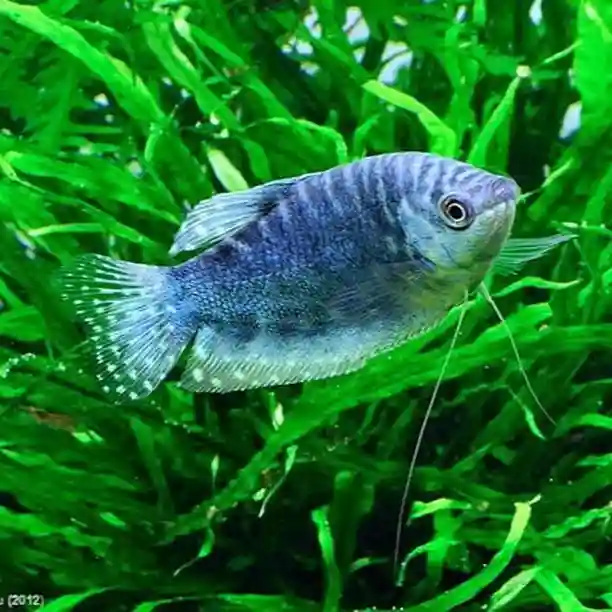
Blue Gouramis are mostly peaceful and calm, often gliding through the upper levels of the tank. They’re curious but not aggressive, making them suitable for community tanks.
Behavior Notes
- Males may show aggression during breeding or in tight spaces
- Females are more relaxed and social
- Avoid housing more than one male in small tanks
Compatible Tank Mates for Blue Gouramis
Choose peaceful or semi-aggressive species that won’t nip fins or fight over food.
Good Tank Mates
- Corydoras Catfish
- Platies, Swordtails, Mollies
- Rainbowfish
- Peaceful Loaches (like Kuhli Loach)
Avoid These
- Tiger Barbs – known fin-nippers
- Betta fish – similar shape may trigger aggression
- Aggressive cichlids – too territorial
Breeding Blue Gouramis
Blue Gouramis are bubble nest builders, and breeding them at home is fairly easy with the right conditions.
Breeding Conditions
- Breeding tank size: 20–30 gallons
- Water temp: 80°F
- Water depth: Reduce to 6–8 inches
- Add floating plants like Water Sprite or Duckweed
- Feed both male and female live food for conditioning
The male builds a bubble nest and courts the female. After spawning, remove the female immediately. Once fry hatch and become free-swimming, remove the male to prevent him from eating them.
Common Health Problems in Blue Gouramis
Blue Gouramis are hardy, but they’re not immune to disease. Poor water conditions or stress can lead to the following issues:
Common Diseases
- Ich (white spot disease)
- Fin rot
- Velvet
- Constipation or bloating
How to Prevent Illness
- Maintain stable, clean water (weekly water changes)
- Quarantine new fish before adding to main tank
- Avoid overcrowding
- Feed a varied, high-quality diet
Related post: Why Are My Fish Dying? (Also applies to fish)
FAQs
Are Blue Gouramis good for beginners?
Yes! They’re hardy, adaptable, and easy to feed.
How big do Blue Gouramis get?
They grow up to 5–6 inches in a well-maintained aquarium.
Can I keep two male Blue Gouramis?
Not recommended unless you have a large tank (over 50 gallons) with plenty of hiding spots.
Do Blue Gouramis need floating plants?
Yes. Floating plants help them feel secure and support breeding behavior.
Are Blue Gouramis aggressive?
Usually peaceful, but males can show mild aggression during mating or in small tanks.
Final Thoughts
Blue Gouramis are a fantastic choice for aquarists looking for low-maintenance, colorful fish that do well in community tanks. As long as you provide enough space, gentle water flow, and floating plants, these fish will reward you with calm behavior and unique personality.
