
Flame Hawkfish Care Guide: Feeding, Compatibility, Tank Tips & Behavior

If you’re looking for a reef-safe fish with a bold attitude and a splash of fire-red color, the Flame Hawkfish (Neocirrhites armatus) is a standout choice. Known for perching on live rock like a watchful guard, this fish is both entertaining and easy to care for. But its assertive personality and shrimp-snacking habits mean it’s not ideal for every tank.
In this care guide, we’ll cover everything you need to know—tank size, feeding, reef safety, tank mates, and behavior—to help your Flame Hawkfish thrive in a saltwater aquarium.
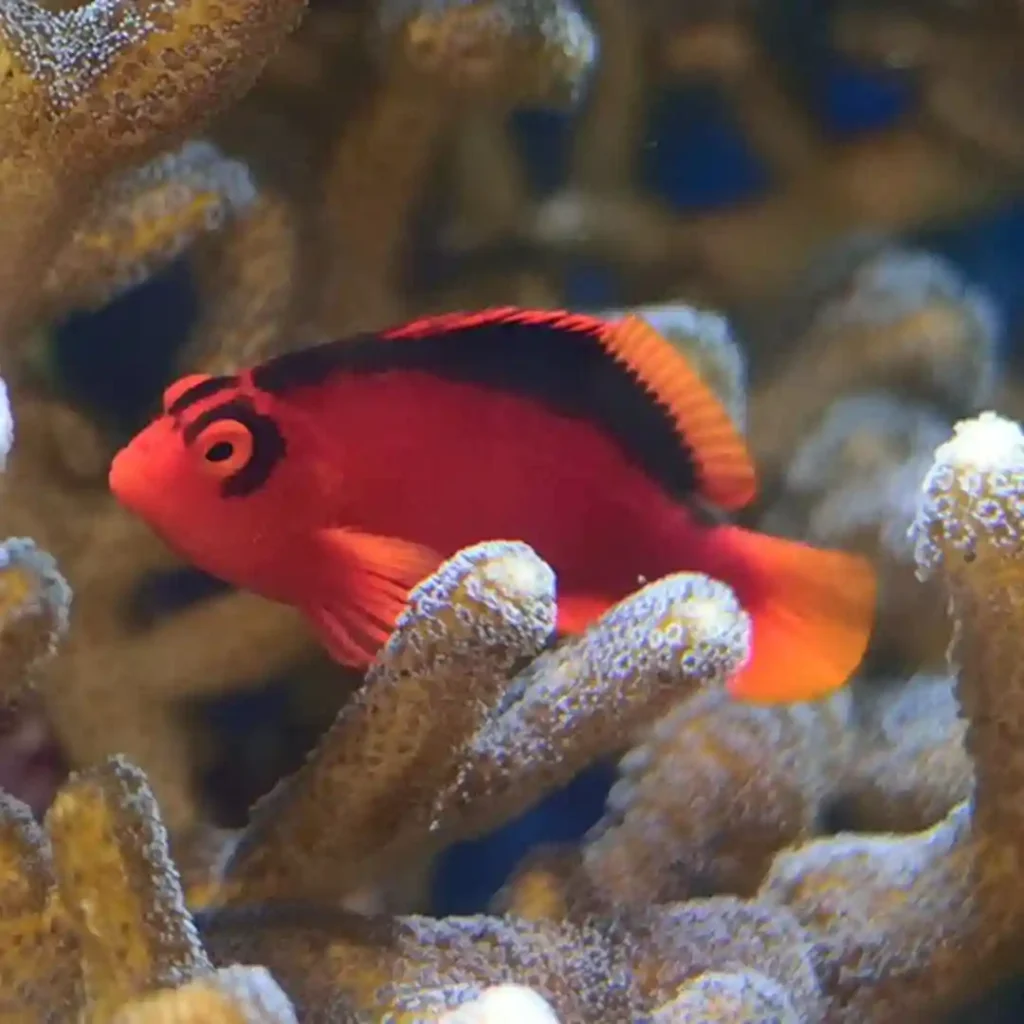
Flame Hawkfish Quick Care Sheet
| Feature | Details |
| Scientific Name | Neocirrhites armatus |
| Common Name | Flame Hawkfish |
| Adult Size | Up to 4 inches |
| Tank Size | Minimum 30 gallons |
| Temperament | Bold, semi-aggressive |
| Diet | Carnivore – mysis shrimp, brine shrimp, chopped seafood |
| Reef Safe | Yes (but may eat small shrimp and inverts) |
| Swimming Zone | Bottom to mid-level; prefers to perch on rocks and coral |
| Lifespan | 5–7 years |
| Special Notes | Needs a secure lid (they jump); avoid pairing with tiny fish |
Flame Hawkfish Appearance & Behavior
The Flame Hawkfish earns its name with a vivid red body and contrasting black markings on the fins. It’s a small fish with a big personality—confident, curious, and often the “lookout” of the tank.
Rather than swim constantly, it prefers to hop from rock to rock. This is because it lacks a swim bladder, making it better suited for perching than hovering in the water column. You’ll often spot it perched on corals or ledges, observing everything around it.
Tank Setup for Flame Hawkfish
Minimum Tank Size
A 30-gallon tank is the absolute minimum, but if you’re planning to house tank mates, larger is better. These fish are territorial and appreciate extra space to avoid aggression.
🪨 Aquascape Tips
- Use plenty of live rock for climbing, hiding, and perching
- Include flat ledges or branching coral structures
- Provide open water areas for short swims
Water Parameters
| Parameter | Ideal Range |
| Temperature | 72–78°F |
| Salinity | 1.020–1.025 SG |
| pH | 8.1–8.4 |
| Nitrate | <20 ppm |
| Ammonia/Nitrite | 0 ppm |
Pro Tip: Use a secure lid—Flame Hawkfish are known jumpers, especially when startled.
Diet and Feeding
Flame Hawkfish are carnivores that thrive on a high-protein diet. In nature, they hunt tiny crustaceans, and they’re quick feeders in the tank.
Best Foods to Offer:
- Mysis shrimp (frozen or live)
- Brine shrimp
- Chopped squid or fish meat
- Marine carnivore frozen blends
- Ghost shrimp (as a treat or enrichment)
Feed once or twice daily. They’re quick to eat, so make sure more timid fish get food too.
Tank Mates & Compatibility
Flame Hawkfish are generally peaceful—but their semi-aggressive streak shows in smaller or crowded tanks. They can get territorial and may chase or nip timid tank mates.
Best Tank Mates:
- Clownfish
- Royal Gramma
- Wrasses (similar size)
- Dwarf Angelfish
- Tangs and other active mid-size fish
- Blennies and Dottybacks
Avoid These:
- Small ornamental shrimp (peppermint, sexy shrimp)
- Tiny gobies and dartfish
- Passive or shy species
- Other hawkfish (unless in a large tank)
More Saltwater Fish Guide
Reef Safety: What About Corals and Shrimp?
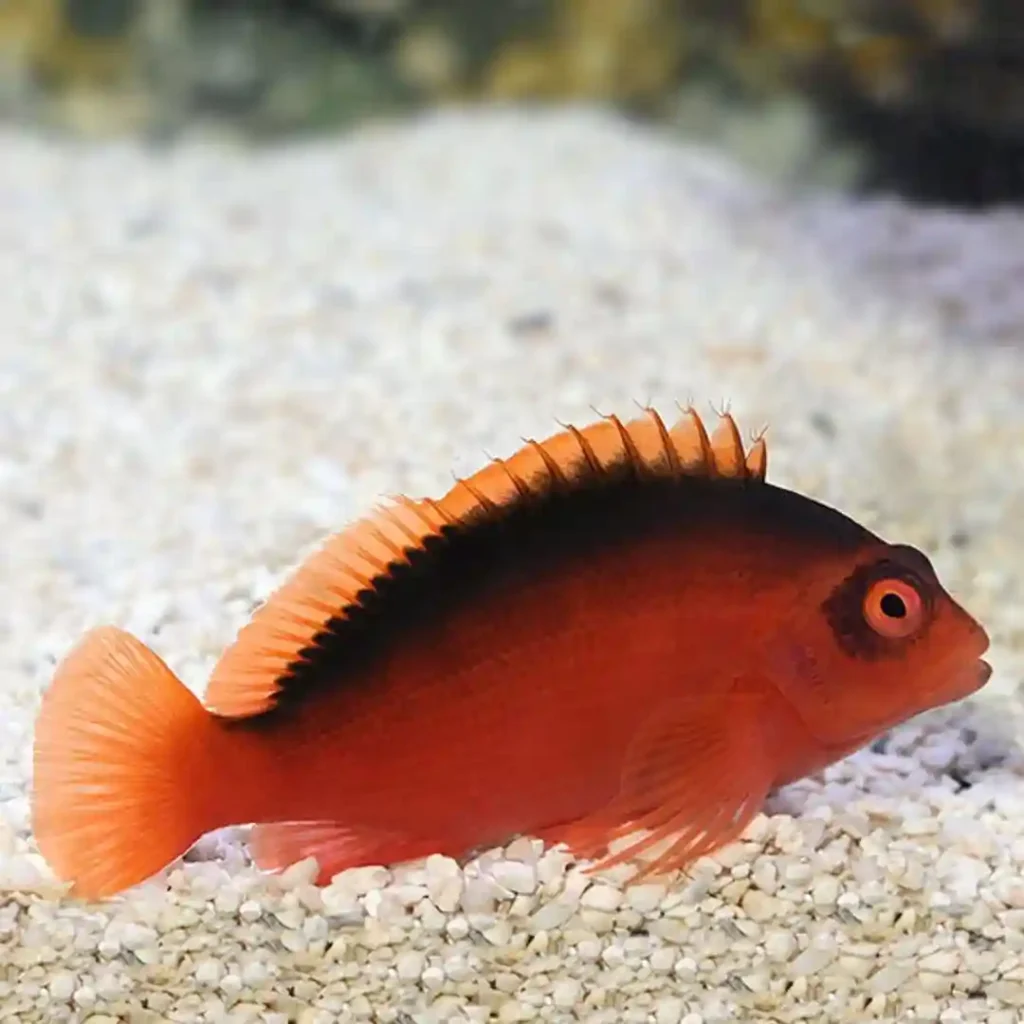
Flame Hawkfish are reef-safe for corals. They won’t bother polyps, LPS, or soft corals. But they do pose a risk to shrimp and small inverts, especially if those are added after the hawkfish is established.
Safer Inverts:
- Large cleaner shrimp (with caution)
- Snails
- Larger hermit crabs
To minimize issues, add shrimp before the hawkfish, and make sure they’re full-grown.
Breeding Flame Hawkfish
Breeding in captivity is rare but possible. Flame Hawkfish are open-water egg scatterers, and breeding typically happens at dusk.
Quick Facts:
- Male-female pairs form naturally
- Eggs are released in the water column and fertilized
- Larvae require specialized rearing systems
Most breeding attempts in home aquariums fail at the larval stage, due to complex feeding needs.
Common Health Concerns
Flame Hawkfish are hardy, but like all saltwater fish, they are vulnerable to poor conditions and tank stress.
Watch for:
- Loss of appetite
- Rapid breathing
- Lethargy or hiding
- Fin damage from aggression
Prevention Tips:
- Quarantine new fish
- Maintain water quality
- Offer hiding places
- Avoid overcrowding
Is the Flame Hawkfish Right for You?
The Flame Hawkfish is perfect for reef aquarists looking for a colorful, bold, low-maintenance fish—as long as your tank doesn’t rely on shrimp for cleanup.
It’s a Good Fit If:
- You want a reef-safe fish (coral-wise)
- You don’t keep small shrimp or nano gobies
- You want an interactive, hardy fish with personality
- Your tank is 30 gallons or larger with live rock
FAQs
Is the Flame Hawkfish reef safe?
Yes,for corals. But not for small shrimp or micro inverts.
Can Flame Hawkfish live alone?
Absolutely. They’re solitary and do fine without other hawkfish or schooling species.
Will they eat my shrimp?
Probably,especially if the shrimp is small or added after the hawkfish.
Are they jumpers?
Yes! Keep the tank covered at all times.
How long do they live?
Most live 5 to 7 years in captivity with good care.
Final Thoughts
The Flame Hawkfish is a brilliant, low-maintenance saltwater fish that adds color and personality to reef aquariums. They perch, observe, and engage with their environment in ways few other fish do. Just make sure to skip the shrimp, give them space, and keep the tank sealed and you’ll enjoy this fiery little sentinel for years to come.
