
Firefish Goby Care: Tank Setup, Feeding, and Tank Mates

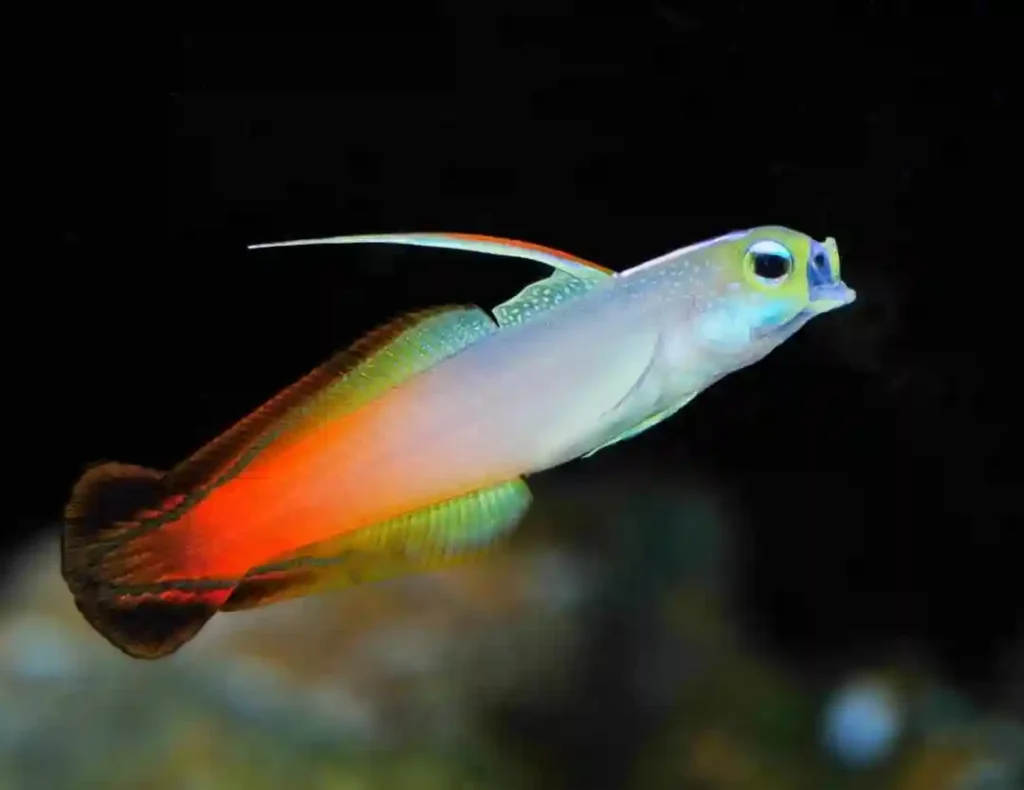
The Firefish Goby (Nemateleotris magnifica) has earned its place as one of the most beloved saltwater aquarium fish. Known for its bright white and orange gradient, elongated dorsal fin, and peaceful nature, it brings both beauty and calm to reef tanks. At only two to three inches long, it is small enough for nano setups but colorful enough to catch attention in larger displays.
Aquarists often have many questions before bringing home their first Firefish. How large should the tank be? Do they get along with other fish? Why do they seem to hide so often? This guide will cover everything you need to know, from water conditions and tank design to feeding habits and compatibility.
Species Overview
The Firefish Goby belongs to the Indo-Pacific coral reefs, where it hovers gracefully above rocky ledges before darting into hiding at the first sign of danger. Its peaceful personality and hardy nature make it one of the most recommended species for beginners in the saltwater hobby. With good care, it usually lives three to five years in captivity.
Appearance and Behavior
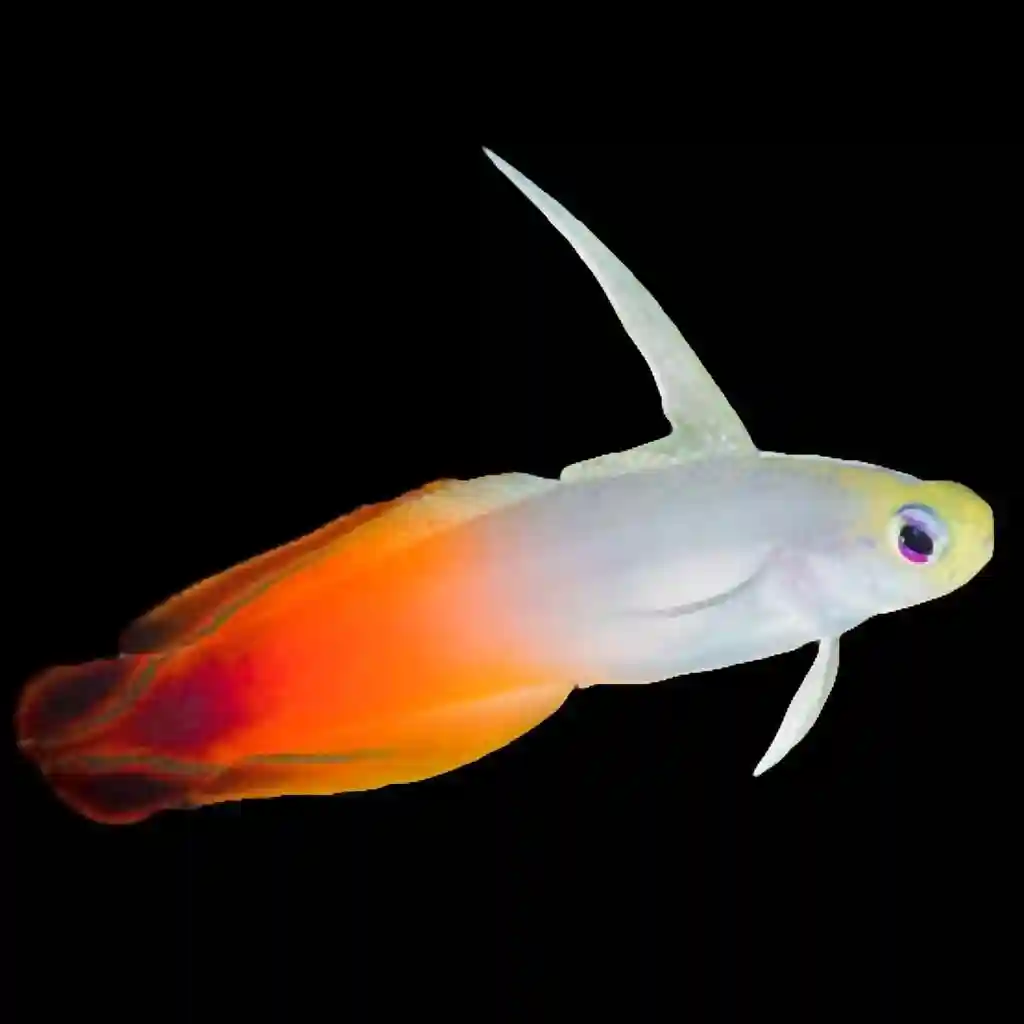
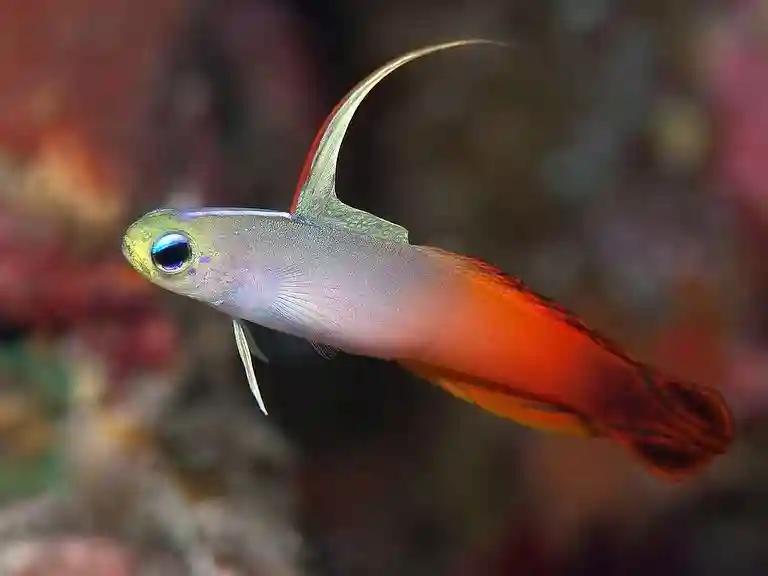
A Firefish is instantly recognizable by its white front half, fiery orange tail, and elegant dorsal fin that sometimes stands tall like a banner. Its gentle movements are a joy to watch, but it is also one of the shyest marine fish. When startled, it retreats quickly into crevices, which is why live rock and caves are so important in its environment.
If you enjoy the idea of keeping other colorful but peaceful reef fish, you may want to look into the Fairy Wrasse, which shares a similar charm but is often more active in the water column.
Ideal Tank Setup
Although Firefish Gobies remain small, they need room to swim and feel secure. A single fish will do well in a twenty-gallon tank, while a bonded pair is better kept in something closer to thirty gallons or more. They do not demand a massive aquarium, but stability is critical. Smaller tanks fluctuate more quickly in terms of temperature and water chemistry, so beginners often find success starting with slightly larger systems.
The right water conditions will keep your Firefish healthy. Aim for a stable temperature between seventy-two and seventy-eight degrees Fahrenheit, a pH range of 8.1 to 8.4, and salinity around 1.020 to 1.025. Ammonia and nitrite should always be at zero, with nitrates kept under twenty parts per million.
Aquascaping is just as important as water chemistry. Firefish Gobies thrive when they have both open water to hover in and rocky crevices to retreat to when startled. Live rock not only gives them shelter but also supports the tank’s filtration system. Above all, remember that Firefish are excellent jumpers. A tight lid or mesh cover is essential, as many aquarists sadly lose their Firefish to uncovered tanks.
Feeding and Diet
In the wild, Firefish Gobies feed on plankton drifting through the reef. In the home aquarium, they are not fussy and will accept many prepared foods. Frozen mysis shrimp, enriched brine shrimp, finely chopped seafood, and high-quality micro pellets are all suitable.
Feed them once or twice daily in small portions. Because they are timid eaters, it is important to ensure they get their share if housed with faster fish. Some aquarists use a feeding pipette or turkey baster to gently release food near their hiding spot, which helps shy individuals eat more confidently. A varied diet not only prevents malnutrition but also keeps their coloration vibrant.
Tank Mates
Firefish Gobies are peaceful and do best with equally calm species. Clownfish, small gobies, blennies, and chromis are all suitable tank mates. They also live comfortably alongside invertebrates such as shrimp, snails, and hermit crabs. Corals are safe as well, making them a perfect fit for reef aquariums.
What you must avoid are aggressive or territorial species. Larger dottybacks, triggers, and lionfish will stress or even eat a Firefish. Even semi-aggressive fish may cause it to hide constantly, reducing its quality of life.
If you are drawn to dartfish in general, you might also consider the Purple Firefish. While very similar in care, it offers a striking violet coloration with yellow accents and tends to be slightly bolder than its orange-red cousin.
Firefish Goby vs Purple Firefish
Both Firefish Gobies and Purple Firefish belong to the dartfish group, but they differ slightly in appearance and behavior. The Firefish Goby has the signature orange and white gradient, while the Purple Firefish displays a violet body with hints of yellow. Purple Firefish usually grow a little larger, reaching three and a half inches compared to the Firefish Goby’s average of three. In terms of temperament, both are peaceful, though many aquarists note the Purple Firefish is a bit less shy.
Price can also influence your decision. Firefish Gobies often cost fifteen to thirty dollars, while Purple Firefish are considered rarer and may be closer to thirty to fifty dollars. Beginners may start with the Firefish Goby, while experienced aquarists sometimes choose the Purple Firefish for its unique look.
Breeding in Captivity
Breeding Firefish Gobies at home is possible but rarely successful. They form monogamous pairs, and if conditions are favorable, they will lay eggs inside a crevice. The male typically guards the nest until hatching. The true challenge is raising the fry, which require live foods such as rotifers and copepods that many hobbyists do not have on hand. For this reason, most Firefish available in stores are wild-caught, though captive-bred individuals are slowly becoming more common.
Common Health Concerns
Firefish Gobies are hardy but not immune to issues. They can develop marine ich, which shows as small white spots and causes them to scratch against rocks. Stress from aggressive tank mates or sudden environmental changes can also trigger problems, including their instinct to jump. Malnutrition is another risk if they are fed only one type of food for too long.
Prevention is simple: quarantine new arrivals before adding them to your main tank, feed a diverse diet, and keep the environment stable. With these precautions, most Firefish thrive without major health concerns.
Buying Firefish Gobies
When selecting a Firefish from a store, choose one that swims actively in the open and does not appear overly stressed. Bright colors, clear eyes, and smooth fins are signs of health. Avoid specimens that refuse food, breathe heavily, or remain clamped in the corner. Prices usually range from fifteen to thirty dollars depending on size and availability.
If you are searching for another small and hardy option, the Chalk Bass is worth considering. It adapts well to community setups and shares the same beginner-friendly reputation as the Firefish Goby.
Care Tips for Beginners
Success with Firefish Gobies comes down to three main points: provide a secure tank with no escape routes, keep water parameters stable, and choose peaceful companions. Feeding a varied diet will ensure strong health and rich colors, while patience will help shy individuals become more confident over time.
FAQs
Are Firefish Gobies good beginner fish?
Yes, they are hardy, peaceful, and small enough for modest-sized tanks.
Can Firefish live in nano aquariums?
A single Firefish can live in a twenty-gallon nano reef, provided the water remains stable and the tank has a secure lid.
Why is my Firefish hiding all the time?
Hiding is natural, especially during the first weeks. Overly bright lighting or aggressive tank mates can also make them retreat more often.
Do Firefish get along with each other?
Two males will fight, so only a bonded pair should be kept together.
How long do Firefish Gobies live?
Most live between three and five years in captivity, though some have been reported to reach longer lifespans with exceptional care.
Final Thoughts
The Firefish Goby is one of the best introductions to marine fishkeeping. Its combination of beauty, peaceful temperament, and simple care requirements make it a favorite for beginners and experienced aquarists alike. With the right setup, proper feeding, and a calm community, this dartfish will reward you with years of graceful hovering and fiery color in your reef.
