
Red Coris Wrasse Care Guide: Tank Size, Feeding, and Growth

The Red Coris Wrasse (Coris gaimard) is one of the most striking saltwater fish you’ll ever see in an aquarium. Known for its dramatic color change from juvenile to adult, this species is both beautiful and full of personality. However, it’s also a fish that requires careful planning. While the tiny juveniles may look like perfect additions to a reef tank, they eventually grow into large, active adults that demand a spacious environment and a meaty diet.
If you’re considering adding a Red Coris Wrasse to your tank, it’s important to understand its long-term care needs. In this guide, we’ll cover everything from tank size and feeding habits to their growth stages and compatibility with other fish.
Species Overview
The Red Coris Wrasse belongs to the Labridae family, which includes dozens of wrasse species known for their color, activity, and burrowing habits. This fish is native to the Indo-Pacific region, often found around coral reefs and sandy lagoons where it spends much of its time hunting for crustaceans.
- Scientific Name: Coris gaimard
- Common Names: Red Coris Wrasse, Yellowtail Coris, Gaimard’s Wrasse
- Origin: Indo-Pacific reefs (Hawaii, Tahiti, Great Barrier Reef)
- Size: Up to 10–12 inches as adults
- Lifespan: 8–10 years in captivity with proper care
- Temperament: Semi-aggressive
- Diet: Carnivorous
- Reef Compatibility: Not reef-safe (preys on invertebrates)
Quick reference table:
| Characteristic | Details |
| Adult Size | 10–12 inches |
| Lifespan | 8–10 years |
| Minimum Tank Size | 125 gallons |
| Temperament | Semi-aggressive |
| Diet | Carnivorous |
| Reef Safe? | No (eats inverts) |
Appearance and Growth Stages
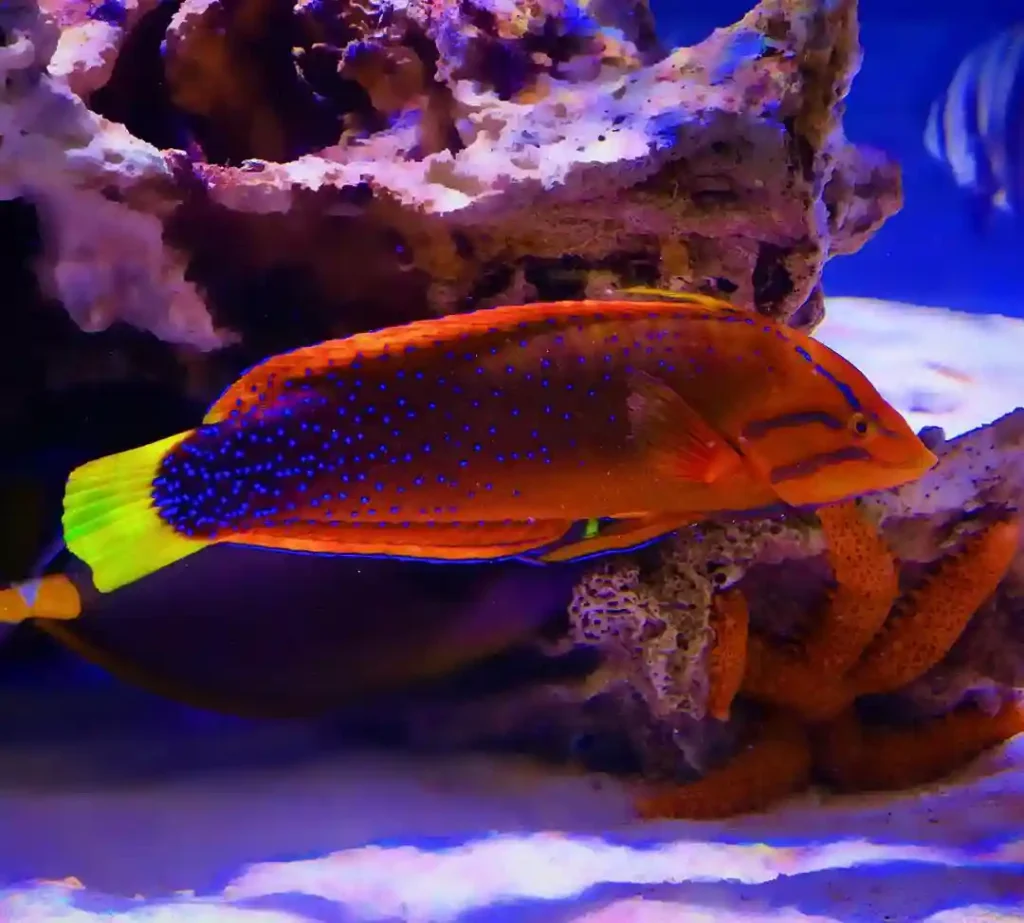
One of the most fascinating aspects of the Red Coris Wrasse is its dramatic color transformation.
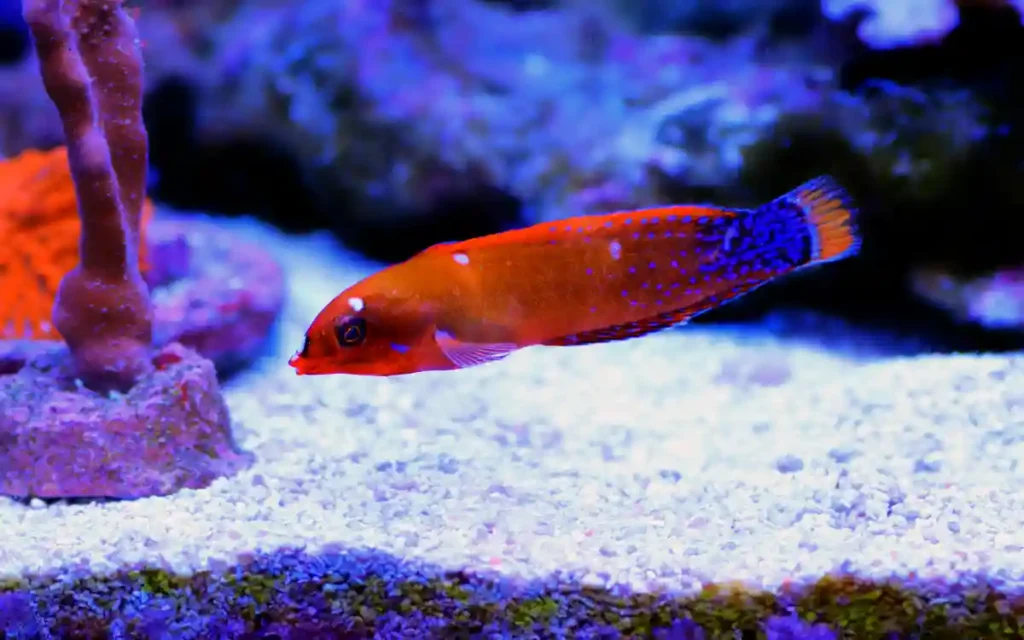
- Juvenile Stage: Small (2–3 inches), bright reddish-orange body covered with large white spots. This makes them look adorable and often leads aquarists to buy them without realizing how big they’ll get.
- Sub-adult Stage: As they grow, they begin to develop patches of green and blue, with their orange fading to a darker tone.
- Adult Stage: Mature wrasses have a deep reddish-orange body, vivid green and blue facial markings, and a bright yellow tail. The adult coloration is bold and eye-catching but completely different from their juvenile look.
Males are usually larger and more colorful than females, but both sexes share similar transformations.
Tank Setup for Red Coris Wrasse
Tank Size Requirements
Although juveniles may be sold at only 2–3 inches, adult Red Coris Wrasses can reach 10–12 inches. For this reason, they require at least a 125-gallon aquarium once fully grown. Smaller tanks will quickly become too cramped, causing stress, aggression, and stunted growth.
Water Parameters
Stable, clean water is essential for such an active swimmer. Ideal ranges:
- Temperature: 74–80°F
- Salinity (SG): 1.020–1.025
- pH: 8.1–8.4
- Hardness (dKH): 8–12
Regular testing and water changes help keep conditions safe.
Read also: Purple Firefish 101: Care, Diet, Tank Mates & Reef Safety
Substrate and Aquascaping
The Red Coris Wrasse is a burrower. They dive into the sand at night to sleep or when stressed. To allow this natural behavior, your aquarium must have:
- A fine sand bed at least 3–4 inches deep.
- Avoid coarse substrates like crushed coral, which can injure them.
- Rock structures for hiding and exploring.
- Open swimming areas since they are very active during the day.
Filtration and Flow
A large fish with a meaty diet produces a lot of waste. Use:
- Strong filtration system (sump, canister, or reef-ready filter).
- Moderate water flow — enough to keep water oxygenated but not overwhelming.
- Protein skimmer recommended for big tanks.
Diet and Feeding
The Red Coris Wrasse is a carnivore with a big appetite. In the wild, it feeds on small crustaceans, snails, worms, and other invertebrates it digs out of the sand.
In captivity, feed a varied diet to keep them healthy:
- Frozen mysis and brine shrimp
- Chopped shrimp, clam, squid, or scallops
- Krill and silversides (cut into small pieces)
- High-quality marine carnivore pellets
Feed 2–3 times daily, as they have fast metabolisms. Make sure the food is small enough for them to swallow easily, especially juveniles.
Caution: They will almost certainly eat ornamental shrimp, crabs, snails, and other tank clean-up crew members.
Temperament and Tank Mates
Red Coris Wrasses are generally semi-aggressive. They aren’t usually bullies but will defend their territory, especially as they mature.
Good tank mates include:
- Tangs (Yellow Tang, Blue Tang)
- Angelfish (larger species like Emperor or Regal)
- Other large wrasses (non-aggressive types)
- Groupers and triggers (in large tanks)
Tank mates to avoid:
- Small gobies, dartfish, or firefish (may be harassed).
- Ornamental shrimp, snails, and crabs (will be eaten).
- Delicate reef fish not suited to aggressive eaters.
Reef Compatibility
Unfortunately, the Red Coris Wrasse is not reef-safe. While they won’t bother corals directly, they are notorious for:
- Eating shrimp, snails, crabs, and other invertebrates.
- Digging through the sand and potentially overturning small rocks or corals.
They are best kept in fish-only (FO) or fish-only with live rock (FOWLR) setups rather than full reef tanks.
Growth and Lifespan
- Juveniles: 2–3 inches when purchased, bright orange with spots.
- Adults: Can grow up to 10–12 inches, requiring large aquariums.
- Lifespan: 8–10 years with proper care, sometimes longer.
Because of their growth potential, always plan for the adult size before purchasing. Many aquarists outgrow their tank too quickly when buying them as juveniles.
Common Health Issues
Red Coris Wrasses are hardy but still vulnerable to common marine diseases:
- Marine Ich (Cryptocaryon): White spots, scratching behavior.
- Velvet disease: Fine golden dust on the body, rapid breathing.
- Internal parasites: Weight loss despite eating.
- Stress injuries: Cuts or abrasions from diving into coarse sand.
Prevention:
- Quarantine new fish before adding them to the display tank.
- Maintain excellent water quality.
- Provide a soft sand bed to prevent injuries.
Tips for Success with Red Coris Wrasse
- Plan ahead: Don’t buy juveniles unless you can eventually house a 125-gallon or larger tank.
- Deep sand bed: A must for burrowing behavior.
- Secure the lid: They are strong jumpers.
- Meaty diet: Feed a wide variety of high-protein foods.
- Best for experienced aquarists: Their size, diet, and tank needs make them a poor choice for beginners.
Read also: Domino Damsel Care Guide: Tank Setup, Diet, Behavior & Tank Mates
FAQs
How big does a Red Coris Wrasse get?
Adults can reach 10–12 inches, much larger than the tiny juveniles often sold in stores.
Is the Red Coris Wrasse reef-safe?
No. They eat shrimp, crabs, snails, and other invertebrates, making them unsafe for reef tanks.
What do Red Coris Wrasses eat?
They are carnivores. Feed frozen mysis, krill, chopped seafood, and high-protein pellets.
Can they live in a 55-gallon tank?
No. While juveniles may survive temporarily, adults need at least 125 gallons.
Do they change color as they grow?
Yes. They transform from bright orange with white spots (juveniles) to red adults with green and blue markings and a yellow tail.
Final Thoughts
The Red Coris Wrasse is one of the most visually stunning saltwater fish, but it’s also one of the most misunderstood. Too often, aquarists buy them as juveniles without realizing how large and demanding they become as adults.
If you have the right setup—a large tank, deep sand bed, and meaty diet—the Red Coris Wrasse can be a rewarding and long-lived centerpiece fish. For aquarists with experience and the space to house them, they’re a lively addition that brings constant activity and color to a marine aquarium.
